Sunday, March 22, 2026
Home Blog Page 902

Black ink at last

0
john marshal

Amidst all the political caterwauling, a look at the state’s finances may advance some sense and understanding before the election. If only a peek, it helps to know how we’re doing.
Early this month the Kansas Department of Revenue reported that the state’s tax revenues at the end of September were at $961 million, an increase of $84 million over first-quarter revenues a year ago.
At the same time, Gov. Laura Kelly reported that the administration had saved taxpayers more than $750 million by paying cash for various state projects and by retiring early the remaining half of $200 million in highway bonds; this saves the state more than $22 million in interest payments.
The 20-year bonds were issued 10 years ago. The legislature approved an early payoff of $98 million last session, the first time that the state had paid a bond issue before it was due.
This is a remarkable change from four years ago, when the ledgers were stained red. Kansas bond ratings had been downgraded three times; the state had become a credit risk.
The Brownback-Colyer administration had wrecked the treasury with years of budget deficits. Repeated tax cuts for corporations and wealthy individuals brought years of declining revenue. State aid for local schools was slashed. Local taxes increased. Budget deficits approached $1 billion. State debt soared. Sales taxes and user fees increased by $300 million. Assaults on Medicaid and state hospitals and ceaseless raids on state highway funds were used to backfill deficit spending.
Today, black ink. This has been the pattern for three years.
*
The state’s budget year begins July 1. A report for the first quarter ending September 30 showed $2.2 billion in tax receipts. This is $92 million (4.4 percent) above revenue for last year’s first quarter.
Other notes:
Individual income taxes for the period, mostly withholding, were $441 million, up 8.5 percent ($34.5 million). Corporate income taxes were $170 million, up 17 percent ($24.9 million).
Sales taxes for the quarter were $245.7 million, up 9.1 percent ($20.5 million). Compensating use taxes (on out-of-state sales) were up 5.1 percent ($3 million).
Other excise taxes were $26.6 million, up 7.6 percent ($1.9 million).
Cigarette taxes were $8.5 million, down 10.2 percent ($969,000) from the first quarter a year ago.
*
Over the last budget year – July ’21 through June ’22 – the Kelly administration acquired enough budget surplus to retire debt early and pay cash for projects rather than borrow by issuing bonds.
Prudent conservative management allowed the government to retire $1.6 billion in debt and save $632 million in interest payments. Plans are to pay cash for another $203 million in new capital projects. This should save more than $100 million in interest that would otherwise have accumulated with bond-borrowing.
A budget surplus of nearly $1 billion has allowed the government to pay down a stunning level of debt and, at the same time, continue to build reserves.
This should insulate the state budget from volatile economic times, said Budget Director Adam Proffitt. “It will provide fiscal stability allowing us to continue to fund critical services for Kansans for years to come.”
It’s a stunning change after the dark Brownback years of his disastrous “Glide Path to Zero” income taxes. His trickle-down evaporated. As revenues dried up, budgets for local schools, state universities, colleges and even the Highway Patrol were savaged. Spending was fueled by budget raids on such fee-supported agencies as the insurance department and wildlife and parks. The highway fund was looted repeatedly. Brownback borrowed with $1.5 billion in bonds to cover a raid on the public employee retirement fund. The state’s credit rating plunged as the treasury began to run dry.
*
In 2016 the courts intervened and voters spoke. The Supreme Court ordered local schools to be funded “adequately” according to constitutional directive. Voters elected legislators who had sense enough to begin a realignment. A year later Brownback was hounded from office and assigned by Trump as a “religious ambassador” to preach the word to the planet’s unwashed multitudes. His acolyte, lieutenant governor Jeff Colyer, took over for the final withering year of Brownback’s second term.
In 2019, Laura Kelly. Finances improved despite headwinds of legislative intolerance. Budgets recovered, subduing the tired dogma of tax cuts and less government, of borrow-and-spend and ignoring red ink.
This advance comes from a belief in better government, not less government. A healthy budget is the product of enlightened government. A strong treasury comes by an informed government. It pokes through the deceits of slash and spend. It refutes the tattered Republican gospel of borrow and backfill.


Advice Given for Both Buyers And Sellers of Agriculture Land

0
Frank J Buchman
Frank Buchman

“Recent record rural land sales suggest opportunities for both sellers and buyers of farm, recreational, and other rural land.”
Alex Gyllstrom, marketing director for Whitetail Properties, told “Successful Farming” low property inventories point to land values remaining high.
Rising interest rates this year could suggest reduced demand, but that is only one factor.
“It can be projected that rural land values will stay at the higher end of the market,” Gyllstrom said. “That’s because of current inflation across our economy, as well as volatility in the stock market. This will help maintain or even increase the value that sellers can potentially receive.”
While these factors create a sense of urgency for those looking to sell land, they also present upside for buyers.
“Eventually, we anticipate more inventory becoming available due to current economic factors, creating more buying opportunities,” Gyllstrom said.
The Federal Reserve has rolled out rate hikes incrementally with more projected over the course of 2022 and into 2023. However potential land buyers can benefit from interest rates that are still relatively low, at least at the current time.
“We expect this year’s rural estate market to continue at a strong pace rewarding both sellers and buyers,” Gyllstrom said.
“Land is, and forever will be, a limited resource. The rate of appreciation over time continues to make it a solid and safe investment,” Gyllstrom said. “The mind-set of buyers will continue to factor in the increasing interest rates. But we expect the demand to sustain if rates don’t get too out of whack.”
Gyllstrom made several recommendations for those considering selling or buying rural land.
Sellers can provide “curb appeal.” There is the only once chance to make a good impression. Pick up trash along the road leading to the property, fix fences, hang a gate, and make the driveway attractive. Digging a pristine looking fishing pond or planting shade are long-term improvements that can appeal to land buyers.
Documenting farm value help land sellers increase appeal of their offering. For farm sales, provide soil fertility records, production history, and recent farm improvements that add value to the operation. Prospective buyers also want to know about any tenancy agreements if someone is operating the farm other than the owner.
Leases need to be in writing. If a farmer is renting the crop land, write up a simple contract both parties can sign. When hunting rights are leased, make sure there is a written agreement in place. Sellers can show potential buyers the extra income to be made through leasing out the farming or hunting rights.
A photographic portfolio is helpful for selling property. For hunting land, trail cam photos will show food plots and populations of deer, turkey, and other game animals
Buyers must work with a rural lender. Many of these offer tailored lending options and customized packages for rural properties. That can include a fixed interest rate, low down payment, and fixed monthly payments.
It’s essential for buyers to think longer term. Despite current economic challenges, avoid weighing only the short-term impact of 2022. Land ownership is a longer-term investment. Things could swing one way or another in 2023. But waiting to purchase land many times does not produce more favorable results.
A partnership agreement in a consideration for land buyers. A common way to purchase large hunting property is through partnership agreements, such as a limited liability company. This enables a group of individuals to work together to own property, making it more affordable for each.

CUTLINES
Many considerations must be made for both those considering selling or buying rural land.

A single realtor has 4,672 listings of Kansas land for sale.

Overweight Horses Require Feed Management

0

“Some horses are like some people; they can become overweight quite readily.”
Again, similar to their human counterparts, cause for a horse becoming too heavy and unhealthy has various causes. It’s well beyond eating too much and not doing enough.
Certain horses are “easy-keepers,” and some people are simply “easy-keepers.”
“Managing easy-keeper horses can be challenging,” emphasized horse nutritionist Shannon Pratt-Phillips.
“Pasture is like a buffet for horses,” Pratt-Phillips said.
Not only can pasture have more calories than most hay, but it can also accumulate problematic sugars for some horses.
“Biggest issue with pasturing a horse is that it’s difficult to know how much the horse is eating,” Pratt-Phillips said. “Balancing the rest of the diet is very difficult.”
While most owners have never heard of such things, grazing muzzles can be used to reduce pasture intake, Pratt-Phillips said.
They effectively reduce pasture intake and still allow the horse to have ample turnout time. “However, food-motivated horses can remove or damage the muzzle, rendering it ineffective,” Pratt-Phillips pointed out.
Of course, feeding horses hay in a dry lot lets them move around without risking over consumption in the pasture.
“Obviously, it’s difficult to evaluate hay quality or composition by looking at it,” Pratt-Phillips said. “Knowing exactly what’s in forage is key to keeping a horse healthy and their weight under control.”
A hay sample can be sent it to a laboratory for analysis. “This can be challenging if the hay changes frequently, but it is still useful to check it,” Pratt-Phillips said. “Owners are often surprised at how much they are underfeeding or overfeeding horses’ certain nutrients in the hay.”
Different flakes of hay, even from the same bale, can weigh different amounts. Likewise, scoops of different concentrates will have different weights. “So, weighing horse feed is critical,” Pratt-Phillips said
It’s not too difficult to make a scale of sorts. For grain, weigh an empty bucket before adding the amount of concentrate the horse gets each day. Subtract the weight of the bucket to find out how many pounds the horse eats.
“Then, mark the volume on a feed scoop for easy measuring on a day-to-day basis,” Pratt-Phillips suggested.
“It’s best to weigh hay in a garbage bag at each feeding, because flake size and weight varies,” Pratt-Phillips reiterated.
Caution must be taken to always feed enough. “We know we want to limit concentrated feed intake for an easy-keeper,” Pratt-Phillips said. “But feeding too little might result in the horse not getting all needed the nutrients.”
Owners should evaluate concentrates being fed a horse and make changes as needed.
“Ration balancers are designed to be fed at a half-pound to two pounds daily as excellent horse feed,” Pratt-Phillips said.
Because they’re concentrated sometimes more than 30-percent protein and higher concentrations of other nutrients, not as much feed is required.
“This can decrease calorie intake from the feed, to maximize the forage intake,” Pratt-Phillips said. “We all know how important forage intake is for keeping digestive tracts healthy and horses happy.”
If ration balancers add too many calories to the diet, a vitamin and mineral supplement might be better, Pratt-Phillips added. It can typically be fed at about 100 grams per day.
“Depending on hay analysis, owners can add soybean meal to ensure protein and amino acid intake are appropriate,” Pratt-Phillips said.
Despite the common moniker, easy-keepers can be anything but easy to feed and manage properly, Pratt-Phillips insisted.
+++30+++
CUTLINE
A muzzle can allow an horse that is an “easy-keeper” to remain on pasture while limiting intake. (Erica Larson photo)

KU News: New $10M grant to promote equity leadership and educator well-being

0

From the Office of Public Affairs | http://www.news.ku.edu

Headlines

New $10 million grant to promote equity leadership and educator well-being
LAWRENCE — The SWIFT Education Center, part of the Life Span Institute at the University of Kansas, was awarded a $10 million federal grant to promote equity leadership and educator well-being among educational leaders in Black, Hispanic and Native American communities. Partner schools and districts are located in Arizona, California, North Carolina and Tennessee.

KU Engineering professor wins $100K award to research wastewater intensification
LAWRENCE — A prestigious award from the Water Research Foundation will provide the opportunity for a University of Kansas School of Engineering professor to research a breakthrough approach to improving water quality. Belinda Sturm will assess how the physical, chemical and biological properties of aerobic granular sludge impact the removal of pathogens and microplastics from wastewater. The city of Lawrence is one of the project partners.

‘Black Matters’ anthology showcases emerging ‘audacious’ playwright
LAWRENCE — A University of Kansas professor is the editor of a new book titled “Black Matters: Lewis Morrow Plays,” an anthology of three works written by the emerging Kansas City-based playwright that focus on the vivid emotional realities of modern African American life. “I pitched it with this framework that he’s not writing to Black Lives Matter. He’s not talking about post-George Floyd. He’s contextualizing this within the larger Black history: ‘This isn’t the first time we’ve been here,’” said Nicole Hodges Persley, who also has directed four of Morrow’s plays.

‘Deep fake’ protein designed with artificial intelligence will target water pollutants
LAWRENCE — University of Kansas researchers are working to use an artificial intelligence machine-learning process to build new proteins designed to detect water pollutants. With a new three-year, $1.5 million grant from the National Science Foundation’s Molecular Foundations for Biotechnology program, Joanna Slusky will use machine learning to create “deep-fake” membrane beta-barrel proteins — a class of naturally successful biosensors — designed to detect polluting metal ions in water.

Full stories below.

————————————————————————

Contact: Nicole Perry, SWIFT Education Center, 785-864-3391, [email protected], @SWIFTSchools
New $10 million grant to promote equity leadership and educator well-being

LAWRENCE — The SWIFT Education Center, part of the Life Span Institute at the University of Kansas, was awarded a $10 million federal grant to promote equity leadership and educator well-being among educational leaders in Black, Hispanic and Native American communities.
The three-year award comes from the Supporting Effective Educator Development (SEED) program, Office of Elementary and Secondary Education, U.S. Department of Education. SWIFT will provide for principals and leadership teams professional learning and networking opportunities with Historically Black, Hispanic-serving and Tribal University faculty to foster a more diverse educational workforce. School leaders’ professional learning will focus on developing student social and emotional competencies as well as ways to promote the well-being of educators.
“We are at a moment in education when many pressing concerns converge. We face an urgent need to make transformative changes in our systems to bring equity, safety, security and freedom into education, and at the same time our educators are facing intense burnout due to multiple and overlapping crises,” said Amy McCart, research professor and SWIFT co-director. “We have to offer educational leaders the strategies they need to both make change for their students and support their own well-being.”
In addition to McCart, the project is being led by SWIFT’s Dawn Miller, associate director of partner engagement and systems design; Melinda Mitchiner, associate director of partnership development and business operations; and J. Hoon Choi, assistant research professor and associate director of research and evaluation.
The project will support over 50 principals and their leadership teams in schools that serve Black, Hispanic, and Native American communities. Partner schools and districts will be San Diego Unified Schools, California; Cumberland County Schools, North Carolina; Sunnyside Unified Schools, Arizona; Millington Municipal Schools, Tennessee; and Green Dot Charter Schools, Perea Elementary and Arrow Academy of Excellence, all in Tennessee.
-30-
————————————————————————
The official university Twitter account has changed to @UnivOfKansas.
Refollow @KUNews for KU News Service stories, discoveries and experts.


————————————————————————

Contact: Cody Howard, School of Engineering, 785-864-2936, [email protected], @kuengineering
KU Engineering professor wins $100K award to research wastewater intensification
LAWRENCE — A prestigious award from the Water Research Foundation will provide the opportunity for a University of Kansas School of Engineering professor to research a breakthrough approach to improving water quality.
Belinda Sturm, professor of civil, environmental & architectural engineering, is the winner of the 2022 Paul L. Busch Award. With this $100,000 research prize, Sturm will assess how the physical, chemical and biological properties of aerobic granular sludge impact the removal of pathogens and microplastics from wastewater.
Sturm’s research could allow municipal wastewater treatment plants to double their capacity without the need for expanding or adding new treatment equipment.
“The greatest achievement in water quality research is obtained when knowledge is put into practice to create a safer environment,” Sturm said. “This award will enable me to explore a new research application in collaboration with utility partners.”
Wastewater from residences, businesses and other properties carries materials such as carbon, nutrients, pathogens and microplastics to water resource recovery facilities (WRRFs). While WRRFs have processes in place to remove contaminants, there is a need for more research into increasing capacity, ensuring efficiency and understanding the broader applications of existing treatment technologies.
Partnering with the city of Lawrence as well as Metro Water Recovery in Denver, Sturm will assess the removal of pathogens from wastewater due to grazing by the protozoa in biofilms, as well as the sorption of microplastics onto aerobic granular sludge granules.
This research will “explore the fundamental properties of AGS while demonstrating full-scale and practical improvements for water quality,” Sturm said. This research has the potential to significantly enhance wastewater treatment and further the science related to biofilms.
In addition to her work at KU, Sturm serves as director of the Kansas National Science Foundation’s Established Program to Stimulate Competitive Research (NSF-EPSCoR) and chair of the Water Environment Federation’s Municipal Design Symposium.
For 22 years, the WRF Endowment for Innovation in Applied Water Quality Research has supported the Paul L. Busch Award, providing more than $2 million in funding to researchers who are making major breakthroughs in water quality science. More information about the Paul L. Busch Award can be found on WRF’s website.

-30-
————————————————————————
Subscribe to KU Today, the campus newsletter,
for additional news about the University of Kansas.

http://www.news.ku.edu
————————————————————————

Contact: Jon Niccum, KU News Service, 785-864-7633, [email protected]
‘Black Matters’ anthology showcases emerging ‘audacious’ playwright
LAWRENCE — What word best describes the work of Lewis Morrow?
“Audacious,” said Nicole Hodges Persley, associate professor of American studies and African & African American studies at the University of Kansas.
She is the editor of a new book titled “Black Matters: Lewis Morrow Plays,” an anthology of three works written by emerging Kansas City-based playwright Morrow that focus on the vivid emotional realities of modern African American life. It’s published by Methuen Drama/Bloomsbury.
“I can’t name a playwright right now who is writing such unapologetic language,” Hodges Persley said. “And he’s not doing it so that someone will see his work and hopefully pick it up for a TV series. He writes stories that really appeal to the urgency of what it means to live as a Black person in America.”
Morrow’s trilogy includes “Baybra’s Tulips,” about a former convict who moves in with his sister under the pretense of rehabilitation but is actually there to take revenge on his abusive brother-in-law. “Begetters” explores generational trauma through the lens of a couple in their 60s. “Mother/son” finds a Black man hoping to help his drug-addicted white parent get clean, only to discover that may be the least of their problems.
Hodges Persley said two of the three plays that are bookends are stories about absence.
“There’s this idea of how you wish your mother would be in ‘Mother/son.’ She’s not that, but it doesn’t mean that need doesn’t go away. Same with ‘Baybra’s Tulips.’ He wanted a relationship with both his mother and father that turned out very different, but even the absence of those relationships shaped him,” said Hodges Persley, who is also serving as interim vice provost for diversity, equity, inclusion & belonging at KU.
In addition to Morrow’s command of language, Hodges Persley particularly appreciates his ability to counter the cliches often seen in mainstream American theatre about Black lives.
“When you see these tropes around absence of a father figure or a certain negative stereotypical representation of Black mothers, he doesn’t give you those. He gives you families that have money, they have a relationship, they’re not living in poverty. He’s taking average representations of Black families and saying, ‘You can’t continue to impose these stereotypes and mythologies on us.’”
Also serving as artistic director of the KC Melting Pot Theatre (the city’s premier African American theatrical company), Hodges Persley has directed four of Morrow’s plays. At times, she feels they have a comparable working relationship similar to the late Lloyd Richards and August Wilson of “The Piano Lesson.” Richards and Wilson had a collaborative relationship as director-playwright that Hodges Persley admires.
“We share apartments in each other’s brains,” Hodges Persley said. “We can have the best hangout and collab, and then when we’re ready to slam doors, we’re ready to slam doors. We often agree to disagree but ultimately have created a great partnership. I completely trust his writing, and he trusts me as a director to turn the story into a 3D, living, moving thing that reflects the intention of what he wants as a playwright.”
Already in the middle of two book projects with London-based Bloomsbury (best known as the original publisher of the Harry Potter books), the professor took a gamble that Morrow’s work might also get the company’s attention. But she made it clear his talent went deeper than mere cultural zeitgeist.
“I pitched it with this framework that he’s not writing to Black Lives Matter. He’s not talking about post-George Floyd. He’s contextualizing this within the larger Black history: ‘This isn’t the first time we’ve been here,’” she said.
A Detroit native, Hodges Persley came to KU in 2009, where she honed her expertise in African American theatre and hip-hop performance. (She is one of a small group of scholars in the U.S. who focus on hip-hop’s musical and cultural influence in theatre.) Her recent publications include “Breaking It Down: Audition Techniques for Actors of the Global Majority” (Rowman & Littlefield, 2021) and Sampling and Remixing Blackness in Hip-Hop Theater and Performance (University of Michigan Press, 2021).
With constant political assaults on Black rights and culture going on now, do theatrical plays really matter?
“In African American communities and particularly in the American theatre, the erasure of Black theatre voices historically and systemically in the United States has been strategic,” Hodges Persley said. “We need the theatre — whether that be the church pulpit or the street corner or the library. It’s vital for us to continue to tell our stories because if we don’t tell our stories, they don’t exist.”
-30-
————————————————————————
Don’t miss new episodes of “When Experts Attack!,”
a KU News Service podcast hosted by Kansas Public Radio.

https://kansaspublicradio.org/when-experts-attack
————————————————————————

Contact: Brendan Lynch, KU News Service, 785-864-8855, [email protected], @BrendanMLynch
‘Deep fake’ protein designed with artificial intelligence will target water pollutants

LAWRENCE — If you’ve ever used a text-based artificial-intelligence image generator like Craiyon or DALL-E, you know with a few word prompts that the AI tools create images that are both realistic and completely synthesized.
The machine learning that powers such websites will scan millions of images on the internet, analyze them and assemble facets of them into fresh, but fake, images.
Now, University of Kansas researchers are working to use a similar machine-learning process to build new proteins designed to detect water pollutants. With a new three-year, $1.5 million grant from the National Science Foundation’s Molecular Foundations for Biotechnology program, a KU researcher will use machine learning to create “deep-fake” membrane beta-barrel proteins — a class of naturally successful biosensors — designed to detect polluting metal ions in water.
“These beta barrels are super useful because they can bring things across membranes,” said principal investigator Joanna Slusky, associate professor of molecular biosciences at KU. “Barrels make good enzymes — there are so many different things that barrels can do.”
Previous research on the tube-like beta barrels has altered their binding properties for a variety of tasks. However, much of this work was arduous and completed by hand, usually resulting with minor variations of a limited number of scaffolds, or barrel structures.
“In this case, we’re using machine learning to generate large numbers of barrels,” Slusky said. “But, how about if we can both generate barrels and have them be useful? We asked ourselves, ‘What’s a biotechnology application of barrels?’ Well, one would be metal sensors that could perhaps detect metal pollutants.”
Slusky and her co-principal investigators, professors Rachel Kolodny and Margarita Osadchy of Haifa University in Israel (along with KU postdoctoral fellow Daniel Montezano), will develop a new machine-learning process that generates beta-barrels with scaffolds similar to those found in nature, but with different sequences.
“There’s a website called ‘This X Does Not Exist,’” Slusky said. “If you go to that site, you see all these AI-generated things and people don’t really exist. But a computer made an image, for instance, of a cat. But that’s not really a cat — a computer took a bunch of pictures of cats and said, ‘OK, we can just sort of generate as many cat pictures as you want now, because we figured out what is a cat.’ We need to make something real so we see it more like generating a recipe.
“The question is, how to make computers generate a recipe for proteins.”
Beta barrels are well-suited to advancement through machine learning because “natural proteins are sort of a small blip in the number of possible sequences.”
If a computer algorithm can learn the essence of what makes a protein a protein, Slusky said, it will avoid generating useless sequences.
“Most sequences would never actually be proteins— they wouldn’t have a particular fold,” she said. “They would just kind of bond with themselves in weird, nonpredictable ways over and over again. To be a protein, you need a sequence that makes one shape. When people tried to make random sequences, or even somewhat directed sequences, they found that only a very, very small percentage of them might actually be a protein.”
With machine learning creating new and viable sequences resulting in this common fold, Slusky and her colleagues hope to generate a beta-barrel especially well-suited to finding metal ions in water. This result of the work will be biosensors based on beta barrels that can identify pollutants like lead in waterways.
“If we make them the right size, this molecule will be ideal to put some particular metal in, and you can have the right substituents so that it would bind that metal,” Slusky said. “Because it’s in a membrane, it can give you some sort of conductance difference — there’s a difference between when it’s bound and when it’s not bound. If you’re able to do that, you could sense for different metals, and different concentrations of those metals. There are a lot of big steps we want to accomplish, but I’m hopeful and excited.”
The work also will help train undergraduate researchers in Slusky’s lab, as well as inform Slusky’s teaching at KU as well as outreach to high-school science students.

-30-
————————————————————————

KU News Service
1450 Jayhawk Blvd.
Lawrence KS 66045
Phone: 785-864-3256
Fax: 785-864-3339
[email protected]
http://www.news.ku.edu

Erinn Barcomb-Peterson, director of news and media relations, [email protected]

Today’s News is a free service from the Office of Public Affairs

KU News: Kansas Economic Policy Conference, KU Law Dean’s Fellows

0

From the Office of Public Affairs | http://www.news.ku.edu

Headlines

Kansas Economic Policy Conference to explore policies for economic resilience
LAWRENCE — The 2022 Kansas Economic Policy Conference will bring together state legislators, Kansas community leaders, policymakers and subject matter experts to consider timely and relevant questions about how to build a more resilient state economy. The event, organized by the Institute for Policy & Social Research at the University of Kansas, will take place Oct. 27 at the Burge Union and will be livestreamed.

2022-23 class of KU Law Dean’s Fellows to mentor first-year law students
LAWRENCE — Fifteen students from the University of Kansas School of Law have been chosen to be Dean’s Fellows for the 2022-23 academic year, including Kansans from Hays, Lawrence, Lenexa, Manhattan, Olathe, Overland Park, Pittsburg and Wichita. The Dean’s Fellows are a group of second- and third-year law students selected to mentor first-year peers.

Full stories below.

————————————————————————

Contact: Carrie Caine, Institute for Policy & Social Research, 785-864-9102, [email protected]
Kansas Economic Policy Conference to explore policies for economic resilience
LAWRENCE — The 2022 Kansas Economic Policy Conference will explore “Building a Resilient Kansas Economy.” Taking place Oct. 27 at the Burge Union on the University of Kansas Lawrence campus with a livestreaming option, the conference brings together community leaders, policymakers and subject matter experts to consider timely and relevant questions.
“This year’s conference focuses on economic resilience,” said Donna Ginther, director of the Institute for Policy & Social Research, the conference organizer. “Now that we’re moving past the pandemic, as a state our focus should shift to making investments that position us for growth and prosperity in the next decade. The conference is designed to highlight the challenges and opportunities facing the state as we build a resilient Kansas economy.”
Following the economic and social shocks brought on by the COVID-19 pandemic, and in the wake of increasingly frequent natural disasters such as the ongoing drought, communities are adjusting to new conditions and planning for an uncertain future. Some Kansas communities have responded to change with innovative and effective initiatives to build diverse, resilient local economies.
In light of these challenges, the conference will feature speakers close to these communities and these changes. During morning keynote speeches, Ginther, who is also KU’s Roy A. Roberts and Regents Distinguished Professor of Economics, will outline the current state of the state economy. Julie Lorenz, Kansas secretary of transportation, will discuss investments in infrastructure that will serve the state into the future.
One morning conversation will feature a discussion of local perspectives on economic resilience. Trisha Purdon, director of the Office of Rural Prosperity for the Kansas Department of Commerce; Lisse Regehr, president and CEO of Thrive Allen County; and Ernestor De La Rosa, assistant city manager/legislative affairs for the city of Dodge City, will share strategies from their work. A second morning conversation will address industry and infrastructure for a resilient Kansas. That conversation will include Jade Piros de Carvalho, director of the Kansas Office of Broadband Development and mayor of Hutchinson; Josh Svaty, owner and operator of Free State Farms; and Belinda Sturm, Ross McKinney Faculty Fellow, professor of civil, environmental & architectural engineering, and principal investigator of the NSF EPSCoR-funded ARISE project.
In the afternoon, state legislators will address policy for a resilient Kansas. That conversation will feature:
1. State Sen. Dinah Sykes, Kansas District 21
2. State Rep. Jim Kelly, Kansas District 11
3. State Rep. Rui Xu, House District 25
4. State Rep. Dave Baker, House District 68
Jim McLean, Kansas News Service, and Deb Miller, KU Public Management Center, will moderate the conversations.
Registration for in-person or online attendance is available through the conference website. KU’s Institute for Policy & Social Research is organizing the event. All attendees are welcome. Contact [email protected] with questions or information about accommodations.

-30-
————————————————————————
The official university Twitter account has changed to @UnivOfKansas.
Refollow @KUNews for KU News Service stories, discoveries and experts.


————————————————————————

Contact: Sarah Pickel, School of Law, 785-864-5648, [email protected], @kulawschool
2022-23 class of KU Law Dean’s Fellows to mentor first-year law students
LAWRENCE — Fifteen students from the University of Kansas School of Law have been chosen to be Dean’s Fellows for the 2022-23 academic year.
The Dean’s Fellows are a group of second- and third-year law students selected to mentor first-year peers. Fellows offer academic support and guidance, serving as resources for students navigating the transition to law school. Fellows are selected through an application and interview process that considers their academic performance, campus and community involvement, and rapport with classmates.
“We are so excited to usher in a new group of Dean’s Fellows for the 2022-23 academic year. As Dean’s Fellows, we are here to guide 1Ls through the social and academic rigors presented in the first year of law school,” said Sarah Schmitz, co-head Dean’s Fellow. “This group of Dean’s Fellows exemplifies what it means to be selfless leaders, humble mentors and genuine friends within Green Hall.”
The 2022-23 Dean’s Fellows are listed below.
Jadyn Atteberry is a third-year law student from Olathe. She attended Kansas State University, where she earned a bachelor’s degree in statistics and data science. In addition to the Dean’s Fellows, Atteberry is a staff editor for Kansas Journal of Law & Public Policy and a member of Women in Law.

Jacob Barefield is a third-year law student from Augusta, Georgia. He attended Georgia Southern University, where he studied political science. He has experience as a law clerk in Georgia and Texas. Outside of Dean’s Fellows, he is also in Moot Court, the International Law Society and the Jewish Law Society.

Ellie Beck is a second-year law student from Olathe. They attended KU, where they studied Spanish as well as women, gender & sexuality studies. Beck is a staff editor on the Kansas Journal of Law & Public Policy. In their first year, they were a board member for OutLAWS & Allies and served as the sergeant-at-arms for the American Civil Liberties Union of KU.

Sam Crowley is a second-year law student from Hays. He earned a bachelor’s degree in political science from the University of Nebraska-Lincoln and minored in national security studies and criminal justice as a member of the University Honors Program. Outside of Dean’s Fellows, he is a staff editor for the Kansas Journal of Law & Public Policy, a student attorney in the Project for Innocence and the treasurer for the KU Law Military and Veterans Society.

Kat Girod is a third-year law student from Overland Park. Before law school, she worked for Olathe Public Schools. She earned a bachelor’s degree in sociology and a certificate in the study and practice of leadership at the University of Colorado. At KU Law, she participates in Moot Court and the Business and Tax Law Society as well as Dean’s Fellows.

Kaitlin Hamilton is a second-year law student from Pittsburg. She attended KU, where she studied political science and business. In addition to Dean’s Fellows, she is a student intern for the Paul E. Wilson Project for Innocence and the Post-Conviction Remedies and a member of Women in Law. She is also a law clerk outside of school.

Jackie Jeschke is a second-year law student from Lawrence. Before law school, she attended KU and studied biology. She went on to receive a master’s degree in health services administration from KU. Jeschke is a Dean’s Fellow, a staff editor for the Kansas Journal of Law & Public Policy and a member of Women in Law. Outside of school, Jeschke serves as a board member for the Kansas Association of Healthcare Executives.

Jade Kearney is a second-year law student from Kansas City, Missouri. She earned a bachelor’s degree in political science and philosophy from KU. She is a member of the Shook, Hardy and Bacon Advocacy Moot Court, Black Law Students Association and Dean’s Fellows.

Hunter Kruse is a third-year law student from Overland Park. For his undergraduate degree, he attended KU and studied accounting. At KU Law, he is a member of the Dean’s Fellows, First Generation Professionals and Sports Law Society. He enjoys playing golf, basketball and exercising in his free time.

Brandon Lock is a third-year law student from Dallas. Lock earned a bachelor’s degree in economics, public policy and political science from Southern Methodist University. In addition to being a Dean’s Fellow, he is president of the Black Law Students Association, serves as the executive ABA representative for the Student Bar Association after being elected by the student body and is an active member in many other student organizations.

Amanda McElfresh is a third-year law student from Manhattan. She received her bachelor’s degree in criminal justice from Wichita State University. McElfresh took advantage of the KU Law Judicial Field Placement Program and spent time working for a judge in Douglas County. She is also the secretary of the Hispanic American Law Student Association, a member of Women in Law and a member of First-Generation Professionals.

Andy McLandsborough is a second-year law student from Olathe. He has a bachelor’s degree in industrial engineering from Kansas State University. He also worked for an industrial automation company for a few years before coming back to law school. In addition to Dean’s Fellows, he is a staff editor for the Kansas Journal of Law & Public Policy and the president of the Student Intellectual Property Law Association.

Sarah Schmitz is a third-year law student from Wichita (67226). She received her undergraduate degree from Creighton University, where she studied business, intelligence and analytics, and finance. Schmitz is also the managing editor of the Kansas Law Review, a research assistant for Michael Hoeflich, professor of law, and a member of the Women in Law and the Environmental Law Society.

Madeline Shriver is a third-year law student from Omaha, Nebraska. She attended Rockhurst University, where she studied political science, philosophy and Spanish. At KU Law, she is the vice president of Public Interest Law Society and is a member of moot court, Women in Law and Dean’s Fellows.

Connor Works is a second-year law student from Lenexa. He attended KU, where he earned a bachelor’s degree in biology. In his first year at KU Law, he participated in the Jessup Moot Court Program and was the only first-year law student on the team.

-30-
————————————————————————

KU News Service
1450 Jayhawk Blvd.
Lawrence KS 66045
Phone: 785-864-3256
Fax: 785-864-3339
[email protected]
http://www.news.ku.edu

Erinn Barcomb-Peterson, director of news and media relations, [email protected]

Today’s News is a free service from the Office of Public Affairs
 

From the Office of Public Affairs | http://www.news.ku.edu

Contact: Evan Riggs, 785-864-1085, [email protected]
Second College of Liberal Arts & Sciences executive dean candidate to present Oct. 19
LAWRENCE – The second candidate for the University of Kansas College of Liberal Arts & Sciences (CLAS) executive dean position will give a public presentation from 2-3 p.m. Wednesday, Oct. 19, in the Beren Petroleum Conference Center in Slawson Hall.

The presentation will be livestreamed, and the passcode is 604135.

Arash Mafi is the second of four candidates who will present their vision for the College in today’s rapidly changing landscape of higher education. The College is the largest academic unit at the university, and the executive dean will strategically and collaboratively lead the school in its scholarly and educational contributions.

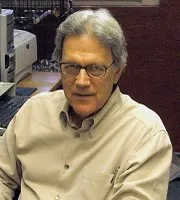
Mafi currently serves as the interim dean of the College of Arts & Sciences at the University of New Mexico, a position he’s held since 2021. He joined the UNM faculty as an associate professor in 2014.

Each candidate will be announced approximately two business days before their scheduled campus visit. Public presentations for each of the candidates will take place in the Beren Petroleum Conference Center in Slawson Hall on the following dates:

1. Alfred J. López: 2-3 p.m. Monday, Oct. 17
2. Arash Mafi: 2-3 p.m. Wednesday, Oct. 19
3. Candidate 3: 2:30-3:30 p.m. Tuesday, Oct. 25
4. Candidate 4: 2-3 p.m. Friday, Oct. 28

Faculty, staff and students are encouraged to offer their impressions and observations of each candidate online through a limited-time feedback survey. Feedback on Mafi’s presentation is due by 5 p.m. Monday, Oct. 24. A recording of his presentation will be available the morning after the presentation on the search website until the survey closes.

Each candidate will meet with Chancellor Douglas A. Girod, Provost and Executive Vice Chancellor Barbara A. Bichelmeyer, senior administrators, College chairs and directors, deans, KU Endowment, the KU Alumni Association, university governance, graduate and undergraduate students and the College dean’s office executive committee and administrative staff.

As interim dean of the College of Arts & Sciences at the University of New Mexico, Mafi oversees 24 academic departments and schools, 460 faculty and 300 staff members. UNM has one of the most diverse student bodies of any flagship university in the nation and is one of only a handful of R1 Hispanic-serving institutions. He previously served for five years as the director of the Center for High Technology Materials (CHTM), an internationally renowned interdisciplinary research center at UNM. Mafi also served one year as the chair for Optical Science and Engineering at UNM.

Mafi earned a bachelor’s in physics from Sharif University of Technology in Tehran, Iran, a master’s in physics and a doctorate in theoretical particle physics from The Ohio State University, followed by postdoctoral fellowships in particle physics and photonics. He worked as a senior research scientist for four years at Corning, primarily focusing on optical communications, before returning to academia as an associate professor at the University of Wisconsin-Milwaukee.

He joined UNM in 2014, where he is currently a full professor of physics and astronomy in addition to serving as interim dean.

Mafi is a fellow of the International Society for Optics and Photonics and the Optical Society. Additionally, he is a senior member of the Institute of Electrical and Electronics Engineers (IEEE). His research has resulted in high-impact publications in several disciplines.

About the KU College of Liberal Arts & Sciences

The approximately 11,000 undergraduates, 1,700 graduate students, 700 faculty and 375 staff who comprise the KU CLAS share a commitment to excellence. The College provides students with a broad foundation of arts, liberal arts and sciences concepts that will expand what they know and provide new ways of thinking about challenges.

The College is home to more than 50 departments, programs and centers, as well as the School of the Arts and School of Public Affairs & Administration. Those departments, programs and centers offer more than 150 majors, minors and certificates, which prepare students with fundamental skills and knowledge that will serve them in any career.

-30-

————————————————————————

KU News Service
1450 Jayhawk Blvd.
Lawrence KS 66045
Phone: 785-864-3256
Fax: 785-864-3339
[email protected]
http://www.news.ku.edu

Erinn Barcomb-Peterson, director of news and media relations, [email protected]

Today’s News is a free service from the Office of Public Affairs