

Friday, March 27, 2026
Home Blog Page 942

KU News: Minority, immigrant populations faced misinformation, hostility when seeking COVID-19 information, study finds

0

From the Office of Public Affairs | http://www.news.ku.edu

Headlines

Study: Minority, immigrant populations faced misinformation, hostility when seeking COVID-19 information
LAWRENCE — When the COVID-19 pandemic swept the globe, many people turned to online sources to find health information. A new study found that racial and ethnic minority populations in the United States encountered not only misinformation online, but also unique factors such as harassment, hostility and racial animus.

Rocket Grants return, award $60K to 10 regional art projects
LAWRENCE — The 2022 Rocket Grants have awarded a total of $60,000 for 10 artist projects in the Lawrence and Kansas City area. Collectively these projects will uplift narratives of the LGBTQ+ community, trans women of color, Black histories and Indigenous voices, including a public mural by Lawrence-based artist Mona Cliff.

Karla Leeper named vice chancellor for strategic communications and public affairs
LAWRENCE — In this role, Leeper will serve as a senior advisor to Chancellor Douglas A. Girod and the university’s leadership team on issues of communications and public affairs. She will oversee all messaging to advance KU’s interests at the local, state and national levels, and she will have responsibility for marketing, branding, internal and external communications and message integration across all KU campuses, affiliates and partners.

Neighborhood provides new understanding of 17th-century Dutch art
LAWRENCE — The importance of knowing what’s going on in your neighborhood and upholding its honor is at least as old as comparable societal expectations in 17th-century Netherlands, according to a new book by a University of Kansas art historian. Numerous Dutch paintings of an array of subjects — scenes of streets, domesticity, professions and festivity — conveyed and reinforced those values to contemporary viewers.

Full stories below.

————————————————————————

Contact: Mike Krings, 785-864-8860, [email protected]
Study: Minority, immigrant populations faced misinformation, hostility when seeking COVID-19 information
LAWRENCE — When the COVID-19 pandemic swept the globe, many people turned to online sources to find health information. That was also largely the case for racial and ethnic minority populations in the United States, and a new study from the University of Kansas found they faced many of the same challenges such as encountering misinformation online, but also unique factors such as harassment, hostility and racial animus. They also relied on media from the United States and their home countries, as well as social media for information, but were hesitant to push back against misinformation.

Mass communications researchers at KU conducted in-depth interviews in early 2021 with 49 racial/ethnic minority individuals in the Midwest who migrated to the United States since 2014 about their COVID-19 online information experiences. In addition to the findings about where and how they received information, the study also found younger and healthier people showed more resistance to being vaccinated. The findings can help scholars, digital media and health communicators develop more effective health messaging and minority communication, the researchers wrote.

The study was written by Annalise Baines, doctoral candidate in KU’s William Allen White School of Journalism & Mass Communications; Hyunjin Seo, professor of journalism & mass communications and director of KU’s Center for Digital Inclusion; Muhammad Ittefaq, of James Madison University and former KU doctoral student; Fatemeh Shayesteh, doctoral candidate in journalism at KU; Ursula Kamanga of the University of Nevada; and Yuchen Liu of Cleveland State University. The study was published in Convergence: The International Journal of Research into New Media Technologies.

The United States is home to more immigrants than any other country and was simultaneously hit hard by the pandemic. Those factors led researchers to examine how racial/ethnic minorities and immigrants navigated the pandemic and found information. Notably, most interviewees reported turning to online media from the U.S. and their country-of-origin to find information. While that information could prove helpful, it also provided an avenue for misinformation and harassment that was rampant on social media.

“We found that many of our interviewees rely on the news and social media, including Facebook and YouTube, to find health information during the pandemic. Noticeably, many participants use media sources from their country-of-origin as well as U.S. based sources. However, while these platforms allowed them to receive social support and find the necessary information about COVID-19 protections and other information, at times these networks created more stress and fear amongst the participants,” Baines said. “For instance, several interviewees described looking at and receiving hateful messages and racial slurs online, particularly among those immigrants from Asian countries. Unfortunately, these findings are not that surprising as people who migrated from Asian countries have faced xenophobia related to COVID-19 on social media since early 2020 when prominent individuals called it the ‘Chinese virus.’”

That added stress was illustrated by one interviewee, a 56-year-old woman who emigrated from South Korea.

‘I saw hateful comments toward Asian immigrants, some posts more specific to people from China, on Facebook calling them ‘spreaders of coronavirus’ while using F-words,” she said. “These experiences got me really stressed and nervous, so I didn’t want to visit even social media sites for a while.”

In addition to a hostile online environment, roughly two-thirds of participants also encountered misinformation, largely on social media such as Facebook and WhatsApp, and reported seeing it both coming from the U.S. and their countries of origin. However, they also largely reported treading carefully when deciding whether to correct or address the misinformation. They commonly wanted to consider cultural norms in both countries and expressed uncertainty in political beliefs of the person sharing the misinformation. But, when it was coming from family members or close friends, they were more likely to correct or push back against incorrect information.

Researchers also asked interviewees about their willingness to receive a COVID-19 vaccine. When asked in early 2021, as vaccines were beginning to become widely available to the public, about one-fifth said they would not get vaccinated, or at least “not for now.” The majority of those respondents were young and healthy, and they reported both a lower perceived risk or susceptibility to the virus and lower perceived benefit of a vaccine, as opposed to those who said they intended to get the shot.

Like their experiences in gathering information about the pandemic, respondents reported using both U.S. and country-of-origin media, as well as social media and information from friends and families, in making their vaccine decisions. Experience and information from friends and family most often influenced how much they trusted vaccines and their willingness to get them.

As racial/ethnic minorities and immigrants constitute a substantial part of the American population, better understanding how they obtain health information, especially during a pandemic and how that information affects vaccine willingness, can assist both researchers and those working in the health field, the research team wrote. For scholars, the study both provided new and needed empirical data on minority immigrants in terms of health beliefs and shed more light on the Health Belief Model, a theoretical framework commonly used in health research.

The findings can also help ensure accurate information is readily available for those seeking information on health-related topics such as the pandemic and how to address specific challenges such as harassment or reluctance to push back against misinformation.

“The findings from this study highlight the importance and urgency for media organizations, health care providers, policymakers and government entities to take measures to create better information environments related to COVID-19 on social media,” Baines said. “We found that two-thirds of our sample was exposed in some way to misinformation online. It is essential for relevant organizations to identify and eliminate misinformation online and provide an information hub tailored for specific populations so that any needs of underserved immigrant populations can be addressed.”

-30-
————————————————————————
The official university Twitter account has changed to @UnivOfKansas.
Refollow @KUNews for KU News Service stories, discoveries and experts.


————————————————————————

Contact: Elizabeth Kanost, 785-864-0142, [email protected]
Rocket Grants return, award $60K to 10 regional art projects
LAWRENCE — The 2022 Rocket Grants have awarded a total of $60,000 for 10 artist projects in the Lawrence and Kansas City area. Collectively these projects will uplift narratives of the LGBTQ+ community, trans women of color, Black histories and Indigenous voices, including a public mural by Lawrence-based artist Mona Cliff.

Rocket Grants, a partnership of Charlotte Street Foundation and the Spencer Museum of Art, support innovative, artist-driven projects outside of established arts venues through funding from the Andy Warhol Foundation for the Visual Arts. In 2020 and 2021, Rocket Grants shifted to Rocket Relief, providing emergency grants of $1,000 to artists in need during the COVID-19 pandemic. The 2022 award cycle marks a return to the program’s original intent.

This year’s awardees were selected from a competitive pool of 65 applications and will each receive $6,000. Recipients were selected by a panel of regional jurors — Brandon Alvendia, artist, curator and educator based in Chicago; Matthew Willie Garcia, artist and studio manager at the Lawrence Arts Center; Nneoma Ilogu, curator-in-residence at the Bemis Center, Omaha, Nebraska; and Cory Imig, artist and arts administrator based in Kansas City, Missouri.

A public awards ceremony for this year’s recipients will take place Sept. 15 at Charlotte Street Foundation in Kansas City. For more information about Rocket Grants and this year’s award recipients, visit www.rocketgrants.org.

A complete list of 2022 Rocket Grants recipients:

KC Rainbow Tour / Joel Barrett

This interactive driving tour shares stories from Kansas City’s LGBTQ+ history.

Indigenous Reclaiming Spaces / Mona Cliff

This continuation of Cliff’s “Natives NOW” project will bring visibility to the Native community in Lawrence with a public mural located near Haskell Indian Nations University.

Neighborhood Heroes / Devin Edwards

This collection of murals located in the East Side of Kansas City will depict “crusaders” who grew up in this area dressed as superheroes helping their community.

“Closure is Not Justice” / Andrew Johnson, Aja Edwin Mujinga, Bryan Sheppard

This multimedia installation invites the public to reflect on memories surrounding an explosion in 1988 that resulted in the death of six Kansas City firefighters and the conviction of five people for setting the fire that caused the explosion. Project member Bryan Sheppard, who was one of the five convicted, was released from prison in 2017. He, along with the other four defendants, have maintained their innocence.

Spoken Easy Slam Series / John Lewis

This series offers a fresh take on typical open mic nights, including poetry, musicians, comedians and visual artists. Events occur in outdoor, urban settings and invite stories from artists of all ages.

“I’m So Glad” / Nancy Meis, Paul Wenske, Isaac Cates, Chris Wenske

This documentary will explore the unique legacy of Black gospel music in Kansas City. Through previously unshared stories, photos and music, the film celebrates the heritage of Kansas City’s Black musicians, their impact on gospel music and their contributions on a national level.

“Only the Wounds and Weapons Have Changed” / Scott Myers, Jacqueline Gafford, Frances Farah

This original play about Black history features lesser-known figures who played key roles in the struggle for liberation. Significant scenes from the play will be staged at spaces in four Kansas City public libraries.

core. / Brittany Noriega

“Core.” is an artist-run, noncommercial art zine that highlights Kansas City creators. It showcases artists from all creative backgrounds and is free to the public at nine locations throughout Kansas City.

Snapping Back: A Trans Women of Color Sex Workers + Artist Empowerment Project / Kelly Nou, Fynelle Fristoe, Merrique Jenson, Nyla Foster, Tre’Shawn Seymour

This immersive project will combine dance, voguing, spoken word and short documentary narratives at a historic venue near Troost to highlight trans women of color.

ArtMoves / Regina Nouhan and Dwight Smith

This multimedia project of videos and podcasts highlights the vibrant pool of visual artists in Kansas City and the Midwest.

-30-
————————————————————————
Subscribe to KU Today, the campus newsletter,
for additional news about the University of Kansas.

http://www.news.ku.edu
————————————————————————

Contact: Joe Monaco, 785-864-7100, [email protected]
Karla Leeper named vice chancellor for strategic communications and public affairs
LAWRENCE — Karla Leeper, executive vice president for operations at Augusta University/Augusta University Health System in Georgia — and a KU alumna — will become the University of Kansas’ vice chancellor for strategic communications and public affairs, effective Nov. 1.

In this role, Leeper will serve as a senior advisor to Chancellor Douglas A. Girod and the university’s leadership team on issues of communications and public affairs. She will oversee all messaging to advance KU’s interests at the local, state and national levels, and she will have responsibility for marketing, branding, internal and external communications and message integration across all KU campuses, affiliates and partners.

“Karla’s extensive background in communications, public affairs and higher education administration, coupled with her experience as a full-time faculty member in communication studies, make her an ideal fit for this position,” Girod said. “I have no doubt she will immediately benefit our efforts to elevate KU’s status, attract top students and scholars, and improve in every aspect of our mission.”

In her current role with Augusta University/Augusta University Health System, Leeper oversees marketing and communications, facilities and human resources. Prior to that, from 2015-2018 she served as the institution’s executive vice president for strategic communication and chief marketing officer. Before joining Augusta University, she served as a tenured faculty member in communication studies, vice president for board and executive affairs and chief of staff to the president at Baylor University. She received her doctorate and master’s degrees from KU and her bachelor’s degree from the University of Iowa.

“I am thrilled to be coming back to serve the University of Kansas,” Leeper said. “It will be an honor to come to work every day with the mission of sharing the stories of the great work being done by our faculty, staff and students.”

Leeper succeeds David Cook, who served as vice chancellor until spring 2022, when he left KU to become the president of North Dakota State University.

-30-

————————————————————————
Don’t miss new episodes of “When Experts Attack!,”
a KU News Service podcast hosted by Kansas Public Radio.

https://kansaspublicradio.org/when-experts-attack
————————————————————————

Contact: Rick Hellman, 785-864-8852, [email protected]
Neighborhood provides new understanding of 17th-century Dutch art
LAWRENCE — The importance of knowing what’s going on in your neighborhood and upholding its honor is at least as old as comparable societal expectations in 17th-century Netherlands, according to a new book by a University of Kansas art historian. Numerous Dutch paintings of an array of subjects — scenes of streets, domesticity, professions and festivity — conveyed and reinforced those values to contemporary viewers.

That is Linda Stone-Ferrier’s conclusion after analyzing a range of 17th-century Dutch Golden Age paintings in a new context: that of the neighborhood. Her book, “The Little Street: The Neighborhood in Seventeenth-Century Dutch Art and Culture,” is just out from Yale University Press after a 14-year process of research, writing and editing.

A professor of 17th-century Dutch and Flemish art in KU’s Kress Foundation Department of Art History, Stone-Ferrier realized she would begin research for a book like “The Little Street” when, by chance, she read an article about 17th-century Netherlandish neighborhoods by the sociologist Herman Roodenburg.

“I knew no art historian had ever talked about the neighborhood, which Roodenburg made very clear was a significant organizing unit for social control and social exchange,” Stone-Ferrier said. “No art historians of Dutch art had ever addressed the neighborhood as an interpretive context for the study of Dutch paintings.”

In the book’s introduction, she wrote that studies by art historians tend to silo works by subject matter, like landscapes or scenes of daily life, “presum(ing) that each category raises interpre¬tive issues distinct from the others. In a revision of that par¬adigm, I argue that certain seemingly diverse subjects share the neighborhood as a meaningful context for analysis.”

In addition, Stone-Ferrier wrote, her book challenges scholars’ assumptions that categorize “imagery in paintings within a binary construct of ‘private,’ understood as the female domestic sphere, versus ‘public,’ synonymous with the male domain of the city …”

The neighborhood was a “liminal space” between home and city that encompassed people of every gender, religion, social class, nationality and political persuasion, she wrote. In fact, Dutch citizens of the 1600s were required to officially belong to and participate in their neighborhood organizations – much like today’s homes associations – which collected membership dues, enforced neighborhood rules, and hosted mandatory meetings and annual group meals. Thanks to some exquisite recordkeeping from centuries ago and today’s digital resources, Stone-Ferrier was able to research, among other things, relevant subjects of paintings and the identity and professions of Dutch citizenry who owned them that informed her research. Art collecting was important, Stone-Ferrier said, to a broad and deep urban middle class whose wealth was generated by such trading enterprises as the Dutch East and West India companies.

And it’s clear, from an analysis of that art and an array of documents, that what was going on down the street and around the corner was important to Dutch people of that time – just as it is to people in neighborhoods around the world today.

“Honor is the word the Dutch used in in their neighborhood regulations and in other contexts, too,” Stone-Ferrier said. “Honor had to do with how one behaved. To act honorably in all endeavors — personally, at home, in your business — was valued highly. An individual’s honor or dishonor reflected on that of the whole neighborhood. That was an integral tie. That’s why there was gossip and documented witness statements regarding the behavior of one’s neighbors.”

One chapter is subtitled “Glimpses, Glances, and Gossip” because — like today — not only are people curious about what the neighbor across the street is doing in his driveway, or what is going on with those Rottweilers around the corner, but they want to make sure people are not misbehaving or breaking communal rules.

Paintings showing scenes of people upholding neighborhood virtues both reflected and reinforced those values, Stone-Ferrier wrote.

-30-

————————————————————————

KU News Service
1450 Jayhawk Blvd.
Lawrence KS 66045
Phone: 785-864-3256
Fax: 785-864-3339
[email protected]
http://www.news.ku.edu

Erinn Barcomb-Peterson, director of news and media relations, [email protected]

Today’s News is a free service from the Office of Public Affairs

KU News: Study suggests COVID face masks don’t impair most social interaction

0
From the Office of Public Affairs | http://www.news.ku.edu
Headlines
Study suggests COVID face masks don’t impair most social interaction
LAWRENCE — A new study just published in Journal of Applied Social Psychology debunks the idea that wearing a mask to slow the spread of disease damages most everyday social exchanges. Reporting results from an experiment with 250 university students carried out in 2012 — before masks became fodder for political and cultural angst — psychology researchers based at the University of Kansas and Wellesley College found mask wearing “had no effect on the ease, authenticity, friendliness of the conversation, mood, discomfort or interestingness” of interactions between students.
Fall 2022 KU Architecture Lecture Series lineup announced
LAWRENCE — The School of Architecture & Design at the University of Kansas has announced programming for the Fall 2022 Architecture Lecture Series, welcoming architectural and experiential design leaders from across the country to illuminate new ideas and inspire purpose-driven design practices. The series begins Sept. 9 with a presentation by Kapila Silva, KU professor of architecture.
Study finds common creativity assessment in education may not be completely valid
LAWRENCE — A new study from a University of Kansas educational psychology researcher has found that one of the most common methods used in studying creativity may be reliable, but it varies widely in how it is used, depends on subjective judgments and may not be completely valid.
Educate & Act Series will offer opportunities to learn about civic participation
LAWRENCE — The Educate & Act series, led by The Commons and partners at the University of Kansas, will host three virtual events this fall for students, staff and faculty. The first event will take place Sept. 8 and will offer insights about the upcoming general election Nov. 8. Speakers will include Marcus Winn, director of integrated voter engagement at MORE2, and Ursula Minor, president of the Lawrence NAACP.
Full stories below.
————————————————————————
Contact: Brendan Lynch, KU News Service, 785-864-8855, [email protected], @BrendanMLynch
Study suggests COVID face masks don’t impair most social interaction
LAWRENCE — A new study just published in Journal of Applied Social Psychology debunks the idea that wearing a mask to slow the spread of disease damages most everyday social exchanges.
Reporting results from an experiment with 250 university students carried out in 2012 — before masks became fodder for political and cultural angst — psychology researchers based at the University of Kansas and Wellesley College found mask wearing “had no effect on the ease, authenticity, friendliness of the conversation, mood, discomfort or interestingness” of interactions between students.
Each student was instructed to chat with another participant who seemed like themselves, though the pair had to share the same gender and mask condition. Participants chatted with their partner for two minutes about their favorite vegetables, whether Pluto is a planet or the number of credits needed for their major. Afterward, they reported on their interactions via questionnaire.
“Actually, we were disappointed at the time because covering the face did almost nothing,” said lead author Chris Crandall, professor of psychology at KU. “It just really didn’t change it much. It didn’t make conversations awkward. People didn’t think it was weird. They didn’t make the conversations unfriendly. And they still found people to meet. There’s a little slippage of how similar the other person was to them, but it was very modest. This was in 2012, and we set aside the data because we did this big interaction and we got nothing. Now, many years later we discover, ‘Oh, it’s really quite meaningful.’ People have the skills to look past things that block the face — a mask, a hat, sunglasses and so on. We’re still able to get through to people.”
When choosing a discussion partner who seemed similar to themselves, masked participants only reported a significantly different experience from their unmasked counterparts in relying on the “look of their face and head” when picking. In important other measures, like “their friendliness,” or “seemed similar to me,” the masked vs. unmasked state made little difference, researchers found.
Previously, the team had run a similar student experiment, but instead of obscuring faces, half of the participants’ torsos were hidden with black plastic bags — a hindrance that skewed normal social interactions much more than the experiment with the masks, hats and shades.
“I was surprised by the results,” said co-author Angela Bahns, associate professor of psychology at Wellesley College. “We assigned people to wear masks or not because we thought masks would have an effect on who people interacted with and how the conversation went. Wearing the mask had almost no effects at all, except that people recognized they were wearing one. I think the biggest lesson to be learned from our study is that there is nothing inherent about wearing a mask that interferes with everyday social interactions. People — mostly grown-ups — have made mask wearing controversial in the era of COVID, politicizing the use of face masks so that the choice to wear one or not carries excess social meaning.”
In 2012, mask wearing hadn’t yet become a hot-button political issue, but the researchers did gather survey data on participants’ political leanings, among many other traits. At the time, a student’s stance along the conservative-liberal divide had no relationship with their attitude toward wearing a mask. “Wearing a mask, a hat and sunglasses did not impede liberals or conservatives,” the team reported. Omri Gillath, professor of psychology at KU, also served as a co-author.
“The research we did in 2012 can’t be done today,” Crandall said. “There’s just no way to do it, because when you say, ‘Put on a mask,’ people say, ‘Well, OK, you liberal Fauci follower, you’re a sheep for putting on the mask.’ Masks are suffused with meaning — political, social, health — in a way they weren’t then. Today, putting on a mask is a loss of liberty, so you might expect Republicans or conservatives could be more sensitive to losses of liberty and freedom — here, it was ‘deep-state’ professors trying to control their actions. You might think that conservatives, when assigned to the mask experiment, might be more resentful or more upset. We found nothing at all like that. So, I don’t think putting on mask is a fundamental loss of freedom, except in the context of being told by Big Government to put on the mask for the purposes of safety to self and others.”
Stripped of today’s political and social significance, wearing masks didn’t interrupt social interaction for people of any political stripe in 2012. Indeed, the authors conclude, “The data have direct public health and policy implications — wearing masks does not end normalcy.”
“What do masks really do to social interactions? Well, at least for the everyday kind of interactions, you know, talking to somebody at the checkout counter, the grocery store, at the gas station or walking around — everyday kind of stuff with stranger interactions — masks just don’t really do much at all in our setting,” Crandall said. “The question is, ‘What does masking up do?’ Aside from the underlying political effects, the answer seems to be not very much. Look, if you put on a mask and you go out on a first date, that’s going to be more troublesome. But for most of the everyday interactions, which I think our experiment models, where you go talk to somebody about something not so important, we find masking isn’t anywhere near as disruptive as some people think — and that’s really the good news.”
-30-
————————————————————————
The official university Twitter account has changed to @UnivOfKansas.
Refollow @KUNews for KU News Service stories, discoveries and experts.
http://www.twitter.com/kunews
————————————————————————
Contact: Dan Rolf, School of Architecture & Design, 785-864-3027, [email protected], @ArcD_KU
Fall 2022 KU Architecture Lecture Series lineup announced
LAWRENCE — The School of Architecture & Design at the University of Kansas has announced programming for the Fall 2022 Architecture Lecture Series.
The Architecture Lecture Series welcomes architectural and experiential design leaders from across the country to the University of Kansas to illuminate new ideas and inspire purpose-driven design practice. Lecturers bring a wide range of expertise in areas such as sustainable building, digital environments, public interest design, historic preservation, health and wellness design, and more.
Fall 2022 lectures will be offered in-person in the Forum at Marvin Hall and livestreamed. Lectures will begin at 11:30 a.m., except where noted.* See events site for streaming information.
Sept. 9
Kapila Silva: “Cities as Cultural Landscapes”
Kapila Silva is a professor of architecture at the KU School of Architecture & Design. His research focuses on the social, cultural and psychological aspects of architecture, urbanism and historic preservation. In geo-cultural scope, his work focuses specifically on non-Western traditions within the Asian context. In addition, he studies vernacular environments in the region, developing a theoretical framework to study those environments and deriving lessons for contemporary architectural situations, such as community design and post-disaster resettlement housing.
Sept. 29 at 3:30 p.m.*
Dianne Lee: “Leveraging Stereotypes to your Advantage”
Dianne Lee is a construction management professional, author and advocate for empowering individuals regardless of gender, age, race or status. During this series event, she will discuss her book “Leveraging Stereotypes to your Advantage,” in which she shares her personal story as an Asian immigrant in a highly male-dominated industry. This event is co-sponsored by the KU architecture & design school and the following KU organizations: Center for East Asian Studies; Emily Taylor Center for Women & Gender Equity; the Office of Diversity, Equity, Inclusion & Belonging; and School of Engineering.
Oct. 21
Jeffrey Huber of Brooks + Scarpa
Jeffrey Huber, FAIA, is a principal at Brooks + Scarpa, where he manages the firm’s south Florida office. Brooks + Scarpa is a multidisciplinary practice that includes architecture, landscape architecture, planning, environmental design, materials research, graphic, furniture and interior design services that produces innovative, sustainable iconic buildings and urban environments. A distinguished architect and landscape architect, Huber specializes in public realm projects that combine ecological, landscape, urban and architectural design. Huber’s research, teaching and professional work have garnered more than 75 national design awards, including multiple Progressive Architecture Awards, AIA National Institute Honor Awards in Architecture and Regional and Urban Design, American Society of Landscape Architects, American Architecture Awards and the American Collegiate Schools of Architecture.
Nov. 11
Grant Gibson and Sean Lally: “Drawing & Representation Techniques in Architecture”
Grant Gibson is principal at CAMESgibson Inc., a clinical assistant professor at the University of Illinois-Chicago and author. His work has been widely exhibited and recognized, especially in his home city of Chicago. In 2014, he was awarded an Emerging Vision Prize by the Chicago Architecture Club. Two projects by CAMESgibson have received Citations of Merit by AIA Chicago, and another was nominated for a Mies Crown Hall Americas Prize for Emerging Practices. Gibson is the author of “A Performed Memoir,” published and exhibited by the Graham Foundation in Jimenez Lai’s Treatise Series. He has taught undergraduate and graduate design and building technology courses since 2006.
Sean Lally is principal at Sean Lally Architecture, associate professor at the University of Illinois-Chicago and an author. Sean Lally Architecture is dedicated to engaging today’s greatest pressures — a changing climate and advances in health care and consumer devices that are redefining the human bodies that occupy our environments. Lally is the author of the “The Air from Other Planets: A Brief History of Architecture to Come” (Lars Müller). Lally is the recipient of the Young Architects Award from the Architectural League of New York and the Prince Charitable Trusts Rome Prize in landscape architecture from the American Academy in Rome.
-30-
————————————————————————
Subscribe to KU Today, the campus newsletter,
for additional news about the University of Kansas.
http://www.news.ku.edu
————————————————————————
Contact: Mike Krings, KU News Service, 785-864-8860, [email protected], @MikeKrings
Study finds common creativity assessment in education may not be completely valid
LAWRENCE — Creativity is increasingly viewed as an essential part of education and vital for the future of a competitive nation. Yet not a lot is known about what makes a person creative, or how to identify and teach those traits. A new study from the University of Kansas has found that one of the most common methods used in studying creativity may be reliable, but it varies widely in how it is used, depends on subjective judgments and may not be completely valid.
Subjective creativity assessment is one of the most popular methods in creativity research. In essence, the approach depends on judges who study a work or topic, then provide a rating on whether it meets creativity criteria. Haiying Long, associate professor of educational psychology at KU, led research that analyzed 84 studies using the approach, also known as Consensual Assessment Technique, and found their approaches vary widely and do not necessarily prove its validity. That should warrant caution in depending on the approach or attempting to translate it to use in schools, she said.
Long compared the approach to voting for the Academy Awards, in which voters watch a film, then provide a rating. The CAT, introduced in 1982 and widely used since, is similar.
“I feel like there are a lot of things about this approach that are not consistent with what I learned about educational measurement. We don’t often use subjectivity to measure in education,” Long said. “A popular assessment that’s been used for 40 years without much evaluation or consideration for validity seems like it could be dangerous to me.”
Long’s study, co-written with Jue Wang of the University of Miami, was published in the journal Educational Psychology Review. The researchers analyzed the studies, finding that most focused on the reliability and consistency of judges. While some were rated as experts and some as quasi-experts in their fields, the studies mostly focused on the consistency of the judges’ ratings. The analysis showed the judges were reliably consistent about 70% of the time. But that reliability cannot be assumed to mean the assessment is valid.
“What I found was the 84 studies are very different in their fields,” Long said. “Some were in writing or the arts, or in science. Some are for elementary, some for college. And the raters are very different, too, in their characteristics, like how long they’ve worked in the field, their interests and their motivations.”
The creativity studies also rarely divulged whether judges gave a high score to a work they observed because they liked it, because they thought it truly met the criteria of creativity or both. That wide-ranging subjectivity and lacking consistency in approach means caution should be used in pronouncing subjective creativity assessments completely valid, according to the researchers.
The CAT is one of three dominant approaches in creativity research, along with creative and divergent thinking tests and questionnaires used to assess different aspects of creativity, such as creative activity and creative self-beliefs. Consensual Assessment Technique is the only one that relies on subjective judgments to rate creativity of a product or work.
Long and Wang wrote that the goal is not to discredit CAT or discourage its use, but to encourage further study and better understanding of the assessment and how it is used. That could lead not only to enhancing creativity research and understanding its role in education, but in helping develop curriculum and methods for educators to teach creativity and identify it in students. Currently, students are identified as creative most of the time by teachers who judge them as such or as having the potential to be creative, based on classroom observations.
“When we use this approach, we need to be aware of its weaknesses and use other approaches as well,” Long said. “At the same time, we need to study this approach more and get a better idea of how it works to better understand how it can be applied for classroom use.”
To the classroom use point, Long — who has previously published research on the pros and cons of the most popular classroom creativity assessments in education — hopes to continue research into developing creativity models to study students holistically, focusing on their strengths. That could help translate creativity research into tools educators can use to identify where a student’s creative potential is strongest, and build from that, while also providing support in areas that may be lacking.
“I want to do that in a modern way, with the best available technology. I don’t want teachers to feel like this is one more thing they have to do,” Long said. “Every student can be creative, but we need to support them. The tests shouldn’t be to see who’s creative and who’s not, but what each individual’s strengths are and how best to support them.”
-30-
————————————————————————
Don’t miss new episodes of “When Experts Attack!,”
a KU News Service podcast hosted by Kansas Public Radio.
https://kansaspublicradio.org/when-experts-attack
————————————————————————
Contact: Emily Ryan, The Commons, 785-864-6293, [email protected], @TheCommonsKU
Educate & Act Series will offer opportunities to learn about civic participation
LAWRENCE — The Educate & Act series, led by The Commons, the Center for Service Learning and the Emily Taylor Center for Women & Gender Equity at the University of Kansas, will host three virtual events this fall for students, staff and faculty.
Now in its third year, this series offers opportunities to learn more about individual issues and general engagement in democracy in the United States, offering information and sharing resources about civic participation.
The first session, scheduled for noon Sept. 8, will be led by the Center for Service Learning. It will offer insights about the upcoming general election on Nov. 8, including ways in which the process has changed, what offices and issues are on the ballot, and the effects of the recent redistricting. Speakers for the event:
1. Marcus Winn, director of integrated voter engagement at MORE2.
2. Lindsay Ford, associate director of the Voter Network.
3. Paul Buskirk, senior associate athletics director for student athlete support services at KU Athletics.
4. Ursula Minor, president of the Lawrence NAACP.
5. Donnavan Dillon, undergraduate student at KU and student power campaign fellow at Loud Light.
The session will be moderated by Kate Kemper, associate director for student and civic engagement at the Center for Service Learning.
A second session will take place at noon Oct. 6 and center on the Indian Child Welfare Act, which is at the center of recent cases scheduled for a Supreme Court hearing in November.
The final session of the semester will take place at noon Nov. 3, focusing on reproductive justice advocacy. To complement this virtual event, Students United for Reproductive & Gender Equity will host an in-person watch party.
Register for the events at https://bit.ly/ElectionsEA.
-30-
————————————————————————
KU News Service
1450 Jayhawk Blvd.
Lawrence KS 66045
Phone: 785-864-3256
Fax: 785-864-3339
http://www.news.ku.edu
Erinn Barcomb-Peterson, director of news and media relations, [email protected]
Today’s News is a free service from the Office of Public Affairs

KU News: New Kansas Statistical Abstract features timely, relevant information for Kansans

0

From the Office of Public Affairs | http://www.news.ku.edu

Headlines

New Kansas Statistical Abstract features timely, relevant information for Kansans
LAWRENCE — The newest edition of the Kansas Statistical Abstract is now available on the Institute for Policy & Social Research website. This rich resource contains information on the Sunflower State on a variety of topics ranging from agriculture to transportation. Ahead of the November 2022 elections, this edition includes maps of the new U.S. congressional districts as well as Kansas Senate, House and State Board of Education districts. The KSA also publishes information about government and political engagement.

Music dean to leave role at close of fall semester
LAWRENCE — Robert Walzel, dean of the University of Kansas School of Music, has announced plans to step away from his leadership position at the end of the fall 2022 semester. This change will allow him to focus on family matters that have become a priority. Barbara A. Bichelmeyer, provost and executive vice chancellor, shared gratitude for the work Walzel has undertaken over the past 12 years.

Full stories below.

————————————————————————

Contact: Carrie Caine, Institute for Policy & Social Research, 785-864-9102, [email protected]
New Kansas Statistical Abstract features timely, relevant information for Kansans

LAWRENCE — The newest edition of the Kansas Statistical Abstract is now available on the Institute for Policy & Social Research website. This rich resource contains information on the Sunflower State on a variety of topics ranging from agriculture to transportation.
“Communities can be overwhelmed with data from federal, state and private sources. Often it is difficult to locate reliable data needed for grant applications and local decision-making. The KSA aims to relieve this burden by offering a comprehensive data resource for Kansas communities,” said Xan Wedel, senior research data engineer at IPSR.
Ahead of the November 2022 elections, this edition includes maps of the new U.S. congressional districts as well as Kansas Senate, House and State Board of Education districts. The KSA also publishes information about government and political engagement, including a map of voter participation rates in the U.S. by state in November 2020. One table shows voter registration and party affiliation by county in Kansas as of Nov. 1, 2021.
“The Kansas Statistical Abstract is a valuable resource for observing trends in Kansas agriculture, government and economic growth,” said Donna Ginther, director of IPSR. “I share the abstract with thought leaders to inform their understanding of the state.”
The KSA includes several maps and tables that describe the population landscape in Kansas. A map displaying population of Kansas by region shows how East Central Kansas, which includes Johnson County, has grown 0.26% over the last year, while all other regions of Kansas have lost population. This map also shows that nearly 2 in 3 Kansans live in the eastern third of the state. A map showing population density in Kansas by county adds more detail: Johnson and Wyandotte counties hold more than 1,000 people per square mile, while Greeley and Wallace counties in western Kansas contain fewer than 2 people per square mile.

“The 2020 Census showed dramatic changes in the Kansas population. The KSA reports Census data at the local level to show how Kansas population has shifted and changed over time,” Ginther said. One map shows how population within each Kansas county changed from 2020 to 2021.
The Kansas Statistical Abstract includes data in 16 categories published over 17 chapters: Sunflower State Summary; Agriculture; Banking and Finance; Business, Industry, and Exports; Climate; Communications and Information; Courts, Crime, and Public Safety; Education; Employment and Earnings; Energy and Natural Resources; Government; Housing and Construction; Income; Parks and Recreation; Population; Transportation; and Vital Statistics and Health.
Published fully online and at no cost for users, the KSA contains the latest available state, county and local data for Kansas on topics ranging from education to business and manufacturing. Users can access the document as a single PDF or download tables, maps and graphs as separate files.
-30-
————————————————————————
The official university Twitter account has changed to @UnivOfKansas.
Refollow @KUNews for KU News Service stories, discoveries and experts.


————————————————————————

Contact: Jill Hummels, Office of the Provost, 785-864-6577, [email protected], @KUProvost
Music dean to leave role at close of fall semester
LAWRENCE — Robert Walzel, dean of the University of Kansas School of Music, has announced plans to step away from his leadership position at the end of the fall 2022 semester. This change will allow him to focus on family matters that have become a priority.
Barbara A. Bichelmeyer, provost and executive vice chancellor, shared gratitude for the work Walzel has undertaken over the past 12 years.
“Bob has made numerous contributions to the University of Kansas as well as to the students, faculty and staff within the School of Music,” Bichelmeyer said. “I wish him and his family all the best.”
Walzel will remain with KU and will conduct research during the spring 2023 semester.
Walzel was selected as dean of the school in 2010. Since that time, the school has increased the amount of student scholarship awards, which now exceed $1 million. Student musicians have performed at world-renowned venues including Carnegie Hall, the Kennedy Center and Jazz at Lincoln Center. The KU Orchestra, Opera, Jazz Ensemble and Chamber Choir have all performed internationally, with the KU Wind Ensemble scheduled to perform later this semester in Italy. Membership in the Marching Jayhawks has risen to 330 students this fall. Walzel also oversaw the $2.1 million renovation of Swarthout Recital Hall in 2015.
“I appreciate the timing of this decision as it also provides continuity as we work to determine the path forward for the School of Music,” Bichelmeyer said. An announcement later this semester will provide details on interim leadership for the School of Music during the spring semester and plans to fill the dean position.

-30-
————————————————————————

KU News Service
1450 Jayhawk Blvd.
Lawrence KS 66045
Phone: 785-864-3256
Fax: 785-864-3339
[email protected]
http://www.news.ku.edu

Erinn Barcomb-Peterson, director of news and media relations, [email protected]

Today’s News is a free service from the Office of Public Affairs

KU News: New research effort will clarify aging differences in males and females of many species

0
From the Office of Public Affairs | http://www.news.ku.edu
Headlines
New research effort will clarify aging differences in males and females of many species
LAWRENCE — Researchers from the University of Kansas will join a multi-institution effort to better grasp mechanisms and evolutionary history of sex differences in aging across an array of animal species. The research project, organized as the IISAGE Biology Integration Institute, is funded by a five-year, $12.5 million award from the National Science Foundation, of which about $1 million will come to KU. KU’s primary role in the project will be to contribute data from Lepidoptera (moths and butterflies).
Addiction research center series features experts in substance use and treatment, eating behaviors and LGBTQ+ health disparities
LAWRENCE – The Cofrin Logan Center for Addiction Research & Treatment at the University of Kansas will launch its fall seminar series this week with a talk presented by a University of Kentucky scientist who studies cocaine use disorder. William Stoops will present at 11:30 a.m. Sept. 16 in the Dole Human Development Center, room 1031. The event will also be livestreamed via YouTube; details will be shared on the center’s website.
Full stories below.
————————————————————————
Contact: Brendan Lynch, KU News Service, 785-864-8855, [email protected], @BrendanMLynch
New research effort will clarify aging differences in males and females of many species
LAWRENCE — Researchers from the University of Kansas will join a multi-institution effort to better grasp mechanisms and evolutionary history of sex differences in aging across an array of animal species.
The research project, organized as the IISAGE Biology Integration Institute, is funded by a five-year, $12.5 million award from the National Science Foundation (of which about $1 million will come to KU).
“This project has its genesis in the observation that the average lifespan of males and females is often strikingly different, but the extent and direction of these differences varies widely among animal species,” said Jamie Walters, associate professor of ecology & evolutionary biology, who is leading the KU portion of the grant work.
“In some species, like humans and many other mammals, females live longer than males,” Walters said. “However, in many other species, like some bats, some birds and many insects, the opposite pattern is found. There are many hypothesized explanations for why such differences in aging exist, but which ones are the most common or prominent has not been resolved. This is why our IISAGE integration institute is such an exciting project – we’ll be collecting comparable data from many different animal species with the aim of finding the common mechanisms underlying sex-differences in aging.”
The KU researcher said the consortium includes experts in mice, fish, lizards, turtles, flies and moths, “as well researchers with expertise in computational biology and machine learning — statistics — who will help weave together the data collected from diverse animals into an integrated inference.”
Beyond a better scientific understanding of sex differences in aging, the project could lead to medical advances and inform society as it deals with the challenges of climate change in coming years.
“Understanding the common principles and mechanisms in sex-specific aging has notable implications not only for human health, but also for how organisms will be impacted by changing climate, including animal agriculture and the conservation of biodiversity,” Walters said.
Walters’ lab at KU integrates advanced genomic methodologies with basic organismal biology to better comprehend evolutionary processes at the molecular level. His primary role in the IISAGE Biology Integration Institute project will be to contribute data from Lepidoptera (moths and butterflies).
“This work dovetails with my long-standing interest in studying sex chromosomes, which are the foundation of one major hypothesis explaining sex differences in aging,” he said. “In many animals, it is the males who carry ‘different’ sex chromosomes — the X and Y. And often it’s also the males that age faster, suggesting there is something important about having a Y chromosome, or at least having ‘different’ sex chromosomes, that determines longevity. However, moths and butterflies have ‘reversed’ sex chromosomes, with females having ‘different’ sex chromosomes and carrying the Y. Notably, it seems often female Lepidoptera are shorter lived. But in any case, including Lepidoptera in the study allows us to separate having a Y chromosome from being male, thus separating the impact of sex chromosomes on aging from the impact of being male or female.”
The IISAGE collaboration is led by Nicole Riddle, associate professor of biology at the University of Alabama at Birmingham. She said the results of the investigation someday could benefit human health.
“There are significant variations that we see in nature with regards to lifespan and sex differences in aging,” Riddle said. “It has long been a puzzle why in some animal species the females live longer and in others, males outlive their counterparts. We don’t know why this is, and our findings will help us better understand these diverse patterns of aging, and how those could potentially be manipulated to our benefit. This understanding can impact our food supply, how we adapt to rising temperatures or even how to defy the frailty that accompanies older age altogether.”
In addition to KU and UAB, researchers involved in the IISAGE Biology Integration Institute come from sites including Michigan State University, Cornell University, Marquette University, Brown University, the University of Houston and the University of Maryland.
The new institute also will include a Research Experiences for Undergraduates program, a traveling museum exhibition and a citizen-science project tailored for K-12 school students in after-school programs.
-30-
————————————————————————
The official university Twitter account has changed to @UnivOfKansas.
Refollow @KUNews for KU News Service stories, discoveries and experts.
http://www.twitter.com/kunews
————————————————————————
Contact: Jen Humphrey, Life Span Institute, 785-864-6621, [email protected], @kulifespan
Addiction research center series features experts in substance use and treatment, eating behaviors and LGBTQ+ health disparities
LAWRENCE – The Cofrin Logan Center for Addiction Research & Treatment at the University of Kansas will launch its fall seminar series this week with a talk presented by a University of Kentucky scientist who studies cocaine use disorder.
William Stoops, professor of behavioral science, psychiatry and psychology at the University of Kentucky, will present at 11:30 a.m. Sept. 16 in the Dole Human Development Center, room 1031. The event will also be livestreamed via YouTube; details will be shared on the center’s website.
Stoops will describe research that has evaluated some non-abstinence outcomes for treating cocaine use disorder that may serve as novel targets and be used to identify and advance treatments.
Additional speakers in the series:
1. Ashley Gearhardt, 11:30 a.m. Oct. 21 in 1031 Dole. Gearhardt, associate professor of psychology at the University of Michigan, studies how certain foods may be capable of triggering an addictive process and what activates reward systems to driving eating behavior.
2. Annesa Flentje, 11:30 a.m. Nov. 4 in 1031 Dole. Flentje is an associate professor at the University of California-San Francisco School of Nursing and studies health and health disparities among sexual and gender minorities.
“Through our seminar series, we highlight pressing issues in addictions research and treatment and educate the public about addictions science in an effort to increase knowledge and reduce stigma,” said Michael Amlung, associate director for training at the center and associate professor in the KU Department of Applied Behavioral Science. “The series is a key component of the educational and outreach missions of the Cofrin Logan Center.”
Based at the KU Life Span Institute, the Cofrin Logan Center brings together researchers, practitioners, KU students and community partners to address challenges in addiction. Researchers affiliated with the center explore a wide range of behavioral health challenges, while clinical staff members of the center deliver direct addiction treatment and therapy services to individuals in the community, as well as arts-based therapy programs.
-30-
————————————————————————
KU News Service
1450 Jayhawk Blvd.
Lawrence KS 66045
Phone: 785-864-3256
Fax: 785-864-3339
http://www.news.ku.edu
Erinn Barcomb-Peterson, director of news and media relations, [email protected]
Today’s News is a free service from the Office of Public Affairs
Talking Trapping at the Fair

0
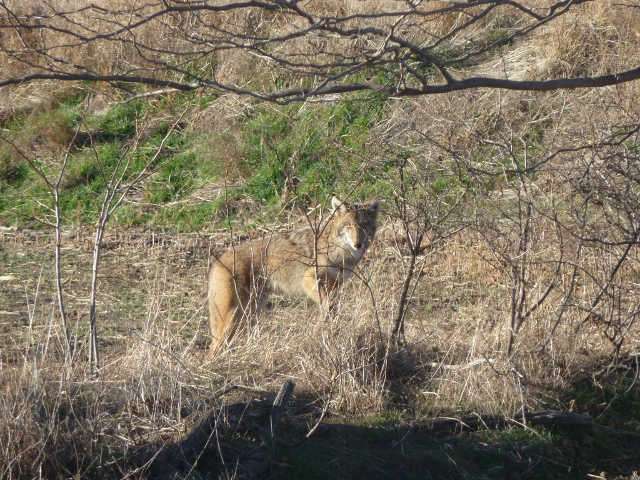
Coyote near Inman
I love the Kansas state fair and I enjoy talking to people about trapping, so I spend some time each year at the Kansas Fur Harvesters booth at the Kansas State Fair. That booth is an excellent way to educate people about the importance of trapping here in the U.S.
As people stop by the booth, one of the things we point out is that furbearers in Kansas are very prolific breeders and trapping is a perfect and necessary tool to keep their populations manageable. Beavers have from one to six young each year, and they do considerable damage by damming streams and ponds that flood farmland, back roads and golf courses. They cut off newly planted saplings with just a couple bites and kill large standing trees by completely chewing off the bark as high as they can reach. Beavers can be beneficial in creating wetlands and other wildlife habitat in pastures or in other out-of-the-way places, but they won’t be tolerated in farm country or in places like city parks or golf courses.
Muskrats have three to five litters per year, each containing up to five kits, and even though they don’t chew trees, they can absolutely riddle dikes, stream banks and pond dams with holes for dens. Raccoons birth three or four young each year and their taste for eggs leads them to destroy large numbers of songbird, pheasant and quail nests every spring. Coyotes have six to ten pups each year and even if only three survive, that’s a three hundred percent population increase.
Displayed at the booth are tanned pelts representing every furbearer found in Kansas. Everyone enjoys trying to identify each pelt as they run their fingers through the soft luxurious fur. The skunk pelt is always a good conversation starter, and visitors are usually astonished at how soft and beautiful skunk fur really is; even more surprising to them is the fact that skunk essence is used in minute amounts in perfume as an agent to hold and carry the aroma, making it last longer (ever noticed how long skunk smell hangs around?) I always have a good time with a skunk hat we have at the booth each year. Letting kids try it on and getting their pictures taken is as much fun for me as it is for the kids and their families. Most people are also amazed at how soft and plush a possum pelt actually is. Its hard for them to believe something that soft can come from an animal as homely as a possum that is pretty much a four-legged vulture.
Numerous men who stop at the booth trapped when they were kids and they usually ask about fur prices today. They are often surprised to hear that most wild caught fur ends up in foreign countries where the garment trade still exists, and that prices for American wild-caught fur are dependent on the economies of those countries and of the political climate of the world in general.
As recently as a generation ago, hunting, trapping and fishing were never questioned and were just a part of life. Today, because of seasons and harvest limits there are more game and fish available for harvest than ever before in the history of our country, so it makes no sense to me that hunting, trapping and fishing would be challenged now. I wish every anti-hunter could envision a world without regulated hunting, trapping and fishing, where wildlife died from starvation, rampant disease and indiscriminate shooting; it wouldn’t be pretty! Continue to Explore Kansas Outdoors.
Steve can be contacted by email at [email protected].