
For most people, taking a daily 81 mg aspirin to prevent stroke and heart attack is more risky than beneficial.
Aspirin has been in use as a pharmaceutical for over 150 years making it one of our oldest. One might assume with all this experience we would know exactly how to use it, but today’s recommendations are based on better evidence gained from better science.
Originally used to treat pain, aspirin evolved to become a cornerstone for cardiovascular protection after compelling research in the 1970s. By the 1980s, it was recommended that almost anyone over the age of 50 take an 81 mg aspirin daily because it makes your blood clotting cells “slippery” thus helping prevent clots from forming in the arteries of your brain and heart.
Even at the low 81 mg dose, bleeding is aspirin’s most common side effect. Physicians have long accepted this risk, however, as multiple large scale research studies have established this risk as low and outweighed by its great benefits.
This risk vs. benefit relationship has been called into question by more recent research leading to the recommendation several years ago that only those at highest risk of stroke and heart attack should take a daily aspirin. This includes people with Diabetes, Hypertension and those who have had a stroke or heart attack in the past as well as those who have stents in their coronary or other arteries.
Research published in the April 2022 issue of the Journal of the American Medical Association is a game changing analysis confirming the benefits of aspirin are indeed outweighed by the risk of bleeding, specifically among those who have never suffered a stroke or heart attack nor have a vascular stent. One out of every 250 people in this category taking a daily 81 mg aspirin for ten years successfully prevented a stroke or heart attack but one out of 200 suffered a major bleeding event.
In an update to their 2016 recommendations, The U.S. Preventative Services Task Force now discourages using aspirin for the primary prevention of stroke and heart attack in adults older than 60. To clarify, those who have had a previous stroke or heart attack and/or have a vascular stent, benefit greatly from a daily aspirin and this benefit outweighs the risk of bleeding.
There are exceptions to every rule and guideline so please, as always, consult your personal physician regarding your unique situation and use of aspirin.
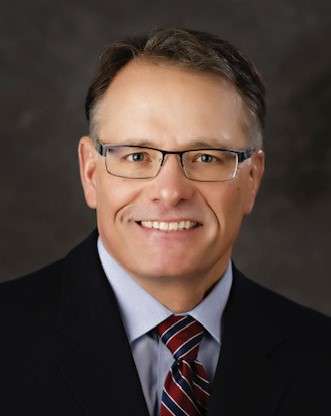
Philip Meyer, D.O., is a contributing Prairie Doc® columnist. Dr. Meyer has been practicing General Internal Medicine and Hospital Medicine in Pierre since 1997. Currently Dr. Meyer practices outpatient Internal Medicine at the Pierre VA clinic where he also serves as the medical director. In addition, he is an Associate Clinical Professor for the Sanford School of Medicine and the University of South Dakota Physician Assistant Program. Follow The Prairie Doc®, based on science, built on trust, at www.prairiedoc.org and on Facebook featuring On Call with the Prairie Doc® a medical Q&A show streaming live on Facebook most Thursdays at 7 p.m. central.
Aspirin: Is it right for you?
Kansas Wheat

Contact: Marsha Boswell, [email protected]
Wheat Scoop:
To everything there is a season: Randy and Kim Fritzemeier share a lifetime of farm, family and community
For audio version, visit kswheat.com.
He started farming in high school when his uncle rented him ground. A fifth-generation farm daughter herself, she was driving farm trucks before she had a driver’s license. After meeting in college at Kansas State University, they found a way to farm across county lines, balance her necessary off-farm income with the ebb and flow of farming and — most importantly — raise two exceptional children. Now, following a season of last farm milestones and a farm machinery sale, Randy and Kim Fritzemeier are off to a new set of adventures with a binful of goodwill from the family and friends with whom they have shared their love of agriculture and community.
Combining Farming, Blogging and Community Service
After both growing up as farm kids, Randy and Kim established their own farm family with kids Jill and Brent on the county line between Stafford and Reno counties. Randy, as a fifth-generation farmer, raised wheat, alfalfa, sudangrass and cattle. Kim works as the central Kansas reporter for KFRM 550 AM and operates her blog called Kim’s County Line, where she posts everything from the routines of farm life to fun recipes. Kim started her blog in 2010 as a combination of wanting to serve as an agvocate, flex her journalist mental muscles and pursue her photography hobby.
“It is easy to get people to listen to the controversial figure and the loudest voice in the room,” Kim said. “It’s not as easy to get people engaged about reading about real people.”
“One of the reasons I’ve continued to do it is that I want our story to not have special interest groups or restaurants tell the consumer what we are doing. Plus, I feel like I can share the beauty of what we experience around here.”
In addition to their careers, the couple is heavily involved in their community and Kansas agriculture. Randy has served on the Kansas Association of Wheat Growers board of directors, Kansas Wheat Commission Research Foundation, Kanza Co-op Board of Directors, the Ark Valley Cooperative Nominating Committee and the Stafford County Farm Bureau Board of Directors. Both he and Kim have been active members of the Stafford First United Methodist Church and have been excellent 4-H leaders in Stafford County for years. Together, the couple was honored as a Kansas Master Farmer and Master Farm Homemaker in 2013 and they just completed their second year as the presidents of that organization.
“We both have enjoyed connecting with other farm couples, just the organization of like-minded people who are also interested in agriculture, family and community service,” Kim said.
“I always enjoyed visiting with people from other parts of the state,” Randy said. “We had people that didn’t have a lot in common. Maybe not everyone agreed on everything, but I like people that have different opinions but respect. We made some friends out of it.”
Throughout his involvement in the wheat industry, Randy has been a perpetual student. He recalled his first meeting with the Kansas Wheat Commission Research Foundation, where they handed him a great, big notebook of proposed wheat research projects and his mind was blown by the details of projects researching exact genes on specific chromosomes.
“Ever since I was in college, I enjoyed seeing how the research was done, following extension research programs, and watching what they were doing,” Randy said. “When I got on the wheat board, I got to see what people wanted to do. It was always amazing, it’s interesting to see what people wanted to see happen.”
Helping with the Kansas Wheat booths at the State Fair and helping with the National Festival of Breads also allowed Randy and Kim to connect with others from across the state and the country.
“I’m always kind of intrigued with the people that come, especially those who aren’t from the Midwest,” Kim said. “It’s such a thrill for them to ride the combine and interact with farmers and learn more about the crop. It’s gratifying to have them so excited and enthused about it.”
Working with school children through Kansas Wheat has been another highlight for Kim, including talking about farming to local second-grade classrooms, school library programs and other community programs.
“I went to (my granddaughter) Kinley’s first-grade class when they still lived in Manhattan for Kansas Day,” Kim shared. “I shared my farm-themed ABC and counting books with them. I mailed copies to my other granddaughter Brooke’s kindergarten teacher during COVID-19 two years ago for Kansas Day. So we’ve connected with younger consumers in fun ways too!”
Deciding to Leave a Legacy
Randy and Kim’s own children are now grown and have families and well-established careers of their own. While Jill’s children are happy farm helpers and appear frequently on Kim’s blog, neither Jill nor her brother Brent was destined for work as full-time farmers. So, Randy and Kim made the difficult decision last year to retire after the 2022 wheat harvest.
“Randy felt strongly that this was the time,” Kim shared. “When we were in the combine, he was talking about not going to miss scooping wheat out of a hot metal grain bin in August to get it clean.”
“And I told him, I’m also not going to miss — as I’m running the PTO — wondering if he’s having heat stroke in there. He was the one having to do all of that because we didn’t have somebody younger to do it.”
Unfortunately, although Randy is an amateur magician, no amount of magic could help him end his final wheat harvest this year with a bang. He had to replant fields due to significant rainfall during planting, but then the weather turned so dry that a windstorm in December filled the house with dirt. Yields were lower than average in the low 30s bushels per acre. But, rainfall in the spring did bring just enough rain while the kernels were filling to finish off the crop. As a result, the wheat was some of the best quality he had cut, providing a ray of sunshine in an otherwise disappointing send-off.
After wheat harvest came sorting through generations of old farm equipment, tools and farm memorabilia that were sold during a farm equipment sale this August, the official end of Randy and Kim’s role as full-time farmers and the start of their next chapter.
“…Our farm sale and retirement ended Randy’s immediate family’s involvement in active farming,” Kim wrote on her blog on August 23. “We will still be involved in agriculture as landowners, and we have no plans to sell farm or pasture ground at this time.”
“Was it an easy decision? It was not. But it was the right decision for us.”
Kim’s family is still actively farming in Pratt County. Randy found a younger neighbor to take over the bulk of the operation in Stafford and Reno counties. Randy will provide the cattle and the pasture, and the neighbor will do the labor and feeding, keeping the couple involved in the operation. For Randy and Kim, helping a younger farmer get his career going is a fitting legacy after Randy’s uncle gave him his start in the farming business.
“We’re never not going to care about agriculture, people in it and its impact,” Kim said. “I can’t imagine that ever changing.”
Thank you, from all of us at Kansas Wheat, to Randy and Kim Fritzemeier for your decades of service to your community and Kansas agriculture and for continuing to share your stories.
###
Written by Julia Debes for Kansas Wheat
Randy Fritzemeier stands beside his combine during his final wheat harvest in 2022.
KU News: Study finds students self-sort in active learning spaces, with potential to push women out

From the Office of Public Affairs | http://www.news.ku.edu
Headlines
Study finds students self-sort in active learning spaces, with potential to push women out
LAWRENCE — A recent trend in higher education has seen universities install more active learning spaces, in which students can move their seats, collaborate and interact with one another, as opposed to more traditional lecture halls. But, as space in the former is limited, little is known about which students choose them. A new study from the University of Kansas found that students initially choose based on their social networks. That self-sorting, however, has the potential to push some students, most often women, from undergraduate programs.
Spencer Museum receives $250K from Institute of Museum and Library Services for database upgrade
LAWRENCE — The Institute of Museum and Library Services (IMLS) has awarded the Spencer Museum of Art $250,000 to upgrade its collection database, MuseumPlus, to the newest cloud-based version. Together with an IMLS grant awarded in 2021 to redesign the Spencer Museum’s websites, this funding will help improve access to and the sustainability of the museum’s digital resources.
Fall series will expand dialogue on reproductive justice
LAWRENCE — Since the U.S. Supreme Court issued its ruling on Dobbs v. Jackson on June 24, discussions around the globe have targeted the unknown future of reproductive rights in the United States. Through a series of online discussions, each featuring a panel of speakers from diverse fields, University of Kansas researchers will gather to further inform the conversation. The first session, “Kansas and the Region in Broader Context,” will take place at 5:30 p.m. Sept. 6.
Full stories below.
————————————————————————
Contact: Mike Krings, KU News Service, 785-864-8860, [email protected], @MikeKrings
Study finds students self-sort in active learning spaces, with potential to push women out
LAWRENCE — A recent trend in higher education has seen universities install more active learning spaces, in which students can move their seats, collaborate and interact with one another, as opposed to more traditional lecture halls. But, as space in the former is limited, little is known about which students choose them. A new study from the University of Kansas found that students initially choose based on their social networks. That self-sorting, however, has the potential to push some students, most often women, from undergraduate programs.
KU researchers observed students taking part in an organic chemistry course over the course of an academic year. Classes were offered in both an active learning space and a traditional, larger lecture hall with fewer active learning supports. Researchers found that more women chose the active spaces, and that at the semester break, there was an additional, substantial shift in who chose the active spaces.
Initially, results showed students largely chose based on their social networks. First, they looked at where the class was offered. They then relied on what friends told them about the spaces when making their choice. However, when researchers interviewed students again at the semester break, they found those most interested in switching to an active learning space or continuing there were more focused on learning chemistry like an expert. And the majority interested in active spaces were women.
“The vast majority of students who wanted to take classes in active learning spaces were women,” said Michael Ralph, doctoral candidate in educational psychology at KU and the study’s lead author. “Many were also honors students. These students prioritized learning about chemistry both in and outside the classroom. This became even more apparent by mid-semester, as more women wanted to transfer to the active learning rooms but couldn’t because of limited space.”
The study, written with co-authors Blair Schneider, Kansas Geological Survey; David Benson, associate professor of chemistry; and Doug Ward, associate director of KU’s Center for Teaching Excellence, was published in the journal Active Learning in Higher Education.
The research team previously published a study that found women and honor students tended to prefer the active learning spaces. While that study observed a moment in time, the current study aimed to better understand how students arrived at their learning space choices over time. But as the active learning spaces are limited, only a finite number of students can take those classes. Given that, the researchers wanted to understand more about how decisions were made by students from historically underrepresented groups.
The data showing that students who preferred active learning spaces were those who tended to think about the sciences outside of class suggested students who were beginning to think like expert chemists preferred the active spaces, Ralph said. That, combined with data that shows women and honor students prefer the spaces as well, suggests active learning spaces are valued by the students most likely to continue into graduate programs in the sciences and with potential for high achievement. Better understanding why students choose the active learning spaces, and why women were showing such a strong preference for them, can help reduce barriers to success for women in physical science and STEM more broadly.
While the current study did not examine factors such as race, socioeconomic status and other considerations that have been historically marginalized in the sciences, it can help open the door to those types of questions in the future, while simultaneously better understanding how active learning spaces serve students, whether they help retain highly qualified students and how higher education can best support young students interested in the sciences.
“We hear from women that they are looking for these types of spaces,” Ralph said. “So we used a statistical approach to examine how they makes choices about classrooms. It was helpful to be able to ask these questions directly and interesting to see the self-sorting that took place. Showing how some of these formative moments affect the students’ future choices and opportunities may allow us to help students earlier.”
-30-
————————————————————————
The official university Twitter account has changed to @UnivOfKansas.
Refollow @KUNews for KU News Service stories, discoveries and experts.
Tweets by KUnews
————————————————————————
Contact: Elizabeth Kanost, Spencer Museum of Art, 785-864-0142, [email protected], @SpencerMuseum
Spencer Museum receives $250K from Institute of Museum and Library Services for database upgrade
LAWRENCE — The Institute of Museum and Library Services (IMLS) has awarded the Spencer Museum of Art $250,000 to upgrade its collection database, MuseumPlus, to the newest cloud-based version. Together with an IMLS grant awarded in 2021 to redesign the Spencer Museum’s websites, this funding will help improve access to and the sustainability of the museum’s digital resources.
The Spencer Museum’s database is the foundation of all activities that fulfill its mission, including documenting its collection of more than 47,000 objects, organizing exhibitions and public programs, and recording data such as university and K-12 class visits. Much of this information is available to the public through the museum’s online collection. With IMLS support, the Spencer Museum will migrate more than 200,000 records and multimedia files to the new cloud-based system, increasing usability and accessibility for all audiences.
Jennifer Talbott, deputy director for operations and innovation, said the timing of this grant will allow the Spencer Museum to achieve goals outlined in its recent digital plan (pdf), including a complete redesign of the museum’s websites and online collection.
“Upgrading the database at this time will allow us to unite our existing websites on a more stable and sustainable platform, allowing us to develop customized tools and applications to better meet the needs of our digital audiences,” Talbott said.
In addition to supporting the museum’s online database, MuseumPlus powers a suite of five browser-based applications that present the museum’s collections, exhibitions and educational content in directed, audience-driven tools. These digital resources allow the Spencer Museum’s audiences to access its wealth of data to support visits to the galleries, classroom instruction, research and more. Rebuilding these applications with the new cloud-based MuseumPlus will ensure their longevity and make them easier to navigate for both users and developers.
This most recent grant from IMLS builds on a long history of their support for the Spencer Museum’s digital projects. They also funded the Spencer Museum’s initial work to digitize its collection in 2004, which allowed the museum to become one of the first U.S. museums to publish nearly 100% of its collection online in 2009.
-30-
————————————————————————
Subscribe to KU Today, the campus newsletter,
for additional news about the University of Kansas.
http://www.news.ku.edu
————————————————————————
Contact: Emily Ryan, The Commons, 785-864-6293, [email protected], @TheCommonsKU
Fall series will expand dialogue on reproductive justice
LAWRENCE — Since the U.S. Supreme Court issued its ruling on Dobbs v. Jackson on June 24, discussions around the globe have targeted the unknown future of reproductive rights in the United States. Through a series of discussions, each featuring a panel of speakers from diverse fields, University of Kansas researchers will gather to further inform the conversation.
This fall, The Commons will host a series of discussions that highlight the complexities of reproductive justice. The considerations surrounding legislation on reproductive rights often appear on ballots reduced to binary decisions, which obscure the many and layered contexts within which they exist. This series will draw upon the knowledge of researchers and practitioners across areas of study and service, to help inform audiences about the roots and ramifications of present-day discussions around reproductive rights.
Alesha Doan, professor of women, gender & sexuality studies and of public affairs & administration, is co-leading the event series with Emily Ryan, director of The Commons.
“We can expect to see abortion rights political battles unfold for the foreseeable future,” Doan said. “As they develop, the legal chaos and public health crisis created by the U.S. Supreme Court’s decision will continue to affect thousands of people who no longer have agency and autonomy to chart the course of their reproductive lives.”
This series offers information so that all attendees will be more informed about current regulations across geographic areas, ongoing political action appearing in local, regional and national efforts, and new effects of legislation.
“As we know, research is constantly influencing and influenced by public decision and behavior,” Ryan said. “Researchers and centers across KU’s campuses are working to ensure that accurate information is conveyed to public audiences as well as to policymakers. To that end, this series of events aims to bring together some of the many perspectives that are informing our understanding of reproductive health care in the 21st century.”
In addition to presentations from researchers in disciplines from across the university, the events will include information about resources specific to students at KU.
The first event will take place at 5:30 p.m. Sept. 6, and discussion will be framed around “Reproductive Rights in Kansas and the Region.” Presenters include:
1. Alesha Doan
2. Don Haider-Markel, professor of political science
3. Sarah Kessler, associate professor of family medicine & community health, KU Medical Center
4. Sam Brody, associate professor of religious studies
5. Rachel Gadd-Nelson, director of the Health Education Resource Office
6. Nikita Haynie, director of the Emily Taylor Center for Women & Gender Equity
The second event will take place at 5:30 p.m. Oct. 12, and discussion will be framed around “Impact and Access Across Populations.”
Events will be offered online and are open to the public. To register to attend the Sept. 6 event, visit https://bit.ly/KURepro.
-30-
————————————————————————
KU News Service
1450 Jayhawk Blvd.
Lawrence KS 66045
Phone: 785-864-3256
Fax: 785-864-3339
[email protected]
http://www.news.ku.edu
Erinn Barcomb-Peterson, director of news and media relations, [email protected]
Today’s News is a free service from the Office of Public Affairs
KU News: Grant to support Indigenous students in STEM programs at KU, Haskell

From the Office of Public Affairs | http://www.news.ku.edu
Headlines
Sloan Foundation grant to support Indigenous students in STEM programs at KU, Haskell
LAWRENCE — A joint project of the University of Kansas and Haskell Indian Nations University was selected to receive a $500,000 seed grant from the Alfred P. Sloan Foundation’s Indigenous Graduate Partnership. This project will support Indigenous students pursuing STEM (science, technology, engineering and math) degrees. The project aims to increase the number of Indigenous students — American Indians, Alaska Natives, Native Hawaiians and other Pacific Islanders — attaining graduate and undergraduate degrees in STEM fields.
Task demonstrability a key component for how groups solve problems most effectively, study shows
LAWRENCE — According to a new study of organizational teams, enhancing task demonstrability may be the key method for how an individual can convince a group to choose the correct solution to a problem. “In group decision-making, it can be so difficult to identify who we should listen to because we have all of these heuristics for who’s going to provide the best input,” said study co-author Nate Meikle, assistant professor of business at the University of Kansas. The work was published in the journal Organization Science.
Psychological lens reveals racial repression at heart of ‘Passing’
LAWRENCE – While many literary critics have found Nella Larsen’s 1929 novella “Passing” to be frustratingly opaque, and others have concentrated on its themes of same-sex attraction and class consciousness, an essay by a University of Kansas professor of English finds that racial repression is the focus of the work by analyzing it from a Freudian perspective. Doreen Fowler’s article was published in The South Atlantic Review.
Full stories below.
————————————————————————
Contact: Carrie Caine, Institute for Policy & Social Research, 785-864-9102, [email protected]
Sloan Foundation grant to support Indigenous students in STEM programs at KU, Haskell
LAWRENCE — A joint project of the University of Kansas and Haskell Indian Nations University was selected to receive a $500,000 seed grant from the Alfred P. Sloan Foundation’s Indigenous Graduate Partnership. This project will support Indigenous students pursuing STEM (science, technology, engineering and math) degrees. The project aims to increase the number of Indigenous students — American Indians, Alaska Natives, Native Hawaiians and other Pacific Islanders — attaining graduate and undergraduate degrees in STEM fields.
“The Sloan Indigenous Graduate Partnership is a tremendous opportunity to build and strengthen pathways for Indigenous students in STEM fields at KU,” said project leader Joseph Brewer II, associate professor of environmental studies and director of Indigenous Studies. “Our goal is not only to build this pathway but to create opportunity, and to address systemic inequities in STEM by supporting Indigenous students in best-practices and research-based protocols. Our overall goal is to shape a new, more inclusive future for Indigenous students in STEM fields.”
The project will help address a trend in higher education — the rapidly declining number of STEM field doctorates awarded to American Indian and Alaska Native students in the past 20 years. When this project phase is complete, KU and HINU will embark on a broader project to strengthen initiatives to increase the number of STEM degrees awarded to Indigenous students as part of the national Sloan Indigenous Partnership.
“We have a tremendous dual campus team at Haskell Indian Nations University and KU that are well suited to engage in these processes,” Brewer said. “The Alfred P. Sloan Foundation has been successfully supporting Indigenous students in STEM for over 10 years now at universities around the country, and having the ability to tap into the national network through the Sloan Indigenous Graduate Partnership is such a unique opportunity for KU students, staff and faculty.”
The project includes several interconnected initiatives, which collectively build on the decades-long history of the KU-HINU collaboration and the many existing programs at KU and HINU that support Indigenous students in higher education.
“Haskell Indian Nations University is very excited for the opportunities the Sloan Indigenous Graduate Partnership brings to Haskell students,” said Julia Good Fox, interim president and faculty member in Indigenous & American Indian studies.
Francis Arpan, vice president of academics at HINU, will lead the HINU team and said he welcomed this opportunity to expand educational options for Indigenous students.
The team will create a robust pathway for HINU students into graduate programs at KU through the efforts of a dedicated Sloan Indigenous Graduate Partnership program coordinator, Mica Mendez. The coordinator will organize workshops, work group meetings, conferences and special events. This work will help students transition from undergraduate to graduate STEM education and will improve the capacity of faculty and others to mentor Indigenous students. The project team will also offer workshops to strengthen faculty mentoring of Indigenous students.
The team will work to create a supportive and inclusive community of Indigenous STEM graduate students, including funding for scholarships to support seven Sloan Scholar graduate students.
This partnership will also create a new Sloan Undergraduate Student Program, expanding the existing exchange program between the two universities. This will connect HINU students to additional STEM courses as undergraduates so that they are better positioned to move into STEM programs as transfer students or graduate students.
“Graduate students play such a vital role in our institution — they bring new perspectives, approaches and innovative ideas that contribute to the groundbreaking research being done at our institution,” said project team member Jennifer Roberts, vice provost for academic affairs & graduate studies at KU and professor of geology. “We are so excited to support this program that will further strengthen our recruiting efforts of Indigenous graduate students into our STEM programs. We welcome the unique opportunities that this program will bring the student participants as well as the research and innovation that will result from these activities.”
Because this work will prepare for participation in the broader Sloan Indigenous Partnership, the project team will collaborate with the national SIGP leadership team. Currently, nine universities participate in this partnership, including Purdue University, University of Alaska (Anchorage and Fairbanks) and University of Montana. The National Action Council for Minorities in Engineering administers the partnership.
The team includes representatives from KU and HINU. In addition to Brewer and Roberts, the KU team includes Jay Johnson, professor of geography & atmospheric science and director of the Center for Indigenous Research, Science & Technology; Paulyn Cartwright, professor of ecology & evolutionary biology and director of the Office for Diversity in Science Training; Elaina Sutley, associate professor in civil, environmental & architectural engineering and associate dean for diversity, equity, inclusion & belonging at the School of Engineering; Lori Hasselman, Native American Student Success coordinator, and Melissa Peterson, director of Tribal Relations for both of the University Academic Support Centers. From HINU, in addition to Arpan, the team includes Daniel Wildcat, faculty member in Indigenous & American studies and co-founder of the HERS internship program, and Josh Meisel, faculty member in geography & geographic information systems and instructor in the HERS program.
The KU Institute for Policy & Social Research supported the application and will help administer the project.
-30-
————————————————————————
The official university Twitter account has changed to @UnivOfKansas.
Refollow @KUNews for KU News Service stories, discoveries and experts.
Tweets by KUnews
————————————————————————
Contact: Jon Niccum, KU News Service, 785-864-7633, [email protected]
Task demonstrability a key component for how groups solve problems most effectively, study shows
LAWRENCE — There is no “I” in team … but there is a “me.”
According to a new study of organizational teams, enhancing task demonstrability may be the key method for how an individual can convince a group to choose the correct solution to a problem.
“In group decision-making, it can be so difficult to identify who we should listen to because we have all of these heuristics for who’s going to provide the best input,” said Nate Meikle, assistant professor of business at the University of Kansas.
“We have conflicting motivations, too. I might want to get the right answer, but I also might want to please my boss more than I want to get the right answer.”
His paper titled “The Theory and Measurement of Expertise-Based Problem Solving in Organizational Teams: Revisiting Demonstrability” concludes that the more group members are able to enhance demonstrability — a four-step process that includes demonstrating the correctness of one’s proposals and recognizing the correctness of others’ proposals — the better decisions the group will make. It’s published in Organization Science.
“Demonstrability was a theoretical construct that we’ve tried to make more organizationally accessible by providing a measurement tool for researchers and decision-makers to build on and use when making decisions,” said Meikle, who co-wrote the paper with Bryan Bonner and Kathryn Coll of the University of Utah, Daniel Shannahan of Northern State University and Kristin Bain of the Rochester Institute of Technology.
“Research shows that for groups to make optimal decisions, they need to find the expert and listen to that expert. Demonstrability does a nice job of emphasizing that point. We need to find the person who has the best answer, and then we all need to listen to that person,” Meikle said.
He gives an example of the Space Shuttle Challenger disaster in 1986. A 14-person team was commissioned to uncover the cause of the tragedy. But this wasn’t solved until physicist Richard Feynman brought a sample of the material used in the O-rings of booster rockets, small clamps and a glass of ice water to a meeting. He demonstrated that when he compressed the O-ring material and put it in the liquid, it remained temporarily compressed, making clear its inability to seal at low temperatures — a fatal design flaw.
For Meikle’s research, his team created 42 statements that represented different aspects of demonstrability, such as, “My group had a shared understanding of what we were trying to do.” He then had approximately 200 people read each of the statements and rate the degree to which each of these fit with the descriptions of the four elements of demonstrability. The ratings were used to identify 12 statements that best described such elements. Next, a separate group of approximately 200 people used a team project they had worked on to rate their group on each of the items.
“Because there had been no way to measure demonstrability, everything was theoretical. It had always made logical sense. But it hadn’t been empirically tested. Now we have a measure that people can build on,” Meikle said.
“Organizations can now use this measure and say, ‘Hey, if we want to enhance demonstrability, let’s look at the 12 demonstrability items to see where we might want to focus.’ You administer that to your group and find out where they rate on the different items, and then you can say, ‘Looks like our group really needs to improve step two information sufficiency or some social factors from step four.’”
A native of Idaho, Meikle came to KU last year. He is a former receiver with the BYU Cougars. (He caught a dozen passes in the 2005 Las Vegas Bowl.) He also has a podcast titled “Meikles and Dimes,” where he shares findings gleaned from social science. He teaches courses in leadership and ethics at KU.
Can demonstrability techniques also be applied to a football team, for instance?
“Maybe we have a rookie join our team, and they’re sharing something and they don’t have the status that the established veteran has. We might not pay that rookie as much attention, and now our decision-making process and final outcome might suffer because of it,” he said. “This demonstrability framework shows us how to improve that. So in football, we can imagine the offensive coordinator and the offensive coaches using the demonstrability construct to try to figure out which play to run when. Or the head coach and his staff using the construct to determine who to draft and why.”
Meikle believes this research is relevant anywhere a collective is contemplating difficult choices.
“Every company considers, ‘Who are we going to hire and what market opportunity should we pursue? How are we going to improve employee morale, and how are we going to improve retention?’ Many of these decisions are group decisions that can be improved by running the decision through the lens of demonstrability,” Meikle said.
“In a perfect world, the goal is to make the best group decision possible.”
-30-
————————————————————————
Subscribe to KU Today, the campus newsletter,
for additional news about the University of Kansas.
http://www.news.ku.edu
————————————————————————
Contact: Rick Hellman, KU News Service, 785-864-8852, [email protected], @RickHellman
Psychological lens reveals racial repression at heart of ‘Passing’
LAWRENCE – While many literary critics have found Nella Larsen’s 1929 novella “Passing” to be frustratingly opaque, and others have concentrated on its themes of same-sex attraction and class consciousness, an essay by a University of Kansas professor of English finds that racial repression is the focus of the novel by analyzing it from a Freudian perspective.
Doreen Fowler said she believed that the shift to a psychological reading explains why the two main characters — Irene, who lives as a Black woman, and Clare, who passes for white — are doubled.
In an article titled “Racial Repression and Doubling in Nella Larsen’s Passing” in the latest edition of The South Atlantic Review, Fowler wrote that the main character, Irene Redfield, “works to erase signs of her black identity — but those signs of blackness return to haunt her in the form of her double, Clare. While many scholars have recognized that Irene is ambivalent about her African American iden¬tity and that Clare and Irene are doubled, my original contribution is to link the two. In my reading, Clare is Irene’s uncanny double because she figures the return of Irene’s rejected desire to fully integrate with the black race.”
Fowler said Larsen, who worked as a nurse and was acquainted with then-popular Freudian theories, structured the novella from Irene’s point of view, and that what other critics call confusing passages filled with ellipses are meant to show the reader the main character’s distorted thinking.
“That’s why there is so much opaqueness and unknown in this novel,” Fowler said, “because whatever Irene refuses to know is withheld from the reader.”
The KU researcher said, “I think the whole novel is characterized by repression, and particularly racial oppression is repressed. According to Freud, when you repress something, it returns in a disguised form, often the double.
“Clare is the one who is passing,” Fowler said, “and you would expect that Clare is an example of repression. But I argue that she is the return of the repressed because she really wants to be with Black people. She wants full solidarity with Black people.”
Fowler, who often approaches literature through a psychological lens, said that while the book is over 90 years old, it’s not surprising that Netflix chose to release a filmed version of “Passing” less than a year ago.
“I think ‘Passing’ is relevant today,” Fowler said, “because there is racism in our culture, and racism is a repression — a refusal to recognize that Black people are people just like white people. I think Larsen teaches this in her novel. In the novel, not only white people repress Black people, but what Larsen calls Negro society, upper-class Blacks, repress full solidarity with an oppressed, racialized people. They don’t want to be marginalized. So there is a scene in the novel when Irene’s Black husband is talking to his sons about a lynching, and Irene stops him because she doesn’t want to know that there is racial oppression in the United States.”
Without giving away any spoilers, Fowler believes the novella’s ambiguous conclusion – often decried by critics who feel denied of closure — is simply another indication of Irene’s psychological repression.
-30-
————————————————————————
KU News Service
1450 Jayhawk Blvd.
Lawrence KS 66045
Phone: 785-864-3256
Fax: 785-864-3339
[email protected]
http://www.news.ku.edu
Erinn Barcomb-Peterson, director of news and media relations, [email protected]
Today’s News is a free service from the Office of Public Affairs
KU News: Study will sharpen understanding of precipitation’s influence on aerosols in the atmosphere

From the Office of Public Affairs | http://www.news.ku.edu
Headlines
Study will sharpen understanding of precipitation’s influence on aerosols in the atmosphere
LAWRENCE — A new $620,000, three-year grant from the U.S. Department of Energy will enable a University of Kansas atmospheric scientist to research how aerosols, clouds and precipitation interact over ocean waters, with the goal of producing more accurate Earth System Models.
School of Law announces associate dean for diversity, equity, inclusion and belonging
LAWRENCE — The University of Kansas School of Law has announced the appointment of Jamila Jefferson-Jones, professor of law, as the new associate dean for diversity, equity, inclusion and belonging. Jefferson-Jones joined the KU Law faculty in July and previously was a professor at Wayne State University and the University of Missouri-Kansas City.
Study delves into how Catholic school teachers balance monetizing of education, meeting vocational call
LAWRENCE — Many teachers would attest they were called to the profession to educate students and prepare them for life, not just to provide an economic service. Yet, as education is increasingly politicized and monetized, many educators are pulled between providing an economic good and doing what they love. A new University of Kansas study found that to be especially true for Catholic school teachers, who have developed strategies for balancing their calling and profession.
Full stories below.
————————————————————————
Contact: Brendan Lynch, KU News Service, 785-864-8855, [email protected], @BrendanMLynch
Study will sharpen understanding of precipitation’s influence on aerosols in the atmosphere
LAWRENCE — A new $620,000, three-year grant from the U.S. Department of Energy will enable a University of Kansas atmospheric scientist to research how aerosols, clouds and precipitation interact over ocean waters, with the goal of producing more accurate Earth System Models.
Lead researcher David Mechem, professor and chair of geography & atmospheric science at KU, will use a wide array of data collected at the Atmospheric Radiation Measurement Program (ARM) facility on Graciosa Island in the Azores, a region of the eastern North Atlantic known for ample marine low-altitude clouds. While previous research has examined how aerosols influence radiation and precipitation, Mechem said his work will be among the first to parse in such detail how precipitation and other processes in turn influence aerosols in the atmosphere.
“The act of precipitation forming and then falling — it acts to remove the aerosol from the atmosphere,” Mechem said. “Even just a rainstorm cleans it out. You know how everything seems so clean and pristine after it rains? We call it aerosol processing or coalescence processing, this removal of aerosol from the precipitation process. What happens, then, if you try to get new cloud formation, you’re going to be dealing with a very different aerosol environment. That’s going to have implications for the brightness of the clouds that form and how prone they are to precipitation. We’ll be studying the backside of that aerosol-cloud-precipitation interaction loop. It’s something that hasn’t been studied much, and it’s important to understand, fundamentally, what governs that process.”
The KU researcher will combine ARM data from the Azores site, observations from a previous ARM aircraft field campaign called the Aerosol and Cloud Experiments in the Eastern North Atlantic, and fine-scale modeling datasets. He said he would rely on long-standing collaborations with DOE laboratory scientists to provide guidance in the use of the ARM data products.
“We’ll use ’Large-eddy Simulations,’ which are fluid-dynamic simulations to probe some of these different mechanisms in a very high-resolution model — much higher resolution than current climate models,” Mechem said. “We can see updrafts and downdrafts, and we can see individual clouds and we can calculate how individual clouds are processing the aerosol — then we can better figure out what’s going into the clouds, what’s coming out of the clouds, and what’s left after our cloud lives and dies.”
The work product of the data analysis and modeling efforts will be a more detailed, accurate understanding of marine boundary layer (MBL) aerosol-cloud-precipitation interactions, and how better to portray these interactions in climate models. According to DOE, “Response of these low clouds to changes in atmospheric greenhouse gases and aerosols is a major source of uncertainty in global climate models.”
Mechem said one work product could be a computer code with more precise models of cloud-processing of aerosols that could sharpen climate models produced by outside research groups.
“Individual clouds are too small and too short-lived for a climate model to directly capture, so you have to develop other approaches that accurately represent the effects of clouds. We’re trying to get the physics of clouds right so the models produce a credible estimate of climate change,” he said. “You want to better understand the physical processes that are happening and then also figure out a way to represent them in a computer model. We’re using observational and high-resolution modeling tools to better understand what’s going on and then we’re going to translate that understanding into improvements in how clouds are portrayed in the climate models.”
Computer simulations will be run on the KU Advanced Community Cluster.
While there is uncertainty in some details of climate models that track climate change, Mechem said it shouldn’t cast doubt on the general validity of climate models.
“If you’re doing good science, you quantify uncertainty,” he said. “You have some estimate of what you think the answer is — then you have a range, plus or minus. Part of the reason for paralysis on the climate problem is you can always say, ‘You don’t know because there’s uncertainty.’ Well, yes, there’s always uncertainty. I think the climate models are generally doing a good job, but some parts of their physics are less advanced than other parts. This project is filling in an important aspect of something that’s missing — how clouds influence aerosol, and we know aerosol are important.”
The DOE award also will support two students on the master’s or doctoral track in atmospheric science for the project’s duration.
“They do the work and get a degree out of it,” Mechem said. “It’s full sort of GRA support, a modest stipend and then their tuition covered, which is standard. Researchers typically either will do this or will use the award to get a postdoc — but generally I like supporting students.”
-30-
————————————————————————
The official university Twitter account has changed to @UnivOfKansas.
Refollow @KUNews for KU News Service stories, discoveries and experts.
Tweets by KUnews
————————————————————————
Contact: Margaret Hair, School of Law, 785-864-9205, [email protected], @kulawschool
School of Law announces associate dean for diversity, equity, inclusion and belonging
LAWRENCE — The University of Kansas School of Law has announced the appointment of Jamila Jefferson-Jones, professor of law, as the new associate dean for diversity, equity, inclusion and belonging.
As associate dean, Jefferson-Jones will lead diversity, equity, inclusion and belonging initiatives for the School of Law. She will coordinate with the law school’s DEIB advisory committees of faculty and staff, students and alumni to set a strategic vision for KU Law’s efforts in this area. In the newly created associate dean role, Jefferson-Jones will engage with the law school’s students, faculty, staff and administration to promote a diverse, equitable and inclusive environment for all members of the KU Law community.
“The School of Law’s efforts to build a welcoming and inclusive environment for our students over the past decade have been productive. We’ve led students and faculty in discussions about how to have conversations about race and justice within and outside the classroom, as well as conversations about developing a unique professional identity,” said Stephen Mazza, dean of the School of Law.
“But sometimes these efforts felt disjointed, and follow-up programming didn’t always take place. The law school’s response to important incidents was also sometimes delayed. By elevating DEIB issues within an associate dean position, we hope to better coordinate our efforts and make more progress in this area,” Mazza said.
In the past, three advisory committees have contributed programming, training and guidance to the law school’s DEIB efforts: the Faculty & Staff Committee on Diversity & Inclusion, the student-led Dean’s Diversity Leadership Council and the alumni Diversity Advisory Council. The expectation is that these committees will remain in place, although some revisions may occur to increase their effect.
“I am excited to join the KU Law community and continue the important work of DEIB to which so many members of this community have already shown their commitment,” Jefferson-Jones said. “I hope to implement cohesive and empowering programming and initiatives that will not only strengthen DEIB at the law school, but will establish our law school as a national leader in this area.”
Jefferson-Jones joined the KU Law faculty in July. She will teach courses in property law beginning in the spring semester. Jefferson-Jones was a visiting associate professor of law at KU in spring 2018, teaching Property and Fair Housing Law Seminar courses.
Before joining KU Law, Jefferson-Jones was a professor of law and associate director of property, equity and justice for the Damon J. Keith Center for Civil Rights at Wayne State University School of Law. She was previously a professor at the University of Missouri-Kansas City School of Law, teaching courses in property, fair housing and real estate transactions, and serving as interim director of the Black Studies Program in the UMKC College of Liberal Arts and Sciences.
In 2021, Jefferson-Jones received the Jefferson B. Fordham Advocacy Award from the American Bar Association Section of State and Local Government Law, recognizing her outstanding legal advocacy in the field. She is an American Bar Foundation Fellow and a former University of Missouri System Presidential Engagement Fellow, and she is active on several committees of the Association of American Law Schools and the ABA.
Jefferson-Jones’ legal scholarship focuses on property and wealth attainment by communities and groups on the margins of society. She examines the ways members of favored racialized groups exclude minoritized populations from public and private spaces, thus enforcing the racial segregation of space and racist notions of supremacy. Her work harnesses critical race methodologies, focusing in part on the use or threat of police action against members of disfavored groups. Her recent article on this subject, #LivingWhileBlack: Blackness As Nuisance, was published in the American University Law Review and featured in the New York Times.
Jefferson-Jones is a graduate of Harvard Law School and Harvard College. Prior to beginning her career in academia, Jefferson-Jones practiced law for over a decade at firms in the District of Columbia and in her hometown of New Orleans.
-30-
————————————————————————
Subscribe to KU Today, the campus newsletter,
for additional news about the University of Kansas.
http://www.news.ku.edu
————————————————————————
Contact: Mike Krings, KU News Service, 785-864-8860, [email protected], @MikeKrings
Study delves into how Catholic school teachers balance monetizing of education, meeting vocational call
LAWRENCE — Many teachers would attest they were called to the profession to educate students and prepare them for life, not just to provide an economic service. Yet, as education is increasingly politicized and monetized, many educators are pulled between providing an economic good and doing what they love. A new University of Kansas study found that to be especially true for Catholic school teachers, who have developed strategies for balancing their calling and profession.
Education has been influenced by neoliberalism and postindustrialism in the last two decades, which places an emphasis on measurable results, standardized testing and steady enrollment. The debate of whether education should be viewed as a commodity or public good is present in all schools, but Heidi Hallman was interested in how it played out in Catholic schools, whose mission is to educate students, but also to guide them through the church’s teachings and to provide a public good for all students, though they rely on tuition.
During the pandemic, Hallman, professor of curriculum & teaching at KU, heard about families, including non-Catholics, who sent their children to Catholic schools that maintained in-person teaching.
“I wondered how these teachers perceive the challenges that they face in comparison to their public school counterparts,” Hallman said. “I did hear some lamenting the loss of community. We have sports, or the online community where we can reach around the world, and I think that has been tough for religious schools to accept, especially with the closing of so many Catholic schools and the loss of neighborhood and community.”
Hallman interviewed 35 elementary, middle school and secondary Catholic school teachers and administrators for the study, published in the journal International Studies in Catholic Education.
As many Catholic schools kept their doors open during the pandemic, the schools often saw increases in enrollment. Many new students were not Catholic, but the schools have stated missions to educate all and felt like their spiritual component could offer something for the families they might otherwise be missing. However, it also added to the perception of education as a commodity, Hallman said.
“Because of education ‘being on the market,’ we tend to have a view of education as a product. That happens in higher education as well,” Hallman said. “We don’t want to treat students as customers, but there were people happy to have students and families coming to their schools, but also a skepticism, as if people were just shopping for schools.”
The study participants revealed three themes in their responses to balancing teaching and vocation and how they dealt with the neoliberal and postindustrial influences on American education and policy.
First noted was technocratic professionalism. With a constant focus on professional development and skills, American education has emphasized that this type of training will develop the best educators. However, several of the teachers, especially the younger ones in the study, questioned that approach. Respondents often wondered if allowing them to draw on their faith and love for working with young people would make them more effective educators than continuously taking skills training classes.
Respondents also noted competition from the marketplace. Teachers could feel there were many outside forces pulling students away from the community provided by a Catholic school. Educators noted the pull of athletics outside the school or non-school related activities and options available via the internet and social media that resulted in a “watering down,” or de-investment, of activities and teachings of the school and church. Even though schools often continued in-person education, church services were often canceled or reduced in frequency, and educators noted many people, including families of students, have not come back. They also reported fearing that students would leave the schools as public schools returned to in-person learning after the initial stages of the pandemic.
Finally, respondents reported being concerned with optimizing the student experience. In addition to state-mandated curriculum, Catholic school teachers are required to impart the teachings of the church. That part of the job often appealed to those saying faith helped bring them to the job, and that it could be a way to serve everyone, but also could ring hollow.
“If a family didn’t have a religious identity, the teachers mentioned how maybe the school could offer them that, but there was also a concern that faith might simply be an add-on, or like going to the grocery store to get something you need,” Hallman said.
The educators were not territorial, she added, and often looked for ways to make non-Catholic students and families feel welcome.
The findings provide insight into how Catholic school teachers and administrators view their roles in society, a topic which has been largely overlooked by academic researchers, Hallman said. Their dedication to their work, and especially reluctance to view education as a commodity while drawing on their faith as a way to help better serve students, can provide a model for preparing teachers for all schools. As opposed to simply relying on teaching a set of skills and insisting they meet mandates and measurable results, teachers could be viewed more holistically, in a way that allows them to use what inspires them, whether religious or otherwise, to be better teachers and continue to grow, she added.
“It gave me hope that religious schools can seek their religious mission, but also welcome others and maintain their commitment to the common good, even among pressures to keep enrollment up and seeing neighboring Catholic schools close,” Hallman said. “These teachers were very hopeful. They often had lower wages but were very dedicated to their vocation, and I found that refreshing to hear from people in the pandemic era, when there are so many pressures on teachers.”
-30-
————————————————————————
KU News Service
1450 Jayhawk Blvd.
Lawrence KS 66045
Phone: 785-864-3256
Fax: 785-864-3339
[email protected]
http://www.news.ku.edu
Erinn Barcomb-Peterson, director of news and media relations, [email protected]
Today’s News is a free service from the Office of Public Affairs
