Monday, January 19, 2026
Home Blog Page 119

Want a quick day trip this summer? Here’s some options within a few hours of Hutchinson

0

Summer is the time that many people decide to take some time off for a little rest and vacation, leaving where they live for a trip, either short or long.

While there are plenty of places outside the Sunflower State that may be popular for individuals and families from Hutchinson to visit, there’s also a variety of places within Kansas for those looking for a shorter, trip, even if just for one day.

Here’s a look at interesting and exciting locations in Kansas and within a few hours drive from Hutchinson.

Kansas State Parks offer views and fun

One option for a short trip from Hutchinson is to visit one of the 28 Kansas State Parks spread across the state.

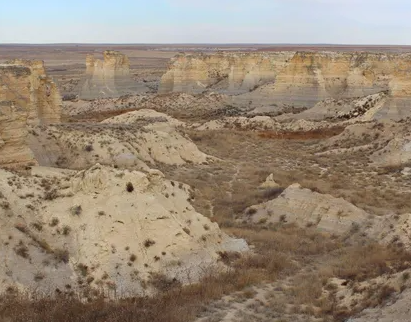
For a longer drive, there’s options like Little Jerusalem Badlands, three hours away and just south of Oakley. The newest of Kansas State Parks, this beautiful landscape is hundreds of acres of badlands including formations and cliffs of Niobrara Chalk, formed 85 million years ago.

In Ellsworth county there is Kanopolis State Park and nearby Mushroom Rock State Park. In addition to having fun on the lake at Kanopolis, the park offers miles of trails for hiking, mountain biking and horseback riding, in addition to features like the Faris Caves.

While the smallest of state parks, Mushroom Rock is a fascinating 5 acres of unique and natural mushroom-shaped rock formations called concretions made of cemented calcium carbonate, with the largest being 27 feet in diameter.

Cool off inside at a museum

In addition to heading outside for some fun on a short trip from Hutchinson, there are also plenty of indoor options within a few hours.

A quick drive to Salina offers several places including the Smoky Hill Museum of history and The Garage, an automobile museum that currently has its Hello, Yellow exhibit, featuring cars, trucks and more in that color.

Traveling to Abilene, people can learn about Dwight D. Eisenhower at the Eisenhower Presidential Library, Museum and Boyhood Home. This museum explores the president’s life from his early years in Kansas, his time serving as the Supreme Allied Commander in Europe during World War II, the presidency and later life.

Across the street from the Eisenhower Library is the Greyhound Hall of Fame where guests will be greeted by retired greyhound racers before exploring and looking at the history of the sport and its best competitors.

Going northwest people can stop inside the dome of the Sternberg Museum of Natural History, a venture of Fort Hays State University. This museum features live animals, fossils and more, emphasizing the millions-years long history of the Great Plains.

For a look at even more things to do, all within the boundaries of the Sunflower State, take a look at the Kansas Tourism website, www.travelks.com, which lets visitors search for events, places and more by city and region.

Walmart opens beef facility in Kansas

0

New Walmart facility boosts beef supply chain in Midwest

Walmart has launched its first fully owned and operated case-ready beef facility in Olathe, Kansas. This 300,000-square-foot plant is a major step in building a strong and transparent supply chain for Angus beef across the Midwest.

The new facility processes fresh beef from Sustainable Beef LLC, a producer-based company in Nebraska, into case-ready cuts. These cuts are then shipped directly to Walmart’s Midwest stores. Walmart invested in Sustainable Beef in 2022 to strengthen its farm-to-store beef pipeline.

The Olathe facility is expected to create over 600 new jobs, bringing economic growth and career opportunities to the local community. Walmart says the plant ensures better value, consistency, and quality beef for its customers.

“The opening of our new facility in Olathe, Kansas, is centered on delivering more of what our customers want — affordable food and quality they can trust. This is the first case-ready facility fully owned and operated by Walmart, and that milestone ensures we’re able to bring more consistency, more transparency and more value to our customers,” said John Laney, Executive Vice President, Food, Walmart U.S.

“Kansas has long been at the forefront of the agriculture industry, and Walmart’s investment in Olathe is further driving our success,” said Kansas Governor Laura Kelly. “Through food production and supply chain innovations, we are proud to partner with Walmart to transform how we feed communities across our state and the region.”

Walmart celebrated the grand opening by awarding over $90,000 in grants to four local organizations, including Kansas Special Olympics, Boys & Girls Club of Greater Kansas City, Friends In Service of Heroes, and Mayor Bacon’s Book Club.

This new facility also supports Walmart’s broader U.S. Manufacturing commitment. The company plans to invest $350 billion in U.S.-made, grown, or assembled products by 2031.

Walmart encourages suppliers to apply to its Annual Open Call event to bring more U.S. products to stores.


Conservation Pays Off on Unproductive Ground in Kearny County

0

On the northwest edge of Kearny County, where the plains stretch flat and wide, farmer Ryan Barnhardt has found a new purpose for the less productive parts of his dryland acres — turning them into wildlife habitat and helping recharge the Ogallala Aquifer through playa conservation.

“It’s relatively flat ground,” Barnhardt said of the area where his playas sit. “One field has some terraces to control erosion when we get heavy thunderstorms. But the playas themselves were never productive, just bare spots or drowned-out crops.”

That’s when Barnhardt started learning more about the ecological value of these features. Playas are vital, temporary wetlands that provide important habitat for wildlife and are a primary source of recharge to the Ogallala Aquifer, a critical water source for western Kansas. These shallow, clay- lined depressions collect runoff from the surrounding area, filtering out contaminants and directing water underground.

About 10 years ago, Barnhardt enrolled in the Migratory Birds, Butterflies and Pollinators
Conservation Reserve Program (CRP) State Acres for Wildlife (SAFE) practice through the USDA Farm Service Agency (FSA), which allowed him to take unproductive playas out of rotation and establish grass buffers. For each enrolled playa acre, the program included a buffer of approximately three grassed acres surrounding it.

“The motivation was simple,” Barnhardt said. “There was no benefit in farming those areas. The soil is either too tight and burns up quickly, or they flood out in a heavy rain. Either way, you end up with poor yield and more weeds.”

The shift from marginal farming to conservation has helped not only Barnhardt’s operation but the surrounding ecosystem. While his playas aren’t on irrigated land, he sees clear benefits for aquifer recharge. With vegetation cover in place, more rainfall is absorbed into the soil instead of evaporating or running off.

“That grass cover helps reduce evaporation and gives water more time to soak in,” Barnhardt said. “That’s good for the aquifer, and long-term, for all of us relying on it.”
Wildlife has also found a home among Barnhardt’s playas and buffer zones. Native upland game birds like pheasants and quail are regular visitors, along with migratory waterfowl such as geese.

The impact has been notable enough to catch the attention of out-of-state conservationists.

“I recently got a letter from the Bird Conservancy of the Rockies,” he said. “They wanted to come out and observe species using the playas. It’s nice to see others recognizing the value these places bring.”

While the playa conservation program doesn’t significantly boost his bottom line, Barnhardt says it helps offset some maintenance costs and provides a small, steady income stream. Land enrolled in a conservation program doesn’t require the intensive inputs of traditional farming and offers a more consistent return on otherwise unproductive acres.

“There’s some mowing and maintenance, mostly on the buffer strips,” he said. “It’s similar to CRP [Conservation Reserve Program] contracts. Sometimes, those expenses can be cost-shared.”

When asked what he would tell other producers considering enrolling their playas in similar
programs, Barnhardt is honest about the considerations.

“The rental rate might not be what it used to be,” he noted. “And if the playa is in the middle of your field, it can be harder to manage around. But overall, I still think there are a lot of advantages.”

Among those benefits, Barnhardt points again to water recharge and wildlife habitat — and the fact that trying to farm playa ground is rarely worth it. “At the end of the day, it’s just not productive ground,” he said. “The program gives you a consistent
income on something you otherwise wouldn’t get much out of. And it’s great to see the wildlife coming back. I’ve had neighbors call me just to ask if they can go bird hunting out there in the fall.”

For Barnhardt, conservation isn’t just a practice — it’s a partnership between land, water, and wildlife. And it’s proving to be one that pays off in more ways than one.

Ryan Barnhardt’s story is just one example of how conserving playas can turn unproductive ground into an asset for both producers and the land. Learn more about how playas support aquifer recharge and wildlife habitat at playasworkforkansas.com.

To discuss programs and options that can help meet your conservation objectives, contact PLJV Conservation Outreach Specialist Titus Jaeger at 620-272-2828 or Ducks Unlimited Biologist Abe Lollar at 620-214-2693.

Kansas Chiefs and Royals? Teams get more time to decide on new stadiums across the border

0

The teams have already had one year to negotiate with Kansas officials. But supporters say the deals are complicated  —  and are frustrated by delays.

Kansas legislative leaders decided on Monday to give the Kansas City Chiefs and Royals an extra six months to reach deals with the state on potential new stadiums.

The organizations now have until the end of the year to take advantage of a tax incentive package designed to lure the teams over from their long-time homes in Missouri.

Republican House Speaker Dan Hawkins blamed the delays on the state Department of Commerce, which is led by Democratic Lt. Gov. David Toland.

“Although I don’t like having to extend the statute for this, I feel in fairness to the teams, it’s incumbent on us to make sure that we do things that are fair and above-board,” Hawkins said during the Legislative Coordinating Council meeting.

The deadline extension keeps supporters’ dreams alive of bringing Kansas its first NFL or MLB team — if not both — by the early 2030s.

Kansas Senate President Ty Masterson called the meeting in late June to extend the June 30, 2025, deadline set during a special legislative session in 2024.

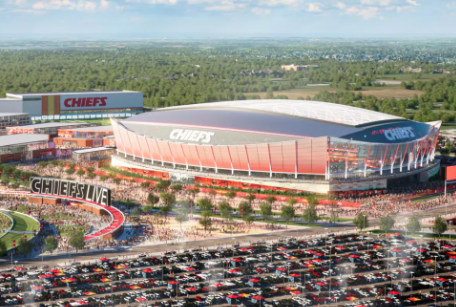
Masterson, a Republican, shared a letter from Mark Donovan, president of the Kansas City Chiefs. Donovan said the team had made strides on a plan to build a domed, Super Bowl-capable stadium in Kansas.

“At the same time,” Donovan said, “the complexity and scale of the project—and the importance of crafting a structure that works for all stakeholders—make it clear that more time is needed to bring the effort to full fruition.”

How did we get here?

Both teams have played at their respective stadiums in the Truman Sports Complex for over half a century. With aging facilities and leases expiring in 2031, the Chiefs and Royals have been planning changes for years.

But last year, voters in Jackson County, Missouri, rejected a sales tax extension to fund stadium renovations for the Chiefs and relocation for the Royals.

Kansas lawmakers jumped at the opportunity. In June of 2024, bipartisan majorities approved a plan to help cover up to 70% of the cost of a major stadium project — with the promise that taxpayers would not foot the bill.

Instead, the state would use a funding mechanism called Sales Tax and Revenue, or “STAR,” bonds.

Private investors would purchase state-issued bonds to help pay for the stadium’s construction. Revenues from economic activity that the development brings, like sales tax from food and ticket purchases, would be used to pay back the loans.

Supporters maintain that STAR Bonds are a way of raising capital for developments without burdening taxpayers. Though critics worry that sales tax revenue would go to paying off bonds rather than to the local or state governments.

Missouri officials, like Kansas City Mayor Quinton Lucas, condemned Kansas’ bid as a reignition of an economic “border war” from years past.

But the Missouri state Legislature has taken its time presenting a counter-offer. In June, nearly a year after Kansas’ STAR Bonds proposal, Missouri lawmakers approved an incentive package to cover half of the costs to renovate the Chiefs’ Arrowhead Stadium and relocate the Royals.

Meanwhile, the Kansas City Royals have shown interest in potential stadium sites in Kansas. The organization confirmed in May that an affiliate had bought the mortgage of the Aspiria development in Overland Park.

Nevertheless, the Royals insist they are still considering multiple options on both sides of the state line.

Lingering uncertainty

Time is running out for both teams to decide where they will go — let alone develop and build new sites — in the six years that stand between now and their leases expiring.

The Chiefs want to build a domed stadium, new headquarters, and a practice facility if they reach a deal on a new site. The Royals have previously planned to include a hotel, offices, and entertainment options in a new stadium development.

In his letter to Masterson, Chiefs president Donovan said his organization hadn’t heard back from Kansas Department of Commerce Officials about their latest proposal in the past six weeks.

Democratic Lt. Gov. David Toland, who doubles as Kansas’ secretary of commerce, said in a June statement that the negotiations were complicated and posed high stakes for taxpayers.

“Bringing the Royals and Chiefs to Kansas is a complex process with long-term opportunities, and implications, for generations to come,” he said. “It’s critically important that we get it right.”

Zane Irwin reports on politics, campaigns and elections for the Kansas News Service. You can email him at [email protected].

The Kansas News Service  ksnewsservice.org.

Fall Gardening

0
Ready or not it’s time to start planning the fall vegetable garden. Fall gardens may face additional pressures of pests and heat, but the flavor that comes from these late season crops are often better. Fall planting requires attention to the number of days to harvest as well as the crops’ tolerance to frost. Crops may be direct seeded or transplanted into the garden. Growing transplants is a good choice when the temperature is too warm for starting seeds in the ground, if you have grow lights and space available for starting them indoors.
When seeding crops directly into the garden, plant slightly deeper than recommended in the spring to take advantage of the cooler soil temperatures and moisture available. Water more frequently to prevent the seeds from drying out. Overhead watering often causes soil to crust, making it more difficult for young, tender plants to emerge. Prevent this by applying a light sprinkling of vermiculite or compost over the row after seeding or use a soaker hose or drip irrigation right next to the row to allow water to slowly seep into the ground.
Mid-July:
Plant potatoes if you can find seed stock or have saved seed potatoes. Do not use
freshly dug potatoes as they have a built-in dormancy that will prevent growth. Also, grocery store potatoes are often treated so they don’t sprout.
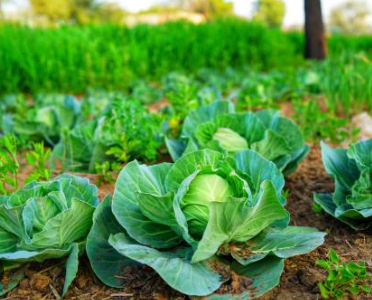
Cabbage, broccoli, and cauliflower can be started from seed at this time. Choose a protected place where the soil can be kept moist and rabbits will not bother them. This will not be where they will grow the entire season but these crops will be transplanted about mid-August.
Late July:
Seed beets, carrots and beans.
Late July to Early August:
Seed spinach and long-season maturing lettuce. Leaf lettuce will be seeded later.
Second Week of August:
Transplant cabbage, broccoli and cauliflower to their final location.
Mid to Late August:
Seed radishes and leaf lettuce. No need to fertilize before planting. Side-dress two weeks after transplanting or four weeks after sowing seed by applying 2 tablespoons of a 16-0-0 or 1 tablespoon of a 27-3-3, 30-3-4 fertilizer, or something similar per plant.
The Kansas Garden Guide is a great resource for additional information about fall gardening.