Wednesday, January 14, 2026
Home Blog Page 51

Wild Rice Soup

0

There are many soups I consider rather ‘elegant’, ‘lighter’ in presentation, and wild rice soup is one of them. It can hold it’s own as the main entree or as an opener to a meal. Mine includes the use of sherry, giving it a bit of uniqueness. You will notice it does not include any bacon, chicken or turkey. However; it is certainly a good option to apply. I’ve prepared the dish as presented, and with finely chopped/grilled chicken too.

Remember the wild rice is going to take a while to cook for this dish. You have heard me say, I often cook several cups of wild rice, set it out to dry and then freeze it for dishes.

Pop of color; perhaps a sweet red pepper will fill the bill for an additional amount of flavor and color. You may also like the addition of sauteed mushrooms. I’m sitting here thinking I don’t think it would be too odd to implement very small pieces of steak in this dish. Could be quite nice.

What to serve with the soup? A fall salad, pinwheels, mini sliders perhaps a club sandwich cut into small triangles. The mock white castle burgers might be fun too.

Like many of you I enjoy eating out, especially breakfast. This weekend Ervin and I tried a Pub in Hollister, Mo., for an evening meal. The prices were high, but we were eating light, so we didn’t cringe too much! The reason I brought this situation up is the fact it was expensive and just sub-par.

The food was OK, but not someplace I would send someone to, for a good meal. Everything was missing very small elements that could have turned the dining experience into a more positive outcome. So ,when you’re cooking in the home kitchen, push yourself to add elements of surprise that lift the average dish into something spectacular. Need a few ideas? OK, here we go:

1. I use a little cocoa powder or chocolate in any form in my chili soup.

2. In my chocolate chip cookies I add a tad of cinnamon. It lifts the flavor of the chocolate to a new level.

3. Cherries, blueberries and other fruit can easily be enhanced with a little

almond flavoring.

4. Don’t be a tight-wad with the meat in chili. At the restaurant the chili flavor was nice, but the meat was very scarce.

5. Don’t leave dinner guests wondering how to eat your meal with grace.

Walk yourself through the meal, and make sure it doesn’t create uncomfortable moments at the table.

I have a 7 dozen batch of chocolate chip cookies to get made, so I’d best wrap up the column, and get to work in the kitchen. Enjoy the week with the goal of making someone’s day! Simply yours, The Covered Dish.

Wild Rice Soup

2 tablespoons butter

1-3 tablespoons of very finely chopped onion

¼ cup flour

4 cups chicken stock

2 cups cooked wild rice

½ salt

White pepper to taste

1 cup half and half

2 tabs dry sherry

Minced Parsley or chives for embellishment

Using at least a 6 quart stockpot, sauté the onion in the butter until translucent. Stir in the flour and gradually add the chicken stock while whisking. The mixture should lightly thicken. Blend in the half and half and sherry. Simmer for at least 6 minutes, gradually increasing the heat. Be very careful, you don’t want this to come to a boil. At serving time garnish with parsley or chives. This will freeze. Serves 6-8 in small servings, not ‘large’ bowls. I usually double this recipe.

Consider additional butter and adding red pepper. I also enjoy this with chicken, turkey and/or mushrooms added.

“The What If’s”

0

Let’s call her Sarah, although that wasn’t her name. I’d had the privilege of delivering her, and the fun of watching her grow into a precocious toddler, with an impish smile and a joyous laugh. Then I had the responsibility of explaining her autopsy report to her devastated parents.

She’d died from an infection that her young, previously healthy body just couldn’t fight. It hadn’t taken long; she’d started running a fever the night before, and her parents brought her to the clinic the next afternoon. The flight crew hadn’t even gotten to our ER before she lost the battle.

Of course we all had “what ifs” to torment ourselves with. What if mom had breast fed for longer? What if dad hadn’t taken her to that play date, with the little friend who had a runny nose? What if the doctor (me) been more detailed in the “how to tell when she’s really sick” discussion? What if her parents had brought her to the ER that morning, instead of to the clinic that afternoon?

The “what if” that has tormented me the most, though, is what if she’d been born just a year or two later?

The infection that killed my little patient was caused by streptococcus pneumoniae. The original version of the Prevnar vaccine, which taught a child’s immune system to fight 7 strains of that bacteria, was introduced in 2000. Shortly after, the rates of serious infections from these bacteria dropped precipitously, and not just in the children who got the shots. Adults also benefited, to varying degrees.

One modernized version of the Hippocratic oath contains the phrase “I will prevent disease whenever I can, for prevention is preferable to cure.” I don’t remember if my classmates and I said those particular words on graduation day, but it’s a philosophy I wholeheartedly endorse, and one I try to live by. I nag my patients to eat more fruits and vegetables, and to get their calcium. I nag them to exercise more. I nag them to quit smoking. I urge them to get to the eye doctor, and to the dentist. I remind them that seatbelts save lives, that helmets save lives, that smoke detectors save lives. That vaccines save lives.

I don’t know that the Prevnar vaccine would have saved little Sarah. No vaccine is perfectly protective. She might still have gotten seriously ill. She might still have died.

But I do know it would have shifted the odds in her favor.

Dr. Debra Johnston is a Family Medicine Physician at Avera Medical Group Brookings in Brookings, SD. She serves as one of the Prairie Doc Volunteer Hosts during its 24th Season providing Health Education Based on Science, Built on Trust. Follow The Prairie Doc® at www.prairiedoc.org, Facebook, Instagram, YouTube, and TikTok. Prairie Doc Programming includes On Call with the Prairie Doc®, a medical Q&A show (most Thursdays at 7pm, YouTube and streaming on Facebook), 2 podcasts, and a Radio program (on SDPB, Sundays at 6am and 1pm).

It’s science: Why a pumpkin is actually a fruit

0
AgriLife Extension horticulturist explains what sets fruits and vegetables apart.

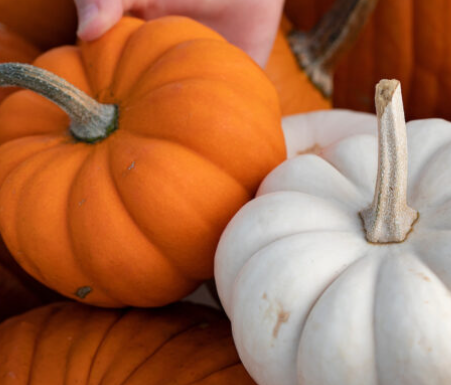
Every fall, pumpkins steal the spotlight with multiple purposes: as decorations, for soups and in pies. But here’s a fun fact backed by science: this seasonal favorite is actually a fruit.

Joe Masabni, Ph.D., Texas A&M AgriLife Extension Service vegetable specialist and professor in the Texas A&M Department of Horticultural Sciences, said pumpkins are scientifically classified as fruits because of how they grow. Anything that starts from a flower is classified botanically as a fruit.

Why do people mistake pumpkins for vegetables?

People typically consider something as either a fruit or a vegetable based on how they eat it rather than how it grows.

“We see them as to whether we eat them as a dessert, salad or as part of a meal,” Masabni said.

For example, consider cucumbers or tomatoes. People typically don’t eat them as desserts, he said. They often eat cucumbers and tomatoes in salads or cooked meals, so they may think of them as vegetables, even though they’re fruits.

“The pumpkin is a tricky one, though,” he said, “because some people make soups or stews from pumpkins, which is a meal, while others make pies, which is a dessert. So that can lead to confusion.”

What’s the difference between a fruit and a vegetable?

The difference between a fruit and a vegetable lies in whether the produce starts as a flower.

“All plants start from a seed,” Masabni said. “Let’s take the example of lettuce as a vegetable. It makes more and more leaves, and then you harvest them and eat those leaves. If you let it go even longer, it will eventually make a flower stalk and make seeds that we harvest and store for next year’s crop.”

A pumpkin plant starts the same. However, its flowers eventually turn into the fruit we eat – in this case, the pumpkin itself.

“A pumpkin starts as a small plant with a few leaves, and as the leaves grow and more branches develop, flowers will start to bloom on the plant,” he said. “Those flowers then need to be pollinated by bees or other pollinators. Once a flower is pollinated, it develops into a fruit that we consume. So ultimately, fruit relies on pollination of the flower to become the thing we eat.”

What other ‘vegetables’ are actually fruits?

Besides pumpkins, some other fruits that are typically confused with vegetables are:

  • Cucumbers
  • Tomatoes
  • Eggplants
  • Corn
  • Zucchini
  • Okra
  • String beans
  • Squash
  • Peppers

So, does it matter?

Maybe not at the dinner table, but it’s a fun fact to share at your next fall gathering.

“The fruit and vegetable debate is a fun one that hangs on the technical, scientific view of these plants that we consume,” Masabni said. “At the end of the day, we want to inform people, but we also want them to enjoy these plants as gardeners and at the dinner table.”

Daughter Verena Pens the Column Again

0

Lovina’s Amish Kitchen
Lovina Eitcher,
Old Order Amish
Cook, Wife &
Mother of Eight


This is Lovina’s daughter Verena writing. It is such a beautiful Monday evening. The leaves are changing color more and more. It is always such a beautiful view once the leaves are changed to such pretty colors.

Fall used to be my favorite season and I would love to rake up the leaves. But with me being disabled, it became too much for me to handle as I grew older. I’m thankful I can now use a leaf blower and still go out there to help gather up the leaves. It is something I enjoy. I do not care for the stink bugs and lady bugs and that also comes with fall since the beans were cut across the road from us but so be it. That is a very small thing to worry about. Haha! 

Summer became my favorite season once my muscles started to weaken more. I discovered it was easier to get around in the warmer weather. I still enjoy the snow, but I feel cooped up when I can’t go outside. Especially when there is a lot of snow on the ground, although it does look pretty. But I do look forward to putting together puzzles and sitting by the kitchen table sipping on hot chocolate while Daniel Ray sips on his coffee during the cold winter months. Sitting here writing this is just another reminder to myself that life is really what you make it. 

I now have the laundry folded and ready to put away. Laundry is one of the jobs I am not thrilled about and one of the jobs that is never ending. Haha! Also same as dishes but washing the dishes is a job I do not mind. Many times Daniel Ray will fold the laundry for me but today was not one of those times. He had other jobs to attend once he was home from work. Daniel Ray is on three days as of right now at the RV factory. Thursday and Friday he works at the buggy shop for another Amish man in this community. As of right now, he is learning how to build open cruiser seats. He enjoys the work so far. 

Daniel Ray and I butchered two deer on Saturday. Daniel Ray’s parents came to help us. We were so glad for their help. Daniel Ray’s siblings Anna, age 13, William, age 8, and Alvin, age 6, came along as well. We canned 14 quarts of deer burger and got 14 – 1/2-quart bags of deer burger for the freezer. Daniel Ray wants to make deer jerky this week yet sometime. I’m hoping Daniel Ray or I will get another deer soon because I would like to can deer chunks. Sister Liz said that she canned them and put beef flavoring in, and it tastes not far different from beef chunks that way. I’m excited to try it. We plan to go over to sister Liz and her husband Tim again this week sometime so I can try my luck at hunting again. So far, I haven’t had a chance at a deer but Daniel Ray shot two already out of sister Susan and her husband Ervin’s property. 

We now have our buggy back, it was getting fixed. Daniel Ray was getting around on his bike and I was driving the EWheels. The EWheels is a bigger mobility scooter and more road ready. I have a small trailer I can hook behind it and put my scooter on. We got around like that a lot this summer. It makes it so nice for me because I can go with Daniel Ray when he goes on a bike ride. I know mine isn’t a bike, but it feels pretty close.

It was nice to have our buggy back to go to church on Sunday because it was chilly and very foggy. The buggy lights are much brighter than the EWheels or bike lights. We have a heater in our buggy and it makes it nice and cozy for a horse and buggy ride. 

Well, you all take care and God’s blessings to you!!

VENISON CHILI

3 pounds lean venison

1 small onion, chopped

1 quart kidney beans, cooked

Brown sugar to taste if desired

1 to 1 1/2 tablespoon chili powder

1 quart pasta sauce

4 quarts tomato juice

1 quart water

Brown venison burger and onion. Add all remaining ingredients and simmer for 5 to 10 minutes. If desired this can be processed in a pressure cooker according to its directions. Makes 10-14 pints. 

Kansas hides a magnificent limestone castle that tourists have overlooked for decades

0

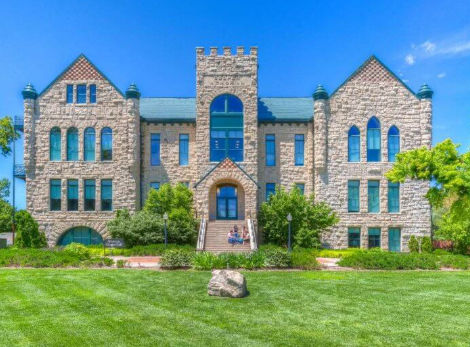
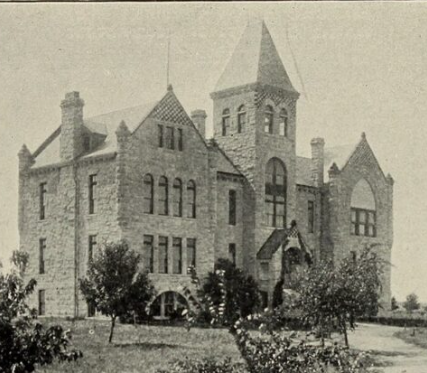
Cooper Hall’s Grand Vision on the Kansas Prairie

In 1886, Pliny Axtell gave ten acres of land to build a dream on the Kansas prairie. The United Presbyterian Church took the gift and set out to build their westernmost college in America.

They named it Cooper Memorial College after a church leader they loved. Soon, architects Evans and Gall got to work on a grand plan.

Local men cut huge blocks from nearby limestone beds to build the three-story hall with its tall 75-foot tower.

When Cooper Hall opened in 1887, it stood as both a school and church, with thick walls and round arches that still catch the eye.

Settlers Wanted Their Own College in 1880s Kansas

Pliny F. Axtell came to Sterling, Kansas as one of the first settlers and bought lots of land in the area.

The growing Presbyterian community in this small frontier town needed a college to teach their young people.

The United Presbyterian Church of North America was looking for a place to build their westernmost college.

Local folks in Sterling got excited about having a college in their small prairie town, as it would put their community on the map.

Ten Acres of Prime Land Sealed the Deal

In October 1886, Pliny F. Axtell gave 10 acres of his best land in Sterling for the college.

He picked a spot on high ground where people could see the building from miles around. This was a big gift worth a lot of money, and Axtell knew it.

The spot worked great as a landmark that farmers and travelers could spot from across the flat Kansas landscape.

Church Leaders Said Yes to the Sterling Proposal

The United Presbyterian Church Synod of Kansas took Axtell’s offer. They promised to pay for the school and keep it running for years.

This choice made Sterling home to the most western college in the entire United Presbyterian system. The church saw this as their chance to spread their values and education into Kansas frontier.

 A Beloved Pastor Gets His Name on the Building

The church named it Cooper Memorial College after Reverend Joseph Cooper, a top Presbyterian leader everyone respected.

Cooper had made such a big impact on the church that they felt he earned this lasting tribute. Presbyterians often named important buildings after church leaders.

The Cooper name gave the new school instant trust within church groups.

Two Talented Architects Dream Up a Masterpiece

George H. Evans and William Gall got the job to design the building.

They picked the popular Romanesque Revival style that people liked for big public buildings in the 1870s and 1880s.

Their plans called for a huge three-story limestone building stretching 120 feet long and 50 feet wide. The best part of their design was a 75-foot tower that would stand tall above the flat Kansas fields.

Kansas Stone Created a Lasting Monument

The builders found plenty of limestone right in Kansas to build Cooper Hall. The area had rock formations that gave perfect building material.

Using local stone saved money on shipping and gave jobs to local quarry workers. The limestone looked great and would last for many years.

Local Workers Tackled a Massive Building Project

Construction teams started work in 1886 right after the architects finished their plans. Workers from the area brought their skills to this big project that would change the town.

The Romanesque style meant they built round arches, thick walls, and used heavy building methods. Moving the giant limestone blocks from quarries to the building site took special tools and lots of workers.

One Building Served Two Important Purposes

Cooper Hall wasn’t just for classes. It also housed the Second United Presbyterian Church.

This smart plan meant the building stayed busy all week with students and then filled with churchgoers on Sundays.

Sharing the space helped save money when money was tight on the frontier. The multi-purpose approach showed how practical these frontier Presbyterians were.

One Man Ran Both School and Church

Reverend Francis M. Spencer ran both the college as president and the church as pastor.

His background in teaching and preaching made him perfect for this hard job. Having one person in charge of both places kept everything running smoothly.

Spencer became the face of this new school in Sterling.

Doors Opened to Students in Fall 1887

Cooper Hall welcomed its first students on November 1, 1887, with much celebration.

The college became the very first United Presbyterian higher education institution in this part of America, and the farthest west. The impressive building brought big-city architectural style to small-town Kansas.

The successful project showed what could happen when settlers, church leaders, and skilled architects worked together toward a common goal.

Visiting Kansas Historical Society in Topeka

The Kansas State Archives research room at 6425 SW 6th Avenue in Topeka offers free public access to historical records related to Cooper Memorial College (now Sterling College).

The archives operate Tuesday through Friday from 9am-12pm and 1pm-4pm, plus Saturday mornings.

While the Kansas Museum of History remains closed for renovation until November 22, 2025, administrative offices are available weekdays from 8am-5pm.