
Monday, January 19, 2026
Home Blog Page 129

“Oral health is a gateway to general wellness”

0

For much of modern healthcare, dentistry has existed apart from the broader medical system.

Patients commonly have separate providers for medical and dental care, and this division is

reflected in insurance models, education, and even cultural perception. Yet biologically, this

separation is artificial. The mouth is a central part of the body, and its health is intimately tied to

overall well-being.

Studies of centenarians—people who live into their 100s—have shown a correlation between

good oral health and longevity. While flossing alone may not extend your life, oral hygiene often

reflects broader patterns of self-care. People who maintain their teeth through regular checkups

and good habits tend to engage in other positive health behaviors, supporting the idea that oral

health is a gateway to general wellness.

Beyond its connection to systemic health, oral health also has a major psychosocial impact. A

healthy smile can influence confidence, job opportunities, and social interactions. Teeth support

essential functions like speech, eating, and self-expression—all of which contribute to quality of

life at any age. This means not only is there a reason to maintain your teeth with brushing and

flossing, but there are also benefits to improving them for both esthetics and function.

One way to enhance a smile is by improving tooth alignment, which can benefit both function

and appearance. Orthodontics—the dental specialty focused on straightening teeth and

correcting bite issues—is often associated with adolescence, but treatment is increasingly

common among adults. Advances in digital imaging and clear aligner therapy have made

orthodontics more accessible and discreet. For many patients, even minor adjustments, such as

moving one tooth or closing a small space, can be completed efficiently and comfortably with

modern treatment options.

These treatment options can now range from simple corrections to comprehensive care using

either clear aligners or traditional braces. Importantly, they are often more convenient than

people expect, with flexible solutions to fit different lifestyles and goals.

The first step toward improving your oral health—or enhancing your smile—is establishing or

re-establishing a dental home. Regular dental evaluations help detect and address problems

early, before they become more serious or expensive to treat. Once a foundation of oral health

is in place, patients can explore options to improve the shape, color, alignment, or function of

their teeth.

Whether you’re considering tooth whitening, replacing missing teeth, or straightening your smile,

having a trusted relationship with a dental provider makes all the difference. Open

conversations, regular care, and modern dental tools make it possible to achieve not only a

healthier mouth but a healthier life overall

Paul Meyer, DDS, MS, is an orthodontist proudly serving the Brookings, South Dakota community. After earning his dental degree from the University of Minnesota and completing his orthodontic residency at the Mayo Clinic, Dr. Meyer returned to his hometown to carry on the family practice at Meyer

Orthodontics. He is honored to continue the practice founded by his father, Dr. David Meyer, providing expert, personalized orthodontic care to patients of all ages. Follow The Prairie Doc® at www.prairiedoc.org, Facebook, Instagram, YouTube, and Threads. Prairie Doc Programming includes On Call with the Prairie Doc®, a medical Q&A show (most Thursdays at 7pm streaming on Facebook), 2 podcasts, and a Radio program (on SDPB), providing health information based on science, built on trust.


Garlic harvesting!

0
KSU horticulture

It is nearly time to enjoy one of the many fruits of your vegetable garden labor! Garlic harvesting!


Most varieties will be ready to harvest in late June to mid-July. The best indicator of time to harvest is when the 5 lowermost leaves have yellowed and died. When 3 to 4 leaves have turned brown, you should discontinue watering. Dig the whole plant with a spade or garden fork and gently remove dirt, taking care to keep the wrapper intact. Let dry in a shady location with good air circulation for a day or two. Brush off any remaining dirt and tie in bunches. Hang in a shady, dry, cool, and well-ventilated location for 4 to 6 weeks to cure the bulbs. Once dry, trim stalks to about 1½ inches above the bulb. To maximize storage life, store bulbs at 32 to 25°F and 65 to 70% relative humidity, such as in a refrigerator. Bulbs can be stored at room temperature, but storage life may be shortened if the bulbs begin to sprout due to the warmer temperatures.


“Anatomical Variations: Connecting Physicians and Anatomists”

0

It’s remarkable how much anatomy education and medical practice overlap, yet anatomist-physician collaborations are often underutilized for improving student learning and patient care outcomes.

Becoming an anatomist or a physician requires commitment to many years of education and practical training. Both generally require four years of comparable, comprehensive baccalaureate coursework followed by four or more years of concentrated graduate/medical education and practical training. Amid both career paths, students work diligently to achieve predefined benchmarks for competency in complex human anatomy, meticulous clinical applications, and interrelated skills. Nevertheless, it is natural for anatomists to lose insight about practical clinical skills and physicians to lose insight about anatomical intricacies – most notably while the other person is keenly maintaining expert-level knowledge and knowhow of that very information. Anatomical variations offer a course of action for efficiently and effectively addressing the “use it or lose it” principle for both experts.

Human anatomy is taught and learned according to its foundational morphologic norm – that is, the typical configuration, form, and function of structures in the body. Understanding typical anatomy allows physicians to draw clinical insights from patients’ chief complaints. For example, knowing the typical arrangement of bones, muscles, nerves, and vessels in the body allows orthopedic physicians to discern differential diagnoses and establish safe and effective surgical and therapeutic treatment plans for patients with musculoskeletal issues. However, anatomical variations – structures that do not present in typical location or form – are common and can complicate both learning and medical practice.

As authorities in the granularity of human anatomy, anatomists develop and maintain expertise about the development, presentation, and impact of anatomical variations, especially as they uncover specific cases during routine cadaveric dissection. As authorities in the minutiae of patient care, physicians develop and maintain expertise about adaptive clinical practices to address anatomical variations, especially as they come across specific cases during patient examinations and surgeries. In these regards, each professional can strategically benefit from the other’s expertise to create better outcomes, and this “bench-to-bedside” collaboration is known to promote translational medical education, high-definition patient care, and exemplary interprofessional behavior.

Despite their inherent benefits, strategic anatomist-physician collaborations appear underutilized. Investigating anatomical variations cases permitted by cadaveric donors and/or living patients offers one way to encourage these collaborations. Common field interest seems to effortlessly reciprocate enthusiasm from both parties. Anatomists can leverage workload designated for research/scholarship and physicians can fulfill contractual service obligations, thus offering a manageable framework for each to strategically contribute expertise and achieve high-quality and high-impact productivity. Simultaneously involving students can further distribute workload while providing them with meaningful research experience and influential mentorship.

As indicated, cadaveric donors and living patients play a critical role in this framework by willfully permitting analysis of their associated tissues and records. Human cadaver dissection offers complete and unrestricted views of anatomical variations, and patient records (diagnostic imaging, physician summaries, etc.) convey the clinical presentation and impact of variations. Anatomists, physicians, and

students remain extremely grateful to each for their incredible contributions to advancing medical education and patient care.

Ethan L. Snow, PhD is an Anatomist and currently serves as an Assistant Professor of Innovation in Anatomy at South Dakota State University in Brookings, South Dakota. Follow The Prairie Doc® at www.prairiedoc.org, Facebook, Instagram, YouTube, and Threads. Prairie Doc Programming includes On Call with the Prairie Doc®, a medical Q&A show (most Thursdays at 7pm streaming on Facebook), 2 podcasts, and a Radio program (on SDPB), providing health information based on science, built on trust.
Wheat Foods Council prepares for summer strategy meetings

0

Contact: Marsha Boswell, [email protected]

For the audio version, visit kswheat.com.

From engaging top chefs in an immersive dive into the world of wheat to summer strategy meetings, the Wheat Foods Council (WFC) continues to champion wheat-based foods, as it has done for more than five decades.


“The WFC brings together all of the different industries connected with wheat,” said Cindy Falk, Kansas Wheat nutrition educator. “Millers, bakers and more are all members, so this organization is where folks can come get a really good perspective about what is going on in the world of wheat from the farm to the table and everywhere in between.”


Wheat producers across the country joined together in 1972 to create the WFC as a national organization to promote the entire category of wheat-based foods, including baked goods, cereal, crackers, pasta, sweet goods and tortillas. Since then, the organization has established itself as a source of science-based information on wheat and grain foods nutrition.


Today, the WFC uniquely remains an organization whose membership encompasses the entire wheat foods value chain. Kansas Wheat is a member, along with grain producers, millers, baking suppliers, life science companies and cereal manufacturers. Together, the WFC stays true to its original mission — to help increase the awareness of dietary grains as an essential component of a healthful diet.


To do so, the Council develops sound nutritional, educational and promotional programs that reach health and nutrition professionals, opinion leaders, media and consumers. The organization works with a wide swath of key audiences, including health and nutrition professionals, educators, supermarket and retail dietitians, health-conscious consumers, media, chefs and cooks and personal trainers.


One recent example of these efforts was a chef-focused event in April 2025, when the WFC hosted 11 prominent, high-volume chefs for an in-depth look into the wheat industry at the Culinary Institute of America in Napa, California. The experience included a tour of a working flour mill, educational sessions on wheat varieties, production and growing region, hands-on demonstrations of a variety of techniques and doughs, guest lectures and more.


Attendees included culinary and research and development leads from major foodservice operators and suppliers. The event culminated with a culinary challenge, where teams of chefs used their creativity and newfound knowledge to develop innovative menu items for the morning and afternoon dayparts – all centered around wheat. The WFC plans to maintain ongoing connections with these chefs, monitoring their progress and offering continued support to ensure successful menu integration and increased wheat usage.


This successful event adds to the WFC’s decades of achievements. Now, the organization is turning its sights to the future during the upcoming WFC summer board meeting, scheduled for June 17 to 19, in Minneapolis, Minnesota. This meeting will serve as a forum to review the previous fiscal year’s marketing program, analyze current industry health and wellness trends and formulate planning recommendations for the 2025-2026 fiscal year. A significant discussion will also focus on the future direction of the WFC, strategizing how best to continue its mission in an evolving landscape.


Falk will help provide context to the discussion with a presentation highlighting 20 significant events in the organization’s history, spanning from the creation of the WFC to the latest in educational resources and research. She is also bringing along a display of historical items and educational materials, including posters, pamphlets, books, swag and more.


“For more than five decades, the WFC has been a steadfast voice supporting the wheat industry, ensuring its vital role in people’s daily lives,” Falk said. “This continued work is crucial, and this organization is a place where the entire industry comes together for a shared vision.”


Learn more about the Wheat Foods Council at wheatfoods.org.

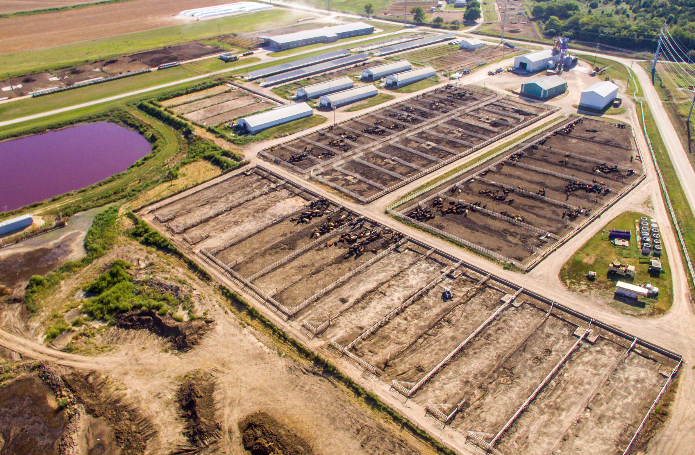
Researchers using drones to aid cattle feed yard sustainability

0

K-State researchers use thermal images to improve cattle management.

Kansas State University researchers are working on a project to analyze the opportunities available by using drone thermal imaging in cattle feed yards.

In a recent episode of Cattle Chat, guest Haley Larson, assistant professor in animal nutrition and health at K-State Olathe, described their project and findings.

“To start off, we needed to determine the type of samples in these feedlot pens that could better detect pen management, especially as you have different environmental conditions, different manure outputs, moisture content,” Larson said. “Then, we wanted to find out if we could capture that same pen management findings in a thermal image from a drone.”

She said that drones are highly sensitive, and images can be collected in series to improve sensitivity contrary to what some might think.

“It’s a series of many images of that pen that then are combined so we can get a lot of sensitivity out of these aerial images. They’re taken sequentially as the drone flies over that pen,” Larson said.

With their findings, Larson and her team were able to begin analyzing cattle management strategies. After pilot testing small pens, the researchers took the drones to commercial feed yards to see what information they could gather.

“Commercially there are ways that you can upload the drone’s images into an app on your phone and it will run the algorithm to count the number of cattle that are in that pen,” Larson said.

One of the team’s interesting findings: Larson said researchers found they could detect water leaks that pen riders had missed. Drones were able to pinpoint the thermal temperature of the bedding as well as the coolest locations of each pen.

Larson added that the technology has the potential to be very useful to producers as it becomes more accessible.

“A lot of this pilot work is helping to lay the foundation for where we could go eventually for some real time processing ability at the producer level, or at the nutritional consultant level, to try to better extrapolate some of this data outside of the very specific programs that recombine the images together, she said.”

For the full discussion listen to Cattle Chat on your preferred streaming platform.