Wednesday, January 14, 2026
Home Blog Page 52

Training for women landowners begins Oct. 21

0

Sessions will be held in Missouri, Kansas and Iowa

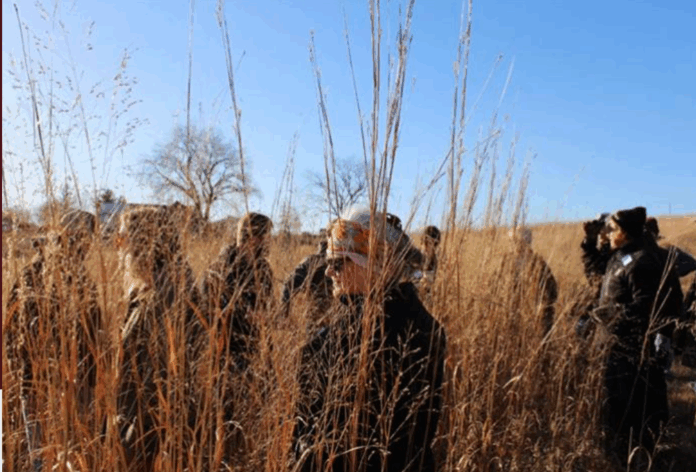
The Center for Regenerative Agriculture at the University of Missouri recently launched the Women Landowners Leading Regeneration (WLLR) project. It offers trainings and outreach activities available in Missouri, Iowa and Kansas.

WLLR project is designed to address the unique needs women landowners—those who own farmland but do not farm it themselves—by providing a supportive, peer-based environment to help them implement conservation practices on their land, said project co-leader Kelly Wilson, associate director of Center for Regenerative Agriculture.

“Women own roughly 25% of U.S. farmland—an estimated 354 million acres—but are often overlooked in traditional conservation outreach,” Wilson said. “Many women landowners want to steward their land in ecologically responsible ways but lack access to the information, networks and support they need. This project fills that gap.”

Wilson says WLLR is rooted in the Women Caring for the Land model, which uses a peer-to-peer learning circle approach proven effective in increasing women’s knowledge, confidence and ability to advocate for conservation outcomes on rented farmland. “About 70% of women who attend a Women Caring for the Land meeting will take an action to improve conservation on their land.”

The effort is about building bridges between women landowners and the conservation tools available to them, she says. “We’re not only seeing increased adoption of practices like cover cropping and reduced tillage, but we’re also witnessing women forming lasting networks of support that strengthen rural communities.”

“Through both in-person and virtual learning circles, we’re connecting women landowners with one another and with resource professionals who respect and understand their goals,” said project co-leader Olivia Caillouet. Caillouet says participants will become familiar with the learning circle model and learn about lease agreements that encourage regenerative farming. They’ll also learn about government-funded cost-share and incentive programs and about practices such as cover crops and conservation tillage.

The project is a collaboration of the University of Missouri, the Kansas Soil Health Alliance, E Resources Group, and the Women, Food and Agriculture Network. Partners include consultants Jean Eells and Rebecca Christoffel, who will lead trainings, and Jennifer Simmelink, executive director for the Kansas Soil Health Alliance.

Wilson and Calliouet recommend the training for conservation professionals, including extension staff and natural resource partners who work with women landowners.

Fall trainings

  • Missouri: Tuesday, Oct. 21, Lakeside Nature Center, 4701 E. Gregory Blvd., Kansas City.
  • Kansas: Wednesday, Oct. 29, Prairiewood at Blue Sage Barn, 1484 Wildcat Creek Road, Manhattan.
  • Iowa: Wednesday, Nov. 12, Madison County Historical Museum, 815 S. Second Ave., Winterset.

The WLLR project will continue into 2026 and 2027 with learning opportunities tailored directly to women landowners in Kansas, Missouri and Iowa, Wison said.

Learn more about WLLR, or contact Wilson at [email protected] or Caillouet at [email protected].

Have you an Owl in your Burrow?

0

I love birds of prey, especially owls. Among my top ten favorite life experiences has been sitting on my brother’s porch after dark, when he lived deep in the southeastern Ohio woods, listening to the sounds of the night. There are whippoorwills and coyotes and all the small croaking, twittering creatures of the dark, but the main attraction was always the owls. From the eerie whines of tiny screech owls, to the deep, bass moans of great horned owls, and the tell-tale “Who cooks for you, who cooks for you too” cries of barred owls, the night time woods always came alive with owl calls.

A little-known owl species here in Kansas is the burrowing owl, a medium sized owl that make their home in abandoned badger and prairie dog dens. I was introduced to burrowing owls a few years back during an opening day pheasant hunt near my home. We were a large group of 15 or so hunters and were trudging across an overgrown CRP field. As we walked, birds identified by the landowner (who was with us) as hawks began taking flight, one-at-a-time from out of nowhere. Looking back, I believe those birds were in fact burrowing owls being spooked by our presence from their dens that were probably old abandoned badger holes.

Studies show burrowing owl populations to be in sharp decline, easily imagined here in Midwestern farm country where badger dens are not welcome and are filled-in when possible, and where prairie dog towns as a whole are hard to come by anymore. They are listed as endangered in Canada, as threatened in Mexico, and as endangered, threatened or of special concern in 9 of the United States. Here in Kansas, they are listed as “vulnerable.” Burrowing owls are active both day and night and often live in colonies of several mated pairs. They drag all manner of stuff into their dens as nesting material, and I found numerous mentions of cow manure being a favorite. Researchers believe the manure somehow helps control the microclimate of the den, plus attracts insects which the owls feed on. Typical clutch sizes are from 3 to 12 eggs, and large families of chicks are often raised. Their main diet is mice and moles during spring and early summer when they’re still feeding hungry chicks, then mainly grasshoppers and beetles as long as they can still be found. Burrowing owls stand 10 to 12 inches tall when mature and have long, featherless legs and white eyebrows above extremely large, bright and beautiful yellow eyes. All birds make some sort of vocal sounds, and even though burrowing owl calls are not noteworthy at all compared to some of their vocal cousins, they do make a few cooing, chirping sounds, the most recognized being a 2-note sound reminiscent of a quail call.

We recently watched a TV documentary about swift foxes and burrowing owls living in suburban neighborhoods around Las Vegas. Since watching that documentary, we have found a couple dens of burrowing owls living in a sprawling prairie dog encampment near Walmart in Hutchinson. We can see their dens from a side street, so now every time we are in that part of town (which is way too often for me) we swing past, and if they are sitting at the entrance to their den, we stop and watch awhile. They are surrounded by active prairie dog dens and the dogs scurry about and graze as if the owls weren’t there at all. In fact, the little owls probably benefit from the prairie dog’s surveillance system. In an active prairie dog town there are always certain occupants designated as sentries whose job it is to keep watch for danger, and when intruders are spotted in the form of foxes, hawks or merely nosey humans, they sound an alarm by rising quickly up on their hind feet, stretching their heads skyward and emitting

shrill high pitched chirps of danger, sending all their brethren scurrying for cover and affording the owls a chance to dive into their burrows too.

One of these days I’m going to wonder around through the prairie dog towns around Walmart to see if there are signs of any other little owls there. I’ve always wondered if there are prairie rattlesnakes living there amongst the prairie dogs too. They are common inhabitants of abandoned prairie dog dens, although not quite as cordial as the owls, given that they often eat the landlords…. Continue to Explore Kansas Outdoors!

Steve can be contacted by email at [email protected].

Lettuce Eat Local: Tomato Juice For The Soul

0

Amanda Miller
Columnist
Lettuce Eat Local


I don’t think Grandpa ever made me any food.
Not because he was a terribly mean grandparent withholding sustenance from me, but because he didn’t cook…so even if he had made me something, I probably wouldn’t have jumped at the chance to eat it. Grandma didn’t question the prevailing social norms, so as a good Mennonite woman, even though she didn’t love cooking, she did it all. She died almost ten years ago, leaving Grandpa not exactly competent in the kitchen; as the years without her increased, so did the rate of his ketchup consumption.
Yet while Grandpa could not ever have been described as a chef, my memories of that sweet man are exploding with flavors.
He was an incredible teacher, speaker, and theologian, his study overflowing with books and sermon tapes proof to his lifelong love of digging in and learning more; along with almost 63 years of marriage, Grandpa conducted 50 years of revival meetings and over 40 years of college Bible classes. All this intellectual knowledge and ability, however, paired beautifully with his innate love of the natural world. Grandpa was as at home clambering around trimming his apple trees as he was giving an intense Scriptural treatise.
He was born into a farm family almost a century ago, and must have brought that heritage along with him. He didn’t just like working with the soil; he needed it. At his funeral this past weekend, a major theme that emerged from us as Grandpa’s descendants was his strong work ethic — something by default that we got to “enjoy” alongside him, primarily outside in the ample garden and loaded orchard.
He wasn’t afraid to put us grandkids to work, and while we may not have loved every minute, he helped instill in all of us the value and (eventual) appreciation of hard work. Together, we picked up sticks in the orchard, and buckets and buckets of apples; planted, pulled weeds, and harvested in the garden; and then had corn day, applesauce day, peach day, grape day, so forth and so on, forever it seemed in my younger days.
Some of my most cherished memories now are sitting around with Grandpa and Grandma, working up mountains of produce; just talking about it I can almost taste concord grape juice, fresh sweet corn, and crisp sun-warm apples. Grandpa always grew too much of everything, from tomatoes to strawberries, and he was never tight-fisted with the bounty.
I could always count on something homegrown on their table, whether fresh or preserved in some way. Far into his 90s, after Grandma died, we would still amble out to the garden patch to see what he was proudly tending.
I could never get into his butter & radish sandwiches, and I shudder when I think of how he would take chomps of plain spring onion. I am far too laissez-faire with pruning our two apple trees, far and away from Grandpa’s example of his extreme pruning of his 70 apple trees. But I make tomato juice like him, with inordinate amounts of black pepper; I search out other family’s corn days to join in; and concord grapes will always have a distinctly special spot in my heart.
So Grandpa might not have made food in the kitchen, but he did the step before and grew it; he didn’t cook for me, but he certainly fed me and my soul. I’m sure he’s feasting now in heaven, where the sweet corn is even fresher.
Peppery Tomato Juice
Grandpa wasn’t gardening much anymore when he died peacefully last week at age 99 — yet even this summer he had tomatoes growing in a planter on the back porch! While he loved other tomato products like creamy soup and his everlasting ketchup, his real tomato love was garden tomato juice. This is the perfect thing to make with the last bits of the season’s produce, as you can make any size batch you like. Mom said he never followed any kind of recipe, so this is all approximate. We just always called it tomato juice even though it is more of a V8 style mixture of vegetables and black pepper, lots of pepper. If your mouth isn’t burning when you drink it, you didn’t make it right.
Prep tips: don’t attempt to can this if you aren’t familiar with the process, but if you are, skip the chilling, add a tablespoon of vinegar to each quart, and water-bath for 45 minutes.
a couple pounds of tomatoes, chunked
an onion or two, chopped
a bell pepper or two, roughly chopped
a couple celery stalks, chopped
scoop of sugar
salt
more black pepper than you think is appropriate
Combine all ingredients in a large kettle, and simmer until vegetables are fully tender. Let cool a bit, process until smooth in a blender, and adjust seasoning to taste. Serve fully chilled as a beverage, or use in chili or homemade tomato soup.
Lettuce Eat Local is a weekly local foods column by Amanda Miller, who lives in rural Reno County on the family dairy farm with her husband and two small children. She seeks to help build connections through food with her community, the earth, and the God who created it all. Send feedback and recipe ideas to [email protected].

Wheat Scoop: October is National Co-op Month

0
Kansas Wheat

Contact: Marsha Boswell, [email protected]

For the audio version, visit kswheat.com.

Whether stopping by for a quick chat and a cup of coffee or picking up fertilizer for planting, local elevators are a hub of activity and advice for farmers, especially during the busy fall season. Each October since the 1930s, the American agriculture industry has shown appreciation for these member-owned, member-controlled businesses during National Co-Op Month.


The 2025 theme, “Cooperatives Build a Better World,” highlights how agricultural cooperatives continue to evolve to meet the needs of their farmer member-owners. Just as Kansas farmers adopt new technologies and management practices, agricultural cooperatives invest in infrastructure, leadership programs and services to help their members succeed.


“Local farmer-owners of Kansas cooperatives are the backbone of the Wheat State,” said Russell Plaschka, president and CEO of the Kansas Cooperative Council, the organization that has represented the cooperative business model in the Sunflower State since 1944. “When we talk about a circular economy, cooperatives exemplify this through the cooperative principle of concern for community. The majority of the dollars generated from wheat and other commodities typically stay local, supporting local economies and helping sustain our rural communities into the future.”


The Kansas Cooperative Council represents cooperatives across all sectors, including agriculture, finance, utilities, housing and more. The organization provides education, advocacy and public outreach to promote the cooperative business model and strengthen the network of member-owned organizations throughout Kansas.


Cooperatives play a vital role in Kansas communities, employing more than 5,000 people across 575 locations statewide and serving more than 100,000 members. Kansas is also home to three of the nation’s top 100 agricultural cooperatives, showing the state’s deep roots in collaboration and shared success.


By definition, a cooperative works for the mutual benefit of its members, who own and control the business. Nationally, nearly one in three Americans are member-owners of a cooperative of some type, according to the National Council of Farmer Cooperatives. Agricultural cooperatives enable producers to pool resources and expertise to strengthen their operations while returning earnings, known as patronage, to members.


In Kansas, cooperatives continue to invest in the grain industry through projects that expand storage capacity, improve efficiency and update facilities. These investments reflect a proud tradition of matching the innovation and dedication of Kansas farmers while keeping dollars in local communities.


To learn more about the Kansas Cooperative Council and its members during National Co-Op Month, visit kansasco-op.coop or follow the organization on Facebook.