Friday, January 16, 2026
Home Blog Page 86

Why Armadillos Are Invading Kansas and Freaking Everyone Out

0

Something strange is happening on the plains of Kansas. Picture this: you’re driving down a country road, and out of nowhere, a strange, armored creature scuttles across your headlights. No, it isn’t a prehistoric relic or a visitor from another world—it’s an armadillo! Once a rare sight, these quirky animals are now popping up everywhere in Kansas, leaving locals surprised, confused, and sometimes even a little unsettled. But why are armadillos suddenly marching north into the Sunflower State? The answer is as bizarre and fascinating as the creatures themselves.

The Unexpected Arrival of a Southern Wanderer

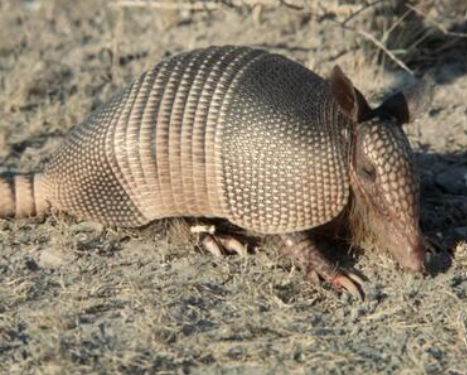
Just a few decades ago, spotting an armadillo in Kansas would have been the stuff of tall tales. Native to South and Central America, the nine-banded armadillo was historically a creature of the warm, humid south. Now, however, sightings have exploded in Kansas, with reports from city parks, rural fields, and even suburban backyards. This sudden arrival has caught many Kansans off guard, sparking both fascination and fear. The armadillo’s odd appearance—with its bony shell and tendency to jump when startled—has even inspired urban legends and social media buzz across the state.

Climate Change: The Great Enabler

One of the primary reasons for the armadillo’s invasion is the shifting climate. Winters in Kansas have become milder over recent years, with fewer deep freezes that would once have killed off these warm-weather creatures. Armadillos are highly sensitive to cold, so as the average temperature rises, their range steadily expands northward. Scientists point to climate records showing a clear trend: as frosty nights decrease, the armadillo’s playground grows. This is a vivid example of how even modest climate shifts can trigger surprising ripple effects in wildlife populations.

Highways to the Heartland

Armadillos aren’t just wandering north by accident—they’re following the ribbons of highways, railways, and cleared land humans have carved through the landscape. These corridors make it easier for armadillos to travel long distances, avoiding dense forests or impassable prairies. As Kansas’s infrastructure has grown, so too has the opportunity for armadillos to explore new territory. Observers have even noted that freshly built roads seem to act like armadillo superhighways, quickly drawing them into regions where they were never seen before.

Food and Survival: The Kansas Buffet

Kansas offers the perfect menu for a hungry armadillo. With its abundance of insects, grubs, and worms, the state’s soil is a smorgasbord for these natural foragers. Armadillos use their keen sense of smell to locate food underground, rooting through lawns and gardens with their pig-like snouts. This has been great for armadillos but less so for Kansas homeowners, who sometimes wake up to find their yards riddled with holes. Yet, the rich pickings mean armadillos are thriving and multiplying at an astonishing rate.

Surprising Adaptations and Resilience

What makes armadillos such successful invaders? For starters, they are incredibly adaptable. Their tough armor protects them from most predators, and their ability to dig allows them to create burrows for shelter. Armadillos also have a quirky reproductive strategy: each litter is made up of genetically identical quadruplets, boosting their numbers quickly. These traits, combined with their insatiable curiosity and willingness to explore, have helped them survive—and even flourish—in Kansas’s changing landscape.

The Human Reaction: Fear, Fascination, and Frustration

The arrival of armadillos has sparked a whirlwind of emotions among Kansans. Some people are delighted to see such an unusual animal in their backyard, quickly snapping photos and sharing stories online. Others feel uneasy, worried about the damage to gardens, golf courses, and even the risk of disease—since armadillos are known carriers of leprosy bacteria, though the risk to humans is extremely low. Still, the shock of seeing an “alien” creature in familiar surroundings has stirred up excitement and anxiety in equal measure.

Impact on Local Wildlife and Ecosystems

The appearance of armadillos in Kansas is more than just a curiosity; it has real consequences for local ecosystems. Armadillos compete with native animals like skunks, raccoons, and opossums for food and shelter. Their digging can disrupt the habitats of insects and small ground-nesting birds. Scientists are watching closely to see if the armadillo’s presence will tip the balance of Kansas’s intricate web of life. In some cases, armadillos may even help by eating pests, but their long-term impact remains uncertain.

Armadillos and Disease: Separating Fact from Fear

One of the more alarming rumors about armadillos is their connection to leprosy, a disease that conjures up ancient fears. While it’s true that armadillos can carry the bacteria that cause leprosy, the risk of transmission to humans in Kansas is vanishingly small. Most experts agree that direct contact is rare, and simple precautions—like avoiding handling wild armadillos—are more than enough to stay safe. Still, the association has fueled a mix of fascination and worry, adding to the armadillo’s mysterious reputation.

Can We Coexist with Kansas’s Newest Residents?

As armadillos continue to march across Kansas, the big question is how people will adapt. Some communities are learning to live with these oddball neighbors, focusing on ways to protect gardens and lawns without harming the animals. Wildlife agencies offer tips for deterring armadillos, such as fencing and humane traps, and encourage people to appreciate the unique role these creatures play in the ecosystem. The key may be understanding—not fear—as Kansans adjust to life alongside their unlikely new residents.

A Glimpse Into the Future: What Comes Next?

With armadillos now firmly established in Kansas, experts predict their numbers will only grow in the coming years. Will they keep moving north, reaching Nebraska or even farther? Only time will tell. What’s clear is that the story of the armadillo in Kansas is still unfolding—a living reminder of how quickly nature can surprise us, and how adaptable both animals and people must be in a world that’s always changing. What unexpected creature might show up next in your backyard?


K-State Salina to hold webinar for drone pilots on proposed FAA changes

0

As the drone industry continues to advance and develop new regulations at a rapid pace, Kansas State University Salina’s Applied Aviation Research Center, or AARC, prepares the next generation of drone pilots to be Federal Aviation Administration compliant through world-class uncrewed aircraft systems training and education.

The Federal Aviation Administration, or FAA, is planning new regulations aimed at standardizing operations beyond the visual line of sight for commercial drones. Currently, Part 107 regulations with the FAA do not permit drones to fly beyond the visual line of sight of the operator without a special waiver.

The new set of regulations will allow for more expansive uncrewed aircraft systems, or UAS, operations beyond the visual line of sight, impacting all industries, including agriculture, engineering and public safety.

Upcoming webinar explains proposed UAS regulations

With this immense change coming to the industry, the Applied Aviation Research Center will provide a free informational webinar explaining the proposed regulations on Sept. 4. The webinar will discuss the new regulations, including guidance on detect-and-avoid, minimum operational standards, certification and training requirements, and integration into the national airspace.

“The AARC has a close connection to the FAA from our years of UAS experience,” said Kurt Carraway, executive director of the Applied Aviation Research Center. “As the first university to receive a waiver of beyond visual line-of-sight UAS operations back in 2018, we have proven to be detailed and system-oriented with our operations. Training and operations on the new set of regulations are the next step in K-State Salina’s strategic goals that enable technologies to advance us in our work and connect the world in new ways.”

To stay up to date with the FAA and advance your training in UAS technology, register by Sept. 2 for the free webinar with the AARC drone experts at noon on Thursday, Sept. 4.

Leading the way in advanced air mobility

In alignment with K-State’s mission to become a next-generation land-grant university, the Salina campus has been tasked with leading exploration, integration and operation of next-generation, revolutionary drone technologies and air transport systems known as advanced air mobility — a rapidly emerging, new sector of the aerospace industry that aims to safely and efficiently integrate highly automated aircraft into the national airspace system.

Advanced air mobility is not just a single technology; it’s a collection of new and emerging technologies being applied to the aviation transportation system, including urban mobility, public services and cargo delivery.

K-State Salina is in a unique position to positively impact the aerospace industry by training thousands of drone pilots through the bachelor’s degree program and providing instruction to learners from many industries through professional education. The Applied Aviation Research Center is also conducting groundbreaking research into drone operations in natural disasters.

As the industry flies forward with advancement, K-State’s advanced air mobility research and education will help transform the lives of Kansans and those around the world.

JEREMY BOHN
K‑State Salina

Welcome Baby Brooklyn and Happy 10th Anniversary Tim and Elizabeth

0

Lovina’s Amish Kitchen
Lovina Eitcher,
Old Order Amish
Cook, Wife &
Mother of Eight

Today, August 14th, ten years ago we prepared for our first born’s wedding. What a change it was to have the first of our children to move away from home. As a mother I relied a lot on my oldest child and I could always depend on her. I had a hard time accepting this change. I am truly thankful she married a loving, kind man that has brought her much joy and happiness in the five years they dated and then ten years of marriage. They were blessed with four sweet children, Abigail Elizabeth age 8 (9 on September 10th), Timothy Josiah age 6, Allison Lovina age 5 and Andrea Ruby age 3. Happy anniversary Tim and Elizabeth! May God grant you many more happy, healthy years together!

Last night we attended the annual church picnic. It was held by our neighbors this year. Every year neighbor Joas deep fries fish that he caught. He loves to fish, and this helps use up his supply. Everything else is brought in. On the menu besides fish were three different casseroles, baked beans, a variety of salads and desserts, coffee and water. All but three of our church families attended. Croquet and volleyball were played after supper. A bouncy house was set up for the younger children to bounce around in. Our church district has twenty two families in it. 

School doors open for eight of our grandchildren on August 18th. They are all excited and were able to meet their teacher at the open house last night. Abigail and Kaitlyn will be in the third grade. Jennifer and Isaiah will be in second grade. Timothy (T.J.) will be in first grade. Ryan, Curtis, and Allison will be in kindergarten. Abigail was extra excited to find out her teacher shares the same first and middle name as herself, Abigail Elizabeth. 

Kaitlyn will also celebrate her 9th birthday on the first day of school, August 18th. It’s so hard to believe how the grandchildren are growing up so fast. Although Kaitlyn joined our family later in life she has won over our hearts. She is an active little girl. 

Recently we found our horse Midnight, age 10, lying dead in the field. What a shock! She was the horse Joe and I took everywhere for the last eight years. It means a lot to have a well-trained horse that you can depend on. Joe trained her for buggy at 2 years old. She was a challenge to train but Joe enjoyed that. He always trained all our horses but now health doesn’t allow him to. We weren’t sure why she died as it didn’t show like she struggled at all. The vet said he thinks it was a heatstroke since it was during the week where it was so hot and humidity was high. She had plenty of shade and water and our other horses were fine. A man from our church is training Midnight’s 2 year old colt Jett. After he has her trained for the buggy we will drive him. We hope he will be as safe and sound as his mother was. We will miss her. 

This week we have been busy canning peaches. Daughters Verena, Loretta, Lovina and I canned forty-nine quarts and froze some. Over three bushels of red haven peaches were given to us from neighbors, Joas and Susan who have over thirty peach trees. We really appreciated it. Peaches aren’t cheap to buy so that was a treat to us. 

On Sunday church services will be held at son Joseph and Grace. This is their first time hosting church services. Tomorrow I will bake ten loaves of wheat bread to take there for church. 

This is now Monday and I ended up asking the neighbor ladies to bake my bread. I spent Thursday night to Saturday night at the hospital with my daughter Lovina and Daniel. 

I am excited to announce the birth of their first child born August 16th at 2:03 p.m. Brooklyn Nyah weighed 5 pounds and 6 ounces and is 19 inches long. Daniel and Lovina and baby Brooklyn just arrived home. I can’t wait to go over and see her again. She is such a sweetie. It will be nice having her just across the road. 

Until next week…

God bless!

EASY PEACH CREAM PIE

3 cups fresh peaches, peeled and sliced

1 (9-inch) pie crust (unbaked)

2 eggs

1 cup sugar

1/4 cup flour

dash of salt

1 cup heavy cream.

1 teaspoon vanilla

Place peaches in the pie crust. Beat eggs slightly in a bowl; blend in sugar, flour, and salt. Stir in cream and vanilla; blend well. Pour over peaches. Bake at 375 degrees for 40 to 50 minutes, or until the center shakes slightly when moved.


Lovina’s Amish Kitchen is written by Lovina Eicher, Old Order Amish writer, cook, wife, and mother of eight. Her three cookbooks, The Cherished Table, The Essential Amish Cookbook, and Amish Family Recipes, are available wherever books are sold. Readers can write to Eicher at Lovina’s Amish Kitchen, PO Box 234, Sturgis, MI 49091 (please include a self-addressed stamped envelope for a reply); or email [email protected] and your message will be passed on to her to read. She does not personally respond to emails.

Just a Little Light: “Make It Do It Again, Grandma!”

0

Dawn Phelps
Columnist


It was a Wednesday, a day that was busier than we had expected.  That morning, as usual, I made “the list” of things I needed to accomplish that day.  

I met with some friends about mid-morning—an enjoyable time.  Then, a little after twelve noon, my husband Tom and I headed to a nearby town for errands and to buy a few groceries.  We are aware of the need to not dilly-dally, since we both needed to get back to Miltonvale for meetings that evening.  

All went well, and we were soon headed toward home.  We were only a few miles from the turnoff to our little town when we spotted a potential problem!  That’s when I saw the arm over the railroad track ahead of us begin to slowly drop.  I thought, “Oh, no!” 

My heart sank because I knew a train would soon be crossing the highway ahead of us.  And when I saw the nose of the train enter the crossing, it was not moving very fast!  I said to Tom, “I hope there are not a hundred cars”—that’s sometimes the case for the trains out our way.  

I nervously looked at my watch, knowing I needed to get a couple of things done at my shop before the meeting, and I also needed to put away groceries.  I was not interested in counting the train cars—I just wanted to spot the caboose so we could get moving again.  

While watching the cars slowly lumber down the track, we talked about our options.  There was a dirt road that turned to the right just ahead of us, but we knew the train was probably long enough to block another crossing to the south anyway.  

So, we sat and waited and watched, mostly watching for the caboose.  As we watched, we talked about another time I had watched a slow-moving train with our youngest grandson, Will Thomas, as the train moved along the track in Miltonvale.  Will was about three at the time, and getting to watch a train was a treat for him.  

We kept Will on Tuesdays, and he loved going to Sr. Citizens with us for lunch.  After lunch, Will enjoyed watching a few of the guys play pool.  He was supposed to sit in a chair a little distance from the pool table, but before long, he would quietly move closer to the pool table for a better look.

After a bit, I decided it was time to take Will home, but Tom stayed.  Just as Will and I were leaving, we could hear a train in the distance coming down the track.  The railroad track is in full view of the Sr. Citizen’s building, and we soon saw the arm slowly drop down, blocking the track for vehicles.   

Since Will and I were not in hurry, I pulled the car up to a safe distance from the track and put the car in park.  Will wanted to count the cars, so I counted, “One, two, three, four, five, six, seven, eight….”

Like on that recent Wednesday, the train was not moving very fast.  “Nine, ten, eleven, twelve, thirteen….”  After many more train cars, the caboose finally appeared.  Finally, the end of the train!

As the arm over the track was going up, Will piped up with, “Make it do it again, Grandma!”  I inwardly smiled, amused that Will thought that as a grandma I could actually conjure up another train for him watch, just so we could count the cars again!  He must have thought I have some kind of super-grandma power!

I tried to explain to Will that trains only come through Miltonvale a couple of times a day, and that I could not make another train come through.  But it was interesting that in Will’s little mind, he thought I might make it happen!  

Will’s remark stuck with me through the years, kind of reminding me of the Serenity Prayer “to accept the things I cannot change. . . and the wisdom to know the difference.”  

As we grow older, we realize there are things we cannot change.  For instance, we cannot go backward in time and live our childhoods again; we can only live forward.  And just like with Will’s train that day, we only get to live life once.

There is a quote by a Greek philosopher that compares time to a river.  It says, “Time, like a river, is a continuous flow that carries us forward with each moment passing and never returning.”  Time goes by quickly.  No rewinds.  No replays.

But the good news!  We have “today!”  So, make your “list” and live each day thoughtfully and deliberately, and make every moment count.  

Pretty soon that old “caboose” will coming down the track, and even grandmas can’t make life do it again!  


[email protected]

Lettuce Eat Local: One Of The Melon Reasons To Love

0

Amanda Miller
Columnist
Lettuce Eat Local

“Always buy the watermelon.”

The podcast host I was listening to was sharing a collection of listeners’ advice and tips for summer, and up until this point I had been feeling fairly meh about most of the ideas. There was some good content, but most felt more applicable to different families, stages, and environments.

But these few words, as simple and non-life-altering as they were, resonated in my soul. Yes, I thought, now that is wisdom! 

It provided both confirmation of our current habits and renewed commitment to our future habits. I don’t want to say we buy a watermelon every single time we see one…but also we might. If a summer day goes by that we don’t eat at least a few bites of watermelon, it feels like deprivation. We are so attached to a norm of constant watermelon that I never even put a lid on the container in the fridge; we need straightforward access. Ain’t nobody got time to open lids. 

Though the phenomenon is fortunately rare, I know people exist who “don’t prefer” watermelon. In fact, I know a few of them personally — and though it’s difficult, through the largesse of my heart, I remain civil with them. Perhaps even genuinely friendly! Even so, I always feel a sense of shock and dismay at such culinary desolation. Can you even have summer without watermelon?

I asked Benson how he feels about people who don’t like watermelon. His immediate answer, with a smirk: “Not good.”

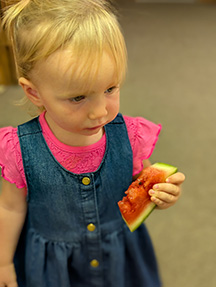
But at least that leaves more for us. There is nothing that can hydrate my children quite so well as watermelon (except maybe Brian’s gatorade that they pilfer), and considering that it’s 92% water, that makes sense. It’s pretty obvious on mouths and fingers if the kids have been eating things like chocolate or cheetos; watermelon has its own distinct tell. Although, while I was referencing the over-hydration effect, I guess watermelon is also very obvious on their faces, hands, and generally whole bodies, as well as the entire surrounding area. Everything, and I do mean everything, gets remarkably sticky. 

Banishing the watermelon-eating to the outdoors helps the floor, at least. Although on our farm, that can get a little interesting: the hens are free-range, and there may be nothing more enticing to a chicken than melons. Kiah is barely above eye-level with the chickens, and we have over 50 of them. That girl is tough, but I’m not sure even she could stand her ground if the ladies saw her holding a slice. 

Fortunately, watermelon is one of the few foods that has a built-in safeguard for melon-loving poultry. My kids might eat all trace of red, yet only sometimes are they dedicated enough to chomp far into the white and never into the green, so there’s always a load of rind treats for the hens. 

As a side note, chickens are definitely not the only animals to adore watermelon, so if you need a quick pick-me-up sometime, look up animals eating watermelons. Benson went through a phase of wanting to daily watch a clip of zoo animals, from turtles to bears to hippos, chowing down on watermelons. It was oddly satisfying. 

Another of watermelon’s amazing traits is that to serve it, all you do is cut it. Right, there are all sorts of things you can do with watermelon, and you can be sure I’ve experimented with lots. But in the end, I just want watermelon. If you volunteer to bring watermelon somewhere, no one asks how you’re going to prepare it — it’s watermelon, and we eat it with joy. 

That is, if you have one. So remember, always buy the watermelon.


Cubed Watermelon

This is cheating to call this a recipe, I’ll admit. But it’s also The Thing we do with watermelon! Since slicing is serving, the way you cut up a watermelon can really change the experience of eating it. I find it charming how many different styles people choose to get watermelon ready, both their end goal shape and their way of getting there. I could almost write another article about that…in fact maybe I will. After I clean up another round of watermelon sticky.

Prep tips: you can use a similar method to de-rind cantaloupes and honeydews. 

a watermelon of your choice; chilled

optional but unnecessary: flaky salt; fresh key/lime juice; tajin; crumbled feta; minced mint or basil

Rinse off the watermelon, then place on a large (preferably rimmed to catch the juice) cutting board. Using a large sharp knife, cut off both poles of the melon, then stand upright on a now-flat end. Cut off the rind by slicing down along the curve, rotating the melon as you cut off the slabs of rind. Once you’ve removed all the rind, set the watermelon down on a side, and slice it into 1” wheels. Set the wheels down flat, and cut in a crosshatch pattern into cubes — l like them large bitesize to minimize juice run. Try not to eat it all right away.