Monday, January 26, 2026
Home Blog Page 4590

January Exhibit Features Sowa and Startists

0

credit: Pratt Community College

During the month of January, the Delmar Riney Art Gallery at Pratt Community College features the work of Tiffany Sowa and her students. Sowa is a traveling art instructor and the owner of “You’re Fired Ceramics and Canvas” in Coldwater, Kan.

Sowa believes that art is for everyone, not just for the educated, the affluent or the expressive.  She says anyone can create art, and art can be found in everything we see and do.  The one thing that brings her more joy than making her own art is the environment she creates where anyone can become an artist. She calls them “Startists” because they have just started their journey to becoming an artist.

The Startists featured in the Delmar Riney exhibit are of every age, some as young as six years old.

“There’s a moment in every creation when the artist can suddenly see the art,” she said. “Until that point, many of my students are just following along, maybe somewhat anxious, possibly even complaining a bit, but they follow instructions and put paintbrush to canvas, all along doubting that this stuff will somehow turn into art – then that moment happens, when they realize they can do it, and it’s a beautiful thing.”

Sowa’s style is what she calls “random revelations,” and involves throwing, splattering, dropping, dabbling and manipulating.

“I like the element of surprise – starting with a blank canvas and then exploring all the ways that the paint can be applied to create something beautiful,” she said. “I go home each night not knowing what will be waiting for me in the morning. The unknown is exciting and always amazes me.”

Sowa has a Bachelor of Science in Strategic Leadership from Southwestern College, and received her art education through the Bicentennial Art Center of Aurora, Colo.

The art gallery is free and open to the public Monday – Friday, 8 a.m. – 5 p.m. or by appointment. If you would like to be considered as a featured artist of the month, send your name, contact information and a brief description of your artwork to [email protected].

Cougar Track and Field open 2015 indoor season in Colorado

0
barton cc

The Barton Community College men’s track and field team opened their 2015 indoor season Friday at the Air Force Collegiate Open Meet held at Cadet Field House on the United States Air Force Academy in Colorado Springs, Colorado.

Bolstering the roster in the sprints, Barton placed two in the top six in the 60 meters.  Freshman Alex Richmond‘s 6.93 captured fifth place edging out sophomore teammate Shadrack Adu-Gyamfi by .02 seconds while freshman Anthony Adderly placed 14th in 7.01.   Richmond was also the lone jumper for the Cougars placing fifth in the Long Jump at 6.53m (21-5.25).

Mike Simmons led three sophomore Cougars in the top twelve of the 200 meters crossing the tape in fourth place at 22.07.  Quick Stukes placed eighth in 22.26 while Adu-Gyamfi finished 12th in 22.59.

Sophomore Kennedy Mayweather cracked the top ten of the 400 meters with a 50.56 to place ninth.  Micha Carey’s 52.20 was good for 19th with fellow freshman Jonathon Pierre coming in a half second behind in 22nd with a 52.72.

Freshman cross country athlete Antonio Perez led five Cougars in the 800 meters with three pf the entries cracking the top eleven.  Perez placed seventh in 2:00.40, freshman Anthony Forrest in ninth at 2:03.13, and sophomore Brady Holler‘s 2:04.47 was good for 11th.   Sophomore Kole Stiner finished in 17th in 2:13.33 while Elder Colindres‘ 2:16.28 placed the freshman 19th.

The Cougars had three entries in the 60 meter hurdles with two finishing in the top seven.  Freshman Deron Gordon led the way coming in third with an 8.27 with sophomore Zodani Francois in seventh at 8.40 while freshman Kyree Triggs placed 15th in 8.82.

Barton dominated the Mile Relay taking the top two spots of the eight team entries.  Team A got the best of their counterparts taking the crown in 3:23.47 while Team B closed in 3:26.25.

The Cougars also had solid performances in the throws led by sophomore Alireza Rafiei seventh place finish in the Shot Put with a personal collegiate best 15.20m (49-10.50) and freshman Donald Daley‘s tenth place finish at 14.35m (47-1.00).  Daley also led three Cougars in the Wight Throw with another tenth place finish at 13.84m (45-5.00) while sophomores Tyler Jordan‘s 11.61m (38-1.25) and Colby Overturf‘s 10.32m (33-10.25) placed 17th and 18th respectively.

Barton returns to action on Friday in the two-day Holiday Inn Invitational held on the campus of the University of Nebraska in Lincoln, Nebraska.

Kansas is your customer

0

By John Schlageck, Kansas Farm Bureau

While food safety will always be the cornerstone of our production process, allegiance is making inroads into why and where consumers buy their products.

The majority of today’s shoppers enjoys and often takes for granted the expanded menu in supermarkets. They look forward to shopping in a meat case filled with dozens of new cuts, pre-packaged, oven-ready, custom portioned, “natural” and pre-cooked products. They can’t wait to get their mitts on the marinades, dry rubs, cooking bags and other specialty items designed for time strapped, two-income families.

There’s also another growing group of consumers who are purchasing products based on trust and nostalgia. This notion of nostalgia, or pining, harkens back to the good old days – a time when events and lives were perceived as simpler, more wholesome, just downright better.

Many in this new group of consumers want to share in the story behind the product they are buying. They wish to establish a direct link and cultivate a relationship with the producer who provides them with tomatoes, asparagus, corn or their leg of lamb for the upcoming holiday.

There are a fair number of shoppers who yearn to develop a trust with producers who they believe will provide them with a quality, consistent wholesome product time after time.

Tapping into this ever-changing consumer landscape, today’s food producer – especially those located near large-population, urban areas – must not miss the opportunity to reach the hearts, minds and stomachs of consumers who feel strongly about their food.

Some consumer-savvy producers are already honed in on this concept. They’ve retooled their farming operation from a conventional commodities-only business to one that includes pick-your-own sweet corn, pumpkins, asparagus, tomatoes and strawberries. They’re giving people what they want.

Others now provide home deliveries of fresh produce and sell their produce at local farmers’ markets. Still others have added a corn maze, day-on-the-farm activities, ice-cream socials and chuck-wagon cookouts, while inviting everyone from school-aged kids to wedding rehearsal parties – all to enjoy the farm and ranch way of life.

This new direction in farming is being driven by farmers and ranchers who are attempting to be less dependent on cheap land and vast acreage. This pioneer is tapping into the population surge and wealth of consumers who shop online, drive a couple cars including a SUV and don’t mind paying a premium for the food they feed their families.

Another common element of this non-traditional farmer is the belief that this shift in production style may not make them rich, but will keep them out in the open spaces, running their own business and doing what they enjoy and want to do. A large percentage of those willing to try something new are younger farmers. In many cases, a young farmer is often considered someone who has yet to reach the half-century mark.

For some, traditional farming became too expensive. Others decided traditional farming was no longer worth the effort. Whatever the reason, any farmer will tell you that farming is a difficult process. Still most would agree they are glad they bought their land, and glad they’re doing what they enjoy.

No doubt, more and more farmers will be looking at a different direction to stay on their land in the future. The land will continue to be farmed. There will no doubt be fewer farmers but those who are determined to stay in this business of agriculture will have to find innovative ways to farm and serve their customers.

John Schlageck is a leading commentator on agriculture and rural Kansas. Born and raised on a diversified farm in northwestern Kansas, his writing reflects a lifetime of experience, knowledge and passion.

– credit: kfb

Chronicles of The Farm Woman: The Landon Campaign

0
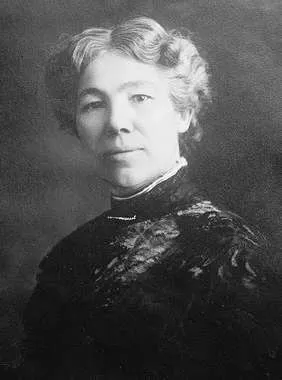
Farm woman

What a day!  What a day!

Can you imagine 500,000 people lining the streets of Indianapolis to see our Kansas governor?  Eight and 10 deep on either side of the street for blocks they stood to watch the Republican standard bearer and the parade.  Every window was filled with faces.  Business had a 2-hour breathing spell on Saturday afternoon.

It took the parade exactly two hours to pass our vantage point.  Two lines of cars and floats two hours long.  Bands and drum corps too numerous to count interspersed the parade.  Legion bands, auxiliary bands and drum corps, kid bands, school

bands, town bands and the spirit of 76 was there.  Delegates from practically every county in the state.  Voters enough in the parade it seemed to carry the state for Landon.  We thought as we crossed Indiana last Sunday that the situation did not look so good.  So few sunflowers were in evi-dence.  But sunflowers lined the streets today as thick as they grow along fence rows and township roads in Lyon County.  Indiana may have looked like a doubtful state yesterday or last week.  Tonight it is in the bag.

And one thing about Republican parades in this campaign of 1936.  They are purely voluntary demon-strations.  There are no orders or threats of fine.

It is remarkable how much satisfaction and confidence people gain by even a glimpse of Landon.  The farm folks were gathered in assembly hall.  The candidate was ushered in for a brief moment.  A wave of inspiration and enthusiasm settled upon the audience.

The Coliseum was so packed that the doors were closed at 7 o’clock, one hour before the speaking.  Thousands listened from outdoor speakers on the fair grounds.  An eager at-tentive audience.  One wonders at the boldly placarded Roosevelt march-ers that are in the crowds.  They apparently are not listening to the radio address.  Do they adore crowds?  With stolid mien they march along, not slow, not fast, a measured trudge.

We turn out the light tonight, weary but thrilled to the toes.  This day is something to tuck in our memory book.

Helping seniors stay connected in witer

0

(NAPSI)—While winter, with its cold temperatures and extreme weather, can be an isolating time for many, it can be particularly tough on seniors. When driving conditions deteriorate and roads are slippery, many seniors don’t feel safe enough to venture out of their homes. Others just don’t like the cold and often forgo regular activities and visits with family and friends that involve going outdoors.

However, regular social and cognitive activities are necessary for maintaining optimal health and independence and are often key to fighting through the winter blues. That’s why it can be important for seniors to find innovative ways to maintain a safe, consistent level of activity all year-round. Staying connected and active can contribute to seniors’ well-being and mental sharpness.

The Right Technology

Having access to helpful technology can be beneficial. According to the Administration on Aging, 12 million seniors live alone in the U.S. Fortunately, when armed with the right technology, these seniors don’t have to spend the winter months in isolation.

For example, mobile medical alert services offer seniors the peace of mind many of them need to venture out of their homes. They can come equipped with advanced locating and fall detection technology that adds extra reassurance that help will be there when and if needed.

Additionally, there are mobile response apps that seniors can use to connect to the same emergency call centers offered through traditional and mobile medical alert services. With the added confidence from these technologies, seniors can feel empowered to get out of the house and engage in the activities they love to do, even during the winter months.

The Internet also provides ways to stay connected during the winter. According to The Journals of Gerontology, the Internet has been shown to reduce the probability of depression by 33 percent. Internet-enabled solutions, such as e-mail, social media (e.g., Facebook) and Skype, are all ways to keep in touch. While distance and weather can sometimes get in the way of face-to-face communication, seniors can stay socially engaged and involved through technologies when traveling isn’t an option.

Volunteering And Hobbies

Volunteering can also be a rewarding way for seniors to get involved in their community and meet new people. According to the Corporation for National and Community Service, 24 percent of those over the age of 65 in the U.S. perform volunteer work, and they report lower levels of disability and higher levels of well-being.

Additionally, the quiet months of winter can be a good time to take up a new hobby—for example, joining a local bridge club or knitting circle. There are also exercise classes designed for seniors, which is a good way to stay active and social.

For more information on solutions designed to empower seniors and keep them safe, healthy and connected, visit www.philips.to/lifeline.