Monday, January 19, 2026
Home Blog Page 93

Water history exhibit grand opening at El Quartelejo Museum in Scott City

0

SCOTT CITY — El Quartelejo Museum, in collaboration with the Kansas Geological Survey and Groundwater Management District 1, will open its newest exhibit, “History of Scott County Irrigation and the Ogallala Aquifer,” on Aug. 16.

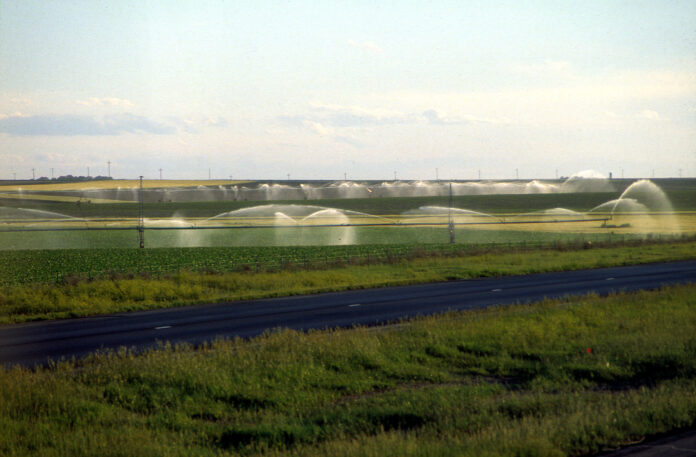
Using a variety of multimedia components, the exhibit combines the scientific study of water and local history to show the story of water use in western Kansas.

“The exhibit focuses on farming outcomes, water resources, management and education to illustrate the irrigation history of Scott County and the High Plains of western Kansas,” said Stephanie Fisher, El Quartelejo Museum director. “Its goal is to highlight primary sources, photographs and interactive educational elements.”

Sunday Siomades, who interned with the museum through the University of Kansas’ Museum Studies program, designed the exhibit.

“The design of the exhibit seeks to connect visitors with water history in tactile, immersive ways to demonstrate how communities interact with the natural environment,” said Siomades, who is studying geology and science communication through the KU Department of Geology and the Kansas Geological Survey.

The exhibit begins with early Scott County irrigation in the 1650s and moves through time to the management practices and water science that define present-day agriculture. Scott County’s cattle industry — the fourth highest in the nation — relies heavily on groundwater. Consequently, the status of the Ogallala aquifer, which provides this essential water resource, is especially relevant to the county.

Exhibit visitors will learn about historical innovations (and innovators) in irrigation, explore the science of aquifers and groundwater and watch water flow through the decades right under their feet.

The installation represents locality-driven science outreach designed to equip visitors of all ages with the historical and scientific background to discuss community water resources. Katie Durham, GMD1 manager, said the district sees education and outreach as critical components in protecting groundwater for future generations.

“Sharing the history of irrigation in our district helps us all to understand where we’ve been, the challenges we face and why the progress being made is so important to our communities, culture and economy,” she said.

In conjunction with the new exhibit, the KGS plans presentations, educational games, and activities for the public beginning at 10 a.m. at the museum. A ribbon-cutting ceremony for the exhibit will take place at 2 p.m. The schedule of events is available online.

“I’m so grateful to the museum for providing the KGS with this opportunity,” said Blair Schneider, KGS science outreach manager and exhibit contributor. “I hope that this project paves a pathway for the KGS to partner with more community museums across the state.”

The “History of Scott County Irrigation and the Ogallala Aquifer” joins a variety of paleontological and anthropological exhibits featured at El Quartelejo Museum and Jerry Thomas Gallery and Collection on topics ranging from Kansas’s prehistoric inland sea to Native American history to modern municipal development.

About the Kansas Geological Survey

The KGS is a nonregulatory research and service division of the University of Kansas. KGS researchers study and provide information about the state’s geologic resources and hazards, including groundwater, oil and natural gas, critical materials and earthquakes.

Investing in Kansas’ first line of defense against animal disease

0
In its role as frontline defense against animal diseases, Kansas Veterinary Diagnostic Laboratory provides more than $2.5 billion in annual impact for the state.

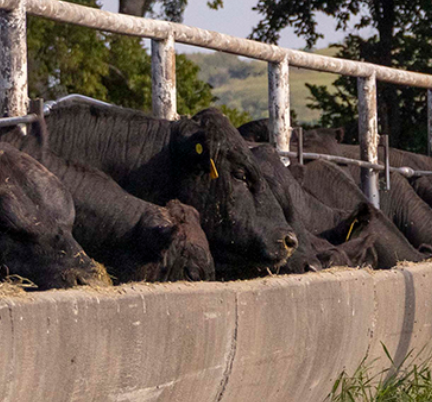
MANHATTAN — Every spring, John Irvine and his ranch hands line up 300 head of cattle to make one of the biggest investments they can in the future of the seventh-generation Kansas ranch: they collect a few vials of blood to send to the Kansas Veterinary Diagnostic Laboratory.
Irvine doesn’t wait for signs of illness. In his business, one sickened cow or bull, if not caught in time, could mean a devastating blow to the entire herd.
But through the Kansas Veterinary Diagnostic Laboratory, or KVDL, Irvine and ranchers across the state and nation have access to a whole battery of diagnostic tests that keep their animals healthy and the state’s farms, communities and economy safe.
“Because of the KVDL’s services, we know that we’re giving our customers clean, healthy bulls,” said Irvine, a sixth-generation operator of Irvine Ranch in northeastern Kansas. “The lab is a great partner for us, and they enable us to do what we do well.”
When diseases can cross cattle pens and county, state and national lines in just a few hours, having a robust disease testing system and provider is crucial, and the KVDL, housed at Kansas State University, has served that role well for the state for several decades.
As the only state-run animal disease laboratory in Kansas, the Kansas Veterinary Diagnostic Laboratory provides critical diagnostic services that support animal health, public safety and the state’s livestock industry, said Jamie Retallick, director of the lab.
KVDL conducts testing for disease detection, surveillance, and outbreak response, serving veterinarians, producers and public agencies across Kansas and beyond.
KVDL drives $2.5 billion economic impact in Kansas
During a regular year, the KVDL’s services add more than $2.5 billion to the state economy, according to a 2024 economic impact report, supporting $5.7 billion in direct livestock industries output and $8.7 billion in total output. In the event of a catastrophic outbreak or disease crisis, the value of the lab’s services would balloon to $4.9 billion.
The lab also generates $125.7 million in state sales tax from its testing services, with much of that revenue coming from out-of-state clients.
All told, KVDL’s economic impact to operating cost ratio is 113:1.
“The economic impact of livestock production and food safety in Kansas is undeniable,” Retallick said. “Ensuring the health of companion animals and wildlife resources is imperative. Protecting Kansans that interact with domestic animals and wildlife is paramount. In addition to service, KVDL faculty and staff provide critical support for a wide range of biologic researchers and train the veterinarians, researchers and diagnosticians of tomorrow.”
While much of the laboratory’s work supports Kansas’ agriculture and livestock animal industry, Retallick emphasized that the lab’s work touches the lives of every Kansan.
House pets need biopsies, zoo animals need diagnostics, wildlife animals need monitoring.
Animal health is everyone’s health, she said.
“Everyone is connected to animal health in some form,” Retallick said. “Whether it’s a pet that’s a family member or an animal in livestock production, there’s an animal connection for everyone. Not many organizations can claim that they’re such a critical part of so many industries and areas of society, but we can, and we’re proud to continue serving this role for Kansas.”
Kansas Legislature invests $128 million in KVDL’s defense against animal disease
Despite its extensive diagnostic work and economic impact, the Kansas Veterinary Diagnostic Laboratory has long kept a low profile on K-State’s campus, with its testing and workspaces spread across three buildings on the northern edge of campus.
But the lab will soon get a major upgrade that will better reflect and support its value to the state and region. The Kansas Legislature earlier this spring appropriated $128 million to build a new state-of-the-art facility that will both expand and strengthen the Kansas Veterinary Diagnostic Laboratory’s output and economic impact.
“This investment from the Kansas Legislature represents far more than just a building,” said Richard Linton, K-State president. “It reinforces Kansas’s position as a national leader in animal health and disease prevention by supporting a vital service that protects our state and beyond.”
Kansas Sen. Brad Starnes, who championed the lab during the legislative session, said he was proud to support a laboratory that is so critical to the state’s well-being.
Between 60-75% of emerging human diseases have animal origins, and as Kansas’ early warning system for animal diseases, the KVDL is crucial for the long-term preparedness, health and safety of Kansas as a whole, Starnes said.
“From rural veterinarians to large-scale producers, the work the Kansas Veterinary Diagnostic Laboratory does every day touches every corner of the state,” Starnes said. “Supporting this new facility for the lab equips it with the tools and space to serve Kansas producers, veterinarians and communities for decades to come.”
New KVDL building will be ‘a crown jewel for Kansas’
The new lab facility will tentatively be built on campus grounds east of the current College of Veterinary Medicine complex. It will roughly double the 41,000 square feet of space the lab currently occupies across the north end of K-State’s campus.
In addition to more efficient sample processing and capacity, the new facility will give the laboratory’s staff some much-needed office space and work areas.
“We’re going to be a lot more efficient,” Retallick said. “By having a top-tier facility, we’ll also be able to recruit and retain top-notch staff and faculty. We’ll also be able to strengthen the great teamwork we already have when we can all work in the same building, instead of having to shuttle between spaces in three different campus buildings. Because of all that, we’ll be able to better protect our state.”
Plans for the building are still in preliminary stages, Retallick said, but construction could begin as soon as next summer, with facility completion three years later.
In the meantime, the lab is working with its partners and stakeholders to raise $2 million in private funding to support the facility’s construction, in addition to the state’s contributions.
But Retallick said even this early, those partners have been enthusiastic to invest in the new facility, since they and many other across Kansas have long benefitted from the laboratory’s services and value.
“This will be a crown jewel for Kansans, and we’re thankful and proud to have the Legislature’s trust in our mission to protect the state from animal diseases,” Retallick said. “We’re going to continue giving this our all, doing our best for the state.”
For Jon Irvine, the sixth-generation operator of Irvine Ranch, the state’s investment in the facility is the same one he makes every spring.
“Every test that ranchers send to the KVDL is a small investment to protect the larger investments we make in our cattle and operations,” he said. “If we can maintain a clean herd, we can prevent a lot of diseases from emerging in the first place. That’s a huge economic benefit, and as new diseases emerge, we’re lucky to have a resource like the KVDL that stays at the forefront of these threats.”
As the nation’s first operational land-grant institution, Kansas State University has served the people of Kansas, the nation and the world since its founding in 1863 — and it continues to set the standard as a next-generation land-grant university. K-State offers an exceptional student experience across three physical campuses and online offerings, meeting students where they are and preparing them to achieve their personal and professional goals. The university is committed to its mission of teaching, research and service through industry-connected programs, impactful research-driven solutions, and a sharp focus on community engagement and economic prosperity.

Mulch rings help to promote healthy trees

0

K-State horticulture expert suggests organic mulch around diameter of the tree

Homeowners who are looking for ways to promote healthy, growing trees in their yard are well-advised to remember this axiom: A ring is a tree’s best friend.

Kansas State University horticulture expert Cynthia Domenghini said a mulch ring is a circular border surrounding the base of a tree. When planting a new tree, she recommends including a mulch ring that covers the soil beneath the tree canopy.

“One benefit of using a mulch ring around trees in a lawn area is to prevent maintenance equipment from coming too close and damaging the trunk,” she said. “Also, plants grown directly beneath the tree canopy compete for water and nutrients, so a mulch ring keeps that soil covered without creating competition for the tree.”

Domenghini suggests using organic mulch, “for the same reasons it is selected for planter beds,” she said. Those reasons include conserving and extending available water, protecting from soil erosion, and reducing competition by suppressing weeds.

“The mulch ring around trees in a lawn should be at least 3-6 feet in diameter depending on the overall size of the tree,” Domenghini said. “Ideally, the mulch ring should extend to the drip line of the tree, which means the ground beneath the entire canopy of the tree should be covered.”

The mulch ring should include a 4-6 inch diameter circle of bare soil at the center so that mulch is not right up next to the trunk, to prevent rotting. The mulch should be 2-4 inches deep and re-applied annually.

“If mulch is applied too deep (more than four inches), the mulch can actually restrict oxygen from the soil and negatively affect the tree’s root development,” Domenghini said.

Domenghini and her colleagues in K-State’s Department of Horticulture and Natural Resources produce a weekly Horticulture Newsletter with tips for maintaining home landscapes and gardens.

Interested persons can subscribe to the newsletter, as well as send their garden and yard-related questions to Domenghini at [email protected], or contact your local K-State Research and Extension office.

Still Time for Salad Garden

0
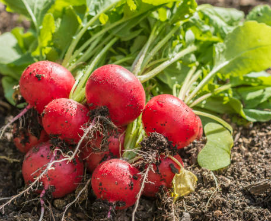
Radishes, spinach, turnips, mustard, lettuce and other leafy greens can be planted from mid-August to early September extending the harvest into fall. If planting in-ground, plant seeds slightly deeper than recommended for spring. This will give seeds access to slightly cooler soil that retains more moisture. Provide regular water until seeds germinate. Sprinkle a light layer of compost over the top of the seeds to prevent the soil from forming a crust.
An alternative way to grow a salad garden this fall is using a bag of potting media. Lay the bag flat and cut it open, on the long side, exposing the media as shown in the photo. Plant the seeds as recommended on the packet. Fertilizer may be necessary depending on the type of media used.  Once planted, the salad garden bag should not be moved or the seeds will be displaced. Prior to planting, place the bag on a pallet or similar support, making it possible to move the planting as needed.
One benefit of growing fall greens in a potting media bag is the temperature of the media can be regulated by relocating the bag. This is particularly helpful during August and September when the heat can hinder germination and negatively affect flavor of certain cole crops. Due to the limited amount of soil, monitoring moisture is essential to crop success.

Hydrangea Blooms

0
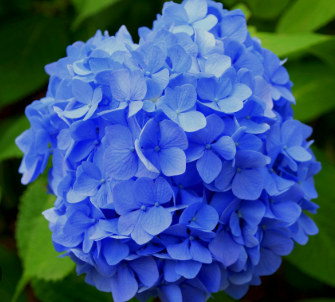
If you are having trouble getting blooms from your established hydrangea plants there are several possibilities of why this is happening.
Bigleaf hydrangeas prefer light shade/filtered sun. Too much shade can hinder blooming. Too much sun can cause stress for the plant.
Pruning at the wrong time can remove buds for the next year and prevent blooming. This varies by species/cultivar so you need to know what type of hydrangea you are growing. Some cultivars develop buds on past season’s growth while others develop on new growth.
Well-drained soil is essential. Compacted soil can prevent the plants from receiving moisture even if you are providing enough water. Over and underwatering will impact flower development and plant health overall.
Too much nitrogen fertilizer will support leaf development but not flowers. Fertilizers with more phosphorus will support flower growth.
*** Winter temperature is commonly a problem with hydrangea blooms. If there is a cold snap and no snow insulating the plants along with inconsistent weather (unseasonably warm, followed by a freeze) the buds that developed in the fall can be damaged and this will impact the spring bloom. A late spring frost can also cause problems. If you think this is likely the problem, you can try wrapping the plants as we head into winter to provide some protection.
Your local extension agent can help diagnose further based on the historical weather data from your region.