Monday, January 19, 2026
Home Blog Page 94

The Rewilding of Kansas: Could Bison Return to the Plains for Good?

0

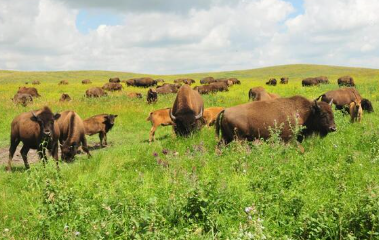
Imagine a time when the heartland of America pulsed with thunderous herds, the ground trembling beneath the hooves of millions of bison. This wasn’t just wild nature; it was a living, breathing ecosystem. Today, Kansas’ vast prairies whisper stories of those days, but most of the bison are gone, and the land has changed. Now, a bold question stirs: could the bison, icons of wild America, truly make a comeback and reclaim their ancient home? As the world yearns for wilder landscapes and a renewed balance with nature, the dream of rewilding Kansas with bison sparks excitement, hope, and a bit of controversy.

The Lost Giants of the Prairie

Kansas was once the kingdom of the American bison, with herds so immense that early settlers described them as “moving clouds” across the horizon. These animals shaped the tallgrass prairie, grazing patterns creating a patchwork of habitats that nurtured countless other species. But the 19th century saw the bison nearly erased from existence, hunted to the brink in a campaign that left only a few hundred survivors. The plains, once alive with the sounds and sights of bison, fell silent. The memory of these giants lingers, however, and their absence is felt in the very rhythm of the land.

Why Bison Matter to the Kansas Prairie

Bison are more than just big animals; they’re ecosystem engineers. Their grazing habits encourage plant diversity, prevent the spread of woody shrubs, and create open spaces where wildflowers and grasses can flourish. Unlike cattle, bison move constantly and graze selectively, which benefits soil health and helps native plants thrive. Their wallows—shallow depressions they create by rolling in the dirt—collect rainwater and become mini-habitats for insects and birds. Restoring bison could mean reviving the very soul of the Kansas prairie, bringing back the intricate web of life that once depended on them.

The Science Behind Rewilding

Rewilding isn’t just letting animals loose and hoping for the best. It’s a carefully planned process that uses scientific research to guide every step. Scientists study how bison interact with plants, soil, and other animals, and how their behaviors influence the landscape. Ecologists also monitor changes in plant species, water cycles, and even fire patterns, since bison grazing can reduce the risk of wildfires. By understanding these dynamics, experts can design rewilding projects that boost biodiversity, restore ecosystem functions, and increase the land’s resilience to climate change.

Challenges to Bison Reintroduction

Bringing bison back to Kansas isn’t as simple as opening a gate. Modern Kansas is a patchwork of farms, towns, and highways, with most land privately owned. Bison need large, connected areas to roam, but fencing and development make this difficult. There are also concerns from ranchers about disease transmission to cattle, potential competition for grazing, and property damage. Overcoming these obstacles requires collaboration among landowners, conservationists, and local communities, as well as creative solutions like wildlife corridors and shared land management.

Current Efforts and Success Stories

Despite the hurdles, some bold projects have already begun. The Konza Prairie Biological Station and the Tallgrass Prairie National Preserve are two places in Kansas where bison have been reintroduced with promising results. These herds are carefully managed, and researchers closely monitor the impacts on the ecosystem. Over time, native grasses and wildflowers have rebounded, and rare birds and insects have returned. These successes fuel the hope that larger-scale rewilding is possible, and that the bison could one day roam more freely across the state.

Bison and the Climate Crisis

The return of bison to Kansas could play a surprising role in fighting climate change. Healthy prairies store vast amounts of carbon in their deep roots, and bison grazing helps keep these grasslands vibrant and productive. By preventing overgrowth and encouraging new plant growth, bison help the prairie capture more carbon from the atmosphere. This natural climate solution is gaining attention as the world searches for ways to slow global warming, making bison restoration not just an ecological dream, but a practical strategy for the future.

Community Voices and Cultural Connections

The bison’s story is deeply woven into the cultural fabric of Kansas, especially for Indigenous communities who have long revered these animals as sacred. For many, the return of bison isn’t just about restoring nature—it’s about healing historical wounds and reviving traditions. Community-led projects are helping to reconnect people to the land and to each other, using bison as a symbol of resilience and renewal. As more people rediscover the bison’s significance, support for rewilding efforts continues to grow.

Economic Impacts: Risks and Rewards

Rewilding bison isn’t just about nature—it also has economic consequences. On one hand, bison herds can attract tourists, create jobs, and open new opportunities for eco-friendly agriculture. On the other, landowners worry about property rights, livestock safety, and potential costs of managing wild animals. Balancing these interests is tricky, but some ranchers are finding ways to coexist, raising bison for meat or ecotourism and benefiting from conservation programs. The path forward will require compromise, innovation, and a willingness to see value in wildness.

What Would a Wild Kansas Look Like?

Picture a Kansas where the prairie sways with native grasses, where butterflies and birds dart through blooming wildflowers, and herds of bison move across the horizon like living storms. Such a vision is both inspiring and daunting. Restoring wildness means accepting change and uncertainty, but it also promises beauty, resilience, and a deeper connection to the land. For many, the thought of bison returning for good is a symbol of hope—a reminder that even after great loss, nature has the power to heal and surprise us.

The Road Ahead: Hope, Hurdles, and Possibility

The journey to rewild Kansas with bison is filled with both hope and complexity. Scientific research, community engagement, and creative problem-solving are pushing the dream forward, but challenges remain. The question isn’t just whether bison can come back, but whether people are ready to welcome them home. The future of the Kansas prairie may depend on our ability to see ourselves as part of the wild story, not just observers or managers.

Bison once shaped the fate of the plains—could they do it again?

By Maria Faith Saligumba

2 Kansas Horses Test Positive for WNV

0

On August 8, two horses in Kansas were confirmed positive for West Nile virus (WNV), including one horse in Barber County and one horse in Reno County.

EDCC Health Watch is an Equine Network marketing program that utilizes information from the Equine Disease Communication Center (EDCC) to create and disseminate verified equine disease reports. The EDCC is an independent nonprofit organization that is supported by industry donations in order to provide open access to infectious disease information.

WNV 101

West Nile virus is transmitted to horses via bites from infected mosquitoes. Not all infected horses show clinical signs, but those that do can exhibit:

  • Flulike signs, where the horse seems mildly anorexic and depressed;
  • Fine and coarse muscle and skin fasciculation (involuntary twitching);
  • Hyperesthesia (hypersensitivity to touch and sound);
  • Changes in mentation (mental activity), when horses look like they’re daydreaming or “just not with it”;
  • Occasional drowsiness;
  • Propulsive walking (driving or pushing forward, often without control); and
  • Spinal signs, including asymmetrical weakness; and
  • Asymmetrical or symmetrical ataxia.

West Nile virus has no cure. However, some horses can recover with supportive care. Equine mortality rates can reach 30-40%.

Studies have shown that vaccines can be effective WNV prevention tools. Horses vaccinated in past years need an annual booster shot, but veterinarians might recommend two boosters annually—one in the spring and another in the fall—in areas with prolonged mosquito seasons. In contrast, previously unvaccinated horses require a two-shot vaccination series in a three- to six-week period. It takes several weeks for horses to develop protection against the disease following complete vaccination or booster administration.

In addition to vaccinations, owners should work to reduce mosquito population and breeding areas and limit horses’ mosquito exposure by:

  • Removing stagnant water sources;
  • Dumping, cleaning, and refilling water buckets and troughs regularly;
  • Keeping animals inside during insect feeding times (typically early in the morning and evening); and
  • Applying mosquito repellents approved for equine use.

Practical Horseman provides hands-on, instructive articles on riding and training, horse care and competition for riders of all English disciplines.

Local first responders’ input addresses lessons from DeBruce explosion

0

Even on a global scale, the impact of the DeBruce grain elevator explosion
(considered the largest such facility at the time) in Haysville back on June 8,
1998, was felt — and certainly hit close to home in Derby and the
surrounding area.

Local residents Larry Simmons and Malissa Paxton, father and daughter,
were among those first responders on scene at the explosion— quickly
jumping into action.

“I didn’t really notice it. I notice every explosion around me now —
earthquakes and everything — but [my partner] said, ‘What happened?’ He
had that walkie in his ear and immediately he was like, ‘Wow, something
big’s going on,’” said Paxton, who was working for Sedgwick County EMS at
the time. “You don’t forget that. And before that, it was just a building I
didn’t know anything about.”

“We knew that it was something big and we figured [out] what it was before
dispatch even gave any information; we knew,” said Simmons. Now retired,
Simmons was working for Sedgwick County Fire Department at Station 38 in
Bel Aire at the time.

Currently, Derby area resident Robin Turnmire — who lost a brother in the
DeBruce explosion — is working on a documentary film, “11 Days,” that tells
the story primarily from the first responders’ perspective.

Noting that she never actually set out to make a movie, Turnmire became an
“accidental filmmaker,” as she was looking to shed light on the instigating
factors of the explosion as more of a preventative measure.

“What I set out to do was get to the truth about what really happened out at
DeBruce, and then go figure out how to do the causal analysis and really dig
in,” Turnmire said.

Identifying the first responders as the most accurate witnesses, Turnmire set
out to talk with them about their experiences “rolling up to a war zone,” as
many of them put it. Turnmire talked to over 25 of the 200 first responders
who were on scene in the immediate aftermath of the explosion, which is
considered one of the deadliest in American history and claimed the lives of
seven workers.

Once she began interviewing the first responders, she realized their stories
had to be captured on film. Among those she talked to were the firefighters who rescued her brother, Lanny Owen, from being trapped near the top of
the grain elevator. Their efforts gave him 11 more days to live, which is
where the film gets its title.

Recalling the scene

Simmons was also among those first responders Turnmire talked to for the
film. He was a captain with Sedgwick County Fire at the time and in charge
of the technical rescue team.

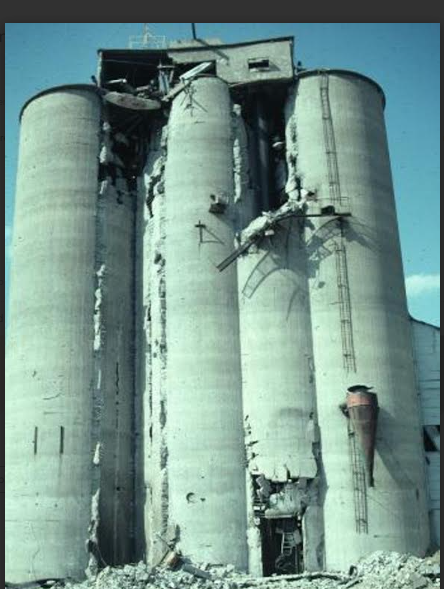
As Simmons recalled, “the whole tops of the elevators were gone and people
were hanging in the headhouse [the top two to five stories].” That left
Simmons with quite the situation to sort out, first calling in a rescue
helicopter to help the trapped workers. However, the vibrations from the
blades were dislodging rubble and creating more issues, so cranes were
called in instead to get the technical rescue team up to the trapped workers
to help free them.

Looking back, Simmons noted his team had done all sorts of rescues over
the years, but responding to the DeBruce explosion combined all of those
elements into one call and he said the imprint of the body of one of the
victims 100 feet up on one of the silos has stayed with him, speaking to the
force of the blast.

“When I saw that body up there, that just blew me away,” Simmons said.
On top of that, Simmons and his team had to worry about the additional
risks of secondary explosions while on site. He stayed on in response until
the morning after the explosion, while his daughter was out there for the
day providing medical support to the firefighters while also helping search
the scene for critical body parts — with recovery and cleanup efforts
continuing for weeks after.

Now a physician’s assistant at Tanglewood Family Medical Center, Paxton
said she and her father were aware they were at the same scene the day of
the explosion. While their paths didn’t cross, given how shaken the
firefighters she treated were, she was certainly concerned.

“I knew that he was in command of that scene, and I was worried,” Paxton
said. “It was a threatening scene and I knew he had a lot of stress on him,
and those firemen were his family. He had to make decisions on who was
going in; he was in a tough spot.”

Avoiding future risk

Rob Dusenbery, a fellow retired firefighter who now teaches fire science at
Wichita South High School, noted there are only a handful of calls the
magnitude of the DeBruce explosion firefighters will make in their careers.
Part of the purpose of the film is to help raise funds for Dusenbery’s program
and other local firefighter charities.

While Dusenbery was relatively new to the department compared to
Simmons and was on the fringes of the response team, the lessons on
incident management — between all parties — from the grain elevator
explosion are something he is trying to pass on to the next generation within
the consistency he preaches to his students.

“We start out with a good game plan and then we make a mistake and don’t
correct it and pretty soon we’ve normalized that behavior. Pretty soon we
normalize other mistakes and other sloppiness, and when you end up on an
accident scene like that somebody has to have their stuff together and
somebody else has to know what their place is and how they react,”
Dusenbery said. “I see something like DeBruce as the ultimate example of
that kind of coordination, and I see something like this film as a way to get
people to think about it.”

Speaking to the many moving parts of such a response, Simmons noted he
was just one pawn out on the scene doing his job and there are plenty of
others who deserve the spotlight — which the film is shedding some light on.
“It was overwhelming. It’s something I’ll never forget in my life,” Simmons
said. “I learned a lot from it, and I’m sure other people learned a lot from it
that were there.”

There were signs of an eventual issue like the explosion. Simmons saw it
when he worked at the grain elevator as a teenager, and Turnmire said her
brother made comments noticing issues coming to a head as well.
Part of the drive behind the film is to explore the technical challenges,
hazards, lessons, etc., from the DeBruce explosion and other similar
accidents to help prevent them in the future.

“I can’t bring my brother back. I can’t bring those men back. None of them
are going to come back. We’re not going to have any of those experiences
with them, and I am so sorry that they’re gone,” Turnmire said. “But on the
flip side, I’m so thankful that I’ve had this experience with the [surviving
responders].

“This is about risk management. I’m hopeful that by having these
conversations, we educate [people] that it’s all of our jobs,” she continued.
“What can we do as a community to make sure it never happens again?”
Currently, “11 Days” is in post-production and editing, with a private premier
screening being planned for the contributing first responders. Turnmire is
also seeking to enter the film on the festival circuit in the coming months.

For more updates and to view the film’s trailer, check
https://sannnordstudios.com/11-days-the-film/.

Derby’s Larry Simmons (right) and Malissa Paxton, father and daughter, were among the
emergency personnel who responded to the DeBruce explosion, helping share some of their
insight for the documentary.

Documentary,
BY KELLY BRECKUNITCH
[email protected]

KU News: University of Kansas, Kansas State University partner on Sunflower State Tour for prospective students

0

From the Office of Public Affairs | https://www.news.ku.edu

Headlines

University of Kansas, Kansas State University partner on Sunflower State Tour for prospective students

LAWRENCE — In a partnership to share information about admissions and scholarship processes with high school and transfer students, the University of Kansas and Kansas State University will host the Sunflower State Tour from Sept. 8 to 11 in seven Kansas cities: Emporia, Liberal, Humboldt, Dodge City, Wichita, Colby and Phillipsburg.

Study traces history of legislation to help low-income households pay for energy

LAWRENCE — As extreme temperatures drive energy bills higher, low-income households increasingly face utility shutoff. Policy addressing such energy insecurity has traditionally been viewed as the domain of poverty law, but new research from the University of Kansas proposes it should be a more central part of energy law. The article published in the journal Environmental Law traces the history of legislation that assists with home energy bills and outlines how energy and poverty law could work together to ensure better energy insecurity policy.

Prison to possibility: KU TRIO program helps incarcerated individuals rebuild through education

LAWRENCE — The TRIO Educational Opportunity Centers, a program within the Center for Educational Opportunity Programs at the University of Kansas, is working to make reentry to society easier through education, support and connections. Melody Lawrence, a TRIO EOC academic adviser, works with the Shawnee County Department of Corrections and Kansas Juvenile Correctional Complex to create pathways to education for inmates seeking a fresh start.

Center for Community Outreach to host annual Super Service Saturday

LAWRENCE — The University of Kansas Center for Community Outreach is preparing to host its annual Super Service Saturday on Aug. 23. Jayhawk volunteers will travel to nonprofit service sites and assemble sustainable pet toys for donation to the Lawrence Humane Society. In 2024, more than 230 student volunteers traveled to 21 nonprofit service sites, contributing an estimated $22,000 in economic impact to the community.

Full stories below.

————————————————————————

Contact: Kaylin Burris, Enrollment Management, [email protected]
University of Kansas, Kansas State University partner on Sunflower State Tour for prospective students

LAWRENCE — The University of Kansas and Kansas State University will host the Sunflower State Tour from Sept. 8 to 11 in seven Kansas cities: Emporia, Liberal, Humboldt, Dodge City, Wichita, Colby and Phillipsburg.

The event is designed for high school and transfer students to learn about the admission and scholarship processes at two of the state’s largest universities. Guests and family members are also welcome to attend to receive information about admissions and scholarships.

High school and community college counselors can also attend special sessions in each city during the tour. These sessions will include resources to help guide students through the college search process for both institutions.

Students attending the events will be entered into a raffle for a chance to win tickets to the KU vs. K-State football game Oct. 25. Winners will be announced at each event.

Students and counselors can register at the official website.

For more information, contact [email protected].

-30-

————————————————————————

KU activity supports nearly 88,000 jobs — or 1 in every 23 jobs in Kansas.

If KU by itself were its own industry sector, it would be the 10th-largest sector in Kansas.


https://economicdevelopment.ku.edu/impact

————————————————————————

Contact: Mike Krings, KU News Service, 785-864-8860, [email protected]
Study traces history of legislation to help low-income households pay for energy

LAWRENCE — As extreme winter cold and rising summer temperatures drive energy bills higher, low-income households face utility shutoff for not being able to afford the cost. Policy addressing such energy insecurity has traditionally been viewed as the domain of poverty law, but new research from the University of Kansas proposes it should be a more central part of energy law. The work traces the history of legislation to assist in covering home energy bills and outlines how energy and poverty law could work together to ensure better energy insecurity policy.

The Low Income Home Energy Assistance Program, known as LIHEAP, was established by Congress. The legislation recently marked its 40th anniversary as the centerpiece of federal low-income energy policy.

“Although it makes sense that help on energy bills is administered through social service programs, it’s always bothered me that energy insecurity and energy burden are usually addressed only abstractly, as part of general affordability, in energy law. I pursued this research to better understand that split,” said Uma Outka, William R. Scott Professor of Law at KU.

Outka has published an article examining the history of LIHEAP and related programs, calling for a greater focus on energy insecurity within energy law and outlining ways it can be addressed. The article was published in the journal Environmental Law.

Outka’s work traces the passage of LIHEAP and its original intentions to help low-income households afford energy bills, especially in times of extreme temperatures, which most often has been winter heating bills, but is increasingly needed for cooling bills during the hottest days of summer. She also details legislation such as the Weatherization Assistance Program, designed to help homes become more energy efficient, and how both have come up short in various ways.

While never intended to fully solve the problem of energy insecurity, LIHEAP has never served all eligible households. The program has only reached roughly 16% of eligible households over time, ranging from the low single digits to about 30% of eligible households each year, depending on the state. In Kansas, only about one-fifth of eligible households receive help with energy bills through LIHEAP.

Outka examines how some states have taken measures to supplement programs such as LIHEAP, but also how households across the country fall through the cracks every year due to problems applying for such programs, lack of knowledge of the existence of assistance and other barriers.

Further, shifting political winds illustrate the danger of relying on programs that themselves rely on congressional funding. During President Donald Trump’s first term, the White House proposed that LIHEAP funding be eliminated, though Congress rejected that proposal. Trump’s latest budget proposal for 2026 again has LIHEAP on the chopping block.

“This remains a critical issue, as the budget proposal for next year proposes eliminating LIHEAP, and the staff who administer the program have been fired,” Outka said.

Research shows that energy insecurity disproportionately affects Black, Latino and Native households and that low-income households also frequently have high numbers of children, seniors and individuals with disabilities residing in them. Outka cites research that shows the economic effects energy insecurity has on such households, including statistics showing that the most common reason people seek high-interest, short-term payday loans is to afford energy bills.

“We have much more information now than we ever have about what the experience is like when people face energy insecurity, but it still seems as if the specific needs of very low-income households are sidelined within energy law,” Outka said.

Further, Outka distinguishes a difference between energy insecurity and energy poverty. Many areas of the world have people living each day without access to energy, whereas the United States has the capacity to provide energy for every citizen, though many cannot afford to pay for it. Thus, she reviews the issue under the definition of energy insecurity in the United States.

Because the capacity exists, energy law would be well-served to consider energy insecurity more directly and not assume it is a problem that will be solved by poverty law, Outka writes. Those involved in energy law and policy, especially at the state level, could help by making sure the issue is at the forefront, for example, when utilities seek approval to raise utility rates for consumers. And while energy law can’t solve poverty, it can play a bigger part of ensuring just rates for low-income households and centering them in clean energy reforms, she writes.

In future research, Outka hopes to study states that have been the most successful in assisting low-income households address energy insecurity, what steps they have taken and if they can be strengthened or duplicated in other states.

Ultimately, energy and poverty law should work together to address energy insecurity, as relying on annual congressional appropriations in a divisive political climate can be precarious, according to Outka. Through such collaboration, the issue could move beyond crisis response into a rethinking of law that both addresses energy insecurity and centers low-income households in a stronger energy policy.

“To treat low-income energy insecurity as primarily a poverty problem has allowed inequities to continue,” Outka said. “By tracing the intertwined history, we see compelling reasons to reconceive low-income energy policy as energy, not to displace the critical assistance provided by anti-poverty programs, but rather to reinforce it.”

-30-

————————————————————————

KU spent $78.9 million across Kansas on research-related goods and services in FY23.

https://ku.edu/distinction

————————————————————————

Contact: Justin Leonard, Achievement & Assessment Institute, 785-864-0753, [email protected]
Prison to possibility: KU TRIO program helps incarcerated individuals rebuild through education

LAWRENCE — Imagine spending 10 years behind bars with limited contact with the outside world. Then one night, you’re removed from your cell and dropped off in an unfamiliar city, alone, with no job, no savings and no connections. This was the reality for Destney Williams, a former Topeka Correctional Facility inmate.

“I’m not from Topeka, and I didn’t know anyone in Topeka when I got out of prison,” Williams said. “They pretty much just kick you out and tell you to figure it out.”

After a decade in a state prison and with no degree, Williams said she struggled to stay afloat, even after finding a job.

“I just couldn’t afford to support myself no matter how many hours I worked,” Williams said. “I just could not get ahead.”

Reentry into society after years can be abrupt and overwhelming, especially for those who entered the system as teenagers. With little preparation, many have to navigate a maze of housing, employment and education alone. Their success can be the difference between moving forward and ending up back behind bars.

The TRIO Educational Opportunity Centers (EOC), a program within the Center for Educational Opportunity Programs at the University of Kansas, is working to make reentry to society easier through education, support and connections. Melody Lawrence, a TRIO EOC academic adviser, works with the Shawnee County Department of Corrections and Kansas Juvenile Correctional Complex to create pathways to education for inmates seeking a fresh start.

Williams wanted to go back to school but didn’t know where to start. She was referred to Lawrence, who was offering FAFSA assistance at the Topeka & Shawnee County Public Library by a Shawnee County Reentry Council member. Lawrence helped Williams fill out her FAFSA and learn about the nearby opportunities. Since then, Williams has received certifications in welding and electrical technology from Washburn Tech University.

“TRIO EOC has helped me a lot because I probably would have gone back to prison if Melody was not here for me,” Williams said.

Inspired by Williams’ successful reentry and educational journey, Lawrence participated in the Shawnee County Reentry Council meeting to help more people like Williams. At the conference, a reentry simulation highlighted the difficulties and barriers of reentry.

“It was very eye-opening as to the barriers that justice-involved folks encounter upon reentry into society,” Lawrence said. “My first thought was that this is why people go back to prison or jail. Because they don’t have the resources for them to be successful.”

Lawrence joined the Reentry Opportunity Conference of Kansas (ROCK) committee to help plan the annual ROCK conference, which is dedicated to advancing reentry services for Kansans. It was there that Lawrence met Justin Knutzen, a reentry coordinator at Shawnee County Department of Corrections who teaches life and employment skills. The two connected and began their partnership to support individuals reentering society and benefit Kansas as a whole.

“Kansans spend around $24,000 to $26,000 a year on average for a single person to be incarcerated, and that’s not even adding the mental or physical health aspect, which bumps the cost up further,” Knutzen said. “When they receive this education and don’t come back, that’s saving cost and putting money back into the system.”

While Knutzen focuses on skills needed for daily life and employment, Lawrence teaches students about the education opportunities available to them, whether that’s getting a GED diploma, enrolling in college or going to a trade school. She also shares information about scholarships, applying for FAFSA and leveraging their experience.

Lawrence said these classes are just the beginning. She is looking for ways to grow TRIO EOC’s offerings to justice-involved individuals and is interested in partnering with organizations doing similar work to expand the center’s reach. Lawrence will also be presenting a breakout session at the 2025 ROCK Conference, Aug. 26-28 in Topeka, on education opportunities for individuals currently and recently incarcerated.

“We’re all human, and we all fall sometimes,” Lawrence said. “I want to provide as many opportunities as possible to show people that it’s okay to ask for help. There is hope.”

-30-

————————————————————————

Don’t miss new episodes of “When Experts Attack!,”

a KU News Service podcast hosted by Kansas Public Radio.


https://kansaspublicradio.org/podcast/when-experts-attack

————————————————————————

Contact: Kate Kemper, Center for Service Learning, 785-864-0960, [email protected]
Center for Community Outreach to host annual Super Service Saturday

LAWRENCE — Every Hawk Week, the University of Kansas Center for Community Outreach (CCO) hosts Super Service Saturday, an opportunity to assist area nonprofit service organizations.

The 2025 event will take place from 9 a.m. to 2 p.m. Aug. 23. While this event is traditionally targeted toward students, CCO leadership encourages all Jayhawks, including faculty and staff, to sign up to volunteer for this day of service. Employees can join with their students or individually and partake in a meaningful team-building opportunity.

In 2024, more than 230 student volunteers traveled to 21 nonprofit service sites, contributing nearly $22,000 in economic impact to the local community, based on estimates from the Independent Sector’s 2025 Value of Volunteer Time Report.

“When we come together as a campus, we’re also coming together as a community to help each other work towards a better place for everyone to live, learn and work,” said Avery Swanson, CCO executive director.

Super Service Saturday includes an opportunity for participants to connect with CCO and other community service programs, assemble sustainable pet toys for donation to the Lawrence Humane Society and learn from influential keynote speakers prior to being transported by bus to service sites for two hours of volunteering.

This year’s Super Service Saturday keynote speakers are Linda Luckey, founding director of the Center for Service Learning and a current assistant dean of the College of Liberal Arts & Sciences, and Melinda Lewis, School of Social Welfare professor of the practice.

Swanson said she is “excited to listen to two Jayhawks with a deep understanding of what it means to engage with the community as vital partners and how to pursue service that is actually positively impactful.”

All Super Service Saturday volunteers receive free breakfast, an event T-shirt and transportation to and from service sites. Sign up to volunteer by noon Aug. 22 and contact [email protected] for questions or accommodation requests.

The KU Center for Community Outreach is a student-led service organization founded in 1995 at KU with the mission “to provide meaningful service opportunities for students, address various needs through collaborative partnerships, and strengthen our community through education and advocacy.”

-30-

————————————————————————


KU News Service

1450 Jayhawk Blvd.

Lawrence KS 66045

[email protected]

https://www.news.ku.edu

Erinn Barcomb-Peterson, director of news and media relations, [email protected]

Today’s News is a free service from the Office of Public Affairs

 

KU media advisory: Heavy traffic anticipated Aug. 14-15 for KU Housing & Residence Life move-in days

0

From the Office of Public Affairs | https://www.news.ku.edu

Media advisory

Contact: Jacque McKenna, KU Housing & Residence Life, [email protected]
Heavy traffic anticipated Aug. 14-15 for KU Housing & Residence Life move-in days

LAWRENCE — University of Kansas employees and the Lawrence community should anticipate heavy traffic around the Lawrence campus this week — Aug. 14-15 — during KU Housing & Residence Life’s two-day move-in process for its residents.

Traffic around Daisy Hill is expected to be heaviest from about 7 a.m. to 2 p.m. The busiest intersections will likely be 15th and Iowa streets, Clinton Parkway and Crestline Drive, and 23rd Street and Naismith Drive. Due to ongoing road construction and road closures on Iowa and 19th streets, residents moving in have been given alternative driving routes. Closures impacting travel include both the east and west sides of 19th Street at Iowa Street and 19th Street between Kentucky and Massachusetts streets.

There also may be increased traffic at:

11th and Louisiana streets, location of GSP and Corbin halls.
19th Street at both Ousdahl Road and Ellis Drive, which are the entrances for Downs and Naismith residence halls and Stouffer Place apartments.

Maps of each area, which were emailed to incoming residents and their families, can be found at the KU Housing & Residence Life website.

If announcements are needed related to severe weather, tune to Kansas Public Radio at 91.5 FM.

An early move-in for band members, sorority recruitment and other residents took place Aug. 9-10.

For media:

Media are welcome to attend the event, but news vehicles will not be allowed to cross Irving Hill Bridge and enter the line of cars going to Daisy Hill.

-30-

————————————————————————


KU News Service

1450 Jayhawk Blvd.

Lawrence KS 66045

[email protected]

https://www.news.ku.edu


Erinn Barcomb-Peterson, director of news and media relations, [email protected]


Today’s News is a free service from the Office of Public Affairs