Sunday, January 18, 2026
Home Blog Page 105

Ready or not: It’s time to plant the fall vegetable garden

0

Fall crops may be seeded directly or transplanted, says K-State horticulture expert.

It may be mid-summer, but veteran gardeners know it’s time to start planning the fall vegetable garden.

“Fall gardens may face additional pressures of pests and heat, but the flavor that comes from these late season crops are often better (than summer crops),” said Kansas State University horticulture expert Cynthia Domenghini.

She notes that gardeners should count the number of days to harvest, as well as the crops’ tolerance to frost, before deciding when to plant fall crops. Crops may be seeded directly, or transplanted into the garden.

“Growing transplants is a good choice when the temperature is too warm for starting seeds in the ground, assuming you have grow lights and space available for starting them indoors,” Domenghini said.

She provides some tips for successful fall crops:

  • When seeding crops directly into the garden, plant slightly deeper than recommended in the spring to take advantage of the cooler soil temperatures and moisture available.
  • Water more frequently to prevent the seeds from drying out.
  • Overhead watering often causes soil to crust, making it more difficult for young, tender plants to emerge. Prevent this by applying a light sprinkling of vermiculite or compost over the row after seeding, or use a soak hose or drip irrigation right next to the row to allow water to slowly seep into the ground.

Domenghini also suggests a timeline for planting fall crops:

Mid- July

Plant potatoes if you can find seed stock or have saved seed potatoes. Do not use freshly dug potatoes as they have built-in dormancy that will prevent growth. Also, grocery store potatoes are often treated, so they don’t sprout.

Cabbage, broccoli and cauliflower can be started from seed at this time. Choose a protected place where the soil can be kept moist and rabbits will not bother them. This will not be where they will grow the entire season; these crops will be transplanted in August.

Late July

Seed beets, carrots and beans.

Late July to early August

Seed spinach and long-season maturing lettuce. Leaf lettuce will be seeded later.

Second week of August

Transplant cabbage, broccoli and cauliflower to their final location.

Mid to late August

Seed radishes and leaf lettuce. There is no need to fertilize these crops before planting. Side-dress two weeks after transplanting, or four weeks after sowing seed, by applying two tablespoons of a 16-0-0 or one tablespoon of 27-3-3, 30-3-4 fertilizer (or something similar) per plant.

More information about fall gardening is available in the Kansas Garden Guide, available online from the K-State Research and Extension bookstore.

Domenghini and her colleagues in K-State’s Department of Horticulture and Natural Resources produce a weekly Horticulture Newsletter with tips for maintaining home landscapes and gardens.

Interested persons can subscribe to the newsletter, as well as send their garden and yard-related questions to Domenghini at [email protected], or contact your local K-State Research and Extension office.
Farm Families of the Year Recognized

0

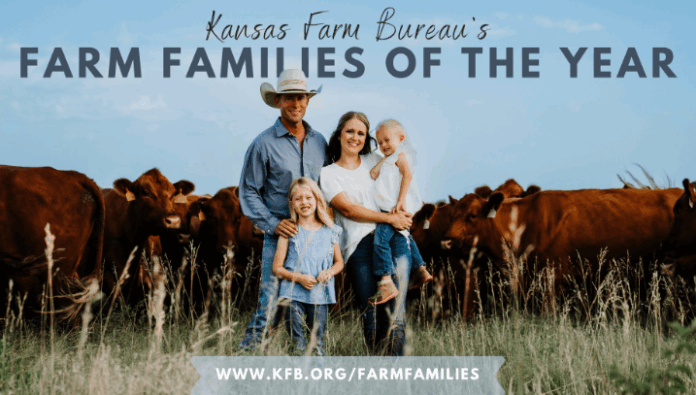
A group of families across Kansas have been recognized as a “Farm Family of the Year”.

Each year, Kansas Farm Bureau recognizes outstanding Farm Bureau families who have distinguished themselves through participation in Farm Bureau programs and leadership, family activities, community and civic service, as well as displaying good farm operation management. These Farm Family of the Year winners receive an attractive Farm Family of the Year yard sign, which will be presented to the winning family at the county annual meeting. Counties may also choose to give other recognition items at their discretion. The families are also honored at the Kansas Farm Bureau Annual Meeting in Manhattan. Honorees will receive special recognition, a commemorative gift and invite for immediate family to the recognition banquet.

Congratulations to the following families for being named KFB’s 2025 Farm Family of the Year winners:

  • Mike and Peggy Blaes, Montgomery County
  • Jason and April Coover, Lincoln County
  • Pat and Lori Elpers, Kingman County
  • Kendall and Melinda Hodgson, Rice County
  • Kacie and Johnathon Lockyear, Cowley County
  • Jason and Haley Nelson, Jewell County (pictured)
  • Joseph and Theresa Neville, Sedgwick County
  • Russell and Tiffany Rezac, Pottawatomie County
  • Carolyn and (the late) Lloyd Wulfkuhle, Douglas County

Learn more about the Farm Family of the Year program at www.kfb.org/farmfamilies. Follow along on KFB’s Facebook and Instagram to learn more about these families in the coming weeks.

Heat stress sets back weed control efforts

0

High temperatures and drought-stressed crops are reducing herbicide performance and allowing weeds to take hold.

Kansas producers are facing weed management challenges in grain sorghum, wheat stubble and soybean fields, according to Kansas State University weed management specialist Sarah Lancaster.

Lancaster said there aren’t many post-emergence herbicide options for grain sorghum currently on the market.

“Aim is labeled for post-emergence use in grain sorghum, but it’s only effective on very small pigweeds,” Lancaster said. “2,4-D and dicamba are probably the most effective on Palmer amaranth, but they can also cause injury to grain sorghum, such as lodging and brittle stems.”

According to Lancaster, Aim and Huskie have a better chance at being effective if the weeds are small.

“By small, I mean four inches or less,” she said. “The Huskie label specifically states four inches, and coverage is important. The smaller the weed, the better your chances of success.”

Humid conditions can improve herbicide performance significantly, according to Lancaster.

“If the plants are not growing well, the herbicides are not going to work as well,” Lancaster said. “We’ve seen temperatures into the upper 80s, which can reduce herbicide effectiveness, but we’ve also had high humidity across much of the state which generally increases efficacy – especially for contact herbicides like glufosinate (Liberty).”

Lancaster expressed particular concern about wheat stubble fields, where Palmer amaranth, kochia and volunteer wheat are rapidly emerging. She said timely herbicide applications are essential to prevent weeds from going to seed.

“I’ve seen fields that are just green with palmer amaranth, kochia and volunteer wheat,” she said. “Timely applications are crucial.”

While newer tools like drones are gaining interest, Lancaster cautions that they may not be as effective or reliable as some producers hope.

“Drone applications are not as straightforward as some may think,” she said. “There are very few products actually labeled for this type of application.”

For more guidance, Lancaster recommends the K-State Agronomy eUpdate and the Chemical Weed Control Guide as essential resources for producers navigating this challenging season.

Brand names mentioned in this article are for identification purposes only and are not intended to represent an endorsement of any specific product.

Just a Bit of Bark and Banter: Summer Days with My Toy Aussies

0

Jennifer Long
Columnist

Summer is here, and while many of us love soaking up the sunshine, my four Toy Australian Shepherds have their own opinions about these hot days!
Lucy, our indoor queen, is perfectly happy lounging in the cool air conditioning. She’ll occasionally peek outside, but the heat doesn’t appeal to her one bit. Her favorite summer activity? Sprawling out in the coziest spot on the couch, keeping a close eye on everything happening inside.
Brutus and Scout, on the other hand, are usually the adventurous ones. They love their walks and exploring the neighborhood, but lately, the summer heat has slowed them down. Walks have to wait until early morning or late evening when the sun isn’t blazing. Even then, they’d rather take shorter strolls and hurry back to the shade.
Luna, our playful girl, likes a mix of both worlds. While she appreciates the comfort of staying inside where it’s cool, she can’t resist her little pool in the backyard. On particularly hot afternoons, she’ll splash and play in the water, tail wagging, before heading back inside to relax.
Watching my Toy Aussies handle summer in their own ways reminds me that, like people, pets have their unique personalities and preferences. Whether it’s lounging indoors, enjoying a quiet evening walk, or splashing in a backyard pool, there’s no wrong way to beat the heat—so long as they’re happy and safe.
A Few Summer Tips for Your Furry Friends:
Hydration is key! Always keep fresh, cool water available indoors and out.
Paw check! If the pavement is too hot for your hand, it’s too hot for their paws. Walk during the cooler parts of the day.
Shade & splash zones: A shady yard and a small kiddie pool can turn a hot afternoon into a play day.
Frozen treats: Ice cubes or frozen dog-friendly snacks make for fun (and safe) summer cool-downs.
Know their limits: Just like us, dogs can overheat quickly, so watch for signs of heat exhaustion and give them plenty of rest.
Summer with my Toy Aussies is never boring—between Lucy’s lounging, Brutus and Scout’s short-but-determined walks, and Luna’s splash parties, there’s always a story to tell!

Tradin’ Places (Best Of)

0
lee pitts

They left the auction arena shrouding their eyes…they couldn’t stand to watch the sale of their cows, the ones they raised from calves and given family names. They didn’t want their friends and neighbors to see them cry so they got their final cattle check and left without saying goodbye.

They’d best be getting on with their lives. They weren’t getting any younger and their son didn’t want any part of the ranching life. So with ranch real estate selling for a pretty penny they decided there wasn’t gonna be a better time to sell the old ranch house. And so they moved their possessions to town in the back of their Gooseneck® trailer. When it was empty they traded it and the truck in on something more practical. The ranch pick-up wouldn’t fit in the garage of the tract home they were buying anyway. They’d left behind a few items they thought the new owners might appreciate but they were soon stacked by the road, “Free for hauling away,” the sign said. Only one item was broken in the move to town, an antique vase, like the ranch, handed down from generation to generation.

Having lived their entire lives under cowboy hats they didn’t have the necessary skills or the proper clothes for urban life. After all, one doesn’t wear five buckle boots and Carhartt overalls to the bank. Having said goodbye to their horses and their habits they tried to rid their lives of any record of the ranch. It was bad enough when a cattle truck would pass or a cowboy friend would call. They stopped answering the phone because they didn’t need good memories reminding them of better days.

City life took some getting used to. You couldn’t run through the house half naked because a salesman or someone peddling religion might be standing at the door. They’d never locked their door in the country and were not used to carrying a house key. So now they had to leave a window cracked and the screen off so they could crawl back in. The neighbors complained about their barking dog, but not for long. He got run over trying to go back to the only home he’d ever known.

Oh sure, town life had some pluses. If you were baking and ran out of milk a store was handy. And when you flushed your toilet it was someone else’s problem. Your well never went dry, fast food was readily available and the hospital was just a short ambulance ride away.

Pops got bored with retirement and looked for some part-time work to keep himself busy but he’d never gone to college, having always known what he would do for a living. He finally got a job delivering soda pop which meant he had to change the brand he drank. In his spare time he wandered around like a pony with its bridle off.

One day he drove out beyond the urban sprawl, past the ranchettes to the old home place. They’d traded places with an urban-bred family looking for “the simple life.” Oh really? Wait till the septic tank backed up or the road went out. Now they were living in each other’s world. Perhaps they’d make it, after all, there wasn’t a cow on the place just a llama, a non-working breed of dog and a miniature horse. Oh well, they had probably never swung their leg over the back of a real horse anyway.

No sagebrush rebels these.

Their old house had been transformed into a bed and breakfast with a coat of paint and a sign by the road. The tree house had been taken down and a cute little John Deere became the first tractor to take up permanent residence on the place. The new garden sprouted signs they knew as much about farming as a hog does about Sundays. It was planted way too early in the Spring and there were far too many mounds of zucchini.

So this is the changing landscape of the countryside, where everyone has a gardener or is one. Welcome to a world that is moving at Internet speed and doesn’t seem to care too much for the ‘family’ or the ‘farm’, where heritage, traditions and customs are reduced to being part of an irrelevant past.

But the blood, sweat and tears won’t sift from the soil that easily.