Monday, January 19, 2026
Home Blog Page 119

Walmart opens beef facility in Kansas

0

New Walmart facility boosts beef supply chain in Midwest

Walmart has launched its first fully owned and operated case-ready beef facility in Olathe, Kansas. This 300,000-square-foot plant is a major step in building a strong and transparent supply chain for Angus beef across the Midwest.

The new facility processes fresh beef from Sustainable Beef LLC, a producer-based company in Nebraska, into case-ready cuts. These cuts are then shipped directly to Walmart’s Midwest stores. Walmart invested in Sustainable Beef in 2022 to strengthen its farm-to-store beef pipeline.

The Olathe facility is expected to create over 600 new jobs, bringing economic growth and career opportunities to the local community. Walmart says the plant ensures better value, consistency, and quality beef for its customers.

“The opening of our new facility in Olathe, Kansas, is centered on delivering more of what our customers want — affordable food and quality they can trust. This is the first case-ready facility fully owned and operated by Walmart, and that milestone ensures we’re able to bring more consistency, more transparency and more value to our customers,” said John Laney, Executive Vice President, Food, Walmart U.S.

“Kansas has long been at the forefront of the agriculture industry, and Walmart’s investment in Olathe is further driving our success,” said Kansas Governor Laura Kelly. “Through food production and supply chain innovations, we are proud to partner with Walmart to transform how we feed communities across our state and the region.”

Walmart celebrated the grand opening by awarding over $90,000 in grants to four local organizations, including Kansas Special Olympics, Boys & Girls Club of Greater Kansas City, Friends In Service of Heroes, and Mayor Bacon’s Book Club.

This new facility also supports Walmart’s broader U.S. Manufacturing commitment. The company plans to invest $350 billion in U.S.-made, grown, or assembled products by 2031.

Walmart encourages suppliers to apply to its Annual Open Call event to bring more U.S. products to stores.


Conservation Pays Off on Unproductive Ground in Kearny County

0

On the northwest edge of Kearny County, where the plains stretch flat and wide, farmer Ryan Barnhardt has found a new purpose for the less productive parts of his dryland acres — turning them into wildlife habitat and helping recharge the Ogallala Aquifer through playa conservation.

“It’s relatively flat ground,” Barnhardt said of the area where his playas sit. “One field has some terraces to control erosion when we get heavy thunderstorms. But the playas themselves were never productive, just bare spots or drowned-out crops.”

That’s when Barnhardt started learning more about the ecological value of these features. Playas are vital, temporary wetlands that provide important habitat for wildlife and are a primary source of recharge to the Ogallala Aquifer, a critical water source for western Kansas. These shallow, clay- lined depressions collect runoff from the surrounding area, filtering out contaminants and directing water underground.

About 10 years ago, Barnhardt enrolled in the Migratory Birds, Butterflies and Pollinators
Conservation Reserve Program (CRP) State Acres for Wildlife (SAFE) practice through the USDA Farm Service Agency (FSA), which allowed him to take unproductive playas out of rotation and establish grass buffers. For each enrolled playa acre, the program included a buffer of approximately three grassed acres surrounding it.

“The motivation was simple,” Barnhardt said. “There was no benefit in farming those areas. The soil is either too tight and burns up quickly, or they flood out in a heavy rain. Either way, you end up with poor yield and more weeds.”

The shift from marginal farming to conservation has helped not only Barnhardt’s operation but the surrounding ecosystem. While his playas aren’t on irrigated land, he sees clear benefits for aquifer recharge. With vegetation cover in place, more rainfall is absorbed into the soil instead of evaporating or running off.

“That grass cover helps reduce evaporation and gives water more time to soak in,” Barnhardt said. “That’s good for the aquifer, and long-term, for all of us relying on it.”
Wildlife has also found a home among Barnhardt’s playas and buffer zones. Native upland game birds like pheasants and quail are regular visitors, along with migratory waterfowl such as geese.

The impact has been notable enough to catch the attention of out-of-state conservationists.

“I recently got a letter from the Bird Conservancy of the Rockies,” he said. “They wanted to come out and observe species using the playas. It’s nice to see others recognizing the value these places bring.”

While the playa conservation program doesn’t significantly boost his bottom line, Barnhardt says it helps offset some maintenance costs and provides a small, steady income stream. Land enrolled in a conservation program doesn’t require the intensive inputs of traditional farming and offers a more consistent return on otherwise unproductive acres.

“There’s some mowing and maintenance, mostly on the buffer strips,” he said. “It’s similar to CRP [Conservation Reserve Program] contracts. Sometimes, those expenses can be cost-shared.”

When asked what he would tell other producers considering enrolling their playas in similar
programs, Barnhardt is honest about the considerations.

“The rental rate might not be what it used to be,” he noted. “And if the playa is in the middle of your field, it can be harder to manage around. But overall, I still think there are a lot of advantages.”

Among those benefits, Barnhardt points again to water recharge and wildlife habitat — and the fact that trying to farm playa ground is rarely worth it. “At the end of the day, it’s just not productive ground,” he said. “The program gives you a consistent
income on something you otherwise wouldn’t get much out of. And it’s great to see the wildlife coming back. I’ve had neighbors call me just to ask if they can go bird hunting out there in the fall.”

For Barnhardt, conservation isn’t just a practice — it’s a partnership between land, water, and wildlife. And it’s proving to be one that pays off in more ways than one.

Ryan Barnhardt’s story is just one example of how conserving playas can turn unproductive ground into an asset for both producers and the land. Learn more about how playas support aquifer recharge and wildlife habitat at playasworkforkansas.com.

To discuss programs and options that can help meet your conservation objectives, contact PLJV Conservation Outreach Specialist Titus Jaeger at 620-272-2828 or Ducks Unlimited Biologist Abe Lollar at 620-214-2693.

Kansas Chiefs and Royals? Teams get more time to decide on new stadiums across the border

0

The teams have already had one year to negotiate with Kansas officials. But supporters say the deals are complicated  —  and are frustrated by delays.

Kansas legislative leaders decided on Monday to give the Kansas City Chiefs and Royals an extra six months to reach deals with the state on potential new stadiums.

The organizations now have until the end of the year to take advantage of a tax incentive package designed to lure the teams over from their long-time homes in Missouri.

Republican House Speaker Dan Hawkins blamed the delays on the state Department of Commerce, which is led by Democratic Lt. Gov. David Toland.

“Although I don’t like having to extend the statute for this, I feel in fairness to the teams, it’s incumbent on us to make sure that we do things that are fair and above-board,” Hawkins said during the Legislative Coordinating Council meeting.

The deadline extension keeps supporters’ dreams alive of bringing Kansas its first NFL or MLB team — if not both — by the early 2030s.

Kansas Senate President Ty Masterson called the meeting in late June to extend the June 30, 2025, deadline set during a special legislative session in 2024.

Masterson, a Republican, shared a letter from Mark Donovan, president of the Kansas City Chiefs. Donovan said the team had made strides on a plan to build a domed, Super Bowl-capable stadium in Kansas.

“At the same time,” Donovan said, “the complexity and scale of the project—and the importance of crafting a structure that works for all stakeholders—make it clear that more time is needed to bring the effort to full fruition.”

How did we get here?

Both teams have played at their respective stadiums in the Truman Sports Complex for over half a century. With aging facilities and leases expiring in 2031, the Chiefs and Royals have been planning changes for years.

But last year, voters in Jackson County, Missouri, rejected a sales tax extension to fund stadium renovations for the Chiefs and relocation for the Royals.

Kansas lawmakers jumped at the opportunity. In June of 2024, bipartisan majorities approved a plan to help cover up to 70% of the cost of a major stadium project — with the promise that taxpayers would not foot the bill.

Instead, the state would use a funding mechanism called Sales Tax and Revenue, or “STAR,” bonds.

Private investors would purchase state-issued bonds to help pay for the stadium’s construction. Revenues from economic activity that the development brings, like sales tax from food and ticket purchases, would be used to pay back the loans.

Supporters maintain that STAR Bonds are a way of raising capital for developments without burdening taxpayers. Though critics worry that sales tax revenue would go to paying off bonds rather than to the local or state governments.

Missouri officials, like Kansas City Mayor Quinton Lucas, condemned Kansas’ bid as a reignition of an economic “border war” from years past.

But the Missouri state Legislature has taken its time presenting a counter-offer. In June, nearly a year after Kansas’ STAR Bonds proposal, Missouri lawmakers approved an incentive package to cover half of the costs to renovate the Chiefs’ Arrowhead Stadium and relocate the Royals.

Meanwhile, the Kansas City Royals have shown interest in potential stadium sites in Kansas. The organization confirmed in May that an affiliate had bought the mortgage of the Aspiria development in Overland Park.

Nevertheless, the Royals insist they are still considering multiple options on both sides of the state line.

Lingering uncertainty

Time is running out for both teams to decide where they will go — let alone develop and build new sites — in the six years that stand between now and their leases expiring.

The Chiefs want to build a domed stadium, new headquarters, and a practice facility if they reach a deal on a new site. The Royals have previously planned to include a hotel, offices, and entertainment options in a new stadium development.

In his letter to Masterson, Chiefs president Donovan said his organization hadn’t heard back from Kansas Department of Commerce Officials about their latest proposal in the past six weeks.

Democratic Lt. Gov. David Toland, who doubles as Kansas’ secretary of commerce, said in a June statement that the negotiations were complicated and posed high stakes for taxpayers.

“Bringing the Royals and Chiefs to Kansas is a complex process with long-term opportunities, and implications, for generations to come,” he said. “It’s critically important that we get it right.”

Zane Irwin reports on politics, campaigns and elections for the Kansas News Service. You can email him at [email protected].

The Kansas News Service  ksnewsservice.org.

Fall Gardening

0
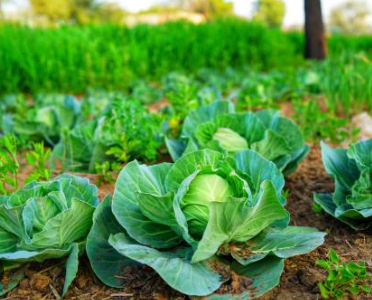
Ready or not it’s time to start planning the fall vegetable garden. Fall gardens may face additional pressures of pests and heat, but the flavor that comes from these late season crops are often better. Fall planting requires attention to the number of days to harvest as well as the crops’ tolerance to frost. Crops may be direct seeded or transplanted into the garden. Growing transplants is a good choice when the temperature is too warm for starting seeds in the ground, if you have grow lights and space available for starting them indoors.
When seeding crops directly into the garden, plant slightly deeper than recommended in the spring to take advantage of the cooler soil temperatures and moisture available. Water more frequently to prevent the seeds from drying out. Overhead watering often causes soil to crust, making it more difficult for young, tender plants to emerge. Prevent this by applying a light sprinkling of vermiculite or compost over the row after seeding or use a soaker hose or drip irrigation right next to the row to allow water to slowly seep into the ground.
Mid-July:
Plant potatoes if you can find seed stock or have saved seed potatoes. Do not use
freshly dug potatoes as they have a built-in dormancy that will prevent growth. Also, grocery store potatoes are often treated so they don’t sprout.
Cabbage, broccoli, and cauliflower can be started from seed at this time. Choose a protected place where the soil can be kept moist and rabbits will not bother them. This will not be where they will grow the entire season but these crops will be transplanted about mid-August.
Late July:
Seed beets, carrots and beans.
Late July to Early August:
Seed spinach and long-season maturing lettuce. Leaf lettuce will be seeded later.
Second Week of August:
Transplant cabbage, broccoli and cauliflower to their final location.
Mid to Late August:
Seed radishes and leaf lettuce. No need to fertilize before planting. Side-dress two weeks after transplanting or four weeks after sowing seed by applying 2 tablespoons of a 16-0-0 or 1 tablespoon of a 27-3-3, 30-3-4 fertilizer, or something similar per plant.
The Kansas Garden Guide is a great resource for additional information about fall gardening.

Carpenter Bees & Beetles

0
Carpenter Bees
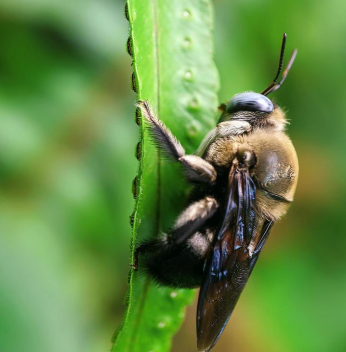
Description: Carpenter bees resemble honey bees however; the abdomen of the honey bee is covered in hairs while the carpenter bee abdomen is smooth and shiny. Female carpenter bees have a black face and a stinger, though they tend not to sting unless provoked. Males have a white face and no stinger.
 
Life Cycle: The life of a carpenter bee lasts one year. Adults overwinter in tunnels they bore into wooden structures. In late spring adults emerge to mate and lay eggs. Female carpenter bees make “bee bread” by combining pollen with nectar. The bee bread is inserted in one of the tunnels and females lay an egg on top of it. That section of the tunnel is sealed and the process is repeated six to ten more times. Larvae hatch from the eggs and reach maturity in five to six weeks. During late summer/early fall the mature bees emerge from the tunnels to eat for a short time before overwintering.
 
Damage: Carpenter bees are reliable pollinators but can be very destructive. Their tunnels are about ½-inch in diameter and five to six inches long through wooden decks, awnings and siding. The secondary damage can be even more destructive as woodpeckers peck gaping holes in the wood in search of the larvae.
 
Control: Carpenter bees tend to prefer soft, unpainted or weathered wood at least a couple of inches thick. Insecticides can be used to treat openings. Sevin can be applied inside the tunnels as a spray or dust. Apply on a cool night when the bees are more likely to be inside their tunnels. Treatment will need to be reapplied after one to two weeks. Carpenter bee traps can be effective for smaller populations, but to control larger populations many traps will be required for any control.
Japanese Beetles 
Description: Similar in appearance to other June bugs, the adult Japanese beetle is 1/4 to 3/8-inch long with a shiny, metallic-green head. The body has bronze wing covers and five clumps of hair that border the sides of the abdomen. The larvae are cream-colored grubs with a light brown head about 1 ¼-inch long at maturity.
 
Life Cycle: Adult female Japanese beetles lay eggs in July beneath wet lawns. Upon hatching, larvae feed on the sod roots and overwinter until the following summer. In June, the larvae pupate and adult beetles emerge to feed above-ground.
Damage: An extremely destructive pest, Japanese beetles feed on every part of the plant. The beetles skeletonize leaves and consume flowers and fruit entirely. Hundreds of varieties of plants can play host to this non-selective pest.
 
Control: Controlling Japanese beetles is a challenge this time of year as new adult beetles emerge from underground daily over several weeks. In small quantities, beetles can be manually removed from plants and dropped into a bucket of soapy water. Check plants daily to look for symptoms. Mornings are the best time to observe as beetles are slower and easier to catch.
There are many traps available that lure Japanese beetles into a container where the pests can be gathered and disposed of. However, some sources caution against using traps as the pheromones used to attract the beetles can draw in even more beetles than would naturally appear. Not all of these beetles may end up in the traps and the result could be greater damage to the plants.
Contact your local Extension agent for recommendations on chemical control options.
 
Blister Beetles
Description: There are several varieties of blister beetles. Colors vary including solid black, black with a gray or cream-colored band, and grayish-brown with yellow stripes. The relatively soft body can be up to one-inch long. They have a broad head with a narrow neck-like structure attaching it to the rest of the body. The wings are soft and the mature adult has long legs. The antennae are about 1/3 the length of the body.
 
Life Cycle: Adult blister beetles lay masses of eggs in the soil during late summer. When the larvae hatch, they search for nests of grasshopper eggs and begin feeding on them. Throughout several molts the larvae develop more prominent legs. The late-stage larvae are the most active and leave the grasshopper nest to pupate underground the following summer. The adult emerges 10 to 20 days later. There is one generation per year.
 
Damage: Blister beetles feed primarily on flowers but will consume leaves as well. Though damage can defoliate a plant entirely, blister beetles can also be great natural predators against grasshoppers. The name blister beetle is derived from the oily substance the insect emits, cantharidin, that is toxic and can leave blisters on human skin if it comes in contact.
 
Control: If removing manually, wear rubber gloves to protect the skin from blistering. Chemical control may be necessary for large populations. Contact your local Extension agent for support.
 
Budworms on Garden Plants
Description: Budworms can be brown, purple, red or green depending on the host plant it’s consuming. It has white stripes on the abdomen that run the length of the 1 ¾-inch body. There are hairs on the body as well. Adult moths are greenish-brown with a
wingspan of about 1 ¼-inches.
 
Life Cycle: There are two generations of budworms each year with the second generation typically being the more destructive. The pupae overwinter several inches beneath the soil surface during mild winters outdoors or in container plants that are brought indoors as well as in the soil of protected patios.
 
Damage: Budworms are common on petunias, geraniums, nicotiana, roses and other
ornamentals. The larvae bore a hole through the flower buds and feed on the petals. Buds may drop prematurely or, if not, the resulting bloom will show damage from the feeding. Larvae also drop black feces on the buds.
 
Control: Manual removal can be effective if plants are monitored regularly. Winters with
temperatures that drop below 20 degrees F can kill overwintering pupae if they are not in protected environments.
Contact your local Extension agency for recommendations on chemical controls.