Wednesday, January 21, 2026
Home Blog Page 142

Wedding Season is in Full Swing in the Community

0

Wedding Season is in Full Swing in the Community

We have entered the month of June. Oh goodness I am actually getting nervous with the wedding of daughter Verena and Daniel Ray being in eighteen days. I have not done much grocery shopping yet. I am still working on my list. It takes a lot of brain work to figure out all the ingredients you need for making over one thousand meals for the wedding day. And of course it does not help being another year older. Haha

 I want to thank everyone for all the nice birthday wishes, cards, gifts, and etc. Also, a thank you to my precious children for their lovely tributes to me. I thank God for blessing me with children that are so thoughtful and show me such great love. It is not easy being a mother but I do the best I can. I remember my mother always saying that it takes a lot of prayers to raise a family. I fully understood what she meant not far into motherhood. I had a lovely birthday on May 22nd. Our whole family came in honor of my birthday on May 25th. They brought supper in so I didn’t have to cook. We had a delicious meal by the time everybody brought something. Nephew Ben and Crystal brought me a nice supply of radishes from their garden. I love those first radishes from the garden. I planted mine later this year so they aren’t ready yet.

Last night we were invited to niece Elizabeth and Manuel for supper. They invited all the church families back for supper as they hosted church services again. Two weeks ago they also hosted church services. We were also invited to go to Daniel Ray’s parents for supper. They also hosted church services at their house. 

Last week one afternoon and evening quite a few men from our church district gathered to put a fence up in daughter Loretta and Dustin’s field. They worked until the fences were all up and the gates all hung. This was greatly appreciated by Dustin and Loretta. They are quite busy raising three children all under age three. There is not a lot of extra time to do these jobs. 

Congratulations to our neighbor girl Marianna and Matthew. They had a nice wedding on May 23rd. We also attended the five o’clock meal at the wedding of Dave and Linda May 29th, Ascension Day. Congratulations to them as well. We have another wedding invitation yet on June 19th, the day before Verena and Daniel Ray’s wedding. It is another neighbor girl Loranna and Leon. I am doubtful that we will make it with Verena’s wedding the next day. We wish all three couples a long happy married life and with God as their guide.  

Tomorrow night we plan to attend the kindergarten graduation of grandson Timothy, TJ, son of daughter Elizabeth and Tim. Time has a way of slipping by. 

Saturday we have our family and Daniel Ray’s family coming to help prepare for the wedding. Lots of jobs should get done. The list includes cleaning the barns, power washing the house, trimming the fences, washing windows in the house and barn, and generally getting the barn cleaned so tables can be set the following Saturday.

We have had a lot of meals of asparagus this season fixed in many different ways. The season of asparagus is coming to an end. Next in season is strawberries. I would like to make strawberry freezer jam which is our favorite jam. 

My rhubarb plants are doing very good this year and I canned thirty-eight quarts of rhubarb juice last week. Enjoy!

RHUBARB JUICE 

8 pounds rhubarb, washed and diced

8 quarts water 

2 (12 ounce) cans frozen orange juice

2 (46 ounce) can of pineapple juice

4 cups sugar 

2 (3 ounce) packages strawberry gelatin

Combine rhubarb and water and cook until rhubarb is soft, about 25-30 minutes. Strain liquid into a large bowl or pot, discarding rhubarb. Add the orange juice, pineapple juice, sugar, and gelatin to the rhubarb juice. Stir until the sugar is dissolved. The juice may be frozen or canned. Makes around 12 quarts. 

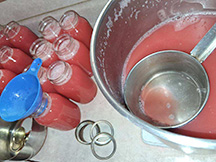
To can it, I ladle the warm liquid into jars and place the jars into a water bath that is about the same temperature as the juice.  I bring the canner to a boil, cover it and process for 5 minutes.    I know others process it for up to 20 minutes.  I can the way my mom taught me and her mom before her.   It is probably good to check the USDA website for more detailed canning instructions.

Note- only use 1 can of pineapple juice and add an extra 3 ounces of strawberry gelatin.  After the juice is canned you can mix it with a clear pop to make a punch if you would like.

Lovina’s Amish Kitchen is written by Lovina Eicher, Old Order Amish writer, cook, wife, and mother of eight. Her three cookbooks, The Cherished Table, The Essential Amish Cookbook, and Amish Family Recipes, are available wherever books are sold. Readers can write to Eicher at Lovina’s Amish Kitchen, PO Box 234, Sturgis, MI 49091 (please include a self-addressed stamped envelope for a reply); or email [email protected] and your message will be passed on to her to read. She does not personally respond to emails.
Wild Coyotes Are Expanding Across These 10 U.S. States

0

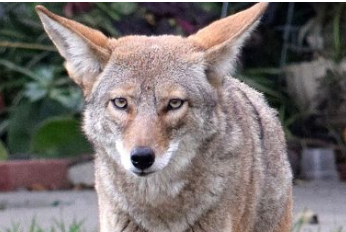
Coyotes are among the most adaptable and intelligent animals in North America. Once limited to wild landscapes, they have increasingly made suburban and urban areas their home. Their ability to survive and thrive has led to growing populations in unexpected places. Here are ten U.S. states where coyotes are expanding rapidly.

Texas – With an estimated 859,510 coyotes, Texas leads the nation in population. Their presence spans deserts, forests, and urban areas, showcasing their remarkable adaptability. While ranchers often view coyotes as pests due to their impact on livestock, these predators also play an important role in controlling rodent populations.

California – In the state of California, the coyote population ranges from 250,000 to 750,000. Sightings are common in major cities like Los Angeles and San Francisco. In fact, some coyotes have even learned to use crosswalks, demonstrating their remarkable adaptability in urban settings.

Arizona – Arizona’s 200,000 coyotes have mastered survival in extreme heat. Specifically, their ability to go days without water and to hunt primarily at night helps them thrive in the harsh desert environment. However, despite their resilience, ongoing human expansion continues to threaten their natural habitats.

Arkansas – With figures around 106,3560, Arkansas coyote populations have the potential to double in the near future. The ability to blend seamlessly into forests and suburban areas ranks them among the most adaptable predators in the state. To reduce coyote scavenging near homes, securing trash bins is a practical and effective step for residents.

Kansas – Kansas is home to approximately 150,000 coyotes, with some estimates suggesting the population could reach 300,000. These predators play a vital role in open prairies by controlling populations of small mammals. However, farmers often debate their role, weighing the benefits of natural pest control against concerns over livestock protection.

New Mexico – New Mexico’s 125,000 coyotes thrive in desert terrains, relying on stealth and intelligence to avoid predators and humans alike. Their predominantly nocturnal habits allow them to hunt efficiently while remaining largely unseen. Moreover, coyotes can adjust their vocalizations to mimic a larger pack, a clever strategy that helps deter potential threats.

Pennsylvania – The coyote population in Pennsylvania has grown to about 100,000, expanding into wooded regions and thriving in both rural and suburban areas. This increase has sparked debates over hunting regulations—while some advocate for population control, others recognize the ecological benefits coyotes provide. Their growing numbers underscore their remarkable ability to coexist with human development.

Georgia – Roughly 90,000 coyotes live in Georgia, and their presence in suburban neighborhoods continues to rise. Known for their stealth, they make use of parks and other human spaces as food sources. In some cases, they’ve been spotted acting like pet dogs to avoid detection.

Wyoming – Rough terrain and cold winters challenge Wyoming’s 86,000 coyotes, who use speed and thick coats to survive. Hunting behaviors shift seasonally to meet changing food supplies. Wildlife officials study these changes to track movements and create plans for population management across the state.

Oregon – Oregon is home to 83,695 coyotes, who balance life between dense forests and expanding urban areas. Their ability to adjust hunting patterns according to the seasonal availability of prey ensures their continued survival. Overall, their presence reflects nature’s resilience and capacity to persist alongside increasing human expansion.

Kansans Nominated For Cattle Feeders Hall Of Fame

0
credit -NDSU Ag

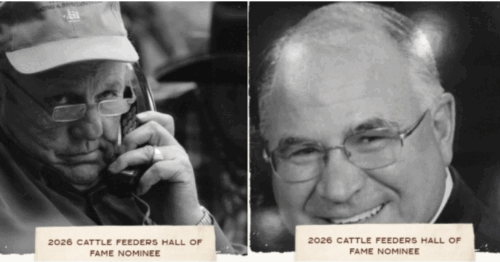
Voting is underway for next year’s inductees into the Cattle Feeders Hall of Fame. The nominees from Kansas include the late Glenn Mull of Haviland and the late Bob Foote from Bucyrus.

According to the Kansas Livestock Association, Mull and his father, Keith, owned and operated Mull Farms and Feeding Inc. What started with one feedyard in Pawnee Rock grew to encompass four more cattle feeding and backgrounding facilities located in Haviland, Mentor, Kinsley and Fellsburg. Total feedyard and growing capacities were about 30,000 head. Mull was a longtime member of KLA and NCBA. Sadly, Glenn and three other family members perished in a plane crash in Bellevue, TN, February 3, 2014. They were on their way to attend the Cattle Industry Convention in Nashville, TN. Mull is survived by two grown children and six grandchildren.

Foote and his wife, Gail, founded Foote Cattle Company in 1985, which consisted of a farming enterprise, order buying business and cattle feeding operation. Hoxie Feedyard, with an initial capacity of 10,000 head, became part of the family business in 1997. Since that time, Foote Cattle Company has grown to include feedyards in multiple locations across Kansas and Nebraska with a total capacity of 285,000 head, as well as farming, ranching and banking enterprises. Foote passed away in 2022. His sons, Scott, Brad and Greg, carry on his legacy.

Two nominees will be inducted into the Hall of Fame based on the number of ballots cast. To vote, click here.

Photo via Cattle Feeders Hall of Fame. Bob Foote (left) and Glenn Mull (right)


Kansas Water Authority Meeting in Hutchison

0

The Kansas Water Authority (KWA) will meet Monday, June 16 and Tuesday, June 17, 2025 at the Hutchison Community College-Fire Science Center located at 3211 E 4th Ave, Hutchison, KS in the Multi-Purpose Room.

The meeting will begin at 1:00 p.m. on June 16 and 9:00 a.m. on June 17.

For additional meeting information and the online meeting link, visit the Kansas Water Office website calendar at kwo.ks.gov or call (785) 296-3185.

The KWA is responsible for advising the Governor, Legislature and Director of the Kansas Water Office on water policy issues. They also ensure that water policies and programs address the needs of all Kansans as well as serve as advisors of the Kansas Water PlanThe KWA was established in 1981 and consists of 13 voting members who are appointed by the Governor or Legislative leadership. State agency directors serve as ex-officio members.

If accommodations are needed for a person with disabilities, please notify the Kansas Water Office at 900 SW Jackson Street, Suite 404, Topeka, KS 66611-1249 or call (785) 296-3185 at least five working days prior to the meeting.

Experts warn Kansas may not be able to afford its plan to lure the Royals and Chiefs from Missouri

0
As Missouri lawmakers prepare to debate a counter offer to keep the Royals and Chiefs in Kansas City, economists say Kansas’ proposal to use STAR bonds may not be financially feasible. “You are not going to generate enough net revenue to cover one of the facilities, let alone two,” one expert says.

Kansas is the only state or local government to pass a plan to fund a Kansas City Chiefs or Royals stadium project.

Dysfunction in the Missouri General Assembly might also mean the Show Me State has nothing to offer. A last-minute plan by Gov. Mike Kehoe to help finance stadium projects for the Royals and Chiefs wasn’t even debated in the Senate.

Missouri lawmakers return June 2 for a special session to, among other things, pass a stadium proposal. But as it stands now, Kansas is in the driver’s seat to get, in theory, both the Royals and Chiefs. Notably, an affiliate of the Royals recently purchased a mortgage in Overland Park secured by the Aspiria campus, which is at 119th Street and Nall Avenue.

But economists say Kansas can’t afford both teams.

“You are not going to generate enough net revenue to cover one of the facilities, let alone two,” said Geoffrey Propheter, an associate professor of public finance at the University of Colorado Denver.

Propheter did say there’s a way Kansas could afford both stadiums, but that requires “cannibalizing activity from other businesses.”

A majority of Kansas lawmakers disagree, and say getting the Chiefs or Royals is a once-in-a-lifetime opportunity. But whether STAR bonds can support one or two teams depends on who you ask.

The Kansas STAR bonds proposal 

STAR bonds, or sales and tax revenue bonds, are bonds that are paid by taxes generated in a bond district — hence the name. In a stadium proposal, taxes collected from bars, restaurants or any other businesses in the bond district would pay back the debt. Typically, STAR bonds are paid off in 20 years.

“(Kansans are) not going to pay a dime unless they visit the district,” Rep. Sean Tarwater, a Stilwell Republican, said last year.

That’s the logic behind the state’s proposal. Lawmakers last year approved a plan that would authorize Kansas to finance up to 70% of stadium costs with the bonds.

Supporters say the Chiefs and Royals would spark an economic boom that will bring new dollars into Kansas. All that economic activity would literally and figuratively pay off in the long run.

Almost 80% of STAR bonds projects are on track to be paid off early, the Kansas Department of Commerce said in 2024. STAR bonds have been used to finance other sports stadiums like the Kansas Speedway and Sporting Kansas City’s Children’s Mercy Park.

But STAR bonds have never been used for projects of this magnitude. A Chiefs or Royals stadium would be by far the largest project in the program’s history. And previous STAR bonds have only funded at most 50% of construction costs, not 70%.

The Kansas Speedway’s original bond was $24.3 million for a stadium that opened in 2001. That’s equivalent to about a $47 million bond when adjusted for inflation. Children’s Mercy Park received a $150 million bond before its 2011 opening.

Those figures would only cover a small fraction of the construction for a new Chiefs or Royals stadium. New stadiums for the Texas Rangers, Las Vegas Raiders and the Los Angeles Rams and Chargers opened in 2020. They had $1.2 billion, $1.9 billion and $5.5 billion price tags, respectively.

2021 audit from the Kansas Legislative Division of Post Audit found questionable returns from some STAR bonds. Notably, the Prairiefire project in Overland Park defaulted on its STAR bonds last year.

Topeka Heartland Park and the Schlitterbahn Waterpark in Kansas City, Kansas, also failed to pay back their bonds. And Strataca, the Hutchinson salt museum, is only projected to break even in 43 to 118 years.

Economists concerns 

Propheter, the University of Colorado Denver associate professor, knows a lot about stadium funding plans. He said they don’t always work as advertised.

He said risk is unavoidable with these types of projects and they never start off profitably. It takes years to build the stadium and the surrounding district. That’s years of debt not being paid back.

Propheter said most of the money generated from the stadiums won’t be new to the metropolitan area. The Royals aren’t going to bring in tens of thousands of out-of-town fans for a Tuesday night game. But they will bring out tens of thousands of people who would already be spending money locally. These fans are spending money at the stadium instead of at a movie theater, bowling alley, restaurant or other local business.

Kansas wants projects financed by STAR bonds to attract 30% of their visitors from 100 miles away and 20% from outside Kansas. The 2021 audit of STAR bonds found that only three of 16 projects — the Hutchinson salt museum, Topeka Heartland Park and Kansas Speedway — met both goals.

A Chiefs or Royals stadium would likely draw a fair share of out-of-state visitors because the teams have been based in Missouri for so long. But Propheter isn’t convinced the economic activity will be worth it.

“A lot more people would travel to Kansas,” he said. “Would it be enough to generate the money needed to pay the debt? No.”

Nathaniel Birkhead, associate professor of political science at Kansas State University, also is wary of sales and other tax dollars being used to pay off bonds.

He said STAR bonds have struggled to pay off up to 50% of project costs before. Now, these bonds could pay up to 70% of one or more billion-dollar projects. That’s concerning to Birkhead.

“There’s some logic behind the STAR bonds,” he said. “However, I still fundamentally think it’s dishonest to say that something will pay for itself.”

Birkhead said the Chiefs, for example, are guaranteed no more than nine regular season games. The teams also could host concerts or other events to keep their stadiums busy, but there is no guarantee that happens.

He wonders how busy the STAR bond district will look when a game is not being played that day.

Then there’s uncertain economic projections. Ongoing concern about inflation and uncertainty around federal tariffs could make construction more expensive. A possible recession also would prevent people from spending money on sports events.

Building a stadium district

Brian Mayes, a lead political strategist who also worked on the Vote Yes! Keep the Rangers campaign in Texas, said there was a point in his life where he might have agreed that stadium debt is hard to pay off.

But Mayes, who has worked on the Dallas Cowboys and Texas Rangers stadium funding, said new stadium development is just different. There’s just so much economic development around these stadiums, he said.

Mayes said Rangers and Cowboys games always keep the businesses around the stadiums busy. But so too do the concerts, conventions and other stadium offerings. The Cowboys offer tours of the locker rooms, and people show up.

That’s not to mention mega events like hosting a Super Bowl.

Mayes remembers when the Cowboys left Irving, Texas, for the new stadium in Arlington. The old site of the Cowboys stadium still sits undeveloped. Meanwhile, Arlington now has a booming tourism district that is helping pay off other government projects.

“(We said) put the Cowboys to work for Arlington,” he said. “It was the economic generator, and the additional tax revenue that was made by the Cowboys helped the city pay for roads and parks and police.”

Scott Sayers is a senior technical architect with Gensler Kansas City. Gensler has worked on dozens of sports projects, including the Rams Village in Los Angeles, Capital One Arena in Washington, D.C., and M&T Bank Stadium in Baltimore.

Sayers said more people want to spend time before or after the game hanging around. Maybe they are talking about what they just saw or wanting to enhance the pregame experience.

Sayers doesn’t have specific opinions on STAR bonds and whether Kansas can afford one or two teams. But he does know that the Chiefs or Royals can create a prosperous stadium district if they work toward it — whether that would be in downtown Kansas City or suburban Kansas.

The state already did that when it created The Legends next to the Kansas Speedway and Children’s Mercy Park. Sayers said that area used to be an empty field before becoming a bustling, dense shopping and entertainment district.

The teams can build thriving entertainment districts when they treat the stadium and its surrounding areas as one cohesive community, he said.

“People have expectations,” Sayers said. “No longer are the days where 7:05, the event starts. I get dropped off at 6:40 … I want to start those experiences at 5 o’clock, at 4:30.”

This story was originally published by The Beacon, a fellow member of the KC Media Collective. Kansas News Service