
Sunday, January 25, 2026
Home Blog Page 199

Dietitian dishes on 7 cheap egg substitutes for baking

0

With the current high price of eggs, you might be looking for reliable egg substitutes for baking.

Not much can replace an egg “eggs-actly,” but some replacements can be suitable alternatives in a pinch. Jessica Clifford, a CSU Extension nutrition specialist and registered dietitian with the Food Science and Human Nutrition Department, has several egg substitutes that can work in a variety of recipes.

Why are eggs hard to replace?

Eggs provide structure and moisture in recipes. Eggs hold together other ingredients, and yolks contain compounds that can help evenly blend liquids that usually don’t mix, like oil and water. When whipped, egg whites raise batters by adding air into the mixture through a process called leavening.

Since few single ingredients can replicate all these properties at once, finding the right substitute often depends on the specific role eggs play in a recipe. For instance, flaxseed meal works well for binding, while baking powder and vinegar help with lift. Testing different substitutes will help you find the best option for your needs.

7 top egg substitutes for baking

How to use flaxseed meal to replace eggs

Mix 1 tablespoon of flaxseed meal with 3 tablespoons of water and let it sit for 15 minutes to form a gel-like consistency.

Best uses for baking with flaxseed meal

  • Baked goods that need binding and moisture (e.g., pancakes, muffins, quick breads, cookies).
  • Vegan recipes where eggs are used as a structural component.
  • Dishes with a slightly nutty flavor (e.g., whole-grain or hearty baked goods).

Health benefits of flaxseed meal as an egg substitute

Flaxseed meal is high in fiber, which can help improve heart health, as well as omega-3 fatty acids and antioxidants.

How much does it cost to replace an egg with flaxseed meal?

It costs roughly 5 cents for the amount of flaxseed meal required to replace an egg.

How to use mashed bananas to replace eggs

Use ¼ cup of mashed banana to replace one egg in baking.

Best uses for baking with mashed bananas

  • In moist baked goods like banana bread, muffins and brownies.
  • As a healthier alternative where natural sweetness is beneficial.
  • In vegan baking.

Avoid using mashed bananas in recipes where:

  • You don’t want banana flavor.
  • Excess moisture could be problematic (e.g., crispy cookies).

Health benefits of mashed bananas as an egg substitute

Mashed bananas are naturally sweet, rich in potassium and a good source of fiber.

How much does it cost to replace an egg with mashed banana?

It costs roughly 10 cents for the ¼ cup of mashed banana required to replace an egg.

How to use aquafaba to replace eggs

Aquafaba is the liquid from cooked or canned chickpeas. It can replace egg whites in recipes. Use 3 tablespoons of aquafaba per egg.

Best uses for baking with aquafaba

  • Meringues, macarons and marshmallows (ideal for whipping into stiff peaks).
  • Vegan or egg-free mousses and soufflés.
  • Vegan mayonnaise and dressings.

Avoid using aquafaba in recipes that require a strong binder.

Health benefits of aquafaba as an egg substitute

Aquafaba is low in calories and fat-free.

How much does it cost to replace an egg with aqaufaba?

It costs roughly 40 cents to replace an egg with aquafaba from a can of chickpeas. That doesn’t factor in the value of the chickpeas, which you can still use.

How to use baking powder and vinegar to replace eggs

Combine ½ teaspoon of baking powder, 1 tablespoon vinegar and 1 tablespoon water to replace one egg.

Best uses for baking with baking powder and vinegar

  • Cakes, muffins, cupcakes and quick breads where eggs mainly provide leavening.
  • Recipes that need a light, airy texture.
  • Vegan baking recipes.

Avoid using baking powder and vinegar in recipes that require a strong binder.

How much does it cost to replace an egg with baking powder and vinegar?

It costs roughly 8 cents to replace an egg with baking powder and vinegar.

How to use cornstarch to replace eggs

To maintain structure and moisture, replace only one egg in every three with 1 tablespoon of cornstarch. Because you’re just replacing 1/3 of the eggs, this works best for recipes that call for more than three eggs and still require eggs for structure and moisture.

Best uses for baking with cornstarch

  • Thickening custards, puddings and sauces.
  • Baked goods where structure is important (e.g., cookies, shortbread).
  • Eggless batters (e.g., tempura or coatings for fried foods).

How much does it cost to replace an egg with cornstarch?

It costs roughly 4 cents to replace a single egg with cornstarch.

How to use gelatin to replace eggs

Soften 1 tablespoon of unflavored gelatin in 3 tablespoons of cold water, add 3 teaspoons boiling water, cool and beat until frothy before using. Reduce other liquid in the recipe by 2 tablespoons.

Best uses for baking with gelatin

  • Dense or structured desserts (e.g., cheesecakes, mousse, panna cotta).
  • Gluten-free baking to improve texture.
  • Savory dishes like meatballs where eggs act as a binder.

Avoid using gelatin in recipes that:

  • Are vegan or vegetarian.
  • Require whipping.

How much does it cost to replace an egg with gelatin?

It costs roughly 50 cents to $1 to replace a single egg with gelatin.

How to use commercial egg substitutes to replace eggs

Substitute 1/4 cup commercial egg replacer for each egg.

What are commercial egg replacers made from?

Many commercial egg substitutes contain some sort of starch as a binding or stabilizing agent, a leavening agent like baking soda, an emulsifier and possibly other things like oils, colors or flavors. Some may include a plant-based protein isolate to increase the protein.

How much does it cost to replace an egg with a commercial egg replacer?

It costs roughly 15 cents to $1 to replace a single egg with a commercial egg substitute.

Other egg substitutes

Chia seeds as an egg substitute

Chia seeds are a fiber powerhouse and work similarly to flaxseed meal, but usually cost more.

Applesauce, Greek yogurt and silken tofu as egg substitutes

Applesauce, Greek yogurt and silken tofu can be used the same way banana is used; they help with moisture. They are best used in moist, dense baked goods, like quick breads.

You may want to avoid using them in baked goods that are meant to be light and fluffy.

Tofu and Greek yogurt supply protein, but the amount in each cookie from a batch or piece of bread from a loaf would be minimal.

Are there nutritional downsides to egg substitutes?

Some commercial replacements provide plant protein but still may not be equivalent to the protein in real eggs. Commercial egg replacers also may contain additives and preservatives. DIY substitutes like flaxseed or aquafaba are more natural but don’t offer the same protein content.

Resources for egg-free recipes

Pro tip: Search for a vegan version of the recipe you want to make, such as “vegan brownie recipe” or “vegan salad dressing.” Adding “vegan” to recipe searches will yield results that don’t use eggs or other animal products.
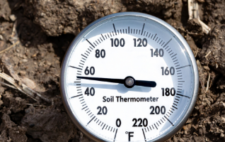
Soil temperature is important for germination in the garden

0

Just in case home gardeners have not really considered the importance of soil temperature, Kansas State University horticulture expert Cynthia Domenghini says you should. Soil temperature, she says, affects germination of many garden foods.

Domenghini said peas can sprout in soil that is 40 degrees Fahrenheit, while lettuce can germinate in 35 F.

“Crops — such as tomatoes, corn and other warm-season veggies — need the soil to be at least 55 F for success,” Domenghini said. “Peppers, cucumbers and melons need even warmer soil.”

The Kansas Mesonet is a resource for guidance on what’s happening below the ground. Domenghini said gardeners can also take their own soil temperature measurements using a soil thermometer, and measuring the soil at least 2.5 inches deep during late morning.

“Find the average soil temperature over five days to determine when the time is right for planting,” Domenghini said. “It is still important to watch the forecast for late season frosts and freezes.”

Domenghini and her colleagues in K-State’s Department of Horticulture and Natural Resources produce a weekly Horticulture Newsletter with tips for maintaining home landscapes and gardens.

Interested persons can subscribe to the newsletter, as well as send their garden and yard-related questions to [email protected], or contact your local K-State Research and Extension office.

Onions: how to grow it

0

Onions have been cultivated for over 5,000 years, and they have been used, not only for food, but for medicine for various illnesses and joint problems. Ancient Greek soldiers and athletes believed eating onions would give them strength from the gods. Ancient Egyptians considered onions symbols of eternity, and they used them as preservatives, as well as for food.

Onions contain cancer-fighting chemicals, as well as compounds that reduce blood cholesterol and promote insulin production and possibly may reduce the risk of Alzheimer’s disease. Of course, most people eat them for the flavoring they add to everything from soups and burgers to casseroles, stir fries, dips and even pickles!

Types

  • Common Onion: These are the bulb onions you see in the grocery store. There are a variety of common onion types, including:
    • White onions are mild, sweet and do not store as long.
    • Yellow onions are more-pungent, harder and longer-keeping (Figure 1-A).
    • Red onions tend to be spicier than yellow onions and not keep as well (Figure 1-B). For South Dakota, avoid short-day varieties, as they will not form bulbs under the long days of our summer.
  • Egyptian Walking Onions: These hardy perennials are planted in the fall and produce bulblets on the end of seed stalks, as well as small, strongly-flavored bulbs at their base. Young plants arising from bulblets can be used as green onions.
  • Shallots: Clusters of small, elongated bulbs. Despite their small size, they require a full growing season (Figure 2-A).
  • Green or “Scallions/Bunching” Onions: These onions are harvested as immature bulbs (Figure 2-B). They may be bulbing varieties simply harvested early, or non-bulbing varieties developed specifically for scallions.
  • Multiplier or “Potato” Onions: These perennials produce a cluster of 3 to 20 small-tomedium-sized bulbs, which can last up to a year or more in storage. Green immature offsets may be used fresh, pulled as soon as the bulbs are large enough for eating.

Planting

Timeline: Onion transplants can be started mid-February and grown through the end of March. Planting can take place from mid-April through mid-May. Green onions can be harvested June through September, while bulbs can be harvested August through October (Figure 3).

Site Selection and Preparation:

  • Onions should be planted in a sunny spot (at least 8 hours of sun daily) with rich, well-drained soil.
  • Onions are not tolerant of high-salt soils.
  • Well-aged compost can be mixed in prior to planting to increase organic matter and nutrient availability.
  • Onions do not compete well with weeds, so avoid weedy areas for planting.
  • Raised beds can give excellent results. If the onions are direct-seeded, the bed needs to be especially well-prepared, level and clod-free.

Sowing and Transplanting: Onions are usually grown in gardens from seedling transplants or from sets, or small bulbs (Figure 5).

  • Transplants can be purchased (usually as bundles of bare-root seedlings) or grown indoors from seed. Seed should be started about two months before transplanting. They are ready to transplant when they have at least two or three leaves. The seedlings can be trimmed back to about three-inches tall if the leaves are drooping over. Plant 1 to 1¼ inches deep; and 2 to 4 inches apart into moist soil. Alternatively, plant clumps of three seedlings six inches apart.
  • Sets. Although they are easier to handle, sets have more of a tendency than transplants to “go to seed” (i.e. produce a flower stalk rather than a bulb). To avoid this problem, choose sets that are smaller than one-inch in diameter. Plant them about 1 inch deep and 2 to 4 inches apart several weeks before the average last frost date. For square-foot gardens, plant 9 sets per square foot. Onions grown from sets will usually be somewhat smaller than onions grown from seedling transplants.
  • Green onions can be grown by seeding directly into the ground, but the ground MUST be kept moist for the 2 weeks it can take them to germinate.

Plant Care

Watering: Onions have a very shallow root system, so keep a close eye on the soil. They will need about an inch of water per week, more during hot, dry windy periods and less during the cooler spring. Once bulbs begin to mature, they do not need further watering, and may have a tendency to rot if the soil is too wet or water accumulates at the base of the leaves.

Weeding: Onions do not compete well with weeds, as their leaves will not shade out competitors. Weeds can also increase moisture around the plant, increasing the risk of fungal or bacterial disease. Early summer weed control (hand weeding and/or hoeing) is essential!

Fertilizer: Onions require a steady supply of nutrients, in part because they do not have extensive root systems. If planting into a raised bed with imported soil, test the soil for nitrogen, phosphorus and potassium (N, P, K) prior to planting. Most (but not all) existing soils in South Dakota will have enough potassium, but they will need nitrogen and possibly phosphorous. A recommended fertilizer ratio is 1:2:2 N:P:K, for example, 5-10-10, but 10-10-10 will also work. Spread one to two pounds (two to four cups) of the dry fertilizer per 100 feet of row. An extra application of nitrogen just as the plants begin to expand their bulbs can help achieve greater size, for example one pound of fertilizer per 100 feet of row. A lawn fertilizer (without herbicide) can be used for this side-dressing: for a typical lawn fertilizer of 34-0-0, apply about 2/3 cup per 100 feet of row, or a tablespoon per 10 feet of row.

Pests and Diseases

Major Pests: Onions grown in South Dakota generally have few pest problems. Proper crop rotation (that is, not planting onions in the same place two years in a row) will minimize potential problems. If any disease problems appear, don’t plant onions or garlic in that spot for four years.

Minor ProblemsFlower Stalks. Onions under drought or heat stress may form flower/seed stalks. If so, cut the stalks off to prevent the bulb from sending its energy into forming flowers and seed.

Harvest

Bulbs: Bulbing onions can be harvested at any point that the bulb is the desired size. However, for best keeping quality, they should not be harvested until the tops begin to fall over (Figure 6). Pull the bulbs gently, and place them in a warm, dry well-ventilated area out of the sun for a few days. This can be on the ground, as long as it isn’t wet (although a drying rack is ideal). Avoid direct sun, as some types of onions can get sunburned as they are curing. Don’t remove the foliage yet – the drying leaves will help draw moisture away from the neck of the bulb and decrease storage rots.

The bulbs can finish drying indoors in a warm, dry area for a week or two. When the leaves have dried, you can remove them. Once the outer bulb scales begin turning a brown, tan or a reddish color (red onions), the onion is cured. You can carefully remove a few of the outer scales if they still are coated in dirt, but do not remove all the outer scales, because these act as a wrapper for the bulb, protecting the fleshier inner-bulb scales and protecting the bulb from excessive drying.

Green Onions: About two weeks before harvesting green onions, pile about 2 inches of soil around the base of the stem. This will blanch the stem, resulting in long, white, tender stems. Green onions can be harvested in as little as a month from transplanting, or 2 months from direct-seeding.

Storage and Preparation

Storage: Once the onions are cured (see the Harvest section above), you can transfer them to mesh sacks, a plastic ventilated crate or a box with holes in it. Store the dried bulbs in a warm, dry location (they will actually keep longer at 80°F than at 60°F, as long as relative humidity is below 70%) until you are ready to use them. They may also be stored in a refrigerator. Yellow onions will keep in storage the longest; red onions the shortest.

Average Yield: Ten feet of single row onions should yield 7 to 14 pounds.

Nutrition Facts: One medium-sized onion has only 60 calories and supplies 20% of the recommended daily value for Vitamin C.

Kansas Driver’s License Renewal 2025: Latest Requirements & Rules

0

Renewing your Kansas driver’s license ensures you remain legally authorized to drive within the state. The Kansas Department of Revenue’s Division of Vehicles (DOV) manages the renewal process, offering multiple methods for residents. Below is a comprehensive guide to the 2025 renewal process, eligibility requirements, fees, and frequently asked questions (FAQs)

Eligibility for Renewal
To renew your Kansas driver’s license, you must meet the following requirements:

  • Hold a valid or recently expired Kansas driver’s license.
  • Be a U.S. citizen or legal resident.
  • Have no outstanding suspensions, revocations, or unpaid traffic tickets.
  • Be within the renewal window (up to one year before expiration and up to one year after expiration).
  • Pass a vision test if required.

Renewal Methods

Kansas offers three primary ways to renew your driver’s license:

1. Online Renewal

Many drivers can renew their license online through the Kansas DOV website. To qualify for online renewal, you must:

  • Be between 21 and 64 years old.
  • Have renewed your last license in person.
  • Have a license that is not expired for more than one year.
  • Not require a name or address change.
  • Have no restrictions requiring an in-person visit.

Once completed, your renewed license will be mailed within 7-10 business days.

2. In-Person Renewal

If you do not qualify for online renewal, you must visit a Kansas driver’s license office. Bring the following:

  • Your current driver’s license.
  • Proof of identity (passport, birth certificate, or permanent resident card).
  • Proof of residency (utility bill, lease agreement, or bank statement).
  • Payment for the renewal fee.
  • If required, vision test results.

3. Mail Renewal

Certain Kansas residents, such as military personnel and those temporarily residing out of state, may qualify for mail renewal. Contact the Kansas DOV for eligibility details and instructions.

Real ID Compliance

Kansas offers both standard and Real ID-compliant driver’s licenses. A Real ID is required for federal purposes, such as boarding domestic flights and entering federal facilities. If your current license lacks a gold star, you must provide additional documentation for a Real ID:

  • Proof of identity (passport or birth certificate).
  • Social Security number verification (Social Security card or W-2 form).
  • Two proofs of Kansas residency (utility bill, bank statement, or lease agreement).

    Fees & Payment Methods

    The fees for renewing a Kansas driver’s license in 2025 are:

    • Standard license renewal (valid for six years): $30.
    • Late renewal fee (if expired over one year): Additional $10.
    • Senior citizen renewal (age 65 and older, valid for four years): $23.

    Accepted payment methods include credit/debit cards, checks, and cash (for in-person renewals only).

    Vision Test Requirements

    Drivers renewing in person may need to pass a vision test. If you wear glasses or contacts, bring them to your appointment. If you fail, an examination by an optometrist may be required before renewal.

    Processing Time & Temporary License

    After renewal, the Kansas DOV will issue a temporary paper license valid for 30 days. Your permanent license should arrive by mail within 7-10 business days.

    Frequently Asked Questions (FAQs)

    1. Can I renew my license before it expires?
    Yes, you can renew your Kansas driver’s license up to one year before its expiration date.

    2. What happens if my license expires?
    If your license has been expired for more than one year, you may need to retake the written and vision tests.

    3. Can I renew my license online if I changed my address?
    No, if you have moved, you must update your address in person before renewing.

    4. Do I need to take a written test for renewal?
    Most drivers do not need to take a written test unless their license has been expired for over one year.

    5. How can I check my renewal eligibility?
    Visit the Kansas DOV website and enter your driver’s license number to check if you qualify for online or mail renewal.

    6. Can I renew my commercial driver’s license (CDL) online?
    No, CDL renewals must be done in person at a Kansas driver’s license office.

    7. What should I do if I lost my renewal notice?
    A renewal notice is not required. Bring your current license and the necessary documents to renew in person.

    Final Thoughts

    Renewing your Kansas driver’s license in 2025 is a straightforward process if you meet eligibility requirements and gather the necessary documents. Whether renewing online, in person, or by mail, plan ahead to avoid delays. For more details, visit the Kansas DOV website or contact your local driver’s license office .

Control Guide For Livestock Predators

0

Based on 2020 market values, predators cause approximately $4 million in losses annually to Kansas cattle producers. Likewise, they financially burden the state’s small ruminant operations to the tune of about $750,000 per year.

To mitigate the economic impact and other effects of predation, Kansas State University wildlife specialist Drew Ricketts said producers have various non-lethal control methods available to keep livestock safe.

“The number of coyotes around or removed doesn’t tend to be directly associated with how many losses a producer has,” he said. “So, if you’re not having problems with predators, then hunting or trapping shouldn’t be a chore for you, and trying to lower coyote populations to prevent future predation isn’t an efficient thing to do.”

Dead livestock commonly attracts predators. Thus, Ricketts recommends proper disposal of carcasses away from calving, lambing or kidding areas to lower the risk of a predator attack, noting that young livestock become especially vulnerable.

“All wild predators in Kansas are mainly scavenging when feeding on large food items like livestock,” he said. “If we have dead livestock near those areas, then we are exposing ourselves to more predation by attracting predators to a food source, so composting and hauling off dead animals are crucial and often overlooked.”

Coyotes are the main predators of livestock in Kansas. Yet, Ricketts said domestic dogs account for a sizeable portion of predation incidents as well. To keep both kinds at bay, producers can strategically fence locations to keep dogs and coyotes away from livestock.

“I suggest woven wire fences with 4-inch by 4-inch squares,” Ricketts said. “If you’ve got 12-inch-wide openings six inches tall, coyotes can squeeze right through those fences. Also, there are some excellent designs for electrified fencing.”

He added: “However, coyotes and other predators can climb over a fence, so if you’re trying to achieve 100% exclusion, we want to have a hot wire on top or have a tall enough fence.”

According to Ricketts, predators may also try to expose a fence’s weakness by digging under it, which actually presents an opportunity to catch them.

“Digging under is likely going to happen, but we can use those crawl-under spots to apprehend them before they cause damage,” he said. “So, don’t plug those holes, call me or your local extension office, and I’ll come out and show you how to target and trap those coyotes causing problems.”

Beyond carcass disposal and fencing, producers may choose to practice night penning or securing their livestock in a barn or other structure during night hours.

“Coyotes usually hunt right around sunrise, sunset and through the nighttime,” Ricketts said. “Accordingly, this is one of the most effective ways to exclude predation – especially for small ruminant producers.”

Guardian animals can also keep livestock out of harm’s way. Ricketts said the kind of guardian “depends on the best fit for your operation.” Species often used as guardians include:

  • Llamas.
  • Donkeys.
  • Dogs.

Due to their status as a migratory bird, non-lethal control strategies remain the most common option for black vultures, which can be seen in the far southeast corner of the state.

“You’re going to have to haze them,” Ricketts said. “Deterring them includes a combination of using pyrotechnics, noise-making devices and hanging fake, dead vultures – called effigies – near roosting sites to exclude those birds.”