Monday, January 26, 2026
Home Blog Page 212

Understanding Your Knife Rights in Kansas: A Legal Guide

0

Kansas knife laws are relatively permissive, allowing citizens to enjoy a wide range of rights when it comes to knife ownership and carry. Here’s a comprehensive guide to understanding your knife rights in Kansas:

Legal Knives

Kansas law allows the ownership and carry of most types of knives, including:

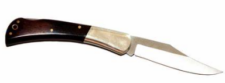
  • Pocket knives
  • Fixed-blade knives
  • Switchblades
  • Balisong (butterfly) knives
  • Disguised knives
  • Karambits
  • Swords and sword canes
  • Machetes
  • There are no restrictions on blade length for knives in Kansas.

    Illegal Knives

    The only knives explicitly prohibited in Kansas are:

    • Throwing stars
    • Ballistic knives

    Manufacturing, selling, buying, transferring, or possessing these items is unlawful within the state.

    Carrying Laws

    Open Carry

    Open carry of any legal knife is permitted in Kansas without restrictions.

    Concealed Carry

    Concealed carry of knives is generally allowed in Kansas, with a few exceptions:

  • You cannot carry blackjacks, billy clubs, sand-clubs, slung-shots, bludgeons, or metal knuckles concealed.
  • Ballistic knives are prohibited from concealed carry.

    Restricted Locations

    While Kansas knife laws are generally permissive, there are some locations where carrying knives is prohibited:

    • Schools and educational institutions
    • Government buildings
    • Jails and juvenile correction facilities
    • Some public places
    • Private properties (if prohibited by the owner)
    • Public transportation (if prohibited)

      Age Restrictions

      Kansas does not have specific age restrictions on knife ownership or carry. However, minors should have parental permission and supervision when handling knives.

      Preemption

      Kansas has a statewide preemption law that makes knife regulations uniform across the state. Local municipalities cannot enact more restrictive knife laws than those set by the state.

      Restrictions for Convicted Felons

      Convicted felons face restrictions on knife ownership and carry. It is unlawful for a convicted felon to own or possess certain types of knives, including daggers, dirks, stilettos, and switchblades.

      Penalties for Violations

      Violating Kansas knife laws can result in various penalties:

      • Carrying illegal knives: Up to two years imprisonment or a fine up to $600.
      • Carrying knives in prohibited locations: Up to one year imprisonment or a fine up to $500.

      Kansas knife laws are generally favorable to knife owners, with few restrictions on the types of knives that can be owned and carried. However, it’s crucial to be aware of the prohibited locations and the restrictions that apply to convicted felons. Always exercise caution and responsibility when carrying and using knives in public spaces.

Celebrate 20 Years with the Ultimate Experience!

0

Make the 20th Anniversary Grand Finale of the Symphony in the Flint Hills Signature Event truly unforgettable with our Patron Package. This exclusive package offers premium access and special amenities, ensuring you enjoy this historic event in the most memorable way possible. Don’t miss your chance to be part of this once-in-a-lifetime celebration!

Special Guest Artist: Logan Mize

General Admission tickets for the Signature Event will be available for purchase starting Saturday, March 1 at 10:00 A.M.


Kansas farmers and wetlands vie for water. A new proposal will aim for long-term sustainability

0
The tension over water for Quivira National Wildlife Refuge has lasted for decades. But recently, water users made progress toward using less groundwater in the area that impacts Quivira.

STAFFORD COUNTY, Kansas — A proposal to resolve decadeslong wrangling over water in central Kansas is slated for release this spring. The draft plan falls under a federal program that has under previous administrations traditionally opened doors to significant financial backing for water conservation projects.

Years of talks, policy proposals, local conservation incentives, data crunching and a few lawsuits haven’t solved a conflict that effectively pits rising water use by humans — primarily for crop irrigation — against wildlife conservation at one of the most important wetlands in the country.

Instead, streamflows to Quivira National Wildlife Refuge have worsened over time.

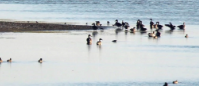
Although Quivira has water rights under Kansas law, in practice, the refuge often stands too dry to support the hundreds of thousands of shorebirds that must find shallow waters in the heart of the continent to survive their long migrations.

Two recent developments may open a new chapter in the saga.

Firstly, water users exceeded an important target to pump less groundwater in 2025 in the watershed that impacts Quivira.

Secondly, local and federal officials are crafting the first watershed plan for the area under a federal program that in past years has covered up to 75% of construction and installation costs for projects that benefit water supplies for agriculture.

The rest of the money would need to come from state and local sources.

The Natural Resources Conservation Service — which is part of the U.S. Department of Agriculture and is the lead agency working on the proposal — said in an email that federal money depends on congressional appropriations, “so funding is not guaranteed.”

NRCS said the goal of the plan is “to provide for long-term, sustainable agricultural water management.”

The public will get its first peek at the draft this spring, the agency said. A public comment period will follow.

NRCS is working with local water officials on the proposal.

“We want to see this thing resolved,” Orrin Feril, manager of the area’s groundwater district, said in an interview in September, and “to see Quivira get the water that it feels entitled to, that makes it so that Quivira can flourish into the future.”

Big Bend Groundwater Management District 5 spans parts of eight south-central Kansas counties. It represents irrigators and other groundwater users, such as municipal utilities and landowners pumping water for livestock.

The U.S. Army Corps of Engineers, U.S. Fish and Wildlife Service, U.S. Environmental Protection Agency, Kansas Department of Health and Environment and Kansas Department of Agriculture are also cooperating on the project, NRCS said.

NRCS said the draft evaluates “a wide range of options” for achieving sustainable water use.

Some of those options include analyzing the potential impact of: state-mandated water cuts; buying water rights from irrigators and retiring those rights; paying farmers to cut back on pumping; drilling new wells or repurposing existing ones to pump groundwater directly to Rattlesnake Creek; or having water users create the kind of locally imposed pumping limits that northwest Kansas farmers employ to slow depletion of the Ogallala aquifer.

Not enough water for everyone who wants it

The way water rights work in Kansas, landowners who have held the paperwork longest get precedence.

Quivira has had water rights since the early 1960s that specify how much water the refuge is entitled to from Rattlesnake Creek, the main waterway that feeds into it.

Like other streams in this part of the country, the water in Rattlesnake Creek comes in large part from an underground aquifer spilling into the creek bed.

Over the decades, the state of Kansas also approved hundreds of other water rights in this area that entitle farmers and others to drill wells and use groundwater. (The state no longer grants any new groundwater rights in the area.)

Depleting this underground water means that the aquifer has less to give to Rattlesnake Creek. A state investigation found that since the 1970s, the creek has often run too low to fulfill Quivira’s water rights.

The refuge’s needs take precedence, on paper at least, over the vast majority of other water users in the watershed because of seniority.

Kansas enforces a senior water right, however, only if the owner of that right demands action.

The Fish and Wildlife Service owns the refuge. After decades of trying to resolve the matter through voluntary efforts, it began about a decade ago to ask Kansas to act. It repeatedly filed to have its water rights upheld, but it also eased off each time amid public and political pressure.

Communities near Quivira have begged the federal agency to weigh the potential harm to local incomes if Kansas imposes cuts on groundwater pumping.

The Rattlesnake watershed, nearly 100 miles long, cuts northeast across half a dozen rural counties before reaching the wetlands.

In 2023, more than 30 community leaders cosigned a letter warning against hammering the regional economy, hurting the tax bases of local governments and schools and making it difficult to attract new employers, such as a proposed dairy.

Politicians from both major parties backed their concerns, including Democratic Gov. Laura Kelly and Republican U.S. Sen. Jerry Moran.

The Fish and Wildlife Service agreed to a fresh round of talks in lieu of seeking enforcement of its water rights. That means groundwater officials, government agencies, agriculture groups and conservation groups meet regularly in search of a solution that won’t require Kansas to impose top-down cuts on groundwater pumpers who impact Quivira.

The Fish and Wildlife Service kept its demand for enforcement on file with the state of Kansas in case things don’t work out. This looms over the situation, adding urgency.

But with a new administration in Washington, D.C., critics of the Fish and Wildlife Service’s stance see an opportunity.

This month, Republican U.S. Congressman Ron Estes wrote to the Trump administration, urging it to ratchet down the stakes. He called Fish and Wildlife’s looming pressure “one of the significant barriers” to solving the situation, and asked for a promise that the agency won’t pursue enforcement of Quivira’s water rights at least through the end of 2026.

“Agriculture is the basin’s primary industry,” he wrote. “Any reduction on the farms’ ability to irrigate would be an economic disaster for thousands of hardworking Kansas families.”

A successful start to a five-year plan

Under the Biden administration, the Fish and Wildlife Service had agreed to hold off on pursuing top-down enforcement and instead see whether landowners could find ways to hit annual targets for five years to divert less water from Rattlesnake Creek.

By August 2024, it became clear that they would hit the first target, after enough landowners signed agreements promising to reduce pumping in 2025.

Kelly and Moran celebrated the news.

“The unparalleled progress we have made is encouraging,” Kelly said, adding that work will continue to ensure water for wildlife “while avoiding economic damages to local communities.”

“The work done today will help ensure farming and ranching operations continue for generations to come,” Moran said.

The Nature Conservancy also applauded the development.

“It demonstrates that the collective efforts of local communities, conservation groups, natural resource agencies and private industry drive on-the-ground solutions so that people and nature can thrive together,” said a written statement from Heidi Mehl, the group’s director of water and agriculture programs in Kansas.

A mishmash of programs and incentives made it possible to hit the first-year target. The single biggest factor was a new Central Kansas Water Bank program that offered money to groundwater users if they agreed to ease off their pumps. The program prioritized areas of the Rattlesnake watershed that impact Quivira the most. It sealed dozens of deals to reduce water use for 2025.

But that money wasn’t easy to come by. The state kicked in $4 million and an alliance of state and regional organizations scrambled to raise several hundred thousand more.

It’s unclear how far this approach can stretch. The annual targets require additional reductions to water usage in the area for each of the next four years.

And still, the five-year plan is just a start. If successful, it would prevent the water shortage from continuing to worsen, but it wouldn’t end the shortage.

That’s why people on all sides of the issue want to see a long-term fix, even if they don’t all agree on how to achieve it.

“So that we’re not having to do this every single year … And so that the issue is no longer hanging over this region — and we’re moving forward,” said Feril, from the Groundwater Management District.

Audubon of Kansas, which sued unsuccessfully to protect Quivira, said in a statement last summer: “Quivira needs its water right upheld.”

Past voluntary efforts have consistently failed to resolve the situation, it said.

“Without more water, only a few small pools remain,” it said. “Birds must compete with each other for limited resources. Concentrations of birds in smaller areas also increases the chances of disease transmission.”

North American shorebird populations have shrunk by an estimated one-third over the past 50 years. Many of these species migrate among North America, the Caribbean, and Central and South America. They face a wide variety of risks on their international paths, including pollution, intense hunting and the loss of wetlands and grasslands to agriculture and other development.

In the U.S., they rely on finding wetlands far away from the shores they’re associated with.

Each spring, more of these birds cut north through the middle of the United States than follow the Pacific and Atlantic flyways.

This is why Quivira’s salt marshes, more than 700 miles from the nearest coast, play host to so many shorebirds. Hundreds of thousands of them can stop to refuel at Quivira and nearby Cheyenne Bottoms in a single migration season.

The two sites also support endangered whooping cranes, a species that numbers fewer than 700 wild birds, and hundreds of thousands of ducks, geese, egrets, ibises and other avian travelers.

Cutting back on pumping groundwater in the area would increase the amount of water bubbling into Rattlesnake Creek and Quivira, but not immediately. Groundwater moves slowly, a state investigation concluded, so it could take anywhere from two years to decades to see the results.

It’s illegal to own a pet raccoon in Kansas. One man is trying to change that

0
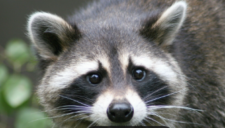
Kansas lawmakers are considering a proposal that would allow Kansans who obtain raccoon ownership permits to keep the animals as pets.

For the past four years, Lenexa resident Stephen Kaspar has been feeding and training wild raccoons that wander onto his property.

“It is the highlight of my life,” he said during a legislative hearing on Monday. “These are the things that you do when you become an empty nester. You start playing with raccoons in the backyard.”

But it’s against Kansas law to own a pet raccoon. That’s why Kaspar is urging state lawmakers to pass a bill that would legalize pet ownership of raccoons.

Owners would be required to obtain a raccoon ownership permit, complete educational training and vaccinate their raccoons for rabies and other diseases. They’d have to provide raccoons with their own room or enclosure, a measure Kaspar said is designed to ensure people provide proper care and enrichment to the animals.

“It’s not supposed to be easy — not everybody should just get a permit,” he said. “This is a commitment.”

Kaspar said 20 other states have already legalized raccoon pet ownership. He said the bill text, which he suggested based on other states’ legislation, gives Kansas an opportunity to set a gold standard for pet raccoon ownership.

Rep. Joe Seiwert, a Republican from Pretty Prairie, testified in support of the proposal.

“I was a poor little farm kid back in the ’50s, and we had a lot of wild pets, and actually a little coyote we named Wiley after a famous movie star,” he said.

Seiwert’s legislative intern, Charles Simpson, delivered the remainder of Seiwert’s testimony.

“I strongly believe that this bill strikes an essential balance between allowing individual freedom to keep raccoons while ensuring their health and safety, as well as the well-being of the community,” Simpson read.

Seiwert said he decided to advocate for the bill because he believes some Kansans might already have pet raccoons, unknowingly breaking state law.

“A lot of people have them and don’t realize that they’re not legal pets,” he said.

But some at the hearing expressed concern about the potential for the bill to fuel the spread of infectious diseases like rabies.

“That is a major human health concern when it comes to pet ownership of raccoons, primarily because there is not a label vaccine for rabies in raccoons,” said Erin Petro, state public health veterinarian at the Kansas Department of Health and Environment.

She said rabid raccoons in the U.S. have caused human death as recently as 2018.

Kaspar suggested limiting ownership permits to Kansans who purchase raccoons from breeders certified by the U.S. Department of Agriculture. Those raccoons, he said, have been bred in captivity since the 1960s and are genetically distinct from wild raccoons. He said there haven’t been any known instances of USDA-bred raccoons contracting rabies.

Kyle Hamilton, an assistant revisor of statutes, said the bill in its current form does not distinguish between USDA-bred raccoons and wild raccoons. Language clarifying that distinction could be added if lawmakers decide to work the bill.

Several lawmakers appeared skeptical of the proposal, including Rep. Brooklynne Mosley, a Lawrence Democrat.

“I’m happy I never got a chance to witness my parents as empty nesters because they had my little brother in their mid 40s. So I did not have to witness ‘raccoon dad,’” she said.

She asked Kaspar about local support for his bill. He said more than 100 Kansans have signed a petition in support of the bill, and estimated that he is in communication with 100 other people from around the country on TikTok who support the bill.

“There is a huge movement,” Kaspar said, noting that both Nebraska and Oklahoma have legalized raccoon pet ownership.

“Those are not great states to be comparing us to,” Mosley replied.

Eureka Republican Rep. Duane Droge, a former veterinarian, said it’s difficult to domesticate animals.

“Dogs were domesticated over hundreds and thousands of years,” he said. “You can’t domesticate in one generation.”

“I had a roommate in veterinary school that had (a pet raccoon) that took over the refrigerator,” he added. “It would hide until you opened the refrigerator door and it would take over the refrigerator. You couldn’t even go in the kitchen.”

It’s unclear if lawmakers will work the bill this legislative session. Lawmakers have the option of taking up bills that are introduced but not passed this year during next year’s legislative session.

Dangerous Waters: The Most Snake-Infested Lakes in Kansas You Need to Know About

0

The snake population in the landlocked state of Kansas is remarkably varied. Kansas’s ecosystems are home to almost forty different kinds of snakes, and there are numerous lakes and reservoirs where they could be hiding nearby.

Although it is fortunate for both residents and tourists that only five of them are poisonous and that no snake bite deaths have been reported in more than 50 years, it is still unsettling to encounter one in the wild if you are even the slightest bit afraid of snakes.

It’s highly probable that you may encounter one or two of Kansas’s many stunning lakes while you’re there. The lakes in Kansas with the highest snake infestations are listed below.

Wilson Lake

The 9,000-acre Wilson Lake, often called Wilson Reservoir, is regarded as one of the most picturesque places in Russell County, Kansas.

A wide range of wildlife, including bears, deer, waterfowl, and many others, consider Wilson Lake’s rocky shorelines and numerous outcroppings and cliffsides to be great real estate.

Regarding snakes, there is a chance of coming across the Western Rat Snake, which has been observed in this area of Kansas.

It has a cream-colored belly with blotchy spots and is distinguished by its keeled scales, black body, head, and tail. Large bodies of water, wooded areas, and hillsides are all part of its natural environment.

Despite being innocuous to people, rodents, birds, and rabbits—which are the main food sources for the Western Rat Snake—are not as lucky.

Lone Star Lake

Located inside the boundaries of Douglas County, Kansas, Lone Star Lake is a true gem. It is a 185-acre lake that is entirely artificial.

It is a popular location for outdoor enthusiasts since it offers a variety of activities, including fishing, camping, and water sports.

Because it offers a naturally rich habitat for some species to flourish, it might also be a desirable location for snakes. The Rough Green snake is one of the snake species that may be found here.

Its yellow underside and bright green, slim body make it easy to identify, and it is most active during the day.

You can be sure they are totally safe if one slithers past your toes while you’re hiking the surrounding paths around the lake. The only food the Rough Green snake consumes is insects.

Clinton Lake

Another gem in the crown of Douglas County, Kansas, is Clinton Lake. Because of its crystal-clear blue seas, it is a popular outdoor attraction.

It offers more than 50 kilometers of hiking trails and is used for boating, fishing, and leisure. In addition, it supplies 10,000 people with water and manages local flooding.

Clinton Lake, which spans 9,200 acres, provides a wealth of habitat for several wildlife, including cormorants, gulls, Great Blue Herons, and White-Tailed Deer, to mention a few.

One snake species to keep an eye out for at Clinton Lake is the gopher snake, which is easily recognized by its frequent hissing when approached and is probably lurking in the surrounding forests.

The Gopher Snake is quite harmless, so don’t be alarmed by its hiss if you come across it.

Hillsdale Lake

Hillsdale Lake is located in Kansas’ Miami County. Like a lot of lakes and reservoirs, it is under the management of the U.S. Army Corps of Engineers, who keep an eye on the area to manage damage, water supply, and flood control.

With 8,000 acres of adjacent public areas and almost 4,600 surface acres, the lake is perfect for recreational purposes.

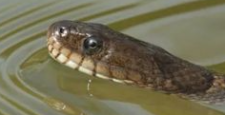
Since this area is a part of their natural habitat, it won’t be unheard of for you to come across a real water snake while you’re enjoying these waters.

They favor lakes and mountain streams and are the least aquatic of Kansas’ water snakes. They are about 55 inches long and may be recognized by their cream-colored belly and dark brown hue.

The primary distinguishing factor when trying to identify the Graham’s Crayfish Snake, another local snake, is that they only eat crayfish. In this region, water snakes typically feed on fish and frogs.

Milford Lake

Milford Lake, the biggest lake in Kansas, is located in Geary County. It boasts more than 160 miles of coastline, including sandy beaches and recreational boat launches, and is nestled within the well-known Flint Hills.

Additionally, visitors like kayaking, canoeing, and camping. As you enjoy your time at Milford Lake, you may come across the Eastern Hog-Nosed snake, but don’t be alarmed by its large size, rough scales, and upturned snout.

They are not dangerous to people, however they prefer to hide in forests and by bodies of water.

For this type of snake, toads are the only food item on the menu. As the Eastern Hog-Nosed snake’s sole prey, toads are essential to the environment of Milford Lake because they help regulate the toad population.

To Conclude

For animals, the state of Kansas is a natural paradise. Some of the nicest lakes and reservoirs in the area are surrounded by vast tracts of unspoiled grasslands and woodlands.

Because they contribute significantly to their habitat and healthy ecosystems, snake infestations actually turn out to be a thriving population.

Although it is uncommon to come across a venomous snake among the 40 species found in Kansas, you are likely to see at least one of the snakes listed here, so keep an eye out and watch your step!