
B-29 DOC and the WSU TECH Foundation will host the fourth Pull a Plane for Education, March 8, 2025, at the B-29 DOC Hangar, Education and Visitors Center.
The event raises funds for WSU TECH student support, creating career opportunities in aviation and beyond. Additionally, it supports the upkeep of B-29 DOC, ensuring it remains airworthy and serves as a living museum to honor the Greatest Generation and celebrate Wichita’s rich aviation heritage.
“Scholarships are the bridge to opportunity, empowering students to pursue meaningful careers that drive innovation and strengthen our community,” said Courtney Sendall, WSU TECH Foundation executive director. “Every dollar raised is a step toward breaking barriers and opening the door to dreams that soar beyond limits for aviation and other technical careers, while at the same time, helping to keep history alive and funding DOC’s mission as a flying museum.”
Each team of 25 people will raise a minimum of $2,500 to participate. Proceeds of the fundraiser will be shared between the WSU TECH Foundation (to finance student-focused initiatives) and DOC’s Friends (to help broaden DOC’s operations and hangar education program). The individual who raises the most donations for the event will be rewarded with a ride in B-29 DOC.
“We are excited to partner with WSU TECH Foundation once again to host this unique event that will help build a solid future for technical education students in Wichita while ensuring raising funds and awareness for DOC’s continued mission to honor, educate and connect,” said Josh Wells, B-29 DOC executive director. “The funds raised by Pull a Plane support student success in aviation and other technical careers, ensuring the next generation of aviation workers not only continue to hold Wichita’s claim to the Air Capital of the World, but also ensure warbirds like DOC have qualified mechanics to keep them flying for generations to come.”
Team and individual registration is open now via www.PullAPlane.com. Sponsorship opportunities are also available.
B-29 DOC and WSU TECH Foundation announce Pull a Plane 2025 event

Mysteries Of Kansas’ Ancient Trail
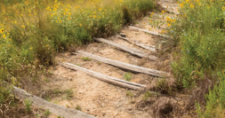
Have you ever wondered about the hidden history of Kansas? One of the most intriguing aspects is the Ancient Trail that winds through the state. This trail, used by Native Americans long before European settlers arrived, holds secrets of the past. Imagine walking the same paths that tribes used for trade, hunting, and migration. The Ancient Trail offers a glimpse into a time when the land was untamed and full of mystery. Whether you’re a history buff or just curious, exploring this trail can be a fascinating journey into Kansas’ rich heritage. Let’s uncover the stories and significance of this ancient pathway.
Mysteries of Kansas’ Ancient Trails
Kansas, often known for its vast plains and sunflower fields, holds secrets from the past. Ancient trails crisscross the state, each with its own story. Let’s explore these hidden gems.
Santa Fe Trail
The Santa Fe Trail was a vital commercial route in the 19th century. Traders and settlers used it to connect Missouri with Santa Fe, New Mexico.
- Council Grove
Council Grove served as a key stop for travelers. Here, they could rest, resupply, and prepare for the long journey ahead. - Fort Larned
Fort Larned protected travelers from potential threats. The fort’s well-preserved buildings offer a glimpse into the past. - Bent’s Old Fort
Bent’s Old Fort was a trading post where cultures met. It played a crucial role in the exchange of goods and ideas.
Oregon Trail
The Oregon Trail guided pioneers westward in search of new opportunities. This trail was a lifeline for many families seeking a fresh start.
- Alcove Spring
Alcove Spring provided a much-needed water source. Its beauty and historical significance make it a must-visit. - Rock Creek Station
Rock Creek Station was a bustling stop along the trail. Travelers could rest and gather supplies before continuing their journey. - Hollenberg Pony Express Station
This station was part of the Pony Express network. It highlights the importance of communication in the 19th century.Chisholm Trail
The Chisholm Trail was essential for cattle drives. Cowboys herded cattle from Texas to Kansas railheads, shaping the state’s economy.
- Caldwell
Caldwell was known as the “Border Queen.” It was a lively town where cowboys could relax after long drives. - Wichita
Wichita became a major cattle-shipping center. Its history is deeply tied to the Chisholm Trail. - Abilene
Abilene was one of the first cow towns. It played a pivotal role in the cattle industry.
Smoky Hill Trail
The Smoky Hill Trail was a shorter route to the goldfields of Colorado. It was less traveled but equally significant.
- Fort Hays
Fort Hays protected travelers on the Smoky Hill Trail. Its history is rich with tales of the Old West. - Ellsworth
Ellsworth was a key stop along the trail. It grew rapidly due to its strategic location. - Sheridan
Sheridan was a bustling town during the gold rush. Its remnants tell stories of ambition and adventure.Kansas’ Ancient Trails Await
Kansas’ ancient trails offer a unique glimpse into the past. Walking these paths, you can almost hear the whispers of history. From the Santa Fe Trail to the Oregon Trail, each route tells a story of adventure, hardship, and discovery. Exploring these trails isn’t just about the journey; it’s about connecting with the pioneers who once traveled them.
Whether you’re a history buff or just love the outdoors, these trails provide a perfect blend of both. Imagine the vast prairies, the rugged landscapes, and the sense of freedom that comes with each step. Kansas’ trails are more than just dirt paths; they’re living museums that invite you to step back in time.
So, lace up your hiking boots, grab a map, and set out to uncover the mysteries of Kansas’ ancient trails. Adventure and history await you.
- Caldwell
Bike Across Kansas 2025

This year’s cross-state tour kicks off June 7 in St. Francis, KS. BAK 2025 marks the 51st year of the tour taking to Kansas roads. Hundreds of bicyclists are preparing to embark on the 51st annual bike tour across the state.
The Biking Across Kansas tour, is an annual celebration of bicycling, history, and camaraderie will hit the highways and byways Saturday through Saturday, June 7 – 14.
BAK organizers revealed the unique route for 2025 at 2 p.m. Saturday, January 18. Route
information is available now, with online registration set to open at 6 a.m. Monday, Jan. 29 at bak.org.
“2025 marks 51 years that BAK has toured every part of this amazingly beautiful state, and we invite all those interested in experiencing this incredible adventure to join us.” said David Rohr, BAK board president. “Biking Across Kansas is a ride for all ages, it is a tour filled with friendly bicyclists, warm small town hospitality, and the stunning landscape of Kansas.”
The 2025 route begins at the Colorado/Kansas border just west of St. Francis, KS. Riders will cover approximately 474 miles beginning June 7, staying overnight in Oberlin, Logan, Osborne, Mankato, Washington, Sabetha, and Troy with the tour concluding in Elwood, KS on the banks of the Missouri River on June 14. Riders pedal between 50 and 80 miles each day.
“BAK is an amazing environment to experience a different pace of life, challenge yourself, be together as a family, and meet new people that will impact your life in so many positive ways. Biking Across Kansas is not a race, it is about being together and experiencing the beauty of what is typically taken for granted.” said Executive Director Bryan Toben.
“Cyclists and drivers alike need to be alert and attentive to the rules of the road. With this many cyclists on the roads, BAK organizers, volunteers and riders urge both motorists and participants to be vigilant and share the roadways. BAK works with law enforcement,
communities, and companies along the route to communicate the shared desire for patience and safety for all.” Toben noted.
BAK riders reflect a wide variety of ages across multiple generations and families participation. In 2024, ages spanned seventy-eight years, with the youngest rider being 7 and the oldest at 85. Participants gathered together from thirty-two states and the District of Columbia. Additionally, Biking Across Kansas often attracts participants from countries outside the United States.
Starting with around 75 riders in 1975, the tour had nearly 900 participants in 2024 as it
celebrated its 50th anniversary. BAK is an opportunity and a big economic boon for the
communities along the route. This opportunity often brings the communities together to work towards a common fundraising goal that benefits everyone.
Biking Across Kansas, Inc. | PO Box 192 | Olathe, KS 66051 | 913.735.3035
For more information and to register for the tour, visit https://bak.org or contact BAK Executive Director Bryan Toben at 913-735-3035 or email [email protected].
About Biking Across Kansas
Biking Across Kansas (BAK) is an annual, eight-day, bicycle tour across the state of Kansas.
BAK promotes health and wellness through bicycling, the history and beauty of the Kansas
landscape, and the warm hospitality of the Kansas towns and people. BAK started in 1975 with fewer than 100 hundred riders. Fifty years later the tour is now capped annually at 800 participants.
Are frozen canned foods still safe to eat?

K-State food scientist says broken or unsealed cans should be discarded.
With recent cold weather and power outages come many challenges, including food safety. Kansas State University food scientist Karen Blakeslee said frozen canned or jarred foods can be a safety hazard.
“If you have canned foods, either home canned or commercially canned, in a storage location that froze, first check for broken seals or seams in metal cans or broken glass jars in both commercial or home canned foods due to expansion of the food and liquid inside the container,” Blakeslee said.
If all preservation containers are intact, they can be saved.
“Thaw (the canned food) gradually and store it at room temperature,” Blakeslee said.
She recommends discarding commercially canned foods with broken seams or canned foods with broken glass, as they can lead to contamination. This includes home canned foods that came unsealed and thawed.
“If a glass jar became unsealed but is still frozen, this can be safely used immediately or transferred to a new container and stored in the refrigerator or freezer,” Blakeslee said.
To prevent a future food crisis during cold weather, Blakeslee suggests moving containers to a warmer location or wrapping jars or cans in paper and cover with blankets to insulate them.
“Another option for vulnerable storage locations is to prop open the pantry or cupboard doors to allow warm air inside,” Blakeslee said.
Blakeslee, who also is coordinator of K-State’s Rapid Response Center for Food Science, publishes a monthly newsletter called You Asked It! that provides numerous tips on food safety.
More information is also available from local extension offices in Kansas.
House Bill 2063 Recently Introduced by Kansans for Conservation

Pheasants Forever and Quail Forever are proud to support House Bill 2063, introduced by Kansans for Conservation. Drafted by the coalition, this bill would establish a state conservation fund providing grant programs for conservation efforts relating to working lands, wildlife, outdoor recreation, and education. House Bill 2063 represents a historic effort of collaboration across industry and geography to provide the dedicated funding needed to support Kansas’s natural resources.
“Kansans have made it clear that conservation is a priority, and now is the time to take meaningful action,” said Erika Devore, co-chair of Kansans for Conservation. “With Kansas being one of only 15 states without a dedicated conservation fund, we risk falling further behind in addressing the critical needs of our natural resources. House Bill 2063 is our opportunity to invest in the landscapes and resources that sustain our communities, economy, and way of life. We’re eager to collaborate with lawmakers to make this vision a reality.”
One of the key resources supporting HB 2063 is a research report published by Kansas State University in December 2024. The report underscores:
• The growing urgency for conservation funding in Kansas,
• Opportunities lost due to the absence of state-backed initiatives, and
• The potential for significant return on investment through dedicated conservation efforts.
The full research report can be read here.
House Bill 2063 is expected to be referred to the House Agriculture and Natural Resources Budget Committee and will likely be heard in early February. Subscribe to the coalition’s website here for further updates.
Kansans for Conservation
Kansans for Conservation is a coalition of 41-member organizations representing agriculture, recreation, wildlife, and other natural resource interests across the state working together to support conservation funding. A list of coalition member organizations is attached.
For further inquiries, please contact Justin Cobb – [email protected], (573) 418-1498
About Pheasants Forever and Quail Forever
Pheasants Forever and Quail Forever make up the nation’s largest nonprofit organization dedicated to upland habitat conservation. This community of more than 477,000 members, supporters and partners is dedicated to the protection of our uplands through habitat improvement, public access, education and advocacy. A network of 754 local chapters spread across North America determine how 100 percent of their locally raised funds are spent — the only national conservation organization that operates through this grassroots structure. Since its creation in 1982, the organization has dedicated more than $1 billion to 580,000 habitat projects benefiting 28.8 million acres.
