Tuesday, January 27, 2026
Home Blog Page 236

KU News: KU Debate opens 2025 with 2 tournament wins

0

From the Office of Public Affairs | http://www.news.ku.edu

Headlines

Editors: Note students from Lawrence, Lenexa, Olathe, Overland Park, Pittsburg, Prairie Village and Topeka.

Contact: Scott Harris, KU Debate, 785-864-9878, [email protected], @KansasDebate

KU Debate opens 2025 with 2 tournament wins

LAWRENCE — The University of Kansas Debate program opened the new year with a bang by winning two college tournaments Jan. 3-6. The KU team of John Marshall, Lawrence, and Graham Revare, Prairie Village, won a tournament hosted by Georgetown University in Washington, D.C., while the team of Claire Ain, Overland Park, and Jared Spiers, Pittsburg, won a tournament hosted by KU in Lawrence.

KU sent four teams to the tournament at Georgetown University to compete in a field involving teams from Binghamton University, California State University-Fullerton, Cornell University, California State University-Long Beach, Dartmouth College, Emory University, Georgetown University, Gonzaga University, Harvard University, the University of Iowa, James Madison University, the University of Kentucky, Macalester College, the University of Michigan, Michigan State University, the University of Minnesota, Northwestern University, New York University, Southern Nazarene University, the University of Texas, the University of California-Berkeley, Wake Forest University and the University of West Georgia. After two days of debating, all four KU teams compiled winning records and qualified for the single elimination debates.

KU’s top duo of Marshall and Revare qualified for the elimination rounds with a 6-1 record in the preliminary debates. Marshall was the first-place individual speaker at the tournament, and Revare was the fifth-place speaker. In the elimination rounds they advanced over another KU team in the round of 32, defeated NYU in the round of 16, Wake Forest in the quarterfinals, Michigan State in the semifinals and Emory in the finals. The pair ran their record on the season to 55-9 and are the top ranked team in the country.

The KU team of Luna Schultz, Houston, and Rose Larson, Milwaukee, qualified for the elimination rounds with a 5-2 record. They defeated Harvard in the first elimination round before falling to the 4th-seeded team from Northwestern University in the round of 16.

The KU team of Zach Willingham, Topeka, and Owen Williams, Lee’s Summit, Missouri, qualified for the elimination rounds with a 4-3 record but were matched up against the KU team of Marshall and Revare, and the higher seeded pair advanced. The KU team of Ethan Harris and Jacob Wilkus, both of Lawrence, also qualified for the elimination rounds with a 4-3 record but were knocked out of the tournament by the 2nd-seeded team from Dartmouth.

The same weekend KU was also hosting a tournament in the ice and snow in Lawrence. Schools competing at the KU tournament included Baylor University, the University of Houston, the University of Iowa, Kansas State University, Kansas City Kansas Community College, Missouri State University, the University of Nebraska, the University of Oklahoma, Trinity University, the University of Texas-San Antonio and the University of Wyoming. KU demonstrated its depth of talent as four additional KU teams advanced to the single elimination rounds at the tournament.

The KU duo of Ain and Spiers went undefeated at the tournament and advanced to the final round where they defeated a team from the University of Houston to win the tournament. The KU team of Carson Bath, Topeka, and AJ Persinger, Lawrence, qualified for the elimination rounds with a 5-1 record and defeated Kansas State University in the quarterfinals to advance to the semifinals where they were paired against the KU team of Ain and Spiers, and the higher-seeded KU pair advanced. The KU team of Connor Brown, Lawrence, and Henry Walawender, Lenexa, advanced to the elimination rounds with a 4-2 record. They defeated a team from Houston in the quarterfinals to reach the semis where they lost to the top team from the University of Houston. The KU team of Nate Boyle, St. Louis, and Averi Harker, Olathe, also advanced to elimination rounds with a 4-2 record. They defeated the University of Oklahoma in the first elimination round but met the higher seeded KU team of Ain and Spiers in the quarterfinals.

In addition to winning the tournament, KU placed three teams in the semifinals and a fourth team in the quarterfinals. KU debaters also won several individual speaker awards as Spiers finished fourth, Brown ninth, Bath 10th, Persinger 12th and Walawender 13th.

“This was a tremendous weekend for KU debate as the entire squad demonstrated their ability and commitment,” said Brett Bricker, KU head debate coach. “We are very proud of the entire team and coaching staff for their efforts that produced these results.”

Scott Harris, David B. Pittaway Director of KU Debate, said, “It is no small task to host a tournament in a blizzard while traveling teams on the same weekend to a snowed-in Washington, D.C. We are grateful for all of the teams who braved the weather to come to Lawrence, for the hard work of the coaching staff to host, judge and coach at two tournaments simultaneously, and to our alumni and the university who provide the support that allow KU Debate to continue to represent the University of Kansas with pride and distinction.”

-30-

————————————————————————


KU News Service

1450 Jayhawk Blvd.

Lawrence KS 66045

[email protected]

http://www.news.ku.edu


Erinn Barcomb-Peterson, director of news and media relations, [email protected]


Today’s News is a free service from the Office of Public Affairs
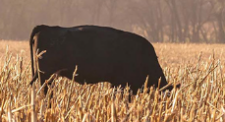
Grazing crop stubble can extend feed resources

0
K-State beef cattle veterinarians offer tips for producers turning out the herd on crop fields post-harvest.

Eating leftovers is a way for people to save money while still getting nutritious food. For beef producers, one way to extend the grazing days is to turn cattle out on crop fields after harvest, according to the veterinarians at the Kansas State University Beef Cattle Institute.

Addressing this topic on a recent Cattle Chat podcast were K-State veterinarians Brad White, Bob Larson and Scott Fritz, who specializes in veterinary toxicology.

“Crop stubble is a great feed resource for cattle, but it is a resource that will decrease in nutrient quality the longer the cattle are in the field,” Larson said. “When cattle are first turned out, there is often a lot of leaves on the plants, but over time cattle will strip those leaves off.”

Larson recommends beef producers monitor the grazing fields and offer supplements to the herd as needed.

White agreed, adding: “The cow herd will likely need to be supplemented with protein later in the winter.”

And while they agree that crop stubble can be a valuable feed resource, there are risks to be aware of, Fritz said.

“In a dry year, drought-stressed forages can accumulate nitrate and can poison the cattle, so it is important to do a field test in arid parts of the country,” he said.

Grazing wet fields

By contrast, Fritz said overly wet fields also pose a risk.

“Cattle turned out on flooded fields can be exposed to mold growth that leads to mycotoxin issues,” he said.

Before turning the cattle out on the crop stubble, Fritz recommends walking through the field to assess the quality of the field and look for grain spills.

“One problem a lot of people overlook is a pile of corn that got spilled in the field when loading the grain cart. If a cow eats 20-30 pounds of grain, she will get acidosis, and if it is a pile of soybeans, the (opposite) happens and they can end up with a neurologic disease,” he said.

Along with inspecting the field for spills, Fritz recommends that producers also evaluate water sources and grass strips.

“Make sure that whether it is surface water or a dedicated underground source, it is functioning before the cows are turned out,” Fritz said.

White added: “It is a good idea to give the water source a flush through, so you know the cattle are getting clean, fresh water.”

The last thing to check for when inspecting the field is the grass strips that might be full of weeds. “When putting up the hot wire around the field, make sure there are no noxious plants in the grass strips,” Fritz said.

To hear the full discussion, listen to Cattle Chat on your preferred streaming platform.

Kansas Fish Consumption Advisories for 2025

0

The Kansas Department of Health and Environment (KDHE) and the Kansas Department of Wildlife and Parks (KDWP) (collectively, “Kansas”) is issuing fish consumption advisories for 2025. The following advisories identify types of fish, or other aquatic species, that should be eaten in limited quantities or, in some cases, avoided altogether because of contamination. General advice and internet resources are provided to aid the public in making informed decisions regarding the benefits and risks associated with eating locally caught fish from Kansas waters.

Definitions/Servings:

Bottom-feeding fish: buffalo, carp, catfish, sturgeon and suckers

Shellfish: mussels, clams and crayfish

Serving size (skinless fish fillets before cooking):

  • Adults and children age 13 and older = 8 ounces
  • Children age 6 to 12 = 4 ounces
  • Children younger than 6 = 2 ounces

Statewide Mercury Advisories for Fish:

There are many health benefits associated with going outside and catching and consuming fish; however, all fish contain some amount of mercury. Consumption of mercury-rich fish can harm the development of fetuses, nursing babies, and growing children. As a result, anyone who routinely eats fish or serves fish to children, including store-bought fish, should carefully consider the type and amount of fish eaten. Therefore, mercury-sensitive individuals (women who are pregnant, nursing, or may become pregnant, and children 17 or younger) should follow the guidelines presented below for eating Kansas-caught fish.

Fishing and Eating Guidelines:

  • Eat smaller portions – a fillet about the size of your palm.
  • Eat fish species with less mercury (see “Preferred Choice Fish” chart below).
  • If you don’t know what type or size of fish you’ve eaten, wait at least one week before eating fish again.
  • When fishing, keep fish shorter than your forearm (fingertips to elbow) or less than 20 inches, as regulations allow. Visit Fishing Regulations / Fishing / KDWP – KDWP (ksoutdoors.com) for more information.
  Preferred Choice Fish   Servings
  Blue and Channel Catfish

Common Carp

Crappies

White Bass, White Perch, Wiper, Striped Bass

Walleye, Sauger, Saugeye

Bullhead Catfish

Drum

Sunfish (Bluegill, Green, Redear, etc.)

   1 or 2 per week     


  Second Choice Fish   Servings
  Buffalo (Black, Bigmouth, Smallmouth)

Flathead Catfish

Bass (Largemouth, Smallmouth, and Spotted)

   1 or 2 per month 

Reduce the recommendations above if you tend to keep fish larger than 20 inches to:

  • Preferred Choice Fish – not more than 1 serving per week
  • Second Choice Fish – not more than 1 serving per month

For specific questions or concerns about mercury in Kansas-caught fish, contact KDHE. For information about mercury in fish caught in other states, store-bought fish, and other types of seafood, visit the U.S. Environmental Protection Agency (“EPA”) and U.S. Food and Drug Administration (“FDA”) EPA-FDA Advice about Eating Fish and Shellfish | US EPA website.

Waterbody-Specific Advisories for All Consumers:

Kansas recommends restricting consumption of bottom-feeding fish to 2 servings per month from the following location because of polychlorinated biphenyls (PCBs):

  • Little Arkansas River from the Main Street Bridge immediately west of Valley Center to the confluence with the Arkansas River in Wichita (Sedgwick County).

Kansas recommends restricting consumption of bottom-feeding fish to 1 serving per month from the following locations because of PCBs:

  • Cow Creek in Hutchinson and downstream to the confluence with the Arkansas River (Reno County).
  • K-96 Lake in Wichita (Sedgwick County).

Kansas recommends restricting consumption of bottom-feeding fish to 1 serving per month from the following location because of arsenic:

  • Mill Creek from Madison Road east of Morrowville to confluence with Little Blue River (Washington County).

Kansas recommends not eating specified fish or aquatic life from the following locations:

  • Antioch Park Lake South in Antioch Park, Overland Park (Johnson County); all fish due to pesticides: dieldrin, heptachlor epoxide, chlordane and dichlorophenyltrichloroethanes (DDTs).
  • Arkalon Park Lakes in Liberal (Seward County); Kansas recommends not eating any aquatic life because the lakes are sustained solely by treated municipal wastewater.
  • Arkansas River from the Lincoln Street dam in Wichita downstream to the confluence with Cowskin Creek near Belle Plaine (Sedgwick and Sumner counties); bottom-feeding fish due to PCBs.
  • Kansas River from Lawrence (below Bowersock Dam) downstream to Eudora at the confluence of the Wakarusa River (Douglas and Leavenworth counties); bottom-feeding fish due to PCBs.
  • Mill Creek from Washington (below 18th Road) downstream to confluence of Little Blue River (Washington County); shellfish due to arsenic.
  • Shoal Creek from the Missouri/Kansas border to Empire Lake (Cherokee County); shellfish due to lead and cadmium.
  • Spring River from the confluence of Center Creek to the Kansas/Oklahoma border (Cherokee County); shellfish due to lead and cadmium.

Waterbodies Affected by Harmful Algae Blooms:

To date, measured algal toxin levels in fish samples collected from waters affected by harmful algal blooms suggest the fish are safe to eat.  However, please take the following precautions:

  • Avoid skin contact with water.
  • Wear gloves when handling wet fish and equipment.
  • Rinse fish with clean water.
  • Remove skin from fillets and rinse with clean water prior to cooking or freezing.
  • Eat only skinless fillets.
  • Do not eat shellfish.

General Advice for Reducing Exposure to Chemicals in Fish:

  • Keep smaller fish to eat (regulations permitting) and let the big ones go.
  • Avoid eating fish parts other than fillets.
  • Trim fat from fillets and/or use cooking methods that allows fat to drip away.
  • Avoid subsistence fishing (relying on wild-caught fish for daily nutritional needs) in rivers within or immediately downstream of large urban/industrial areas.
  • Do not eat fish or aquatic life from wastewater outfalls, waste treatment lagoons or stormwater retention ponds.

Other information from KDHE, KDWP, EPA and the American Heart Association

To view the advisories online – and for information about KDHE’s Fish Tissue Contaminant Monitoring Program –  Fish Tissue Contaminant Monitoring Program | KDHE, KS.

For information about fishing in Kansas – including licensing, regulations, fishing reports and forecasts –  Fishing in Kansas | KDWP.

For information about the health benefits and risks of including fish in your diet, visit Eating fish twice a week reduces heart, stroke risk | American Heart Association.

For technical information regarding the U.S. EPA risk assessment methods used to determine advisory consumption limits, visit EPA Guidance for Developing Fish Advisories | US EPA.

Reflections on a winter storm — and the worst blizzard in Kansas history

0

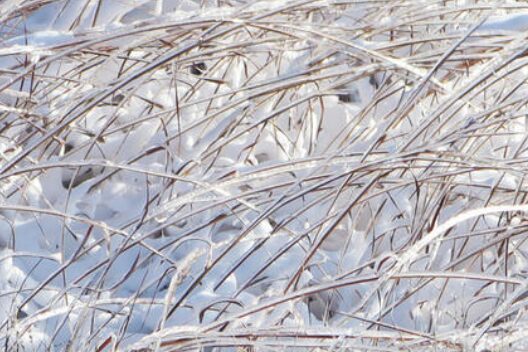
Long grass bears the weight of snow in this Jan. 8, 2024, photo taken in Emporia. The blizzard of early January closed roads and brought life-threatening cold to the state.

You know when the winter country has arrived in Kansas because the sky at midday is a shade of blue that throbs with light but no warmth. The shameless trees are studded with diamonds that flare in the sunlight, the long grass is matted with snow, and the geese are lords of the frozen fields. The very ground sends a chill right up through your boots to squeeze your spirit in a grip that makes you long for the golden days of summer.

Because summer is half a year away, you will settle for a favorite chair and a hot cup of tea, if you are lucky enough to have such a refuge. If you are uncommonly lucky, you will have someone who cares about you enough to help you off with your boots at the door when the workaday chores are done. This someone — my someone, Kim — will hold the work light while you lie with your back on the cold kitchen floor and peer up into the plumbing beneath the sink, wrenches in hand, while you try to puzzle out why the garbage disposal is backflowing into the dishwasher. Later, there will be a reward in a warm bowl of brown beans from a pot that has been cooking all day.

These are the things that make the winter country bearable, at least for me.

I have heard of those who revel in the thought of frigid weather, but such delights are alien to me. While I have often written of the joy found in nature, I am strictly a three-season enthusiast. Although I have sometimes camped in the snow in single-digit temperatures in the name of research for some book or another, I do not enjoy it. I have a friend who I’ll call George, because that’s his name, who seems absolutely down with all of this winter stuff, but I suspect there is something deeply wrong with him. He probably thinks the same of me, as I anxiously await the return of spring.

As I write this — it’s before dawn Thursday morning, Jan. 9 — the temperature here at Emporia in east central Kansas is a fitting 13 degrees. It was no degrees the night before. It’s not snowing, but there is still a few inches of the filthy white stuff from the storm that began last weekend. I was particularly disappointed because otherwise reliable sources had been predicting a mild winter, and then we got walloped by a major winter storm.

By the time it was done, Topeka had received more than a foot of snow. Interstate 70 from the Missouri state line to Hays, in western Kansas, was closed. By Sunday afternoon, every highway in the northeastern quarter of the state was closed, according to the Kansas Department of Transportation online map .

It was a historic storm, with single-day snowfall records broken across the region, followed by wind chills in the negative double digits. It all got me to thinking about what is considered the worst blizzard in Kansas history, in January 1886.

A remarkable account is found in the February 1930 issue of the Bulletin of the American Meteorological Society. It was written by B.R. Laskowski of the U.S. Weather Bureau, Topeka. The bureau was the forerunner of the National Weather Service.

“Following a summer of almost complete crop failures, the weather during the autumn and early winter remained mild and pleasant up to the morning of December 31, 1885,” Laskowski writes, “which inclined people to believe there were in for an open mild winter.”

The crop failures of 1885 were not only a financial worry, but a practical one, because there wasn’t the cattle feed and other stores necessary for a hard winter.

“Late that morning the wind shifted to the north and a fine rain began,” Laskowski continues. “As the day advanced, the wind increased in force and the rain changed to snow as the thermometer made a dive below zero. Day after day the storm continued.”

The Topeka Daily Capital of Jan. 8, 1886, called the blizzard a “vehemence unprecedented.” While the entire country was punished by the storm, western Kansas got hit particularly hard; businesses, railroads and telegraphic communication all came to a stand-still as the snow came, the winds howled and the mercury dropped below zero.

“Two great blizzards hit western Kansas the first week of January 1886,” according to the National Weather Service webpage on the storm. “The first blizzard began on the first around noon at Dodge City and continued until the early morning hours of the third. During this time, seven and a half inches of snow fell … and wind speeds averaged 20 to 30 mph from the north to northwest. The lowest temperature was 12 degrees F on the third.”

The weather service is confident of the temperature because Dodge City had its own weather station, manned by the U.S. Army Signal Corps, which was first located on the top floor of the Dodge House hotel.

A second, more severe blizzard struck Jan. 6 and was accompanied by an artic blast that sent the mercury to 16 degrees below zero two days later, according to the weather service.

Residents were unprepared for the blizzards because the weather had been unseasonably warm — and because the storms struck so quickly. It was, until the Dust Bowl, the greatest natural disaster in Kansas history. Up to 100 people were killed, some frozen to death in the dugout cabins where they slept.

“There are several heartbreaking stories on how some of the people died,” the weather service reports. “Two young ladies froze to death near Minneola in Clark County. They were out walking, trying to reach their brothers’ house for shelter.” Their own home was filling up with snow. The women never made it and were found huddled together, dead.

Rabbits and birds were found dead on the prairie.

Train travel all but stopped because of the deep snow drifts. Most of the cattle in rail cars froze to death. Cows also froze to death in the fields — by the thousands. Estimates vary, but from 75% to 90% of the cattle in western Kansas died during the storms. As the animals perished, so did vast cattle fortunes.

In 1922, D.L. Simmons of Newkirk, Oklahoma, wrote a letter to the Dodge City Journal recounting his experience living on a claim nine miles outside the city.

“When daylight came, the air was white,” Simmons recalled. “It was like looking against a sheet. There was not a minute of the day you could have distinguished a cow from an elephant one rod from your door. … Almost everything, man or beast, that had been out during the blizzard died.”

He closed his letter by saying that nothing he had read about the blizzard, or anything that he had heard others say about it, was as bad as what he had experienced.

The blizzards of January 1886 in Kansas was just a preview of the hard times to come. The next winter, blizzards struck across the plains, and hundreds of thousands of cattle perished in what was soon called the “Great Die-Up.” The event was so catastrophic that it likely hastened the end of an era, according to American Cowboy magazine, by causing many cowboys to turn to farming.

“There have been other blizzards since January 1886 that have been just as bad,” according to the National Weather Service webpage quoted earlier. “As a result of this great blizzard and the consequences that resulted, changes were made in preparation for the winter months to help prevent livestock losses.”

These changes included fences to keep cattle from drifting onto the open prairie, stocking more provisions before the cold months, better and more accessible weather forecasting, and rotary snowplows that helped the railroads clear drifts.

While the blizzard that paralyzed western Kansas is 139 years in the past, last week’s winter storm made it seem less distant. We sometimes forget the impact of weather in our lives until something comes around to remind us — a twister, a flood, a blizzard.

Nothing upends your view of everyday reality like severe weather.

If you’re one of the lucky ones, you can survive the winter country with only a little inconvenience. Perhaps it’s just having to dig your car out of a snow drift or coping with plumbing in an old house. You might even have the luxury of reflecting on how the ice in the trees shine like gems in the winter sun.

But spare a thought for others not quite as fortunate.

There are people in your community who don’t have enough to eat, who can’t pay their utility bills, who don’t have homes to live in. The unhoused can freeze to death on a city street just as surely as people did a century ago in prairie dugouts.

If you can spare it, buy a little extra food the next time you go to the store and put it in a blessing box. Send a few bucks to a charity that you’ve checked out to make sure it is legit. Hand some dollars directly to someone in need, even though many localities discourage it. Make sure your pets are fed, watered and warm. Spread some seed for the birds. Help where you can, when you can, and in your own way.

The only weather we can change is in our own hearts.

Max McCoy/Kansas Reflector


Horticulture 2025 Newsletter No. 01

0
KSU horticulture

ANNOUNCEMENTS:
Happy New Year!
I hope you all enjoyed the holiday season. Here’s to a wonderful 2025 with new gardening adventures as we grow together.

Each year we request reader feedback on our Horticulture Newsletter. We use this information to adjust our content to better serve you. Please take a moment to share your K-State Horticulture Newsletter experiences to help us make improvements to this resource. Follow the link below to complete a brief survey. All responses are anonymous. Thank you!

Horticulture Newsletter Needs Assessment

K-State Garden Hour Wednesday, January 8, 2025 12:00 PM – 1:00 PM
Register to attend this free webinar here:
https://hnr.k-state.edu/extension/consumer-horticulture/garden-hour/

VIDEO OF THE WEEK:
Home Hydroponics
(K-State Garden Hour December, 2024)

Grow fruits and vegetables year-round with home hydroponics. Learn the basics of hydroponics with Shawnee County Horticulture Agent, Lane Wiens.

Horticulture Newsletter 2024 Indexed
All of the articles published in the 2024 Horticulture Newsletter have been indexed according to subject. Lori Dickey has undertaken the time-consuming task of linking all of the articles in one document which can be found at the Horticulture Newsletter website. Thank you, Lori!
Horticulture Newsletter Website
VEGETABLES
Extension Master Gardener Tomato and Pepper Variety Trial Report
Many of our K-State Extension Master Gardeners participated in the 2024 Tomato and Pepper Variety Trial project. Each participating county was required to grow 11 varieties of tomatoes, 14 varieties of sweet peppers and 13 varieties of hot peppers. The recorded growth data and made evaluations throughout the growing season. The following report highlights the procedures followed and a summary of the results.

2024 Master Gardener Tomato and Pepper Variety Trial Report

Starting Onions Indoors
If grown from seed, onions need to be started indoors 10 to 12 weeks prior to the transplant date. Onions are typically planted in mid- to late-March to avoid the summer heat. Place seeds ½ to 1-inch apart in a tray filled with seed-starting media. Keep the tray in a warm location (75-80 degrees F) until seeds germinate. When the seedlings are one to two-inches tall, move the tray to a cooler location (60-65 degrees F). Provide adequate light and use a water-soluble, general-purpose fertilizer no more than once per week when seedlings reach two to three inches in height.

Starting Garden Transplants from Seed
It’s not too early to begin gathering seeds for the spring garden. Select seeds from reputable sources to ensure high quality, healthy seeds.

Starting transplants for the vegetable garden typically requires four to eight weeks from seeding to transplant date. Visit the Kansas Garden Guide where you can find the Average Expected Planting Calendar to know when the best start date is for seedlings intended for transplanting into the garden.
Always use a disease-free, soilless planting media or seed-starting mix for seeds. The containers for seed-starting can be individual cups, trays or even recycled containers as long as they have drainage holes in the bottom. Fill the container with a couple inches of media and then lightly cover the seeds with the mix after planting. Keep the soil moist until the seeds germinate and keep the containers under lights in a warm location.
When the seedlings have grown two to four small leaves, they are ready to be transplanted into small pots. This will allow them to continue growing until it’s time to transplant into the garden.
It’s important to give plants time to harden off before transplanting. This should typically be started about ten days before the transplant date and involves gradually acclimating the seedlings to the outdoor conditions by reducing the amount of water the plants receive while slowly increasing their exposure to the outdoor conditions. This prevents the plants from experiencing transplant shock so they can continue normal growth when they are transplanted.

FLOWERS
Forcing Paperwhites
A member of the Narcissus genus, paperwhites are spring bulbs that are easy to force into bloom. Begin with healthy bulbs from a reputable source. Store bulbs in a cool, dry location until planting.

Choose a clear, shallow dish (approximately three-inches deep) that does not have drainage holes. Add a one-inch layer of washed gravel or decorative stones to the base. Place the bulbs on top of the rocks and use additional gravel or stones to hold them in place. The tops of the bulbs should remain visible. Fill the container with enough water to keep the base of the bulbs wet.
Keep the container in a cool, dark location initially to promote root growth. Then move it to a south-facing window until the bulbs begin to bloom. Keep flowers in a cool location away from direct sunlight to prolong the bloom period. Paperwhites can be expected to bloom within 8 weeks of planting.
Important Notes:
Maintain the water level at the base of the bulbs throughout their growing period.
Paperwhites can be forced in a moist, soilless mix as well. Use a container with drainage holes and plant the bulbs so the top third is visible.
Paperwhite bulbs should be placed within one-inch of each other in the container.
The linear leaves of paperwhites often fall over. They can be propped up with decorative supports or grown in a taller, glass container to hold them upright.

MISCELLANEOUS
Monitor Indoor Plant Temperatures
Now is a good time to check on houseplants to ensure they aren’t getting too cold. Plants next to windows or near exterior doors are at the greatest risk. Many houseplants including: Chinese evergreen (Aglaonema), flamingo flower (Anthurium), croton (Codiaeum), false aralia (Dizygotheca), and ming and balfour aralia (Polyscias) are highly sensitive to cold temperatures.
Most houseplants prefer temperatures above 50 degrees F though some require the temperature to be over 60- or 65-degrees F. If necessary, move plants away from the windows or door entrances to reduce cold temperature exposure.
QUESTION of the WEEK
Pruning Pyracantha
We have some giant pyracantha shrubs that are about 10 years old. They are doing great and are low maintenance but are getting to the edge of the planter boundary and encroaching on the sidewalk bordering it. Will they tolerate heavy pruning? What time of year should that be done?
In general, it is recommended to remove no more than one-third of the shrub when pruning. However, pyracantha can tolerate a heavy “rejuvenating” pruning as needed. Plants can be cut to about 6-inches from the ground in early spring before new growth begins.

Contributor:
Cynthia Domenghini, Instructor and Horticulture Extension Specialist

Division of Horticulture
1712 Claflin, 2021 Throckmorton
Manhattan, KS 66506
(785) 532-6173

For questions or further information, contact your local extension agency.
This newsletter is also available on the World Wide Web at:
http://hnr.k-state.edu/extension/info-center/newsletters/index.html

The web version includes color images that illustrate subjects discussed. To subscribe to this newsletter electronically, send an e-mail message to [email protected] listing your e-mail address in the message.
Brand names appearing in this newsletter are for product identification purposes only. No endorsement is intended, nor is criticism implied of similar products not mentioned.
K-State Research and Extension is committed to making its services, activities and programs accessible to all participants. If you have special requirements due to a physical, vision or hearing disability, or a dietary restriction please contact Extension Horticulture at (785) 532-6173.


Cynthia Domenghini, Ph.D.
Instructor; Horticulture Extension Specialist
Department of Horticulture and Natural Resources
Kansas State University
1712 Claflin Rd.
Manhattan, KS 66503
785-340-3013
[email protected]

Access the HORTNEWS-L Home Page and Archives

Unsubscribe from the HORTNEWS-L List