PRATT – Nitrate pollution has forced a central Kansas town to shut off two wells that make up nearly one-quarter of its total permissible water supply.
The state of Kansas will help Pratt afford the cost of drilling a new well in a different location with cleaner groundwater.
But ultimately this town of 6,500 people, like so many others in the middle of the country, will need to find a way to cover the steep price tag of removing an increasingly widespread contaminant from its drinking water.
“The reality is that we have to supply quality, healthy drinking water to our citizens,” city manager Regina Goff said, “and adhere to all the regulatory limits.”
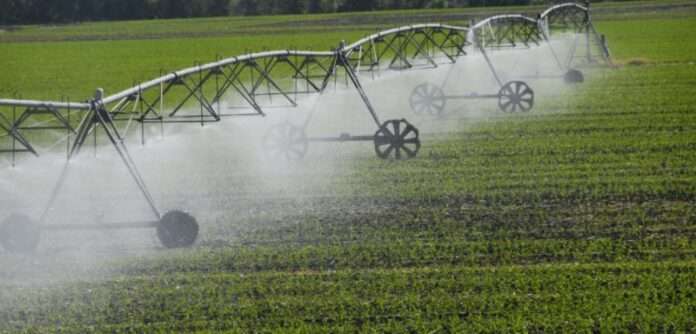
Nitrate reaches waterways and groundwater from sources like feedlots, farm fertilizers and leaky septic tanks.
In south-central Kansas, scientists from Kansas State University sampling private wells across 10 counties say most of the nitrate they’ve found comes from chemical crop fertilizer.
South-central Kansas groundwater is particularly vulnerable to this contamination for several reasons.
The region’s groundwater is often very close to the surface. Much of the region is also sandy, making for especially permeable ground.
“Sandy soil means that water percolates through that soil very quickly,” K-State geology professor Matthew Kirk said, “and makes its way down to the water table.”
Some farmers faced with sand may end up applying more chemical fertilizer to cope with nitrogen escaping from that sandy ground faster.
Although soil contains microbes that can remove nitrate from water as it trickles down toward the water table, this nitrate-cleaning process tends to happen more in clay and humus soils than in sandy soils.
K-State geologists found increases in nitrate in south-central Kansas private wells over the past four decades that count among the biggest nationally when compared to long-term data from a similar national study.
Over the past few years, they’ve found wells in the region containing four or five times as much nitrate as the U.S. Environmental Protection Agency considers safe to drink.
The city of Pratt
With nitrate levels creeping upward regionally, utilities watch their wells closely.
When drinking water becomes too contaminated, they have to take action.
If they don’t have the infrastructure to immediately treat the water or to dilute the contamination by blending with cleaner water from another source, they end up shutting off the well that contains too much nitrate.
In the long term, though, a community can’t afford to keep shutting off wells. It could cause water shortages.
“The answer eventually is going to be a treatment center,” Goff said of Pratt’s dilemma. “We understand that. We accept that. We’re doing everything that we can to move in that direction in a responsible way, because it’s a very expensive path.”
In the summer of 2023, one of Pratt’s wells hit the EPA’s nitrate limit. The city shut it down and informed the public.
A year later, the same situation played out with a second well.
Pratt’s remaining eight wells produce enough water to meet current demand. For a few weeks last summer, during a heat wave and drought, the city asked the public to conserve water voluntarily. It did not impose conservation rules.
But the two wells that are shut off make up 23% of the city’s water rights. Pratt cannot simply pump that much out of its other wells because of intricacies in the state’s water law that are intended to protect groundwater supplies.
Instead, Pratt needs to find new well sites that can produce drinking water clean enough to meet the EPA’s standards, while also working toward eventual nitrate treatment.
Before two of its wells hit the nitrate ceiling, city officials saw the problem looming on the horizon and began hunting for money to deal with it.
They secured $3 million in EPA funds through the Kansas Department of Health and Environment.
That money will pay for one new well — the engineering, the wellhouse and a backup generator. Officials hope to lock down another $1 million under the Kansas Water Plan to replace the second well that Pratt lost.
But the state is inundated with requests for help from communities facing either dwindling water supplies or water quality problems. The Kansas Water Office is considering 277 applications this year. That’s a combined ask of $236.3 million, compared to the $27 million available.
Planning ahead
And nitrate levels could keep rising in the area.
So Pratt officials figured out how to put a portion of the $3 million toward the single biggest expense that their town ultimately faces before it can one day treat its water for nitrate.
Pratt will need to connect its various wells, a process called trunking, so that water can flow to a treatment center and then to people’s faucets. Trunking would also allow the city to blend water from different wells.
One cost estimate that the city received for a treatment facility topped $60 million, with $40 million of it going toward this trunking.
Pratt officials continue their search for more affordable options and for funding sources to help with the financial burden. They hope replacing the two contaminated wells in the meantime will buy the town more years to work toward that end.
They also face difficult choices as they explore what kind of treatment facility to build. No option is perfect. All of them involve tradeoffs.
One method for removing nitrate could discard 20% of the water it takes in. Discharging such a significant waste stream is problematic in parts of the Great Plains that depend on aquifers for drinking water, livestock water, crop irrigation and more.
“We talk a lot about water conservation” in the region, Goff said. “There is a water shortage.”
A second treatment option discharges less water but requires creating large brine lagoons.
City officials are also keeping in mind that Pratt may eventually need to treat its water for other pollutants.
This year the EPA implemented public safety limits for PFAS in drinking water. PFAS, often called “forever chemicals,” are used in a wide array of commercial products.
One of the wells that Pratt shut off due to nitrate now also tops this new PFAS ceiling. (The $3 million that Pratt got to replace one of its wells actually relates primarily to the PFAS in the well, state health officials said by email. But it solves two problems at once because the well contained too much of both contaminants.)
It’s unclear whether PFAS levels may eventually increase in other wells in Pratt. Pratt could end up needing to blend or treat its water for PFAS or for other contaminants.
That’s why city officials say the water treatment facility requires meticulous planning. Certain design choices could eventually help the city roll out additional treatments beyond nitrate removal, to meet other EPA requirements that could impact Pratt in the future.
Nitrate in public water and private wells
Water with too much nitrate can cause methemoglobinemia (also called blue baby syndrome), a condition that can kill infants.
The EPA’s limit for nitrate in public water supplies is 10 parts per million. That’s 10 milligrams of nitrate per liter of water. This ceiling has been shown to protect babies from methemoglobinemia.
But scientists continue to study suspected links between nitrate in drinking water and other health problems.
A 2018 paper by researchers at the National Cancer Institute suggests more studies are needed, but the strongest evidence so far relates nitrate to thyroid disease, colorectal cancer and certain birth defects. What constitutes a safe level of nitrate remains unclear in the context of these other health conditions.
In Kansas, nitrate problems generally strike utilities that depend mostly on groundwater rather than surface water.
Once nitrate seeps into groundwater, it accumulates because it lies out of the reach of bacteria, algae and plants that would otherwise begin breaking it down and releasing the nitrogen into the atmosphere as gas.
The state’s biggest cities largely have access to enough rivers and reservoirs to avoid this problem. Although they have to treat their water to remove other compounds, they don’t deal with excessive nitrate.
But for most utilities in Kansas, surface water isn’t an option. So far, a few dozen of these public water systems — such as Dodge City, Haviland, Pretty Prairie, St. John, Woodston and Reno County Rural District 101 — have seen nitrate levels reach or sail past the EPA’s standard.
Additionally, an estimated 150,000 to 175,000 people in Kansas don’t get their water from a utility. Instead, they drink groundwater pumped directly from beneath their property, and it’s not clear how many of them test the water for safety.
If a recent study from Iowa offers clues, the answer may be “not many.” Researchers asked more than 8,000 households that have private wells in Iowa counties with known nitrate contamination. Fewer than 1 in 10 had tested their wells recently, yet 4 in 10 were drinking the water without filtering it.
In Kansas, K-State geologists reach out to homeowners, mostly in Barton, Stafford, Pawnee, Edwards, Rice, Pratt and Kiowa counties, offering to test their wells.
They team up with faculty and students from schools in the region, such as Barton Community College and Dodge City Community College, to fan out and gather samples.
This gives researchers a better picture of the extent of nitrate pollution in the Great Bend Prairie Aquifer. And families find out for free what’s in their water.
“It’s entirely up to the landowner to keep track of,” said Kirk, the K-State geology professor. But people may not know where to get water tested, “or how to interpret the results. So, we can help with that.”
More than 40% of the 130 wells tested so far top the EPA’s public safety limit for nitrate. (EPA rules don’t apply to private wells, however, so owners can choose whether to act.)
Nitrate contamination can vary widely even within a single county. Of 20 private wells that were sampled in Pratt County, for example, most hovered below the EPA’s limit.
Six wells topped it. Two of these, to the north and west of Pratt city, contained four times the EPA’s ceiling.
Often, homeowners aren’t aware that the water beneath their properties is contaminated until K-State tells them the results.
Installing treatment systems at home can cost hundreds to thousands of dollars. People who can’t afford treatment can end up hauling bottled water from nearby towns.
Kansas News Service ksnewsservice.org.