Monday, January 12, 2026
Home Blog Page 29

Fall composting tips for gardeners

0

Turn over a new leaf by turning leaves into compost.

Gardeners are encouraged to compost leaves this fall to improve soil health. With plenty of leaves, grass clippings and garden debris available, residents can create compost piles that benefit the environment, recycle yard waste and nourish their gardens.

“Composting is a natural process that turns organic material into a dark, crumbly, earthy-smelling material called humus,” said Aaron Steil, consumer horticulture specialist with ISU Extension and Outreach. “It is an excellent soil amendment that improves soil structure, increases water-holding capacity and provides nutrients.”

Building and maintaining a compost pile

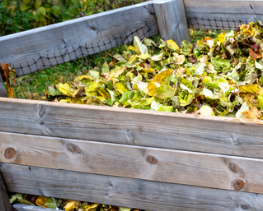
Effective composting requires a balance of carbon-rich “browns” (such as dried leaves and straw) and nitrogen-rich “greens” (like vegetable scraps and fresh grass clippings). The ideal carbon-to-nitrogen ratio is about 30:1. Steil recommends piles be at least three feet tall and wide to retain heat and should be turned regularly to maintain airflow and moisture.

“A three-bin system can work well with one bin used to stockpile materials until there is enough material to begin a composting batch,” said Steil. “The second bin is used for active composting and the third is used for the finished material to be stored until it can be used.”

Decomposition will still occur when the ratio of carbon to nitrogen is not perfect, but at a slower rate. “Compost created from fall materials, like fallen leaves and dead plant debris, is high in carbon and low in nitrogen. This means that special attention needs to be given to provide more of those green materials to create compost efficiently,” Steil noted. To accelerate the decomposition rate, gardeners can shred materials to increase the surface area for microorganisms to feed upon. Adding a small amount of nitrogen-rich fertilizer can also help. Regularly turning the compost helps introduces oxygen, keeping microbes healthy and growing. If the pile is dry, Steil advises adding water until it feels like a “wrung-out sponge.”

Steil recommends avoiding the use of meat, dairy products, pet waste, weed seeds and diseased plants in compost to prevent pests, pathogens and weeds. While heat is generated during the composting process, temperatures need to reach 150 to 170 degrees Fahrenheit to kill most pathogens and weed seeds, and most home compost piles do not reach this high a temperature.

“If a gardener does a great job of balancing the right ratio of browns and greens and provides the right amount of moisture while turning frequently, the pile will be warmer,” Steil said. “But even with the best of conditions, the pile may not be hot enough for long enough, so it’s best to avoid seeds and diseased plants.”

Using finished compost

After several months, compost should resemble rich, dark soil with an earthy aroma. This finished product can be used to top-dress lawns, mulch around trees or improve garden beds for spring planting. While compost can introduce some fertility to soil, its real benefit is introducing organic matter. Compost’s ability to improve soil structure and water-holding capacity improves aeration, supports the beneficial soil microbe population and helps the soil better hold and release essential plant nutrients. “This is why we sometimes call compost black gold!” Steil mentioned.

Soybean Farmers Invited to Second Annual Celebration

0

January once again marks the time of year that Kansas soybean farmers will gather to recognize good news in agriculture. Now in its second year, Kansas Soybean Celebration is set for January 30 in Salina and invites growers to join for an evening of awards and camaraderie.

“We were really pleased with the switch to Celebration from the traditional Soybean Expo in Topeka last year,” says Kansas Soybean Association President Brett Niebling, Highland. “It was an effort to better use resources, engage more with other commodities and serve farmers with a more central location, and we’re excited to see it pay off again this year.”

Following Kansas Commodity Classic and the KSA annual members meeting, Celebration is set to begin at 4:30 p.m. All Kansas soybean growers are invited to attend and enjoy a meal, an awards ceremony, organizational updates and a featured speaker.

Delivering the keynote address this year is Tyne Morgan, award-winning agricultural journalist and host of the U.S. Farm Report. Aside from raising two daughters with her husband in a rural Missouri community, what Morgan values most is sharing stories from across rural America that showcase the grit and tenacity that is hallmark to agriculture’s success.

The Kansas Soybean Celebration features recognition of KSA’s Friend of Soy and Meritorious Service recipients, honored farmer-leaders retiring from service and the results of the Kansas Soybean Yield and Value Contests.

Celebration is a free event coordinated by KSA and made possible by checkoff funding from the Kansas Soybean Commission. Registration, details and updates are available at www.kansassoybeans.org/celebration.

The Kansas Soybean Association, headquartered in Topeka, is the voice and advocate on local, state, national and international issues of importance to Kansas’ 16,000 soybean farms. Founded in 1973, its advocacy efforts are made possible through the voluntary memberships of farmers and industry supporters. It also is the primary, administrative contractor to the Kansas Soybean Commission.

The Kansas Soybean Commission, established in 1977, includes nine volunteer farmer-commissioners who are elected by their peers. They oversee investments of the legislated “soybean checkoff” assessment in research, consumer information, market development, industry relations and farmer outreach to improve the profit opportunities for all Kansas soybean farmers.

Winterizing roses and strawberries

0
K-State horticulture expert outlines steps to protect plants during colder months.

November’s temperatures in much of Kansas have proven to be unseasonably warm, but rest assured, the colder days of winter are not far away.

For gardeners, that means giving attention to garden plants in order to protect them from the inevitable freeze.

Kansas State University horticulture expert Cynthia Domenghini shared tips for protecting two popular plants – roses and strawberries.

Winterizing roses

Most shrub roses are hardy through Kansas winters, but many hybrid teas and other modern varieties require protection, Domenghini said.

“It is important to winterize roses after several hard frosts have occurred, but before the ground freezes,” she said. “Winterizing too early keeps the stems warm and moist, which promotes the growth of mold. Winterizing too late risks damaging the sensitive graft union where the root stalk attaches to the above-ground growth.”

To prepare the plants for winter, clean up debris in the area surrounding the roses to prevent diseases from overwintering. Mound soil or compost 8-10 inches high around each rose plant. Domenghini said this is also a good time to bring in new soil – instead of soil around the roses – to avoid exposing and damaging the roots.

Once the ground has frozen, add a four-inch layer of straw, leaves, wood chips or other mulch over the mound, and cover with a layer of soil to hold it in place.

“This will help protect plants from the cold, but also prevent early budding during warm winter and early spring days,” Domenghini said. “As the mulch settles during winter, you may need to add more.”

Prune canes to 36 inches and remove weak or thin canes. Tie the remaining canes together loosely to keep them secure during windy weather. “If the canes are allowed to whip in the wind, it can cause damage to the crown and disturb the soil,” Domenghini said.

When the ground thaws next spring, remove the mulch and soil from the base of the plant to return the soil level to normal.

Winterizing strawberry plants

Mulch is necessary to protect strawberry plants from winter damage, regardless of whether they are young or established, Domenghini said.

“Sudden drops to freezing can kill fruit buds and injure roots and crowns,” she said. “When the soil freezes and thaws repeatedly, plants can be heaved out of the soil, exposing the roots.”

Domenghini recommends a three-inch layer of straw mulch for plants after they have been exposed to several frosts, but before the heavy freeze begins. In Kansas, this usually falls between Thanksgiving and Christmas.

More information on caring for strawberries is available online in a publication from the K-State Extension bookstore.

Domenghini and her colleagues in K-State’s Department of Horticulture and Natural Resources produce a weekly Horticulture Newsletter with tips for maintaining home landscapes and gardens.

Interested persons can subscribe to the newsletter, as well as send their garden and yard-related questions to [email protected], or contact your local K-State Extension office.

Turkey safety myths roasted

0

Every Thanksgiving, millions of home cooks become kitchen scientists, experimenting with thawing, basting, and timing the perfect bird. Friends and family share treasured secrets or tips for creating the ideal Thanksgiving meal; however, not every “secret” passed down at the dinner table is true – or safe.

MYTH #1: It’s safe to thaw your turkey on the counter overnight.

False. Here’s the truth: A turkey left at room temperature for more than 2 hours enters the “danger zone” (40°F-140°F) where bacteria proliferate, even if the center of the bird remains frozen. Thaw the turkey in the refrigerator, allowing 24 hours for every 4-5 pounds of turkey, or use the cold-water method by submerging the bird in cold water in a leak-proof plastic bag, changing the water every 30 minutes. (Allow 30 minutes of thawing time per pound of turkey.) Cook the turkey immediately after thawing.

MYTH #2: You should rinse your turkey before cooking.

False. Here’s the truth: Cooking, not rinsing, kills bacteria. Washing a raw turkey can cause cross-contamination of other foods as water droplets from the turkey spread bacteria across the sink, counter, and utensils. The Centers for Disease Control recommends that if you decide to wash your raw turkey, you should immediately clean and sanitize the sink and counters. First, clean with hot, soapy water to remove any residue. Then, sanitize using either a solution of 1 tablespoon of unscented bleach mixed with 1 gallon of water, or a commercial kitchen cleaner labeled as a disinfectant, and wipe everything down with the solution. Let it sit for at least a minute, then let it air dry or wipe it with a clean paper towel. Your future self (and your guests) will thank you!

MYTH #3: The pop-up timer will reliably tell you when the turkey is cooked.

False. Here’s the truth: While a pop-up timer serves as a convenient tool to indicate when the turkey might be done, the USDA recommends using a food thermometer to check three key areas of the turkey to ensure the internal temperature reaches 165°F: 1) The thickest part of the breast, 2) The innermost part of the thigh, and 3) The innermost part of the wing.

MYTH #4: Stuffing cooks safely inside the turkey.

False. Here’s the truth: Stuffing cooked inside the turkey may not reach the necessary internal temperature of 165°F by the time the turkey finishes cooking, which could fail to kill harmful bacteria. For optimal safety, the USDA encourages cooking the stuffing in a separate dish. Plus, stuffing tends to have a better texture when cooked separately.

MYTH #5: Leftovers can stay out until everyone’s finished eating.

False. Here’s the truth: Refrigerate leftovers within 2 hours of cooking to prevent food poisoning. This guideline pertains to all foods, but especially dishes that contain dairy, eggs, or meat.

  • Turkey: Carve the turkey into smaller pieces before refrigerating so the meat cools faster.
  • Mashed Potatoes: Made with milk and butter, so put them in the fridge promptly.
  • Casseroles: Whether it’s green bean, sweet potato, or stuffing, these often contain eggs, cream, or broth and should be cooled and stored quickly.
  • Gravy: High-risk due to moisture and meat drippings; cool in shallow containers in the fridge.
  • Cranberry Sauce: More acidic but still best refrigerated within 2 hours.
  • Rolls and Bread: Lower risk, but these can dry out if left uncovered too long.
  • Tip: Use shallow containers to help leftovers cool faster, and label them with the date so you know when to toss them (typically within 3-4 days). To reduce waste, consider dividing leftovers into smaller portions to send home with your guests.

Remember: Safe turkey cooking is about science, not luck. Keep your feast delicious and safe by following the four steps of food safety:

  1. Clean – Wash hands and surfaces often.
  2. Separate – Don’t cross-contaminate. Keep raw meats and poultry away from produce and other foods.
  3. Cook – Use a food thermometer to ensure an internal temperature of 165°F.
  4. Chill – Refrigerate leftovers within 2 hours after cooking.

This Thanksgiving, trust science, not kitchen folklore, and enjoy a meal that’s both delicious and safe for all.

Understanding forage value of Kansas CRP grasslands

0
K-State research shows seasonal variation in nutrient quality, guiding producers toward smarter grazing decisions.

Kansas State University extension experts are calling attention to important factors producers should consider when using Conservation Reserve Program (CRP) lands for cattle forage.

In a recent Agriculture Today podcast episode, Jason Warner, K-State cow-calf extension specialist, discussed his findings on the variability of forage quality in lands under the Conservation Reserve Program — and the inherent challenges that come with grazing or haying those stands.

Warner and a group of K-State extension agents and beef cattle specialists have worked to better understand the nutrient composition of standing CRP forage available for grazing or haying through a collaborative, producer-focused project. Lands enrolled in the CRP program represent approximately 12% of grassland acres available for grazing in Kansas.

The CRP program, a USDA initiative, pays producers to remove environmentally sensitive land from production and plant native grasses to prevent erosion and improve soil and wildlife habitat. While these acres aren’t necessarily used every year, Warner said their forage often serves as a valuable — though variable — resource in cattle diets.

While primarily used during drought when forage supply is limited, there are conditions in which these forages may be used during any given year. Nutrient composition data pertaining to CRP forages is very limited, and this work was done to help fill a gap in knowledge that currently exists.

In recent forage quality assessments, Warner found that the nutrient content of CRP grasses fluctuates widely by season and region.

“In eastern Kansas, we’ve seen crude protein levels range from less than 3% in February to nearly 10% in June,” he said. “Western Kansas follows a similar trend but with slightly lower values overall.”

He said those findings highlight the importance of knowing when — and how — CRP forage can fit into a ranch’s feeding plan.

“Producers should look at these results as benchmarks and use them as a tool and resource to make informed management decisions,” Warner said. “Depending on the time of year and the animal’s production stage, CRP forage might work well or cattle may need supplementation, but these data help establish guidelines for producers and allied industry to work with”

Warner added that updated results and additional analysis will be published in the 2026 K-State Cattlemen’s Day Report, set for release next spring.

For more information on Warner’s research and other agriculture related topics, listen online to the Agriculture Today podcast.