
Sunday, February 1, 2026
Home Blog Page 302

Wheat Scoop: Wheat U Follow-Up

0
Kansas Wheat

For audio version, visit kswheat.com.

Growers gain valuable insights on production, marketing and more at Sorghum U/Wheat U event


Roughly 130 wheat and sorghum growers listened to insights and recommendations on seed technology, foliar fungicide applications, grain marketing and more as part of the recent Sorghum U/Wheat U.


The free, one-day event in Wichita on August 13 was sponsored by High Plains Journal, Kansas Grain Sorghum Commission, Kansas Wheat, United Sorghum Checkoff Program, DoubleTeam Sorghum Cropping Solution, Kauffman Seed, Heartland Soil Services, Conklin AgroVantage and American AgCredit.


Grain Marketing Guidance


Keynote speaker Matt Hines, a licensed commodity broker and risk management consultant with Lowen & Associates, provided a market outlook and outlined grain marketing strategies for the wheat and sorghum markets.


“Wherever I go, I’m trying to teach our producers to be better merchandisers,” Hines said. “How can I be more like the elevator? The processor? How can I make better decisions and hopefully take some of that stress out.”


Miss the event and looking for insights? Hines joined Aaron Harries, Kansas Wheat vice president of research and operations, on the “Wheat’s on Your Mind” podcast to delve into the intricate world of grain marketing, risk management and the global dynamics affecting wheat producers. Hines emphasized the importance of understanding market factors and developing effective marketing strategies to ensure profitability in an ever-changing landscape.


“Successful marketing really is just about picking the best tool at that time,” he said. “Because at the end, you’ve got to make a profit.”


Producer Panel Insights


A producer panel featured sorghum and wheat producers, including Kansas Association of Wheat Growers’ Chris Tanner from Norton and Keeff Felty, a producer from Altus, Oklahoma, who represented the National Association of Wheat Growers.


“We talked about what we’re doing as a wheat organization and the policy goals we’re working to accomplish for wheat and sorghum farmers in this area,” Tanner told farm broadcaster Ken Rahjes after the event. “Wheat covers a broad geography of the Heartland and we’re working for policies that will help us all be more productive.”


Specifically, Tanner and the panel discussed programs like cover crops and carbon programs. He highlighted the difficulties of raising cover crops in the arid High Plains, which is why NAWG is working to have wheat recognized in national discussions for its soil health benefits, including maximizing continuous living roots, minimizing disturbance, maintaining soil cover and maximizing biodiversity.


“Wheat is the cover crop out here, so we want to make sure our farmers are not put at a disadvantage moving forward,” Tanner said. “That’s where sorghum and wheat go together – those are two crops that are raised in the more arid climates where we’re not able to raise cover crops.”


Wheat Disease Update and Management


Kelsey Andersen Onofre, assistant professor of plant pathology in K-State’s College of Agriculture, shared information about Wheat Streak Mosaic Virus (WSMV). She reminded attendees that WSMV and other viruses like Triticum mosaic virus (TriMV) cannot be controlled by fungicides and are instead spread by the wheat curl mite. With the highest populations during harvest, these critters move from wheat fields to volunteer wheat and other crops and grasses that serve as hosts. She noted more WSMV outbreaks are happening in central and even northeast Kansas and TriMV is increasing in central Kansas.


Onofre also reported there was a “rust trifecta” this year with stripe rust showing up early. She reminded producers that these diseases can cause substantial yield loss of up to 30 to 40 percent. However, she noted there is some variety resistance available as well as effective fungicides.


One resource she highlighted is new K-State guidance on foliar fungicides, which focuses on efficacy ratings as well as outlining the need to pay attention to application timing, disease scouting reports and varietal vulnerabilities.


“Research conducted by Kansas State University indicates a single fungicide application made to susceptible wheat varieties when the risk of disease is high will often result in a 4% to 13% yield increase with an average increase of approximately 10% relative to wheat that remained untreated,” the publication noted. “A lower yield response is likely if the disease remains at low levels or is absent. The following guidelines will help maximize the potential for effective disease management and a positive yield response.”


She also promoted the release of the 2024 Kansas Wheat Variety Guide, which provides a rundown of how well varieties are adapted for the different areas of Kansas, disease resistance and herbicide resistance as well as other performance strengths and weaknesses.


“Variety selection is one of the most important decisions a wheat grower makes,” the publication noted. “This choice profoundly influences the potential wheat crop’s productivity. Agronomic characteristics, such as height, acid soil tolerance, and maturity, determine how well a variety is adapted for a region or desired cropping system. Selecting a good variety also influences how well the crop tolerates drought or resists diseases and insects.”


Even more insights coming


Rounding out the day packed full of information, Romulo Lollato, K-State associate professor of wheat and forage production, shared results from the “Beyond the Grain” study. The study showed wheat has a substantial impact beyond the value of the grain itself, including the value of residue in conserving soil moisture and temperature, weed control and yield impact on the subsequent crop. Dalton Henry, vice president of trade policy with U.S. Wheat Associates, also discussed changes in wheat seed technology and policy implications for global trade. Look for more insights from these presentations in future editions of Wheat Scoop.


Keep up with all the latest research insights, industry news and podcast episodes at kswheat.com.


###


Written by Julia Debes for Kansas Wheat

Horticulture 2024 Newsletter No. 38

0
KSU horticulture

1712 Claflin, 2021 Throckmorton Plant Science Center
Manhattan, KS 66506 (785) 532-6173

Download and print the Hort Newsletter
(Downloadable version)

HNR Website access: https://hnr.k-state.edu/extension/horticulture-resource-center/horticulture-newsletter/

ANNOUNCEMENTS:
The Kansas Forest Service’s Conservation Tree Planting Program offers tree and shrub seedlings, as well as other items for use in conservation plantings. Plantings may function as wildlife habitat, windbreaks, wood lots, timber plantations, or educational and riparian (streambank) plantings. Find out more and order trees by visiting: https://www.kansasforests.org/conservation_trees/

The 74th Annual Kansas Turf & Landscape Conference will be held on December 4 & 5 (Wednesday & Thursday) at the Hilton Garden Inn,
Manhattan. The conference is an excellent way to learn about turf and
landscape management, visit with old friends, network with new ones, and see all the latest products and supplies from local and national vendors.
The conference has been approved for commercial pesticide recertification hours:
1 Core hour
3A – 7 hours
3B – 7hours
GCSAA education points and International Society of Arboriculture CEUS will also be available by attending the conference. For more information, visit:
https://www.kansasturfgrassfoundation.com/

VIDEO OF THE WEEK:
Growing Garlic in Kansas
(K-State Garden Hour)

Kansas is well-suited for growing a healthy garlic crop, but there are special considerations to make including what varieties to grow.

GARDEN TO-DO
Plant Kentucky bluegrass by October 1. Tall fescue should be seeded no later than October 15.
Herbs can be dug and transplanted into pots for indoor use during the winter.

VEGETABLES
Garlic Planting Time
Kansas’ climate is suitable for growing a variety of garlic types. By planting garlic in the fall the cloves have time to go through a chilling period which is important for bulb and flower growth. October is a good time to plant because the cloves can begin to develop roots and shoots before freezing temperatures arrives.
Purchase large, mature garlic bulbs from a reputable grower rather than the grocery store. Separate the bulbs into individual cloves just before planting. The papery covering does not need to be removed. Cloves should be planted one to two inches deep and six-inches apart within five days to prevent them from drying out. Fertilize according to soil test recommendations. Water the cloves in well and apply a layer of mulch in late fall or early winter after there have been a few frosts to insulate the soil. Keep the area weed-free and remove the mulch in mid-spring so the soil will warm.
Bulbs should be ready to harvest next summer when the lower third of the foliage is yellow. Carefully dig one area to check the bulbs for maturity. The bulbs are ready for harvest when the cloves are beginning to separate.

FRUIT
Fruit Planting Preparation
If you plan to establish a fruit garden or add to your existing one, now is a good time to take advantage of the weather conditions and prepare the planting site.
Pay attention to slopes in the landscape. Cold air tends to settle in these areas and frost damage is more likely so it is best to avoid planting fruit trees and other frost sensitive plants there.
Fruit crops are perennial. Soil preparation is important since the plants will stay in that site many years. Moderate fertility and loamy texture are ideal and good drainage is essential. To improve the soil, incorporate organic matter into the top several inches. If possible, plant a cover crop the year before planting to improve the soil.
Contact your local K-State Research and Extension agents to guide you in obtaining soil samples to determine a fertilizer program. Fruit trees can be planted in the fall, but they will need to be monitored through the winter. Warm winter temperatures can promote bud development which can be detrimental to fruiting if followed by a freeze. It is also important to ensure trees are watered, as needed, through the winter. The Midwest Home Fruit Production Guide is a great resource to support your fruit growing efforts.
TURF
Animal Urine on the Lawn
Animal urine can cause damage to turfgrasses. Most commonly the problem is from domesticated animals, primarily dogs, who frequent the lawn and urinate in the same area repeatedly. The result is a non-uniform lawn with inconsistent growth and patches of deeper green or brown. In severe cases, the homeowner may need to reseed to correct the problem.
The symptoms from animal urine on turfgrass are most severe during dry periods when the soil moisture is low and the turf is poorly hydrated. To best protect your lawn from this damage, maintain turfgrass so it is vigorous and more likely to recover from damage. This includes following mowing, fertilizing and other care recommendations. If the problem is primarily caused by your own pets, you may be able to direct them to a less visible area of the lawn to take care of business. Pouring water on the grass immediately after the dog has urinated on it can help minimize damage.
MISCELLANEOUS
Bringing Amaryllis Back into Bloom
Are you growing an amaryllis bulb from last winter? Since they are sensitive to cold temperatures they need to be moved indoors before the first frost. In order to force them into bloom, amaryllis bulbs need a dormant period to store enough energy to support flowering.
Keep the amaryllis in a cool, dry, dark area. Do not water and remove leaves as they dry. Allow the bulb to rest for eight to twelve weeks. If new growth develops, move the amaryllis to a sunny window. Otherwise, wait until you are ready to encourage new plant growth. At that time, move the bulb to a warm, sunny spot and water thoroughly. Wait to water again until roots have established to avoid bulb rot. Maintain temperatures between 50- and 60-degrees F. Flowers will last longer, even up to one month, if the plant is kept in a cool location away from intense sunlight.
Yellow Jacket Wasps
Though yellowjackets can sting, they are beneficial insects. Yellowjackets feed on many varieties of soft-bodied insects such as sawfly larvae and caterpillars that an wreak havoc in the garden.
Yellow jackets are about ½ to ¾-inch long with a black and yellow striped abdomen. They are scavengers and often impose on outdoor events where sugary foods and drinks are being served. They are also commonly seen swarming trash cans and are attracted to perfume and flowers as well.
Yellow jackets are most aggressive around their nest so avoid this area. Removing food sources, including fruit dropped from trees, can reduce their presence in the landscape. Yellowjackets are typically present until the weather turns cold.
Preventing Sunscald on Thin-Barked Trees
Many young, smooth, thin-barked trees such as honeylocusts, fruit trees, ashes, oaks, maples, lindens, and willows are susceptible to sunscald and bark cracks. Sunscald normally develops on the south or southwest side of the tree during late winter. Sunny, warm winter days can heat the bark causing it to lose its cold hardiness. In one study, the southwest side of tree trunks were 40 degrees warmer than shaded bark. As a result the cells become active and susceptible to freezing when the temperature drops at night. Damaged bark tissue becomes sunken and discolored in late spring and will eventually crack and slough off. Trees often recover but need special care — especially watering during dry weather.
If you have seen this type of damage in previous years or fear you have susceptible trees, you can take preventative measures. A light-colored tree wrap from the ground to the first branches can be added in October/November to protect young and/or recently planted trees. The wrap should be removed the following March to prevent harm to the tree.
QUESTION of the WEEK
When should I cut back ornamental grasses?
I have some very large ornamental grasses in my landscape. Some of the lower blades are turning brown but most of the plant is still green. Should I cut them back now or wait until later in fall?
In general, avoid cutting back ornamental grasses while they are still green to allow them more time to store energy. As the grasses turn brown and dry, they can be cut back if desired. However, many gardeners leave them intact through the winter to provide interest to the landscape. Early spring is typically the best time to cut back and divide ornamental grasses.

Contributors:
Cynthia Domenghini, Instructor and Horticulture Extension Specialist
K-State Turfgrass
Kansas Garden Guide

Division of Horticulture
1712 Claflin, 2021 Throckmorton
Manhattan, KS 66506
(785) 532-6173

For questions or further information, contact your local extension agency.
This newsletter is also available on the World Wide Web at:
http://hnr.k-state.edu/extension/info-center/newsletters/index.html

The web version includes color images that illustrate subjects discussed. To subscribe to this newsletter electronically, send an e-mail message to [email protected] or [email protected] listing your e-mail address in the message.
Brand names appearing in this newsletter are for product identification purposes only. No endorsement is intended, nor is criticism implied of similar products not mentioned.
K-State Research and Extension is committed to making its services, activities and programs accessible to all participants. If you have special requirements due to a physical, vision or hearing disability, or a dietary restriction please contact Extension Horticulture at (785) 532-6173.


Cynthia Domenghini, Ph.D.
Instructor; Horticulture Extension Specialist
Department of Horticulture and Natural Resources
Kansas State University
1712 Claflin Rd.
Manhattan, KS 66503
785-340-3013
[email protected]

Access the HORTNEWS-L Home Page and Archives

Unsubscribe from the HORTNEWS-L List

Wheat Scoop: Quality Control: Grain Craft’s Innovation and Quality Lab puts Kansas wheat to the test for milling and baking performance

0
Kansas Wheat

For audio version, visit kswheat.com.

When the final fields are cut, the trucks empty, the bins full and the combines cleaned out, Kansas wheat farmers breathe a quick sigh of relief that harvest season is complete. But for Kathy Brower, lab manager for Grain Craft’s Innovation and Quality Lab, harvest is just the start of her busy season as she takes samples from those farmers and puts them to the test for how that wheat will perform in making a consistently good loaf of bread.


“Grain Craft leads by example through educating their customers about wheat quality while communicating those needs back to wheat farmers and researchers,” said Aaron Harries, Kansas Wheat vice-president of research and operations, who interviewed Brower for an episode of the organization’s “Wheat’s On Your Mind” podcast. “That dialogue supports the advancement of wheat quality for the entire supply chain.”


Grain Craft is the largest independent flour miller in the United States. The company has longstanding relationships with Kansas Wheat and Kansas State University. So when it came time in 2021 to establish a new laboratory focused on varietal research, there was little doubt an ideal location would be inside the Kansas Wheat Innovation Center on K-State’s north campus. Today, Grain Craft has 12 mills in the United States and the lab in Manhattan does the analysis for quite a few of them, especially for hard wheats destined for the bread industry.


And who better to manage the lab than Brower, the daughter of a fifth-generation wheat farmer and K-State food science graduate with the experience needed to connect the dots between the wheat developed by breeding programs, the varieties planted each year and the final end-use quality of those kernels.


“Having us here at the Kansas Wheat Innovation Center, we can bring in various tour groups, even famous football coaches like Bill Snyder,” Brower said. “I really love making that connection with people. We’ve even had some of the farmers come in and they’ve got to see their specific variety baked out in our process. It’s a tremendous opportunity to put those connections together.”


While the lab’s work is never truly complete, their new crop testing starts as soon as producers begin wheat harvest. In mid-June, a company courier starts collecting samples from throughout the region, which are brought into the lab and tested. Mills, breeding programs and even individual farmers also send in samples. With kernels in hand, testing begins in the Grain Craft laboratory’s milling facility, where kernels are tempered, cleaned, processed and ground.


The resulting flour moves into the company’s flour analysis lab. Grain samples are run through near infrared imaging (NIR), which measures both protein content and initial moisture ash – a common quality factor requested by millers.


“Ash is the mineral left behind after you’ve burned off all the carbohydrates and all the protein,” Brower said. “If you have that outer layer of the kernel, that outer layer contains a lot of mineral content in it. When we’re putting something through the mill – grinding – that part is always going to be present within the flour itself. If we know our ash content, we can get a good idea of how well we’re grinding.”


After initial testing, it is time to make some bread dough. Using a farinograph – a piece of equipment that looks like a miniature mixing bowl with two paddles inside – the flour is mixed with water. The machine then turns the paddles, and the resulting mixture generates torque against those paddles, which measures water absorption and helps determine peak development time.


If dough breaks down after a certain amount of mixing time, it becomes very sticky and very soft and is virtually impossible to remove from the mixer. As a result, the goal of a baking process is to mix the dough to a nice, developed state where it will still retain gas throughout baking.


“From a baker’s standpoint, the baker is wanting to know – how much water can I potentially put into this flour? And then what is the mixability of it? How strong is it going to be? How long am I going to be able to mix it out?” Brower explained. “The farinograph is one piece of equipment that can allow us to give a heads up to those bakeries as well as in our own test baking scenario as to what the performance of that flour is going to be.”


After flour analysis, a sponge and dough process is used to test how the flour will turn into bread. Lab technicians take about 70 percent of the flour and mix it with yeast and water. The mix is put into a three-and-a-half-hour fermentation process, resulting in the “sponge” that can be tested – is it too soft? A little overhydrated? Underhydrated, dry and shaggy? Or just right?


“If you’re running a fermentation process, it gives you a really good look at that initial stability of a flour,” Brower said. “It also gives us a way to judge if we hit the correct absorption.”


After the sponge is tested, it’s time to add back in the remaining 30 percent of the flour, add shortening, sugar and salt and bring that back as a final dough. Then it is time to make a loaf of bread.


In a commercial bakery, loaves are made in an assembly line, not one at a time like at home. In a commercial setting, after bread leaves the mixing bowl, it must go through a sheeting process – a set of rollers that takes out air pockets and makes a smooth sheet of dough – and then divided and molded into individual loaves. This process puts stress on the dough, meaning it needs to be strong enough to maintain its shape and texture. The dough cannot mix and fall apart, or it messes up everything else down the line before it ever gets into an oven. All this to say, it requires high protein quality, not just content, to provide that strength.


“If you’re bulking up for weight training or something similar, you have to have that protein coming in so you can retain your strength,” Brower said. “And it’s very much the same with flour.”


Using a similar process, albeit on a smaller scale, lab technicians divide, sheet and mold the dough into loaves. From there, the dough is put in a pan, goes through a 60-minute proof time and then placed in the oven. Once the loaves are fully baked, they are cooled overnight and evaluated the next morning.


That evaluation includes measuring loaf volume and then slicing the bread to look at the texture of the crumb – important determinants of flour strength and how well it would perform in a commercial setting.


“We are trying to mimic that process as closely as we can because we want to simulate what they would potentially see in their system,” Brower said.


This whole process is repeated with every sample that comes into the lab – about 1,300 samples last year. The lab shares the results with mills as far away as Los Angeles, the Kansas farmers who sent in samples and university breeding programs – like K-State. The participation of wheat breeders is essential, especially since Grain Craft runs a preferred variety program for farmers.


“We couldn’t run a program like a preferred variety program without the cooperation from the breeders,” Brower said. “It’s so important that we have those samples coming in year after year because varieties are changing constantly. If those breeding programs are willing to work with us, it really does help us make decisions for what can go onto that preferred list.”


“It’s very important that those perform well for the farmers. We want to make sure that they have really good yield, quality, drought tolerance and pest resistance and all those things built in that are going to make it so the farmer can actually profit. But we also want to make sure that the quality is going to work out for our bakers.”


Learn more about Brower, the Grain Craft Innovation and Quality Lab and the importance of protein quality in the featured episode of “Wheat’s On Your Mind” podcast at wheatsonyourmind.com.


###


Written by Julia Debes for Kansas Wheat
Job Security

0
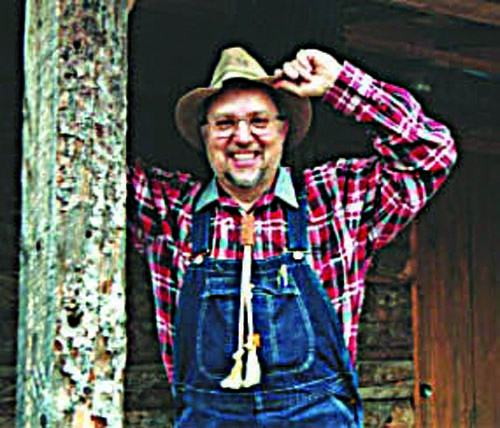
Thayne Cozart
Milo Yield

I’ve got an unfortunate friend, ol’ Layde Aufwerk, who has a hard time keeping a job. He’s been laid off from three different jobs in six months. The most recent job he wound up with was advertised as temporary job working for a rancher in the Flint Hills.

Here’s the story Layde told me about his new job. It wuz during the haying season and he was pulling a fully loaded bale wagon across a steep hilly field with his boss’ new tractor. It wuz steep country and Layde said he suddenly realized as he was heading down a steep hill, the trailer started swerving and the whole shebang got quickly out of control with nowhere to go but down.

Layde leaped for his life as the tractor, wagon and bales went crashing down the hill into the slough, where the whole mess burst into flames.

Naturally the rancher wasn’t too happy about the accident and rightly blamed Layde. The rancher told him he’d have to garnishee a chunk of his wages from every paycheck until the damage was paid off.

Layde said he asked, “How long will that take?”

Peering into the black smoke rising from below, the rancher said, “At least 10 years.”

Layde said he enthusiastically yelled, “All right! Job security!”

***

The early deer hunting season has already opened in some states for some categories of hunters. Reading about that reminded me of a humorous deer hunting story from years ago. Here’s how it went:

A Missouri farmer relented to a couple of aging deer hunters when they politely asked for permission to hunt in some os his woodlands. Although his land was posted, he figgered that at their age, their hunting efforts were bound to fail.

Well, imagine his surprise when he wuz finishing his chores just at sundown when he spied one of the oldsters huffing and puffing in near exhaustion pulling a huge buck deer out to the road to the hunters’ pickup truck.

When he went to investigate, the farmer asked the sweating, heaving oldster, “Where’s your buddy?”

Gasping for breath, the aging hunter blurted, “Homer pulled on this deer so long and hard that he fainted back in the woods.”

“You mean you left your friend alone and unconscious out in the woods while you dragged this buck out?
“Yep,” the oldster gasped. “We really need the meat for this winter and it wuz a tough call for me. But, I figgered no one’s going to steal ol’ Homer. I’ll go fetched him in after I rest for a spell.”

***

Out in remote eastern Colorado is a small, family owned country store called “The Wander In.” It’s been owned by the same local folks for three generations. A staple fixture at the story has been a harmless old hound dog named Buford who snoozes on the floor by the cash register. Most customers in the store stop to pet the appreciative Buford on his head.

That’s why one day a regular customer to the establishment wuz surprised to see a new sign that read, “Danger! Beware of Dog!”

The surprised customer asked the owner, “What give’s with the dog danger sign?” Did Buford bite someone or did you get a new dog?”

“Neither,” the owner replied. “Last week a touristy lady tripped over Buford and broke her tailbone. I sweet talked her out of suing me, but I figgered better to be safe than sorry for the future.”

***

My mind went on vacation before I sat down to write this column. I had writer’s block. So, I did what I always do in such a situation. I went back and pulled a good humorous story out of a far-distant column.

This wuz back in the early days when farm families really did milk cows by hand outdoors. It wuz on one of those farm at evening milking time when the neighbor’s of the family with the milk cow got a good scare.

When they looked across the fence into the cow lot, they saw the neighbor’s daughter, Mabel, out by the creek milking the family Jersey. That didn’t surprise them, but what did wuz the sight of the Jersey bull tearing across the cow toward Mabel. The bull wuz red-eyed, bellowing, slobbering and clearly intent on doing some damage to Mabel.

That’s why, to everyone’s surprise, Mable looked up and never flinched. She just kept milking ol’ Jersey. The bull thundered to a halt, dust flying, just a few yards from Mabel, then it turned around a docilely went back to the creek.

The neighbor witnesses were amazed. They yelled at Mabel, “What were you thinking? Weren’t you scared at all? Are you really that brave?”

“No way,” Mabel hollered back. “I knew he didn’t have the guts to harm me. I know for a fact this cow is his mother-in-law.”

***

Here’s a true story about my 4-year-old great grandson. He recently started going to pre-school. After the first day, when his mother picked him up, his teacher relayed this story.

After recess, the teacher lined up her class to re-enter the school. She said that it would be a good time to go to the restroom.

That’s when my intrepid great-grandson blurted, “Well, good. I’ve been squeezing my penis for a long time.”

***

Words of wisdom for this week: “The older I get, the more I appreciate cancelled plans, early nights, loose clothes, old-time music, thunderstorms that wake me up, and alcohol that’s on sale.”

Have a good ‘un.

Back to the future

0
john marshal

President Biden had a chat last week with British Prime Minister Kier Starmer about many things, but tops on the list was Putin’s hint of a NATO war if the Ukrainians use U.S. missiles and know-how to blast targets far into Russia.

Welcome back, 1973.

Half a century ago President Nixon’s Secretary of State, Henry Kissinger, had outlined his Year of Europe, a bolstering of the Atlantic partnership by the full cooperation of the United States. Nixon himself went on a grand tour. There was hardly a major capital in Europe where the bands were not practicing “The Star Spangled Banner” and “Hail to the Chief” with ruffles and flourishes.

Then as now, diplomacy involved more than weapons and sweet music.

Then as now, we need to improve our trade relations, especially in regard to European import of our farm products, and generally to better our balance of trade. In these matters, we were to deal with an enlarged and tougher European Common Market (today, the European Union). Never an easy task.

We have managed since then to disentangle our fuel supplies from Middle Eastern crises and the Arab squeeze, but fragile threads of alliances remain.

All of the Atlantic community, on both sides of the water, must maintain a sound medium of exchange, a stable currency with which to buy and sell. Money not only related then, as now, to current prices but determined the validity of long-term contracts and the safe storage of capital. This may have been far down Biden’s and Starmer’s list of things to worry about but no doubt came up in chats among their aides.

*

Then as now, it was crucial to perform the balancing trick of reducing armaments on all sides while at the same time keeping strong enough to dampen Russian ambitions. This part has been unraveling since Russia invaded Ukraine nearly three years ago, and was particularly relevant during the Biden-Starmer talks.

Western Europeans then, as now, still fear what they had once called “Finlandization”, a Russia so powerful that it can dictate the policies of its neighbors without the necessity of invasion. It has used Crimea and Ukraine as lessons in their promise of no idle threats; its spies poke about the Baltic states with aplomb.

Kissinger then and Secretary of State Anthony Blinken today point out that it will be necessary to maintain a U.S. military force in Western Europe, not as hostages against a Russian nuclear attack but as a counter-balance to Russian bullying.

During that brief, sweet moment of glasnost-detente with Gorbachev, a faint promise flickered for a unilateral troop withdrawal; that was gone in an instant in the back draft of Putin’s rush into power.

So long as our troops are on European soil even a half-century later, we are liable to be sucked into any European conflict, whether the Russians or other nations start it.

Avoiding war, its cost in blood and treasure, will continue to demand powerful and competent diplomacy, the guiding hand of a stable U.S. president, and a platoon of career foreign service professionals who know what they’re doing. Anything less, and optimism will be premature.