Monday, February 2, 2026
Home Blog Page 324

USDA Offers Disaster Assistance to Agricultural Producers in Kansas Impacted by Drought

0

Aug. 28, 2024 – Agricultural operations in Kansas have been significantly impacted by recent drought. The U.S. Department of Agriculture (USDA) has
technical and financial assistance available to help farmers and livestock producers recover
from these adverse weather events. Impacted producers should contact their local USDA
Service Center to report losses and learn more about program options available to assist in
their recovery from crop, land, infrastructure, and livestock losses and damages.

USDA Disaster Assistance

Livestock producers who suffered grazing losses for covered livestock due to drought on
privately owned or cash leased land may be eligible for the 2024 Livestock Forage Disaster
Program (LFP). To participate in LFP producers must own, cash or share lease, or contract grow eligible livestock, provide pasture or grazing land to eligible livestock on the beginning date of the qualifying drought, certify that they suffered a grazing loss due to drought, and submit an acreage report to the Farm Service Agency (FSA) for all grazing land for which a grazing loss is being claimed. FSA maintains a list of counties eligible for LFP and makes updates each Thursday.

Meanwhile, the Emergency Assistance for Livestock, Honeybees, and Farm-Raised Fish
Program (ELAP) provides eligible producers with compensation for above normal costs of
hauling water and feed to livestock as well as transporting livestock to forage or other grazing acres. For ELAP, producers are required to complete a notice of loss and a payment application to their local FSA office no later than the annual program application deadline, Jan. 30, 2025, for 2024 calendar year losses.

Additionally, eligible orchardists and nursery tree growers may be eligible for cost-share
assistance through the Tree Assistance Program (TAP) to replant or rehabilitate eligible trees, bushes or vines. TAP complements the Noninsured Crop Disaster Assistance Program (NAP) or crop insurance coverage, which covers the crop but not the plants or trees in all cases. For TAP, a program application must be filed within 90 days of the disaster event or the date when the loss of the trees, bushes or vines is apparent.

“Once you are able to evaluate the impact on your operation, be sure to contact your local FSA county office to timely report all crop, livestock and farm infrastructure damages and losses,” said Dennis McKinney, State Executive Director for FSA in Kansas. “To expedite FSA disaster assistance, you will likely need to provide documents, such as farm records, herd inventory, receipts and pictures of damages or losses.”

FSA also offers a variety of direct and guaranteed farm loans, including operating and
emergency farm loans, to producers unable to secure commercial financing. Producers in
counties with a primary or contiguous disaster designation may be eligible for low
interest emergency loans to help them recover from production and physical losses. Loans can help producers replace essential property, purchase inputs like livestock, equipment, feed and seed, cover family living expenses or refinance farm-related debts and other needs.

Additionally, FSA offers several loan servicing options available for borrowers who are unable to make scheduled payments on their farm loan programs debt to the agency because of reasons beyond their control.

Risk Management

Producers who have risk protection through Federal Crop Insurance or FSA’s NAP should
report crop damage to their crop insurance agent or FSA office. If they have crop insurance, producers should provide a notice of loss to their agent within 72 hours of initial discovery of damage and follow up in writing within 15 days.

For NAP covered crops, a Notice of Loss (CCC-576) must be filed within 15 days of the loss
becoming apparent, except for hand-harvested crops, which should be reported within 72
hours.

“Crop insurance and other USDA risk management options are offered to help producers
manage risk because we never know what nature has in store for the future,” said Collin Olsen, Director of USDA’s Risk Management Agency (RMA) Regional Office that covers Kansas. “The Approved Insurance Providers, loss adjusters and agents are experienced and well-trained in handling these types of events.”

Conservation

FSA’s Emergency Conservation Program (ECP) and Emergency Forest Restoration
Program (EFRP) can assist landowners and forest stewards with financial and technical
assistance to implement emergency water conservation measures, restore fencing, remove
debris, replace damaged irrigation system, land leveling and more.

Outside of the primary nesting season, emergency and non-emergency haying and grazing
of Conservation Reserve Program (CRP) acres may be authorized to provide relief to livestock producers in areas affected by a severe drought or similar natural disasters. Producers interested in haying or grazing of CRP acres should contact their county FSA office to determine eligibility.

USDA’s Natural Resources Conservation Service (NRCS) can help farmers make their operation more resilient in the face of drought in future years. Through conservation planning and practices that will improve soil health and water conservation, farmers can reduce future crop loss due to drought and enhance resiliency to changing climatic conditions. Financial help for implementing conservation practices may be available through the Environmental Quality Incentives Program.

Long-term damage from drought can include forage production loss in pastures and fields and increased wind erosion on crop fields not protected with soil health practices. Producers can visit their local USDA Service Center to learn more about these impacts, potential recovery
tactics and how to take steps to make their land more resilient to drought in the future.

“The Natural Resources Conservation Service can be a very valuable partner to help
landowners with their recovery and resiliency efforts,” said David Doctorian, NRCS State
Conservationist in Kansas. “Our staff will work one-on-one with landowners to make
assessments of the damages and develop approaches that focus on effective recovery of the land.”

More Information

Additional USDA disaster assistance information can be found on farmers.gov, including USDA resources specifically for producers impacted by drought. Those resources include the Disaster Assistance Discovery Tool, Disaster-at-a-Glance fact sheet, Loan Assistance Tool, and Natural Disasters and Crop Insurance fact sheet. Additionally, FarmRaise offers an FSA educational hub with an ELAP decision tool as well as farm loan resource videos. For FSA and NRCS programs, producers should contact their local USDA Service Center. For assistance with a crop insurance claim, producers and landowners should contact their crop insurance agent.

USDA touches the lives of all Americans each day in so many positive ways. Under the Biden-Harris administration, USDA is transforming America’s food system with a greater focus on more resilient local and regional food production, fairer markets for all producers, ensuringaccess to safe, healthy and nutritious food in all communities, building new markets and streams of income for farmers and producers using climate smart food and forestry practices, making historic investments in infrastructure and clean energy capabilities in rural America, and committing to equity across the Department by removing systemic barriers and building a workforce more representative of America. To learn more, visit usda.gov.

USDA is an equal opportunity provider, employer and lender.


Extending life of aquifer takes a commitment

0

Finding ways to extend the economic viability of the Ogallala Aquifer is a regular topic among farmers who ask what can be done in a practical manner.

Those answers are not going to be one size fits all.

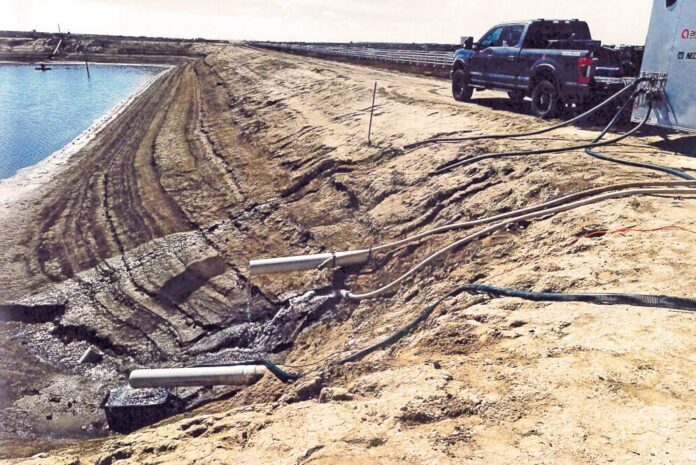
Susan Metzger, director of the Kansas Water Institute at Kansas State University, said multiple entities have all been working to extend the life of the vast underground reservoir that impacts High Plains states. One recent demonstration in July focused on feedyard water filtration and reclamation. The demonstration, which was at the Irsik and Doll Feedyard near Garden City, brought a focus on beef and dairy operations. (Pictured above is a photo from a lagoon north of Garden City, courtesy of Western Kansas Irrigation.)

A highlight was a mobile laboratory under the direction of Jas Dale, with the concentrated animal feeding operations division with Western Kansas Irrigation, Ulysses, Kansas. The mobile lab demonstrates filter and treatment processes.

Depletion of the Ogallala Aquifer has made farmers, feedyard operators and dairy operations, as well as municipalities and businesses, more aware of the need for quality water. As wells get shallower, they are more likely to have higher salinity and unwanted minerals, he said. Plus, some wells are being dug more than 700 feet underground to reach the Dakota aquifer, which is another reservoir below the Ogallala. Collectively, underground reservoirs in Kansas are known as the High Plains aquifer.

Clean water, too

Dale said water can be recycled and blended so that beef or dairy cattle have clean water for consumption. Safe water means the best opportunity for the cattle to be efficient and, even though beef and dairy cattle have different final products, the goal of the feedlot and dairy operator is to have healthy animals, he said. Healthy animals are more profitable.

Recycling water can help conserve the Ogallala, too.

Brandon Depenbusch, vice president of cattle feeding for Irsik and Doll Feed Services Inc., Cimarron, Kansas, said water reclamation is a topic gaining attention, and it offers significant benefits. The recent demonstration showcased the effectiveness of a reclamation system.

“We observed various filter types in action and the resulting product,” Depenbusch said. “While water reclamation is not a standalone solution, it is a crucial component in the journey toward a more sustainable animal agriculture. The focus of this demonstration was on reclaiming lagoon water, the drainage and runoff water from a feed yard, presenting a novel and challenging approach to feed yard water reclamation.”

Irsik and Doll is evaluating the feasibility of a water reclamation system at a couple of its locations, he said.  The system would collect overflow and drainage from its livestock watering tanks, Depenbusch said. The key is to have the underground drainage infrastructure in place to route overflow water to a common spot where a centralized reclamation system could be installed.

Not all facilities were designed with water reclamation of overflow water in mind, Depenbusch added.

“The filtered and treated water, once approved for use, would be incorporated directly into the livestock water inlet lines,” he said. “It’s important to note that quality control at the water reclamation center is a top priority, ensuring all filters work properly and that the process is safe and reliable.

Seeing a project is helpful

Clayton Huseman, executive director of the feedyard division of the Kansas Livestock Association, said his organization’s interest in this effort was to help provide an opportunity for members to see the role filtration technology can play at the feedyard or dairy. Every operation is different, so the field day gave operators an opportunity to watch the technology in action, contemplate how it might benefit their operation and discuss those options and strategies with others.

“Agriculture is always looking for opportunities to do more with less,” Huseman said. “Water through a feedyard, or stormwater retained in waste management systems is already put to multiple uses.  Filtration technology provides another opportunity.”

One of Dale’s messages is extending the resources of the aquifer takes a particular mindset and a collaborated effort. For cattle in a concentrated area, there is opportunity to recycle water and reuse it for animals. In the High Plains, where temperatures can exceed 100 degrees Fahrenheit, a dependable source of quality water is a necessity for beef or dairy cattle.

“As water quality unfortunately declines, we can put a system in a place to improve it and continue to use it,” he said, adding that the goal is not to return the quality to the state it was 60 years ago when no treatment was required.

His company also draws on technology designed and implemented in Israel many years ago. Israel is a global leader in using technology to improve water for human and livestock consumption.

The key to water sustainability is to get multiple uses out of every gallon of water extracted from the aquifer, Depenbusch said. Currently, all water tank overflow in feed yards is drained into a lagoon system, which can then be used to irrigate crops.

“Water reclamation is a means to create a ‘higher-valued’ use for each gallon of water tank overflow,” he said. “Reclaiming this water as drinking water would be a higher-valued use.”

Cost-effective

Cost-effectiveness is directly related to the availability of drinking water, Depenbusch said. “The ‘true’ value of water will only be fully realized when we cannot meet the cattle’s drinking requirements. We believe that we are responsible for being good stewards of the water we’ve been given.”

The highest value has to be assigned to every drop, and economics is an important consideration, Metzger said.

There is a high value assigned to beef and dairy sectors for feedlots and processors and also the crops that are needed to support those operations. Western Kansas communities and the state benefit from those sectors.

“We know that is a higher value of water when you have the opportunity to send it through beef and dairy cattle,” Metzger said.

In Finney County, the beef sector employs 11 times as many people, and there is 11 times the amount of revenue when compared to crop production, as an example, she said. Crop production is important to supporting the industry, but maximizing the beef industry makes economic sense.

The beef industry generates more than $165,000 per acre foot of water compared to $970 per acre foot of corn, Metzger said.

“It is about maximizing every drop of water,” she said. One reason for the presentation was to not only promote technology about re-use and conservation but educate people about the economics.  “Are we putting the water in the places where it generates the greatest economic return for the community and the state?” she asked.

Natural link

The cattle feeding industry thrives in western Kansas, Huseman said, in large part due to the feed resources made possible by irrigation.

Cattle feeding followed the crops to western Kansas, so finding ways to produce more feed, using less water while maintaining economic viability is a priority for everyone with a vested interest in Kansas agriculture,” Huseman said.

Weston McCary, technology projects coordinator with the Kansas Water Office, said dairy and feedyards only represent 2% the water usage, but they are important to an all-protein agriculture. Each head of cattle consumes about 10 to 14 gallons a day and needs high quality drinking water.

Dale said Western Kansas Irrigation works with new technologies for center pivot and subsurface drip irrigation systems to help growers with water application, and he said there are multiple ways producers can improve their efficiency. His firm is one that seeks to help them. “We just touch a lot of water,” he said.

Putting in a water-recycling system costs about $300,000 for a typical feedlot or dairy operation, although grants may be available to offset costs.

Dale said one reason he remains bullish on the systems is that public and private entities are working together as partners to seek a long-term solution.

Metzger likened the partnerships to a clearinghouse that can incubate new ideas and a place where farmers and businesses that depend on the aquifer can go to learn more and see how it might work for them.

“The best thing is to turn to trusted neighbors and trusted resources,” Metzger said.

Depenbusch recommends that producers set up a demonstration on their operation to see how the process works.

Others who were involved in the July 9 presentation included Aimpoint Research and K-State’s Southwest Extension-Research Center.

Fact Sheet: sclerotinia crown and stem rot of alfalfa

0

Sclerotinia crown and stem rot, also called white mold, can be one of the most destructive diseases of alfalfa. The pathogen that causes this disease, Sclerotinia trifoliorum, infects the alfalfa seedlings in the fall after planting under cool and moist conditions. However, symptoms may not become visible in the field until the following spring. Alfalfa fields seeded during spring are less susceptible to infection by the pathogen since stands can develop stronger crowns before the infectious period by the pathogen during fall. In contrast, alfalfa fields seeded in late summer or early fall are most susceptible to the disease. Prolonged snow cover can increase disease severity. In contrast, in dry winters, this disease is not a problem. Limited information is available for this disease in Oklahoma; however, recent reports have confirmed its presence in alfalfa fields, and as environmental conditions change, more cases could develop.

Symptoms:

Symptoms of the disease include the development of profuse, fluffy, white mycelium on the base of the alfalfa stem and diseased alfalfa stems have a bleached, dry appearance (Figure 1). Infected plants become wilted and eventually collapse in the field due to stem and crown rot, which weakens the stem (Fig. 2). The mycelium growing on the plant surface can infect and colonize neighboring plants through direct contact. The fungus also produces black, hard structures known as sclerotia, which are formed when plant nutrients decline (e.g., the plant tissue is already dead) or the environmental conditions become unfavorable (e.g., too hot or too dry for disease development) (Fig. 3). The fungus uses these structures to survive in the soil for many years in the absence of the plant host. Symptoms of this disease can also be mistaken for winterkills. Growers can distinguish between winterkills and Sclerotinia crown and stem rot by scouting the fields and looking at the base of the alfalfa stem of the wilted/dead plants. Plants infected by the disease will show the presence of white mycelia, which may also be associated with sclerotinia production (Fig. 1). Plants affected by winterkill will not have the pathogen structures associated with it. For more information on alfalfa winterkill, please visit: Frost Injury in Alfalfa.

Disease cycle:

The sclerotia of the pathogen over summers in the soil in a dormant stage. In the fall, with adequate soil moisture and decreased soil temperatures (50 – 59 °F), the sclerotia will germinate and produce structures known as apothecia and spores. The apothecia are a small mushroom-like structure, while the spores are considered the seeds of the fungus. The spores of the fungus will be blown to nearby plants, and under wet and cool conditions, the infection process in the alfalfa plants will occur. There is a potential transmission of the pathogen by the sclerotia mixed in with the alfalfa seeds, highlighting that contaminated seeds are a way of disseminating the pathogen over long distances. This is one reason alfalfa growers can experience outbreaks in areas where the disease has not been reported. Alfalfa growers must use clean and certified seeds in their farms to protect their crops from this seed contamination risk.

Disease Management

Planting strategies:

A primary cropping practice for preventing alfalfa crown and stem rot is planting the crop in the spring rather than the or late summer or fall. Warmer temperatures at these times inhibit germination of the sclerotia in the soil, allowing the plant to grow bigger and stronger when the pathogen’s spores are released in the fall. However, spring plantings in Oklahoma can be riskier than fall plantings due to dryer conditions, insects, and weed pressure. Planting only sclerotia-free seeds helps to reduce the risk of introducing the pathogen in the area and reduces fungus inoculum in the field.

Crop rotation:

The pathogen that causes Sclerotinia crown and stem rot only infects alfalfa, clover and related forage legumes. The pathogen that causes disease in alfalfa (S. trifoliorum) is not the species that attacks soybean, peanuts, tobacco, canola or vegetable crops. Field crops (e.g., corn, cotton, wheat, sorghum) and annual forage grasses (e.g., Sudangrass) may be used in crop rotation. However, the growers need to keep in mind that the sclerotia of the fungus can survive in the soil for up to 5 to 6 years without any host plant. Once the pathogen is well established in a field and the soil is highly infested with sclerotia, crop rotation may be of less value because of the long survival time of these fungi structures.

Weed control:

The pathogen can remain on volunteer clovers in a pasture indefinitely. Weeds, such as chickweed, further encourage disease by prolonging moist conditions in the canopy. Other weed hosts (e.g., pineappleweed, sowthistle, groundsel, mayweed, mustards, radish, and legumes) can also be the source of new infections. Good weed control reduces the potential survival of the fungi and helps to reduce humidity in the canopy, which favors disease development.

Canopy management:

In fields where the disease had already been reported, strategies to manage Sclero-tinia crown and stem rot include reducing the number of seeds planted per acre to decrease the humidity in the crop canopy. Because infection by spores of the fungus requires an extended period of free moisture, orienting rows parallel to the direction of the prevailing winds may be of some value in drying the canopy more quickly after rain or irrigation events. In addition, general management practices such as identifying a well-drained location for planting and timely harvesting are useful tools for disease management.

Host resistance:

A few current varieties on the market claim moderate Sclerotinia resistance, but results vary by location.

Fungicide applications:

Currently, one fungicide premix, pyraclostrobin/boscalid, is known to reduce the severity of Sclerotinia crown and stem rot disease and increase yield in the first cutting. Mixing two active ingredients with different modes of action (pyraclostrobin and boscalid) is more expensive but provides better disease control and should slow the development of resistant Sclerotinia isolates than using a strobilurin (pyraclostrobin or azoxystrobin) by itself. Please contact your county Extension educator for more information on fungicide applications.

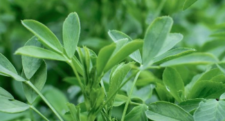
Characteristic symptoms of Sclerotinia crown and stem rot, with the development of profuse, fluffy, white mycelium on the base of the alfalfa stem. Diseased alfalfa stems have a bleached, dry appearance. Infected plants become wilted and eventually collapse in the field due to stem and crown rot, which softens and weakens the stem.


Nebraska water transfer could introduce invasive carp to Kansas rivers and lakes

0

Kansas Gov. Laura Kelly and Attorney General Kris Kobach sent a bipartisan letter to Nebraska Gov. Jim Pillen objecting to a proposed water transfer between the Platte and Republican rivers that Kelly and Kobach say could lead to invasive species of carp in Kansas waterways.

“The introduction of these fish will cause irreparable ecological harm to native species and economic and noneconomic harm to the use and enjoyment of these waters, including sport fishing, commercial fishing, and recreational boating. It should be noted that Milford Reservoir is regarded as Kansas’s premier fishing destination, and many Nebraskans enjoy it every year,” Kelly and Kobach said in the joint letter.

The letter is in response to an application by the Central Nebraska Public Power and Irrigation District and the Platte Republican Diversion Interlocal Agreement Partners made up of several natural resource districts. It is before the Nebraska Department of Natural Resources.

If approved, it would allow 150 cubic feet per second of excess flow from the Platte River Basin into the Republican River Basin through a series of canals and pipelines. The proposal is designed to meet river flow minimums in an interstate water compact with Kansas.

Why Kelly and Kobach oppose it

Kansas officials have opposed the idea of the water transfer since it was originally proposed in 2018. They worry that it would make a path for invasive bighead and silver carp that have been documented in the Loup, Platte and Elkhorn rivers.

If these invasive species have a path to the Republican River, it could allow the fish to enter the Harlan County Reservoir in Nebraska and then the Lovewell and Milford reservoirs in Kansas. Milford Reservoir is popular among fishermen regionally.

“As an avid fisherman, I’m one of thousands of Kansans who enjoy our first-class lakes and waterways for fishing,” Kobach said. “I will use every tool available to keep these invasive species from harming Kansas waters.”

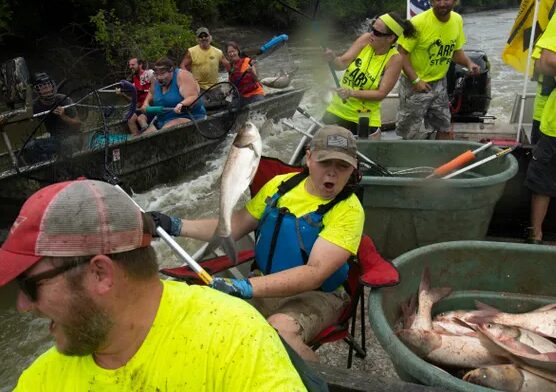
The carp have damaged other waterways, and the knowing importation, possession or transportation of the fish is outlawed by the federal government. In Lake Yankton in Nebraska invasive carp invaded and decimated native fish populations.

“After flooding in 2011, the lake was infested with invasive carp, and by 2014, they composed over ninety percent of the fish in the lake, necessitating the use of poison to eliminate all fish in the system,” Kelly and Kobach said.

Why some Nebraskans opposed it

The project has also been controversial in Nebraska, where some natural resource districts said the diversion could lead to water rights not being delivered to its patrons. The dispute made it to the Nebraska Supreme Court in October, where it sided with the proposed water transfer.

“I’m so pleased that the Justices agreed that our project has no potential to harm existing water right holders,”, said John Thorburn, manager of Tri-Basin Natural Resources District (NRD), after the Nebraska Supreme Court decision.  “Our project has always been intended to only divert water that no water user in the Platte Basin can use. We simply want to beneficially use water that would otherwise flow out of Nebraska.”

Proponents say the project will deliver more water to Nebraskans and generate power through hydroelectric generation.

In May, the Nebraska Department of Natural Resources held a hearing on the proposed transfer, where Kansas officials also voiced concern about the transfer.

Though the proposal is under con sideration, there is no set timeline on when a decision will be made on its approval.

As reported in the Topeka Capital Journal