
“Keeping farm machinery operating in the field when work needs done is essential to profitability.”
When tractors and small line equipment were first produced, farmers could often do the repairs personally.
With rapidly increasing technology that’s often not the case nowadays. Fixing a farm machinery breakdown requires a high level of ability, often requiring a computer program to figure it out.
Then, sometimes the problem still can’t be solved, forcing technicians to call the factory or other upper-level knowhow for help.
On top of that issue, farm equipment repair businesses typically have long waiting-lists of machinery needing repaired.
Sometimes, that can be up to several weeks. Plus, most repairs must be done in the main shop where the computers can be utilized.
Situations do arise infrequently when a repairman will come to the field to fix machinery, but not often.
Fortunately, when this ranching operation was getting started, Dad had the ability to fix most of the problems. He typically had natural ability and learned by doing, but that would not be the case today.
His son never had any mechanical ability period with “It won’t start” a frequent response to any breakdown.
Uncertain why the high school boy was teamed up with his cousin in the state fair small engine trouble shooting contest. Despite the teammate’s extensive knowledge, that gas engine never would start.
A small engine repair class was required for agricultural education students in college. There was an old lawn mower in the garage that wouldn’t start.
Dad suggested his son take it as a college class project to see if he could get the mower running again. A classmate didn’t have an engine to repair so he volunteered to get credit for assisting with fixing the mower.
The engine was disassembled with all parts on the bench without a clue how they would all go back together.
The knowledgeable college professor was very patient helping his students with the project. Believe it or not, when the engine was installed back on the lawnmower, it started and ran to pass the course.
Excited to get back to the ranch so Dad could try out the mower, “It wouldn’t start.” The uptown mechanic never got it running again either.
Reminded of Isaiah 58:12: “People of faith are led to fix things that are broken.”
+++ALLELUIA+++
XVIII–29–7-15-2024
Equipment Repair Major Ordeal

Risks in Peace
In September we will mark the 23rd annual memorial for the 9/11 attacks. It also will be 30 years since Yitzhak Rabin and Yasir Arafat signed the Oslo peace accords that included creation of a Palestinian state.
The accords have since gone dormant and our policies in the Middle East have reignited furious passions ‒ a reminder that the risks in war are no greater than the risks in peace.
For two generations, the United States has gambled in the far, oil-rich deserts where war and oppression have become the rule and the headline. We have waffled with Israel on the most sensitive flash points of Israeli-Palestinian conflict. We have allowed the International Criminal Court to be smeared and threatened. Under Trump, we blessed the contested city of Jerusalem as the Israeli capital and ended our long-running aid for Palestinian refugee camps. Under Biden we fret over the slaughter in Gaza and the West Bank.
As Israel’s grudging partner, we are a co-conspirator in a region where we continue to demonstrate our ignorance of the land, its cultures, its complex history. Small wonder that we are hated there yet.
Over the decades we have sent to that region nuclear capability. We have sold aircraft and arms and extended credit. We have offered industrial know-how and technical assistance and we have invited investment opportunities.
And all of this for nations that with the exception of Israel are so oil-rich that they could, if inclined, restart heavy pressure on the world petroleum market. (Israel has its own treasury here.)
This has been a high price to pay for our version of group therapy. And it’s an even higher price now, because the Palestine question remains unsettled in a region ripe with the potential for all-out war.
*
In earlier years, we paid for gala desert receptions for our dignitaries while buying options on oil, although on an open market. We thought we were buying a new sphere of influence and shutting out the Russians.
We set loose domestic drillers and invaded Iraq to recover and protect its vast oil reserves. Against the global turn to cleaner fuel and alternative energy sources, Washington remains handicapped by repeated failures to engage and understand the Arab region.
The Middle East holds historic attraction for empire builders. American fits and twitches recall the British spasms as the footings of its desert empire began to collapse. The French, the Turks, and Russians also lost their shirts trying to control the region. We were at war there for 20 years at a cost of thousands of lives – Americans, innocents, insurgents – and, at last count, more than $5 trillion. And yet there is no end in sight to the bloodshed or to the hemorrhage of dollars, euros and rubles.
As America buys peace and power with U.S. Treasury borrowings and tax cuts for arms manufacturers, the national debt tops $30 trillion.
This is no fault of Trump’s Tillerson or Pompeo, or Biden’s Blinken. So long as presidents and the Congress want it this way, our few remaining diplomats try to hold things together. Even with our full and mortgaged pockets, it remains hard to bargain with the wily Arabs and their cousins across the Red Sea.
Does America want it this way at the price of inflation at home, the peace abroad falling away, our power growing illusory against the Russians and Chinese?
If you think this has nothing to do with the home front, visit a gas station, a
grocery store, a car lot, a farm export office.
Congress aside, Americans really haven’t come to grips with this question. The problems are too complicated, too fragmented, too rarely explained in full, clear and accurate terms.
Nor is the question often put with any frankness. It is far easier to be concerned with a president’s age, or where our cars are made, whether the fuel for them comes from oil or lithium. We should worry whether there will be any fuel at all. We head toward catastrophe, and a good part of the globe could burn away before the next anniversary of Nine-Eleven.
Champions Named At Santa Fe Trail Ranch Rodeo
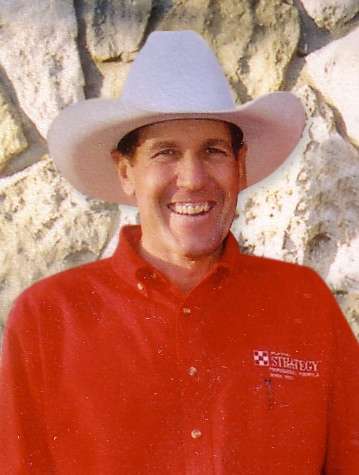
By Frank J. Buchman
Cowboys from throughout the Midwest came to Council Grove for the Santa Fe Trail Ranch Rodeo sponsored by the Morris County Youth Rodeo Association.
In the Working Ranch Cowboys Association (WRCA) competitions with 15 teams Friday and Saturday evenings, the Rocking P Cattle/S&P Cattle team from Latham was declared champion for the combined scores from both performances.
Hat Creek Cattle Company, Mount Vernon, won the WRCA Youth Ranch Rodeo with the top total points out of eight teams.
Both top teams are now qualified to compete in their respective divisions at the 29th annual World Championship Ranch Rodeo in Amarillo, Texas, November 14-17.
Members of the Rocking P/S&P team are Chris Potter, Colton Potter, Carlee Potter, Justin Peterson, Jake Peterson, and Dillon Sherrick.
The Hat Creek Cattle youth team is composed of Blaine Roberts, Kasen Brewer, Luke Campbell, Jared Campbell, and Branch Horn.
There was a tie for second place in the two-performance open rodeo between Lonesome Pine Ranch, Cedar Point, and Buford Ranches Rock Creek Division, Adair, Oklahoma. The teams split the winning payback.
Riding for Lonesome Pine Ranch were Bud Higgs, Troy Higgs, MaKenzie Higgs, Frank Higgs, Bob Krueger, and Brett Cloud.
Buford Ranches team members include Ty Davenport, Slade Davenport, Lucas Langenderfer, Ty Scott, Ethan Hill, and Gabe Wiedel.
Fourth place team was Beachner Brothers Livestock/Mill Creek Ranch, Erie and Fort Scott, with members including Calvin Kendall, Cody Kendall, Caden Kendall, Coy Hyer, Logan Delinte, and Gary Herrin.
Riding for the open Hat Creek Cattle Company team, Blaine Roberts was named recipient of the Top Hand Award.
Sooner Cattle, Pawhuska, Oklahoma, was second in the youth ranch rodeo with team including Ian Dyck, Dax Godsey, Brodie Godsey, Tagen Carney, and Tripp Carney. Since the first place junior team Hat Creek Cattle had already qualified for the national finals rodeo, Sooner Cattle became eligible to compete.
Third place junior team was California Creek Ranch, Delaware, Oklahoma, with team members Owen Dean, Brody Grisgby, Nathan Dean, Casden May, and Briar Horn.
The 3:16 Ranch team composed of Corbin Bailey, Dylan Chrisman, Wyatt Walker, Jaden Bartosch, and Clancey Jones placed fourth in the junior ranch rodeo.
CUTLINES
Representing the Rocking P Cattle/S&P Cattle championship team from Latham at the Working Ranch Cowboys Association Santa Fe Trail Ranch Rodeo in Council Grove were Justin Peterson, Jake Peterson, Chris Potter, Colton Potter with the new Morris County Youth Rodeo Association Queen Rylee Williams. (Amy Allen photo)
Hat Creek Cattle Company, Mount Vernon, won the Santa Fe Trail Working Ranch Cowboys Association Youth Ranch Rodeo at Council Grove. (Amy Allen photo)
Riding for the open Hat Creek Cattle Company team, Mount Vernon, Blaine Roberts was named recipient of the Top Hand Award at the Santa Fe Trail Ranch Rodeo at Council Grove. (Amy Allen photo)
KU News: KU student awarded Astronaut Scholarship two years in a row

From the Office of Public Affairs | http://www.news.ku.edu
Headlines
KU student Audrey Rips-Goodwin awarded Astronaut Scholarship two years in a row
LAWRENCE — Audrey Rips-Goodwin, a senior in chemistry and mathematics from Overland Park, is the University of Kansas’ 2024 Astronaut Scholar — receiving an award of up to $15,000. A graduate of Blue Valley Southwest High School, Rips-Goodwin was also named an Astronaut Scholar in 2023. This year the foundation awarded 71 scholarships to students from 48 universities across the nation.
Globe-trotting trumpet professor featured in Spanish Olympics fanfare
LAWRENCE — Musical talent, hard work and networking have taken Stephen Leisring, professor in the University of Kansas School of Music, around the world — recently to Madrid, where he played first trumpet on a piece for Radio Television Española’s upcoming coverage of the Paris Olympics.
New edition of book updates changing world of international trade law in free, open-access format
LAWRENCE — International trade law has transformed rapidly since 2019. A University of Kansas law expert is addressing those changes — including U.S. trade policy following the 2020 presidential election and Russia sanctions — with a new edition of his textbook that for the first time is available free of charge in an open-access format. “International Trade Law: A Comprehensive E-Textbook, Sixth Edition,” by Raj Bhala, Brenneisen Distinguished Professor at the KU School of Law, is available through KU ScholarWorks.
I2S scientist receives NSF award for research focused on cardiac tissue ablations
LAWRENCE — Suzanne Shontz, computational scientist with the University of Kansas School of Engineering and Institute for Information Sciences, is part of a team of researchers that received $283,686 from the National Science Foundation to develop a scientific computing platform for characterization and monitoring of cardiac tissue ablations. The project will also feature educational and outreach initiatives to train the next generation of scholars and researchers.
Full stories below.
————————————————————————
Contact: Erin Wolfram, Office of Fellowships, 785-864-2308, [email protected]
KU student Audrey Rips-Goodwin awarded Astronaut Scholarship two years in a row
LAWRENCE — Audrey Rips-Goodwin, an Overland Park senior in chemistry and mathematics, is the University of Kansas’ 2024 Astronaut Scholar — an award of up to $15,000. Rips-Goodwin was also named an Astronaut Scholar in 2023.
“The Astronaut Scholarship Foundation has provided me with support and guidance for my academic and research endeavors. I am extremely honored to be awarded the Astronaut Scholarship and grateful to be a part of such an amazing community,” said Rips-Goodwin.
The Astronaut Scholarship was founded in 1984 by the six surviving members among the seven astronauts who were part of the Mercury program as a means to encourage students to pursue scientific endeavors. Astronauts from the Mercury, Gemini, Apollo, Skylab and Space Shuttle programs have also joined the foundation.
This year the foundation awarded 71 scholarships to students from 48 universities across the nation. In August, Rips-Goodwin will attend the Innovators Symposium & Gala in Houston, where she will network with other scholars and be recognized by the foundation. Students interested in applying for the award in future years should contact the Office of Fellowships by email.
Rips-Goodwin is the daughter of Cheryl Rips and Stanley Goodwin and is a graduate of Blue Valley Southwest High School. After completing her undergraduate degrees, she plans to pursue a doctorate in computational neuroscience to study addiction and obesity.
After transferring to KU from the University of South Carolina in 2022, she joined Tera Fazzino’s lab and determined the accuracy of reported energy content of hyper-palatable foods, combining her research interests in both chemistry and psychology, leading to two presentations. In 2022, she was named a Kansas Idea Network of Biomedical Research Excellence program scholar to conduct independent research.
In summer 2023, Rips-Goodwin participated in a National Science Foundation Research Experience for Undergraduates in the Department of Mathematics at Lafayette College in Easton, Pennsylvania, where she worked on sensitivity analysis of agent-based models, or ABMs.
At KU, Rips-Goodwin founded and serves as the president of the Pop-Science Book Club and previously was a student ambassador for the College of Liberal Arts & Sciences. She was also named a Bricker ChemScholar and is a recipient of the Frances H. Gayetta Lensor Scholarship awarded to an exceptional female student majoring in chemistry, the Steve and Susan Snyder Chemistry Award, and the Joan Kirkham/May Landis Scholarship from the Department of Mathematics. In spring 2023, she was a teaching assistant for Engineering Physics II taught by Sarah LeGresley Rush. Outside of research and academics, Rips-Goodwin serves as a weekend volunteer at Children’s Mercy Hospital.
-30-
————————————————————————
The official university account for X (formerly Twitter) is @UnivOfKansas.
Follow @KUnews for KU News Service stories, discoveries and experts.
————————————————————————
Contact: Rick Hellman, KU News Service, 785-864-8852, [email protected], @RickHellman
Globe-trotting trumpet professor featured in Spanish Olympics fanfare
LAWRENCE – How does a trumpeter from Kansas wind up in Madrid leading an orchestra section recording an anthem for use in Spain’s television coverage of the upcoming Summer Olympics?
The old joke about practice has some relevance, of course. But Stephen Leisring, professor of trumpet at the University of Kansas, often points to a map of the world on his office wall covered with push pins when prospective students and their parents ask where a career in the arts can lead.
The pins represent places the professor has visited, and they show — even before Leisring became associate dean for global engagement and special performance projects for the School of Music in 2023 — that the trumpet has taken him to 20 countries on five continents.
“I didn’t plan any of this,” Leisring said. “It just happened through hard work and getting the right guidance. I truly believe you can make anything happen. Every generation has had to adapt. But if you’re really passionate, you can find ways to do it.”
A native of Connecticut and graduate of the University of North Texas and New York’s Mannes School of Music, Leisring said the twig of his internationally focused career was bent when he took part in a New York City audition immediately upon earning his master’s degree. He won an orchestra job in the Canary Islands, which is a part of Spain located just off the coast of Africa.
During 14 years with the Orquesta Sinfónica de Tenerife, Leisring learned Spanish and taught private lessons on the side, even as the orchestra traveled around Europe performing and recording.
When he returned to the states and embarked upon full-time teaching at KU in 2003, Leisring maintained and extended some of the connections he formed overseas.
Leisring was attending the annual International Trumpet Guild conference in May and June 2023 in Minneapolis when he met Marcos Garcia, who is a friend of a friend and who plays in the Madrid Symphony Orchestra. They hit it off.
“He invited me, since I was on sabbatical, to come play a three-and-a-half-week opera with him in the Royal Theatre in Madrid, and it was just phenomenal,” Leisring said. In March, the group performed rarely heard works by Francis Poulenc and Arnold Schoenberg to great acclaim, he said.
That led, on his day off, to another gig offered to Leisring by another Spanish musician he had met in Minneapolis, David Pastor.
“He found out I was going to be in Madrid, and I actually had a day off in between the operas,” Leisring said. “He was doing a recording session with the RTVE, the Radio Television Española, Orchestra. And it was his piece. He was the conductor. And he invited me to come play first trumpet on this Olympic fanfare that he was commissioned to write.”
Not only was the sound of the fanfare recorded for use in RTVE’s coverage of Spain’s participation in the Paris Olympics, but the musicians were recorded on video from every possible angle during the long session, Leisring said, presumably for interstitial use in RTVE broadcasts.
Leisring said Pastor “is already well known in Spain, but he’s becoming really well known outside of Spain, too, because of things like these performances. It was an honor for me to get to go there and play on this.”
Leisring then leveraged his personal opportunity to pursue his mission as associate dean — extending the KU School of Music’s relations with university-level yet freestanding conservatories in Europe and elsewhere. It’s the focus of his sabbatical year.
“I visited seven or eight conservatories this year already, just trying to make personal student and faculty connections,” Leisring said. “There were four or five schools in Poland and in Estonia, and I visited several in Spain when I was there.
“The kind of exchanges these relations make possible are very important. They change people’s lives, and so I want to try to do more of that for our students.”
-30-
————————————————————————
Subscribe to KU Today, the campus newsletter,
for additional news about the University of Kansas.
http://www.news.ku.edu
————————————————————————
Contact: Mike Krings, KU News Service, 785-864-8860, [email protected], @MikeKrings
New edition of book updates changing world of international trade law in free, open-access format
LAWRENCE — International trade law has transformed rapidly since 2019. A University of Kansas law expert is addressing those changes with a new edition of his textbook that for the first time is available free of charge in an open-access format.
Vaccine nationalism catalyzed by the COVID-19 pandemic gripped the globe, while new political regimes took power that challenged the dominant free trade consensus. Social justice movements pressed for enhanced human rights provisions in trade treaties, and the World Trade Organization dispute settlement system saw the demise of the Appellate Body. Those were among the shifts to inspire the publication of “International Trade Law: A Comprehensive E-Textbook, Sixth Edition,” by Raj Bhala, Brenneisen Distinguished Professor at the KU School of Law.
The “E” is a significant first. The new edition was published open access via KU ScholarWorks, KU’s online institutional repository of scholarly work by KU faculty, staff and students managed by KU Libraries.
The edition spans eight volumes over 188 chapters and more than 6,500 pages. The volumes can be used flexibly, such as in combination for basic and advanced trade courses, or as stand-alone books for specialty courses. The text explains and analyzes changes in the field, such as U.S. trade policy following the 2020 presidential election, the new iteration of the North American free trade agreement, the worsening Sino-American trade war, ramifications of Brexit, efforts by Prime Minister Narendra Modi to liberalize India’s trade policies, the proliferation of trade measures against Iran following the end of the nuclear deal, new U.S. and European Union law forced labor prohibitions concerning merchandise or companies associated with China’s Xinjiang Province and more.
“We can’t forget Russian sanctions,” Bhala said in reference to actions taken following Russia’s invasion of Ukraine. “In Volume Four, titled ‘National Security,’ there are four chapters on Russian sanctions, which didn’t exist 2019. In Volume Eight, ‘Growth, Development, and Poverty,’ there are four new chapters on Indian trade issues. Across all eight volumes, a good deal of attention is paid to social justice issues, including how some free trade agreements now address rights for women and LGBTQ individuals. Across 32 years, since the first edition, the conceptual and practical patterns of world trade law have altered. This book says, ‘Here is where we were, here’s where we are now, and here’s where we’re headed.’ It encompasses the grand sweep of paradigmatic shifts in world trade law. Indeed, to help appreciate this sweep, Volume One, ‘Interdisciplinary Foundations,’ has three new chapters on international relations theory.”
The book’s format has changed since the previous version as well. Making it available via KU Scholar Works and SSRN eliminates the hefty price tag and simultaneously increases the work’s value.
“The value of information, regardless of format, comes from its ability to meet two criteria: reliability and shareability. Raj Bhala is one of the world’s leading scholars on international trade and has devoted his career to creating this text. The reliability goes without question. This leaves us with the value that come from shareability. By removing the financial barrier that comes with traditional publishing, we have made this text as valuable as we possibly can,” said W. Blake Wilson, assistant director of Wheat Law Library at KU.
Bhala praised colleagues in KU Libraries and KU Law’s Wheat Law Library who encouraged the open format publication and addressed the challenges of making a document the size of “International Trade Law” openly available.
“I’ve had students from across America and around the world say, ‘I want to take your class and buy your book, but I can’t afford it.’ When my library colleagues suggested publishing it via open access, I thought, ‘Why not? Let’s try it,’” Bhala said. “It’s a total win-win. All the reference and teaching materials are there. I think KU’s leadership in open access is outstanding. As far as I know, it’s one of the only law textbooks available open access, certainly in trade. This platform – KU ScholarWorks – helps ensure the international trade bar is open, inclusive and meritocratic.”
KU was the first public university to pass a faculty open access policy in 2009 that asserts faculty rights to make their published scholarly articles openly accessible, according to Marianne Reed, digital publishing and repository manager in KU Libraries.
“I applaud Dr. Bhala’s commitment to giving students and scholars open access to high-quality textbooks free of charge, and ScholarWorks will make sure that they are available for many years to come,” Reed said. “I hope that others will follow his lead in making their scholarship openly available.”
Students affected by the growing student debt crisis were top of mind in making the latest edition freely available.
“Excessive textbook costs pose a significant challenge for law students, so efforts like this represent a tangible way to help students focus more on the course material and less on their book budget,” said Chris Steadham, director of Wheat Law Library. “Legal publishing tends to value tradition and is not often first to adopt the latest fad. However, it is now clear that open access is here to stay and that it is a more-than-viable alternative for delivering scholarly information. This project is an excellent example of this evolution in legal education. When we have an internationally renowned professor publishing a leading textbook in this format, that reinforces the benefits of open access and promotes it as something that others might want to consider when they author a new textbook or a new edition.”
-30-
————————————————————————
Don’t miss new episodes of “When Experts Attack!,”
a KU News Service podcast hosted by Kansas Public Radio.
https://kansaspublicradio.org/podcast/when-experts-attack
————————————————————————
Contact: Andrew Perkins, Institute for Information Sciences, 785-864-2284, [email protected], @I2SResearchKU
I2S scientist receives NSF award for research focused on cardiac tissue ablations
LAWRENCE — A computational scientist with the University of Kansas School of Engineering and Institute for Information Sciences (I2S) is part of a team of researchers that received $283,686 from the National Science Foundation to develop a scientific computing platform for characterization and monitoring of cardiac tissue ablations.
KU’s Suzanne Shontz, whose expertise is in parallel scientific computing with a focus on mesh generation and numerical partial differential equations (PDEs), will join principal investigator Cristian Linte, a biomedical image computing expert with the Rochester Institute for Technology, and partners to provide an understanding of the physiological mechanisms that govern heat transfer into biological tissues.
This understanding, according to the researchers, is essential to advancing research in developing less invasive treatment options than cardiac ablations, which convert abnormal heart tissue to scar tissue, so that abnormal heart electrical signal pathways are interrupted.
With as many as 50% of ablation patients experiencing reoccurrence of cardiac arrhythmias, the development of noninvasive methods to resolve the abnormal cardiac electrical signals promise to reduce these numbers. Although the project focuses on providing a solution to a particular problem, the methods and products developed to do so are expected to have broader applications. For instance, a better understanding of the physiological mechanisms that govern the transfer of heat into biological tissues by modeling and quantifying tissue responses to thermal energy could potentially lead to future tools to better guide and monitor cardiac ablation therapy.
“In fact, on the PDE solver side, uses could be even more expansive than for just medical purposes,” Shontz said. “Discoveries in heat transfer technology could be applied to mechanical or aerospace applications, for example.”
Joining Linte and Shontz on the NSF Computational and Data-enabled Science and Engineering Grant is RIT mechanical engineer Satish Kandlikar. In addition to the institutional support provided by I2S and RIT, the group also will work with cardiologists at the University of Rochester Medical Center and an ablation modeling expert at Medical University of South Carolina.
The project will also feature educational and outreach initiatives to train the next generation of scholars and researchers.
Shontz, who is also KU’s center director for the Mathematical Methods and Interdisciplinary Computing Center and the engineering school’s associate dean for research and graduate programs, will incorporate the mesh generation concepts and rapid PDE solvers into her parallel scientific computing course. Plans also include workshops to engage K-12 students on computational bioengineering topics and a summer camp to attract a diverse group of students, along with a one-day WE’re in Motion event for incoming female engineering students.
-30-
————————————————————————
KU News Service
1450 Jayhawk Blvd.
Lawrence KS 66045
Phone: 785-864-3256
Fax: 785-864-3339
http://www.news.ku.edu
Erinn Barcomb-Peterson, director of news and media relations, [email protected]
Today’s News is a free service from the Office of Public Affairs
KU News: KU researchers highlight how $80.6 billion in federal spending supports individuals with intellectual and developmental disabilities nationwide

From the Office of Public Affairs | http://www.news.ku.edu
Headlines
Contact: Jen Humphrey, Life Span Institute, 785-864-6621, [email protected], @kulifespan
KU researchers highlight how $80.6 billion in federal spending supports individuals with intellectual and developmental disabilities nationwide
Editor’s note: Individual state profiles of federal spending to support individuals with intellectual and developmental disabilities are available through the State of the States website and may assist in localizing figures. Project director Shea Tanis, an expert on intellectual and developmental disability funding and supports, is available to speak with reporters. Contact Tanis by email. All graphics are available as individual files for download. This release is also available as a pdf with maps and graphics.
LAWRENCE — Twenty-five years ago, the U.S. Supreme Court’s landmark decision in Olmstead v. L.C. found the unjustified segregation of people with disabilities violated the Americans with Disabilities Act. The decision ultimately influenced the amount and distribution of federal funds to support individuals with intellectual and developmental disabilities, which now totals $80.6 billion.
In recognition of the anniversary of the 1999 decision, which was celebrated June 20 by the U.S. Department of Health and Human Services, University of Kansas researchers shared information about how federal funds are distributed to each state to help individuals, families and caretakers.
The figures are a part of the work conducted by the State of the States in Intellectual and Developmental Disabilities Ongoing Longitudinal Data Project of National Significance. The project, now based at the KU Life Span Institute, has tracked federal spending in this area for more than 40 years and provides governments and the public with state-by-state data and comparisons.
Project director Shea Tanis, associate research professor at the KU Center on Developmental Disabilities, and research team members explored what the public receives with its investment and broke down the $80.6 billion spent in fiscal year 2021, the latest year for complete figures (pdf). Tanis, who is available to help journalists and other media members further understand the data, is nationally recognized for her expertise in applied technology solutions, cognitive accessibility, and advancing the rights of people with cognitive disabilities to access information and technology.
“The investments in intellectual and developmental disabilities services and supports across the nation are a measure of our conscience and commitment to the disability community,” Tanis said. “It demonstrates our expectations of full-participation, equal opportunity, economic self-sufficiency and independent living outlined in the Americans with Disabilities Act.”
The following figures and accompanying links to individual graphics and maps break down spending and effects nationwide. A PDF with all graphics is also available.
An overview of IDD funding: How much does the public invest? (map of distribution)
An estimated 7.57 million people in the U.S. have intellectual and developmental disabilities (IDD). Many live in family homes and community-based settings.
The federal government invests in areas such as supported living, family supports, personal assistance, supported employment and other programs equal to about 0.1% of the $6.8 trillion federal budget for 2021 reported by the Congressional Budget Office, or about $80.6 billion.
In FY2021, 87% of the total public funding for IDD services was distributed through Medicaid-related services.
As a percentage of each state’s budget (map), supports for intellectual and developmental disability services make up between less than 1% and up to 6% of any state’s budget, or an average of 2.57%.
How has funding for IDD supports and programs shifted?
Funding has pivoted away from congregate settings to home and community-based care (image). Before 1981, the United States largely provided comprehensive long-term care in institutionalized or congregate settings. In the decades since, states have greatly increased investment in home and community-based services, or HBCS.
In 1981, the U.S. government began to allow waivers for HBCS to allow recipients to receive care in community and residential settings as an alternative to institutions. By 1989, states began investing more money in community supports than institutional or segregated settings for people with IDD.
Then in 1999, the Supreme Court’s decision on Olmstead v. L.C. found that unnecessary institutionalization to be a violation of civil rights.
By FY2021, the U.S. spent $73.6 billion dollars for community living and only $7 billion for institutions (graph).
A breakdown of selected IDD Support & Services
Details about the distribution and total support for supported living, family support, personal assistance and supported employment are described below.
Supported Living Services: $9.1 billion in FY2021 (map)
Home and community based services (HCBS) provide opportunities for Medicaid beneficiaries to receive services in their own home or community rather than in institutions or other isolated settings.
In 2021, more than 7 out of 10 (72%) of people with intellectual and developmental disabilities lived with family members. The HCBS program has grown nationally to support 894,000 people and families across the United States.
Family supports (map)
$9 billion
Family supports are community-based services provided to families of children or adults with an intellectual or developmental disability living in the family home, with the family as the primary beneficiary.
There are two categories of family support: financial subsidy/cash payments to families and general family support payments including respite care, family counseling, equipment, architectural adaptation of the home, parent education and training, or other state-designated categories of family support. A state agency may provide vouchers, direct cash payments to families, reimbursement or direct cash payments to serve providers.
In 2021, while 72% of people with intellectual and developmental disabilities lived with family members, only 10% of all caregiving families received supports from state intellectual and developmental disabilities state agencies.
Personal assistance (map)
$4.66 billion
Personal assistance funds provide adults with intellectual and developmental disabilities the necessary level of support to remain in their homes. Some people use personal assistance to support daily activities such as getting up and ready for work, bathing, dressing, cooking, cleaning or running errands, while for others it can be support in the workplace. Personal assistance includes guidance toward more independence and arrangements that offer the participant self-direction.
Supported employment (map)
$860.80 Million
There were 536,771 work participants funded through federal or state employment support in FY2021. Of these, 22% were in supported employment programs or services. This is down nearly 14% from a total of 622,297 work participants in 2019.
Employment investments include support for obtaining and retaining what is known as competitive integrated employment, or CIE. In CIE, the individual is compensated at or above minimum wage comparable to pay to employees without disabilities performing similar duties, receives similar benefits, interacts with other individuals without disabilities and has similar opportunities for advancement.
Additional highlight: technology for IDD services and support
Technology solutions (image) allow for the inclusion of multifunctional and diverse technologies. This can include smartphones — where a single feature may mediate an impairment, but also to achieve other goals such as personal communication, education and civic engagement.
Less than 1% of funding from IDD spending by states is used for technology solutions.
-30-
————————————————————————
KU News Service
1450 Jayhawk Blvd.
Lawrence KS 66045
Phone: 785-864-3256
Fax: 785-864-3339
http://www.news.ku.edu
Erinn Barcomb-Peterson, director of news and media relations, [email protected]
Today’s News is a free service from the Office of Public Affairs
