Thursday, February 5, 2026
Home Blog Page 362

Gas taxes

0
john marshal

When it comes to car travel, Europe isn’t like us in at least two ways ‒ size and expense. Vehicles there are small and stingy on fuel because driving them is expensive. Fuel prices there are double or more the price in America.

The cost there may be softened by announcing fuel prices by liter, but converted to gallons ‒ 3.785 liters per gallon ‒ the price is an eye-opener. In Germany the recent price converted from the Euro (€) was $2.02 per liter. By the gallon, $7.65.

Trading Economics, which reports and analyzes economic data from nearly 200 countries, shows European gasoline prices in dollars. A liter in Denmark at $2.27 means a gallon for $8.59.

In Sweden, $6.55 per gallon. Among other prices: Switzerland, $7.87; France, $8.02; Norway, $8.10; United Kingdom, $7.19.

Think on it: In Paris, a 20- gallon fill ‒ not uncommon here ‒ would cost $160. In Copenhagen, $172. Stockholm, $131.

And taxes: The EU minimum tax is $1.36 per gallon (36 cents per liter) but in most countries it’s much higher. The Netherlands currently has the highest per-gallon tax at $3.10. Next are Italy ($2.76), Finland ($2.73), Greece ($2.65), France ($2.57) and Sweden ($2.54).

This is why Europeans drive small, if at all, and why ground transportation by rail or bus is common. Electric vehicles there are increasingly popular.

*

The American discussion of switching from internal combustion to battery-powered vehicles has been vague on how to pay for the monstrous number of charging stations needed to refuel them. The $1.2 trillion American infrastructure program takes in a lot ‒ highways, bridges, airports, railroads, locks and dams, tech, telecommunications. It includes $550 billion for new programs and ought to kick in for technical training to repair and service electric vehicles.

Meanwhile the federal tax on gasoline lies dormant. Tying higher gas taxes to infrastructure programs is logical, but in today’s Congress it’s a non-starter. There are notions that the federal gasoline tax could provide at least partial funding for improvements. Each time the idea is floated it is quickly stifled in Congress and a White House scrambles to reassure us that it did not plan to ask for a federal gas tax increase to pay for a president’s idea.

In recent decades, inflation has severely weakened the purchasing power of the fuel tax. Construction and maintenance costs are up, vehicles are more fuel-efficient. A tax tied to inflation would rise with the cost of doing business. It would likely prompt the matter of state tax increases to share the costs.

*

The current federal gasoline tax is 18.4 cents per gallon; the federal tax on diesel fuel is 24.4 cents. The federal taxes have not been increased since 1993.

The Kansas tax on gasoline is 24.03 cents and 26.03 on diesel – last raised a penny each, in 2004. (Total state-federal tax on gasoline in Kansas is 42.8 cents per gallon, and 50.4 cents for diesel).

In 1990, when the Kansas tax was raised from 11 to 15 cents, the state began a series of further increases. Each year it increased a penny until 1993 (18 cents for gas, 20 cents for diesel). This was to help finance two massive highway improvements projects ($11 billion and $14 billion) in Kansas enacted in the late 1980s and mid-1990s. Federal money also was involved.

Kansas gas and diesel taxes raise roughly $900 million per year – $90 million for every nickel in taxes – for the state highway fund.

Federal fuel taxes raise $62 billion, which goes to the federal highway trust fund and is allocated to states.

Since 1993 the federal tax has stayed still; Kansas fuel taxes increased 33 percent between 1993 and 2004.

Cheap fuel is no incentive to go green in America. In this era of strident political divide, necessity has little to do with the value of a federal program, or plans to shore up a frayed infrastructure. Or have electric vehicles.

Beef Grades 101: Select, Choice or Prime?

0

Texas A&M Meat science expert provides tips to pick out the perfect steak.

Choosing the perfect cut of meat for backyard grilling and barbecue needs is no small task.

When selecting beef at the grocery store, shoppers often face decision fatigue from refrigerated shelves stocked top to bottom with different cuts of meat, all classified by varying beef grades.

Beef grades explained

There are eight beef grades, also known as quality grades, and five yield grades. Understanding at least three of these grades is important because they are related to quality traits as well as tenderness, juiciness and flavor that affect a consumer’s eating experience, according to the U.S. Department of Agriculture, USDA.

The most common grades of beef sold in your local grocery store or restaurants include USDA Select, Choice or Prime. Ray Riley, Rosenthal Meat Science and Technology Center manager in the Texas A&M Department of Animal Science, shares tips about what consumers can expect when selecting these common grades.

Beef quality grades are based on maturity or age of the animal, as well as the amount of intramuscular fat or marbling. Basically, as you go from Select to Choice to Prime, consumers should expect satisfaction with their eating experience to increase with each grade.

Beef grades are heavily used to market a product and determine the price of the meat.

“Beef grades help consumers decide what product they want to buy based on the selection between higher and lower quality grades, serving consumers across the board,” Riley said.

Select grade

After going through a USDA grader, beef that is identified as having a slight amount of marbling in the rib-eye is identified as Select grade beef.

This selection can be a good lean option for consumers, but it also has the potential for much more variation in quality and overall flavor. According to Riley, some select grades eat like Prime or eat like Choice, but that expectation or the probability of that happening is less.

Choice grade

As grades transition up to Choice, consumers can expect to see three different marbling classifications: moderate, modest and small.

Choice beef grades are the primary grade available at supermarkets, Riley said.

“Today’s feedlot cattle are about 11% Prime beef, 72% are Choice, and 13% are Select, so most of the beef that is being fed and going to harvest will fall into the Choice grade,” Riley said.

When it comes to consumers looking to stock up on steaks for their weekend cookout, Choice will often be the go-to because it represents the most options in stores.

Roasts and steaks like filets and rib-eyes are cuts of meat that consumers might buy within this grade for both the amount of marbling and increased taste and juiciness when compared to Select grade.

Prime grade

For consumers looking for the highest amount of marbling, flavor and tenderness, the Prime grade provides a higher probability of getting a quality cut of meat overall.

This grade is classified as having abundant, moderately abundant or slightly abundant amounts of marbling.

Some grocers place Prime cuts on shelves, but many shoppers will need to visit the specialty counter if they want Prime-grade meat. Rib-eye, T-bone and porterhouse steaks are popular and commonly known Prime-graded beef choices that one may eat or order when looking for higher quality.

Watch out when buying wagyu

Wagyu, or Japanese beef, is another selection of meat rising in popularity because of its superior marbling deposits, but consumers should know that wagyu doesn’t always have equal quality. Buying wagyu beef based on name alone does not mean consumers are getting beef that is better than Prime to Select grades.

“Don’t let the connotation of wagyu beef throw you off,” Riley said. “Consumers need to be careful when opting for wagyu beef. Its ability to marble doesn’t mean it may not have the same amount of marbling or lack thereof as Select at times.”

What to look for when choosing your next brisket or steak

While the Select, Choice and Prime options can all be compared based on their flavor, marbling and tenderness, Riley suggests people buy based on their own preference and pocketbook. As beef grade quality increases from Select to Prime, the expectation is that the consumer’s eating experience will improve but it can all depend on a consumer’s personal preference.

So, whether you’re grilling out as a family for the Fourth of July or cooking Prime-grade steaks for a celebratory dinner this summer, the choice of meat grade is entirely up to you.

Kansas hunters offered chances to hunt on land not otherwise open to hunting

0

Hunters in Kansas have been offered more than 350 chances to hunt on land not otherwise open to the activity through a state-run program.

The Kansas Department of Wildlife and Parks has announced that exclusive access to land not normally open to hunting with above-average success rates is available through its Special Hunts program. The program provides hundreds of hunts each fall and winter, for free, as long as hunters apply and are selected.

Kansas Department of Wildlife & Parks noted that the Special Hunts program offers chances with limited access to public and private lands, including refuge areas for deer, upland game, waterfowl, doves, turkey and furbearers.

In the fall and winter of 2024, conservation specialists said more than 350 individual Special Hunt opportunities exist through one draw, as opposed to multiple draws previously. The application period is open through July 28.

The Department indicated that resident and nonresident hunters are welcome to apply, however, some hunts are restricted to residents only. When hunters apply online, they should select hunts by species, date and category. All applicants can apply for Open Hunts, regardless of age or experience.

Kansas Department of Wildlife & Parks noted that Youth Hunts require parties to include at least one hunter age 17 or younger, accompanied by an adult age 21 or older. Mentored Hunts are open to youth and novice hunters supervised by a mentor age 21 or older.

Conservationists said email notifications will be sent to both successful and unsuccessful applicants in mid-August. Those successful will also be emailed their permit and other pertinent information. Hunters are responsible for the purchase of necessary licenses and permits required by law. Nonresident deer hunters are required to have drawn a Kansas permit over the spring to be eligible for Special Hunts for deer.

Please call available hunts can be foound here:  https://programs.ksoutdoors.com/Programs/Special-Hunts/2024-Fall-Winter-Hunts

The Newlyweds Return from their Honeymoon

0

Lovina’s Amish Kitchen
Lovina Eitcher,
Old Order Amish
Cook, Wife &
Mother of Eight


July 1 (yesterday) was daughter Loretta’s 24th birthday. I wish her many more happy, healthy years ahead. Her two little boys keep her busy. Denzel will be 2 years old on July 10 and Byron will be 1 on August 7. On Sunday Joe and I drove with Dustin and Loretta and the boys to the park. Byron was sitting with Loretta and me in the back, and he wouldn’t quit fussing until he could sit up front with Joe, Dustin, and Denzel. Then he would look back at Loretta and me with a grin on his face as if saying, “Ha ha, I like it better up here.” He enjoys watching the horse run. Denzel will hold the lines to drive their horse, Spirit. Spirit is a calm horse and travels along safely. Of course, Dustin makes sure to keep a watch on the road for traffic. 

Our family gathered at the park for a picnic lunch on Sunday in honor of daughter Verena’s special friend Daniel’s birthday, which was on June 29. It was enjoyable, with some taking hikes on the walking trails and some of us just relaxing and visiting. 

Daughter Lovina and Daniel joined us at the park. They just arrived home from their honeymoon. They spent a week at a cabin by a lake after the wedding. They are enjoying being newlyweds. 

Last night they came to get another load of their belongings and their wedding gifts. Thank you to all of you that sent a gift, card, etc. to help them start their life together. They greatly appreciated it. Lovina made a vegetable soup here, and they ate supper with us. I always have a hard time when another of our children leaves the house. My mother heart just doesn’t like change. I am happy for them, but having one less person in the house makes for an empty spot. 

At least it’s not like losing a loved one. Sarah Irene (sister-in-law) attended the wedding along with some of her family. Brother Albert was missed so much. She did a great job in hiding her sorrow and helping make it a cheerful day for the newlyweds. I know her heart was hurting and she misses her dear husband. Her 59th birthday was on June 28—the first birthday without her dear husband by her side.

Daniel and Lovina had a nice day for their wedding, although it was a very hot week. Temperatures reached the 90s. The cooks did a great job in the heat to prepare all the food. 

Our sons-in-law, Daniel’s brothers, and sister Emma’s sons-in-laws and son started grilling chicken around 5 a.m. They grilled 300 pounds for the noon meal and another 100 pounds in the afternoon for the evening meals. We had 480 pounds of chicken here but only grilled 400 pounds. We had plenty left over. They did a great job on the chicken, and it tasted really good. They had 9 or 10 grills going and were done by the time the wedding services started at 9 a.m. That was also a hot job on a 90-degree day. 

On the menu for the wedding meals were bread, strawberry butter, mashed potatoes, gravy, buttered noodles, dressing, barbecued chicken, mixed vegetables, lettuce salad, pecan, rhubarb custard, and strawberry pies, caramel pudding, fresh fruit (watermelon, cantaloupe, and grapes) and coffee. The cake was cut at the 7 p.m. meal. It was decorated by the bride and groom. 

Daniel and Verena and Dustin and Loretta were their witnesses. They had 14 couples for table servers and 12 special helpers (they pass out the guest book, gifts, etc.). The rest of their nieces and nephews that were too young to help—those age 3 and younger were called Day Brighteners, and the girls wore yellow dresses. The boys wore gray pants with yellow shirts. The special helpers wore light green. The table servers wore coral, the cooks wore burgundy, the family wore green, and the mothers wore a dark green. The bride wore a dark teal, and her witnesses wore light teal. Lovina had someone make a wall hanging with all her colors she chose. It looks really nice! 

I chose sister Emma and niece Elizabeth to be my head cooks at the wedding. They once again did a great job in keeping everything running smoothly. 

Wednesday and Thursday before the wedding were busy days, with over 20 women coming each day to bake over 80 pies, 30 loaves of bread, dice carrots, celery, and onions, wash and slice strawberries for pie, cut up rhubarb for pie, etc. We had good help on those two days, and all was done by lunch time. Casseroles, salads, and desserts were brought in each day by the women who came to help. For the wedding on Friday, we had over 50 cooks to help make the food. Their help is greatly appreciated. Also, an extra thank you to the cooks who spent an extra day preparing ahead and took their time out of two days to help. They are truly a blessing. And a special thank you to sisters Emma, niece Elizabeth, and my friend Ruth who were here through it all! Sister Verena also came every day with Emma. Ruth furnished the transportation for them to and from here. If we missed something, it was Ruth that had to go get it. God bless you!

Pie Dough

Makes 6 9-inch pie crusts

6 cups flour

2 teaspoons baking powder

1 teaspoon salt

2 cups lard

2 eggs

2/3 cup water

2 teaspoons vinegar

Mix together flour, baking powder, and salt. Add lard to flour mixture and make crumbs. It’s best if crumbs are quite moist—a little more lard can be added for that. In a separate bowl, beat eggs, water, and vinegar together and pour over crumbs. Mix with a fork until right consistency. Don’t overmix.

Divide dough into 6 equal parts and form each part into a ball. Press each ball into a disk and roll it onto a floured surface to 1/8-inch thickness. Fit the dough into a 9-inch pie pan and trim the edges. For a prebaked crust, bake at 450o F for 10 to 12 minutes, or until lightly browned. 

Lovina’s Amish Kitchen is written by Lovina Eicher, Old Order Amish writer, cook, wife, and mother of eight. Her three cookbooks, The Cherished Table, The Essential Amish Cookbook, and Amish Family Recipes, are available wherever books are sold. Readers can write to Eicher at Lovina’s Amish Kitchen, PO Box 234, Sturgis, MI 49091 (please include a self-addressed stamped envelope for a reply); or email [email protected] and your message will be passed on to her to read. She does not personally respond to emails.


Gardening in a Heat Wave

0

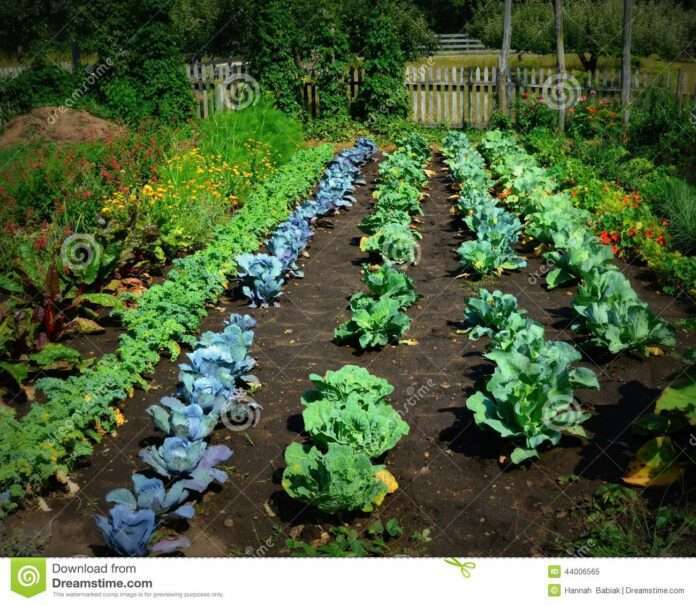
When the summer heat cranks up it is tempting to add water, but this is not necessarily what the plants need. On average, vegetables need about one-inch of water per week. During a heat wave (over 90 degrees F) it may be necessary to water daily or every other day but check the soil first.

Before adding water to the garden, insert your finger one to two inches into the soil and check for moisture. If the soil is wet, wait to add water. A layer of straw mulch, several inches thick can be added to the garden in advance of a heat wave to keep the roots cooler. Ensure plants have enough water before the heat wave.

It is best to water as early as possible in the morning to reduce the amount of
evaporation. Drip irrigation is the best option, but regardless of the method it is
important to keep water off the leaves and close to the soil.