Friday, February 6, 2026
Home Blog Page 377

Parts of Kansas once tried to secede and form ‘West Kansas.’ It helps explain our politics today

0
More than 30 years ago, a group of southwest Kansas counties tried to secede and form their own state called West Kansas. It’s largely forgotten now, but the political divisions that caused it remain.

Secession movements in places like eastern Oregon continue to make headlines today, but back in the 1990s, parts of western Kansas made an effort to secede that previewed the political divisions that still cause people in the U.S. to consider cutting ties from their governments.

In Kansas, the effort involving nine southwest Kansas counties all started with a disagreement over school funding policies.

After people in western Kansas felt a new school funding law adversely affected rural schools, some residents of the nine counties were so upset that they petitioned to leave the state. They proposed a new state called West Kansas.

In the heart of one of those counties, tucked behind endless rows of corn and milo, Sharon Concannon takes a trip down memory lane, thumbing through a book of newspaper clippings and documents from the time.

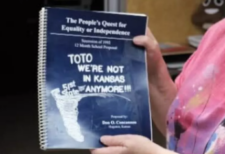
The navy blue book’s cover exclaims, “Toto, we’re not in Kansas anymore” in large white letters.

The laminated book documents the reactions to a secession movement that grew out of the region 30 years ago.

Concannon remembers how it unfolded.

“They went about getting petitions signed to make our own state,” Concannon said.

As she flips through the pages, she chuckles at some of the headlines. They remind her of her late husband, Don, who started this movement.

“He was an attorney, and he felt that … we’re just kind of no man’s land,” Concannon said. “We don’t feel like we’re ever heard.”

Don has since passed away, like many of the others originally involved in the movement to form West Kansas.

The push for ‘West Kansas’ 

Supporters of the idea were so serious that they gathered in 1992 in Ulysses, Kansas, and drew up state borders. They decided what should be the West Kansas state bird, the pheasant, and the state flower, the yucca.

Pete McCormick grew up 30 minutes from Ulysses in Lakin, just outside of Garden City. He was studying cultural geography at the University of Kansas and wrote his thesis on this topic in 1995. He said there was a clear reason these Kansans were upset

“The state redid its school finance laws, and basically it was trying to equalize things across the board,” McCormick said.

But it didn’t seem like equalization to many in the western part of the state.

Southwest Kansas was enjoying economic stability because of the growth of natural gas and irrigated grain, without a significant tax burden. Schools in this rural region were spending north of $5,000 per student, but this new law would cap that at just $3,600.

With the 1992 school finance formula, eastern Kansas received significant tax relief, and southwest Kansas saw an increase in tax rates.

This further stressed the already existing divide between the more populous eastern parts of Kansas and more rural western Kansas.

“I remember there was a sign on the motel in Lakin, and it said ‘To hell with Topeka, let’s secede,’” McCormick said.

Cultural divisions 

Through the lens of cultural geography, McCormick can see the distinctions between the two halves of Kansas.

The different landscapes have influenced the cultures, and the different cultures have simultaneously impacted the landscapes.

Looking at western Kansas, patterns of circles and squares show the impact of farming, and how the rural towns have built lives in an area with plentiful farmland and mineral resources, but not a whole lot else. Seemingly every other car has a license plate proclaiming “eat beef” as a reminder of how agribusiness and beef processing are the centers of this region’s economy.

Eastern Kansas is less flat, receives more rain and has urban centers that are more industrialized, similar to other midwestern states.

“Those cultural distinctions are there, and so when you had something as shocking as this tax reform, immediately everybody was like, ‘alright, that’s it,’” McCormick said.

Counties that voted to secede and create “West Kansas” in 1992
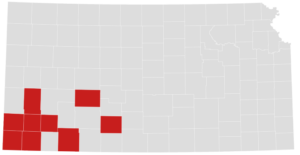

Stanton, Morton, Kearny, Grant, Stevens, Haskell, Hodgeman, Meade and Kiowa.

Results from a public poll showed in seven of the eventual nine southwest Kansas counties, a whopping 85% of the residents who answered the polls were interested in secession.

Joe Thompson, Stevens County commissioner, said the movement now is largely forgotten.

“There may be some folks hanging on to that, but it’s been years since I’ve seen or heard anything about it,” Thompson said.

But a major aspect of the secession movement was natural resources and education, issues that linger today. Since the movement, resources have continued to dwindle. Oil in Kansas has gone down ever since, and so has groundwater for irrigated grain.

Looking at the parallels today

Donald Haider-Markel, political scientist at the University of Kansas, said these kinds of secession attempts have become more common in rural areas over the years.

“This is what happens when a rural region of a state feels neglected and creates an ‘us versus them’ mentality,” Haider-Markel said.

And those feelings can still linger today. The West Kansas movement took place when Kansas had its first Democratic woman for governor, who was widely disliked by the larger conservative western constituents.

As rural schools continue to consolidate, the way taxes flow through the region remains a big contention.

Many of the counties involved in the movement saw their populations peak before the year 2000.

And just as they once feared, this region of Kansas has the hardest time retaining teachers today.

Haider-Markel also pointed out that the movement may have been a precursor to our identity politics in the country today, as factions fear loss of control. The West Kansas group was able to garner overwhelming support by leveraging dissatisfaction with state leaders and dissociation from the rest of the state. That’s still seen today in far-right groups that resist the federal government.

“You could find some roots of what you see today in the Republican Party in Kansas, really going back to the 1990s. Where there’s sort of a super far-right portion of the party,” Haider-Markel said.

In the end, the movement was thoroughly squashed after the state attorney general said it was unconstitutional and called it an exercise in futility. A couple years later, multiple rural school districts filed lawsuits against the school funding law, but the law was upheld by the Kansas Supreme Court.

Back in her office in Hugoton, Sharon Concannon said her husband Don, an attorney, knew this movement was doomed, but did it more as a stunt to grab lawmakers’ attention. Ultimately, it worked.

“I don’t think anybody ever really believed it could happen, but everyone was absolutely amazed at the support we got,” Concannon said. “He was just finding a way to get them to listen to us out here.”

Calen Moore covers western Kansas for High Plains Public Radio and the Kansas News Service. You can email him at [email protected].

The Kansas News Service is a collaboration of KCUR, Kansas Public Radio, KMUW and High Plains Public Radio focused on health, the social determinants of health and their connection to public policy. ksnewsservice.org.

With this app, Kansas families can go to more than 200 attractions for free this summer

0

Families with children in Kansas who don’t want to travel far for vacation have the perfect opportunity this year and they won’t have to pay an admission fee at several attractions to do so.

Back again is the 2024 edition of Sunflower Summer, a program happening from May 25 to Aug. 11, that offers a way for Kansas families with school-aged children to explore their state, providing complimentary access to tourism attractions across the Sunflower State.

Kansas Tourism announced more than 220 attractions will be part of the program, nearly doubling the amount from 2023.

“The Sunflower Summer program plays a pivotal role in making in-state travel affordable for Kansas families,” Lieutenant Governor and Secretary of Commerce David Toland said. “It offers amazing opportunities for parents to nurture their children’s love for travel and appreciation for our incredible state and everything it has to offer.”

Participating attractions this year are located in all regions of the state and includes places like museums, discovery centers, historic sites, arboretums, water parks, amusement parks, zoos, guided trolley tours, live theater events and professional sports events.

How does the Sunflower Summer program work?

To use the program, families with school-aged children need to download the Sunflower Summer app in either the App Store or Google Play Store beginning May 1. From there, they can create an account and claim tickets to participating attraction venues, which will be redeemed upon arrival at the venue.

Free tickets are available to all Kansas students from pre-K through 12th grade and up to two adults accompanying them. The Sunflower Summer App allows one free admission ticket per student for each attraction. Once a ticket is used, the app will “stamp” the ticket and it will no longer be valid to be re-used for that attraction.

A list and map of participation attractions, as well as links to download the app, can be found on the Sunflower Summer website, sunflowersummer.org.

What kind of impact does the Sunflower Summer program have for Kansas attractions?

Attractions and cities that have taken part in the Sunflower Summer program speak highly of it, saying that it offers a great way for Kansans to have fun, learn and experience their state in a cost-effective way.

“I’ve heard from a lot of families that say this is how they travel in the summer,” said Julie Roller Weeks, director of the Abilene Convention and Visitors Bureau.

Previously, Abilene only had the Eisenhower Presidential Library and Museum as part of the program, but this year, the Abilene and Smoky Valley Railroad and Dickinson County Heritage Center are also taking part.

“Now packaging (all) three attractions, we’re a great vacation now,” Weeks said. “All of them are in the same block and very walkable.”

While the tickets are free for those participating, each attraction gets reimbursed for each ticket used, which Weeks said is a win-win for everybody.

“The family gets to go for free, but the attraction… isn’t out anything,” Weeks said. “So this is a way for (the attraction) to increase revenue and increase visitation…thanks to the State of Kansas.”

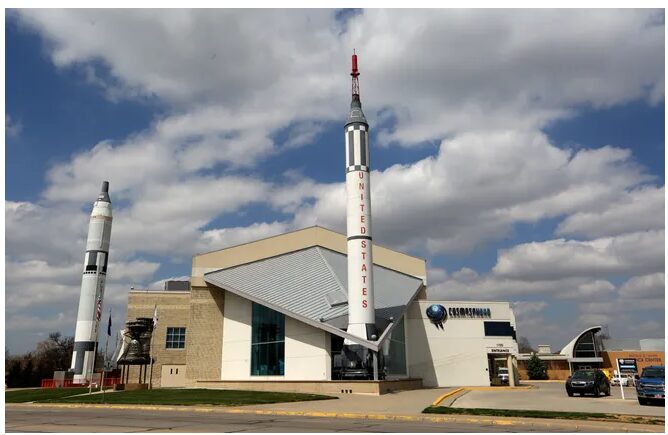
One attraction that is able to expand what families can do for free this year is the Cosmosphere in Hutchinson. Chuck McClary, Digital Specialist and Public Relations Coordinator for the international science education center and space museum, said last year, the Sunflower Summer Program only included access into the Hall of Space Museum.

“Reno County residents already get into the…museum for free, so they weren’t getting the full benefit of the Sunflower Summer program,” McClary said.

This year, the program includes a free All-Access Mission Pass, which includes access to Hall of Space Museum and CosmoKids, one Carey Digital Dome Theater documentary, one show in the Justice Planetarium, one show in Dr. Goddard’s Lab and one ride on the naviGATOR Flight Simulator.

“It’s a pass to pretty much everything in the building,” McClary said.

There are currently renovations happening in the Hall of Space Museum, but McClary said people who come are still able to see things like the Apollo 13 command module and the Liberty Bell 7 spacecraft on display.

Plan a vacation or weekend around the Sunflower Summer program

With cities and towns like Abilene or Salina that have multiple attractions participating, there is an opportunity for Kansans to plan a whole trip in one place.

“We’re drawing in a lot of people from outside the area,” said Linda Henderson, director of development and marketing for Rolling Hills Zoo.

Henderson said Salina is trying to create a destination for people to travel to, and with this program, that allows families multiple things to do when they come here, with not only the zoon, but The Garage, the Smoky Hill Museum, Kenwood Cove Aquatic Center and the Art Center and more participating in Sunflower Summer.

“(We want people to) come and spend the weekend in Salina, and check out all of the great venues we have,” Henderson said.

For more information about the Sunflower Summer program, visit sunflowersummer.org.

Good stuff, Maynard

0

Amanda Miller
Columnist
Lettuce Eat Local

Some of you might get that reference immediately, while the rest of you have no idea what I’m doing. Our household is young enough that we wouldn’t quite as naturally spout off that tagline from a 1983 Malt-O-Meal commercial, yet you’ll hear it rolling off Brian’s and my tongues like cream of wheat off a spoon. Benson has even been heard saying it to himself in his silly little voice. Although I’m not sure of the conversation context, I first learned about this Maynard from a group of ladies in one of my cooking classes; their age demographic is above mine by a good margin, so they were all in the know while I had to be educated. 

Since then, I’ve educated several others with an easy-to-reference YouTube clip of the breakfast bear. It gets me every time — I don’t know if it’s the haircuts, the speaking patterns, or the dry humor, but I know it’s not the product advertised.

I know lots of people are fans of Malt-O-Meal. Or rather, I assume there are at least enough people that purchase this kind of product to keep it on the market since its invention in 1919. Cooked milled wheat middlings had been served as a breakfast porridge for at least a couple decades before then; Cream of Wheat debuted in Chicago at the World’s Columbian Exposition of 1893. Cream of Wheat was a marketing innovation in response to a reduced demand for flour, and it was clearly met with more accolade than I give it: the initial product testers telegrammed back, “Forget the flour. Send us a car of Cream of Wheat.”

Before this article, I thought those two products were the same thing under different brand names, but Malt-O-Meal added malted barley to a slightly coarser ground wheat than the smoother, “creamier”-cooking Cream of Wheat. Farina is the general term for this particular style of ground wheat kernels, that falls somewhere on the spectrum between cracked wheat berries and flour; think grits made from wheat instead of corn. 

I’m obviously not a major connoisseur of the porridge. I’ve had one or the other before, but I’m generationally biased against it; my parents tell of their season as recently-married poor young college students when Cream of Wheat was their breakfast staple for far too many mornings. My mom got desperate enough for some variety in their budget breakfast that she tried adding food coloring — it seems it didn’t help matters much. 

On the other hand, my mother-in-law has instant Cream of Wheat for breakfast often, as a perfect easy breakfast after finishing the early morning milking. (She makes it with milk, of course, and tops it with a little brown sugar.)

All I can say for farina porridge is that it’s a good blank canvas for adding flavors, whether the pre-added packaged varieties or your own in-home additions. But God made oatmeal for a reason, so if I want a hot breakfast porridge, and one that has better taste, texture, and nutrition, oatmeal is where I’m headed. 

All that said, we did just have wheat harvest. And if there ever was a time to try making my own cream of wheat, it’s when I have a bucket of fresh-from-our-field wheat berries sitting in my kitchen…i.e., now. 

And you know, it wasn’t bad. It’s not going to become a staple, but I surprised myself with how enthusiastically I kept going in for another bite. I can truthfully say, “Good stuff, Maynard.”


Homemade Malt of Wheat

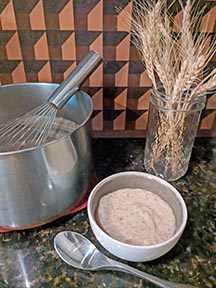
I wanted the creaminess of Cream of Wheat and the malt of Malt-O-Meal, so good news, I can do both. This breakfast isn’t quite as quick as the minute or two in the microwave the instant varieties require, yet it’s still fast and easy, and a good bit more nutritious since this uses the whole wheat berry instead of degermed. My Vitamix high-powered blender can do a whole range of different grind textures, and you should be able to find something that gets a coarse grind for you (try a food processor or coffee grinder if you don’t have a blender). 

Prep tips: if a bucket of fresh wheat didn’t appear in your house, you can find wheat berries at Glenn’s Bulk Food, another bulk food store, or sometimes even a “regular” grocery.

½ cup wheat kernels, ground to a medium-fine texture

2 cups milk 

¼ teaspoon salt

2 tablespoons browned butter 

2 tablespoons malted milk powder

sweetener and/or toppings of choice

Add wheat, milk, and salt to a saucepan, and simmer over medium-high heat until thickened, 5-10 minutes depending on the grind. Remove from heat and whisk in butter and malted milk, as well as honey/maple syrup/brown sugar/whatever you want. Top with toasted nuts, chocolate chips, coconut, bananas, again whatever you want — or really just another pat of butter. 

Hort Newsletter #24

0
Photo courtesy: K-State Horticulture

[email protected]

HNR Website access: https://hnr.k-state.edu/extension/horticulture-resource-center/horticulture-newsletter/

Horticulture 2024 Newsletter
No. 24 June 17, 2024
1712 Claflin, 2021 Throckmorton Plant Science Center
Manhattan, KS 66506 (785) 532-6173

ANNOUNCEMENTS
Riley County Master Gardener 35th Annual Garden Tour
Saturday, June 22, 2024
8:30-1:00
For more information contact: 785-537-6350

2024 Kansas Turf and Ornamentals Field Day
August 1, 2024, at Rocky Ford Turfgrass Research Center in Manhattan, KS. https://www.k-state.edu/turf/events/2024TurfFieldDayProgram.pdf

VIDEO OF THE WEEK:
Common Tomato Problems, Part 2
Tomatoes are one of the most popular vegetables to grow, but there are several things that may cause problems — including insects, sunburn, calcium deficiency, and cracking. This segment shows examples and gives advice on how to correct some of the issues.

GARDEN TO-DO
Renovate strawberry beds after last picking of fruit by cutting off leaves, fertilizing and narrowing row to 10 inches.
Plant Fall Squash and Pumpkins
Tip blackberries, black raspberries and purple raspberries as needed.
PESTS
Squash Bugs
Description: Eggs are 1/16-inch in diameter and change from light brown to dark red. Young nymphs are pale green with red antennae which later turn black. As the nymphs develop, they turn a light to dark grey color. Mature nymphs are up to ½-inch long and wingless. Adults are ½ to ¾-inch long and dark-brown in color. The wings are brownish-black with orange markings on the outer edge of the body. If crushed, adult squash bugs emit a foul odor.

Life Cycle: Squash bugs overwinter as adults. From late-May through June they seek a plant host. From June through mid-August, after mating, females lay eggs in clusters on the stems and undersides of leaves. Within 7 to 14 days nymphs hatch and go through multiple stages of development. By 4-6 weeks, the adult squash bug is fully developed.

Damage: The primary hosts for squash bugs include summer/winter squash and pumpkins but they will feed on other cucurbits as well. Adults and nymphs have piercing-sucking mouthparts which they use to suck fluids from leaves, stems and fruits. Young plants are at a great risk for destruction from squash bugs, though mature plants can be severely damaged as well if the pest population is high. Damage appears as small yellow specks on leaves. Stem damage causes wilting and leaves will dry up and shrivel. Feeding on fruit affects the quality by causing distortion and scarring along with sunken areas.

Control: Preventative management is the best recommendation. Scout for pests in the garden regularly. Look on the undersides of leaves and the stems for eggs early in the season. Remove plant debris to reduce overwintering habitats. Physically remove and destroy eggs, nymphs and adult bugs from plants as you find them. Use floating row covers, if garden size allows, to exclude pests from accessing plants.

Horticulture oils can be effective if applied on eggs. Young nymphs can be controlled with insecticides. Weekly application may be necessary for complete control. Adult squash bugs have a thick, waxy cuticle that makes insecticides ineffective. Ensure thorough coverage of the plant for best results. See your local extension agent or KSRE Publication: Squash Bugs for insecticide recommendations.

For more information about squash bugs see KSRE Publication: Squash Bug

Hornworms on Tomatoes
Description: The larval stage is a 3 ½ to 4-inch long pale, green caterpillar. There are five pairs of prolegs and a horn on the last segment. The tobacco hornworm has seven diagonal white stripes and usually a red horn. The tomato hornworm has V-shaped markings and a blue/black horn. The adult moth has a stout, grayish-colored body with wings that span 4 to 5 inches.

Life Cycle: In the larval stage the hornworm caterpillar passes through four or five stages before reaching full size. This process takes about one month. The caterpillar pupates in the soil giving rise to an adult moth. The adult of the tobacco hornworm is the Carolina sphinx moth. The adult of the tomato hornworm is the five-spotted hawk moth. There are two generations each year.

Damage: Hornworm larva are the damaging stage and are typically found on tomatoes, but feed on eggplant, peppers and potatoes as well. Caterpillars devour leaves and stems leaving behind dark green or black droppings.

Control: Hornworms are parasitized by several insects including the small braconid wasp which lays eggs on the larva. When the eggs hatch, the wasp larva feed on the hornworm devouring it from the inside killing the hornworm.

To avoid harming beneficial insects, handpicking hornworms is the recommended control. Hornworms camouflage themselves among the leaves making it difficult to find them.

Bt (Dipel, Thuricide), Spinosad (Conserv, Captain Jack’s Dead Bug Brew, Monterey Garden Insect Spray), cyfluthrin (BioAdvanced Vegetable & Garden Insect Spray) are a few insecticides that can be effective at controlling hornworms. Always follow label instructions and pay close attention to the harvest interval.

TURF
Grub Control in Lawns
If you’ve dealt with an excessive number of grubs in the lawn previously you may choose to apply a pesticide containing imidacloprid. This active ingredient is safe and effective at killing the grubs before they damage plant roots. Apply the product by mid-July and water it in if rain is not expected within 24 hours.

Controlling Yellow Nutsedge in Lawns
We are getting numerous requests for weed identification in lawns and landscapes which is common this time of year. Yellow nutsedge often appears when the soil is moist. Some identifying features of yellow nutsedge include:
Yellow inflorescence
Yellow-pale green leaves
Tapered leaves with sharp point
Triangular stem with leaves growing in three directions
Rapid growth extending above the turfgrass within days of mowing.
The best control of yellow nutsedge is maintaining a healthy, dense lawn. Nutsedge spreads by tubers which can produce numerous plants. Manually pulling yellow nutsedge can activate dormant tubers which send up new growth, but with persistence over multiple seasons it can be eradicated. If using an herbicide, it is important to apply before tuber production for the best control. The first application should usually be applied by June 21 before plants mature. Here are some herbicide options for home gardeners.

SedgeHammer and Hi-Yield Nutsedge & Horsetail Control (active ingredient: halosulfuron)
Bonide Sedge Ender, Ortho Nutsedge Killer & Spectracide Weed Stop for Lawns plus Crabgrass Killer (active ingredient: sulfentrazone)
Always follow label instructions and pay attention to turfgrass species tolerance for herbicide treatments.

VEGETABLES
Tomato Leaf-Spot Diseases
Septoria Leaf Spot appears initially as small, water-soaked spots on the lower leaves. The centers of the spots turn light tan or gray while the margins remain dark. Dark-colored fungal fruiting structures form in the spots which are typically smaller and more numerous than early blight spots.

Early Blight symptoms appear as irregular, brown lesions or spots on the leaves up to ½-inch in diameter. The dark, concentric rings in the lesions give the spots a target-like appearance. This is a distinguishing symptom to identify the disease. Several lesions can merge together and cause the leaf to yellow, dry up and drop prematurely. Leaf drop reduces the plant’s ability to photosynthesize thus reducing the energy and vigor of the plant. It can also expose fruit to an increased risk of sunscald. Early blight lesions can develop on the stem and fruit as well.

In Kansas, Septoria leafspot tends to be more common than early blight. Both fungi overwinter in plant debris, on seeds or weeds. Spores can splash or blow onto tomato plants. Warm, humid weather and heavy rainfall favor development of Septoria leafspot and early blight.

Read more at our KSRE Publication: Early Blight and Septoria Leaf Spot

PERMACULTURE
Growing With Microclimates
Working with the environment is a core principle of permaculture. Learn how to take advantage of microclimates to support optimal plant health and get more out of your growing spaces.

Read more in our KSRE publication:
Growing with Microclimates

QUESTION of the WEEK
Cleaning up Asparagus
I have finished harvesting my asparagus. When should I remove the tops off the plants?
Asparagus tops should not be removed until after a killing freeze. The tops have the important role of producing and transferring food to the plant roots impacting next year’s growth. If plants are falling over and you want them to remain upright, set posts 10-12 feet apart and secure plants with twine.

Contributors:
Cynthia Domenghini, Instructor and Horticulture Extension Specialist
K-State Plant Pathology
K-State Entomolgy
K-State Turf and Landscape Blog
Kansas Garden Guide

Division of Horticulture
1712 Claflin, 2021 Throckmorton
Manhattan, KS 66506
(785) 532-6173

For questions or further information, contact: [email protected] OR [email protected]
This newsletter is also available on the World Wide Web at:
http://hnr.k-state.edu/extension/info-center/newsletters/index.html

The web version includes color images that illustrate subjects discussed. To subscribe to this newsletter electronically, send an e-mail message to [email protected] or [email protected] listing your e-mail address in the message.
Brand names appearing in this newsletter are for product identification purposes only. No endorsement is intended, nor is criticism implied of similar products not mentioned.
K-State Research and Extension is committed to making its services, activities and programs accessible to all participants. If you have special requirements due to a physical, vision or hearing disability, or a dietary restriction please contact Extension Horticulture at (785) 532-6173.

Cynthia Domenghini, Ph.D.
Instructor; Horticulture Extension Specialist
Department of Horticulture and Natural Resources
Kansas State University
1712 Claflin Rd.
Manhattan, KS 66503
785-340-3013
[email protected]