Friday, February 6, 2026
Home Blog Page 385

The Middle Man

0
lee pitts

I was born at the wrong time but then, my timing has always been off. At the tender age of 21 I was hired as a field editor for a livestock weekly and there were eight of us all together. Every other man was at least 20 years older than me and most were 30 years older. The editor, publisher and owner were also at least 30 years older so everything that went wrong was obviously my fault. When I started work in 1973 the price of feeder calves was 70 to 80 cents a pound and within my first year prices for the same weight and age of cattle dropped to 30 cents per pound! Naturally, this was all my fault too.

Due to my youth my fellow field editors thought they had the right to boss me around. One of them, who I thought was my friend, came to me and said that one of his contacts had asked him to find 40 Polled Hereford heifers to be shipped to Japan but there was one condition: they had to come from Arizona, which just happened to be part of my territory. They had to come from a desert environment because cattle from California tested positive for blue tongue even though they didn’t have the disease. My friend said that this would be a big feather in my cap and the grateful breeders would probably buy a big thank you ad on which I’d get a commission. Plus, I’d get to write a fascinating story.

So I paid all my expenses, motel, gas, and food and crawled all over Arizona to find six people in the whole state who had Polled Herefords for sale. After weeks of work I finally found 45 head of Polled heifers and arranged for them all to be blood tested, gathered up at one central location to be loaded on a truck and hauled to the port of Oakland, California. There they were inspected by Japanese health officials who found a wart on one heifer the size of a pencil eraser and they grounded her.

I was not privy to the selling price. All that was handled by my fellow field editor who I sensed was making money off my hard work.

This was all part of the massive sale of Polled Herefords around the world, 10,000 of which were exported in 1968 and 1969 to Chile alone. The world wanted our Polled Herefords because they had none of their own as the breed was started in the United States.

To write my story I went to the Port of Oakland on the departure date where I was allowed inside the stretched jet that would take the heifers to Japan. My tour guide called the jet “four engines mounted on a coffin” and told me of an earlier shipment of 30 head from the U.S. to South America that had been improperly secured, the load shifted forward, the pilot lost control and everything died. I did a little investigating for my story and also learned about a planeload of hogs enroute from Chicago to Europe that suffocated on the ground in New York. One of the pilots going to Japan with the Polled Herefords called his beat-up airplane “The Vomit Comet”.

There was another load of cattle from New York to Europe that expelled so much moisture everything froze up inside the plane and they had to make an emergency landing. Initially, I thought I could write a better story if I went with the Polled Hereford heifers I’d hand picked to Japan, just like the old time herdsmen who accompanied their cattle on the train trip to Chicago for the International. After much consideration I had “reservations” about my reservations for the flight and canceled at the last minute. The whole thing was pretty sketchy and I thought it prophetic that we’d be leaving from a place called a “terminal”. I didn’t want the last thing to go through my mind to be a load of Polled Herefords.

To make a long story short, afterwards none of the Arizona Polled Hereford breeders would speak to me, my editor never did run my story and I was later told that my “buddy” who gave me the assignment got two free plane tickets and a week’s stay in Tahiti for all his hard work.

Cracking the mystery on chicken eggs

0

Discover why chickens lay different colors, shapes and shades.

As we enter summer and more people are looking at raising backyard chickens, they may be curious why chicken eggs can be different colors. Most eggs are white or brown, but they also come in other colors such as cream, pink, blue and green. In addition — and this is no “yolk” — some eggs are speckled.

Nature has provided chickens with diverse color patterns for their feathers, skin patches and eggshells for various purposes, including camouflage to protect from predators and to denote individual identity.

The color of an egg is primarily determined by the chicken’s genetics, said Gregory Archer, Ph.D., Texas A&M AgriLife Extension Service poultry specialist in the Texas A&M Department of Poultry Science, Bryan-College Station. That means the breed of hen will usually indicate what egg color will be produced.

For example, Leghorn chickens lay white eggs, Orpington’s lay brown eggs and Ameraucana chickens lay blue eggs. And the “olive egger” breed lays … wait for it … olive-green eggs.

But appearances aside, all chicken eggs have no major differences in taste or nutritional composition, Archer said.

Chicken earlobes help predict egg color

A good way to guess what color eggs a chicken will lay is to have a gander at the hen’s ear lobes.

“Generally, hens with white earlobes will produce white eggs,” Archer said. “But all eggs start out white because the shells are made from calcium carbonate. They get their color from the hen’s genetics as the egg forms.”

He said chickens with lighter earlobes often have white feathers and produce white eggs. Those with colored feathers and darker earlobes will likely produce colored eggs.

Adding a little color

Nature has its own way of coloring eggs, and it doesn’t require food coloring or a paintbrush. Different eggshell colors come from pigments deposited onto the shell as the egg forms in the hen’s oviduct. The oviduct is a tube-like organ found along the hen’s backbone between the ovary and the tail.

A chicken yolk, or ovum, forms in the hen’s ovaries. A fully formed ovum leaves the ovary and makes its way into the oviduct. It then goes through a five-stage process to help ensure the yolk makes it safely to the outside world. The entire egg-forming process usually takes a little more than 24 hours.

It’s during the fourth stage of this process, which involves the shell gland, that pigments are deposited onto the shell, producing its color. So, in short, different breeds of chicken deposit different pigments on the shell as it forms, changing its exterior — and sometimes also its interior — shell color.

Archer added that shell pigment also has anti-microbial properties that may help reduce the risk of embryonic mortality.

 A pigment of the imagination

White Leghorn chickens lay white-shelled eggs and breeds like Plymouth Rocks and Rhode Island reds lay brown-shelled eggs. The shells are brown because a pigment known as protoporphyrin is deposited onto the shell. But because this happens late in the shell formation process, the pigment rarely penetrates the shell’s interior.

“This is why when you crack open a brown egg, you will see the interior of most of the shells remains white,” Archer said.

However, there is a notable exception. A pigment called oocyanin is deposited on the egg of the Ameraucana breed and can penetrate both the exterior and interior of the shell, making them both blue.

Other breeds, such as Araucana, Dongxiang and Lushi, lay blue or blue-green eggs.

An olive egger results from a cross between a hen and a rooster from a brown egg-laying and a blue egg-laying breed. The hen produces a brown pigment that penetrates the blue shell of the egg, resulting in a greenish-hued egg. The darker the brown pigment, the more olive-colored the egg appears.

Other chickens that lay colored eggs include the Easter egger, Barred rock, Welsummer and Maran, with the color of the egg depending on the breed and its genetics.

A hen will only lay one color egg her entire life, so if she starts by laying blue eggs, her eggs will always be blue.

Some speculation about speckled eggs

Speculation aside, the general consensus from the eggs-perts is the speckles on speckled eggs are just extra calcium deposits. One reason speckles are formed is the egg-shaping calcification process is disturbed. Another possible reason could be a defect in the shell gland.

Sound a little scrambled? Don’t worry about it … just keep your sunny side up and know there’s probably more than one explanation for this speck-tacular occurrence.

Oh, and although technically considered “abnormal,” speckled shells can sometimes be stronger than the average egg.

Egg-straneous factors influencing color, size and shape

While genetics primarily determine egg color, other factors can also influence the color and other characteristics of the shell. These factors include a hen’s age, diet, environment and stress level.

“As they age, hens that lay brown-colored eggs may start to lay larger and lighter-colored eggs,” Archer said. “While this may produce an egg of a lighter or darker shade, it will not alter the egg’s basic color.”

While not directly associated with color, an oddly or irregularly shaped egg may occasionally pop out. This may result from a dysfunction in the hen’s egg-forming process.

Archer said both very old and very young hens are the most likely to lay abnormally shaped eggs.

“Stress factors like disease, heat or overcrowding may also affect the hen and impact the egg’s size, shape and quality,” he said. “A lot also depends on the amount of calcium the hen has in its body and can provide for the egg-making processes.”

All yolking aside: Color, nutrients and seeing double

You may also be wondering if the color of the egg affects the color of the yolk. Well, it doesn’t, but the hen’s diet certainly can. For example, if a pasture-raised hen eats plants with yellowish-orange pigmentation, the yolks can take on a more orange color. If she eats mainly a corn- or grain-based diet, the yolk is more likely to be a pale yellow.

Research has shown darker, more colorful yolks have the same amount of protein and fat as lighter yolks. However, it has also demonstrated that eggs from pasture-raised hens can have more omega-3s and vitamins and less cholesterol than other eggs.

Speaking of yolks … this will crack you up. Sometimes, an egg will have two yolks. While some people think a double yolk is good luck, the reason is more mishap than fortune. A double yolk is a fluke that occurs when a hen ovulates too rapidly, releasing two yolks, usually about an hour apart. These yolks enter the oviduct and eventually wind up in the same shell.

Hormonal changes or a hyperactive ovary can also cause these double releases. These “double-yolkers” are most common among younger chickens due to their reproductive system not yet being fully developed.

Where can you learn more about chickens and eggs? Well, you could go to the “hen-cyclopedia” of course. But if you don’t have one handy, visit this publication on the AgriLife Learn website for more information.

K-State beef cattle veterinarians relay how to make the most of grazing warm and cool season grasses

0

Pastures can be thought of in the same light as bank accounts. If an account holder withdraws a lot of money early in the year, then they’re left with nothing to spend on essential things down the line.

Beef producers who manage their pastureland in the same way can face similar repercussions.

Kansas State University veterinarians spoke about summer grazing management techniques that can keep pastures “in the black” on a recent episode of Cattle Chat.

“When we have cool-season grasses right now, they should be doing pretty well in most parts of the country and are very productive. Our warm-season grasses, depending on where you are, maybe haven’t quite come on yet,” K-State veterinarian Brad White said. “We need to think about our plan because both of those types of grasses have what are called dry spells where they’re less productive.”

K-State nutritionist Phillip Lancaster suggests introducing annual warm-season grasses to help balance out a pasture’s nutritional value when cool-season plants start to decline.

“Adding some annual warm-season forages to your grazing land rotation can be very beneficial so that you get something that is peaking in production when cool-season grasses are slowing down because of the heat,” he said.

Lancaster added: “When we get into the July and August timeframe, the cool-season grasses are not able to tolerate the heat, so their productivity slows way down.”

After cattle have grazed down cool-season plants, planting warm-season grasses like sorghum-sudangrass, pearl millet or crabgrass straight into those pastures, or overseeding, serves as a great option for grazing cattle, according to Lancaster.

“Crabgrass is actually a very good (plant) that doesn’t have the potential to introduce some of the animal health problems that sorghum-sudangrass can with nitrate toxicity, but those are still some good options as we’re thinking about planting.”

For producers who employ a rotational grazing plan, frequently monitoring the growth of the plants within a pasture plays a key part in keeping grass in good condition.

“As you’re rotating to new pastures, paying attention to previously grazed pastures and how they are recovering and regrowing can kind of tell you how fast you need to rotate animals to maintain that plant in kind of a vegetative state,” Lancaster said.

White agreed and added: “In terms of your pasture movement, some of those things need to be sped up or slowed down based on conditions. There’s no static.”

To capture the full benefits of grazing the cool-season plants within a pasture, it’s important they stay immature for as long as possible.

“One of our goals in some of these cool-season forage systems is to try to minimize that plant going into a reproductive stage,” Lancaster said.

White added: “So, keep it from going to seed and getting ‘stemmy.’”

To learn more about summer grazing, listen to Cattle Chat on your preferred streaming platform.

Did you get that text about the Chiefs? It’s part of a plan to recruit the team to Kansas

0

State lawmakers are expected to consider the plan during an upcoming special session.

Top Republicans in Kansas are officially inviting the Kansas City Chiefs to relocate across state lines.

Kansas Senate President Ty Masterson and House Speaker Dan Hawkins, both Republicans, sent a letter Tuesday evening to the team’s owners, asking them to consider a plan in the state Legislature that would help build a new stadium in Kansas City, Kansas.

“(The plan) represents, in our view, the best economic development partnership the franchise will find in America,” the letter reads. “With our strategic location, a vibrant fan base, robust economic incentives, and the exceptional tools at our disposal, we are poised to make the Kansas City Chiefs even stronger.”

Lawmakers never voted on a bill to bring the Chiefs or another sports team to Kansas before adjourning in May, but they will return to the Statehouse on June 18 for what’s expected to be a brief special session about tax cuts. Hawkins and Masterson say lawmakers also will consider the sports bill then.

The letter coincided with a mass text message inviting people to visit a website describing the plan and asking them to urge their state representatives to support it. The site, paid for by “Scoop and Score, Inc.,” makes a number of claims about the project, including that it would come at no expense to taxpayers.

While the plan would not necessarily require an immediate increase in taxes, it would help finance the stadium through sales tax revenue bonds, or STAR bonds. The state issues those bonds for certain developments and essentially diverts the sales tax revenue those developments generate in future years to pay off the debt.

Proponents say STAR bonds boost economic activity and the diverted sales tax revenue wouldn’t exist without the new projects. But critics say the projects often fall short of economic expectations.

The bill would also require the Chiefs or any other team to contribute hundreds of millions of dollars to a potential stadium project. It would allow the state to recruit up to two professional sports teams.

Democratic Gov. Laura Kelly has previously said she doesn’t believe the state is in the right financial position to attract the team. She says she’s not involved in any efforts to recruit them across state lines but says she wouldn’t “stand in their way,” either.

“Probably over half the people in the stands any given Sunday are Kansans,” she told the Kansas News Service in April. “We claim them as our team – but we recognize that it’s probably in their best interest to stay where they are, so we (the governor and her office) won’t be making any overtures to the Chiefs.”

Kelly called the upcoming special session so lawmakers could pass tax cuts she’s willing to sign, but lawmakers are also allowed to vote on bills related to other subjects.

In a recent interview with KCUR, state Rep. Sean Tarwater, the Republican lawmaker who sponsored the STAR bonds bill, says it’s the one piece of legislation he could see passing during the special session other than tax cuts.

“As you were walking through the Statehouse on the last day of session, … there was a heck of a lot of talk and a lot of excitement over the STAR bond bill that would bring the Royals or the Chiefs or both to town,” he said.

Other officials, like Republican former House Speaker Ron Ryckman Jr., have pointed at revenue from sports betting as a potential funding source.

When Kansas legalized sports betting in 2022, it designated 80% of the state revenue toward attracting professional sports teams. But that fund is expected to hold $10 million by 2025 – a far cry from the billions it would take to build a new stadium.

Speculation that the Chiefs might relocate to Kansas began after residents in Jackson County, Missouri, voted in April to reject an attempt to renew a 3/8th-cent sales tax that would have funded renovations at Arrowhead Stadium and built a new downtown Kansas City ballpark for the Royals.

That sales tax will now end in 2031, when the leases of both teams are set to expire.

Zane Irwin of the Kansas News Service contributed to this report.

Daniel Caudill reports on the Kansas Statehouse and government for Kansas Public Radio and the Kansas News Service. You can email him at [email protected].

The Kansas News Service is a collaboration of KCUR, Kansas Public Radio, KMUW and High Plains Public Radio focused on health, the social determinants of health and their connection to public policy.

Drought affected wheat fields call for supplemental equipment

0

K-State wheat production specialist says that short wheat plants require novel harvesting tactics

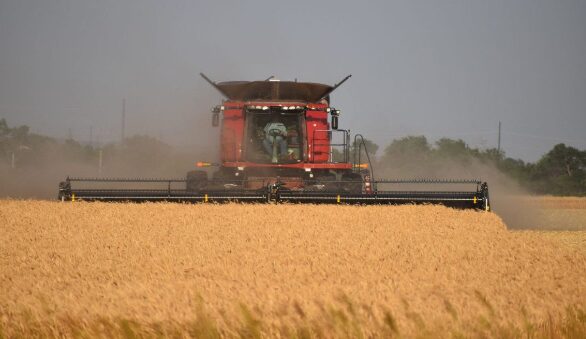
Drought plaguing parts of Kansas created shorter wheat plants and thinner crop stands this year. In turn, Kansas State University wheat production specialist Romulo Lollato advises growers to make adjustments at harvest time.

“This year, the biggest cause for short wheat has been drought stress,” he said. “During springtime, the crop starts to go through a phase called stem elongation. That’s when plant height is determined. In certain areas, there was virtually no moisture, which caused the plants to be short.”

Not all areas of Kansas have experienced this level of drought. Lollato said irregular rain patterns gave rise to significant plant height differences across counties and even in the same fields.

“The Kansas crop is not uniformly short. A very sparse and variable rainfall distribution created these ‘waves’ within areas where tall and short plants occur, simultaneously, in those locations,” he said.

According to Lollato, producers can attach stripper headers to the front of their combines to effectively harvest small wheat plants. Stripper headers separate the grain head from the remaining plant. On the other hand, traditional headers detach plants halfway down their stems.

Lollato said, “Essentially, they have fingers on them. Those fingers pluck the heads out from the stem. The stripper headers feed the combine with only the wheat heads, which means having a cleaner product go into the combine, with increased efficiency.”

Harvesting low-standing wheat plants with a stripper header can help improve soil quality in semi-arid areas.

“They leave more crop residue behind. It will act as a barrier against weeds and shade the fields, which cools soil temperatures and delays weed emergence. Moisture retention is another important advantage. Stripper headers reduce water loss through evaporation, runoff and erosion.”

If a producer uses a stripper header this year, future crops have the potential to benefit as well, according to Lollato.

“There is a lot of value in having more residue left in the fields,” he said. “When growers plant wheat directly into that crop residue after this year’s harvest, they get all of those benefits, like added moisture, weed control, and erosion reduction, which can help return a very good dollar amount the following summer.”

Conventional headers remain as another workable solution for operations not able to invest in additional implements.

“A stripper header is a pricey investment,” Lollato said. “However, there might be more challenges operating with a conventional header – especially on ground with a great slope – but they still work in this case.”

Making alterations to a traditional header may yield better results when harvesting stunted wheat fields with them.

“The most important thing to keep in mind is to maintain the cutting height as high as possible. You can also adjust the reel on the header to get more movement of wheat from the cutter bar to the auger,” Lollato said.

Other combine headers appropriate for harvesting poorer quality wheat stands include draper and flex heads. More information on considerations for harvesting short wheat is available in the May 24 issue of the Agronomy eUpdate, published weekly by the K-State Department of Agronomy.