Tuesday, January 13, 2026
Home Blog Page 45

Secretary Rollins Announces Plan for American Ranchers and Consumers

0

Washington, D.C., October 22, 2025 – Today, U.S. Secretary of Agriculture Brooke L. Rollins, Secretary of the Interior Doug Burgum, Secretary of Health and Human Services Robert F. Kennedy Jr., and Small Business Administrator Kelly Loeffler announced a suite of actions to strengthen the American beef industry, reinforcing and prioritizing the American rancher’s critical role in the national security of the United States. Since 2017, the United States has lost over 17% of family farms, more than 100,000 operations over the last decade. The national herd is at a 75-year low while consumer demand for beef has grown 9% over the past decade. Because increasing the size of the domestic herd takes time, the U.S. Department of Agriculture (USDA) is investing now to make these markets less volatile for ranchers over the long term and more affordable for consumers.

“America’s food supply chain is a national security priority for the Trump Administration. We are committed to ensuring the American people have an affordable source of protein and that America’s ranchers have a strong economic environment where they can continue to operate for generations to come,” said Secretary Brooke Rollins. “At USDA we are protecting our beef industry and incentivizing new ranchers to take up the noble vocation of ranching. Today, USDA will immediately expedite deregulatory reforms, boost processing capacity, including getting more locally raised beef into schools, and working across the government to fix longstanding common-sense barriers for ranchers like outdated grazing restrictions.”

“At Interior, the Department is slashing red tape and restoring grazing access on public lands to support the livelihoods of hardworking Americans in the ranching industry,” said Secretary of the Interior Doug Burgum. “Thanks to President Trump, this administration is taking decisive action to support America’s farmers and ranchers so that they can support American families with high quality beef.”

“We face a chronic disease epidemic in this country largely tied to the foods we eat,” said Health and Human Services Secretary Kennedy. “Under President Trump, we are restoring whole foods as the foundation of the American diet and ending the decades-old stigma against natural saturated fat in beef and dairy products. We will strengthen America’s ranching industry so families can choose nutrient-dense, minimally processed foods. Bottom line: we cannot Make America Healthy Again without America’s farmers and ranchers.”

“Ranches and farmers are the original small businesses. Over generations, they carry on the vital legacy of feeding, clothing, and fueling America,” said SBA Administrator Kelly Loeffler. “Today, thanks to the leadership of President Donald J. Trump and Secretary Rollins, this Administration is taking major action to strengthen our food supply and the beef industry by offering more security for the hardworking ranches our nation depends on. The SBA is committed to doing its part by cutting burdensome regulations and supplying government-guaranteed loans to support our producers as they work to strengthen the American beef supply – for consumers, our national security, and the proud American tradition of ranching.”

To view the plan, please click here.
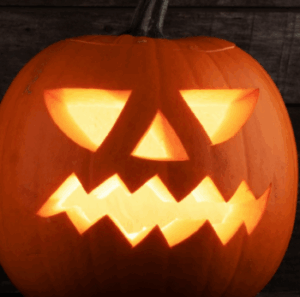
Picking and preserving the perfect pumpkin

0
K-State horticulture expert shares tips for extending the life of carved pumpkins.

Pumpkins are a popular fall decoration this time of year, not to mention the joy of jack-o-lanterns, a Halloween favorite.

Kansas State University horticulture expert Cynthia Domenghini suggests harvesting or purchasing pumpkins that are fully ripened in order to increase their longevity.

“Pumpkins that are harvested before they fully ripen will rot more quickly than those harvested at peak maturity,” Domenghini said.

She adds:

  • A mature pumpkin will have a hard rind that is solid in color.
  • The pumpkin should make a hollow sound when thumped.
  • Mature pumpkins will have a waxy coating, which protects them from drying out.

After harvesting pumpkins, keep them cool and out of sunlight to extend their life.

“Carved pumpkins have a much shorter shelf-life, sometimes only a few days up to a week, before noticeable rotting occurs,” Domenghini said.

To extend the life of carved pumpkins:

  • Clean the inside thoroughly, removing all seeds and loose string.
  • Soak the inside of the pumpkin in a 10% bleach-water solution for several hours.
  • Avoid using a real candle inside the pumpkin, since the heat speeds up rotting.
  • If there’s a freeze in the forecast, bring your jack-o-lantern inside; pumpkins have a high concentration of water.

Domenghini and her colleagues in K-State’s Department of Horticulture and Natural Resources produce a weekly Horticulture Newsletter with tips for maintaining home landscapes and gardens.

K-State horticulture expert shares tips for maintaining growth during the cold months

0

By Pat Melgares, K-State Research and Extension news service

MANHATTAN, Kan. – Cold temperatures have come to Kansas in bits and spurts this year, but enough so that many gardeners have moved cold-sensitive plants indoors recently.

It begs the question: Now what?

“Hopefully, you were able to transition your plants to the indoors (by gradually introducing them to less light), but if not, they may go through a period of shock,” said Kansas State University horticulture expert Cynthia Domenghini.

Symptoms of shock may include yellowing leaves, dieback and wilt, she said.

“Some plants won’t survive the shock if it’s extreme,” Domenghini said. “Others will recover over time and with proper care.”

Domenghini offers tips for helping plants survive their new indoor environment.

Water and fertilizer

Whether indoors or out, the amount of light decreases from fall to winter, resulting in slower plant growth. “This means the fertilizer and water needs will decrease,” Domenghini said.

She suggests only providing water when the soil is dry about one-inch deep. Fertilizer can be applied at one-fourth the recommended rate in November, then again in February.

“Plants in smaller containers often require water more frequently, but less fertilizer because they have less soil,” Domenghini said. “This varies based on species, so do your homework and research individual plant needs.”

Temperature

If the air temperature drops below 50 degrees Fahrenheit, the leaves of more sensitive plants may begin to yellow. “Keep this in mind if you adjust the thermostat during times when nobody is home, such as vacations,” Domenghini said.

Humidity

When the humidity is lower, plants release more water from the leaves. Many common indoor plants prefer high relative humidity.

“To increase the relative humidity, you can create a micro-climate by grouping plants closer together,” Domenghini said. “Another option is to place a shallow container below each plant and fill it with water. Elevate the container by placing some gravel in the saucer so that the plant isn’t soaking directly in the water.”

Misting plant leaves is recommended by some, but Domenghini says it is not a practical strategy to effectively increase humidity.

Light

Indoor plants should receive bright, indirect light either from a window or grow lights. Avoid placing plants too close to windows that are drafty, or next to heat vents.

Some indicators that plants are not receiving enough light include:

  • Elongated internodes (space between leaf/stem unions).
  • Pale foliage color on new leaves.
  • Dieback of older leaves.

Domenghini and her colleagues in K-State’s Department of Horticulture and Natural Resources produce a weekly Horticulture Newsletter with tips for maintaining home landscapes and gardens.

Interested persons can subscribe to the newsletter, as well as send their garden and yard-related questions to [email protected], or contact your local K-State Research and Extension office.

How an Irishman, a turnip and the devil shaped Halloween

0

For many people, Halloween would not be complete without a jack-o’-lantern. Americans are projected to spend more than $867 million on Halloween pumpkins this year, said University of Missouri Extension horticulturist David Trinklein. The U.S. pumpkin industry can thank Irish immigrants and a mythical character named “Stingy Jack” for Americans’ rush to buy pumpkins in October.

“According to Irish legend, Stingy Jack was an old curmudgeon who succeeded in tricking the Devil on several occasions during his acrimonious life,” says Trinklein. Upon his death, Jack appeared at the Gates of Heaven where he was denied entry because of his unsavory lifestyle. Instead, he was sent to Hell to learn his eternal fate.

Having been tricked by Jack on several prior occasions, the Devil wanted nothing more to do with him and refused to let him enter. Instead, he sent him off into the dark night with only a glowing ember to light the way. Jack placed the ember in a hollowed-out turnip and, the legend has it, Jack and his lantern have since roamed the Earth.

The association of jack-o’-lanterns with the end of the harvest season is related to the Celtic festival of Samhain, observed on Oct. 31, which today is also observed as All Hallows’ Eve, or Halloween. Both festivals are associated with the spirits of the dead roaming the Earth.

European immigrants to America continued the tradition of making jack-o’-lanterns but found pumpkins much easier to carve than turnips. Though pumpkin is a dietary staple throughout the world, in the United States this colorful member of the gourd family is sold primarily for decoration. “This fall, millions of Americans will make an annual pilgrimage to a ‘pumpkin patch’ or retail outlet to purchase a vegetable they are likely to look at but, unfortunately, not eat,” said Trinklein.

As a food, pumpkin offers many health benefits. It is high in beta carotene (vitamin A) and is a good source of dietary fiber. The spices in pumpkin pie have health benefits of their own. “Not many people could tolerate taking allspice directly to benefit from its antioxidant, anti-inflammatory and stomach-calming properties. However, consumed in a piece of pumpkin pie, it tastes rather delightful,” said Trinklein.

Plant breeders today focus on improving pumpkin’s ornamental appeal rather than its “table quality,” he said. Driven by consumer demand, pumpkins today come in many different colors, shapes and sizes.

Most of the newer varieties mature into a deep orange color much earlier than pumpkins of the past. Many modern varieties now bear a large, dark green stem or “handle” for convenience. Another new development is pumpkins with rinds covered with warts, whichmake jack-o’-lanterns look even more ghoulish. In contrast, white pumpkins are now available that make faces painted on them more “spooktacular.”

When selecting a pumpkin for fall decoration, check for blemishes. Also, look for fully mature pumpkins by using the “thumbnail test”: If you can pierce the pumpkin rind with your thumbnail, the pumpkin was not fully mature when harvested and likely will not store well.

Stored pumpkins for later use by placing them in a cool, dry, shaded location at a temperature of 50-55 F and a relative humidity of 50%-70%.

University of Missouri Extension

Hog Slop

0

My elders have always told me that I loved animals from the time I first laid eyes on a dog. They say, and I find this hard to believe, that I was even captivated by grandma’s cat… the one who’d later try to scratch my eyes out. Growing up I read every book I could about animals, never missed an episode of Wild Kingdom on TV and would rather see real animals in a zoo than I would animatronic animals at Disneyland.

Animal behavior has always been my favorite field of study and I must say that most of what I learned was, pardon my language, hog slop. For instance, I was taught that humans are the only ones who killed their own kind. Evidently the experts never had an ant farm as a child like I did. If they had they’d have known that ants go to war against other ants at the slightest provocation. Dare I say that ants are more murderous than Hitler, Stalin, Genghis Kahn, Charles Manson and John Wayne Gacy? (Did you also know that ants always fall on their right side when intoxicated?) I know from experience that rabbits sometimes kill their own babies and hogs have not only killed their piglets but eaten them too! Some insects kill others of the same species as part of their mating ritual.

We’ve turned wild murderous animals into plush toys and Disney movies but in the wild animals are not quite that nice. Have the experts not seen two mountain goats go head to head to see who got the goat. The female goat, that is. Even if they didn’t kill each other I bet they both had a headache that made them wonder if a roll in the hay was worth it. I own a bronze called “To Sire The Herd” which basically shows two wild stallions attempting to kill each other.

Roosters kill each other in cockfights and some raptors regularly eat the eggs of other birds. If that isn’t murder in the first degree it’s at least manslaughter. And did you know that all those spotted owls we had to shut down the forestry industry in the great northwest to save, well, researchers now say those spotted owls are being killed off by their own kind. Barred owls are not only stealing their nests, researchers have witnessed them murder their cousins in cold blood.

There are countless other myths that have been debunked since I went to school. For one, we were taught that humans are the only species that uses tools. Which makes one wonder, was one of the qualifications that they wore a tool belt and bought tools off the Snap-On truck? Researchers have since discovered that chimps, elephants, dolphins, sea otters, gorillas and crocodiles are just a few of the animals that are better with tools than your average recent college graduate.

Another little snippet I remember reading was that humans are the only ones who are empathetic and generous. Now we know that capuchin monkeys like to both give and receive and that elephants show their empathy by mourning their dead for longer periods than most heirs to great fortunes do.

We were also taught that humans are the only ones who can love and hate the same person but cattle can do that. We know they hate cowboys at branding time but don’t you know they love those very same cowboys during a three day North Dakota blizzard when the cowboys haul hay to them?

One factoid I’m suspicious of is that humans are the only ones who can experience joy and a knowledge of the future. Have the scientists never seen the look on the face of a bull after he’s bred a cow? You can’t tell me that’s not joy. As for them having no knowledge of the future, why do you think rogue open cows go to such lengths to avoid being caught and sent to town?

After a lifetime of doing my own research I’ve come to the conclusion that I agree more with Maxine of Hallmark® card fame more than I do the experts. Maxine says, “Sometimes I think the only thing that separates us from animals is the fact that animals don’t have near the selection when it comes to hair products as we do.”