Tuesday, January 13, 2026
Home Blog Page 47

Recognizing and preventing modern scams

0
Kansas investigator highlights how to recognize and respond to common scams during K-State webinar.

Scams are becoming more advanced and widespread, targeting Kansans through phone calls, emails, text messages, and even artificial intelligence (AI).

During a recent Living Well Wednesday webinar hosted by Kansas State University, Ed Burr, investigator with the Kansas Attorney General’s Office, shared tips on how to identify fraudulent activity, protect personal information and respond safely if targeted.

Burr emphasized that scams can happen to anyone, regardless of age or experience.

“These scammers are highly trained and very good at what they do,” he said. “Their goal is to make you act quickly and emotionally before you have time to think.”

Listen to a portion of the Living Well Wednesday presentation by Ed Burr, as heard on the weekly K-State podcast, Sound Living

Common Scams and How to Stay Safe

One of the newest and most alarming tactics involves AI-generated voice cloning. Burr shared the story of a woman who answered a call she believed was from her grandson — only to discover the voice was a scammer using AI technology.

His advice: families should establish a code word to verify a loved one’s identity in unexpected calls.

He also warned against falling for computer lock or tech support scams. Victims may receive a message claiming their computer has been hacked or locked and that they must call a provided number or speak with a supposed FBI agent.

“The best thing you can do is hang up, shut down your computer and unplug it,” Burr said. “Never click links, download attachments, or sign into bank accounts when prompted.”

If you believe you’ve been targeted, contact law enforcement and your bank immediately. Burr noted that once money is transferred to scammers, recovery is extremely difficult.

Online and Social Media Risks

Burr said scammers are increasingly using social media platforms such as Facebook, Instagram, TikTok and dating sites to lure victims into conversations that eventually move to other, less secure platforms.

He also urged people to be cautious when buying from online marketplaces and to verify who they’re communicating with.

Burr highlighted the prevalence of romance scams, in which fraudsters build emotional connections over time to gain trust and eventually request money. These scams, he said, are often orchestrated by organized groups in Southeast Asia, including Thailand, Cambodia and India.

“These operations are highly organized, and they thrive on emotional manipulation,” Burr said.

Protecting Yourself

Burr encouraged Kansans to:

  • Be skeptical of unsolicited messages or “wrong number” texts that quickly become personal.
  • Verify credentials before investing money or sharing information; check with the Kansas Securities Commission or the FBI’s consumer resources.
  • Avoid making decisions under pressure or through emotional appeals.
  • Stay educated about emerging scams and talk openly with friends and family to reduce stigma or embarrassment.

“Scammers prey on trust and emotion,” Burr said. “Education and awareness are the best tools we have to stop them.”

For more information or to report a scam, visit the Kansas Attorney General’s Office website or contact local law enforcement.

Caring for Plants Indoors

0
If you moved sensitive plants indoors recently you may be wondering, now what??? Hopefully you were able to transition your plants to the indoors, but if not, they may go through a period of shock. Symptoms may include: yellowing leaves, dieback and wilt. Some plants won’t survive the shock if it is extreme. Others will recover over time and with proper care. Here are some tips for providing the best conditions possible to get your houseplants through the winter.
Water and Fertilizer
Whether indoors or out, the amount of light decreases into fall and winter resulting in slower plant growth. This means the fertilizer and water needs will decrease. Only provide water when the soil is dry about one-inch deep. Fertilizer can be applied at ¼ the recommended rate in November and again in February. Plants in smaller containers often require water more frequently but less fertilizer because they have less soil. This varies based on species so do your homework and research individual plant needs.
 
Temperature
Temperature is another important factor for growing plants indoors. If the temperature drops below 50 degrees F, leaves of more sensitive plants may begin to yellow. Keep this in mind if you adjust the thermostat during times when nobody is home such as vacations. Avoid placing plants near heat vents where the temperature is inconsistent.
 
Humidity
Relative humidity is the amount of moisture in the air. When the humidity is lower, plants release more water from the leaves. Many common indoor plants prefer high relative humidity. To increase the relative humidity, you can create a microclimate by grouping plants closer together. Another option is to place a shallow container below each plant and fill it with water. Elevate the container by placing some gravel in the saucer so the plant isn’t soaking directly in the water. Misting plant leaves is often recommended, but is not a practical strategy to effectively increase humidity.
 
Light
Indoor plants should receive bright, indirect light either from a window or grow lights. Avoid placing plants too close to windows that are drafty. Some indicators that your plants are not receiving enough light include:
  • Elongated internodes (space between leaf/stem unions)
  • Pale color on new leaves
  • Dieback of older leaves

Control Broadleaf Weeds in Lawns in Late October-early November

0
The best defense against common turfgrass weeds is a dense, healthy lawn. With proper maintenance year-round, the dense lawn restricts light from reaching the soil and prevents weed seeds from germinating. Homeowners who choose the right grass species and then maintain it properly are less likely to have serious issues with weeds.
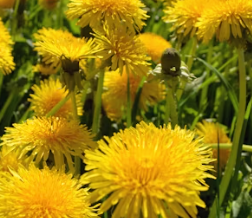
If weeds do pop up in small areas, manual removal is recommended. For taproots, such as dandelions, use a tool to help pry the deep root from the soil. In some cases, chemical removal may be warranted to keep the lawn healthy and prevent the problem from spreading.
The next step for weed control, after proper lawncare, is weed identification. If you don’t know what weed(s) you’re trying to control, you won’t be able to develop an efficient plan. This time of year, the common weeds are dandelions, henbit and chickweed. Treating the area when the weeds are small will provide the best control. For any chemicals applied, always read and follow the label carefully. Only apply chemicals on a day that is wind-free and at least 50 degrees F.
For help identifying weeds in your lawn and developing an action plan for controlling them, contact your local Extension agency.

Just a Little Light: Trees and Seasons

0

Dawn Phelps
Columnist

Autumn has made her presence known.  A beautiful maple tree over on the hill in our town is showing off colors of orange and red, and splotches of bright yellow leaves are showing up in the trees alongside the highways.  

After our first hard frost, our red blaze maple trees outside our front window will change from green to dark red.  Then the leaves will quickly fall and form a colorful red blanket on the ground under the trees.  Only a few isolated leaves will be left clinging to the parent trees.

The trees reminded me of a poem by Joyce Kilmer (1886-1918).  Joyce, a writer, was a man in the New York National Guard who was sent to France during WWI.  He was killed by a sniper, and died at the age of 31, but that’s another story. 

One of my grade-school teachers required our class to memorize and recite the poem.  It is entitled “Trees,” and I still remember the words.

I think that I shall never see

A poem lovely as a tree.

A tree whose hungry mouth is pressed

Against the sweet earth’s flowing breast;

A tree that looks at God all day,

And lifts her leafy arms to pray;

A tree that may in summer wear

A nest of robins in her hair;

Upon whose bosom snow has lain;

Who intimately lives with rain.

Poems are made by fools like me,

But only God can make a tree.

Fields of soybeans have turned bright yellow, and milo crops have turned brown.  Some of the beans have been harvested, creating clouds of dust as the harvesting machines crawl across the fields.  Farmers are working hard to get their crops harvested.

The mornings are becoming chilly now with temperatures in the 40s and 50s.  I have not seen a hummingbird at our feeders in a few days, so I will soon wash our feeders for the last time this season.

It is time for the monarch butterflies to wing their way south to Mexico, and oddly enough, our neighbor’s lilacs are blooming again, as if it is springtime!  Yesterday, mature monarchs and some younger ones were feeding on the lilac blossoms, and I snapped some photos of them!

The ground under our neighbor’s walnut tree across the alley from our house is laden with a dense crop of walnuts.  And the squirrels are chasing, scurrying around, and picking up walnuts that they will plant in unusual places.  

 During the winter, the walnuts will freeze and pop open.  Next spring, tiny walnut trees will emerge in places where there is no space for walnut trees to grow.  Yes, autumn is here, and it is hard to believe that Thanksgiving is only a few weeks away. 

Our changing seasons are like the seasons of our lives with spring quickly giving way to summer, summer to autumn, with winter to soon follow.  If you are older, you may feel the effects of “autumn” in your joints.

Albert Camus said, “Autumn is a second spring when every leaf is a flower.”  Oh, how beautiful the trees are becoming! 

Since we cannot and would not want to control the seasons, we will just have to be thankful—thankful for every day we are given.  To everything there is a season, and a time to every purpose under the heaven” Ecclesiastes 3:1And the trees in the autumn season are glorious!


[email protected]