It all began about five years ago when I was preparing to move from Haven to Wichita. The plan was to move in with my best friend Holly, her son Roman, and their two dogs Brutus and Lucy for a short time. As luck would have it, she had the opportunity to apply for a PhD program in the UK and needed someone to look after her home while she pursued her studies abroad—perfect timing for both of us.
When we first moved in, Brutus was beyond excited to have new faces in the house. Lucy, on the other hand, was much more reserved. She spent the first two weeks hiding under the bed, unsure of our presence. But over time, she realized we were sticking around—and slowly but surely, she warmed up to us.
Not long after, Holly and her son took a trip to the UK, giving us some one-on-one time with Brutus and Lucy. Life with them was anything but boring. They had such strong personalities and even seemed to have their little routines and “jobs” around the house.
Eventually, Holly returned to the UK, and then—COVID hit. She found herself stuck overseas, and things quickly became overwhelming. Thankfully, she made it back safely. But with her permanent move on the horizon, the reality set in: Brutus and Lucy would be going with her. We were heartbroken. Over time, they’d become such an important part of our lives, but we understood they had to go.
One night while we were watching TV, my daughter casually suggested, “We should get puppies!” That was all Holly needed to hear. Not one to do things halfway, she went all in—and surprised the kids with not just one, but two puppies.
That’s how Luna and Scout came into our lives. On a cold, rainy night, we drove to the west side of Wichita to pick them up. They were so tiny—barely eight weeks old. My son Cole and Holly’s son Roman named one Scout, and my daughter Claire chose the name Luna.
As Holly’s move approached, she discovered that relocating Brutus and Lucy overseas was far more complicated than expected. In a twist of fate, it was decided they would stay behind.
And just like that—I officially became the proud mom of four wigglebutts. Let the adventure begin!
Riding unrestrained in the open bed of a moving pickup truck proved fatal last July for two men, 19 and 20, who were ejected when that truck slammed into the rear of another vehicle in Colorado Springs, Colorado.
“Depending on where you live, people in the backs of pickup trucks might be a common sight,” said thezebra.com, a website that helps people compare insurance policies. “However, whether due to occupation, necessity or a casual ride, the practice poses significant safety risks.”
A lack of restraints and secured seating, combined with exposure to environmental hazards and risk during vehicle maneuvers, leaves passengers in truck beds vulnerable, that site said.
What does Kansas law say about riding in the back of pickups?
Kansas statute 8-1578(a) — passed in 1992 — consequently bans riding in pickup beds on many public roads for anyone under 14 except in certain, specific situations.
That statute allows people to ride in truck beds if they are 14 or older.
However, it bans people 14 and older from allowing children under 14 to ride in beds of moving trucks on most public roads.
When does the law not apply?
The state law involved does not apply on private property, leaving youngsters under 14 free to ride in pickup beds through private farm fields.
The law specifies that its provisions apply “only when a vehicle is being operated within the corporate limits of a city or on the state highway system.”
The law’s wording adds that it does not apply to:
“An employee under the age of 14 years engaged in the necessary discharge of the employee’s duty within truck bodies in space intended for merchandise or cargo.”
Or “when the vehicle is being operated in parades, caravans or exhibitions which are officially authorized or otherwise permitted by law.”
What does the law say in other states?
Eighteen states have no state laws at all regarding riding in beds of pickup trucks, thezebra.com said earlier this year.
“Only three states (Arkansas, California and New Jersey) and the District of Columbia mostly outlaw the practice with few exceptions,” that site said.
It added: “The remaining states all have something to say about it, but they put different restrictions on it. In many cases, it depends on the age of the passenger or how fast the vehicle is going.”
Amelia Earhart, Dwight D. Eisenhower and the Wizard of Oz all have links to Kansas towns that the WorldAtlas website describes as being like something out of a fairy tale.
“Think fairy tales are just for bedtime?” WorldAtlas asked. “Kansas says otherwise. Although this state quietly lies in the middle of the Midwest, from the Flint Hills to the Ozarks, its small towns offer more quaintness than prairie views. Many have names and storied histories based on railroad lines, cattle trails, and frontier legends.”
Following are those towns.
Atchison
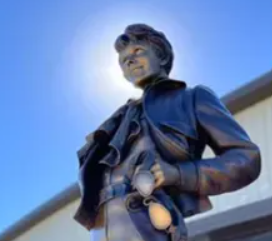
“You will fall in love with this town, but unfortunately, its Earhart belongs to Amelia,” WorldAtlas said while referring to the aviator, who vanished in 1937 in the Pacific while trying to fly a Lockheed Model 10 Electra plane around the world.
WorldAtlas suggested visitors to Atchison, a city of about 11,000, should start at the Amelia Earhart Birthplace Museum, a restored Victorian home that showcases her family photos, childhood artifacts and personal belongings.
It also recommended visiting the contemporary Amelia Earhart Hangar Museum, which features flight simulators, interactive displays and the last remaining Lockheed Model 10 Electra plane out of 149 that were made.
The site added, “Stroll quietly through the International Forest of Friendship, where trees have been planted in recognition of aviation pioneers, astronauts and trailblazers of the skies, honoring these contributions from around the globe.”
Wamego
“Here, every road leads back to Dorothy,” WorldAtlas said of this northeast Kansas city of about 4,900, which capitalizes on the Sunflower State’s enduring fame as being the home of Dorothy, the central character in the 1900 book and 1939 movie “The Wizard of Oz.”
WorldAtlas suggested visitors start at the Oz Museum, a “technicolor shrine to Kansas’ most famous story,” which displays hundreds of movie props, rare collectibles and original artifacts, then go to nearby Oz Winery, which serves playful blends in a cozy tasting room that include “Drunken Munchkin” and “Witch in the Ditch.”
The site recommended visiting Wamego for OZtoberFest, at which it said, “Fans from numerous states come to watch the entire town transform into a costumed and food-truck-powered event.”
This year’s OZtoberfest will be Oct. 4.
Lucas
“Being in a fairy tale isn’t about beauty,” WorldAtlas said. “It’s about feeling like you have stepped out of the real world.”
It consequently suggested visiting Lucas, population 332 in Russell County in north-central Kansas, the site of S.P. Dinsmoor’s Garden of Eden, the oldest intact folk-art environment in the U.S. Concrete figures created by Dinsmoor, who died in 1932, can be seen scaling the house’s exterior. His mummified body can also be seen there, behind glass.
WorldAtlas recommended visitors to Lucas also enjoy World’s Largest Things Inc., a quirky museum featuring tiny, handmade representations of some of America’s largest oddities, from ketchup bottles to massive balls of yarn; Bowl Plaza, a working public restroom that is also a work of art, mimicking a giant toilet; and the nearby Open Range Zoo, where full-sized animal sculptures “are situated along the grass like a surreal safari.”
Abilene
“Trains, trails, and presidential tales all lead to Abilene,” the boyhood home of President Dwight D. Eisenhower, WorldAtlas said. The city of about 6,500 is located in Dickinson County in north-central Kansas.
“Continue your day by stepping back into frontier days at Old Abilene Town, a nostalgic recreation of a western street complete with costumed reenactors, saloons, and a working blacksmith shop,” WorldAtlas said. “When you are done exploring, slow down and relax at Amanda’s Bakery & Bistro, a quaint bakery and café near downtown, specializing in pies and farmhouse style.”Only in Baldwin City can visitors pet alpacas and take part in a fall festival the same afternoon, WorldAtlas said.
Baldwin City
A community of about 4,800, Baldwin City is located in Douglas County in northeast Kansas.
“Visit Ad Astra Alpacas, a lovely family farm where you can meet and feed fluffy alpacas and even walk some on a leash,” WorldAtlas said. “The farm is a whimsical setting that makes Baldwin feel magical and out of a children’s story. For more magic, venture out to explore nature at the Ivan Boyd Prairie Preserve or Black Jack Battlefield Park.”
WorldAtlas recommended visiting Baldwin City during its annual Maple Leaf Festival, first held in 1958, which it said has become one of the largest fall events in the state and offers “parades, quilt shows, street food, and pumpkin everything.”
This year’s Maple Leaf Festival will be Oct. 18 and 19, its website said.
K-State experts say a thoughtful crossbreeding plan can boost fertility, longevity and herd resilience.
If only breeding cattle were as simple as picking toppings at a burger bar—add a little of this, a dash of that and you’re set.
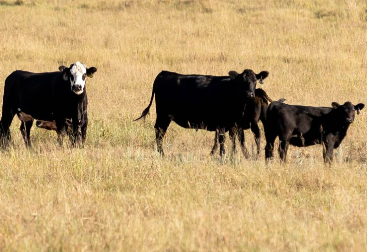
But as Kansas State University beef cattle experts reminded producers in a recent episode of the Beef Cattle Institute’s Cattle Chat podcast, crossbreeding takes more than guesswork. Done right, it can unlock the power of heterosis, also known as hybrid vigor — giving producers cows that stay in the herd longer, breed back easier and better withstand the challenges of the pasture.
“Heterosis is a good thing,” said Phillip Lancaster, a cattle nutritionist. “There are two things to keep in mind: if it gets too complicated and you backcross too much, you can lose the benefits. And it depends on which breeds you’re crossing. You get the most advantage when you cross Bos indicus with Bos taurus (cattle origins), for example.”
Lancaster cautioned that heterosis must add measurable value. “If the cross doesn’t perform as well as one of the breeds by itself, then it isn’t worth it,” he said.
Veterinarian Bob Larson emphasized the importance of breed complementarity. “It comes down to how well you can manage the plan you have for genetics,” he said.
Veterinarian Todd Gunderson added that producers should start by identifying the traits that matter most to their operation.
“The question is, what traits are most important to you, and where can you best get those?” he said.
That focus on priorities, the experts explained, connects directly to how producers approach breed diversity. Lancaster noted that while many breeds today share similar carcass goals, opportunities still exist for producers who look beyond the average.
“Most breed associations have similar end goals now,” he said. “That’s why it’s important to find individual animals that bring something different — something that helps you reach your specific operational goals.”
Looking for new inspiration in the kitchen this fall or wanting to add a fresh twist to your favorite family meals? Be sure to request your copy of the 2025 Kansas Wheat Commission Recipe Book. This year’s edition features the winning entries from the 2025 National Festival of Breads (NFOB), making it a must-have for recipe collectors and home bakers alike.
“The National Festival of Breads celebrates the tradition of baking bread at home,” said Cindy Falk, Kansas Wheat nutrition educator and festival co-director. “This year’s winners shared not only the results of experimenting with new flavor combinations or ingredients, but also the joy of baking for family and friends. We hope you are inspired by the top recipes from this year’s competition to create something original in your own kitchen!”
The cover recipe for 2025 is Vegan Bakery-Style Orange Chocolate Chip Muffins, created by Sarah Meuser of New Milford, Connecticut. With bright citrus and sweet chocolate in a plant-based format, the muffins bring an indulgent yet wholesome twist to fall baking. The recipe earned Meuser the Quick Bread Category Champion.
The Yeast Bread Category Champion is Cranberry Hard Apple Cider Bread by Janet Gill of Canton, Ohio. Combining tart cranberries with the mellow flavor of cider, the loaf captures the cozy taste of autumn gatherings.
Also included in the recipe book are other top recipes from the NFOB, including Foolproof FAUX-caccia Biscuits by Susan Simpson of Harrington, Delaware, Hot Honey, Date and Goat Cheese Beer Bread by Janet Gill of Canton, Ohio, Shirley Temple Scones by Michele Kusma of Columbus, Ohio, and Texas Fruitcake Scones by Felice Bogus of Raleigh, North Carolina. The book also features Chocolate Praline Povitica, Jalapeño Cheddar Roulade, Lemon Meringue Spirals, Pimento Cheese Pull-Apart Bread with Hot Honey, Sticky Pear Claws and Wicked-Good Bread, all of which received honorable mention recognition.
“We love hearing how bakers use these recipes throughout the year, whether they become your family’s new favorite or the next ribbon-winning entry at your county fair,” Falk said. “You can count on these recipes to work, and the creative ingredient combinations, shapes and undeniable taste make these recipes perfect for any fall celebration.”
Recipes for each year’s book are hand-selected by teams of judges and tested by Falk at the Syngenta Speak for Wheat Test Kitchen at the Kansas Wheat Innovation Center in Manhattan. Volunteers and extension agents also assist with testing and distribution, ensuring the book reaches communities across Kansas and beyond.
The National Festival of Breads, sponsored by King Arthur Baking Company® and Kansas Wheat, continues to highlight the role of home bakers in America’s breadbasket. Additional support comes from Stafford County Flour Mills, Kansas Soybean Commission, Kansas Corn Commission, Hy-Vee of Manhattan and the Manhattan Convention & Visitors Bureau.
Request a free copy of the recipe book at kswheat.com/recipebook or explore this year’s recipes online at nationalfestivalofbreads.com/recipe.