Monday, January 19, 2026
Home Blog Page 104

Plan Ahead: Wheat Rx and HPJ Live Offer Timely Tools for Farmers

0
Kansas Wheat

Contact: Marsha Boswell, [email protected]

For the audio version, visit kswheat.com.

As Kansas wheat farmers look ahead to next year’s crop, two upcoming educational events offer timely tools and expert insight to support strong decision-making for fall planting. High Plains Journal’s HPJ Live runs Aug. 6-8 in Wichita, combining multiple crop‑focused “U-Events” with a tradeshow and networking opportunities. Then, on Aug. 20 in Pratt, Wheat Rx returns with a morning of research-driven presentations on variety selection, fertility, disease management and conservation. Both events are free for members of the Kansas Association of Wheat Growers, and both are designed to deliver real-world value for producers planning their next wheat crop.

HPJ Live: Aug. 6-8 in Wichita

The inaugural High Plains Journal Live (HPJ Live) will take place from Aug. 6-8 at the Century II Convention Center in Wichita, bringing together farmers, ranchers, agribusinesses and agricultural experts for three days of learning and networking. Hosted by High Plains Journal, this new event combines the publication’s “U-Events,” including Sorghum U Wheat U, with a regional tradeshow and more than 40 educational sessions covering topics across crop and livestock production. Attendees can connect with top vendors, hear from industry leaders, and expand their networks during this multi-day gathering built for producers across the Plains.

Wheat

producers attending HPJ Live will find several sessions tailored to their interests on Thursday, Aug. 7, with additional educational opportunities continuing into Friday, Aug. 8. Topics include advances in hard red winter wheat breeding for improved consumer traits, an update on the 2025 wheat streak mosaic virus outbreak and its management and a look at the future of HB4 wheat and its potential impact on the U.S. wheat industry. Attendees can also sit in on a high-yield success panel featuring lessons learned from top-performing commodity growers, as well as a session focused on farm marketing strategies and grain storage dynamics in a volatile global market. These sessions offer timely, research-backed insight for wheat producers preparing for the year ahead.


Members of the Kansas Association of Wheat Growers (KAWG), check your email for a special code to claim free admission to HPJ Live. The first 50 members to use the code will receive entry to the whole event. For more information and to register, visit live.hpj.com.

Wheat Rx: Aug. 20 in Pratt

Kansas wheat producers will have another opportunity to sharpen their management plans for next year’s crop during the upcoming Wheat Rx seminar, scheduled for Wednesday, Aug. 20, at the Pratt County 4-H Events Center, located at 81 Lake Rd. in Pratt, Kansas. This educational event is hosted by K-State Research and Extension and Kansas Wheat and will cover critical topics to support wheat management decisions ahead of the 2026 planting season.


The seminar will feature expert presentations on wheat variety selection, wheat streak mosaic virus, conservation practices in wheat-based cropping systems and soil fertility and nutrient management.


This seminar is part of the Wheat Rx initiative, an ongoing partnership between Kansas Wheat and K-State Research and Extension to promote the adoption of proven, research-based management strategies for producing high-quality, high-yielding winter wheat in Kansas. In addition to in-person seminars, the Wheat Rx effort includes a collection of Extension publications and resources available at kswheat.com/wheatrx.


KAWG members receive free registration to this event. Non-member registration is $110. To take advantage of the member benefit, join or renew at kswheat.com/join. The registration link for the event is https://kswheat.com/prattrx. Lunch will be provided for all attendees.
E-Cows

0
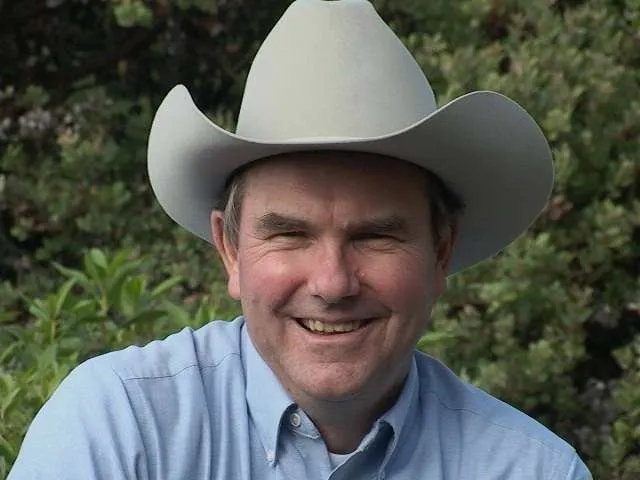
lee pitts

It’s looking more and more like ranchers are going to have electronic ear tags shoved down their throat whether they like it or not. In the future you’ll be required to use EID tags so your cattle can be scanned like a can of peaches in the grocery store. Here are ten events I see happening to ranchers someday as a result. Just remember, you read it here first.

#10- The IRS will have a huge air force of drones for the sole purpose of flying over ranches to take an inventory so they’ll know exactly how many animals you have so that at the end of the year you’ll get an all-new inventory tax bill. Whatever happened to the unwritten rule that it’s impolite to ask a rancher how many cows he or she owns?

#9- Not only will the feds have drones to count cows ranchers will have their own drones to take a daily inventory. Then your neighbor will send you a feed bill for having five cows on his place for 27 days. If you thought the Hatfield and McCoy’s feud was bad just wait until ranchers start spying on their neighbors.

#8- The Forest Service and the Bureau of Land Management will also have a drone air force too. One day after your due date for getting all your cows removed from your allotment they will do a flyover to make sure you got off on time. But because the EID tag is still in the ear of a dead cow that was either killed by wolves or shot by a short-sighted hunter the feds will assess you a huge fine, take your allotment away and throw you in jail for not removing ALL your cows in a timely manner.

7- The USDA will say that their new rules will apply only to those cattle involved in interstate commerce. But is a rancher in California going to commit economic suicide because most of the California stockers are sold to feeders in Nebraska, Colorado, etc. and by not using EID tags he’s going to eliminate them from bidding on his cattle?

#6- Auction markets are disappearing faster than a dozen donuts at a police station due to the U.S. beef cattle herd being the smallest it’s been in 64 years. This is really hurting some of the smaller auction yards. When they are told how much it will cost to install EID readers on their scale and to update computer programs to tie that information in with the price paid, many of the auction owners will just quit.

#5- EID readers and computer programs will make the USDA’s job much easier. At the touch of a keystroke they will know how many cattle and what prices were paid. This will allow packers to know immediately which auction markets to send their buyers to in order buy their cattle the cheapest.

#4- One day you’ll sell a slaughter cow that will be ground up in a big batch of ground beef that could potentially have meat in it from a couple dozen countries. When it’s found that a specific batch of hamburger has e coli in it and because they’ll know your cow contributed to that particular batch the USDA will send officials out to your place to depopulate your entire herd, including those two new $10,000 bulls you just bought. D9 bulldozers will then show up to dig a big trench and bury all your beautiful cows. The packers will love it because they can assign all the blame to you and you’ll get sued and lose your ranch despite the fact that the dirty cow meat actually came from Australia.

#3- Using the IRS inventory you will receive a BIG BILL from the EPA based on how many head you own multiplied by their supposed greenhouse gas production.

#2- Good help will be as rare as a cowboy with a 401K. That’s because a cattleman will someday be able to check the temperature of all his cows, or all his cattle in a feedlot, with a drone and a special EID reader. Cowboys will be replaced by drone pilots and virtual fences.

#!- You inventory tax bill may be inflated by one head thanks to the Longhorn head hanging over your fireplace with an EID tag still in its ear.


Fraud Alert: Scammers Using Fake KDOT Traffic Texts to Demand Payments

0

The Kansas Department of Transportation (KDOT) is warning about a new scam circulating via text message. The texts falsely claim to be from KDOT and the Kansas Department of Motor Vehicles (DMV) giving a final notice of unpaid traffic tickets, and that enforcement will begin soon.

KDOT does not collect money for traffic tickets or tolls and will never request or collect payments through text messages. These messages are not legitimate.

Do not click or open any links within these scam texts. Clicking on these links could expose your personal and financial information to scammers. Never share sensitive personal or financial details via text message or by clicking unknown links.

If you’ve received a scam message, report it to the Federal Trade Commission at https://reportfraud.ftc.gov/ and/or the Internet Crime Complaint Center at https://www.ic3.gov/. Delete the text and report it as junk. If you’ve provided payment information at a fraudulent web site, contact your bank or credit card company immediately.

Stay informed about official KDOT information by visiting our official website at ksdot.gov and our verified social media channels.

Male tarantulas will be roaming about Kansas in September as they look for love

0

These misunderstood, wandering arachnids are often simply young males in search of love. Here’s where you might see them in fall 2025.

A hairy spider native to Kansas once was the namesake of a professional, minor league hockey team, the “Topeka Tarantulas.”

That team, based in the Sunflower State’s capital city, folded in 2005, a year after it was established.

But male tarantulas still leave their burrows and roam the rocky pastures and grasslands of Kansas each September in search of mates, at times crossing highways, says “A Pocket Guide to Common Kansas Spiders,” by Hank Guarisco.

Expert’s advice on tarantulas: Leave them alone

If you’re hiking or camping in the arid Southwest and West in the next few months, get ready for what could be the experience — or fright — of a lifetime.

Across the United States, in California, Colorado, Kansas, New Mexico and Texas, tens of thousands of tarantulas will being crawling out of their burrows in search of females — making for a fascinating, if a little creepy — display of the wonders of nature.

It’s tarantula mating season.

“If you’re lucky enough you can sometimes see them in hordes crossing the roads at certain times of the year,” said Dan McCamish, a senior environmental scientist with California State Parks.

His advice? Leave them alone.

“It’s a wild animal — it doesn’t want to be picked up and loved and hugged,” he said. “In general the species is very docile, but if you were to handle one they could bite you.”

While the idea of thousands of hairy, baseball-sized spiders picking their way through parks and campgrounds might give many people the heebie-jeebies, in general these misunderstood, wandering arachnids are simply young males in search of love.

And if they wander into your tent, they didn’t mean to.

“In truth they’re gentle, ecologically valuable animals,” said McCamish. “Mostly they’re interested in escaping from confrontations — especially with something they know could squish them.”

Here’s what to know about tarantulas during their mating season.

Where in the US do tarantulas live?

Tarantulas prefer dry climates and primarily live in Western and Southwestern states with arid and semi-arid habitats. They are prevalent in Arizona, California, Texas, New Mexico, Nevada, Utah, Colorado, Oregon and Washington.

But they’re in other places as well. South Florida has the Mexican red rump and the Texas brown can be found in Oklahoma and Missouri.

In Kansas, tarantulas are generally found in the southern and western parts of the state, being present in western Kansas as far north as Trego, Russell and Gove counties, said “A Pocket Guide to Common Kansas Spiders.”

There are 29 described individual species of tarantulas in the United States.

Common species include the desert blonde tarantula and the Texas brown (though Texas has 14 tarantula species). In Arizona, there’s even a variety with a fiery-red abdomen.

When are you likely to see tarantulas in the wild?

Tarantulas live in these areas year-round, but they mostly keep to themselves and their nests in the ground, so hikers and campers don’t see a lot of them.

“As with most things that live in the desert in the summer, they’re generally nocturnal,” McCamish said. “So unless you’re out in the middle of the night, which I don’t recommend for safety purposes, you likely won’t see them.”

Governor Kelly Proclaims August as Kansas Farmers’ Market Month

0

For Immediate Release:
August 1, 2025

Media please contact:
KDA Communications Office
785-564-6706
[email protected]

MANHATTAN, Kansas —In recognition of the important role farmers’ markets play in Kansas communities, Governor Laura Kelly proclaimed August as Kansas Farmers’ Market Month.

In both urban centers and rural communities, farmers’ markets give consumers access to fresh, locally grown produce and serve as an important link between food producers and consumers of Kansas products. Farmers’ markets also keep money in Kansas communities, which helps make small businesses stronger and positively contributes to local economies.

The number of farmers’ markets in Kansas has grown from 26 in 1987 to more than 119 registered farmers’ markets today. Farmers’ markets in Kansas can register with the Kansas Department of Agriculture as part of the state’s agricultural trademark program, From the Land of Kansas.

“We are excited about the growth and expansion of farmers’ markets across the state,” said Secretary of Agriculture Mike Beam. “Farmers’ markets serve as a great way for producers to connect directly with consumers and sell their products locally.”

KDA supports farmers’ markets by maintaining the Central Registration for Kansas Farmers’ Markets, which is shared with the public through an interactive map and market directory. KDA also provides educational resources through newsletters, workshops and webinars which help farmers’ markets across the state stay up to date with best practices including food safety regulations. KDA and From the Land of Kansas strive to serve Kansas farmers, ranchers, agribusinesses and consumers by expanding agricultural markets and providing support and assistance to help Kansas businesses grow.

Farmers’ markets are a vibrant part of many Kansas communities, and contribute to the health, well-being and quality of life for many Kansans. To locate a farmers’ market in your area, or to receive more information on how to register a farmers’ market please visit www.FromtheLandofKansas.com or email [email protected].

###

SUGGESTED CUTLINE: The Kansas Department of Agriculture was joined by several representatives of Kansas farmers’ markets as Governor Laura Kelly proclaimed August as Kansas Farmers’ Market Month. From left: Brittney Grother, KDA; Robin Dolby, KDA; Mary Tyler, Breadbasket Farmers Market in Topeka; Sammy Gleason, KDA; and April Rickman, Leslie Bishop, and Dian Gebhardt, all with the Farm and Art Market Downtown in Salina.

Governor Kelly Proclaims August as Kansas Farmers’ Market Month.pdf

Farmers Market Month Proclamation.jpg