

Halstead boys cross country takes places first at Regionals!
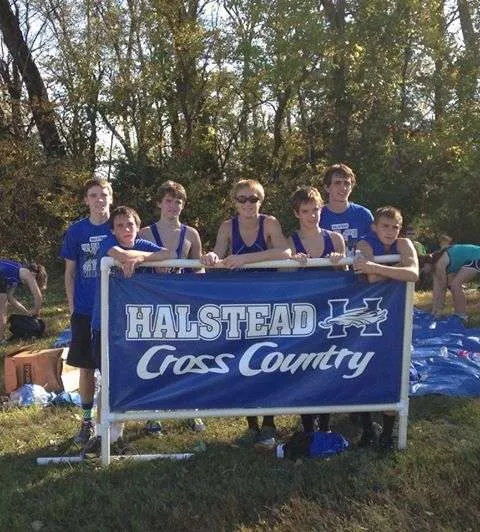
Congratulations to coach Curtis Vermillion and the Dragons cross country team for an excellent performance on Saturday.
Good luck at the State Meet!
photo credit – Halstead High School – USD 440
In praise of hunting
By John Schlageck, Kansas Farm Bureau
During the early days of our country, settlers hunted out of necessity. While farming and trading provided them with a great deal of food, it wasn’t enough for sustenance. In order to survive, they hunted, fished and trapped wildlife where they lived and worked.
Today, hunting in America offers two major benefits to society: wildlife management and an economic boost.
Protecting wildlife makes sense from an environmental standpoint in today’s society. This allows for future hunting seasons. Wildlife management also ensures overcrowding will be less likely.
Today, most wildlife populations continue to thrive under conservation programs put into place in the early 1900s. For example, the white-tailed deer population was a meager half a million 100 years ago. With careful conservation efforts, plentiful crops, well planned hunting seasons and reasonable limits for hunters, the population has grown to approximately 32,000,000.
Almost every other wildlife species has flourished as well. Most of these animals number in the millions today. This wasn’t the case before the efforts of hunters and wildlife enthusiasts became commonplace.
Just as impressive are the numbers on the economic impact of hunting. With approximately 6 percent of the U.S. population hunting today, business is booming.
For countless small businesses in rural communities in Kansas and across this nation, hunter spending plays a major role in economic success.
Local shops, outfitters, hotels, convenience stores, restaurants and landowners all benefit. In 2011, nearly 13.7 million hunters spent $38.3 billion, according to a 2011 U.S. Fish and Wildlife Service survey.
In addition to the 680,000 jobs supported by hunters, hunting generated $11.8 billion in tax revenues for federal, state and local coffers. Wildlife agency positions are also supported by sportsmen through the purchase of hunting licenses and funds collected as excise taxes through the long-running Federal Aid in Wildlife Restoration
These sportsmen contribute on average $8 million per day, much of which goes toward conservation efforts. Billions of dollars have been used to protect the habitats of fish and wildlife throughout the country.
Through conservation efforts, money generated and jobs created, hunting remains a positive engine in this country’s economic industry. What many fail to understand about this sacred tradition is that it isn’t just about the act itself.
Hunting provides the opportunity to experience nature. Some sportsmen will tell you the best part about hunting isn’t shooting; it is the peacefulness and serenity of being outdoors.
Some may even feel a connection with their ancestry while hunting. It’s also an opportunity to pass such traditions to their children and friends.
For generations, families have shared these experiences and it has strengthened their relationships. It is a visceral feeling that can strengthen family bonds. Hunting remains a way of sharing in nature’s beauty and the dynamic between human and animal have few comparisons in society today.
Hunting prevails as a part of our American identity. Millions of people take pride in hunting. Their experiences are much bigger than themselves and create this community called hunting.
John Schlageck is a leading commentator on agriculture and rural Kansas. Born and raised on a diversified farm in northwestern Kansas, his writing reflects a lifetime of experience, knowledge and passion.
– See more at: http://www.kfb.org/news/insight/index.html#sthash.atnVQ1xt.dpuf
cover photo – DNR Wildlife and Heritage
Congrats to Haven Cross Country!

Congrats to Bre Jones, Caitlin Schlickau, Betty Ausherman, Ashton Schlickau, Jacy Ummel, and Amy Burton for winning cross country league championship!
