Tuesday, January 13, 2026
Home Blog Page 38

200,000 leaves – Building the Compost Pile

0

A mature shade tree like an oak can have around 200,000 leaves in a year. Those leaves fall off this time of year making for a lot of organic matter to deal with. Leaves are a great material for making compost to use in your garden! Making compost from organic materials as they become available is a very slow process. The process can be accelerated by making hot compost. Start with a 6- to 8-inch layer of “brown” materials such as straw, old mulch, or tree leaves. Add a 2- to 3-inch layer of “green” materials such as grass clippings, coffee grounds, weeds, kitchen waste, or freshly harvested plant material. Alternate brown and green layers until the pile is 3 to 5 feet high. If green materials are in short supply, add a small amount of commercial garden fertilizer (about 1 to 2 cups per square yard) or an inch or two of manure. The fertilizer or manure provides nutrients that allow microorganisms to build up in the compost pile to ensure decomposition. Water after each layer. Brown materials can be difficult to find at certain times of the year. Stockpile leaves bagged in the fall and add them to the compost pile as needed.


The top of the compost pile should be dish shaped, so it is slightly lower in the center than on the sides. This allows rainfall to soak into the pile instead of running off. In dry conditions, the pile should be soaked weekly so it stays moist. The compost pile eventually will reach 150 to 160°F before it begins to cool down. When this happens, it is time to turn the pile. Slice through the layers and turn the materials upside down. Move materials from the outside of the pile to the inside. After mixing, form the dish at the top and water. Let the pile heat up and cool down as before. Compost should be ready four to six months after the pile is started. Most gardeners keep two piles or divide the pile into two sections, using one side to accumulate new material and storing last year’s compost in the other.


As the compost pile progresses, check for signs the process is going well. The pile should shrink or sink in two to three weeks. If not, loosen it with a shovel or fork to aerate, adding moisture if compost is dry. A strong ammonia smell or other offensive odors may indicate overwatering or an imbalance in materials. Ammonia odors can occur when composting a lot of fresh, green plant material, especially grass clippings. After four to five weeks the inside of the pile should be hot. Push a wire or stick deep into the pile, pulling it out and touching it to check temperature. In three to four months, the pile should be about half its original height. Compost will be dark, moist, and crumbly and should smell like moldy leaves with a rich, earthy odor.

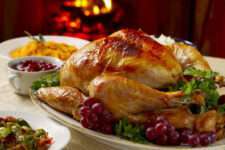
Chicken Stuffing Casserole

0

I must be ready for Thanksgiving because I created a quick meal tonight for the two of us. It tasted like Thanksgiving in a one dish meal. A bit like the ‘Thanksgiving In a Cup’ which ran 2-3 columns back. It features two over the counter ‘pre’ purchases, stove top stuffing and a can of mushroom soup. Not my norm, that’s for sure, but it was a yummy one dish meal.

I have a recipe a ‘bit’ like this one that is made with shredded zucchini, chicken and the stove top stuffing. There are going to be many flip outs for this little casserole dish. Sometimes what we have on hand truly rules the outcome of many dishes.

I’m also going to shock you when I share how I used a Southeastern Mills Chicken gravy packet for the top of the casserole. A little salad on the side, poof, a nice family dinner. This recipe was for an 8 x 8 dish, it will easily double for a 9 x 13 baking pan. Another fun thing is how it only took one large, pre cooked chicken breast, for the 8 x 8 pan.

If the cheese is too much and you need to cut back, it can certainly be omitted. I really don’t think you are going to miss it all that much.

One thing I’ve been cooking with a great deal the last couple of weeks is fresh parsley. I almost put some in this dish, but didn’t. I would definitely think of adding it to the recipe.

Need another direction for this quick fix casserole? Go with the herb stuffing and use pre cooked sausage and chopped apple with the onion and celery, Like things spicy, use a little pepper jack cheese instead of cheddar.

This simple dish could come in real handy as you prepare for the holiday season. The meal comes together quite quickly while you prepare holiday goodies or wrap a few gifts. This is my favorite week of the fall season. Here in the Ozark Hills the first week of November is always a pretty one, and the temperatures are grand.

Oh yes, pumpkin fans, be sure and stop by Culvers for my favorite shake, the pumpkins salted caramel. Simply yours The Covered Dish.

Chicken Stuffing Casserole

1 box low sodium chicken or turkey Stove Top Stuffing

½ of a large sweet onion, chopped fine

3 stalks of celery, chopped fine

½ cup dried craisins

1 can cream of mushroom soup

1 can of milk

1 cup shredded cheddar cheese

1 large pre-cooked chicken breast, cut into chunks

2 whole eggs, lightly whisked

Additional cheese for the top, adding towards the end.

Mix all ingredients except the additional shredded cheese into a bowl. When well blended spread into a greased 8 x 8 baking dish. Bake at 350 to 375 for approximately an hour. Towards the end of baking sprinkle on additional cheese. While the casserole is baking start preparing the gravy to serve over the top of the dish. Great leftovers to take for lunch. Enjoy-

Per pound price for whole turkeys up 70% compared to last year

0
Photo courtesy: plainville farms

Prices for centerpiece turkeys are up, but overall consumers are likely to see a mixed bag of price increases and decreases as they shop for traditional Thanksgiving holiday meals.

While recent price trends for whole turkeys were much higher than last year, the cost of other traditional fare like hams and potatoes, as well as baking items like eggs and butter were lower, said David Anderson, Ph.D., Texas A&M AgriLife Extension Service economist and professor in the Texas A&M Department of Agricultural Economics, Bryan-College Station.

Anderson said overall prices and seasonal specials indicate opportunities for shoppers to find value as the holiday approaches.

“You may see higher prices on some items but remember that grocery stores always have a strategy for Thanksgiving,” he said. “Typically, it’s built around a special feature on the turkey to get people into the store, and I suspect this year will be no different.”

Turkey production down, prices up

Anderson said wholesale prices for whole turkeys were $1.68 per pound compared to 99 cents per pound this time last year – a 70% increase. Two factors – the resurgence of highly pathogenic avian influenza, HPAI, and lower overall turkey production – have reduced supplies that have triggered higher prices.

Turkey and egg production were hit hardest during previous outbreaks of the disease, and turkey supplies are still recovering from losses that continued into late spring. Commercially raised turkey hens take 15-18 weeks to reach maturity while larger toms take 20 weeks or more to reach harvest weights.

“Turkey production takes time, and so even the recovery from avian flu in the spring is impacting supplies,” he said. “The buildup on whole turkeys for Thanksgiving happens throughout the year as birds are held back to meet that holiday demand.”

Anderson said turkey production is down more than 8% year over year as the industry continues to grapple with low prices, increased input and labor costs, and shifting consumer demand. Aside from whole birds for the holiday season, most turkey ends up as deli meats in grocery stores and sandwich shops.

While Americans are eating double the amount of turkey they did in 1970, the 14.8 pounds per person consumed in 2023 is 18% lower than the 18.1 pounds per capita consumed in 1996.

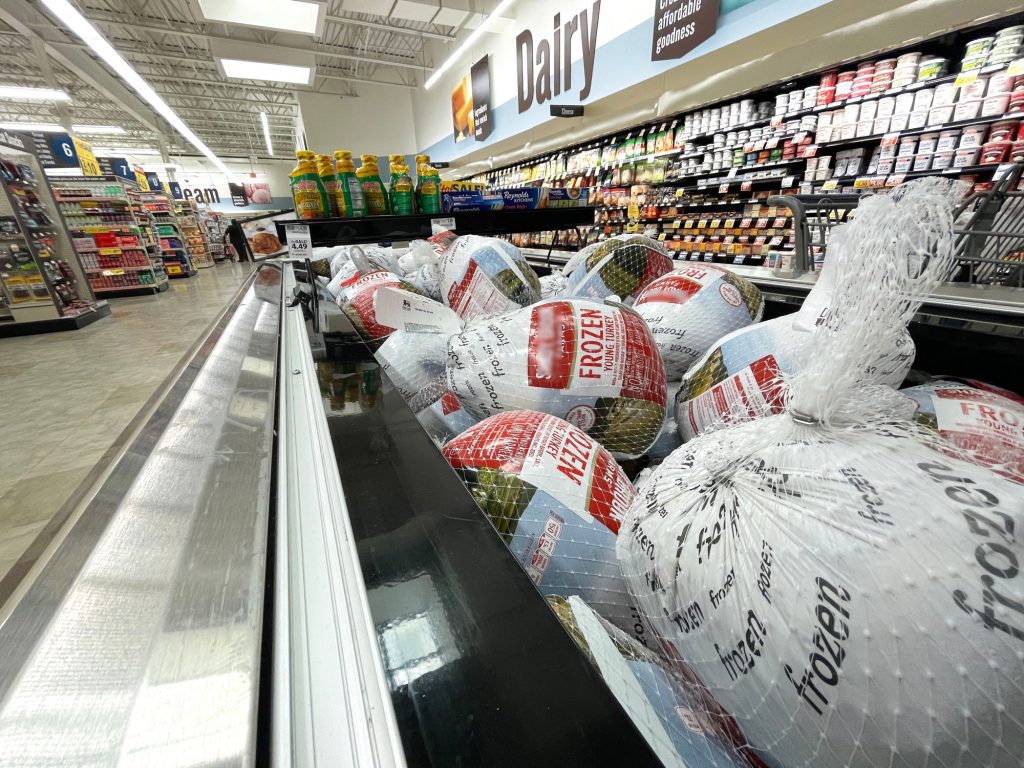
Frozen turkeys at a grocery story (Photo: USDA Food Safety and Inspection Service)

Finding fewer specials so far

Many grocers set contracts with turkey wholesalers long before the holiday to lock in prices and the number of birds to meet expected demand, Anderson said. This can present opportunities for grocers to offer special prices or buying incentives to shoppers.

The retail outlet survey data shows grocers have been offering fewer specials compared to last year, he said. Prices may be lower in some cases, but there are fewer items being featured with special prices.

Anderson said it would be difficult to speculate on what triggered this retail trend, but he’s curious to see if special offers trend upward in the next few weeks.

He suggests shopping early for turkeys if size and brand are a consideration but that shoppers could find deals on centerpiece birds by shopping late as well.

“Even at the higher price, turkeys always seem like a good value relative to other meats when you consider leftovers and secondary meals that we get out of them,” he said. “As an economist we tend to focus on price, but in this case, I have to consider value.”

Mixed bag of prices on other items

Meanwhile, shoppers are also likely to find lower prices on some items like baking pumpkins, potatoes, milk and eggs, and higher prices on other meats like hams and steaks.

Eggs were $1.60 per large dozen compared to $3.30 for the same dozen last year, a 51.5% decline, Anderson said.

Dairy products like milk, butter and cheddar cheese have also experienced a sharp price decline because of higher production, he said. The U.S. dairy herd hit its highest number since the 1990s, and the nation’s 9.5 million milk cows are producing 28 pounds more milk per cow per year than they did last year.

On the other hand, potatoes like russets for baking and yellow gold for mashed potatoes have gone up slightly. Anderson said. Russets were 98 cents per pound compared to 84 cents per pound last year while yellow gold potatoes were 87 cents per pound compared to 74 cents last year.

Prices on another popular holiday item – cranberries – were also up – $2.45 per 12-ounce bag versus $2.37 last year, Anderson said.

At the retail level, prices for sliced boneless hams were relatively static $5.54 per pound compared to $5.53 per pound last year. The cost of spiral sliced hams was up – $3.17 per pound compared to $2.88 per pound last year.

“I think consumers are feeling the pressure at grocery stores with higher prices overall,” Anderson said. “But I also think there will be opportunities to find deals on those go-to items we buy to create traditional Thanksgiving Day meals.”

PHOTO: Man Taking Roast Turkey Out Of The Oven. (Photo: iStock – monkeybusinessimages)

“Listen to your gut”

0

People often talk about having a “gut feeling” or are told to “listen to their gut” when making a decision. Do you know what your gut is trying to tell you? There are multiple things that your digestive system can do to get your attention. Do you know what your body is trying to tell you? Here are some of the things your gut could be trying to say.

Pain just below the breastbone that occurs soon after eating could be a sign of a stomach ulcer. Pain that improves with eating, but then comes back 2-3 hours after eating could be a sign of an ulcer in the small intestine right past the stomach. The pain from ulcers is often described as a burning pain. This pain improves with acid blocking medication like a PPI (Proton Pump Inhibitor) or antacids.

The gallbladder can also cause significant pain in the right upper part of the abdomen, especially after eating fatty foods. Often this pain will radiate to the right shoulder or between the shoulder blades. It can lead to significant nausea and diarrhea. This pain usually will come and go. It can become very severe if a small gallstone gets stuck in the bile duct between the gallbladder and the small intestine. Infections of the gallbladder can cause fevers and chills as well.

Issues with the small intestine can also cause serious pain. The condition of Irritable Bowel Syndrome (IBS) causes abdominal pain, bloating and changes in bowel movements. IBS can cause severe diarrhea, severe constipation or both. IBS is considered a diagnosis of exclusion since these symptoms can be caused by many other conditions like Microscopic Colitis, Celiac Disease, Crohn’s Disease, Ulcerative Colitis, Small Intestine Bacterial Overgrowth, and even Colon Cancer.

However, it is important to note that not all pain in the stomach area is from the digestive system. Heart attacks can also give symptoms of indigestion, nausea, vomiting, and stomach pain. These subtle signs happen more frequently in women and can lead to delay in diagnosis. Aortic dissections or ruptured aortic aneurisms can also cause severe, tearing pain in the abdomen that can radiate to the back or shoulders.

If you notice your gut trying to tell you something, listen and get it checked out by a doctor. Many of these issues have similar or overlapping symptoms. Finding a physician who can order and interpret the right tests to find the answer is key. Your gut knows when something is wrong, and you should trust it. Listen to your gut and stay healthy out there.

Dr. Jill Kruse is a hospitalist at the Brookings Health System in Brookings, SD. She serves as one of the Prairie Doc Volunteer Hosts during its 24th Season providing Health Education Based on Science, Built on Trust. Follow The Prairie Doc® at www.prairiedoc.org, FaceBook, Instagram, YouTube, and Tik Tok. Prairie Doc Programming includes On Call with the Prairie Doc®, a medical Q&A show (most Thursdays at 7pm on YouTube and streaming on Facebook), 2 podcasts, and a Radio program (on SDPB, Sundays at 6am and 1pm).

Deer Hunting the Old-fashioned Way

0

Sometimes as I conjure up “OK Google” or check Fox News or the 7-day weather forecast on my smart phone, all while sitting in the Walmart parking lot, I wonder how we ever survived with phones that were only made to talk on. Then it hits me; we survived quite well, thank you very much.

I remember a few years back, as I rounded the corner on the gravel road on my way to refill the deer feeder in the draw below our high-rise deer blind, there were several hundred thousand dollars of excavating equipment rebuilding the terraces and forming new waterways in the fields that surround our blind. It looked as though our deer hunting could be permanently interrupted there that year, so I scouted out another property on which we have deer hunting permission. In front of that property was a wheat field that was traveled frequently by deer heading for the pond and trees on the property. I found a spot in a sharp corner of the field where it appeared deer were jumping the fence and entering the small woodlot. There was no blind built there and no good spot to set up a temporary blind to overlook that corner. The best option appeared to be the overhanging limbs of a cedar tree seventy yards away. I remember wondering aloud how I would ever survive not having a blind to hunt from, when it suddenly hit me; I had harvested more deer from a folding camp chair tucked beneath a cedar tree than from any other way, and again, I had survived quite well, thank you very much.

For those of you new to deer hunting that don’t have a blind from which to hunt, or for those of you wanting to try hunting deer for the first time but are not sure how to proceed without a blind, let me give you some tips from my experience.

Mr. Webster defines the word camouflage as “a disguise or deception; to disguise in order to conceal.” Camouflage does not have to make something or someone entirely disappear, it just has to make them blend in, and it does that by breaking up their outline. Examples of that would be sitting against a tree or sitting behind or under some broken overhanging limbs. Both choices camouflage you by breaking up the outline of your body. Joyce harvested her first deer ever as she sat on a camp chair behind a log in a big thick tree row. My point is that in the absence of a blind of some description, nature will provide you everything you need if you just learn to see it.

Not to sound over-simplistic here, but the most important element of hunting is to position yourself where there is game. So, when deciding upon a deer hunting location, choose a spot near a well used deer trail, where deer enter and exit a woodlot, etc. If you’re bow hunting, you want to be as close to the trail as possible, but if rifle hunting, choose a spot away from the trail seventy-five to a hundred yards or so. Then pay attention to where the sun will be in relation to you. You do not want the sun shining directly on you or in your eyes when it rises or sets, making it hard to see ahead of you as it shines into your eyes or lighting you up like a Christmas tree as it shines on you. Then check the wind direction, and try to position yourself where the prevailing north and west wind will blow your scent away from the trail. Next, look around you for anything that will conceal your form, like a broken-over or uprooted tree, a tree with large broken limbs that hang to the ground or a big cedar tree with long outstretched branches. Once you have found a natural blind, figure out how best to use it. Prune and remove limbs and branches until you can tuck yourself into whatever concealment you’ve chosen. Prune

away only enough to allow you entrance and to give yourself an open shooting lane. Use your imagination and move limbs and branches around if necessary to accomplish what you need. If you are firearm hunting, find a way to support your firearm. If none exists naturally, a couple 1×2’s bolted together near one end opens up into an “x” to make a cheap and dandy shooting stick to cradle your gun. Your seat can be whatever you want. If you’re young you can probably get away with sitting on a log or a bucket, but my choice is a cheap folding camp chair that gives me a back to lean against. It’s not always possible, but choosing to tuck yourself in amongst the branches of a big cedar tree will often help protect you from the north and west wind also.

There are still plenty of ways to conceal yourself to harvest a Kansas deer without a hunting blind or tree stand. Be creative; tree limbs stacked against a fence, a piece of camouflage fabric stretched around some fence posts, even digging yourself down into an old round hay bale at the edge of a field will all fill the bill. And by the way, sitting amongst the cradling limbs of a cedar tree, or in a spot carved out of an old round hay bale will offer great scent concealment also. The end result might even be more fulfilling knowing you used what God provided to fill your freezer. Continue to Explore Kansas Outdoors!

Steve can be contacted by email at [email protected].