Sunday, December 28, 2025
Home Blog Page 4760

How educated are state legislators?

0
john marshal

It may seem that ignorance ranks higher than knowledge on the sliding political scales at many state capitols.

Not that long ago, the Chronicle of Higher Education looked at the education backgrounds of the nation’s nearly 7,400 state legislators to find out, among other things, how many had attended college and earned at least a bachelor’s degree – and whether it mattered.

Nationwide, the study found, 74.7 percent of state legislators had earned bachelors degrees or higher; 40.8 percent had post-graduate degrees, masters, law, medicine, Ph.D.

Kansas ranked 41st in the 50 states with 68.6 percent of legislators with bachelor’s or higher degrees, and 32.8 percent with post graduate degrees. Lawyers? Nationwide, 17.2 percent of state legislators have law degrees; in Kansas, 9.1 percent.

In the study, New Hampshire ranked as the “least-educated” legislature, with 53.4 percent of lawmakers with bachelors degrees or higher.

California was tops, with 89.9 percent, followed by Virginia, with 88.6 percent of legislators earning bachelors or higher degrees.

*

IS ALL this education, or lack of it, significant?

It‘s relevant at least, given the demands and pressures placed on state lawmakers these days, and how they react to those pressures.

It may be fashionable to dismiss the importance of a college education in legislators as some kind of effetist hang-up, a snob deal.

The effects, though, may be damaging in the long run.

The public, says William A. Sederburg, commissioner for Utah Higher Education, “sees higher education as a private, not a public good. Our depressed economy has put a premium on jobs and economic security. (And) political ideology reigns supreme, and pragmatic support of the educational ‘establishment’ has been devalued.”

But higher (post-secondary) education does contribute to self-knowledge, to job-preparation, to improved citizenship.

Taking that to the legislature can only help.

Lawmakers are confronted with policy choices often so complex that they defy simple solution; to recognize even this – that an issue is complex – may require advanced study, rather than patent, demagogic reaction.

From Peverill Squire, a professor of political science at the University of Missouri at Columbia: “Most lawmakers must rely heavily on their own devices to make good public policy. To do so competently, they must be able to critically analyze large quantities of conflicting information that special interests and others provide.

“The great value of a college education is an improved ability to assess such competing claims. Sharpened analytical skills also provide a greater ability to think independently.” In other words, an advanced education may show legislators the way to ideas beyond group-think and the usual talking points.

*

HAVE MANY of our public officials, from city hall to the Congress, been exposed to the fundamental thinking of the founding fathers?

(A timely question on the passing of another Independence Day.)

Why, for example, did those great men believe that separation of church and state was crucial to a democracy, or that separation of powers – the legislative, executive and judicial branches – was fundamental to our republic? And what did Thomas Paine say in Common Sense, his challenge to the British government and the royal monarchy, and why, in 1776, was this important?

State legislators, even governors, are among those who today mock the values rooted in our democratic freedoms, while claiming to be their great defenders. Study and critical reasoning allow us to see their demagogic preaching.

The Federalist Papers, the dozens of essays and articles from Hamilton, Madison and Jay, are among the nation’s most important documents because they set the reasoning for ratifying the Constitution. They comprise an incomparable outline of the Constitution – what it means, the need for a bill of rights, for judicial review, for\ checks and balances, fundamental concepts that are now under threat of abolishment in state legislatures, starting with Kansas’.

High school may bring us the Constitution, even some of its history. But college brings us the appetite to seek more of that history, to assess arguments, to think independently, as did our forefathers, and to resist the shrill cries of mountebanks and political hucksters.

*

ISAAC ASIMOV, the celebrated novelist, warned of the dangers of blindness and shallowness in an essay for Newsweek magazine in 1980.

“There is a cult of ignorance in the United States, and there always has been. The strain of anti-intellectualism has been a constant thread winding its way through our political and cultural life, nurtured by the false notion that democracy means that my ignorance is just as good as your knowledge.”

There are no guarantees that college graduates make better lawmakers. But college should, at least, make them better equipped for the tasks they face. Voters, too.

***

– JOHN MARSHALL

Registration open for the 2014 Barn Fest

0

Dickinson County to host Kansas Barn Alliance Barn Fest conference and tour

People interested in the preservation and restoration of Kansas barns can get registered for the annual

2014 Kansas Barn Alliance Barn Fest conference and tour, September 26 and 27th

Dickinson County is the site of this years’ event to begin on Friday, September 26 at Rogers Hall at Camp

Mary Dell in Brown Memorial Park, just southeast of Abilene. A full day of information from various presenters

that includes a report on the current Dickinson county barn quilt trail routes (that are part of the Kansas Flint

Hills Quilt Trail); From the Land of Kansas trademark program; State Historic Preservation/Kansas Historical

Society; a construction/restoration business owner and a dendrochronologist (tree/wood ageing).

Meals are part of the conference fee and will feature Kansas products. Mardi Traskowsky, Herington,

the 2013 National Festival of Breads Youth winner, will showcase her bread-making talent and then her products

will be part of the Friday “Kansas Lunch”, served at Rogers Hall.

The day starts off first with breakfast items, registration, viewing of displays/information and the

opening of the day-long Silent Auction, new this year to the Barn Fest. Conference sessions will begin at 9 a.m.

The friday evening program at Rogers Hall, will include a talented pianist, soloist & saxophone and also a

featured speaker who is a photographer of Kansas rural scenes, especially farmsteads. The KBA “Let’s Get

Started” grant awardees will be recognized. The silent auction will conclude during the evening event.

Saturday, September 27 will begin at 7:30 a.m. at Rogers Hall with a biscuit and gravy breakfast hosted

by the Dickinson County Garden Guild. Conference attendees will then board buses at 8:30 a.m. to begin the

route to the stone barn tours southeast of Enterprise. Four farm stops are scheduled and the lunch stop will be

at the Lyona Methodist Church. The day will conclude at approximately 4:30 p.m.

For full conference information and registration, please visit: www.kansasbarnalliance.org to download

forms/schedule. Email: [email protected]. Questions only needed by phone, contact 2014 Barn Fest

Event Coordinator, Lori Hambright, at 785-313-6565. Early conference registration is due September 8th

conference/tour space is limited.

Insight – Tell them

0

By John Schlageck, Kansas Farm Bureau

Some people have the mistaken idea that farmers and ranchers are harming our environment. You hear it everywhere: at the coffee shop, church, public forums, traveling, even in the grocery.

Children arrive home from school and tell parents about harmful practices farmers are using on the land. Everywhere you go today people are concerned about the food they eat.

Few businesses are as open to public scrutiny as a farm or ranch in the United States. While farming and ranching practices occur in the open, the only picture many have of agriculture is what they read in newspapers, or see on television or social media. Even fewer people have set foot on a modern farm.

That’s why it’s more important than ever to engage with our customers and tell them about what we do in agriculture.

Today’s farmer and ranchers are doing their part to protect and improve the environment. They use such agricultural practices as early planting, pest control, good soil fertility conservation tillage and many other innovations that help grow more food while protecting the environment.

Tell them about this.

Farmers adjust practices to meet individual cropping conditions. Such practices may vary from farm to farm – even from field to field.

As in any other business, farmers and ranchers must manage their operations on a timely basis and use all available technology to improve quality and productivity. If they don’t they will not stay in business for long.

Tell them.

Today’s farmer has cut chemical usage by approximately 40 percent in many cases during the last couple of decades. Many no longer apply chemicals before planting. Instead, as the crop matures, farmers gauge potential weed pressure and apply herbicides only if needed.

Because farmers and ranchers are the first to come in contact with chemicals, they use them with care and according to instructions on the label. Farmers know chemicals can be toxic or harmful to people and the environment.

Tell them.

Throughout the growing season, farmers do their best to provide nutritious healthy food. From planting through harvest, they battle weather, weeds, insects and disease. Efficiency is their best defense against unstable world markets, political barriers and fringe groups who may attack their farming methods.

Farmers and ranchers must live in the environment they create. They know all too well the importance of keeping ground water clean and free of harmful products. More often than not, farmers drink from wells on their land. They understand  their family drinks from the water they pump from the ground every day.

Farmers and ranchers can and will do more to improve their environment. They can continue to rely less on herbicides, insecticides and fertilizers. Agricultural producers can also conserve more water, plug abandoned wells, monitor grassland grazing and continue to implement environmentally sound techniques that will ensure preservation of the land.

Production agriculture works because it is flexible enough to accept and adapt to change. No agricultural system – or any other system for that matter – is perfect.  Farmers and ranchers will continue to search for better ways to farm and ranch through research and education.

In the meantime, farmers and ranchers must engage through every avenue to tell our customers what goes on in agriculture. Take every opportunity to explain to customers that you are providing them with the safest food in the world.

John Schlageck is a leading commentator on agriculture and rural Kansas. Born and raised on a diversified farm in northwestern Kansas, his writing reflects a lifetime of experience, knowledge and passion.      


New agriculture data released today for American Indian Reservations

0
 Matt Davis
Matt Davis

Washington, Aug. 29, 2014 –The U.S. Department of Agriculture’s National Agricultural Statistics Service (NASS) today released the 2012 Census of Agriculture American Indian Reservations report. This is the third agriculture census in which NASS has collected reservation-level data. The report covers 76 American Indian reservations in 16 states.

“The Census of Agriculture American Indian Reservations report shows the importance and value of agriculture on reservations,” said NASS Administrator Joseph T. Reilly. “Collected only once every five years as part of the national Census of Agriculture, the reservation-level data provide tribal leaders, government officials, farmers, agribusinesses and others with data to help make informed decisions and thoughtfully allocate resources.”

The 2012 Census of Agriculture American Indian Reservations report contains a variety of reservation-level statistics, including:

•       Number and size of farms
•       Farm tenure and organization type
•       Market value of farm products sold
•       Major crop and livestock items
•       Farm economic characteristics and expenses
•       Farm operators’ age, sex, primary occupation, and number of years on farm

“NASS is committed to ensuring that every farmer and rancher is represented in the Census of Agriculture, and we’ve worked closely with our tribal partners and community based organizations to improve census participation in Indian country,” added Reilly. “This newest report is the most comprehensive American Indian Reservation volume NASS has ever released, and we look forward to continuing to work with our stakeholders and to sharing the data with the tribal communities.”

The American Indian Reservations report continues the series of products NASS published following the May release of the 2012 Census of Agriculture results. NASS will continue to release new products throughout the year as the agency explores the more than 6 million data points captured in the agriculture census, including information on organic production, typology and watershed data.

For access to the 2012 Census of Agriculture American Indian Reservations report and all other Census data and tools, visit www.agcensus.usda.gov.

Source: National Agricultural Statistics Service

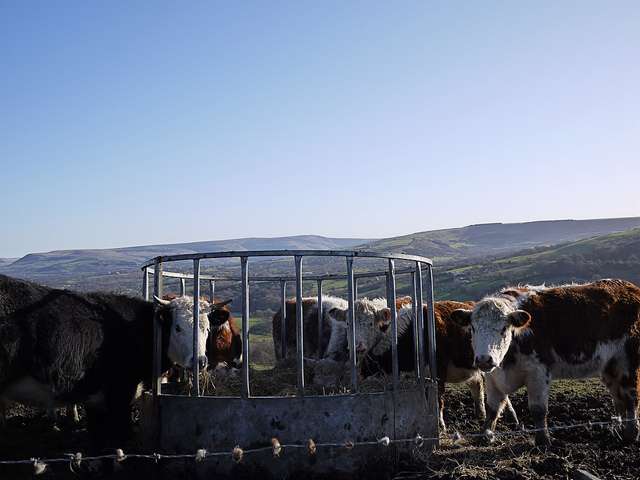
Stocker role in beef cattle herd rebuilding is a topic at Sept. 25 K-State Field Day

0
cattlefeed
credit Smabs Sputzer
cattlefeed
credit Smabs Sputzer

Watering options and environmental impacts are also among presentations planned.

MANHATTAN, Kan. – The role of stocker cattle in beef herd rebuilding, as well as production considerations and water use, are among topics planned for the 2014 Kansas State University Beef Stocker Field Day on Thursday, Sept. 25.

The day is designed to provide the latest practical information for producers to aid decision-making in the current dynamic beef industry environment.

The event starts with registration and coffee at 9:30 a.m. and the program at 10:15 a.m. A barbecue lunch is provided, and the day ends with an evening social, the “Cutting Bull’s Lament 2014” at 5:30 p.m. A panel of producers talking about nutrition issues and several other presentations are on the agenda.

  • Forward Planning Implications for Herd Rebuilding: Where Does the Stocker Segment Fit?
  • Producer Panel: Receiving and Growing Nutrition Philosophies
  • Stocker Parasite Control: A New Frontier
  • Management Strategy Response to the FDA Phase Out of Antibiotics
  • Breakout sessions include: Livestock Watering Options; Evaluating Environmental Impacts of Small Receiving/Growing Facilities; and Coccidiosis: The Robber Baron.

Posters that reflect K-State beef cattle research projects will be on display.

The fee to attend the Beef Stocker Field Day is $25 if paid by Sept. 15. More information and online registration is available at http://www.asi.k-state.edu/species/beef/research-and-extension/. After Sept. 15, attendees must pay at the event. Further information is available by contacting Lois Schreiner at 785-532-1267 or [email protected].