Wednesday, January 21, 2026
Home Blog Page 146

Kansas Wheat Hosts Milling Industry Delegation from Latin America

0
Kansas Wheat

Contact: Marsha Boswell, [email protected]

Kansas Wheat Hosts Milling Industry Delegation from Latin America
For the audio version, visit kswheat.com.

Six milling industry professionals from Mexico, Central America and Venezuela were in Kansas this month to participate in the Wheat Quality Council’s annual Hard Red Winter (HRW) Wheat Tour and gain firsthand insight about this year’s wheat crop and engage directly with Kansas wheat farmers.


“This tour is an excellent opportunity for U.S. customers from Mexico, Central America and Venezuela to get out into the fields and see Kansas wheat production firsthand,” said Stephanie Bryant-Erdmann, U.S. Wheat Associates (USW) Assistant Regional Director, Mexico/Central America/Caribbean/Venezuela.


U.S. Wheat Associates sponsored the delegation using USDA’s Regional Agricultural Promotion Program (RAPP) for Central America and Venezuela and Market Access Program (MAP) funds for Mexico.


The tour kicked off in Manhattan, Kansas, with a briefing on the diverse growing conditions across the state and the challenges Kansas farmers face.


On the first full day of the tour, participants from Honduras and Mexico visited Chris Tanner’s farm near Norton, Kansas. Tanner is President of the Kansas Association of Wheat Growers and Secretary of the National Association of Wheat Growers.


The participants had the opportunity to ride with Tanner in his sprayer, experience sitting in his combine and then visit one of his wheat fields to perform yield calculations. These direct interactions between buyers and farmers are invaluable for building strong customer relationships.


“The visit was incredibly valuable — for both of us,” said Tanner. “When people from the wheat and milling industry come to the farm, it’s a meaningful experience for them. They get to see firsthand where the product begins. For me, it’s rewarding to meet the people who take my product to consumers, build those relationships and show them the practices we use to produce a safe, high-quality product.”


“Mexico is the largest buyer of U.S. wheat in the world, a title it has held for nine consecutive years,” said Mitch Skalicky, USW Regional Vice Present, Mexico/Central America/Caribbean/Venezuela. “U.S. wheat exports to Mexico are up 18% year over year at 3.90 MMT (143 million bushels). It is also the #1 buyer of U.S. HRW and has purchased 1.57 MMT (57.8 million bushels) thus far in marketing year 2024/2025, which will end on May 31.”


Honduras is a top 20 market for U.S. wheat exports with U.S. wheat exports to Honduras growing 3% year over year to 302,000 MT (11.5 million bushels). U.S. wheat has maintained 100% market share in Honduras for more than a decade.


On the next day of the tour, some of the participants visited the Millershaski farm near Lakin, where they had the chance to speak with Gary and his son Kyler about their operation. Gary Millershaski, who serves on the Kansas Wheat Commission and is Treasurer of USW, then met up with the entire delegation at the evening meeting in Wichita.


“We raise wheat because that’s what we do,” Gary told the group. “It’s what our family has always done, and we take great pride in it.” As each of the vehicles pulled up to their farm, Gary welcomed the visitors by inviting each person to introduce themselves and share why they chose to participate in the wheat tour — sparking engaging conversations and building immediate rapport. The personal connections made between the farmers and millers were enhanced as they showed them their combine and header as well as evaluated the fields. Gary pointed out signs of drought stress, but said that despite this year’s challenges, the heads are large, and it should be an average crop.


“It all comes down to one thing,” Gary said. “How can we work together to make tomorrow better than today?”


The delegation also included customers from Venezuela and Costa Rica. Pamela Rubio, USW/Mexico City Programs and Communications Assistant, accompanied the group.


U.S. wheat sales to Central America are up 42% year over year at 1.16 MMT (42.5 million bushels) and U.S. HRW wheat sales to Central America total 307,000 MT (11.3 million bushels).


Venezuela is a top 20 market for U.S. wheat exports, and the eighth largest U.S. HRW market in the world in marketing year 2024/25, having purchased nearly 200,000 metric tons (7.35 million bushels) of U.S. HRW wheat.


USW is the industry’s market development organization working in more than 100 countries. Its mission is to develop, maintain and expand international markets to enhance wheat’s profitability for U.S. wheat producers and its value for their customers. USW activities are funded by producer checkoff dollars managed by 17 state wheat commissions and USDA Foreign Agricultural Service cost-share programs.


USW continues to foster vital partnerships between American wheat growers and international customers.

Horticulture 2025 Newsletter No. 09

0
KSU horticulture

1712 Claflin, 2021 Throckmorton Plant Science Center
Manhattan, KS 66506 (785) 532-6173
Online PDF access

Video of the Week: Heat Loving Perennials
(May 2025 K-State Garden Hour Webinar Recording)

Learn tips to select and care for low maintenance, drought tolerant plants that add color and texture to your landscape

ANNOUNCEMENTS
Upcoming K-State Garden Hour
Wednesday, June 4, 2025 12:00-1:00 PM
Register HERE

Join Johnson County Horticulture Extension Agent, Markis Hill, to learn more about Kansas native and ornamental grasses.

Kansas Turf & Ornamentals Field Day
The Kansas Turf & Ornamentals Field Day will be held on Thursday, August 7, 2025 at the Rocky Ford Turfgrass Research Center in Manhattan.

This Field Day program is designed for all segments of the turf & ornamentals industry — lawn care, athletic fields, golf courses, sod farms, landscape, nursery, and grounds maintenance. Included on the program are research presentations, problem diagnosis, commercial exhibits, and equipment displays. There will be time to see current research, talk to the experts, and get the answers to your questions.

For more information and to register online, go to: www.kansasturfgrassfoundation.com

We hope to see you on August 7 in Manhattan!

Commemorating Dr. Chuck Marr
Dr. Chuck Marr served as a Vegetable Crop Specialist for K-State Research and Extension for 36 years. He was an active member of the community and supported gardeners in many capacities throughout his retirement as well.

Chuck passed away in December of 2024. To honor the legacy of Chuck, many of his friends are coming together to designate a special area in the Kansas State University Gardens in his name. The Riley County Extension Master Gardeners and the Manhattan Watercolor Group are leading this meaningful tribute and warmly invite others to participate.
Chuck was a strong advocate for the Gardens on campus. We envision dedicating the main vegetable growing bed in the Gardens in Chuck’s honor. This space, where he spent so much time nurturing plants and educating others, would be a fitting tribute.
The sponsorship level for this area is $15,000. We hope to raise the total amount collected by July 15 to ensure recognition in the Gardens. If you would like to contribute, donations can be made to Kansas State University Foundation in the following ways:
Online: Donation · Kansas State University · GiveCampus
By phone: 785-775-2400
By mail: Send checks payable to:
Kansas State University Foundation
1800 Kimball Ave., Suite 200
Manhattan, KS 66502 Please include Fund # M47497 (Chuck Marr) in the memo
Thank you for considering this request in memory of Dr. Chuck Marr. If you have any questions or would like additional information, please feel free to reach out to Riley County Extension Agent, Gregg Eyestone at 785-410-5336 or [email protected].
GARDEN CALENDAR

May Garden Calendar

VEGETABLES
Onions Developing
Nitrogen fertilizer will support healthy plant development above ground which directly relates to onion bulb growth.

Here are some guidelines for fertilizer rates:
Ammonium sulfate (21-0-0) at a rate of ½ cup per 10 feet
29-5-5 or 27-3-3 can be used at a rate of 1/3 cup per 10 feet

Apply the fertilizer two to three inches away from the plants and water it in. Stop fertilizing when bulbs begin to emerge through the soil. Do not mound soil over the bulbs.

Weed regularly to reduce competition for water, nutrients and space. The amount of water and space the bulbs have available will affect the size of the bulbs. Provide regular water during drought.

FRUIT
Thinning Fruit
Allowing fruit trees to produce a heavy crop, especially on a young tree, can cause damage to the branches from the weight, and reduce the size of the fruit this year. By thinning the fruit, trees will be prepared to produce a healthier harvest in subsequent years.

The guidelines that follow can help you determine which fruit to remove and which to leave intact.

Apples and Pears: Allow 6-8 inches between fruit. Apple trees tend to produce fruit in clusters of five. Remove all but one fruit from each cluster. Leave the largest, healthiest fruit.
Peaches: Allow 6-8 inches between fruit.
Plums and Prunes: Space fruit 4-5 inches apart.
Apricots: Space fruit 2-4 inches apart.
Fruit can be removed by snipping with clippers or snapping the fruit stem with your fingers. Be careful not to damage the branch.

Tip Blackberries, Black Raspberries and Purple Raspberries
Raspberries and blackberries have similar growing and fruiting habits. The perennial root system grows for several years. The canes are biennial (live for two years).

The first-year canes are called primocanes and do not produce fruit. The second year, the primocanes become floricanes which fruit and then die. Primocanes are produced each year so plants have both types of canes present simultaneously.

Primocanes should be tipped by removing the top two to three inches to promote branching and fruiting.

The species and fruiting habits of the plant determines how the plant should be tipped. Plants that fruit on primocanes are referred to as “everbearing”. Plants that produce fruit only the second year are called “traditional”.

Here are guidelines for tipping blackberries and raspberries:
Traditional blackberries: tip at 4 feet
Everbearing blackberries: tip at 25-30 inches; tip laterals at 25-30 inches as well
Black Raspberries: tip at 3 feet
Purple Raspberries: tip at 36-40 inches
Red Raspberries: do not tip
TURF
Aerate Warm-Season Grasses
Roots make up 90 percent of grass plants and need oxygen for survival. Compacted soil restricts the roots’ access to oxygen and inhibits growth. Aeration loosens the soil, allows air to enter and provides better infiltration of water and nutrients. All of this promotes healthier root growth and consequently, healthier grass.

Core aeration is done with a machine that uses hollow tines to remove plugs of soil leaving holes that are two to three inches deep. Multiple passes may need to be done in order to get the holes three inches apart.

Bermudagrass, buffalograss and zoysiagrass tend to require aeration more frequently than bluegrass and fescue. Clay soils and lawns with heavy traffic may require aerating twice a year. Warm-season grasses should be aerated from late May through July. It is recommended to have a professional aerate your lawn because the procedure requires heavy duty equipment to penetrate the soil.

Little Barley in Lawns
Little barley (Hordeum pusillum) is often confused with foxtails because of the seedheads that form on the bunch grass from spring through summer. However, little barley is a winter annual and foxtails are a summer annual. The seedheads don’t develop on foxtails until mid to late summer.

Little barley is commonly found in disturbed areas such as roadsides, overgrazed pastures and thin lawns. Maintaining a dense, healthy lawn is the best defense. Overseed sparse lawns in late August to early September or use a preemergent. Mow the lawn on a higher setting to prevent sunlight from reaching the soil.

QUESTION of the WEEK
Brown-headed Ash Sawfly
What is this caterpillar eating my ash tree?

(Contributed by Dr. Ray Cloyd)
We have received several inquiries regarding caterpillar like insects feeding on green ash (Fraxinus pennsylvanica) trees. The insects in question are larvae of the brown-headed ash sawfly, Tomostethus multicinctus, which are sporadic, early season, defoliating insect pests. The larvae feed extensively causing noticeable leaf damage and producing frass or fecal material.

Brown-headed ash sawfly larvae are approximately 15 to 20 millimeters (1/2 to 3/4 of an inch) long, yellow green, with white and green stripes extending the length of the body (Figure 1). The larvae have a brown head, and there are prolegs (fleshy, leg like appendages) on every segment of the body, which distinguishes sawfly larvae from caterpillars. Brown-headed ash sawfly larvae feed primarily on green and white ash trees. Adults are wasp like in appearance. Brown-headed ash sawfly pupate in the spring, with adults emerging and females laying eggs inside leaves. Larvae emerge (eclose) from eggs and congregate in groups, feeding from May through June.

Larvae create shot holes or pin holes on young leaves (Figure 2), but as they increase in size, the larvae consume entire leaves, especially terminal leaves (except the main veins), resulting in almost complete defoliation. By June, larvae are fully grown and shed a papery like skin that is attached to the leaf (Figure 3). The larvae move toward the base of the tree and construct protective cocoons. High numbers of larvae may be present at the base of trees (Figure 4). Brown-headed ash sawfly overwinter as full-grown larvae or pre pupae within silken lined cells located on the top of the soil at the base of previously infested trees. There is one generation per year in Kansas.

Rainfall will quickly remove larvae from trees. In addition, the larvae can be removed by hand and placed into a container of soapy water to kill them. An insecticide application is not warranted unless brown-headed ash sawfly larval populations are causing extensive damage that compromises the aesthetic value of an ash tree. Insecticides with contact activity can be applied, but thorough coverage of the tree canopy, in particularly, the leaf undersides, is important. Do not apply an insecticide containing the active ingredient, Bacillus thuringiensis subsp. kurstaki, because the product will not kill sawfly larvae.

For more information on brown-headed ash sawfly, you can access the following extension publication:

Cloyd, R. A. 2016. Brown-headed ash sawfly. Kansas State University
Agricultural Experiment Station and Cooperative Extension Service. Kansas State University; Manhattan, KS. MF3297. 2 pages.
http://www.bookstore.ksre.ksu.edu/pubs/MF3297.pdf

Contributors:
Cynthia Domenghini, Instructor and Horticulture Extension Specialist
Ray Cloyd, Entomology Extension Specialist
Kansas Garden Guide
KSRE Entomology

Division of Horticulture
1712 Claflin, 2021 Throckmorton
Manhattan, KS 66506
(785) 532-6173

For questions or further information, contact: [email protected].
This newsletter is also available online at:
http://hnr.k-state.edu/extension/info-center/newsletters/index.html

The web version includes color images that illustrate subjects discussed. To subscribe to this newsletter electronically, send an e-mail message to [email protected].
Brand names appearing in this newsletter are for product identification purposes only. No endorsement is intended, nor is criticism implied of similar products not mentioned.
K-State Research and Extension is committed to making its services, activities and programs accessible to all participants. If you have special requirements due to a physical, vision or hearing disability, or a dietary restriction please contact Extension Horticulture at (785) 532-6173.


Cynthia Domenghini, Ph.D.
Instructor; Horticulture Extension Specialist
Department of Horticulture and Natural Resources
Kansas State University
1712 Claflin Rd.
Manhattan, KS 66503
785-340-3013
[email protected]

Access the HORTNEWS-L Home Page and Archives

Unsubscribe from the HORTNEWS-L List.

Larry and the Muskrat

0

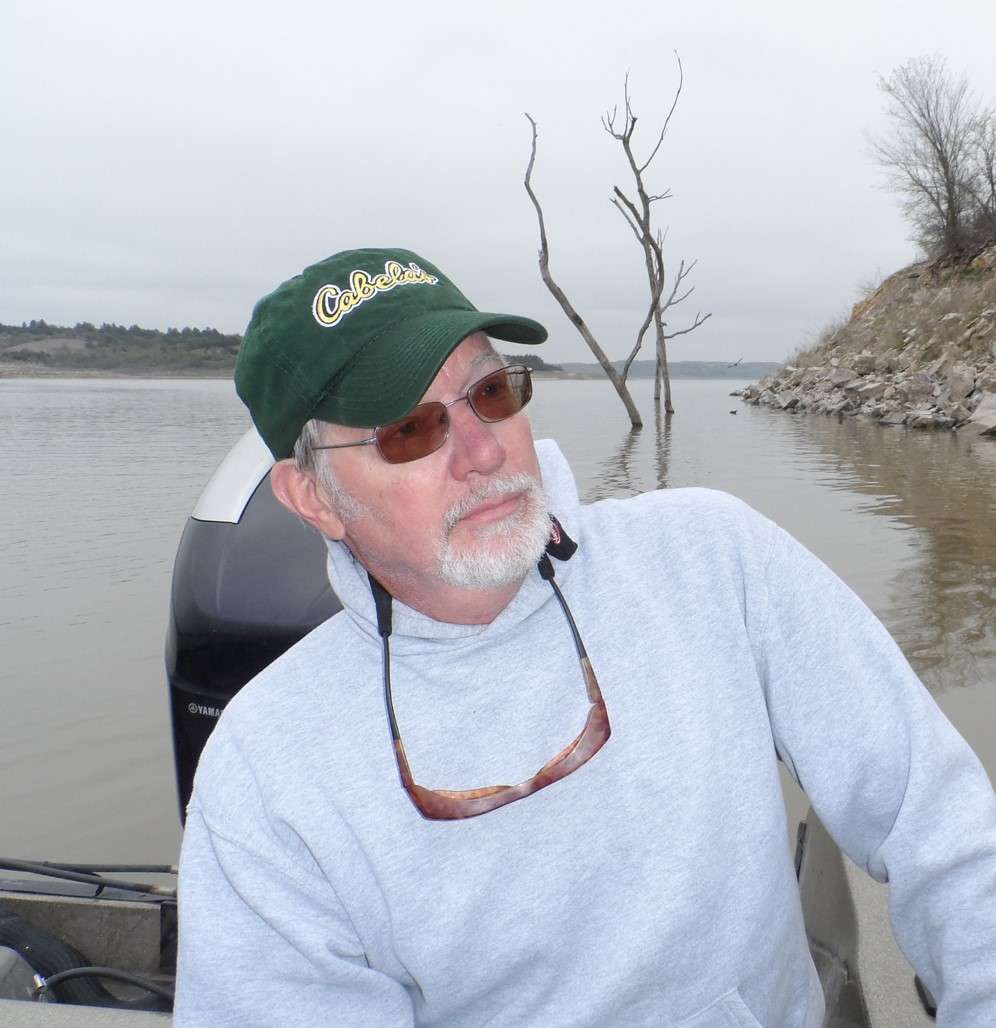
Having just returned from a fishing trip with my son, his father-in-law and my grandson, a fishing story from my youth comes to mind. It involves a high school class mate of mine, his older brother and a muskrat. So, sit back and enjoy Larry and the Muskrat.

John and I graduated together and were just a few years out of high school at the time of the story. He and his older brother Larry both had bass boats and were avid largemouth bass fishermen who liked to spend Sunday mornings on a nice local reservoir named Clear Fork. Larry said he enjoyed the quiet time and all the wildlife he saw as much as the fishing. This particular morning, he was fishing with a spinner-bait, a large odd-shaped contraption full of hooks and shiny blades that makes the whole rig spin and chatter as it’s retrieved through the water. He was close to shore and had stopped casting to watch a muskrat putter about along the bank. A few feet of line hung from his rod with the spinner bait dangling from the end. After several minutes of being amused by the muskrat, he decided it was time to fish again, so he slapped the water with the spinner bait just to scare the muskrat. However, the line carried the lure farther than expected, mistakenly hooking the surprised muskrat, and the fight was on!

John was fishing a ways off, but the commotion caught his attention and Larry’s rod bent doubly into the water was the first thing he saw. Between chuckles, Larry quickly explained the situation and asked for his help. John got his boat as close as possible and after what must have been quite a tussle, he managed to dip the struggling muskrat from the water, but razor-sharp teeth made quick work of the net and it was in the water again, this time with Larry’s line running through a dip net sporting a huge hole in its bottom. After another lengthy scuffle they once again managed to somehow hoist the combative muskrat into the boat, and then the real rodeo began. Now John and Larry were both avid outdoorsmen and conservationists, and all they wanted to do was unhook poor muskrat Sam without harming him. Like I said before, a spinner-bait is full of sharp treble hooks, and now they had one very ticked-off, soaking wet muskrat in the boat with several sets of those hooks fastened securely to him and he evidently was not obeying their verbal commands very well. Remember, Larry’s line was still running through a ruined dip net that I’m sure was very much in the way. Somehow, he got the muskrat pulled back through the net and John was able to pounce on it, pinning the hapless critter to the floor with the rim of the net across its neck. John held it down with his foot while Larry went to work with his pliers attempting to extract the hooks. A fish with a couple hooks in its mouth is one thing, but a feisty, soaking wet rodent the size of a loaf of bread with who-knows-how-many hooks fastened securely to its fur-covered body is quite another matter.

Larry worked feverishly, noticing that the muskrat’s eyeballs were bulging slightly from the weight of John’s foot on the steel ring across its neck. Each embedded hook had to be wobbled and wiggled until the sharp barb on its tip pulled free from the muskrat’s tough hide. Finally,

success as the last of the hooks came free! But then there remained the problem of how to get one still ticked-off but now absolutely free muskrat out of the boat. With that quandary swirling in their minds, both guys simultaneously stepped backwards to suddenly release the muskrat, (in their minds somehow hoping it would just launch itself over the side and back into the water) but looked at each other in disbelief as the poor luckless creature lay lifeless on the floor, evidently strangled in the process, despite their best intentions – problem solved!

Although not funny that muskrat Sammy had to give his life for this adventure, this is yet another story I’ll take with me to my grave when I sometimes can’t remember what I had for breakfast. Continue to Explore Kansas Outdoors!

Steve can be contacted by email at [email protected].

Banana Cake

0

This weekend has found me baking a double batch of tropical biscotti and banana cake/breads. Friday after work Ervin and I ended up over in Branson and I stumbled into a bag of abut 20-22 bananas that were about midway to baking time! We dropped off a few across the street and then some to Phillip’s gal, Paige, and kept enough for at least 2 cakes for ourselves. Cost, 0.99 for the entire bag. In retrospect I should have picked up a second bag and frozen more for later use. Still a marvelous purchase.

I’ve run this cake recipe many times after writing this column for 17 years. It has never failed to present a light, refreshing cake. It also happens to have the ability to be baked in a specialty Bundt pan and come out nicely. Not every cake can be made into my chrysanthemum baking pan, and come out with ease. I seldom bake and serve this recipe with any icing. It is so moist it seriously doesn’t need any. If I did use one it would just be a light glaze/drizzle. Baking the cake into muffin tins also works marvelously, just don’t over bake.

For those headed to Branson this summer I would certainly recommend a stop by downtown Branson to Mr. G’s Pizza and sandwich shop. I could not believe we have lived here 17 years and never enjoyed the Chicago style pizza at this restaurant. I would agree with the advertising as best pizza in Branson. Nice appetizers, quality service, and a management staff overseeing the dining room, with an observant eye.

Join me June 7th for the Focus on Family being held in the parking lot by Hobby Lobby, in Branson. 10am to 3pm. There will be activities for the entire family, non profits and organizations providing resources galore. It’s like a huge street party. I’ll be in the 4 Ozark Seniors tent, be sure and stop by. Oh yes, there will also be a few unique race cars and antique cars present. The event is all about community, come join us for a great day!

Time to set the recipe, and pull the last pan of biscotti from the oven. Simply Yours, The Covered Dish.

Banana Cake

½ cup Crisco oil

1 ½ cups granulated sugar, Cream these two together

2 eggs, lightly beaten

3 teaspoons vanilla, beat together

¾ cup buttermilk

2 cups flour

½ teaspoon baking powder

¾ teaspoon baking soda

½ teaspoon salt

Blend everything together and lastly add:

1 cup mashed bananas, (usually 3 bananas)

Nuts are optional-

Preheat oven to 300-325 degrees, grease and flour a regular Bundt pan, or a specialty Bundt pan. By lowering the temperature you will end up with a tender base with no dark over baked look. If you’re baking in a 9 x 13 pan you could also line with parchment paper. After filling the pan with batter, tap the pan a couple of times on the counter before placing in the oven., this helps to remove air bubbles. Start monitoring the cake at about 35 minutes, and go from there. Remember at a lower temperature it is going to take a tad longer to bake.. Test with a toothpick and remember it will finish baking after it comes from the oven, just like a good steak.

Accolades to the Bridges family, formerly from Diamond, MO. The Bridges were good friends with my parents, Betty and Jerry Dance. Dad was actually the one who baked all the wonderful banana cakes. I remember one year he did one for my birthday! And, he made some for Phillip’s birthday over the years. Icing, never! Dad loved this cake with absolutely no icing.

Life Cycle Of The Heel (Best Of)

0
lee pitts

The Heel flies in the face of our healthy well being. The Heel is probably the most destructive parasite attacking ranchers today. The Common Heel is a hairy, WASP-like maggot that first originated in Washington D.C. There are two species of the Heel, the Republicanis defenses and the Democratius welfarius. Both species of the parasite are destructive, although the Eastern variety is capable of inflicting more pain

Life Cycle

The Heel works within the system and can strike at any time of the year. The bloodsuckers approach everything with an open mouth, stinging the host on his legs, his pocketbook and all over his body. They feed on B.S. and baloney. The incubation stage (the campaign) of the Heel is spent outside the host. Then the leeches attach themselves to the host and go along for a four year free ride. At the end of the four year period the maggot wriggles out of everything, leaving a scar on the host.

Eventually, each maggot feels impelled to rise to the top and depart the host, despite promises to return and help the host who fed it. The maggot emerges from the host as a fully formed Heel. If the infestation is bad enough, the parasites can make the host so poor and weak that he or she eventually dies. Because they are external parasites, the Heels are capable of staying in midair on all issues and just fly to another victim if one host succumbs. Then the life cycle begins anew.

Diagnosis

The presence of the Common Heel can be detected by a lumpy and bruised appearance. 85% of all carcasses are damaged by the Heel. The parasite makes a lot of noise that means absolutely nothing but the sound is enough to send some hosts into shock. If this happens consult your veterinarian.

A conclusive diagnosis can be made if the host runs around frantically with his or her tail in the air. He or she is trying to escape by running for shelter. It won’t work and is a hopeless cause. There is usually an offensive smell that goes with the Heel and often times the symptoms are similar to Foot in Mouth Disease. Some hosts have developed allergic reactions to the I.R.S. form of the parasite and have had to leave the country.

Treatment

Running away won’t help. Neither will spraying or dipping. About all one can do is stand in the mud for temporary relief.

Prevention

Following the terrible outbreaks of 1980 and 1984, which caused great economic loss to the hosts, the U.S. Government decided to do something about this menace. The U.S.D.A. spent trillions of dollars and man hours in an effort to eradicate the pests. The number of spongers only multiplied more. There appears to be no way to keep them from getting under your skin.