
Friday, January 30, 2026
Home Blog Page 267

CBK Warns of Holiday Scams

0

It’s the most wonderful time of the year . . . for holiday scams! In 2024, as digital technology becomes more integrated into daily life, new and evolving scams pose significant threats to consumers. Here are some prominent scams likely to be at the forefront this holiday season.

Phishing and Smishing Attacks
Phishing, where attackers impersonate legitimate organizations to obtain sensitive information, remains a top threat.  Smishing, or phishing via SMS/text messaging, is particularly fertile for scams as more consumers rely on their smartphones for online shopping and financial transactions.

Example scenario: A consumer receives a text message purportedly from their bank or a popular retailer, warning them of a suspicious transaction and prompting them to click a link to “secure” their account. Clicking this link can lead to a fraudulent site designed to steal login credentials or prompt the nstallation of malware.

Recommendations:
 Always verify the sender’s authenticity by directly contacting the institution or retailer using verified phone numbers or websites.
 Avoid clicking on links in unsolicited emails or texts, even if they seem urgent.
Fake E-commerce Sites and Social Media Ads. In 2024, scammers are leveraging social media ads to attract consumers to well-designed but fraudulent websites that offer deals too good to be true.

Example scenario: A shopper finds an ad on social media for luxury or popular goods at an unbelievable discount. Clicking the ad takes them to a website that looks legitimate but is a scam. Payment may result in fraudulent distribution of credit card details and other sensitive personal data and loss of funds, plus often the product never arrives.

Recommendations:

 Research online retailers thoroughly, checking reviews and verifying the website’s URL for signs of authenticity (e.g., HTTPS and legitimate domain names).

 Utilize https://www.TrustPilot.com to verify legitimate online retailers.

 Use secure payment methods, like credit cards, or services that offer fraud protection.
Charity Scams Scammers often take advantage of the season’s charitable spirit. In 2024, fraudulent email campaigns mimic well-known charity organizations with slight name changes.

Example scenario: Consumers receive emails or social media messages asking for donations to disaster relief funds or community initiatives. These messages may link to cloned websites where donations go straight to scammers.

Recommendations:
 Always donate through well-known, established charity websites or platforms and verify the legitimacy of new charities through services like the Better Business Bureau’s Wise Giving Alliance.
 Be cautious of unsolicited requests for donations and verify their authenticity before
contributing.

Package Delivery Scams
With the increase in online shopping, fraudulent package delivery notifications are rampant. In 2024, fraudulent delivery notices, sent via email or SMS/text message, prompt users to click a link to reschedule a delivery or pay a delivery fee.

Example scenario: A consumer receives a message stating that a package could not be delivered and must click a link to reschedule. The link leads to a page that asks for personal details or payment, leading to identity theft or financial loss.

Recommendations:

 Contact the delivery service directly through their official website or customer service to verify any delivery issues.
 Avoid clicking on links from unknown senders claiming to be delivery services.

Gift Card Scams

Gift cards are popular holiday gifts, but they are also frequently used by scammers to impersonate tech support agents, government officials, or even friends and family members, demanding payment in the form of gift cards.

Example scenario: A scammer poses as a representative from the Internal Revenue Service or a utility company, threatening immediate legal action unless payment is made through gift cards. Once the victim provides the card information, the funds are quickly depleted.

Recommendations:
 Be skeptical of anyone requesting gift card payments, as legitimate companies or agencies never
accept them as a form of payment.
 Report any suspicious calls or messages to local authorities or consumer protection agencies such as https://wwwreportfraud.ftc.gov.

Travel Scams

The holiday season also brings an increase in travel, which scammers exploit with fake travel deals, bogus accommodation listings and fraudulent ticket sales.  Scammers use cloned websites of reputable travel agencies and online booking platforms to defraud travelers.

Example scenario: A traveler books a holiday rental from a site that looks identical to a trusted platform but is, in fact, a scam. After making a payment, they discover that the rental does not exist or is not affiliated with the platform they thought they were using.

Recommendations:
 Use well-known booking sites and verify the website’s URL carefully before making any
payments.
 Be cautious of deals that are significantly cheaper than the market rate and ask for independent verification of listings.

Resource: Association of Certified Anti-Money Laundering Specialists provided by Citizens Bank of Kansas.
Embracing Small Business Saturday: why shopping local matters for our communities

0
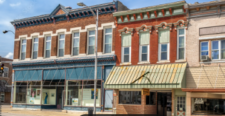
As Thanksgiving approaches, so does the busiest shopping season of the year. We’re familiar with Black Friday and Cyber Monday, but let’s not overlook Small Business Saturday—a day dedicated to supporting the businesses that keep our communities vibrant and unique. On this day, shop small and make an impact close to home by supporting the shops, services, and makers in our own backyards. Small Business Saturday is November 30, 2024.
Rural and local businesses face unique pressures. They compete not only with the convenience of online shopping but also with the often lower prices offered by big-box stores. While saving a few dollars might be tempting, supporting local businesses offers value that goes beyond the bottom line. Local shops offer jobs, character, and a sense of shared community; and each of us has a role to play in keeping our local economies thriving.
When we spend locally, we keep more money circulating within our community. Dollars spent at a local business are reinvested in other local businesses, services, and wages, creating a positive cycle of economic growth. This keeps our towns and neighborhoods financially resilient and can contribute to community improvements and local projects.
When we think of local businesses, we might envision the shops lining Main Street, but small businesses come in all forms. Many local entrepreneurs run online or home-based businesses, selling unique, handcrafted, or custom items through their websites or social media platforms. Following and engaging with these businesses on social media is a great way to stay connected and discover the variety of products they offer.
This Small Business Saturday, let’s show up for the businesses that make our towns feel like home. Support local businesses not just for the unique products and services they offer, but for the positive impact they have on our neighborhoods, our economy, and our sense of community.
Center for Rural Affairs
0

Step into a winter wonderland of twinkling lights and holiday cheer at Hometown Hutchinson Zoo’s 9th annual holiday light show, Nights Before Christmas 2024.

With festivities starting Dec.  12, join the Hutchinson Zoo for a spectacular showcase of lights that will dazzle and delight visitors of all ages. Thanks to the collaboration between the Blue Dragons of SkillsUSA and Hutchinson Community College, some of your favorite areas in the Zoo have been transformed into extraordinary displays through digital enhancements.

Prepare to be mesmerized as the Zoo becomes a magical wonderland with dazzling lights and creative designs.After immersing yourself in the mesmerizing light show, be sure to warm up with some delicious cocoa and cookies, the perfect treat to share with family and friends. Don’t forget to take the opportunity to visit with Santa Claus and share your holiday wishes!

The event runs from 6 p.m. to 9 p.m. Dec. 12-14, 20-21 and 27-28.

Tickets are $10 per person. Children 3 years old and under get in free.

Get your tickets today at http://hutchinsonzoo.org/163/Nights-Before-Christmas.

Subscription-based clinics are growing in Kansas and cutting health care costs

0
A Wichita family physician is trying to make primary care more affordable and accessible through a subscription-based model called direct primary care.

Trying to get in touch with a primary care doctor can be difficult. You call, meander through the automated prompts, and oftentimes don’t speak to your doctor directly.

This is for good reason: there’s a nationwide shortage of primary care physicians. Family doctors generally have to take on a lot of patients and have limited time to field questions.

A facility in Wichita is taking a different approach from top to bottom. Instead of relying on insurance, the group offers a subscription service. For a monthly fee you get care and what patients say is easier access to physicians, like directly texting a doctor.

“It’s personal. You don’t have to wait. You can text them if you have questions,” Wichita resident Randi Krier said. “It’s so easy to contact your doctor.”

Krier goes to Antioch Med in Wichita. It’s what’s known as a direct primary care practice – they don’t accept insurance. Instead, members pay a monthly fee that tops out at $250 per family.

According to a 2021 study published in the American Journal of Lifestyle Medicine, this model is growing. People who champion direct primary care argue it allows more autonomy for doctors and gives them more time with their patients, allowing for a better experience on both ends.

Dr. Brandon Alleman, co-founder of Antioch Med in Wichita, is working to make direct primary care more accessible and affordable for Kansans.

How direct primary care works 

Instead of billing on a traditional fee-for-service model, where doctors are paid for each service they perform, like appointments or lab tests, direct primary care offices bill monthly. Membership typically grants people direct access to their doctor, by appointment, phone, text, email or video call and some preventive care.

At Antioch Med, membership costs $39 a month per child (ages 0-17) and $79 per adult, with a family cap at $250. Members can see their doctor on demand at no extra cost and have access to steeply discounted prescriptions, wholesale lab tests, imaging and basic procedures.

Krier has three children with a fourth on the way. She sees Alleman for prenatal care and takes her kids for pediatric care.

The transparent pricing and affordability are just a few of the things Krier likes about Antioch Med. She said if one of her kids gets sick, she’s able to call or text and bring them in for treatment the same day.

“Really, for the most part, they can do everything here,” she said. “I know exactly what it’s going to cost and I just trust the people here to do it.”

Krier went to Antioch Med recently for a pregnancy checkup. She walked in and was shown right to the exam room, which she said is normal there. She said she’s never had to wait in the waiting room and the environment is calm and relaxed.

“With other doctors that I’ve gone to previously, I’ve always felt super rushed and felt like I couldn’t ask questions because they were ready to move on to the next thing,” Krier said.

But the clinic can’t do everything.

Krier said on top of membership costs, her family also has to pay for insurance to cover anything Antioch Med can’t do or emergencies.

“That’s probably the only thing that I wish I didn’t have to do … mostly because I never use it (insurance),” she said. “If I really need anything, I come here.”

Antioch Med’s story

Doctors Alleman and Nick Tomsen founded Antioch Med in 2016. Alleman said even in medical school, he knew he wanted to work at a direct primary care practice.

Alleman said during his PhD program he studied medical tourism, where people from the U.S. travel internationally to get medical procedures at a lower cost.

“When you added up all the cost of things, it was much less than the price if you went to a hospital,” Alleman said. “But it was in the range of what a hospital would take from certain payers for these procedures.”

That made made him feel like the U.S. has it wrong in how it operates its health care system, with complex billing systems and negotiated prices between insurance companies and care providers.

“There is no transparency in what things cost,” Alleman said. “There is no transparency and access. Everything is kind of defined by what billing code we can put in.”

When Antioch Med opened, the direct primary care model was still kind of rare. He said there were only about 200 other direct primary care practices in the nation. Now, there are nearly 2,500, dozens of which are in Kansas, according to DPC Frontier, a group that maps direct primary care offices.

Survey data from the American Academy of Family Physicians shows that not only are more doctors practicing direct primary care, but they’re happier. About 94% of direct primary care survey takers said they are happy in their jobs, while only 57% of doctors who don’t work in the direct primary care model are.

“Physicians are realizing this is a more fulfilling way to practice medicine, and then consumers are realizing this is a better way to access primary care as well,” Alleman said.

One of Antioch Med’s major goals, according to Alleman, is to be a patient’s “medical home.” Alleman said he and the physicians at his practice maintain close working relationships with their patients. He said they want to know about a patient’s daily life and family so they are better able to understand their health issues.

Part of that relationship, Alleman said, is answering questions and helping explain diagnosis even when patients leave Antioch to go to specialists for things like cancer care.

“We want to be the place where if they have questions … if we need to have a phone call, if we need to go over their diagnosis, we’re that medical home for them,” he said.

Patient rosters

Direct primary care offices intentionally have smaller rosters of patients than traditional fee-for-service practices. Alleman said a family doctor’s roster includes patients they’ve seen in the last three years.

At other primary care offices, Alleman said a physician has about 2,000 – 3,000 patients on their roster. At Antioch, physicians see about 600-800 patients.

“But our goal is, we want to do 90% of the care for those 700 patients, those 600 patients, not just do 20% of the care for the 2000 patients,” Alleman said.

Alleman said the direct primary care model is criticized for the smaller patient load. But he said with the lighter load, doctors are less likely to experience burnout and patients are less likely to utilize urgent or emergency care.

Dr. Tina-Ann Thompson is the senior vice president for the primary care service line at Emory Healthcare, an academic health care system based in Atlanta, and the division chief of family medicine at Emory University School of Medicine.

Thompson said every physician has a threshold or preference for how many patients they see and it doesn’t make one physician better than the other.

She said direct primary care is one solution to physician burnout.

“They may be seeing less patients, but at least they’re seeing patients. Some of these people would have left medicine,” Thompson said.

Another criticism of direct primary care is that it may not be accessible to everyone. Thompson said people below the poverty line may not be able to afford direct primary care membership fees.

“But it can be cheaper than one trip to the emergency room for those folks who may not have access to insurance,” Thompson said. “So I think that it still serves a purpose to me and definitely fills a need in our community.”

A solution to make direct primary care less cost-prohibitive would be if it was subsidized by governmental programs, if individual direct primary care offices set membership fees on a sliding scale or for employers to cover membership costs.

Although she works for a traditional health system, Thompson said she supports the growth of direct primary care.

“We are all necessary. None of us are competing — the minute clinics and the urgent cares and the direct primary cares,” Thompson said. “We’re all in this together to try to take care of the population of patients.”

Getting direct primary care to more Kansans

Back in Wichita, Alleman recently started a health insurance advisory firm, called Candid Health Advisors. He said when he started at Antioch Med, he expected for health insurance costs to go down. But they didn’t.

Alleman said for people to get the most out of their direct primary care investment, insurance needs to be structured differently. Getting the direct primary care option into employer health plans could be part of that.

Candid Health Advisors came from this idea. Molly Breitenbach is COO and the other half of the company’s two-person team.

She said her background is in accounting, and since starting at Candid about a year and a half ago, she’s learned how complicated and sometimes problematic our health care system is.

“I always say the health care system isn’t broken. It’s operating exactly as it was designed and the design is a problem,” Breitenbach said.

At Candid, Breitenbach said they help employers self-insure, so that they can choose to cover direct primary care membership fees for their employees.

She said Candid “unbundles” health insurance benefits, choosing vendors that are focused on transparent pricing models to make the other stuff – like emergency or specialty care – more affordable.

Breitenbach said traditionally, health insurance consultants are compensated by insurance companies when they advise clients to use their product. But at Candid, they only receive payment from their client.

“We only want to put solutions in place for our clients that are going to work for them,” she said.

Breitenbach said they’re currently working with four mid-sized Wichita employers, with goals to expand in the coming year.

One of their clients is Village Travel, a tour bus company based in Wichita, with locations in Oklahoma, Arkansas and Missouri.

Katy Bingham is the human resource director for Village Travel. She said before the company switched to a self-insurance model with Candid, premiums were skyrocketing.

With the change, out-of-pocket health costs for employees have decreased by 80%. Bingham said they offer their employees two health plans – an open access plan that works a lot like traditional insurance, with a deductible and monthly premiums, and a direct primary care plan.

The majority of their employees are on the direct primary care plan, and though it took some explaining in the beginning, the employees love it.

“You get people that come in and say, ‘Thank you so much for our insurance. Our insurance is amazing. I’ve never had anything like it,’” she said.

This fall, Village Travel and Candid Health received an award from Health Rosetta for their high-quality, low-cost health plan. Health Rosetta is a non-profit organization that helps employers and unions create more transparent and cost-effective health plans.

“It was exciting to see that there’s this movement of people that recognize that something is wrong in the health care industry, and something has to change,” Bingham said.

The CDC wants more Kansas farm workers to get their flu shots this season

0
Some rural Kansas counties are offering free flu vaccines targeting farm workers amid an ongoing nationwide bird flu outbreak among dairy cattle and poultry.

The falling temperatures also signal the thick fog of flu season. But in rural areas of Kansas, people are less likely to get vaccinated for the flu.

This year, that has health care professionals worried, specifically for those who work with livestock.

“This makes them more susceptible to flu and other potentially serious complications,” said Dr. Lisette Durand, chief veterinary officer for the Centers for Disease Control and Prevention.

The CDC is trying to mitigate some of those complications this season by offering 100,000 free flu vaccines to farm workers in 12 states, including Kansas, with the hope of reducing the burden on fragile rural health care systems.

The urgency this year comes on the heels of a global outbreak in H5N1 bird flu among livestock.

Bird flu has been reported among dairy cattle herds in at least a dozen states this year, including in Kansas.

Durand said this spread of disease in agriculture was the main push to offer free vaccines for seasonal influenza.

“Having the flu vaccine will help prevent the likelihood of getting infected with seasonal flu. This way, if a farm worker does get sick with flu-like symptoms, that will help them distinguish seasonal flu from bird flu cases,” Durand said.

While seasonal flu vaccines will not protect against infection from bird flu, they will reduce the risk of infection with seasonal flu and the very rare risk of co-infection with both viruses.

Bird flu can cause infection in people; a handful of cases have been reported this year. The risk of infection with bird flu remains low for the public, and the CDC suggests caution for those working around animals.

Bird flu cases in humans usually come with symptoms similar to seasonal flu, like a cough, fever and sore throat. That can make it difficult for health care professionals in rural areas to distinguish a case of bird flu from seasonal flu.

Durand does not know why rural Kansans are less likely to get their flu shots, but she said the goal is to educate people.

“We are working to target that notion to get out into the community to ensure that they have the information that they need … to help bridge that gap of knowledge,” Durand said.


The CDC is teaming up with local health departments, pharmacies and mobile clinics to target their campaign toward farm workers. In Kansas, efforts are underway in Barton, Cheyenne, Hamilton, Nemaha, Osborne, Rice, Stanton and Riley counties.

These counties have some of the largest dairies in the state, or they border states experiencing bird flu outbreaks.

Data from the Kansas Department of Health and Environment shows these counties also have lower vaccination rates for the seasonal flu. Less than 25% of the population was vaccinated last year.

And not only are farm workers more vulnerable, but the illness also strains rural health care systems that are already plagued by low staffing.

In Kansas, rural hospitals are perpetually understaffed and sometimes on the verge of closing. According to the University of Kansas Medical Center, more than 470 rural hospitals have closed this century across the country.

But getting farm workers vaccinated this season could ease that stress. Studies show a flu shot can reduce the likelihood of medical visits by as much as 60%.

Durand says the CDC will monitor hospitalizations from serious illnesses caused by the seasonal flu. That will help researchers determine whether that number was reduced as a result of this program.

“We will see if our outreach and the facts we figured out here have resulted in lower cases than maybe we’ve seen in previous years in the same communities,” Durand said.

The Kansas News Service ksnewsservice.org.