Monday, February 2, 2026
Home Blog Page 297

KU News: $500K Kansas Department of Commerce grant helps bolster KU startup ecosystem

0

From the Office of Public Affairs | http://www.news.ku.edu


Headlines


Kansas Department of Commerce grant helps bolster KU startup ecosystem

LAWRENCE — University researchers who develop new technologies face a number of hurdles in getting those innovations from the lab to the market. A $500,000 Forging Opportunities for Research, Growth & Entrepreneurship (FORGE) grant from the Kansas Department of Commerce will help KU create software, infrastructure and financial mechanisms needed to bridge the gap between academia and industry, growing the state’s economy while enhancing the university’s teaching and research missions.


Campanile area upgrades improve access, aesthetic and functionality

LAWRENCE — As the fall semester begins, a refreshed vision of the Campanile area is starting to take shape. Construction crews over the summer have replaced aging pavement in the plaza area and surrounding sidewalks and stairways. Stone repairs and upgrades to the electric panel and service entry will begin in the fall, as well as new landscaping efforts. The repaved walkways have improved ADA accessibility around the Campanile, and added lights to the north will increase nighttime visibility in the area.


KU faculty honored with 2024 College Awards

LAWRENCE — Faculty contributions in research, teaching and mentoring were recognized this spring with a series of awards from the College of Liberal Arts & Sciences at the University of Kansas. The prizes acknowledge outstanding professors for commitment to advising and teaching to undergraduate and graduate students, as well as innovation in research.


Full stories below.


————————————————————————


Contact: Vince Munoz, Office of Research, 785-864-2254, [email protected], @ResearchAtKU

Kansas Department of Commerce grant helps bolster KU startup ecosystem


LAWRENCE — University researchers who develop new technologies face a number of hurdles in getting those innovations from the lab to the market. A $500,000 Forging Opportunities for Research, Growth & Entrepreneurship (FORGE) grant from the Kansas Department of Commerce will help KU create software, infrastructure and financial mechanisms needed to bridge the gap between academia and industry, growing the state’s economy while enhancing the university’s teaching and research missions.


“With this support from the Kansas Department of Commerce, we will be able to develop fundamental building blocks that assist established companies in accessing KU resources while also developing an infrastructure that supports KU startups in their entrepreneurial journey,” said Tricia Bergman, associate vice chancellor for economic development.


Some companies proactively seek to partner with university researchers but don’t know who in the university to contact to get started. KU staff will use some of the FORGE grant to develop a Jayhawk Front-Door Chatbot that company representatives and economic development professionals can use to understand what resources the university has and who within KU might be able to provide assistance. The chatbot is a large language model software that employs natural-language-processing techniques to quickly search many KU websites for answers to a prospective partner’s question.


“The chatbot will be especially beneficial as we consider expertise across all of our campuses,” Bergman said. “For example, suppose someone is interested in understanding if we could help them with material testing capabilities or in identifying a resource that works in air purification. The answers to these questions are not straightforward unless you know exactly where to go. The chatbot will be helpful in providing initial options that we can quickly and efficiently discuss with the industry partner.”


The grant will also support the construction of an international launchpad at KU Innovation Park. This 2,000-square-foot space will house a research laboratory and offices for international firms interested in being close to KU to access its research expertise and resources. Construction on the Park’s next phase of development, including the launchpad, is expected to begin in 2025.


“Establishing an international launchpad at KU Innovation Park will enable companies from around the world to seamlessly tap into resources and knowledge at the university,” said Adam Courtney, CEO of KU Innovation Park. “This space will lower the barriers for international companies to start and grow a presence quickly in Kansas, creating new collaborations and economic growth.”


Nurturing innovation

In addition to software and research space, the FORGE grant will support financial mechanisms that will help KU nurture the development of new innovations more fully before they are spun out into a Kansas startup company. The Rock Chalk Ready Fund will provide four to six, $35,000 pre-company grants to “de-risk” the technology or business model of a potential startup working with KU intellectual property. De-risking means identifying critical milestones that will increase the likelihood of forming a sustainable startup company. Examples of potential milestones could include creating prototypes, collecting key data, performing a regulatory analysis or other activities that demonstrate the viability of a technology or business opportunity. Master of Business Administration students at KU will participate as part of each pre-company team to provide support from a market and business perspective.


An additional Rock Chalk Raise Fund will provide a smaller pool of $20,000 for early startups to travel to out-of-state conferences or investor meetings. This second fund will provide the startup an opportunity to validate its idea with potential customers and reach new audiences.


“We’re appreciative to the state for supporting us through FORGE and helping KU develop new models to advance innovation arising from research at both Lawrence and the medical center,” said Cliff Michaels, executive director of the KU Center for Technology Commercialization. “The goal is multifold — to move opportunities closer to ‘go, no-go’ decision points and, when possible, also better position those opportunities for whatever their next steps might be.”


Recipients of either fund, as well as others across KU, will be eligible to participate in a two-day boot camp that walks them through the process of applying for the Small Business Innovation Research (SBIR) or Small Business Technology Transfer (STTR) program. SBIR and STTR are equity-free funding opportunities provided by the U.S. Small Business Administration. Participants will also receive group and individual coaching as they work through the grant applications. The SBIR and STTR boot camp coaching are similar to other training programs offered to help KU researchers earn federal grants, returning tax dollars to the state.


Stimulating investment

The final initiative supported by the FORGE grant will be the creation of an angel network to encourage alumni, parents, friends and others engaged with the university to invest in KU-affiliated opportunities. According to a University of Michigan study, the Midwest and Great Lakes regions account for only 7% of all venture capital deals. The membership-based angel network allows KU startups to regularly present their plans to prospective investors, improving their access to capital. The goal is to host an initial launch event in 2024 with 25 to 35 investors and four to five angel investment-ready companies.


“The angel network will engage the extensive alumni community and provide opportunities to invest during the critical early stage for KU-affiliated startups,” Courtney said. “This will accelerate innovation and bring vital capital into the community, strengthening the entrepreneurial ecosystem.”


The administration of the initiatives is through the KU Office of Economic Development and is spread across several departments and university affiliates. KU Innovation Park will lead the development and implementation of the international launchpad, SBIR/STTR boot camp and angel investor network. The KU Center for Technology Commercialization will spearhead the Rock Chalk Ready and Rock Chalk Raise Funds. KU Analytics, Institutional Research & Effectiveness will develop the chatbot, and KU Marketing will create a web portal that both internal and external stakeholders may leverage to more efficiently identify resources and expertise.


Taken together, each element of FORGE activities creates a holistic, streamlined ecosystem that supports a growth trajectory for technology and startups. For example, a proposal supported by the Rock Chalk Ready or Raise Fund may go on to win an SBIR grant after completing the SBIR/STTR Bootcamp. That new startup may then present its more realized business plan to the angel network and external venture capital opportunities needed to begin selling products. Startups may not follow this path exactly — the featured resources combine to provide a road map with opportunities to “hop on or off,” depending on technology or startup maturity. Additionally, for companies that may be interested in licensing or further developing technology, the Jayhawk Chatbot will provide rapid visibility into existing KU technologies.


“The FORGE grant through the Kansas Department of Commerce enables KU to develop tools, processes and new resources that will help to drive economic growth for both existing companies as well as new startups,” Bergman said.


-30-

————————————————————————

The official university account for X (formerly Twitter) is @UnivOfKansas.

Follow @KUnews for KU News Service stories, discoveries and experts.


————————————————————————


Contact: Savannah Rattanavong, Office of the Provost, 785-864-6402, [email protected], @KUProvost

Campanile area upgrades improve access, aesthetic and functionality


LAWRENCE — As the fall semester begins, a refreshed vision of the Campanile area is starting to take shape.


Construction crews over the summer have replaced aging pavement in the plaza area and surrounding sidewalks and stairways. Stone repairs and upgrades to the electric panel and service entry will begin in the fall, as well as new landscaping efforts.


The repaved walkways have improved ADA accessibility around the Campanile, and added lights to the north will increase nighttime visibility in the area.


Alli Gerth, landscape architect and project manager, said the team has worked with KU Endowment to preserve the legacy of the 74-year-old World War II memorial during the project.


“We wanted to make sure that it’s honoring the memorial and honoring the original intent of the Campanile while also upgrading it to modern needs,” she said.


Monte Soukup, KU Endowment’s senior vice president of property, initially brought the project to KU Facilities Planning & Development to honor Dale Seuferling’s retirement as president of KU Endowment.


“When Dale announced his retirement, we knew people would want to honor his many years of service in a way that was meaningful to him,” Soukup said. “The project to improve landscaping around the Campanile fit this bill perfectly.


“It involves beautifying campus and creating a space that is accessible to all — something that mirrors what we do at KU Endowment, which includes, among other things, providing beautiful facilities and scholarships that make higher education accessible.”


One of the major visual changes to the area includes an ADA-compliant plaza seating wall north of the Campanile. With the seating facing in toward the tower, Gerth said it can serve as an ideal backdrop for campus photos, and trimmed shrubbery and trees will also offer a better view overlooking the stadium. The seat wall incorporates the dedication plaques from previously donated benches, which were aging and needed to be replaced.


“We tried to keep multiple uses in mind when designing this project,” Gerth said. “It’s an area that you can use during any day of the year as just a nice, contemplative space on quieter days, but during ceremonies and activities it also remains an icon and photo opportunity while still honoring the memorial.”


Once the weather cools, the landscaping crew will encircle the tower with low-maintenance native plantings. To incorporate year-round color, workers will also add cherry trees on the south side of the tower for spring blooms and Shumard oaks to the north along the sidewalks to the stadium for vibrant hues of orange and red in the fall.


With the changes underway and the remaining work to soon follow, Mark Reiske, director of Facilities Planning & Development, said he hopes the KU community will take advantage of the renovated space.


“It will be in the memories of those who will pass through it for years to come. The space will be many things to many people, but most importantly, it will be there for all that want to enjoy it,” he said.


Public access to the Campanile is limited during the construction period.


The project is funded through gifts made in Seuferling’s honor and the university’s Education Building Funds.


The last major renovation of the Campanile and grounds was completed in 1996. Constructed in 1950 and standing 120 feet tall, the Campanile honors 277 KU alumni, students, faculty and staff who died in World War II. The carillon has 53 bells, which chime on the quarter hour and hour. Since the Class of 1950, KU graduates have participated in the tradition of walking through the bell tower and down the Hill at commencement.


-30-

————————————————————————

Don’t miss new episodes of “When Experts Attack!,”

a KU News Service podcast hosted by Kansas Public Radio.


https://kansaspublicradio.org/podcast/when-experts-attack

————————————————————————


Contact: Heather Anderson, College of Liberal Arts & Sciences, 785-864-3667, [email protected]

KU faculty honored with 2024 College Awards


LAWRENCE — Faculty contributions in research, teaching and mentoring were recognized this spring with a series of awards from the College of Liberal Arts & Sciences at the University of Kansas. The prizes acknowledge outstanding professors for commitment to advising and teaching to undergraduate and graduate students, as well as innovation in research.


Byron A. Alexander Graduate Mentor Award

The Byron A. Alexander Graduate Mentor Award has been given to faculty in the College since 1993. Winners have helped graduate students make the most of their experience and opportunities at KU. Recipients receive an $850-$1,500 prize.


Beth Bailey, Foundation Distinguished Professor of History, director of the Center for Military, War, and Society Studies.

John C. Wright Graduate Mentor Award

The John C. Wright Graduate Mentor Award has been given to faculty in the College since 2002. Winners have helped graduate students make the most of their experience and opportunities at KU. Recipients receive an $850-$1,500 prize.


Ward Lyles, associate professor of public affairs & administration, urban planning program.

J. Michael Young Academic Advisor Award

The J. Michael Young Academic Advisor Award honors exceptional commitment to undergraduate advising. Students nominate the professors for enhancing their experience at KU through the advising relationship. The honor comes with a $1,000 award.


Shahnaz Parsaeian, associate professor of economics.
J.D. Smith, senior academic adviser.

Grant K. Goodman Undergraduate Mentor Award

The Grant K. Goodman Undergraduate Mentor Award recognizes faculty who are selfless with their time and experience and continue to have lasting mentoring relationships with students long after they leave the classroom. Winners receive a $1,500 award.


Mark Landau, professor of psychology.

Funds for the awards are managed by KU Endowment, the independent nonprofit foundation serving as the official fundraising and fund-management organization for KU. Founded in 1891, KU Endowment was the first foundation of its kind at a U.S. public university.


The College is the heart of KU, educating the most students, producing the most research and collaborating with nearly every entity at KU. The College is home to more than 50 departments, programs and centers, as well as the School of the Arts and School of Public Affairs & Administration.


-30-

————————————————————————


KU News Service

1450 Jayhawk Blvd.

Lawrence KS 66045

[email protected]

http://www.news.ku.edu


Erinn Barcomb-Peterson, director of news and media relations, [email protected]


Today’s News is a free service from the Office of Public Affairs
University of Kansas awarded $26 million for new Engineering Research Center from National Science Foundation

0

From the Office of Public Affairs | http://www.news.ku.edu


Headlines


Editors: See video.


Contact: Mark Shiflett, Department of Chemical & Petroleum Engineering, [email protected]; Erinn Barcomb-Peterson, KU News Service, 785-864-8858, [email protected]

University of Kansas awarded $26 million for new Engineering Research Center from National Science Foundation


LAWRENCE — The National Science Foundation (NSF) has awarded the University of Kansas $26 million to establish a new Gen-4 Engineering Research Center (ERC) —Environmentally Applied Refrigerant Technology Hub (EARTH) — that will create a sustainable and circular refrigerant economy.


NSF’s Engineering Research Centers bring universities and businesses together to strengthen the competitive position of American industry in the global marketplace.


“NSF’s Engineering Research Centers ask big questions in order to catalyze solutions with far-reaching impacts,” NSF Director Sethuraman Panchanathan said. “NSF Engineering Research Centers are powerhouses of discovery and innovation, bringing America’s great engineering minds to bear on our toughest challenges. By collaborating with industry and training the workforce of the future, ERCs create an innovation ecosystem that can accelerate engineering innovations, producing tremendous economic and societal benefits for the nation.”


KU’s ERC EARTH was selected from among hundreds of proposed centers.


“Working closely with industry partners, EARTH will have the resources and expertise to solve the technical, environmental and economic challenges required to create a sustainable refrigerant lifecycle that will benefit Kansans, the nation and the world. In doing this work, the center is a prime example of how the University of Kansas is driving economic development in Kansas,” said Douglas A. Girod, University of Kansas chancellor.


KU is well positioned to lead this effort.


“The University of Kansas has a talented workforce and robust research capabilities,” said Kansas Sen. Jerry Moran. “This new research center will allow Kansans to lead the way in developing the next generation of refrigerant technology, increasing U.S. competitiveness in an important technology and industry. Through my leadership role on the Senate Appropriations subcommittee which funds federal scientific priorities, I am pleased to help fund the U.S. National Science Foundation, which is critical to advancing U.S. research and development.”


KU is the lead institution and is joined by partners at the University of Notre Dame, University of Maryland, University of Hawai’i, University of South Dakota and Lehigh University.


Mark Shiflett serves as director for ERC EARTH. Shiflett is a KU Foundation Distinguished Professor in the Department of Chemical & Petroleum Engineering and director of the Wonderful Institute for Sustainable Engineering.


“EARTH’s operational design will cultivate inclusive, interdisciplinary research collaborations and foster workforce development. The EARTH team will partner with community colleges and technical schools to ensure availability of the needed workforce at all levels,” Shiflett said.


At the heart of ERC EARTH’s work is reimagining the process for heating, ventilation, air-conditioning and refrigeration (HVACR) systems across the globe. EARTH will develop sustainable, accessible and equitable refrigerant technologies and practices through research, education and innovation that will improve quality of life and combat climate change.


HVACR systems are widespread throughout society, enabling transportation and preservation of fresh foods, storage of medicines and cooling of buildings. Most current refrigerants are hydrofluorocarbons (HFCs), which have high global-warming potential. As a result of leaks from existing systems and the energy required to operate them, HFCs account for nearly 8% of global greenhouse-gas emissions.


In response, the U.S. and 170 other countries are phasing down HFCs in accordance with domestic and international agreements signed in recent years, which creates a tremendous challenge to responsibly and sustainably replace billions of kilograms of refrigerants.


ERC EARTH will take a multifaceted approach to address this challenge.


“Multidisciplinary research teams will focus on three key areas: promoting the recycling and repurposing of refrigerants, developing transformative refrigerants and creating next-generation cooling and heating technologies with higher energy efficiency,” Shiflett said.


At its core, ERC EARTH will address a critical challenge facing society.


“There is a tremendous need to develop cooling/heating technologies that use less energy and new refrigerants that are safe for the environment. EARTH will be a critical national resource to address these challenges. The University of Kansas School of Engineering is proud to be leading this collaboration, which leverages multiple academic and industrial partners,” said Mary Rezac, dean of the KU School of Engineering.


This is one of the largest federally funded grants in KU history, with the potential to become the largest if the renewal option is successful. The project is renewable after five years for another $26 million dollars, for a total of 10 years and $52 million.


-30-


————————————————————————


KU News Service

1450 Jayhawk Blvd.

Lawrence KS 66045

[email protected]

http://www.news.ku.edu


Erinn Barcomb-Peterson, director of news and media relations, [email protected]


Today’s News is a free service from the Office of Public Affairs
Lovina Recommends a Delicious Twist on a Familiar Recipe

0

Lovina’s Amish Kitchen
Lovina Eitcher,
Old Order Amish
Cook, Wife &
Mother of Eight


Happy third anniversary to daughter Loretta and Dustin on October 1! I wish them many more happy, healthy years together. 

It is still so hard for me to believe that five out of our eight children are married and have homes of their own. In the back of my mind, I always pictured life slowing down when our children started moving out. I was quite wrong as we are busier than ever it seems. 

All the children now have work that needs to be done on their properties. 

My husband Joe, son Benjamin, and Daniel Ray (Verena’s special friend) put in three horse stalls in our new barn on Saturday. We need to have three more put in yet. The tack room and feed room need to be built in yet. It all takes time and money, so we work on it as we can. 

Daughter Elizabeth and Tim are having some struggles right now. They had several inspections and received the bad news that their house has four or five different molds. They have been extra sick and have lots of allergies, which they discovered was coming from living in this house. They were advised to not keep a lot of their belongings, especially mattresses, upholstered furniture, or anything that could carry mold into another house. They are in the process of making their detached garage into living quarters while they tear into the house to see what can be done. The inspectors advised to tear down the house and start new. This is very disappointing since they remodeled and were very satisfied with the house they had. Their house isn’t that old yet. 

If anyone has been through this and has good advice, they would appreciate hearing from you.

Their children were very disappointed that some of their belongings they treasured need to go. 

Although it’s hard to part with your belongings, there is a brighter side, and that is no lives were lost. My sympathy and prayers go out to all the families affected by the hurricanes. I can’t imagine how that would be losing their belongings plus family members. May God help them through this trial in life.

Recently Joe and I took supper to nephew Ben and Crystal as they enjoy their new little one Wesley Benjamin. He is welcomed by a brother Isaiah. Daughter Loretta and Dustin and sons, daughter Lovina and Daniel, son Joseph and Grace, daughter Verena and Daniel Ray, and son Kevin also joined us and helped bring food. Sister Verena also was at sister Emma’s at that time. Ben and Crystal live on the same place as sister Emma and sons Jacob and Steven, so we all ate over in Emma’s garage area. On the menu was mashed potatoes, gravy, mixed vegetables, grilled hamburgers (and all the trimmings). Dessert was cherry delight. 

Of course, baby Wesley was passed around for everyone to admire. He’s a sweetie! Grandson Denzel just stared at him and touched his hair then smiled. 

Sister Verena came here Saturday night and went to church with us Sunday, which was communion services. She went with us Sunday evening to Dustin and Loretta’s house for a delicious supper of mashed potatoes, gravy, cheese and rare beef. 

Today is now Tuesday morning and Verena stayed here again for the night. She wasn’t feeling good yesterday. Hopefully she will feel better today. All my daughters are planning to come home for the day. Half of our 12 grandchildren are in school. 

On Thursday, we plan to attend the wedding of nephew Andrew and Diane in Rome City. Son Joseph and Grace are table waiters. Daniel and Lovina are evening servers. Joe and I have to wash dishes after each meal. 

It sure will be different to not see brother Albert at his youngest son’s wedding. Joe and I were married on brother Albert’s 29th birthday. He died on my 53rd birthday. Rest in peace, dear brother. 

When my siblings get together, our group seems so small with brothers Amos and Albert, sister Susan, and brother-in-law Jacob (Emma) not with us anymore. We don’t understand the meaning of God choosing them early in life, but we do know he doesn’t make mistakes, so we put our trust in him. He can help us through this. God’s blessings to all!

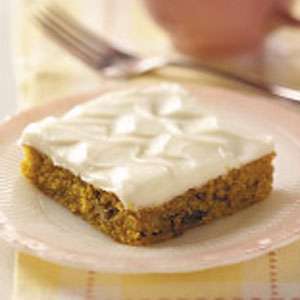
This recipe is in my cookbook The Essential Amish Cookbook. Try replacing the carrots with apples for a great apple cake. My friend from church did this, and it’s so delicious. 

Carrot Cake

4 eggs

2 cups sugar

1 cup vegetable oil

2 cups flour

1 teaspoon ground cinnamon

2 teaspoons baking soda

1 teaspoon salt

3 cups carrots, peeled and grated

1/2 cup nuts, chopped

With an electric mixer, beat eggs, sugar, and oil at medium speed until smooth. In a separate bowl, sift together flour, cinnamon, baking soda, and salt. Add egg mixture, beating at low speed until blended. Fold carrots and nuts into batter and stir until well blended.

Pour into a greased and floured 9 x 13-inch baking pan. Bake at 350 degrees Fahrenheit for 35–40 minutes, or until a toothpick inserted in center of cake comes out clean. Cool. 

Frosting

4 ounces cream cheese

1/4 cup butter, at room temperature

2 1/2 cups powdered sugar

1 teaspoon ground cinnamon

2 tablespoons milk

1 teaspoon vanilla extract

In a small bowl, mix cream cheese and butter until well blended. Add remaining ingredients and mix well. Spread over cooled cake. 

Lovina’s Amish Kitchen is written by Lovina Eicher, Old Order Amish writer, cook, wife, and mother of eight. Her three cookbooks, The Cherished Table, The Essential Amish Cookbook, and Amish Family Recipes, are available wherever books are sold. Readers can write to Eicher at Lovina’s Amish Kitchen, PO Box 234, Sturgis, MI 49091 (please include a self-addressed stamped envelope for a reply); or email [email protected] and your message will be passed on to her to read. She does not personally respond to emails.

KDA and KDHE Remind Kansans to Vaccinate Animals Against Rabies

0

The Kansas Department of Agriculture and the Kansas Department of Health and Environment together advise Kansans to be alert to the human health risk caused by unvaccinated animals, following a second detection of rabies in a cat in the last two weeks. The two cases were in Jewell County and Harvey County, and both involved outdoor cats which exposed multiple humans and other cats. The known human exposures have started rabies post-exposure prophylaxis, a series of five vaccinations to prevent rabies in humans.

Rabies is a viral disease transmitted by the bite or scratch from a rabid animal. There have been six positive cases of rabies in cats this year, as well as several cases in wildlife. Both of the cases this month were in unvaccinated outdoor barn cats.

“Rabies is not unusual in the wildlife population, and unfortunately this often means domestic animals that roam freely can be exposed to the virus,” said Animal Health Commissioner Justin Smith. “It is vital to vaccinate domestic animals against rabies, especially animals that interact with humans, because humans can be infected. Vaccinating pets and livestock against the virus protects both animal health and human health.”

Even if an animal is kept indoors, ensuring their vaccination against the virus is up-to-date serves as an important barrier if they are ever exposed to a wild or stray animal that could be carrying the disease. Those who have barn cats should have them vaccinated against rabies.

Many Kansas cities and counties have vaccination requirements; know what is required in your community and contact your veterinarian for more information about rabies vaccination.

Rabies attacks the brain and spinal cord and can take several weeks to months for symptoms to appear, but early treatment after an exposure can prevent rabies in both humans and pets that are up to date on vaccinations. The vaccination is highly effective.

If you notice unusual behavior in your animal, or you think your animal may have had contact with rabid wildlife, it is important to immediately contact your veterinarian to determine the next steps to take.

If you are a veterinarian, remember to always consider rabies as a potential diagnosis for neurologic animals. In Kansas, rabies is a reportable disease which requires a veterinarian to report a positive rabies test to the KDA Division of Animal Health.

In order to prevent the spread of rabies, people should teach children to be cautious around outdoor animals, wild or domestic, even if they look to be friendly; wash a wound from an animal encounter thoroughly with soap and water and get medical attention immediately; keep pet vaccinations current; and monitor pets when outside.

If you have concerns about rabies, please visit www.kdhe.ks.gov/1497/Rabies or call the KDHE Epidemiology Hotline at 877-427-7317.

State issues health alert after recent rabies cases in Kansas

0

The Kansas Department of Agriculture and the Kansas Department of Health and Environment together advise Kansans to be alert to the human health risk caused by unvaccinated animals, following a second detection of rabies in a cat in the last two weeks, according to a media release from the Kansas Department of Agriculture.

The two cases were in Jewell County and Harvey County, and both involved outdoor cats which exposed multiple humans and other cats. The known human exposures have started rabies post-exposure prophylaxis, a series of five vaccinations to prevent rabies in humans.

Rabies is a viral disease transmitted by the bite or scratch from a rabid animal. There have been six positive cases of rabies in cats this year, as well as several cases in wildlife. Both of the cases this month were in unvaccinated outdoor barn cats.

“Rabies is not unusual in the wildlife population, and unfortunately this often means domestic animals that roam freely can be exposed to the virus,” said Animal Health Commissioner Justin Smith. “It is vital to vaccinate domestic animals against rabies, especially animals that interact with humans, because humans can be infected. Vaccinating pets and livestock against the virus protects both animal health and human health.”

Even if an animal is kept indoors, ensuring their vaccination against the virus is up-to-date serves as an important barrier if they are ever exposed to a wild or stray animal that could be carrying the disease. Those who have barn cats should have them vaccinated against rabies.

Many Kansas cities and counties have vaccination requirements; know what is required in your community and contact your veterinarian for more information about rabies vaccination.

Rabies attacks the brain and spinal cord and can take several weeks to months for symptoms to appear, but early treatment after an exposure can prevent rabies in both humans and pets that are up to date on vaccinations. The vaccination is highly effective.

If you notice unusual behavior in your animal, or you think your animal may have had contact with rabid wildlife, it is important to immediately contact your veterinarian to determine the next steps to take.

If you are a veterinarian, remember to always consider rabies as a potential diagnosis for neurologic animals. In Kansas, rabies is a reportable disease which requires a veterinarian to report a positive rabies test to the KDA Division of Animal Health.

In order to prevent the spread of rabies, people should teach children to be cautious around outdoor animals, wild or domestic, even if they look to be friendly; wash a wound from an animal encounter thoroughly with soap and water and get medical attention immediately; keep pet vaccinations current; and monitor pets when outside.

If you have concerns about rabies, please visit www.kdhe.ks.gov/1497/Rabies or call the KDHE Epidemiology Hotline at 877-427-7317.