Monday, January 5, 2026
Home Blog Page 10

Tips for mailing holiday food gifts

0

If you’re thinking about mailing food gifts for the holidays this year, there are some extra precautions you should plan for beforehand, according to Kansas State University food scientist Karen Blakeslee.

“It is highly recommended to ship perishable food overnight,” said Blakeslee, who is also the coordinator of K-State’s Rapid Response Center for Food Science.

Also, for perishable foods, Blakeslee said packages should be marked as “Keep Refrigerated” or “Keep Frozen,” depending on the particular food item. “And always let the recipient know that the package is on it’s way,” Blakeslee said.

Some additional tips:

  • Ship in a sturdy box with packing to prevent breakage.
  • Pack with a cold source, such as frozen gel packs or dry ice.
  • Use permanent markers to write the address on the outside of the box.
  • Do not send to business addresses or where there will not be adequate refrigerator storage.
  • Send packages at the beginning of the week so that they’re not sitting in a post office or delivery facility over the weekend.
  • When possible, send foods that don’t require refrigeration.

Mailing perishable foods is more risky than non-perishable goods, according to Blakeslee. She also suggests avoiding foods packaged in glass containers, such as jelly, which can break and the added weight increases shipping costs.

“Instead of shipping foods items yourself, leave it to the companies that sell and mail food items,” Blakeslee said.

If you receive perishable foods, Blakeslee suggests checking the temperature of the food when it arrives: “Cold foods should be below 40 degrees Fahrenheit,” she said. “If there are any problems related to temperature, contact the company and do not eat the food.”

Blakeslee cited information from the extension service at the University of Minnesota which notes that some foods that ship best include dried beef; dehydrated soups and drink mixes; condiments such as hot sauce and other seasonings packets; canned foods; dried fruits; and hard candies, or sturdy homemade sweets.

When sending cookies, bars and homemade candies, consider wrapping each piece individually and pack items in commercially popped corn, foam packing ‘peanuts,’ or bubble wrap.

More food safety tips are available online from K-State’s Rapid Response Center for Food Science. Blakeslee publishes a monthly newsletter, called You Asked It!, with timely tips for safe food in and out of the home.

More information is also available at local extension offices in Kansas.

The Wesley Achieves Gold Level Certification as a Montessori Inspired Lifestyle® Community

0

FOR IMMEDIATE RELEASE
The Wesley Achieves Gold Level Certification as a Montessori Inspired Lifestyle® Community
The Wesley joins an exclusive group of over 100 credentialed senior living communities around
the world that have implemented a revolutionary Montessori-based approach to memory care.
Hutchinson, 12/8/25—The team at The Wesley is devoted to building a Montessori Inspired
Lifestyle® for their community, earning them the highest Gold Level credential. The MIL
program was created by the Center for Applied Research in Dementia (CARD) after one of its
founders, Dr. Cameron Camp, adapted Dr. Maria Montessori’s principles for older adults with
dementia. Guided by CARD, staff learned how to implement the Montessori principles of
equality, dignity, and respect into their community. Staff were trained to empower residents
with memory impairment to be as independent as possible. This is achieved through tapping
into each resident’s remaining strengths, designing environments they can thrive in, and
helping them find purposeful activities and meaningful roles within their community.
Communities effectively using Montessori principles benefit from healthier and happier
residents, fewer drugs, fewer responsive behaviors, more satisfied families, and better staffing
and census (Witt-Hoblit, Miller, & Camp, 2016).
Gold Level organizations have resident-led committees, multidisciplinary Learning Circles,
effective signage and environmental cues, personalization of resident spaces, and many other
milestones. In addition, they have demonstrated at least one innovative achievement in
applying MIL principles and have attended additional hours of advanced online learning in MIL
from CARD, among other exemplary achievements.
Several years ago, The Wesley embarked on a journey to bring dedicated cognitive support
services to our campus. Working with Jerree Forbes, Ed.D., an expert in cognitive function, we
wanted to seek out a program that allowed residents to truly participate in their lives rather than
having a one-size-fits-all program offering only pacifying activities. Our efforts were sidetracked
by several events, including a global pandemic and shutdown, until Nabeel Khokhar was hired
in early 2023 as our Chief Operating Officer. One of Nabeel’s charges in his new role was to
find such a supportive program that checked all the proverbial boxes. He discovered CARD and
their Montessori-inspired approach, which I feel is designed perfectly for seniors experiencing
cognitive challenges. This innovative program for residents “meets them where they are” in their
individual journeys, a mindset I truly support. Our team embraced the program, and we have
now achieved Gold Status, the pinnacle, with Legacy residents fully participating in day-to-day
living with purpose. From leading group functions to helping set up for supper, the residents are
engaged and inspired. I couldn’t be prouder of Nabeel and his team for fulfilling our goal of
bringing such a program that encourages and assists our Legacy residents to not only live, but
to thrive.
Mark Mains, President & CEO

The Wesley is a vibrant retirement community and continuum care campus. Call 620-663-9175 for
more information or visit thewesleyks.com.

10 gifts for the gardener without spending a lot of green

0

University of Missouri Extension state Master Gardener coordinator Debi Kelly says you can find a great holiday gift for the gardener on your list without spending a lot of green.

“Gardeners find joy in small packages that don’t cost much, and they understand delayed gratification,” Kelly says.

If in doubt, consider a gift card to a nearby botanical garden or garden center. Another “gift that keeps on giving” is a paid Missouri Extension Master Gardener online course registration, she says.

“With rising food prices and changes in assistance programs, some families will be looking to garden as a budget-friendly option to provide their family with fresh produce, and an investment in the online EMG course provides that opportunity,” Kelly says.

Also consider a themed gift basket that includes seeds, tools, decorative garden items and a gardening book or journal.

If you are on a budget, Kelly has 10 suggestions for fun, useful but affordable gifts for the gardener in your life:

1. Seeds. Small, inexpensive packets of annual seeds will bring the gardener on your list much happiness in the spring.

2. Bulbs. The same is true for bulbs that will bring color and joy for years to come.

3. Amaryllis. “Nothing brings joy to a gardener more than a colorful reminder of spring ahead than an amaryllis bulb that will bloom in the dead of winter,” Kelly says.

4. Hummingbird feeders, butterfly houses and garden flags. Gardeners take joy in seeing birds and butterflies take flight in their gardens. Wind chimes, wind spinners and garden flags come in a variety of styles and prices.

5. A houseplant. In the dead of winter, houseplants can brighten homes and spirits.

6. Rain gage. You can choose a decorative one that reflects your friend’s personality.

7. Garden sculpture or garden stakes. These come in different styles and prices and will remind the recipient of your friendship for years to come.

8. Garden gloves and T-shirts that reflect the recipient’s personality.

9. Garden-themed water bottles or coffee mugs.

10. A basket or tote to carry garden tools and other items.

Beat the chill: Essential layering tips

0

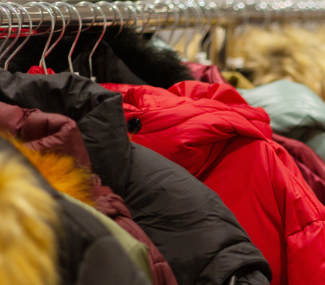
No one wants to be stuck outside in cold temperatures without the proper attire. Kelsie Doty, an assistant professor of fashion studies in Kansas State University’s College of Health and Human Sciences, says there are some important factors that go into staying warm when working or playing outside.

“We often recommend that people layer for the cold weather, rainy weather and wet season,” Doty said. “A different fiber might be appropriate for each layer.”

Doty says there are two main textile families: synthetic and natural. Synthetic textiles are made from such petroleum fabrics as polyester and nylon.

“Natural fibers are things like cotton, linen and wool,” Doty said. “They come from plants or animals.”

Natural fibers are divided between plant fibers and animal fibers. Those two categories make a huge difference when it comes to the time of year to wear them.

“Plant type fibers like cotton, linen or hemp are good for hot weather,” Doty said. “Animal fibers, like wool, mohair or even silk can be really good for colder weather.”

Deciding which layers to wear could make the difference between a warm or cold outing. “I think strategic layering is just as important as the fiber choice because you don’t want to work against that fiber choice by leaving out an air gap.”

When dressing in layers, other suggestions include:

  • Base Layer: “We want something that is going to be knit and very close to the skin,” said Reannan Boisvert, doctoral student in fashion studies, who spoke recently on the weekday radio program Agriculture Today along with Doty. “(That is) most likely something that is made of an animal fiber like wool, which has natural properties that help to wick moisture away.”
  • Mid layer: “The mid layer is really important to help keep air trapped next to your body,” Doty said. “Air is actually our best thermal insulator.”
  • External Layer: “This layer is what’s going to keep you nice and toasty in the coldest months in Kansas,” Doty said. “The exterior layer has the most power for keeping someone dry or someone protected from the elements.”

Doty recommends a dense exterior layer like nylon or denim, or materials in which the yarns are tightly packed so the air or water cannot get in.

Doty recommends avoiding cotton and plant-based fibers as they keep the moisture in themselves. “When it’s cold out, it can be really dangerous because that moisture right next to the skin (may get) trapped and cause frostbite,” Doty said.

More information on topics covered by K-State Extension is available at local extension offices in Kansas.
KFU Statement on the Federal Government’s Farmer Bridge Assistance Program

0

Kansas Farmers Union (KFU) members gathered last month at our state convention to debate and consider policy priorities for 2026. One of those policies includes language that reads, “If a farmer cannot raise a crop that covers the cost of inputs and makes a profit, then they are not making a living wage.”

Unfortunately, that is where most farmers have been trying to live for some time, and this misguided trade war compounded already high input costs, low commodity prices, rising inflation, and growing corporate control of the ag industry.

These bridge payments may help some farmers cover some of their costs, but according to North Dakota State University economists, farmers have lost in excess of $44 billion with all of the aforementioned factors taken into account, and there are some farmers who won’t benefit from these payments at all.

The Trump administration’s $12 billion bailout to farmers won’t come anywhere close to covering all of the losses incurred, and we are not convinced these proposed payments will be equitably distributed based on past relief programs. At the end of the day, farmers want trade, not aid.

We call on Congress and the administration to prioritize developing and passing a new Farm Bill that reflects today’s challenges and realities. A better farm safety net, stable and fair markets, and stronger protections to address consolidation in agriculture must also be prioritized if we truly want to make systematic change that benefits farmers, consumers, and the economy.

About Kansas Farmers Union – Since 1907, Kansas Farmers Union (KFU) has worked to protect and enhance the economic interests and quality of life for family farmers and ranchers and their communities. Kansas Farmers Union represents its members, who are engaged in diverse farming and ranching pursuits, through education, legislation, and cooperation.