Monday, January 19, 2026
Home Blog Page 101

A Likely Story: “MILEPOST 100.1” Ark Valley News

0

Roger Clark
Guest Columnist

I ran this route only a few times each year, and for the most part, it was a predictable run. It’s a scenic trip, even when the Flint Hills are on fire, and traffic is limited to road-weary families, triple-trailer rigs, drug-running entrepreneurs, and mail haulers like me. It’s a great time for personal reflection, corporate gratitude, and genuine appreciation for cruise control.
It’s a time to embrace mental health, goodwill to men, and remembering how good-looking my wife is. Life is good, some nights, and nobody knows it better than me. Especially at 3:00 AM when I’m just hitting the interstate, it’s a comfort zone for a mostly awake trucker.
That is, until I reached mile marker 100.1 north of Cassoday. By this time, I’m in that zone where one is groovin’ to the music, glancing at the moon, and counting the money that’s sure to roll in someday. But as I’ve done countless times on this run, I forget about the bridge. The evil bridge. The bridge that’s about to ruin the reputation I always wanted.
Bridges have expansion plates. Expansion plates, they like, expand. But these particular expansion plates, located only on the south side of the bridge, and only in the northbound hammer lane, have separated from the main structure. Running over it with a forty-thousand-pound semi is like cracking open a can of Bud Lite with a sledgehammer.
The impact launches me out of my state-of-the-art air seat and slams my chest against the shoulder belt. Anything not bolted down, including my coffee cup, cell phone, prepaid funeral plan, and Bluetooth headset are being slung around the cab like marbles in my wife’s state-of-the-art washing machine.
Some people believe time stops or goes into slow motion when things like this happen. They can recall seeing things like bright white lights, long-dead relatives, or images of the pearly gates. Some even claim to have died, briefly.
I should be so lucky. If I recall anything, it’s that trip last November, when I did the same #@%*^! thing, at the same #@%*^! bridge. But trust me, that recollection comes later, not sooner. In the moment, the only thing I’m seeing is the trailer logo way too prominent in the driver’s mirror.
Standing on the gas pedal like you would for a steer tire blowout, I drive for the shoulder and let the engine lug down before clutching. I might have practiced this before. But I also worry about being rear-ended in a situation like this, so I park straight, exit quickly, and do a one-minute walk-around looking for things that might be dragging on the ground, or broken. You know, like my pride for instance.
I did call the turnpike authority, just like last time, and they promised to get right on it, just like last time. I even write them an email about this one, and they responded by offering a prize if I can describe it in seven words or less.
So there’s hope, but not in Kansas. (And there’s my seven words!)
Later when it’s safe to do so, I find a good place to park and clean up the mess. Not only am I able to reset everything undamaged, but also find some loose change, leftover chicken nuggets, and the bonus check I lost last July.

Insight: Corn Sweat and August

0

Greg Doering,
Kansas Farm Bureau

According to recent reports the summer heat is causing corn to sweat in the field. Is it the corn’s profuse perspiration causing the issue or maybe the county fair is the party responsible?
More likely it’s just summer in early August. There are two options, hot and humid or hot and dry. Either way, the corn is still sweating, with each acre pumping up to 4,000 gallons of water into the air every day.  Kansas’ 6.4 million acres of corn pumps out enough sweat each day to cover a football field in more than 15 miles of water.
Corn sweat doesn’t actually make the temperature rise, rather it makes hot summer days feel hotter by adding to the humidity in the air. In addition to evaporation, all plants release water through tiny pores in their leaves during a process called transpiration, or plant sweat.
August is the peak growing season for corn and other fall crops, and correspondingly the peak for humidity, especially with the rains portions of the state have received this summer. The extra moisture can turn a normal August afternoon into a “three-shirt day” where even light work outdoors requires changing shirts more than once.
I do have a small quibble with the National Weather Service over its recent change in the adjectives used to describe our hot, humid summers. In March, the agency substituted “extreme” for “excessive” for heat-related watches and warnings.
Unsurprisingly, I wasn’t consulted on the change, and I have no problem alerting folks about the dangers posed by intense summer weather. But I’m not convinced that classifying normal, expected bouts of summer heat as excessive or extreme are of any help. Everyone should be mindful of the toll working outdoors can take. Plenty of breaks in the shade and cold water are crucial to staying safe in the heat.
As the change from excessive to extreme indicates, adjectives are arbitrary, and neither one is as effective as the description used in explaining the meaning of an extreme heat watch or warning: dangerous heat is possible or happening.
Dangerous means the situation is serious, as the weather in Kansas often is (there’s a 161-degree swing between the hottest and coldest record temps in the state). It also works across a range of conditions from hot and cold to flash floods and severe thunderstorms. It’s an adjective that conveys the stakes of the weather, especially in summer for individuals most at risk of high temperatures like older adults, young children and those without access to cooling resources. It’s easy to poke fun at labeling typical summer weather as excessive or extreme. Call it dangerous and people are likely to actually pay attention.
While July is the hottest month, August is still the heart of summer where triple-digit readings on the thermometer are commonplace. Our electricity bills may be extreme, but that’s just summer.
The days are getting shorter and soon harvest will put an end to sweating corn. For now, it’s still summer. Do your best to stay cool and maybe pack an extra shirt or two if you’re doing anything outside. Afterall, it’s just another August in Kansas.
“Insight” is a weekly column published by Kansas Farm Bureau, the state’s largest farm organization whose mission is to strengthen agriculture and the lives of Kansans through advocacy, education and service.

We Still Need A Queen

0

Trent Loos
Columnist

Boy, did I accidentally stir up a beehive this past week in my broadcast. Ingrid, my guest on Across the Pond from New South Wales, Australia, started talking about the importance of the honeybee. We’ve likely all heard the reports that pollinators are responsible for 1 in 3 bites of food we take.  That is largely dependent on the diet you consume but I don’t feel like that figure is worth taking issue with.
The following day, Texas resident January Nachtigall spoke of her Bee Rescue and how she works with local developers to rescue bees from trees that are in the path of urbanization. I just returned from Texas myself and can verify that urbanization has a full head of steam. One day after the Texas bee conversation, my buddy Bernie Harberts from North Carolina started talking about building bee colonies from wild bees.
Ironically or not, the history of beekeeping in the new America was laced with small farmers who would go to the woods seeking feral bees that had escaped from larger operations that were primarily focused on harvesting the wax rather than the food sweetener.
For the record, the European’s “officially” brought the honeybee to North America in 1622. Prior to that, there were hundreds of species of bees and pollinators but none which produced either wax or honey.
To that point, The Revolutionary War Journal has some very interesting facts about the early days of honeybees here in the homeland.
It wasn’t the honey that colonials were mainly after, but wax production. It became an important export throughout Virginia by the mid-18th century; however, like milk farms of this day and age, only mega-farms and plantations produced enough to garnish a profit. In 1730, 343,900 pounds of Virginia beeswax was exported to mainly the West Indies and Portugal, calculating at approximately 172,950 hives throughout the providence.
Pretty impressive, except all these hives were predominantly in one region of the New World and restricted to large agricultural operations. Wax production records from 1747 – 1758 for Prince George’s County, Maryland, right next door to Virginia, mentions only 7% of large estates and for middle- and lower-class farms, the bulk of colonial agriculture, there is no mention whatsoever. Well-managed colonial farms did not have the prerequisite honey producing hives.
The price and low frequency of acquiring honey restricted its use – so other sweeteners were of far more use. By the mid-1700’s, feral honeybees had established multiple hives in the woods and most small-time farmers hunted the hives, as did cave men thousands of years prior, practicing bee ‘lining’ as it was called, leading to the colloquial term ‘making a beeline.’
In 2025, we can easily relate to the concentration spoken of here in the early days of U.S. farms; however, it is the term “low frequency” that captured my attention. Mostly because of the conversation with Ingrid in Australia who spoke of the importance of bees and frequency. Much of the discussion taking place revolves around Colony Collapse Disorder and most of the blame is typically given to chemical applications. Aside from chemicals, I think we really need to investigate the role of massive frequencies pulsing through the airwaves that our wireless society is emitting into the bee’s world. It must be affecting them as negatively as it is all of us!
From BeeWhisper360.com:
An intriguing aspect of bee buzzing is its frequency, which typically ranges between 200 to 400 Hertz. This range comfortably falls within the audibility limits of the human ear, allowing you to hear and connect with the bees’ harmonious hum. For example, honeybees usually buzz between 250 and 300 Hz, while bumblebees produce lower frequencies around 200 to 250 Hz. These specific frequencies are more than just sound; they form a vibrational pattern that can have subtle yet meaningful effects on your nervous system.
Healing through vibrational frequencies is an emerging field that links sound waves to cellular health. The buzzing you hear isn’t just noise—it is a form of energy that interacts with your biological systems. By tapping into this vibrational energy, you can experience enhanced tissue repair and possibly a reduction in inflammation, making the vibrations emitted by bees a fascinating avenue to explore in holistic and regenerative medicine.
We have only skimmed the surface on what I am learning about the history and the future of bees as they pertain to human health. It turns out that honeybees were in high demand as the United States of America was taking shape for candles and polishes and protecting items from weather and wear. Are we cycling back as we always do where we shed “light” on the importance of an insect in preserving human health for generations to come? I see the swarm forming now to build a better hive for mankind; just when we thought we freed ourselves from the Queen’s control.

Entries Open For Kansas Junior Livestock Show

0

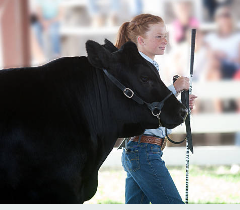
Entries now can be submitted for the Kansas Junior Livestock Show (KJLS), which will be held October 3-5 at the Kansas State Fairgrounds in Hutchinson.

According to the Kansas Livestock Association, participants must enter online at www.kjls.net by midnight August 15 to avoid a higher fee. Late entries will be accepted at double the cost through August 31.

All show details, including entry information, KJLS scholarship applications, LEAD contest specifics and a schedule can be found on the website. Scholarship applications are due August 15. While online, be sure to note several schedule changes for this year’s event.

The Kansas Livestock Foundation (KLF) Club Calf Sale will be held October 4 in conjunction with KJLS. The consignment deadline is September 12. Online entries can be made by going here. For more information, contact Stephen Russell at (785) 273-5115. Proceeds from the sale go toward Youth in Agriculture scholarships given through KLF.


Uncharted Territory: First Wetland Reserve Easement in Kansas

0

LABETTE COUNTY, KS – Photo by Christopher Rustay – In 1994, Max and Eweleen Good became pioneers in wetland conservation in Kansas, making history as the first landowners to voluntarily participate in a USDA Wetland Reserve Easement (WRE) in the state. At the time, the concept of wetland restoration was new, and the Goods had little to guide them. Nevertheless, they saw it as an opportunity to return their land to a more natural state, help restore wildlife habitat, and contribute to the larger conservation effort.

Their property features a riverine wetland, part of the Labette Creek floodplain. These types of wetlands form in low-lying areas that naturally collect water during rains or when nearby creeks overflow. Though the land had been altered over time, it still had the potential to hold water, support native plants, and provide vital habitat for birds and other wildlife.

The 40-acre property had once been part of tallgrass prairie before it was converted to farmland. By the time the Goods acquired it, trees had overtaken the grasslands and the ponds became seasonal. They knew that to restore its natural beauty and ecological value, they needed to take action.

“Our goal was to restore what had been lost,” said Max. “We wanted to contribute to the environment, not just for us, but for future generations.”

In 1994, when USDA introduced the Wetland Reserve Program, it was a rare opportunity to protect and restore wetlands through permanent conservation easements. The Goods took a leap of faith, enrolling their property in the program, despite the uncertainty that came with being the first in Kansas to do so.

The US Fish and Wildlife Service helped the Goods with the restoration process, which began with essential infrastructure, constructing a dike and water control structure to manage seasonal water flow. They also seeded the land with native grasses, carefully planning each step to coincide with the wetland’s seasonal needs. Over the years, the Goods used a combination of chemical and mechanical treatments to control invasive species and protect the new ecosystem.

By January 1996, their land became the first wetland in Kansas to be fully restored and protected under a Wetland Reserve Easement. What followed was nothing short of remarkable.

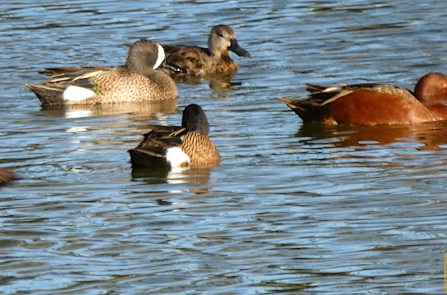
As the wetland flourished, it attracted an incredible diversity of wildlife. The Goods documented over 300 species of plants and animals that passed through or made the area their home. Species such as ducks, geese, eagles, and even river otters arrived, as the wetland quickly became a vital stopover for migrating birds and other wildlife. The Goods watched as new species continued to appear, turning their property into a biodiversity hotspot.

“Each year, it felt like we were discovering something new,” Max said. “We were amazed at how quickly the ecosystem came back to life.”

The Goods’ land became a haven for wildlife. Their wetlands now provide habitat for various species, provide protection from floods and help reduce nutrients and sediments downstream. The project not only brought environmental benefits but also created an opportunity for education and scientific research.

Max and Eweleen’s story is one of the first Wetland Reserve Easement successes in Kansas. Their enthusiasm and dedication inspired others to join the program. By 1995, Kansas had 11 WRE contracts, and by the following year, that number grew to 26. The Goods’ experience became a powerful example of what’s possible when landowners choose to invest in conservation.

“We never expected to become the first, but it’s been an incredibly rewarding experience,” said Eweleen. “We’ve learned so much, and we’re proud to have played a part in this important work.”

For landowners interested in restoring their wetlands, USDA Wetland Reserve Easements — part of the NRCS Agricultural Conservation Easement Program (ACEP) — offer a variety of benefits: enhancing biodiversity, improving water quality, reducing the risk of flooding, and creating sustainable habitat for wildlife. It’s a way to give back to the land and leave a lasting legacy.

The Goods encourage fellow landowners to consider this valuable opportunity. They see wetland restoration not as a sacrifice, but as an investment in the land and in the future.

“Don’t be afraid to step into something new,” Max advises. “If we can do it, so can you.”

For more information about the program and how it can support your conservation goals, contact us.

Abe Lollar, Ducks Unlimited
620-214-2693
[email protected]

Matt Carey, NRCS
785-545-7081
[email protected]