Monday, January 26, 2026
Home Blog Page 187

KU News: Study finds cities that conducted greenhouse gas emissions inventories moved needle toward reduction

0

From the Office of Public Affairs | https://www.news.ku.edu

Headlines

Study finds cities that conducted greenhouse gas emissions inventories moved needle toward reduction.
For years, cities have been taking on efforts to reduce their carbon footprint by reducing greenhouse gas emissions. Yet little has been done to verify if such work has the intended outcome. New research from the University of Kansas found that completing a greenhouse gas emission inventory indeed moves the needle toward mitigation. “Sustainability” can refer to any number of efforts a municipality can employ, but research has found that when American cities conduct a greenhouse gas emissions inventory, they reduce their CO2 emissions significantly more than they would have otherwise.


Hall Center announces competition winners
The Hall Center for the Humanities at the University of Kansas has revealed its winners for the upcoming summer and academic year, honoring faculty and graduate students for their groundbreaking humanities research and creative work. These awards provide critical support for travel, research time and scholarly engagement, advancing KU’s contributions to the humanities.

Full stories below.

————————————————————————

Contact: Mike Krings, 785-864-8860, [email protected]

Study finds cities that conducted greenhouse gas emissions inventories moved needle toward reduction
LAWRENCE — For years, cities have been taking on efforts to reduce their carbon footprint by reducing greenhouse gas emissions. Yet little has been done to verify if such work has the intended outcome.

New research from the University of Kansas found that completing a greenhouse gas emission inventory indeed moves the needle toward mitigation. “Sustainability” can refer to any number of efforts a municipality can employ, but research has found that when American cities conduct a greenhouse gas emissions inventory, they reduce their CO2 emissions significantly more than they would have otherwise.

“We found evidence that the construction and development of a GHG (green house gas) emissions inventory was causally linked to fewer fossil fuel carbon dioxide emissions,” said Rachel Krause, professor of public affairs and administration at KU and the study’s lead author. “Inventories reflect considerable investigation into the source and amount of local emissions, and we hypothesize that this information increases ability to manage efforts and allowed for change.”

Completing such an inventory, as well as employing sustainability directors or professionals in city government, are two of the most common methods cities have used to boost sustainability and reduce emissions, and researchers wanted to examine the understudied area of how effective those efforts are.

Researchers gathered data from cities across the United States identifying whether they had an emissions inventory and/or sustainability staff in place in both 2010 and 2015. Because the goal was to determine the difference that these investments generate, only those without them in place in 2010 were included in the analysis.

This yielded a sample of 702 municipalities to examine the emissions inventory and 484 for the sustainability staff. The research team then used satellite-gathered emissions data to calculate emissions released within the cities’ boundaries and compared the differences in emissions from the two points in time for groups of cities that did and did not make these investments.

“The estimation method we used controlled for over time and between city differences and indicates a statistically significant link back to this treatment,” Krause said of the emissions inventory. “Looking at fossil fuel-based CO2 from on-site residential emissions is a small piece of the overall pie, but the fact that there is evidence of real impact is relevant.”

Researchers examined emissions from on-site residential settings and on-road traffic. The results showed that conducting an emissions inventory results in about 22 fewer pounds of emissions per capita. The reduction appeared primarily via residential emissions.

The addition of sustainability staff, however, did not show a statistically significant reduction.

The study was co-written with Angela Park of the KDI School of Public Policy and Management in South Korea, who is also a public affairs alumna of KU; Christopher Hawkins of the University of Central Florida; and Aote Xin of Claremont Graduate University. It was published in the journal Cities.

Krause reiterated that the findings do not mean that employing sustainability staff is not a worthwhile investment for cities. Sustainability can mean many things and just because the study did not find that the addition of staff results in fewer emissions does not mean they have not influenced important improvements in other areas.

“Because greenhouse gas emissions are influenced by many factors — including climate, macroeconomics and higher-level policy — some people argue that local efforts aren’t large enough to matter,” Krause said. “The causal reduction shown following an emissions inventory is meaningful and adds to an area of research that was lacking.

“It’s not going to solve the issue, but is there evidence that these accounting and planning efforts are moving the needle in the right direction? We are finding that the answer is yes, they are. I posit that means something.”

As national and international political and policy priorities change, cities will continue to be among the most active in addressing greenhouse gas emissions, she added. Data is now beginning to show that investments and action taken by municipalities can move the needle.

-30-

————————————————————————

KU News Service is now on BlueSky.

Follow for KU News Service stories, discoveries and experts.


https://bsky.app/profile/kunewsservice.bsky.social

————————————————————————


Contact: Dan Oetting, 785-864-7823, [email protected]

Hall Center announces competition winners

LAWRENCE — The Hall Center for the Humanities at the University of Kansas has revealed its winners for the upcoming summer and academic year, honoring faculty and graduate students for their groundbreaking humanities research and creative work. These awards provide critical support for travel, research time and scholarly engagement, advancing KU’s contributions to the humanities.


Faculty Research Travel Grants

The Faculty Research Travel Grants offer KU faculty up to $3,500 each to support humanities-oriented research requiring domestic or international travel. This year’s recipients and their destinations are:


Sheyda F.A. Jahanbani, history: Paris, Cahors, Montpellier and Nimes, France
Benjamin Chappell, American studies: Los Angeles, New York City
Rebecca Laughlin Rovit, theatre: Berlin, Germany
Maya Kerstin Hyun Stiller, art history: Seoul, South Korea
Abdelmajid Hannoum, anthropology: Malaga, Spain
Silvia Park, English: Jeju, South Korea
Linda Galvane, East Asian languages & cultures: Tokyo, Japan
Midori Samson, School of Music: La Union and Pangasinan, Philippines; St. Louis, Missouri; Heart Mountain, Wyoming

Graduate Student Research Travel Grants

Graduate Student Research Travel Awards provide up to $3,500 to humanities graduate students for research-related travel. This year’s awardees and their research locations include:


Abigail Grace Scott, history: Paris, Aix-en-Provence, Nantes, France
Chang Wang, linguistics: Lhasa, Tibet, China
Josh Edmond Hayes, curriculum & teaching: South Korea
Xiaoyan Li, American studies: New York City
Ridwan Aribidesi Muhammed, history: Southwestern Nigeria
Han Mao, history: Taipei, Taiwan; Tokyo, Japan
Silvia Sanchez Diaz, anthropology: Guatemala
Lorena Victoria Mosquera Aguilar, Spanish & Portuguese: Colombia

Hall Center Resident Faculty Fellowships

The Resident Fellowships offer tenure-track humanities professors one semester of release time from teaching and service to focus on research or creative work. This year’s fellows and their projects are:


Paul Outka, English: “Judgment and the Human,” exploring how contemporary debates on artificial and nonhuman intelligence echo 19th-century judgments about human identity, race and gender
Michael Joseph Krueger, visual art: “Equine Archetype: Horses in Art as Symbols of Healing and Recovery,” a multimedia project using art and equine therapy to address trauma in at-risk youth
Patricia Walsh Manning, Spanish & Portuguese: “Correcting Erroneous History in Contemporary Spanish Historical Novels,” examining how post-Franco historical fiction shapes perceptions of 17th-century Spain
Maki Kaneko, art history: “Street Nihonga: The Art of Jimmy Tsutomu Mirikitani,” a retrospective exhibition of a Japanese-American artist’s work blending Nihonga techniques with urban survival narratives
Ninel Valderrama Negrón, Spanish & Portuguese: “Infrastructures of the Spanish Planet: Crafting Loyalty in the Borderlands,” investigating colonial infrastructure’s role in reinforcing racial and political hierarchies in Spain’s last colonies

Mid-Career Research Fellowship

The Mid-Career Research Fellowship provides associate professors a full academic year off from teaching and service to pursue research for promotion to full professor. This year’s recipient is:


Kent Blansett, history: “Expressions of Red Power: Engaged Resistance and Pop Colonialism,” a book that examines the Red Power movement through Native American use of popular culture across the 20th century

Richard and Jeannette Sias Graduate Fellowship in the Humanities

This fellowship funds two KU humanities graduate students for one semester each to focus on their dissertations while engaging with the Hall Center’s scholarly community. The recipients are:


Hayden Lee Nelson, history: “The North Woods: An Environmental History from the Pleistocene to the Pyrocene,” tracing the North Woods’ ecological and human history over 12,000 years.
Jeongwon Yoon, art history: “The Boundary Breakers: The Free Artists Association and the Abstract Art Movement in Imperial Japan and Colonial Korea, 1937–1945,” exploring abstract art’s role across empire-colony lines.

For more information about these awards or the Hall Center’s programs, visit hallcenter.ku.edu.


-30-

————————————————————————


KU News Service

1450 Jayhawk Blvd.

Lawrence KS 66045

[email protected]

https://www.news.ku.edu


Erinn Barcomb-Peterson, director of news and media relations, [email protected]


Today’s News is a free service from the Office of Public Affairs
This Kansas photographer’s view of the Flint Hills tells of ‘fire and death and rebirth’

0

Jim Richardson had a distinguished career making images for National Geographic Magazine stories on cultural, environmental and scientific issues. His work on the Flint Hills introduced the uniquely American landscape to an international audience.

When photographer Jim Richardson first pitched National Geographic Magazine on a story about his home state of Kansas, his editors at the time were focused on covering some of the most dramatic scenery in America.

“The biggies were getting all the attention,” Richardson remembers, almost two decades later. “The Grand Canyon, Zion National Park, and all the rest of those places that get inundated every summer with tourists.”

“I thought, why not propose something on the Flint Hills?” he says.

National Geographic is best known for photography, in-depth articles, and coverage of science, geography, history and global culture. At its peak, the magazine had a global circulation of more than 10 million copies per issue.

“You really had to be on your game for the pictures to rise to the level that they would make it into the pages of National Geographic,” Richardson says. “You were looking for great weather, great drama.”

His assignment in the Flint Hills was a high-profile chance to spotlight one of the last remaining tallgrass prairie ecosystems in the world — a 4.5 million acre grassland spanning eastern Kansas and into north-central Oklahoma — and it was practically in Richardson’s backyard.

After more than five decades making pictures all over the world, Richardson’s been looking back at his Flint Hills project as he painstakingly digitizes his work.

His images from the Flint Hills gives Kansans a chance to experience an annual ritual that most will never have a chance to experience up close.

“When you put a painting on the gallery wall behind the red velvet ropes, you figuratively tell people to look at this — ‘Isn’t this something?’” Richardson says. “That was what we did with the National Geographic story, was to get it to the place that we could say to people both inside and outside of Kansas, you know, ‘This is something.’”

On a 12-week assignment for National Geographic, Richardson would often shoot a thousand rolls of film. Those 36,000 images would be edited down to just a handful of photographs in the magazine. Each image had to be powerful enough to make an impression.

“It was never just sort of random shooting to keep the button going, but always trying to elevate the images,” Richardson says. “Many of those pictures would be redundant, because I went back to the same place over and over again, trying to get it to the place where you found something transcendent, so that eventually those really good images call out to you.”

Richardson’s years working for the magazine spanned a time when a shelf of National Geographic issues in American schools, libraries, and households was a mark of interest in a wider world.

“It was a very clear sign of the era and that you were not just locked into the limits of where you lived, but that you could reach out further and understand things on a grander scale,” he says.

‘Fire and death and rebirth’

Like on any assignment, in the Flint Hills Richardson was looking to capture moments in time that were more than just a bunch of pretty pictures. They had to tell a bigger story.

“I wanted the seasons, but it wouldn’t be the seasons of summer or spring, but seasons like fire and death and rebirth — almost biblical, life-cycle seasons,” he says.

As fire season reaches its apex in late March and early April, billowing clouds of smoke often hang over Chase County, in the heart of the Flint Hills. The fires play a critical role in the life cycle of the prairie ecosystem.

“These grasses have evolved with fire,” Richardson says. “By February, they’re brown, they’re like standing tinder. They are meant to burn, and they burn ferociously well.”

The region plays host to between 400 and 600 different species of plants — mostly grasses but also many broadleaf varieties and wildflowers. Fire suppresses the growth of woody plants and stimulates the growth of native grasses like big bluestem, little bluestem, and Indian grass. The spring blazes also ignite a cycle of renewal, welcoming the return of insects, small mammals, birds and grazers.

“There’s actually a rather dynamic battle going on there and, by burning, they beat back all their enemies,” Richardson says. “You have to understand the trees are the enemy of the prairie and enemy of the grasses.”

What follows close on the heels of fire are brand new shoots of grass that gleam in the sun and feed the bison and cattle that graze there.

“There’s an amazing phenomenon after the burn,” he says. “You can go out sometimes the next morning, look across to the hills that are now blackened, and you see this faint greenish glow on the cusp of the hills.”

“Within five or six weeks, what had been blackened hills is the most verdant, emerald green of any green on the planet,” Richardson says.

Organizing the images of a lifetime

These days, when Richardson isn’t on the speaking circuit lecturing on his long career in photojournalism, he’s perched at a light table poring over a lifetime of images in his neatly-appointed office on North Main Street in the small, central Kansas town of Lindsborg.

“The tedious part is finding all those negatives, finding the right one, and digitizing it, all of which is a huge time suck,” Richardson says. “It just takes huge amounts of time.”

He’s been busy organizing the many thousands of images to ensure his vast photo archive is accessible long after he is gone. It’s important work that will preserve his photographs for future generations.

Richardson has a strong presence on the web and almost all of his work is available online. He also owns Small World Gallery in Lindsborg with his wife, Kathy, and displays his photographs as fine art prints, posters and greeting cards.

“There comes a point in which the organization of all that stuff has an impact on whether or not it is going to live,” he said. “Photographs that don’t get seen are like the tree in the forest that falls and no one’s there to hear it,” he said.

This article was reported during a weeklong artist-in-residence program hosted by the Raymer Society, which preserves The Red Barn Studio in Lindsborg, Kansas, as a museum and provides cultural programming.

Kansas drivers now required to move over for more vehicles. What a new law covers

0

A new law requires drivers to “move over” and give an additional lane of safety to more motorists.

The bill, signed into law March 23, expands the requirement to all stalled vehicles along Kansas roadways , and says when approaching a vehicle with its hazard lights on, drivers must move over to the nonadjacent lane, if possible.

“If the driver of the motor vehicle is traveling on a highway that consists of at least two lanes that carry traffic in the same direction of travel as that of the driver’s motor vehicle, the driver shall proceed with due caution and, if possible … shall change lanes into a lane that is not adjacent to that of the stationary vehicle,” the law reads.

If moving over isn’t possible, the driver must slow their speed and proceed to pass with caution.

“If the driver is traveling on a highway of that type but it is not possible to change lanes or if to do so would be unsafe, the driver shall proceed with due caution, reduce the speed of the motor vehicle and maintain a safe speed for the road, weather and traffic conditions,” the law reads.

To safely change lanes, drivers should turn on their blinker, check their blind spot and keep a consistent speed while switching to the other lane.


Previously, move-over laws only applied to emergency personnel and vehicles like tow trucks, road service providers and utility vehicles. Unlawfully passing a stopped emergency vehicle could result in a fine of $75.

Thanks to this commonsense bill, all drivers will now be required to move over or slow down if there is a vehicle on the side of the road with flashing lights,” Kansas Gov. Laura Kelly said in a March 24 press release. “This bill will improve safety and will make it easier to educate the driving public.”

According to the press release, 82 crashes happened from 2018 to 2023 that involved a stalled vehicle on the side of the road.

According to Wichita’s municipal court, failing to move over when the law requires could result in a $50 fine and court costs equaling $71.50, a $121.50 total cost.

There are several laws that went into effect Jan. 1, including the elimination of state sales tax on grocery items , a law that allows retailers in the state to add a surcharge fee to credit card transactions and a law that allows people who can’t afford to pay a traffic ticket to petition the court to waive and reduce the fees.


Lawn Maintenance

0
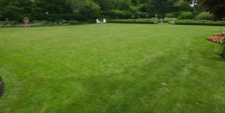
 Following best practice recommendations in every aspect of gardening can help save you time and money. The lawn is no different. Here are some guidelines for proper lawncare:
  • Mowing height is dependent on turf variety, usage and time of year. Improve drought resistance by mowing at the taller end of the recommended range for your turf variety.
  • No more than one-third of the height should be removed at each cutting. If the lawn has become overgrown you will need to cut it gradually over several days.
  • Maintain a sharp mower blade to give a clean cut for the blades.
  • Use a different mowing pattern each time to prevent soil compaction and wear from the mower wheels.
  • Cultivate the soil around trees to prevent grass from growing close to the trunk so mowing equipment will not risk damaging the bark.
  • Water in the early morning.
  • Wait as long as possible between watering.
  • Soak the soil to a depth of 6-8 inches when watering.
  • Fertilize only to maintain moderately green color during favorable weather. Over-fertilizing increases water and mowing needs.
  • Do not fertilize when heavy rain is expected.
  • Time fertilizer based on variety:
    • Fescue and bluegrass – September and November (optional in May)
    • Bermudagrass and Zoysiagrass – between May and August
    • Buffalograss – June

Act Now to Prevent Summer Weeds

0

Weed prevention is an important step in helping your lawn and garden be more drought resistant. Weeds compete with desirable plants for water and nutrients. This problem worsens in periods of drought when these resources are limited. Now is the time to act to apply pre-emergent products in order to prevent summer weeds before they become an issue.

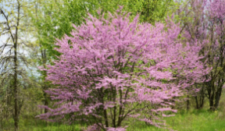
Pre-emergents must be applied before summer weeds begin to grow, so application timing is critical. Look for 1″ soil temperatures to average 55oF, or look for the purple flowers of the Eastern Redbud tree to tell you when to apply weed control pre-emergent. Once the redbud trees begin to bloom, it’s best to apply a pre-emergent within the next two weeks.

Crabgrass, grassy sandbur, goosegrass, and spurge are all weeds we commonly see in lawns & flowerbeds, all of which can be controlled this month with a pre-emergent product. While there are many pre-emergent products available, two products are available for summer-long weed prevention:

o  Dimension (active ingredient = dithiopyr)

o  Barricade (active ingredient = prodiamine)

Other products available will typically need repeat applications throughout the summer, so be sure to read and follow the label instructions. Most products are not safe to use when planting seeds. If you plan to plant seeds in your lawn or garden this spring or summer, most pre-emergent products will kill desirable seeds as well as weed seeds and should not be used in these areas. Always read and follow the label instructions before applying any of these products.