Monday, January 26, 2026
Home Blog Page 189

Just a Little Light: 113 Years Ago

0


Dawn Phelps
Columnist


April 15 brings back haunting reminders of what happened on that day 113 years ago in 1912.  That is when the Titanic, built in Belfast, Ireland, set sail on her maiden voyage from Southampton, England, to New York City with 2,224 on board (Wikipedia).

It was the largest, most luxurious ship of its time, and it was believed to be unsinkable.  It was 850 feet long, 92 feet wide and 64 feet high—larger than the measurements for Noah’s ark of 450 feet high, 75 feet wide, and 45 feet high.  

The ship left England on April 10, carrying some of the very richest and some of the poorest.  Many of the passengers in third class were immigrants bound for America, hoping for a better life.  

Only four days into the journey, the Titanic struck an iceberg about 375 miles south of Newfoundland on the evening of April 14.  It was a dark, calm, moonless night when Frederick Fleet, a watchman on the Titanic spotted an iceberg in the path of the ship—it was too late to avoid it!

But there was a major problem.  The Titanic carried 20 lifeboats, space for about one third of those on board the ship.  

As the ship began to fill with water, some of the passengers were evacuated into the too-few lifeboats.  But some of the lifeboats were not filled to capacity before they were lowered into the Atlantic Ocean.  Preference was given to those in the ship’s first-class section, and women and children were boarded first.


After about two and a half hours, the ship sank to the bottom of the ocean after breaking into two pieces.  A total of 1,514 people died with most of them freezing in the 28–30-degree water.  Only 710 survived.


The survivors on the lifeboats were picked up by the Carpathia, a ship that arrived a few hours too late in response to the Titanic’s distress calls.  Over three hundred bodies from the Titanic were retrieved by ships from Canada which were dispatched to the site, carrying embalming supplies, undertakers, and clergy.  Embalming was required before the bodies could be taken on land.

The task of embalming so many bodies proved too great, so some of the bodies were buried at sea.  Some bodies were returned to America or Europe, and 150 were buried in Nova Scotia, Canada.

Even though the sinking of the Titanic was horrible, the loss of life could have been even greater.  Records show that the Titanic could have held up to 2,566 passengers, but only 1,317 passengers were booked on the ship, partially due to a coal strike in the United Kingdom.  

For various reasons, about 50 people had cancelled their trips, and one crewman sneaked off the ship when the ship temporarily docked in Queenstown, the last stop before the fateful journey across the Atlantic. 

The sinking of the Titanic was such a tragedy, and many died.  But something good did come from the sinking of the Titanic.  

When U.S. Senator William Alden Smith led an investigation into the disaster, he found the ship had failed to take proper heed of iceberg warnings.  There were not enough lifeboats, and the ship had steamed into a dangerous area at too high a speed. 

The inquisition into the disaster uncovered some other problems which resulted in the development of regulations to help prevent future maritime disasters.  Here are a few more findings:

  • The ship was sinkable, and over confidence can be dangerous.  
  • Speed is not as important as safety.
  • The crew did not properly interpret warnings that icebergs were in the water.  Binoculars might have been helpful, but the binoculars were locked away on the Titanic, but there was no key. 
  • Space in the lifeboats was not fully utilized.
  • The staff needed more training on how to deal with catastrophes.

After the sinking of the Titanic, safety regulations were initiated, and an International Ice Patrol was set up to monitor icebergs in the North Atlantic.  Hopefully, other tragic maritime events have been avoided because of the Titanic’s fateful voyage. 

On April 15 we still remember those who died 113 years ago.  May they rest in peace.


Tom Mix: “Straight Shooters Always Win”

0

Jim Fulbright
Guest Writer

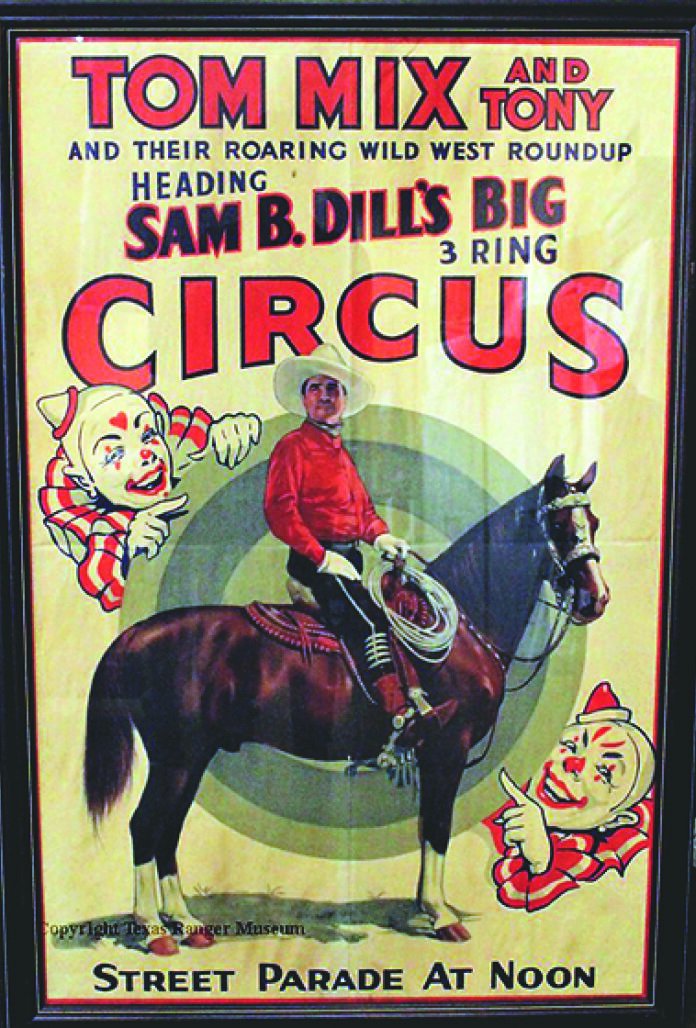
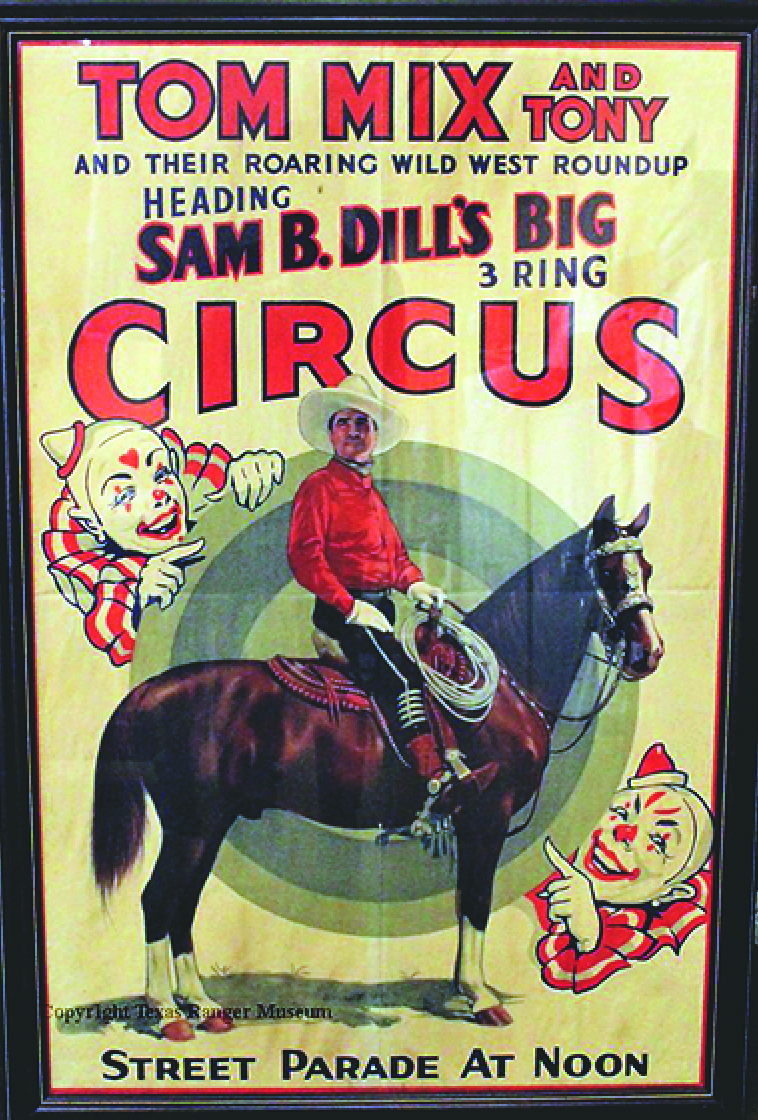
Thomas Hezekiah Mix was not a cowboy by birth, but in a dazzling rise to fame he became the most flamboyant and popular of all early movie cowboys. Mix was born January 6, 1880, in the northeastern Pennsylvania hamlet of Mix Run. His father, a stable master for a lumber merchant, taught his son to love horses, a quality that paid dividends for the boy who one day would set the standard for cowboys of the silver screen. Not liking the name Hezekiah, Mix took his father’s name Edwin, and though he dreamed of becoming a circus performer, his parents discouraged it when they caught him practicing knife-throwing tricks using his sister as an assistant.
With the outbreak of the Spanish-American War in 1898, Mix aspired to soldiering and enlisted, but his army unit remained stateside guarding an artillery base in Delaware. He re-enlisted in 1901, hoping to see combat action in the Boer War, but that all changed when he fell in love with Virginia schoolteacher Grace Allin, marrying her in July 1902. Mix then took leave from the Army, but never returned. He was listed as AWOL, yet not court-martialed or formally discharged.
Following their marriage, the couple moved to Guthrie, Oklahoma, where the multi-talented Mix worked varied jobs, including physical fitness teacher, pugilist instructor, and bartender. His dashing good looks and flamboyant manner won him many friends, including Oklahoma Territory Governor Thompson Ferguson who helped him be named as drum major of the Oklahoma Cavalry Band despite the fact he was not a musician.
His band travels contributed to an eventual divorce, but Mix gained valuable contacts, most notably Zack Mulhall, the Miller brothers, and Will Rogers. In 1905, he rode in Theodore Roosevelt’s inaugural parade with several Rough Riders who had served with the President in Cuba. Years later, Hollywood publicists would muddle this event to imply Mix had been a Rough Rider himself.
Later that year, Mix was invited to work at the 101 Ranch. He knew horses and riding from his boyhood, but his “reviews” as a working cowboy were mixed. Some veteran Miller cowpunchers claimed they had to teach him to properly saddle a cow pony. One even observed that “He could get lost in an eighty-acre pasture.” The Millers paid no attention to the criticisms because Mix was hired as a showman.
When the Millers prepared for their first public rodeo in the summer of 1905, they sent Mix and other performers to appear with the Zach Mulhall show in New York. Oddly enough, he was billed as “Tom Mixco, the “Mexican horse runner,” an unlikely description that may have taught him how easily he could reinvent his life story; something done many times over his career to the consternation of biographers who still have trouble separating fact from fiction. In truth, Mix was never a Texas Ranger; had not fought in the Boxer Rebellion in China; or the Boer War; or the Spanish-American War. Neither had he been a U.S. Marshal, nor did he ride with Pancho Villa in Mexico.
His second marriage, to Kitty Jewel Perrine at the end of 1905, barely lasted a year. In 1908 he met twenty-two-year-old Olive Stokes whose family owned a ranch near Dewey, Oklahoma. They toured the Wild West Show circuit together; Mix performing as a trick rider and expert shot. In January 1909, while in Billings, Montana, he totally surprised Stokes, not by proposing, but inexplicably organizing the necessities for a wedding, evidently not thinking he needed to consult the bride-to-be. At first, Olive thought it was a joke, but then accepted, and the couple tied the knot.
Over the next two years, Mix won the National Rodeo Championship for riding and roping. He and Olive spent the winter months at her family’s ranch near Dewey, where the town appointed him “night marshal.” The connection ultimately led to the creation of Dewey’s Tom Mix Museum.
Mix’s growing reputation in Wild West performances soon gained the attention of Hollywood, and the jaunty cowboy in the big white hat landed his first role in silent films. The Selig Polyscope Company cast him in a documentary-style short film titled, Ranch Life in the Great Southwest. The movie was shot in Dewey, and included Oklahoma’s Henry Grammer in which the duo displayed their roping talents. The film launched Mix’s movie career, and for the next twenty-five years he appeared in nearly 300 films, only nine of which were “talkies.”
Olive gave birth to their daughter Ruth in 1912, and they moved to the “Bar Circle A Ranch” near Prescott, Arizona. Olive appeared in several of Mix’s silent films during that period, and over the years, 65 Mix movies were filmed at Prescott and other Arizona locations.
The family lived on the “Bar Circle A” (now a suburban Prescott housing development) until 1917, but between his travels with the 101 Wild West show and his blossoming movie career, he was not often home. Mix frequently performed opposite twenty-year-old actress Victoria Forde, and in 1917 the duo signed with the Fox Film Corporation. It was the final straw for Olive, who claimed abandonment, leading to a nasty public divorce suit. Mix and Forde were married in 1918, and four years later she gave birth to Thomasina “Tommie” Mix.
During the 1920s Mix made more than 160 escapist matinee cowboy films in which he performed his own stunts and was frequently injured. Most of his movies were simply a means of displaying action-packed stunts, trick riding, and attention-grabbing costumes. Even his intelligent, handsome horse “Tony” enjoyed celebrity status as a result of his films, especially among young movie-goers.
As it happened, Mix’s remarkable steed also came from humble beginnings. One day in 1913, a fellow actor spotted a fine-looking colt pulling a produce wagon on a Los Angeles street. He paid cash for the horse and began training it for his own, later selling it to Mix. For the next thirty-four years, “Tony” co-starred with Mix in dozens of movies and parades. Tony was so well-known to movie-goers that he became the most widely recognized horse in the world, receiving thousands of fan letters from children each week.
With or without Tony, Mix was one of the most sought-after performers of his day, yet he knew his limits as an actor. He made fun of his shortcomings by asking the directors, “Which expression do you want, number one, two, or three.” Although he sometimes left Hollywood to travel with a Wild West show or a circus, he invariably returned to the movie business. In 1929, his last year in silent pictures, Mix worked for a small studio run by Joseph P. Kennedy Sr., which later became film giant RKO Pictures. By then Mix was forty-nine and by most accounts, ready to retire. Although his voice was considered adequate for sound movies when they became the standard in 1927, he thought sound would ruin his action films and had no interest in them. Over the next two years, Mix appeared with the Sells-Floto Circus at a hefty weekly salary of $20,000, but by 1932, when he and Victoria Forde were divorced, the Great Depression, coupled with reckless spending and many ex-wives, had wiped out his savings.
Shortly after divorcing Forde, Mix married his fifth wife, Mabel Hubbard Ward. Universal Pictures approached him that year with an offer to do “talking” pictures, which included script and cast approval. Mix was broke, so he did nine pictures for Universal, but because of previous injuries while filming, he was reluctant to do more.
In 1933, he permitted Ralston-Purina to produce a radio series called Tom Mix Ralston Straight Shooters, a popular show from the 1930s through the early 1950s. He gave them his name but never appeared on those broadcasts, letting others do his sound work. In the meantime, Mix concentrated on the circus business. He joined the Sam B. Dill Circus in 1935, a company he later purchased. His last film, The Miracle Rider, was released in 1935, but by then, Mix wanted to stay with the circus performing with Ruth, his eldest daughter. In 1938 he went to Europe on a promotional tour, leaving Ruth behind to manage his circus. The circus failed, and Mix blamed his daughter, excluding her from his will.
On the afternoon of October 12, 1940, Mix was driving back to Southern California from New York in his 1937 Cord 812 “Phaeton.” On a lonely unpaved road near Florence, Arizona, he encountered construction barriers where a bridge had been washed away. A work crew watched as his car skidded into the gully. The impact sent an aluminum suitcase careening off the luggage rack into the back of Mix’s head, breaking his neck, and killing him instantly.
An investigation gave speeding as the cause, and while some say alcohol did not play a part, several acquaintances stated he had been drinking heavily the night before. Four days later, thousands of people attended the funeral of the man hailed as “King of the Cowboys,” at Forest Lawn Memorial Park in Glendale, California.
For all his shortcomings, Tom Mix insisted on demonstrating strong values to his many young admirers. He didn’t smoke, drink, or curse on screen, and asked that his youthful followers abide by the motto: “Straight shooters always win, lawbreakers always lose.”
His contributions to motion pictures earned him a star on “Hollywood’s Walk of Fame,” along with boot prints, palm prints, and the hoof prints of his horse Tony at the famed Grauman’s Chinese Theatre. In 1958, Tom Mix was inducted into the Western Performers Hall of Fame at the National Cowboy and Western Heritage Museum in Oklahoma City.
Today, on State Route 79, seventeen miles south of Florence, Arizona, there’s a monument where Tom Mix died. It includes a bronze plaque that states: “In memory of Tom Mix whose spirit left his body on this spot and whose characterization and portrayals in life served to better fix memories of the Old West in the minds of living men.”
Tom Mix was one of several famous film stars and show people to have started their careers at the 101 Ranch. They, along with the unique history of the ranch and its people will be the focus of the “101 Ranch Western and Antique Trade Show” in Blackwell, Oklahoma on April 11 and 12. The two-day event at the Kay County Fairgrounds Livestock Center features 101 Ranch and Wild West Show artifacts as well as antiques and other Western memorabilia for viewing or sale. The show, presented by the 101 Ranch Collectors’ Association, is open to the public Friday, 12 to 5 pm, and Saturday, 9 am to 4 pm.

Do You Work Out?

0
lee pitts

The local gym is now the new country club and people are being judged by which gym they belong to. This hit me when I was run-over as I was going to the hardware store by a spandex clad gentleman who ran right into me because he was talking on his phone and had his nose up in the air like he was high society or something.

“Oh, excuse me. I’m sorry old chap but I’m late for my Pilates class,” he exclaimed.

The gym happens to be right next door to the hardware store which makes for an interesting clash of two cultures. The guy was wearing a headband, Fitbit watch and was carrying a bottle filled with a slimy green liquid that I assumed he drank. The haughty gym-goer stooped so low as to speak to me, the lowly hardware aficionado. “I haven’t seen you around here. Do you work out?” he asked, scanning my body from head to toe while shaking his head in disgust.

“I sure do, seven days a week,” I replied.

“You certainly don’t belong to my gym or I’d have seen you around. What’s the name of your gym?”

“It’s called the ranch.”

“Hmph. Never heard of it. Is it nearby?”

“It’s about 15 miles from here.”

“You really should apply for membership to my gym, that is if you qualify, of course.”

“Of course,” I replied.

“As a member you can use any of our state-of-the-art machines. For instance our treadmills allow you to run in place while talking on your phone and stream a movie. For a small additional charge you can sign up to participate in our Pilates, spinning and yoga classes.” said the uppity gym jock.

“You keep referring to it as ‘my gym’. Why are you hustling gym memberships? Do you own the place?”

“Oh no. It’s just that my gym is running a special promotion and for only $39 per month you can be a member and get an official t-shirt signifying your new-found status. And for every five new members I sign up I get a free month, a headband and a mango/beet smoothie. As a new member you would qualify for the same program, that is, after pass our rigid screening process.”

“I’m sure I could use the status I’d gain by joining your prestigious gym but mine is free,” I replied, “and I don’t have to drink the green yuck or buy the leg warmers or headband and honestly, can you picture me in a spandex leotard. And I don’t really have the time for yoga or Pilates and I threw-up on the carousel at the county fair so I think the spinning class is definitely a non-starter.”

“But are you really getting a proper workout at this Ranch place?” asked Mr. Spandex. “You certainly don’t look like it. From the looks of your body I suspect your abs and lats could use a lot of work. We have an excellent coaching team and I’m sure we have more modern up to date apparatus to work out on. What’s your favorite machine at The Ranch?”

“I’d have to say it’s a Bobcat, but it’s a rental.”

“Hmph. I’ve never heard of it. Do you have a climbing wall?”

“No, but I do have to climb a fence every once in a while while sorting.”

“Might I ask how much you can lift?”

“Well that depends on how much rain we get,” I replied. “In a real wet year I might have to lift and throw 400 pounds but if we have a bad year with no grass I might only have to lift and throw 300 pounds. I also work out by lifting railroad ties, heavy sacks of grain and cement, and by digging postholes.”

“That’s certainly an unorthodox work-out regimen, What’s the main staple of your exercise regimen?”

“I’d have to say fencing.”

“Oh, after watching that sport during the Olympics I’ve always wanted to try it. Please do tell me more,” said the suddenly excited gym snob.

“Well, its something you and your wife can do together but it’s dangerous, especially if your wife is mad at you. See all the cuts and lacerations on my arms and hands? That’s all from fencing with my wife.”

When Did You Say You Were Leaving (Best Of)

0
lee pitts

On behalf of my fellow westerners let me be the first to welcome our eastern visitors and their money to the Wild Wild West this coming summer. We certainly want to be hospitable hosts but before you get the idea you might like to prolong your stay and make the west your permanent abode I feel compelled to tell you there are a few things that the local Chamber of Commerce didn’t tell you.

Sure, Montana may capture your soul but may I remind you that the last easterner who wanted to take up permanent residence there was George Custer. Sure you can find a place to park the family R.V in the Dakotas but the Badlands are also the Home of God’s Frozen People. There is usually no weather in the North country… it’s always zero. Did I mention black ice and snow tires?

Washington state offers much scenic beauty, great beer and of course there is Mt. Saint Helens. But before you get any ideas about making the Northwest your new domicile need I remind you that Big Foot is still roaming around. If you survive him there are the logging trucks and of course Mt. Saint Helens could erupt again at any time burying you in molten pumice. You’ve really got to watch your ash in Washington.

Millions of tourists will discover Nevada this summer. The Silver State offers gambling and other indoor recreational sports, if you get my meaning. But the reason everybody stays indoors in Nevada is because outside they are testing nuclear bombs. In Idaho all those buildings you see are not potato cellars. Besides the potato, Idaho’s sagebrush plain is also home to the largest concentration of nuclear reactors in the country. That is why those lucky people who live in Nevada and Idaho always have that certain glow about them.

The Texas and Oklahoma Panhandles may take your breath away…but actually what you are smelling are the feedlots in full flower. Cramped Texans would also probably want me to mention their hail, humidity and hurricanes. Like Texans always say, “short visits make for long friends.”

Sure, the weather in California has attracted lots of people but that is just because they don’t know how bad earthquakes can be. Before you married couples decide that a change of scenery might save your marriage there is another California oddity that could be more devastating than the big quake that is due at any minute. It is called community property!

Oregon is pretty but it is also full of native California nuts, flakes and vegetables trying to escape the big quake. The possibility of having one of them as a neighbor should be enough to discourage anyone from moving there.

I have to admit that Zion and Bryce and the rest of Utah is breathtaking. But need I remind you that those rock formations were carved by floods and wind. Takes a pretty strong wind to carve rock you know? Besides, it can be tough to get a drink in Utah on Sunday.

If you are thinking of relocating, try Kansas. During a twister there your house might get relocated for free. It was the home of the Wizard of Oz you may recall. Colorado will steal your heart but try buying a house in Aspen. They’ll steal more than your heart.

You might want to exercise squatters rights in the Southwest but I have to warn you all the food is covered in red and green chili and the bathrooms and the watering holes are much too far apart. The Tucson Tourist Bureau brags about their dry heat but 120 in the shade is still hot. The Grand Canyon is nothing more than a big crack in the earth caused by a lack of water and extreme heat. During Noah’s flood Arizona and New Mexico only got two inches of rain.

Wyoming offers great hunting but far too many residents are short sighted cowboys. Be advised, wear orange clothing while visiting Wyoming.

What I am trying to say was best summed up by a bumper sticker I saw in Nebraska: “Welcome, Now Go Home.” Besides, I think you left the bathtub running and the iron on. Oh, by the way, did you lock the front door?