

Lettuce Eat Local: Don’t Wait For Whole Wheat

Amanda Miller
Columnist
Lettuce Eat Local
“At last the great moment arrived. A delicious odor was wafted upon the autumn breeze. Everywhere the barnyard citizens sniffed the air with delight. The Red Hen ambled in her picketty-pecketty way toward the source of all this excitement. Although she appeared to be perfectly calm, in reality she could only with difficulty restrain an impulse to dance and sing, for had she not done all the work on this wonderful bread?”
Although the fable of the Little Red Hen has a few revisions here and there — retellings I’ve seen include any combination of farm animals including cat, bull, rat, cow, pig, dog, and duck — most of the original 1874 plot remains the same. An industrious hen finds, plants, waters, cuts, and mills some wheat, inviting her neighbors to work with her along each step of the process. They refuse each time; “Oh very well, I’ll do it myself,” she says. Suddenly the enthusiasm level changes when the question is now one of eating instead of working, and though this time the little red hen is met with a chorus of yeses, she responds, “Oh no you won’t, I’ll eat it myself.” And she did.
You’re probably quite familiar with it as well, especially considering it feels like a very Kansas-appropriate sort of story as it revolves around growing and utilizing wheat. It is both an inspirational fable, focused on the importance of hard work and personal initiative, as well as a cautionary tale warning about the consequences of not helping others. You reap what you sow, or in the case of the animals that didn’t join the hen, you don’t reap what you don’t sow.
I’m not sure that I’d describe my manner in a “picketty-pecketty way,” but I completely empathize with the little red hen’s difficulty restraining her impulse to rejoice at “joy of joys — when the lovely brown loaves came out of the oven, they were done to perfection.” Fresh bread is one some of that kitchen magic like I talked about last week that I never tire of.
There might be another freshly-milled layer to this story that we can glean from as well (pun intended). I do get help from my farm friends — my husband does the growing of the wheat and my kids help with the baking of the bread — so the process is quite different, but we get to take our whole wheat flour from start to finish here. Brian gets me a bucket or two of wheat berries, we store them in the basement to use all year long, and I grind them in my Vitamix into flour. I’ve always known whole wheat flour is healthier than white, retaining the integral nutrients of the whole kernel, and not surprisingly, bread baked with freshly ground flour really does taste fresher. I use some whole wheat flour in just about everything I bake, from cornbread to cake.
But up until the last few weeks I didn’t realize the impact it has to mill the wheat right before using it. “Freshly-milled flour” has been a buzzword in my area lately, popping up in conversations with quite a few different people. Statistics vary, as tends to happen with trending ideas, but it sounds like flour can start to lose some vitamins and antioxidants within even 24 hours of being milled. (Before being milled, the wheat kernels’ outer layer protects them from spoilage and keeps them stable for a long time.)
The healthfulness of freshly milled flour isn’t a new concept, but it does seem to be getting a resurgence in interest — even some people who have gone gluten-free for years are discovering they can handle fresh flour. I’m interested and waiting to see what bakes up with continued research.
The little red hen was clearly onto something.
Simple Half-Whole Wheat Bread
What better for W than whole wheat? The wheat we grow is a hard red variety, and quite dense when used completely, so I typically use some unbleached white flour as well (Hudson Cream!) to keep the texture a little lighter, but you can do what you want. I use my Vitamix dry grind container to mill my wheat, but you can find grain mills in many different types — maybe even a coffee grinder can work for a tiny bit in a pinch?
Prep tips: there are several local sources for wheat berries, and some may also offer fresh flour (you can store in the freezer).
4 cups freshly-milled whole wheat flour
4 cups all-purpose flour
1 ½ tablespoons instant yeast
1 tablespoon salt
2 cups warm water
1 cup warm milk
½ cup local honey
4 tablespoons butter
Mix both flours, yeast, and salt in the bowl of a mixer. In a separate bowl, mix remaining ingredients until butter is melted; add to flour and knead several minutes until cohesive, adding more flour if needed — you want a little sticky but not unmanageably so. Cover and let dough rise for about an hour, then divide in half and form into two loaves. Place into buttered loaf pans and let rise again until crowning the edge of pans. Bake at 365° for 30-40 minutes.
Jury duty surprise
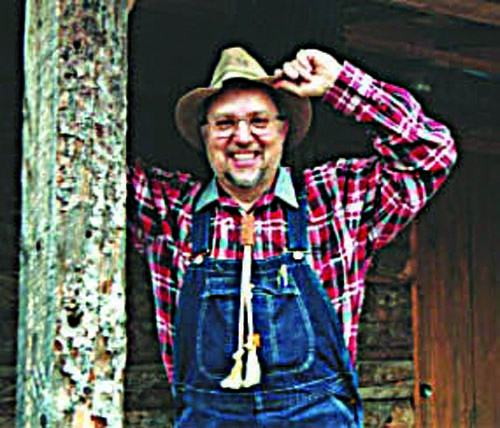
I can never thank my faithful readers enuf for their voluntary contributions to this weekly column. This story comes to me from North Platte, Nebraska.
***
“Milo, a few months ago I was called up for jury duty and got a controversial case. A wealthy rancher claimed his gun went off by accident while he was cleaning it, killing his wife and his best friend who happened to be sleeping in his bedroom at the time.
“The charge against the rancher wuz murder in the first degree, punishable either by life imprisonment or lethal injection.
“After a few days of testimony, the prominent rancher’s lawyer approached me outside the courthouse and promised me $50,000 and a new F-350 if I would hold out for a lesser charge of manslaughter.
“Sure enough, after a tough and long deliberations, we 12 peers in the jury — after a full week — declared the rancher guilty of the lesser charge and the presiding judge sentenced him to only three years in prison.
“After the trial, the rancher’s lawyer approached me, slyly handed me a check for $50,000 and the keys to a shiny new F-350 and said, ‘You had me and the rancher pretty worried. When the jury was out for so long, I didn’t think you’d be able to pull it off.’
“I was pretty worried, too,” I said. “Everyone else wanted to acquit him.”
***
And, from Stillwater, Oklahoma, comes this story:
“One afternoon my best friend and I were standing in the line at our bank to apply for farm operating loans when three armed robbers burst in.
“One demanded the cash from the tellers’ windows.
“The second bandit demanded the head loan officer to open the safe and the robber cleaned out the cash and a few safe deposit boxes.
“And, the third robber came down the customer lineup, taking everyone’s wallets, watches and other jewelry.
“Before they got to us, my friend quietly stuffed something in my coat pocket.
“What was that?’ I whispered.
“It’s the $50 I owe you from that IOU at our recent poker game,” he replied.”
***
There wuz a clumsy farmer who wuz splitting firewood chunks and carelessly managed to trip over a chuck of wood and disable himself.
But, he managed to drag himself into his house, called 911 and said, “Hello. I need help, I believe I’ve broken my arm in two places. What should I do?”
The emergency operator replied, “Well, I certainly wouldn’t go back to either of those places.”
•••
Here’s a story that my departed pious friend, ol’ Saul M. Reeder, would appreciate.
A rural grandfather overheard his granddaughter repeating the alphabet in reverent, hushed tones.
“What are you doing?” the grandfather asked.
“I’m praying, Grandpa,” she said.
“But, it sounds to me like you are just repeating the letters of the alphabet quietly to yourself,” her grandpa responded.
“Well, I can’t think of the right words,” the granddaughter replied, “So I just say all the letters. God will put them together for me ’cause He knows what I’m thinking.”
***
An elderly, and a bit forgetful, cattleman hired a new ranch hand. It wuz his first out-of-family labor he’d ever hired.
On the first day, the rancher showed the new hire into the tiny bunkhouse attached to the barn. And the rancher then instructed the new hire that he could expect long days that started early in the mornings.
He then gave the new hire an old alarm clock and left him in the bunkhouse with this final instruction, “I’ll expect to see you at 5 a.m. for breakfast. After that we’ll go over the day’s work that needs done.”
However, the first morning the alarm clock failed to ring and the newly-hired cowboy missed breakfast completely.
”Where were you at 5 a.m.?” the boss tersely asked his bleary-eyed new man.
“The alarm clock never rang,” the new-hire shot back.
“Oh, I meant to tell you about that,” the rancher said sheepishly. “Sometimes it doesn’t ring ’cause it’s stuck. Then you’ve got to shake it a bit. Now, remember, if it don’t ring by 5 minutes past 5 tomorrow morning, give ‘er a good shake and it’ll ring just fine.”
***
Stumping question for this week: “Why does a slight tax increase cost you $200 and a substantial tax cut save you 50-cents?”
***
Words of wisdom for the week: “There is no opinion so absurd but that some philosopher will express it.” Cicero
***
Hope you having great pre-spring weather. Have a good ‘un.
Wheat Scoop: Carter’s Kansas-Based Community Service: Celebrate Bake and Take Month this March

For the audio version, visit kswheat.com.
The late President Jimmy Carter shared a love of the land with Kansas producers. After all, he grew up on a farm in his home state of Georgia and was the last farmer to serve in the White House. But did you know in addition to his proclivity for hard work, he officially appreciated the Kansas-led tradition of sharing baked goods with others?
A recent dig into the Kansas Wheat archive uncovered a historical photo of Carter, then the governor of Georgia, and two signed proclamations declaring the fourth Saturday in March in 1973 and 1974 as “Bake and Take Day” in Georgia. The timing corresponds with the establishment of the first national Bake and Take Day celebration in 1973 by the Kansas Wheathearts, an auxiliary organization of the Kansas Association of Wheat Growers.
The occasion was marked by a simple premise – bake something and share it with a neighbor, friend or relative. Participants were also encouraged to share their favorite wheat foods with the elderly or residents of adult care facilities.
In 2006, the ACH Food Company, which makes Fleischmann’s Yeast® and Argo®Corn Starch, provided funding and public relations expertise to Kansas Wheat and the Wheat Foods Council to expand the program from a single day to an entire Bake and Take Month with the motto – Bake Something Special for Someone Special. Each March, Kansas Wheat continues to support this tradition by celebrating Bake and Take Month with industry partners like the Wheat Foods Council, Home Baking Association and other state wheat commissions.
“Volunteers of all ages can keep Bake and Take Month a tradition in their communities by showing they care with a baked food and a visit,” said Cindy Falk, Kansas Wheat nutrition educator and coordinator of Kansas Bake and Take Month. “Many young bakers learn together from experienced bakers. This activity helps improve their baking skills and emphasizes the importance of community service.”
Looking for inspiration to take on a Bake and Take Month project? Cookie bars are easy-to-make treats that require minimal preparation and are quick to mix up and bake. Here’s a selection of our favorite cookie bar recipes:
S’mores Cookie Bars
Nothing says summertime like hot and gooey S’mores roasted over a campfire! Capture the flavor of graham crackers, marshmallows and chocolate anytime with these S’mores Cookie Bars.
Mini Pecan Pie Bars
These classic mini bars with a tender shortbread crust provide the wonderfully sweet flavor of pecan pie in a perfect little bite-sized piece.
Fudge Nut Bars
Gooey, sweet, with a soft crunchy top… stop! We are already drooling! These Fudge Nut Bars are excellent for baking and taking to your friends!
Blackberry Crumble Bars
These fruit bars are perfect as a breakfast pastry or a sweet dessert. A tasty blackberry filling is tucked between a tender crust and crumbly topping.
Simple Lemon Squares
These Simple Lemon Squares are as pretty as they are delicious! With a buttery shortbread crust, delicious lemon filling, and a dusting of powdered sugar make these lemon squares as pretty as they are delicious!
Want even more ideas? Check out EatWheat.org, the site that shares the stories of U.S. wheat farmers with consumers all around the world. You’ll find even more quick and easy recipes showcasing wheat, ideas to get inspired by using wheat in crafts and articles to learn more about wheat production and wheat foods. Visit EatWheat.org and get started with your Bake and Take Month project today!
Horticulture 2025 Newsletter No. 03

ANNOUNCEMENTS:
K-State Garden Hour – Establishing a Native Prairie Stand at Home
Wednesday, March 5, 2025, 12:00 PM – 1:00 PM
Transform your land into a thriving prairie habitat. Join Johnson County Natural Resources Extension Agent, Amy Keigher, as she guides you through the process of establishing a home prairie stand. Learn about the benefits of prairie landscapes, plant selection, and maintenance techniques to create a beautiful, sustainable ecosystem right at home.
Register to attend this free webinar here:
https://hnr.k-state.edu/extension/consumer-horticulture/garden-hour/
Garden Spotlight
Send in your garden stories! Last year our Hort Newsletter featured six different gardeners/garden programs.
We love learning about our fellow Kansas gardeners and want to feature your home/community/school garden in our newsletter so we can all grow together.
Email [email protected] to find out more.
“A Gathering for Gardeners”
March 8 (8:30-2:15) Hutchinson, KS
Join the Hutchinson Horticulture Club for a day of educational presentations on flowers, vegetables and more. Admission is free. To learn more visit:
“A Gathering for Gardeners”.
Harvey County Home and Garden Show “Birds and Blooms”
March 22 (8:00AM-5:00 PM) – March 23 (Noon-5:00 PM)
Hosted at the 13-acre Dyck Arboretum, the 2025 Harvey County Home and Garden Show has great food, vendors and an amazing speaker line-up addressing this year’s theme “Birds and Blooms”. For just $1 admission you can spend the weekend enjoying the scenery while getting a great education as you prepare for the growing season.
“Birds and Blooms” Speaker Schedule 2025
Johnson County Healthy Yards Expo
March 29, 2025 (9:00AM – 2:00PM)
A free family and earth-friendly event. Explore and discover sustainable options for your home and garden through expert advice and educational seminars. Plus, a native plant sale and door prizes. Visit: johnson.k-state.edu or call (913)715-7050 for more information.
VIDEO OF THE WEEK:
Maximizing Water Efficiency Through Drip Irrigation
(K-State Garden Hour February, 2025)
Explore water conservation practices and learn about the benefits of drip irrigation.
GARDEN CALENDAR
VEGETABLES
Rhubarb
Rhubarb is a perennial vegetable native to Asia. The leaf stalks are used for jellies, sauces and pies.
One of the biggest concerns with growing rhubarb is crown rot. Begin with healthy, disease-free plants, and plant in well-drained or mounded soil.
Use mulch around plants to minimize weeds, but monitor for signs of slugs and snails.
Plant rhubarb crowns from mid-March through early April. Wait to divide existing plants until they are at least three years old and make sure each division has a large “eye” or bud. Plants will decrease productivity if not divided after growing for five to ten years. Dig a shallow trench and bury each plant so the bud is ½ to 1-inch below the soil surface. Space plants two to three feet apart. Gently pack the soil over the plants.
During the first year of growth rhubarb should not be harvested. A few stalks can be harvested during the second year. This will allow plants to become well-established and highly productive. The harvest window lasts about eight weeks.
If seed stalks develop, break them off right away to direct energy to the crown and roots.
Rhubarb leaves contain oxalic acid which can cause sores on the mouth if eaten. The stalks are the only edible part of the plant. K-State Research and Extension Rhubarb
Potatoes
Mid-March to April is planting time for spring potatoes. Begin with disease-free tubers from a reputable source. Potatoes from the grocery store may not produce a large yield compared with certified seed potatoes.
Early maturing varieties, especially in southern Kansas, are best so tuber development is complete prior to the summer heat. Cut the tubers into 1 ½ to 2-ounce pieces, “seeds”, and store in a warm, humid location for two to three days. This time allows the cut to heal and prevents rot.
Plant the seeds in fertile, well-drained soil when it reaches at least 45 degrees F. Seeds should be planted two inches deep and spaced 12 inches apart in rows 3 feet apart. Potatoes require regular watering.
Practice crop rotation by avoiding planting in an area where tomatoes, peppers, eggplant, potatoes or tomatillos have been planted in the past three to four years.
As potatoes develop along the main stem protruding from the seed, pull loose soil up, or apply straw mulch, over the potatoes. This will prevent them from being sunburned. They will be ready for harvest when the vines are about half dead. (Kansas Garden Guide)
FRUIT
Planting Fruit Trees
It’s time for establishing new fruit trees in Kansas. Here are a few tips to get started.
Whether bare root or potted trees, store them in a shady location and keep watered until planting. Bare root trees may be potted temporarily to prevent against drying out if they won’t be planted right away. Do not store bare root trees in water.
Remove wires, labels and anything else attached to the tree to prevent damage to the trunk and branches.
Roots may need pruning prior to planting to avoid girdling.
Dig a hole approximately three times the width of the root ball.
Backfill the soil to completely cover the root ball, but avoid covering the graft.
You can access our complete publication for planning your fruit garden through the KSRE bookstore: Planning your Fruit Garden.
Pruning Raspberries and Blackberries
March is time for pruning raspberries and blackberries. Though the plants are perennial and can survive several years, the canes are biennial and only live for two years. The first year for each cane is a growth year. The second year is for fruiting. After the second year, the canes should be pruned out. Everbearing red raspberries and blackberries are the exception as they produce fruit on first year canes.
See our publication on Raspberries and Blackberries for details about proper pruning.
FLOWERS
Iris Leaf Spot
Iris leaf spot is a fungus that overwinters in the dead leaf material on the ground. As water or wind disrupts infected leaves, the fungal spores are transferred to the healthy new growth.
As new growth appears, clean up any dead leaves to prevent spreading this disease.
TURF
Buffalograss Lawn
Buffalograss is a warm-season grass native to Kansas and much of the Midwest, with excellent heat, drought and cold tolerance.
Buffalograss grows best with morning sun and 6-8 hours of sunlight throughout each day. It does not do well in poorly drained or sandy soils. For non-irrigated sites, plant in the spring once soil temperatures reach 55 degrees F at a rate of 1.5 to 2 pounds of buffalograss burrs (1 to 5 seeds in a burr) per 1,000 square feet.
Buffalograss is dioecious, which means there are male and female plants. In seeded areas, you can see the inflorescences (male flowers) on male plants emerge several inches tall. The female plant produces a flower close to the soil that is not as noticeable. Several seeds are produced within each female burr. Vegetative buffalograss cultivars can be purchased which are typically sold as plugs. They are generally the female plants (no visible seedheads during the growing season).
You can learn more about cultivars, establishment and management here:
Buffalograss Lawns (K-State Turf and Landscape Blog)
MISCELLANEOUS
Kansas-Grown Fruits and Vegetables Buying Guide
Purchasing fresh, locally-grown fruits and vegetables supports a healthy diet and the community. Kansas Department of Agriculture has a directory to help consumers find local farmers markets (Farmers Market Directory) but you can also reach out to your local Extension office for sources of local produce.
K-State Research and Extension has published an informative guide with a calendar indicating when various types of produce are in season. Purchasing in-season produce is more cost-efficient but also has much better flavor. You can access the KSRE Buying Guide linked below.
Kansas-Grown Fruits and Vegetables Buying Guide
Seed Tape
Seed tapes are a method of preparing seeds for planting. It is a great option for gardeners of all ages because it reduces the amount of time spent bending over the ground. It also makes it easier to handle small seeds and get proper seed spacing.
To make a seed tape cut a paper towel into strips 2 inches wide by 12 inches long. Create a paste by mixing a small amount of flour with water. Use a ruler and pencil to mark dots at the proper spacing for the type of seed being planted. (See the seed packet for recommended plant spacing.) Put one seed on each dot on the paper towel. Put a small drop of the flour paste on top of each seed. Allow the paste to dry before moving the seed tape.
At the appropriate time, each seed tape can be planted at the proper depth in the garden. The seeds will germinate through the paste. Over time, the paper towel will dissolve into the garden. Toilet tissue and tissue paper are other options for making seed tape.
This activity is perfect for getting children involved. Sit together at a table and create an assembly line for an efficient way to get the garden growing.
https://kansashealthyyards.org/component/allvideoshare/video/making-your-own-seed-tape
QUESTION of the MONTH
“Why do some people start plants by seed versus transplants?”
Some plants perform better when planted by seed while others do best when transplanted. For many plants, starting either way is fine.
Root vegetables, such as carrots, turnips and beets tend to not transplant well. Cole crops such as broccoli, cauliflower, cabbage and Brussels sprouts should be transplanted so they will mature before the heat arrives and slows down production.
Starting plants from seed can be less expensive, but transplants have established roots giving them a head start on the season without having to nurture tender seedlings.
Contributors:
Cynthia Domenghini, Instructor and Horticulture Extension Specialist
Kansas Garden Guide
Division of Horticulture
1712 Claflin, 2021 Throckmorton
Manhattan, KS 66506
(785) 532-6173
For questions or further information, contact your local extension agency.
This newsletter is also available on the World Wide Web at:
http://hnr.k-state.edu/extension/info-center/newsletters/index.html
The web version includes color images that illustrate subjects discussed. To subscribe to this newsletter electronically, send an e-mail message to [email protected] listing your e-mail address in the message.
Brand names appearing in this newsletter are for product identification purposes only. No endorsement is intended, nor is criticism implied of similar products not mentioned.
K-State Research and Extension is committed to making its services, activities and programs accessible to all participants. If you have special requirements due to a physical, vision or hearing disability, or a dietary restriction please contact Extension Horticulture at (785) 532-6173.
Cynthia Domenghini, Ph.D.
Instructor; Horticulture Extension Specialist
Department of Horticulture and Natural Resources
Kansas State University
1712 Claflin Rd.
Manhattan, KS 66503
785-340-3013
[email protected]
