Saturday, January 31, 2026
Home Blog Page 260

Why scientists say every new infection puts you at risk of getting long COVID

0

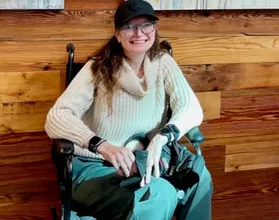
Salam Kabbani wears a smile, and many of her sentences trail into laughter.

That tends to mask the fact that she got COVID-19 three years ago — and never got better.

The 34-year-old Overland Park pharmacist is one of 17 million Americans battling long COVID, an amorphous constellation of symptoms that scientists are only beginning to understand and most doctors are struggling to treat.

Kabbani faced months unable to work. For days at a time, she could barely get out of bed. Just taking a shower exhausts her. She gets dizzy with no notice. Her brain gets foggy. And if she pushes herself even a tiny bit too far, her body simply wilts and she is forced to climb into bed.

“The number of people that are like, ‘Oh, but you look fine,’” Kabbani said, a laugh bubbling to the surface. “Well, yeah, you know, I’m not hemorrhaging from my eyeballs. But I am very much disabled.”

With only 13.5% of adults opting to get the most recent COVID vaccine, a growing number of health care experts and patient advocates are sounding an alarm. The only sure way to avoid getting long COVID, which is believed to affect a third of people infected with the SARS-CoV-2 virus, is to avoid getting COVID.

An up-to-date vaccine, which some people skipped last year, too, is the best way to do that. But public health officials said they face strong headwinds in their efforts to share that message.

Pandemic fatigue and “anti-vax propaganda,” said George Turabelidze, Missouri’s state epidemiologist, stand in the way. Now Robert F. Kennedy Jr., a known vaccine skeptic, is expected to get a substantial role in Donald Trump’s new administration.

But people shouldn’t be lulled into thinking that COVID will be just like a cold, Turabelidze said.

“Some people — even with mild COVID,” he said, “develop long COVID.”

And long COVID, said Jenna Hopkins, an occupational therapist at University Health, “is ruining people’s lives.”

The U.S. Census Bureau’s most recent household pulse survey found 18.6% of Missouri adults and 16.5% of Kansas adults said they have experienced long-COVID symptoms. Nationally, close to 45 million of the country’s 250 million adults said they have had long COVID at some point.

The illness can take hold of anyone who comes down with COVID, no matter their age, gender or overall health. It can linger for months or years. It can be relatively mild or completely disabling.

And while the severity of an initial COVID infection doesn’t seem to influence whether someone gets long COVID, the number of times a person comes down with COVID could be a factor. In other words, every time you get the virus is another chance to end up with stubborn health problems.

“It gets really ugly very quickly,” said Arijit Chakravarty, a COVID researcher in Massachusetts, “because what it means is that if you wait long enough, everyone is at risk of getting it.”

Marathon runner had to be in bed for a year

If Kelly Meiners could scream from the rooftops to warn people to protect themselves against the virus, she would.
The 49-year-old college professor and marathon runner came down with a relatively minor case of COVID in 2021. She stayed home from the office, even though her symptoms felt like nothing more than a bad cold.

That quickly changed in the weeks after her initial infection cleared up.

“Over the next year, I lay in bed,” said Meiners, who chaired the physical therapy department at Rockhurst University. “I had no idea what was going on with me. I felt I was severely drugged and drunk. I couldn’t make sense of anything. I couldn’t think straight.”

In an effort to fend off debilitating migraines and persistent seizures, Meiners spent most of her time in a dark room, wearing noise-canceling headphones and dark glasses. She couldn’t hold a pen or a fork. She could no longer read or walk.

And when she went to a doctor in Kansas City, she was told that it was all in her head, that she should exercise. As an athlete, Meiners wanted nothing more. So her husband bought a recumbent bike. She strapped herself in and pushed herself until the seizures began.

She was told exercise would make her better. Now she understands it only made her worse.

Finally, a year after falling ill, a friend of a friend got Meiners an appointment at Mayo Clinic in Minnesota. The doctor there immediately knew what was wrong.

“I just cried,” she said. “It wasn’t because there were so many things wrong with me. It was because they finally believed me.”

Finding someone to help

Unfortunately, long-COVID patients often have a difficult time finding someone who can help them. And someone who will believe they are sick.

Doctors didn’t learn about COVID in medical school — let alone long COVID. And they work in a system where they need to document their care for insurance purposes. Long COVID is so new and varied in the ways it shows up, it barely has an agreed-upon clinical definition.

So it’s no wonder some doctors are sending patients away without care or telling them their symptoms are in their heads.

“I don’t think it’s coming from a place of malice,” Kabbani said. “It’s truly just a lack of awareness and understanding and being burned out.”

Now that Kabbani’s health is improved, she spends the extra energy trying to help educate the world about the disease. She has written a book about her own journey, and she and Hopkins, the University Health occupational therapist, are creating a podcast.

Kabbani, who works as an infectious disease pharmacist at Olathe Health, is speaking at continuing medical education events, trying to bring information about long COVID directly to doctors and nurses.

“What I hope to drive home to these providers,” she said, “is that the symptoms are very strange, and they fluctuate. That’s why it may seem like it’s absolutely in their heads. But it’s absolutely not.”

Research theories about long COVID

This summer, long COVID earned a consensus case definition from the National Academies of Sciences, Engineering and Medicine. Someone has the chronic condition, according to the new definition, when health problems are present for at least three months after a COVID infection.

Those problems can affect one or more organ systems, according to the definition, as “a continuous, relapsing and remitting or progressive disease state.” And a person can meet the definition by having just one or multiple symptoms, from the list of 200 included in the definition.

“If people just had lung problems,” said Adnan I. Qureshi, a professor of neurology in the University of Missouri School of Medicine, “it would be much easier to study.”

The National Institutes of Health launched a nationwide research program in 2021 with a $1.15 billion investment. In February, the agency announced it would spend another $515 million over the next four years.

The program includes dozens of studies and drug trials across the country, including studies at the University of Kansas Health System and Children’s Mercy Hospital.

U.S. Sen. Bernie Sanders, I-Vermont, has introduced legislation that would invest another $1 billion a year for a decade in research, provider education and public education.

Scientists have several theories about how long COVID strikes, and they are starting to believe that there may be more than one answer.

For example, in some cases, the immune system, which has been activated by the initial viral infection, simply doesn’t turn off once the virus is gone. That means a person’s own immune system can damage the body.

Another theory is that when someone has long COVID it could be because they still have traces of the virus in their body.

Another possibility, scientists said, is that the virus damages the circulatory system, which could explain why symptoms are so varied and in so many organs.

Pacing to survive

Doctors are finding that some patients get better over time without treatment. But others need to manage symptoms.

When patients come to see him at University Health’s Center for COVID Recovery, Wesley Strouts, a nurse practitioner who specializes in internal medicine, looks for the symptoms he can treat that will provide some relief. Sometimes he finds different diagnoses to explain what’s happening. Often, he refers patients to Hopkins, the occupational therapist who has built a specialty out of helping patients manage symptoms.

For many patients, Hopkins said, the best approach is to follow “pacing protocols.”

“Sometimes the treatment is the cure,” she said. “When people are able to manage their symptoms … sometimes their symptoms will start to dissipate as long as they are continuing to be very careful to avoid triggering activities.”

For Amanda Finley, 47, who first came down with long COVID after a 2020 bout with the virus, pacing looks like this: Work. Uber home. Straight to bed. Often her weekends must be entirely devoted to sleeping so she can face another work week.

It’s better than the alternative Finley knew in 2021 when she was living in a tent at Weston Bend State Park because she couldn’t work and had no money for rent. The Independence woman couldn’t see her 11-year-old son for months.

But even when Finley had energy for nothing else, she stayed connected with other people dealing with the illness. Early in her diagnosis, she formed a Facebook group for COVID long haulers that today has 16,000 members around the world.

It helps her know she’s not alone. And it could be a tool in science’s effort to solve mysteries surrounding the illness. Finley tries to put researchers in touch with the people in the group.

“The patients are the experts with long COVID,” she said. “We’re the ones going through the jungle with a machete making the path.”

Telling her story

Since her long-COVID symptoms began, Meiners has missed graduations, kids heading off to college, holidays, family vacations and almost every other part of her life.

She just passed the third anniversary of her initial COVID infection, and she still spends 90% of her day on the sofa or in bed. Meiners needs an electric wheelchair to navigate her Leawood home, but with the help of more than 20 prescriptions and pacing strategies to avoid flare-ups, she can have moments with her husband and three kids.

And Meiners has found a small amount of peace in making art, something she’d never tried before this. Her paintings, which tell her long-COVID story, are on display at the Lenexa City Center Library. They have been shown in galleries around the city.

It may not be screaming from the rooftops, Meiners said. But, right now, it’s the best she can do.

Suzanne King is The Beacon’s health reporter in Kansas City

Soil health is big business, but KU researchers say many fungal products don’t work as promised

0

Liz Koziol works with the world’s largest collection of a category of soil fungus that benefits many plant species, the International Collection of Vesicular Arbuscular Mycorrhizal Fungi. She and other experts in these fungi have tested commercial products with what they say are concerning results.

There’s no shortage of products designed to grow beneficial fungi that will help your crops or garden. Whether they actually do that, though, is a different matter.

LAWRENCE — A burgeoning billion-dollar industry woos farmers and gardeners with promises of achieving better, more environmentally friendly harvests through symbiotic fungi that bond with plant roots.

These fungal bonds can help plants thrive and can lock carbon that came from the atmosphere into the soil. But evidence has been piling up that shows buyers ought to eye with some skepticism the products that promise to produce them.

Now, University of Kansas scientists have combed through 250 commercial product trials detailed in peer-reviewed journals. Most of those trials checked to see if the promised fungi materialized on plant roots and helped the plants grow. And 88% of the time, the answer was no.

Problems that have cropped up in peer-reviewed studies at KU and elsewhere include:

  • Some commercial products contain a pathogen that harms plants.
  • Some contain undisclosed chemical fertilizer.
  • Some don’t contain any spores for the beneficial fungi they’re meant to produce.
  • Some contain spores that aren’t viable.

“These fungi can do awesome things,” lead author Liz Koziol said. “But not when they’re dead.”

Koziol is an assistant research professor at the Kansas Biological Survey and Center for Ecological Research, where she works with the world’s largest collection of the kind of symbiotic fungi that so many growers want in their soil. These are called arbuscular mycorrhizal fungi.

The paper in New Phytologist concluded with a plea for improving the industry. It said the U.S. “fully lacks regulations” on the quality of these products and on importing or exporting them. And it said these products could pose a risk of introducing invasive species.

“There is a pressing need for mandatory global regulation on product quality control,” the authors wrote.

Though it would cost money to enforce rules and independently evaluate products, researchers said they see significant potential for savings compared to how much money farmers and gardeners may be wasting.

Symbiotic fungi give plants vital nutrients. They also help the ground absorb water better, which improves resilience against both drought and heavy rain. They help plants cope with attacks from insects. And they protect against erosion, which is significant because U.S. farmland is losing soil faster than new soil forms.

All these benefits pique the interest of farmers and gardeners, but how can they browse the dizzying array of fungal inoculants for sale — and pick something that works?

“We need to have more transparency,” said Kirsten Hofmockel, a soil ecologist not involved in the KU research. She’s a senior scientist at the Pacific Northwest National Laboratory and recently served as president of the international Soil Ecology Society.

“There’s not a lot that the consumer can do at this moment without that transparency,” she added.

The microbiome ‘moment’

Eco-friendly soil products are a booming market for a reason.

“In a lot of ways, the microbiome is coming of age,” Hofmockel said, referring to microscopic life in the ground. “Soil health is having its moment.”

Scientific understanding of what makes soil productive has expanded greatly in recent decades. It’s amply clear that microbes play key roles. This has growers eager to explore beneficial bacteria and fungi. Many are seeking an alternative to chemical fertilizers.

“There’s a lot of legitimate concern about synthetic fertilizers,” Hofmockel said. “A lot of frustration about the cost and the environmental effects.”

The U.S.’ heavy reliance on these fertilizers since World War II boosted yields but exacerbated greenhouse emissions, polluted groundwater and surface water and fed a dead zone in the Gulf of Mexico.

Today, farmers and gardeners worldwide buy billions of dollars in microbe products each year, according to business analysts. They have linked this fast-growing market to the rising interest in organic and eco-friendly methods. Symbiotic fungi alone account for about $1 billion annually.

KU scientists published two studies this fall that focus on arbuscular mycorrhizal fungi (also called endomycorrhizal fungi on product labels).

One is their analysis of trials conducted by other scientists internationally. The other one, published in Applied Soil Ecology, laid out the results of a product study at KU.

For her research, Koziol bought 16 products on Amazon that were top sellers at the time of purchase. She also picked up two products stocked by one of the country’s biggest retailers of home improvement supplies. And she chose two from sellers that are building a niche market by targeting their soil health products to cannabis growers.

The study involved scouring the products for fungal spores, as well as testing the products in pots containing soil and seedlings for vegetables and grains.

Some of the packages didn’t contain spores. Some did but still failed to produce mycorrhizae.

On the whole, the study found commercial products bonded with roots at much lower rates than when academic scientists used fungi that they grow in-house.

Koziol said a product could underperform for a variety of reasons. Some companies may inadvertently expose their products to extreme temperatures during transport or warehouse storage, for example. Some may mix in other ingredients in ways that can harm the fungi.

Sellers generally don’t disclose their methods in detail, she said, but she wants the problems to get identified and resolved so consumers can tap into the potential of beneficial fungi.

One step that would help, she said, is for more companies to test whether their products are still good after they reach consumers.

“I don’t think that’s necessarily being done,” she said, “because as the end user of these products, they weren’t viable.”

In her papers, Koziol disclosed a potential conflict of interest. She runs a private business selling a mycorrhizal inoculant. The other authors on KU’s studies have not reported any potential conflicts of interest.

Undisclosed product ingredients

Some of the commercial products tested at KU boosted plant growth without producing mycorrhizae. This suggests that other ingredients in those products did the heavy lifting.

Sometimes labels disclose those ingredients, sometimes they don’t.

In 2022, scientists at Oklahoma State University tested six commercial products and found two contained undisclosed chemical fertilizer.

Soledad Benitez Ponce, an Ohio State University plant pathologist not involved in the studies at KU or Oklahoma State, said there are three reasons why undisclosed synthetic fertilizer could cause problems:

  • If that’s the real reason a product works, is it worth the price tag? “Maybe you’re paying more than what you need for a phosphorus fertilizer,” said Benitez Ponce, whose lab works with beneficial fungi and bacteria.
  • Certified organic farmers might mistakenly think that the product complies with the strict rules that govern their work. That “could compromise the certification of the whole operation,” she said, “and that is a costly process that takes a lot of time.”
  • Synthetic fertilizer interrupts the mutual benefits between arbuscular mycorrhizal fungi and plants, so including it in an inoculant “defeats the whole purpose of the product.”

The Oklahoma State researchers tried the six products on prairie grasses and wildflowers and found “no evidence of benefit.” Some of the products caused these plants to grow less while boosting growth of invasive plant species instead.

What options do buyers have?

Benitez Ponce said researchers have been concerned for years about the quality of soil microbe products, how to regulate these and how to help consumers pick among them.

She recommended growers contact nearby university extension agents to see if they’ve tested any products locally. Fungi are living organisms, she said, so they may perform differently according to region, and local results are particularly relevant.

Also, she said, scrutinize labels. Look for as many details as possible, such as the expiration date and specifics about application and storage. A thorough label could be useful.

Still, product labels aren’t always accurate.

The problems go beyond containing undisclosed fertilizer or unviable spores. One study last year found the fungal species in some products didn’t match those listed on the package. In a 2007 study, scientists got results with several products only when they applied 5 or 10 times as much as the manufacturers suggested.

Hofmockel, at the Pacific Northwest National Laboratory, said it might be possible to make rapid spore-staining tests widely available so consumers could at least check the inoculants they purchase to see if they contain viable spores.

She also said farmers and gardeners can improve the conditions for fungi that already live in their soil. Reducing tilling and keeping roots in the ground year-round are two tried and true methods that would help, she said.

These approaches have the advantage of promoting native species, Hofmockel said. The effects of introducing fungi from elsewhere remain uncertain.

What do businesses say?

The Kansas News Service reached out to 11 of the manufacturers whose products were tested by KU.

Two of them replied. One is Groundwork BioAg, which says it is the world’s biggest producer of mycorrhizal inoculants.

The KU paper said one of the company’s products, Dynomyco, produced mycorrhizae in 1 out of 5 pots. It also noted that a pathogen called Olpidium, which can attack plants and host viruses that do the same, repeatedly cropped up on plants grown with Dynomyco.

“We take such studies very seriously,” Dan Grotsky, cofounder of Groundwork BioAg and general manager of Dynomyco, wrote in an email while questioning KU’s methods. “Groundwork BioAg tests its products regularly, using several types of standard tests, and has never received results like these, even on old or shipped and returned products, which we test as well.”

Those tests also include checking Dynomyco for pathogens including Olpidium, he said, and none have turned up.

Grotsky suggested that because KU’s study found Olpidium in products from five companies, the contamination could have happened at KU’s lab. He said his company “would welcome a transparent discussion with full access to the dataset and methods.”

KU is not alone in finding a pattern of Olpidium contamination in commercial products. Its scientists combed through 67 other peer-reviewed trials that tested commercial products for Olpidium. Eleven of those trials found the pathogen.

Koziol said KU’s methods for working with mycorrhizal fungi are used widely in this field of research.

“As curator of the world’s largest AM (arbuscular mycorrhizal) fungi collection, I train others in these techniques, including commercial inoculant producers,” Koziol said. “The fungal assessments we used were appropriate and published in highly regarded, peer-reviewed journals.”

To Benitez Ponce, the plant pathologist at Ohio State, the discovery of Olpidium in multiple products raises the question of whether something in the supply chain could explain it, such as some manufacturers unknowingly receiving an infected ingredient from a single supplier.

“The challenge is that we don’t know where the Olpidium is coming from,” she said.

The other company that replied to the Kansas News Service was MicraCulture, a small company run by Sarah Pellkofer in Seattle. Pellkofer wrote her doctoral dissertation at the University of Zurich on soil biodiversity, and she said she was pleased to see KU’s study.

Her product, Plant Probiotics, was free of the Olpidium pathogen in KU’s trial.

The product didn’t produce mycorrhizae in the trial. But that didn’t alarm Pellkofer because these fungi are just one small part of her microbe mix.

“Our recipe does not only consist of (these fungi), but a suite of microbes” including bacteria, she said in an email. This is to “boost the soil ecosystem as a whole,” because plants benefit from soil biodiversity.

The KU results suggested other microbes in Plant Probiotics helped plants grow, even though the fungal spores didn’t.

Pellkofer said her product instructions recommend that people reapply the mix multiple times during a plant’s growing cycle to increase the chance that the spores will grow and bond with the roots.

She also noted that KU scientists found exactly as many fungal spores in her product as printed on the label, which made it the outlier among the products studied. Pellkofer said this reflects that her company has “gone out of our way” to ensure accuracy.

“I welcome regulation in our field,” she said. “I’ve seen the market flooded with products that have lots of claims that maybe do not go through the scientific testing to back them, and as we see in this study, often do not contain the microbes claimed.”

A snapshot of the KU trial results

KU scientists tested fungi that they grow in-house. They also tested soil from a nearby organic farm that contains fungi. When added to plants, these two sources of fungi produced mycorrhizae 72% of the time.

Tested commercial products produced mycorrhizae 12% of the time.

Products that didn’t produce mycorrhizae when KU scientists tried them out:

  • Great White Premium Mycorrhizae
  • King of Mycorrhizae
  • Plant Probiotics
  • Root Naturally Endo Mycorrhizae
  • Promix Organics
  • Wildroot Organic
  • New Life Agriculture Microbial Solutions

These produced mycorrhizae in 1 out of 5 pots:

  • Big Foot
  • Dynomyco
  • Green Eden
  • Happy Frog
  • Mikrobs
  • Myco Bliss
  • Xtreme Gardening

Root Magic produced mycorrhizae in 2 out of 5 pots.

The pathogen Olpidium was a problem when KU scientists used these products:

  • Wildroot Organic
  • Bigfoot
  • Xtreme Gardening Mykos
  • Dynomyco
  • Root Magic
  • Kansas News Service ksnewsservice.org.

Lettuce Eat Local: Pope’s Nose Possibilities

0

Amanda Miller
Columnist
Lettuce Eat Local

Whether it was appropriate or not, I waited until the others were all chewing before I told them what was in their mouth. I’m not exactly sure what my five teammates thought that afternoon in a Kenyan desert, which speaks well to how effectively they handled their reaction to eating roast goat. To be fair, they knew it was nyama choma ya mbuzi; they just hadn’t known it was a special part of the billy goat. 

I think my Turkana hosts were being genuinely generous when they told me that particular portion was reserved for special guests…although looking back now I realize they may have just been playing a trick on their naive little white friend. 

Often when there’s only one of something available, it becomes more of a delicacy. Sometimes it’s primarily the rarity that catapults it into that category, sometimes it is due to heightened quality, and sometimes it’s an indistinguishable interplay of the two. For example, when we butcher, I see the ratio of tenderloin to ground beef — I do prefer filet, dare I say obviously, but also there’s only so much to be had so it kind of feels like you have to enjoy it. This isn’t quite as common, but I’m certain the very bottom slice of pineapple is the sweetest, and conversely the very top portion of mango. 

There are only two fish cheeks per fish, and they are purported to be particularly tender and delicately flavored. In many cultures, calf, lamb, or pig brain are also considered delicacies, and of course there’s only one available per animal. I’m not personally into that, but I will always volunteer to eat the turkey heart when it comes in that little package with gizzards and liver. 

Speaking of turkey, that’s what started this whole thought process for me. Obviously it was Thanksgiving last week, so I’m guessing a lot of you also saw those “bonus” turkey parts. By chance I learned a new term for the turkey tail: “the pope’s nose.” It intrigued me so much that I had to do some research, especially since learning that this fowl tail structure is more academically labelled the pygostyle: clinching the idea that it is perfect for my P-focused article. 

I discovered that that funny, fatty triangular section could be called any number of people’s noses, from the parson’s to the bishop’s to the sultan’s. The perspective of this proboscis-based etymology is ambiguous, with different theories heading in opposite directions. Either the turkey tail began to be called the pope’s/parson’s nose since it would be saved as a fleshy, fatty delicacy for the guest of honor — or it reminded people of a pompous dignitary’s fleshy, fatty nose stuck up in the air. 

As with all of life, a lot depends on perspective. It would be easy to toss that floppy protuberance or to think it’s gross, thinking it’s both fowl and foul, although someone might consider that same tail a prize portion. We get to choose the things we are thankful for! 

I may never consider that (very chewy, very charred) piece of goat a culinary delicacy as far as taste is concerned, but I do remember it as a prized bite. And I’ll remember to selflessly save the pope’s nose for any guests. 

The Pope’s Poultry Broth

Most of the commenters on the forum where I saw turkey tail called pope’s nose said it’s a great addition in bone broth. I’m almost as thankful for the turkey bones for making stock as I am for the actual roast turkey, so that works perfectly for me. Soup can be transformed from good to fabulous with a quality broth, and other “delicacy” bits like the neck or roasty skin give good depth. People often say not to salt the broth so you can control it when you use it, but I figure I’m never going to want unsalted broth, so I go ahead and give it some. 

Prep tips: If I get enough, I like to pressure-can my broth, but having a bunch is also a good excuse to make lots of soup, which I am also a fan of any time of year but especially now.

1 set of turkey bones, tail included of course

a splash of apple cider vinegar

2 onions, peeled and halved

a couple celery ribs

a couple carrots (or peelings from scrubbed carrots…)

optional: a jalapeño

optional: dash of liquid smoke

peppercorns, salt

handfuls of fresh parsley, sage, rosemary, and thyme

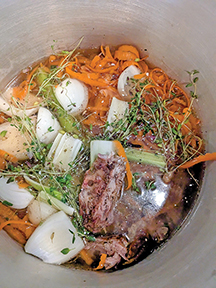
Add all ingredients to a large pot or pressure cooker, and cover just so with cold water. Bring to a boil and simmer for 4-5 hours until everything is very tender, or pressure-cook according to manufacturer’s directions. Use in cooking, or if you’re one of those people, sip it as a hot beverage. 

Word For Word (Best Of)

0
lee pitts

Because they may be offensive, the L.A. Times banned the use of the words “deaf”, “alien”, and “handicapped”. This is the same newspaper that refers to looters as “non traditional shoppers.” UPS scores its worst drivers as the “least worse” and when Chrysler announced a big layoff they called it “a career change opportunity.” Workers called it being “fired.”

We are living in a society where the Army refers to “friendly fire” as “the accidental delivery of ordnance equipment.” You can’t “take a stab at something” or “kill two birds with one stone” any more. You can’t even “hit” a computer key or use the expression “there is more than one way to skin a cat.”

We use several words in agriculture that may be offensive to the politically correct. With some help from The Politically Correct Dictionary and Handbook I came up with some alternatives.

Artificial Inseminator- Animal companion sex care provider.

Bummer Lambs- Disowned future providers of non-human animal fibers.

Castrated- Cosmetically altered and sexually challenged male.

Dead-Non-living corpse; terminally inconvenienced; no longer a factor.

Dwarf- A vertically-challenged non-conforming bovine of color.

Dog- A canine American.

Dog Catcher- Animal welfare officer who picks up temporarily displaced animal companions and canine Americans.

Eggs- Stolen non-human animal products that come fried, poached or scramble.

Fat- Adipose tissue from horizontally challenged processed animal carcasses.

Futures Trader- A potential client of our corrective ecosystem who creates negative cash flow.

Grubby- Parasitically oppressed.

Horseback Riding- The thievery of uncompensated non-human animal transport.

Housebreaking- Environmental orientation.

Husband- Sub optimal utensil sanitizer.

Kill- Degrow.

Locoweed- Unwanted botanical companion.

Manure- Previously utilized organic matter.

Pig- A hair disadvantaged animal companion that because of its good taste will fail to fulfill its wellness potential.

Rancher- Economically exploited cattle murderer. Also, “a non performing asset.”

Screwworm- Temporarily hostless non- human animal.

Sheep- Intellectually challenged non-human being.

Slaughter- The engagement in reduction activities.

Veal- Pre-cow scorched animal carcass.

Vegetarian- A differently logical fruitarian who consumes non-violent food.

Wife- Non-waged employee, unpaid sex survivor; environmental hygienist.

In the future in order not to offend any of our readers this “processed tree carcass” will continue to be on the lookout for words that a socially misaligned, incompletely successful person may find cerebrally challenging.