Monday, February 2, 2026
Home Blog Page 283

KDOT announces approved October bids

0
Logo courtesy: KDOT

The Kansas Department of Transportation announces approved bids for state highway construction and maintenance projects. The letting took place Oct. 16, 2024, in Topeka. Some of the bids may include multiple projects that have been bundled based on proximity and type of work.

District One — Northeast

Atchison ‑ 73‑3 KA‑7473‑01 – U.S. 73, from the east city limits of Lancaster north to the Atchison/Brown county line, milling and overlay, 6.6 miles, Bettis Asphalt & Construction Inc., Topeka, Kansas, $1,472,981.04.

Atchison ‑ 73‑3 KA‑3890‑01 – U.S. 73, bridge #016 located 0.52 mile south of the U.S. 73/U.S. 59 junction, bridge removal, Julius Kaaz Construction Co. Inc., Leavenworth, Kansas, $878,007.00.

Brown ‑ 73‑7 KA‑7474‑01 – U.S. 73, from the Atchison/Brown county line west to the east city limits of Horton, milling and overlay, 8.4 miles, Bettis Asphalt & Construction Inc., Topeka, Kansas, $1,825,026.88.

Douglas ‑ 24‑23 KA‑7512‑01 – U.S. 24, from the Jefferson/Douglas county line east to the Douglas/Leavenworth county line, milling and overlay, 6.6 miles, Bettis Asphalt & Construction Inc., Topeka, Kansas, $1,589,811.20.

Jackson ‑ 75‑43 KA‑7516‑01 – U.S. 75, from the Shawnee/Jackson county line north to 158th Road, milling and overlay, 8.0 miles, Bettis Asphalt & Construction Inc., Topeka, Kansas, $6,509,385.16.

Jefferson ‑ 24‑44 KA‑7510‑01 – U.S. 24, from the Elm Street/U.S. 24 junction in the city of Perry east to the Jefferson/Douglas county line, milling and overlay, 7.7 miles, Bettis Asphalt & Construction Inc., Topeka, Kansas, $1,950,850.25.

Jefferson ‑ 92‑44 KA‑7514‑01 – K‑92, from the K‑92/K‑4 junction east to the west city limits of Oskaloosa, milling and overlay, 12.0 miles, Bettis Asphalt & Construction Inc., Topeka, Kansas, $2,718,791.78.

Jefferson ‑ 59‑44 KA‑7513‑01 – U.S. 59, from the U.S. 24/U.S. 59 junction, north to the south city limits of Oskaloosa, milling and overlay, 10.6 miles, Bettis Asphalt & Construction Inc., Topeka, Kansas, $2,188,785.75

Jefferson ‑ 159‑44 KA‑7475‑01 – U.S. 159, from the K‑4/U.S. 159 junction north to the Jefferson/Atchison county line, milling and overlay, 0.7 mile, Bettis Asphalt & Construction Inc., Topeka, Kansas, $319,864.00.

Riley ‑ 24‑81 KA‑5565‑01 – U.S. 24, junction U.S. 24/K‑13 in Riley County, roundabout, Ebert Construction Co. Inc. & Subsidiary, Wamego, Kansas, $4,888,945.45.

Riley ‑ 24‑81 KA‑5564‑01 – U.S. 24, junction U.S. 24/K‑113 in Riley County, roundabout, Ebert Construction Co. Inc. & Subsidiary, Wamego, Kansas, $3,649,412.86.

Shawnee ‑ 40‑89 KA‑7504‑01 – U.S. 40, from the K‑4 westbound offramp east to 0.63 mile west of Tecumseh Road, milling and overlay, 0.5 mile, Bettis Asphalt & Construction Inc., Topeka, Kansas, $500,578.44.

Shawnee ‑ 70‑89 KA‑1266‑04 – I‑70 Polk/Quincy Viaduct and approach Roadway in Topeka (west phase), from 0.2 mile east of I‑70/MacVicar Avenue east and south to 0.1 mile south of I‑70/4th Street, grading, bridge and surfacing, 2.4 miles, Bettis Koss Construction Joint Venture, Topeka, Kansas, $239,178,617.48.

Shawnee ‑ 75‑89 KA‑7515‑01 – U.S. 75, from 0.4 mile south of the 62nd Street/U.S. 75 intersection north to the Shawnee/Jackson county line, milling and overlay, 4.5 miles, Bettis Asphalt & Construction Inc., Topeka, Kansas, $3,575,974.08.

Wyandotte ‑ 70‑105 KA‑6768‑01 – I‑70, bridge #027 over the railroad yard/Kansas River located at the Central Avenue/I‑70 east junction, bridge repair, Clarkson Construction Company, Kansas City, Missouri, $1,462,492.53.

Wyandotte ‑ 670‑105 KA‑6748‑01 – I‑670, bridge #244 located 1.06 miles east of Mill Street, bridge repair, Clarkson Construction Company, Kansas City, Missouri, $3,997,489.16.

Wyandotte ‑ 670‑105 KA‑6745‑01 – I‑670, bridge #243 located 1.06 miles east of Mill Street, bridge repair, Clarkson Construction Company, Kansas City, Missouri, $3,817,702.88.

District Two — North Central

Ottawa ‑ 106‑72 KA‑7489‑01 – K‑106, from the east city limits of Minneapolis east to State Park, surface recycle, 1.5 miles, Dustrol Inc., Towanda, Kansas, $946,547.20.

Ottawa ‑ 106‑72 KA‑6725‑01 – K‑106, bridge #045 over the Solomon River located 7.66 miles north of K‑18, bridge repair, Wildcat Construction Co. Inc. & Subsidiaries, Wichita, Kansas, $735,403.60.

Ottawa ‑ 72 C‑5223‑01 – County bridge, over Pipe Creek located 0.03 mile west of Minneapolis, bridge replacement, 0.2 mile, Reece Construction Company, Inc., Salina, Kansas, $1,119,686.64.

District Three — Northwest

Osborne ‑ 281‑71 KA‑7480‑01 – U.S. 281, from the south city limits of Portis (State Street) north to the Smith/Osborne county line, milling and overlay, 0.7 mile, Bettis Asphalt & Construction Inc., Topeka, Kansas, $241,109.22.

Osborne ‑ 24‑71 KA‑7476‑01 – U.S. 24, from the north end of the Portland Cement Concrete Pavement at Osborne northeast to the U.S. 281/U.S. 24 north junction; U.S. 24, from the U.S. 281/U.S. 24 north junction east to the 2-lane/4-lane west of Downs; U.S. 24, from the 2 lane/4 lane west of Downs east to the Osborne/Mitchell county line, ultra-thin bonded asphalt surfacing, 14.6 miles, Bettis Asphalt & Construction Inc., Topeka, Kansas, $2,436,686.53.

Osborne ‑ 71 C‑5233‑01 – County bridge, over tributary to Covert Creek located 1.0 mile south and 0.7 mile west of Covert, bridge replacement, 0.2 mile, Reece Construction Company, Inc., Salina, Kansas, $456,638.86.

Thomas ‑ 70‑97 KA‑7445‑01 – I‑70, from just east of County Road K southeast 11.96 miles to the Thomas/Logan county line, milling and overlay, 12.0 miles, Venture Corporation, Great Bend, Kansas, $9,009,553.76.

District Four — Southeast

Bourbon ‑ 69‑6 KA‑6967‑01 – U.S. 69, bridge #009 over U.S. 54 located at the U.S. 54/U.S. 69 south junction in Fort Scott, bridge repair, PCI Roads, LLC, Saint Michael, Minnesota, $1,552,793.79.

Cherokee ‑ 11 TE‑0510‑01 – West Maple Street, from Sunset Avenue to High School Avenue and East Sycamore Street from U.S. 69 to 7th Avenue in Columbus, pedestrian and bicycle paths, 0.8 mile, Heck & Wicker Inc., Parsons, Kansas, $355,559.20.

Coffey ‑ 75‑16 KA‑7486‑01 – U.S. 75, from 0.06 mile north of the K‑58/U.S. 75 north junction north to 0.31 mile north of the south city limits of Burlington, sealing, 8.0 miles, Vance Brothers Inc. And Subsidiary, Kansas City, Missouri, $318,180.00.

Elk ‑ 160‑25 KA‑6969‑01 – U.S. 160, bridge #008 over the Elk River located 5.86 miles east of the U.S. 160/K‑99 east junction, bridge repair, B & B Bridge Company LLC, St. Paul, Kansas, $1,177,742.55.

Franklin ‑ 169‑30 KA‑7482‑01 – U.S. 169, from the Anderson/Franklin county line north to the Franklin/Miami county line, milling and overlay, 2.4 miles, Bettis Asphalt & Construction Inc., Topeka, Kansas, $407,791.83.

Miami ‑ 169‑61 KA‑7483‑01 – U.S. 169, from the Franklin/Miami county line north to 0.77 mile south of the K‑7/U.S. 169 south junction, milling and overlay, 6.5 miles, Bettis Asphalt & Construction Inc., Topeka, Kansas, $1,131,034.70.

Montgomery ‑ 166‑63 KA‑6466‑01 – U.S. 166, six locations beginning 0.21 mile east of 1900 Road east to 0.47 mile east of County Road 3950, guard fence, 11.0 miles, Klaver Construction Company Inc., Wichita, Kansas, $1,394,407.21.

Montgomery ‑ 63 C‑5226‑01 – County bridge, over Pumpkin Creek located 1.5 miles east of Coffeyville, bridge replacement, 0.3 mile, Bridges Inc., Newton, Kansas, $1,774,971.60.

Woodson ‑ 75‑104 KA‑7487‑01 – U.S. 75, from the Wilson/Woodson county line north to the south city limits of Yates Center, sealing, 10.7 miles, Circle C Paving And Construction LLC, Goddard, Kansas, $710,273.18.

District Five — South Central

Cowley ‑ 18 TE‑0471‑01 – Paris Park Pool to West Lincoln Avenue to Cowley Sports Complex in Arkansas City, pedestrian and bicycle paths, 1.6 miles, Prado Construction LLC, Valley Center, Kansas, $1,345,884.20

Harper ‑ 2‑39 KA‑7396‑01 – K‑2 from the south end of bridge #033 northeast to the Harper/Kingman county line, milling and overlay, 10.0 miles, Venture Corporation, Great Bend, Kansas, $1,622,381.93.

Kingman ‑ 42‑48 KA‑7395‑01 – K‑42, from the K‑14/K‑42 junction east to the Sumner/Kingman county line, overlay, 15.1 miles, Venture Corporation, Great Bend, Kansas, $1,917,319.60.

Kingman ‑ 2‑48 KA‑7397‑01 – K‑2, from the Harper/Kingman county line northeast to the Kingman/Sumner county line, milling and overlay, 5.6 miles, Venture Corporation, Great Bend, Kansas, $785,096.50.

Pawnee ‑ 183‑73 KA‑7380‑01 – U.S. 183, from the U.S. 183/K‑56 junction north to the U.S. 183/K‑156 junction, milling and overlay, 12.3 miles, Venture Corporation, Great Bend, Kansas, $2,269,583.80.

Reno ‑ 78 C‑5229‑01 – County bridge, over Little Arkansas River located 0.5 mile east and 2.0 miles south of Buhler, bridge replacement, 0.1 mile, King Construction Company Inc. & Subsidiaries, Hesston, Kansas, $738,711.49.

Rush ‑ 96‑83 KA‑7488‑01 – K‑96, from the Ness/Rush county line east to the U.S. 183/K‑96 junction, milling and overlay, 15.1 miles, Venture Corporation, Great Bend, Kansas, $2,777,443.64.

Sedgwick ‑ 49‑87 KA‑7379‑01 – K‑49, from the Sumner/Sedgwick county line north to the K‑49/K‑42 junction, milling and overlay, 1.0 mile, Venture Corporation, Great Bend, Kansas, $188,073.34.

Sumner ‑ 49‑96 KA‑7378‑01 – K‑49, from the K‑49/U.S. 160 junction north to the Sumner/Sedgwick county line, milling and overlay, 14.1 miles, Venture Corporation, Great Bend, Kansas, $2,028,883.75.

Sumner ‑ 81‑96 KA‑5768‑01 – U.S. 81, bridge #047 over Spring Creek located 4.84 miles north of U.S. 166, bridge replacement, Dondlinger & Sons Construction Co Inc., Wichita, Kansas, $1,363,991.30

Sumner ‑ 42‑96 KA‑7394‑01 – K‑42, from the Sumner/Kingman county line east to the K‑42/K‑2 junction, overlay, 1.0 mile, Venture Corporation, Great Bend, Kansas, $133,330.80

Sumner ‑ 2‑96 KA‑7398‑01 – K‑2, from the Harper/Kingman county line northeast to the Kingman/Sumner county line, milling and overlay, 1.4 miles, Venture Corporation, Great Bend, Kansas, $228,936.55.

District Six — Southwest

Grant ‑ 25‑34 KA‑7499‑01 – K‑25, from the Grant/Stevens county line north to the south city limits of Ulysses, milling and overlay, 13.4 miles, Venture Corporation, Great Bend, Kansas, $2,303,462.00.

Haskell ‑ 83‑41 KA‑7500‑01 – U.S. 83, from the Haskell/Seward county line north to the U.S. 56/U.S. 83 junction, milling and overlay, 6.0 miles, Venture Corporation, Great Bend, Kansas, $1,052,824.11.

Haskell ‑ 83‑41 KA‑1008‑02 – U.S. 83, from 0.19 mile north of the U.S. 83/U.S. 56 junction north to 1.75 mile south of the U.S. 83/U.S. 160 junction, grading and surfacing, 4.1 miles, Venture Corporation, Great Bend, Kansas, $15,545,585.53.

Meade ‑ 54‑60 KA‑7558‑01 – U.S. 54, from the Meade/Seward county line east 0.103 mile, milling and overlay, 0.1 mile, J & R Sand Company Inc., Liberal, Kansas, $42,251.40.

Stevens ‑ 56‑95 KA‑7497‑01 – U.S. 56, from the U.S. 56/K‑51 junction east to the K‑25/U.S. 56 east junction, milling and overlay, 2.2 miles, Venture Corporation, Great Bend, Kansas, $1,078,907.00.

Stevens ‑ 25‑95 KA‑7498‑01 – K‑25, from the U.S. 56/K‑25 east junction north to the Grant/Stevens county line, milling and overlay, 13.1 miles, Venture Corporation, Great Bend, Kansas, $2,772,246.50.


The following projects were approved from the Sept. 18, 2024, letting.

Chase ‑ 9 TE‑0533‑01 ‑ Cottonwood Street, from 4th Street to U.S. 50 in Strong City, landscaping and beautification, 0.3 mile, Killough Construction, Inc., Ottawa, Kansas, $872,916.56.

Geary ‑ 31 C‑5231‑01 – County road, bridge over Tributary of Republican River located 3.0 miles north and 1.0 mile west of Junction City, bridge replacement, Bayer Construction Co. Inc., Manhattan, Kansas, $536,461.18.

Butler ‑ 54‑8 TE‑0508‑01 ‑ Along the old BNSF Railway grade/Redbud Trail rail corridor over U.S. 54 in Augusta, pedestrian and bicycle paths, Dondlinger & Sons Construction Co. Inc., Wichita, Kansas, $1,533,312.95.

Sedgwick ‑ 15‑87 N‑0727‑01 ‑ Nelson Drive, between Patriot and just south of Red Powell in Derby, grading and surfacing, 0.6 mile, Pearson Construction LLC, Wichita, Kansas, $7,318,642.00.

###

This information can be made available in alternative accessible formats upon request. For information about obtaining an alternative format, contact the KDOT Division of Communications, 700 SW Harrison St., 2nd Fl West, Topeka, KS 66603-3745 or phone 785-296-3585 (Voice)/Hearing Impaired – 711.

Non-Profit Organization is Seeking Area Representatives for High School Exchange Students

0

Now Hiring Student Exchange Area Representatives:

As an ASSE Area Representative, you will be that all-important point person for students placed in your area during their year abroad. Counselor, advocate and friend are just some of the roles you will play as you oversee the ASSE program in your area and help an international student get the most out of their year in the USA.

In addition, you will help teenagers in your own community become ASSE exchange students abroad. Opening up the world of international, experiential learning to
students in your area is an important role of being an ASSE Area Representative.
As a trained ASSE Area Representative, you will receive on-going support from your ASSE Area Coordinator and Regional Director as you take on a variety of challenging roles!

Not only will you help young people from your own community and around the world, you will also get to know better the families in your own area. In addition, you will expand your circle of community contacts as you establish relationships with local schools, civic groups, clubs and religious organizations.

The Area Representative is a part-time, stipend-paid position and many of our representatives work other full-time jobs. If this opportunity is appealing to you, please contact us so that we may discuss the program in further detail.

Compensation: $750-1000 per student you place, additional bonuses and incentives available. If you are interested, please complete our online area rep application at www.asse.com

Pratt is the latest Kansas town facing nitrate pollution. One-quarter of its water supply is off.

0

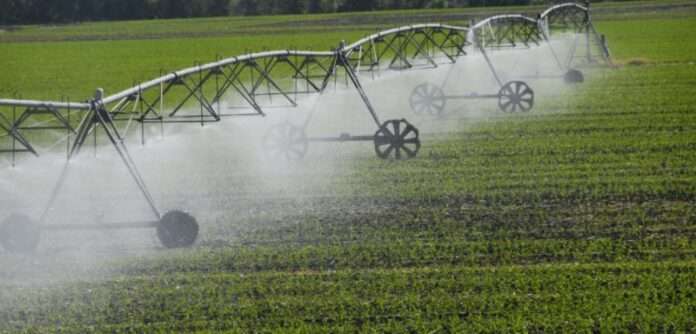
Several south-central Kansas counties are seeing a dramatic increase in groundwater contamination. The region’s nitrate pollution comes primarily from agriculture.

PRATT – Nitrate pollution has forced a central Kansas town to shut off two wells that make up nearly one-quarter of its total permissible water supply.

The state of Kansas will help Pratt afford the cost of drilling a new well in a different location with cleaner groundwater.

But ultimately this town of 6,500 people, like so many others in the middle of the country, will need to find a way to cover the steep price tag of removing an increasingly widespread contaminant from its drinking water.

“The reality is that we have to supply quality, healthy drinking water to our citizens,” city manager Regina Goff said, “and adhere to all the regulatory limits.”

Nitrate reaches waterways and groundwater from sources like feedlots, farm fertilizers and leaky septic tanks.

In south-central Kansas, scientists from Kansas State University sampling private wells across 10 counties say most of the nitrate they’ve found comes from chemical crop fertilizer.

South-central Kansas groundwater is particularly vulnerable to this contamination for several reasons.

The region’s groundwater is often very close to the surface. Much of the region is also sandy, making for especially permeable ground.

“Sandy soil means that water percolates through that soil very quickly,” K-State geology professor Matthew Kirk said, “and makes its way down to the water table.”

Some farmers faced with sand may end up applying more chemical fertilizer to cope with nitrogen escaping from that sandy ground faster.

Although soil contains microbes that can remove nitrate from water as it trickles down toward the water table, this nitrate-cleaning process tends to happen more in clay and humus soils than in sandy soils.

K-State geologists found increases in nitrate in south-central Kansas private wells over the past four decades that count among the biggest nationally when compared to long-term data from a similar national study.

Over the past few years, they’ve found wells in the region containing four or five times as much nitrate as the U.S. Environmental Protection Agency considers safe to drink.

The city of Pratt

With nitrate levels creeping upward regionally, utilities watch their wells closely.

When drinking water becomes too contaminated, they have to take action.

If they don’t have the infrastructure to immediately treat the water or to dilute the contamination by blending with cleaner water from another source, they end up shutting off the well that contains too much nitrate.

In the long term, though, a community can’t afford to keep shutting off wells. It could cause water shortages.

“The answer eventually is going to be a treatment center,” Goff said of Pratt’s dilemma. “We understand that. We accept that. We’re doing everything that we can to move in that direction in a responsible way, because it’s a very expensive path.”

In the summer of 2023, one of Pratt’s wells hit the EPA’s nitrate limit. The city shut it down and informed the public.

A year later, the same situation played out with a second well.

Pratt’s remaining eight wells produce enough water to meet current demand. For a few weeks last summer, during a heat wave and drought, the city asked the public to conserve water voluntarily. It did not impose conservation rules.

But the two wells that are shut off make up 23% of the city’s water rights. Pratt cannot simply pump that much out of its other wells because of intricacies in the state’s water law that are intended to protect groundwater supplies.

Instead, Pratt needs to find new well sites that can produce drinking water clean enough to meet the EPA’s standards, while also working toward eventual nitrate treatment.

Before two of its wells hit the nitrate ceiling, city officials saw the problem looming on the horizon and began hunting for money to deal with it.

They secured $3 million in EPA funds through the Kansas Department of Health and Environment.

That money will pay for one new well — the engineering, the wellhouse and a backup generator. Officials hope to lock down another $1 million under the Kansas Water Plan to replace the second well that Pratt lost.

But the state is inundated with requests for help from communities facing either dwindling water supplies or water quality problems. The Kansas Water Office is considering 277 applications this year. That’s a combined ask of $236.3 million, compared to the $27 million available.

Planning ahead

And nitrate levels could keep rising in the area.

So Pratt officials figured out how to put a portion of the $3 million toward the single biggest expense that their town ultimately faces before it can one day treat its water for nitrate.

Pratt will need to connect its various wells, a process called trunking, so that water can flow to a treatment center and then to people’s faucets. Trunking would also allow the city to blend water from different wells.

One cost estimate that the city received for a treatment facility topped $60 million, with $40 million of it going toward this trunking.

Pratt officials continue their search for more affordable options and for funding sources to help with the financial burden. They hope replacing the two contaminated wells in the meantime will buy the town more years to work toward that end.

They also face difficult choices as they explore what kind of treatment facility to build. No option is perfect. All of them involve tradeoffs.

One method for removing nitrate could discard 20% of the water it takes in. Discharging such a significant waste stream is problematic in parts of the Great Plains that depend on aquifers for drinking water, livestock water, crop irrigation and more.

“We talk a lot about water conservation” in the region, Goff said. “There is a water shortage.”

A second treatment option discharges less water but requires creating large brine lagoons.

City officials are also keeping in mind that Pratt may eventually need to treat its water for other pollutants.

This year the EPA implemented public safety limits for PFAS in drinking waterPFAS, often called “forever chemicals,” are used in a wide array of commercial products.

One of the wells that Pratt shut off due to nitrate now also tops this new PFAS ceiling. (The $3 million that Pratt got to replace one of its wells actually relates primarily to the PFAS in the well, state health officials said by email. But it solves two problems at once because the well contained too much of both contaminants.)

It’s unclear whether PFAS levels may eventually increase in other wells in Pratt. Pratt could end up needing to blend or treat its water for PFAS or for other contaminants.

That’s why city officials say the water treatment facility requires meticulous planning. Certain design choices could eventually help the city roll out additional treatments beyond nitrate removal, to meet other EPA requirements that could impact Pratt in the future.

Nitrate in public water and private wells

Water with too much nitrate can cause methemoglobinemia (also called blue baby syndrome), a condition that can kill infants.

The EPA’s limit for nitrate in public water supplies is 10 parts per million. That’s 10 milligrams of nitrate per liter of water. This ceiling has been shown to protect babies from methemoglobinemia.

But scientists continue to study suspected links between nitrate in drinking water and other health problems.

A 2018 paper by researchers at the National Cancer Institute suggests more studies are needed, but the strongest evidence so far relates nitrate to thyroid disease, colorectal cancer and certain birth defects. What constitutes a safe level of nitrate remains unclear in the context of these other health conditions.

In Kansas, nitrate problems generally strike utilities that depend mostly on groundwater rather than surface water.

Once nitrate seeps into groundwater, it accumulates because it lies out of the reach of bacteria, algae and plants that would otherwise begin breaking it down and releasing the nitrogen into the atmosphere as gas.

The state’s biggest cities largely have access to enough rivers and reservoirs to avoid this problem. Although they have to treat their water to remove other compounds, they don’t deal with excessive nitrate.

But for most utilities in Kansas, surface water isn’t an option. So far, a few dozen of these public water systems — such as Dodge CityHavilandPretty Prairie, St. John, Woodston and Reno County Rural District 101 — have seen nitrate levels reach or sail past the EPA’s standard.

Additionally, an estimated 150,000 to 175,000 people in Kansas don’t get their water from a utility. Instead, they drink groundwater pumped directly from beneath their property, and it’s not clear how many of them test the water for safety.

If a recent study from Iowa offers clues, the answer may be “not many.” Researchers asked more than 8,000 households that have private wells in Iowa counties with known nitrate contamination. Fewer than 1 in 10 had tested their wells recently, yet 4 in 10 were drinking the water without filtering it.

In Kansas, K-State geologists reach out to homeowners, mostly in Barton, Stafford, Pawnee, Edwards, Rice, Pratt and Kiowa counties, offering to test their wells.

They team up with faculty and students from schools in the region, such as Barton Community College and Dodge City Community College, to fan out and gather samples.

This gives researchers a better picture of the extent of nitrate pollution in the Great Bend Prairie Aquifer. And families find out for free what’s in their water.

“It’s entirely up to the landowner to keep track of,” said Kirk, the K-State geology professor. But people may not know where to get water tested, “or how to interpret the results. So, we can help with that.”

More than 40% of the 130 wells tested so far top the EPA’s public safety limit for nitrate. (EPA rules don’t apply to private wells, however, so owners can choose whether to act.)

Nitrate contamination can vary widely even within a single county. Of 20 private wells that were sampled in Pratt County, for example, most hovered below the EPA’s limit.

Six wells topped it. Two of these, to the north and west of Pratt city, contained four times the EPA’s ceiling.

Often, homeowners aren’t aware that the water beneath their properties is contaminated until K-State tells them the results.

Installing treatment systems at home can cost hundreds to thousands of dollars. People who can’t afford treatment can end up hauling bottled water from nearby towns.

Kansas News Service ksnewsservice.org.

Yoder Open House

0

Yoder is holding its Christmas Open House Nov. 1 and 2 from 9 a.m. to 4 p.m.

Yoder Thrift Shop is participating along with Yoder Discount Grocery, Yoder Furniture, Yoder Vintage Market and there will be a Vendor’s Village across from the Post Office that has at least 13 vendors.

There will be refreshments, carriage rides, special discounts on purchases over $15 and a drawing to win a gift basket.

For more information, go to https://www.yoderkansas.com.

12 Strange (But True) Laws You’ll Only Hear About in Kansas

0

Welcome to Kansas—the Sunflower State known for its vast prairies, friendly folks, and a dash of Wizard of Oz nostalgia. While Kansas might appear straightforward, its legal code hides some quirky laws that might just make you do a double-take. So, settle in as we explore 12 strange laws you’ll only hear about in Kansas.

No Snowball Fights in Topeka (Until 2017)

Until 2017, Topeka had an ordinance that made it illegal to throw snowballs in public places. The city council repealed this law, but it once meant that engaging in a friendly snowball fight could land you in trouble.

Screeching Your Tires is Disturbing the Peace

Intentionally causing your tires to squeal can be considered disturbing the peace in Kansas. So, if you’re tempted to show off with a quick burnout, you might want to think twice.

Hunting from Vehicles is Prohibited (Except for Coyotes)

It’s illegal to hunt most animals from a motor vehicle in Kansas—except for coyotes. Coyotes are considered pests, and the law makes an exception to control their population.

No Riding Animals on Highways at Night Without Lights

If you’re riding a horse or other animal on a highway at night, Kansas law requires you to have a front light and a red tail light attached to your animal. Safety doesn’t just apply to cars!

Handfishing (Noodling) is Illegal

Catching fish with your bare hands, known as noodling, is illegal in Kansas. Anglers are expected to use traditional fishing equipment, so leave the handfishing for neighboring states where it’s allowed.

Fortune Telling is Restricted in Some Cities

Certain Kansas cities have ordinances that prohibit fortune telling, palm reading, and other forms of clairvoyance, often requiring practitioners to obtain special permits or licenses.

Installing Musical Car Horns is Illegal

Kansas law prohibits vehicles from having horns that emit anything other than a standard horn sound. Musical or multi-tone horns are not permitted on the roads.

It’s Illegal to Litter a Public Highway with Tacks

Throwing tacks, bottles, or other injurious substances onto highways is illegal in Kansas. This law helps prevent damage to vehicles and injuries to people.

Misdemeanor to Possess a Fake Controlled Substance

Possessing or distributing a counterfeit controlled substance is illegal in Kansas. Even if it’s not an actual drug, the intent to deceive is enough to get you in trouble.

No Shooting of Game Birds or Animals from a Vehicle

Except for hunting coyotes, it’s illegal to shoot game birds or animals from any motor vehicle, including aircraft. Ethical hunting practices are enforced.

Selling Vehicles on Sundays is Prohibited

In Kansas, car dealerships are not allowed to sell vehicles on Sundays. This “Blue Law” dates back to times when Sunday was considered a day of rest.

No Use of Mules to Hunt Ducks

An old law prohibits the use of mules to hunt ducks. While this might seem odd today, it reflects historical hunting practices.

And there you have it—a dozen of Kansas’s most peculiar laws that add a sprinkle of whimsy to the state’s legal tapestry. Whether they’re relics from the past or statutes still in effect, they certainly make for interesting conversation starters. So next time you’re traveling through the Kansas plains or visiting a small-town diner, keep these unusual regulations in mind—you never know when they might just make your Kansas adventure even more memorable!