Wednesday, February 4, 2026
Home Blog Page 316

What’s in a name?

0
Thayne Cozart
Milo Yield

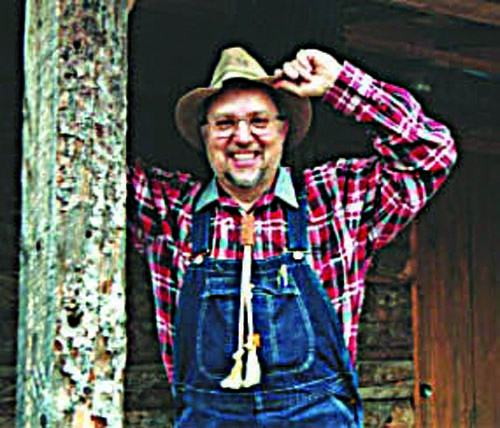
Every once in a while one of my faithful readers comments on the wide range of friends that I’ve mentioned in my columns. And, it’s true. After writing this column every week for more than 50 years, I’ve interacted with, (or simply created out of thin air) rural folks who cover about every aspect of farming, ranching and agribusiness — and the professionals who interact with aggies.

So, that got me to thinking that perhaps this week would be a good time to review the descriptive names of some of my favorite folks who I’ve written about down through the years. Here’s the names that pop up in my memory.

Of course, I’ve got to start off with my long-suffering wife, Nevah Yield.

And, my long-departed good ol’ dad, Czar E. Yield, who at times had difficulty achieving good crop yields on his farm, but still managed to earn two different county soil conservation awards.

Harley Ryder is my motorcycle-loving son-in-law.

Nick deHyde is my careless Iowa sheep shearing buddy and the poor sheep pay the price.

Phil Tanks delivered my propane for years.

Kleenan Baggitt operated a fine seed cleaning business.

Hayes T. Speaker cried many an auction — both big and small.

Saul M. Reeder wuz a devout lay minister in the Lutheran Church who I respected for his deep-seated beliefs.

Canby Handy and his wife May Bea Handy are old friends who can easily handle any task that they encounter.

Howie Doin wuz an old friend who never met a person he didn’t want to engage in conversation.

Armin Cider is the best dairy cow artificial inseminator that I ever met.

Parker Loosely is a farmer friend who learned from sad experience the cost of not setting the emergency brake on his pickup truck.

Sawyer Bord is a retired carpenter extraordinaire who could take a pile of lumber and build you a fantastic set of kitchen cabinets.

Moecephas wuz like Hank Williams, Jr. All his rowdy friends had settled down, but he still enjoyed fishing and card playing.

Avery Ware is a retired county extension agent who worked in the same county all his professional life and could be relied upon to show up everywhere he wuz needed.

Dr. Polk N. Prod handled all my medical problems for many years.

Dr. Pillson Vax wuz my reliable veterinarian for years.

Willie Makitt is a Missouri farmer who always claimed he could build in his farm shop about any thing he needed on his farm.

P.N. Cilpusher, of course, wuz my long-time tax guru and financial advisor.

Lon G. Horner wuz a pre-eminent breeder and exhibitor of longhorn cattle.

Bob Doff is my newest friend in Riley. He self-describes himself as “height challenged.”

Finn N. Furrs has established premier wildlife habitat on his Flint Hills farm. He is a natural resource conservationist of the highest oder, and a good quail shot, too.

Rocky Crick is a Flint Hills rancher who out of necessity has become highly experienced at repairing washed-out water gaps.

Faren Wyde operates a Flint Hills ranch with a hill so high it seems a person can see forever from the top.

Claude Hopper is my farmer-friend and old college roommate who quit turning the clods on his farm several years ago and retired.

Myris Snipedown could be counted on to get any vehicle he wuz driving either stuck in the mud or high-centered. He never left home without a chain.

Nutson Boltz runs a farmer-friendly small-town hardware. He stocks anything you need for the farm, ranch, garden or home.

Nalon Shews is a farrier with a satisfied equine clientele far and wide.

Rapsum Tite makes big round hay bales perfect for shipping on a flatbed semi.

Phil M. Rodeholes does his best as maintaining county gravel roads, but still gets more gripes than complaints from the folks who have to drive over them.

Canlay Rox is a stonemason who, for the right price, can turn a pile of ugly limestone into an bragging-rights home that will stand for centuries.

Ike N. Ketchem operates the headgate of a cattle chute better than anyone. He’s the feedlots’s man in charge of working newly-arrived cattle.

Buzz N. Comb wuz the small-town barber who cut my hair when I wuz a little kid. I still recall enjoying the Garst & Thomas outdoor-themed calendars in his shop.

***

Well, that’s sufficient names of friends for this week. Perhaps more in another future column.

Next column I’ll be reliving a memorable trip that ol’ Canby Handy and I took this week to Ainsworth, Neb.,

***

Words of political wisdom for this week straight from the mouth of my friend, ol’

Wright deLaws, a state senator in the Nebraska unicameral legislature. He said, “I’ve learned that 70 percent of the voters are totally ignorant about who they vote for. And, I’m just glad that I’m in the other 40 percent.”

Have a good ‘un.
Annual Butterfly Festival to be held Sept. 28

0

The Kansas Wetlands Education Center’s 11th annual Butterfly Festival will be held on Saturday, September 28, from 9 a.m. – 12 p.m. in Great Bend.


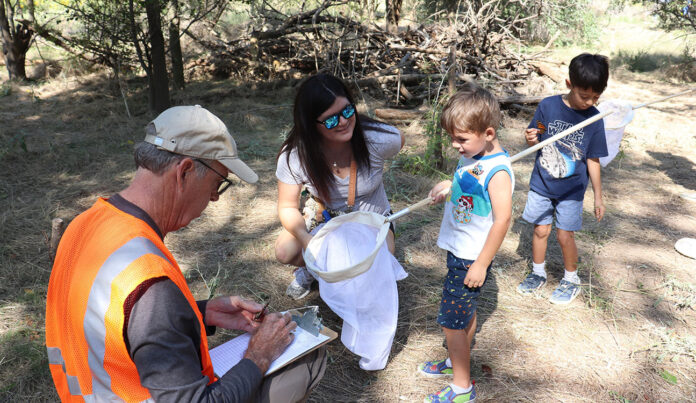
Each year, millions of monarch butterflies undertake their annual fall flight to Mexico. Nets and tags will be available during the event for those who want to capture and tag monarch butterflies.


Participants head out into the flower-filled fields and shelter belt around KWEC to capture monarchs, with tagging leaders stationed along the trail to help with the tagging process. For the past several years, monarchs tagged at the event were recovered at three Mexico roost sites.


On their way to Mexico, data collected from tagged monarchs helps support the research of Monarch Watch. Tagging helps answer questions about the origins of monarchs that reach Mexico, the timing and pace of the migration, mortality during the migration, and changes in geographic distribution. It also shows that the probability of reaching Mexico is related to geographic location, size of the butterfly, and the date.


StoneLion Puppet Theatre will be back again this year presenting “Bubba & Trixie,” a story of a scaredy-cat caterpillar afraid to leave his leaf until it meets a fearless ladybug. This story about friendship and facing fears is sure to delight attendees of all ages.


Larned-based Kellie Honey Farm will be present with a demonstration hive on display in the exhibit hall to educate about the importance of honeybees. KWEC will also feature an invertebrate zoo with giant walking stick insects, butterflies, caterpillars, chrysalises, fluorescing scorpions, and more. Kids can make a crawling caterpillar craft or a butterfly mobile at the craft station and take part in many other activities.


Grassland Groupies, a nonprofit dedicated to inspiring the conservation of grassland ecosystems, will be at the festival with a Bumblebutt Petting Station, an all-male (so they won’t sting) bumble bee interaction display.


Explore the Melody Marsh, a new interactive addition to the KWEC Pollinator Garden, and paint a section of a mural celebrating the monarch butterfly that will be displayed on the garden’s fence.


The garden provides wildflower planting ideas to use at home. It features a variety of native and adaptable plants that serve as host plants for different species of caterpillars and provide nectar sources for pollinators, including butterflies, birds, bees, beetles, and more.


Milkweed plants and wildflower seeds will be available free until they run out. For more information, contact KWEC at 1-877-243-9268 or visit: wetlandscenter.fhsu.edu.

Vegetable Crop Rotation

0

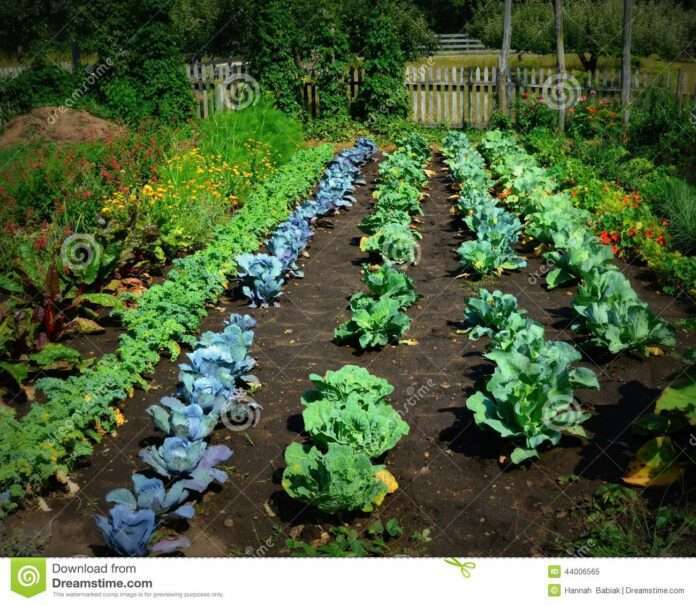
Success in the garden requires planning. To give your plants a healthy start next year, the best practice is to rotate crops within the same family to a different location than where they’re growing this year. This is known as crop rotation and offers several benefits.

Plants in the same family are typically susceptible to similar pests. Some pests overwinter in the soil; some are able to survive on debris. If the same host is available when the pests emerge in the spring, they will be able to continue feeding and multiply the problem. Crop rotation breaks the cycle of these pests.

Plants in the same families have similar nutrient requirements. Rotating crops prevents
the soil from becoming depleted of those nutrients. Also, the varied root system depths
from one plant family to the next contributes to the health of the soil.

Now is the perfect time to make a map of the vegetable garden so you can switch things up when you plant next year. For example, in the location where tomatoes are growing now, avoid planting anything from the Solanacaeae family (eggplant, pepper, potato) next year.

The Kansas Garden Guide has a helpful table of common vegetable crop families and an example of how to rotate these crops. You can access a digital copy of the Kansas Garden Guide here: https://bookstore.ksre.ksu.edu/pubs/kansas-gardenguide_S51.pdf

Harvesting Sweet Potatoes

0

Cold soil negatively affects the quality of taste and shelf life of sweet potatoes. To prevent this, harvest prior to the first fall freeze. Sweet potatoes are typically ready for harvest three to four months after planting.

Gently unearth the sweet potatoes in one mound to check for readiness. You may notice die-back of the above ground growth as harvest time approaches. After digging, sweet potatoes need to be cured for several days.

This process increases the shelf-life and flavor of the sweet potatoes. Curing should be done in a warm, humid location. Ideally the temperature should be between 85- and 90-
degrees F with a relative humidity between 85 and 95%.

Store sweet potatoes for several weeks before consuming. During this time starches are
converting to sugars which improves the flavor. Protect sweet potatoes during storage
by keeping temperatures above 55 degrees F.

Big political event to immediately follow end of Daylight Saving Time in Kansas

0

Daylight Saving Time in Kansas will end two days before the United States elects its next chief executive.

DST comes to a halt at 2 a.m. Sunday, Nov. 3, when time will “fall back” one hour for Kansas residents.

U.S. voters on Nov. 5 will then choose between this nation’s two presidential candidates, Democratic Vice President Kamala Harris and former President Donald Trump, a Republican.

Why does Daylight Saving Time exist?

Sunflower State residents this year have been observing DST since early March, when they carried out their annual ritual of “springing forward” by setting clocks ahead one hour in the spring.

Residents then “fall back” by setting their clocks back one hour in the fall.

DST encompasses roughly eight months of the year, with the rest being called “standard time.”

The U.S. Department of Transportation is in charge of DST in the U.S.

DST exists for purposes that include conserving energy and fuel and making better use of sunlight.

Proponents say it also reduces crime.

What’s the history of Daylight Saving Time?

DST was first used in 1908 in Thunder Bay, Canada, according to timeanddate.com, which says Germany and Austria then became the first countries to use it in 1916.

The U.S. temporarily put DST in place during World War I and World War II.

DST became a national standard in 1966 when President Lyndon Johnson signed the Uniform Time Act.

That act allows states to exempt themselves from observing DST but requires those that do observe it to begin and end it on the federally mandated dates.

The federal government in 2005 approved the Energy Policy Act of 2005, which establishes the dates DST begins and ends.

What states don’t observe Daylight Saving Time?

DST isn’t observed by Hawaii and Arizona, with the exception of the Navajo Nation.

The five territories the U.S. maintains also don’t observe DST.

Those are Guam, Puerto Rico, American Samoa, the U.S. Virgin Islands and the Mariana Islands.

Why did Daylight Saving Time almost get quashed?

U.S. lawmakers took a step toward putting a permanent end to DST in March 2022 when the U.S. Senate unanimously approved the Sunshine Protection Act, a bill that would have done that.

But the U.S. House of Representatives never put that bill to a vote, meaning it wasn’t forwarded to President Joe Biden.

2023 version of the Sunshine Protection Act remained idle in Congress as well.

key point of contention involved whether to switch to permanent DST or transition instead to year-round standard time.

As reported in the Topeka Capital Journal