

Pests

Description: Similar in appearance to other June bugs, the adult Japanese beetle is 1/4 to 3/8-inch long with a shiny, metallic-green head. The body has bronze wing covers and five clumps of hair that border the sides of the abdomen. The larvae are cream-colored grubs with a light brown head about 1 ¼-inch long at maturity.
Life Cycle: Adult female Japanese beetles lay eggs in July beneath wet lawns. Upon hatching, larvae feed on the sod roots and overwinter until the following summer. In June, the larvae pupate and adult beetles emerge to feed above-ground.
Damage: An extremely destructive pest, Japanese beetles feed on every part of the
plant. The beetles skeletonize leaves and consume flowers and fruit entirely. Hundreds
of varieties of plants can play host to this non-selective pest.
Control: Controlling Japanese beetles is a challenge this time of year as new adult
beetles emerge from underground daily over several weeks. In small quantities, beetles
can be manually removed from plants and dropped into a bucket of soapy water. Check
plants daily to look for symptoms. Mornings are the best time to observe as beetles are
slower and easier to catch.
There are many traps available that lure Japanese beetles into a container where the
pests can be gathered and disposed of. However, some sources caution against using
traps as the pheromones used to attract the beetles can draw in even more beetles than
would naturally appear. Not all of these beetles may end up in the traps and the result
could be greater damage to the plants.
Insecticides such as cyfluthrin (Tempo), bifenthrin (Hi-Yield Bug Blaster II) and
cyhalothrin (Bonide Beetle Killer, Spectracide Bug Stop Indoor + Outdoor Insect Killer,
Spectracide Triazicide, Bonide Caterpillar Killer) can be used for Japanese beetle
control with about two to three weeks protection. Carbaryl (Sevin dust) can also be
effective but only for about one to two weeks. The downside of using such products is they will also eliminate parasitoids and other natural predators. Neem products (Natural
Guard Neem-Py, Fertilome Triple Action Plus) and Pyola (pyrethrins in canola oil) can
offer control for three to four days.
Final Wheat Harvest Report
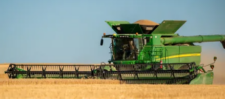
This is day 13 of the Kansas Wheat Harvest Reports, brought to you by the Kansas Wheat Commission, Kansas Association of Wheat Growers, Kansas Grain and Feed Association and the Kansas Cooperative Council.
With harvest down to the final few days, this will be the last report for the 2024 Kansas wheat harvest. Rain delays continue to stretch out the season, but producers welcome the moisture as they turn their attention to planting fall crops and managing the weeds coming up rapidly in wheat stubble.
Moisture over the weekend continues to prevent harvest from wrapping up in northwest Kansas, but no one is complaining about the beneficial moisture for fall crops, according to Jeanne Falk Jones, Multi-County agronomist with the Northwest Research-Extension Center in Colby.
Area producers started test cutting after Father’s Day and harvest kicked into full gear the following weekend. The end of harvest is now in sight – maybe three days more if the skies stay clear. This last push feels more like last year’s harvest – foggy mornings and tough wheat that can’t be cut until late in the day.
Yields are all over the board – from 20 to 100 bushels per acre – across the northwest region, not surprising given the challenges to get stands established last fall. Weather during the grain fill period was much more favorable with moisture, fewer triple-digit days and especially cooler night temperatures.
As a result, Falk-Jones reported average test weights between 58 to 62 pounds per bushel and proteins between 9 and 11.5 percent, depending on field fertility and conditions during grain fill.
“Everybody is pleasantly surprised on how good our wheat has been,” she said, adding that the wheat looked pretty tough for the majority of the growing season. “Now, not every field has been that way.”
Falk-Jones did investigate a fair amount of wheat disease this year, including Wheat Streak Mosaic Virus, Triticum mosaic and High Plains disease, all of which are transmitted by the wheat curl mite. She sent several samples off to the diagnostic labs in Manhattan to determine which virus was on the rise after seeing the characteristic yellow leaves in fields planted to varieties with decent resistance to WSMV. The result was a bit of uptake in Triticum mosaic. The earlier the infection of viral disease, the more impacts on yields, but a good number of fields already had yield potential set when symptoms showed at heading.
She attributes the uptick in disease pressure to severe hail last year after kernels were formed. As a result, there were more shattered kernels in the field and continual flushes of volunteer wheat after catching little rain showers. While folks tried hard to control volunteer wheat, even kernels left in wheels tracks were enough to harbor the disease vector – wheat curl mites – over the fall.
In Sherman County, Brian Linin has about five or six days left to cut near Goodland, after starting harvest on June 26 – three to five days earlier than normal and three weeks earlier than last year.
Expectations were low after the wheat did not have good stand last fall, thinking this year would be a repeat of the last. Blowing fields this spring added to the anticipated disappointment. Linin noted he went ahead and applied fungicide and did not see a lot of rust or Wheat Streak Mosaic virus, but controlling volunteer wheat will be essential to prevent the spread into next year’s crop.
While the cooler days and nights during grainfill helped the wheat do better than expected, this year will still be about 20 percent below an average yield. Linin reported yields on dryland wheat ranging from 30 to 70 bushels per acre, with most in the 40s. Test weights were averaging 58.5 to 59 pounds per bushel, but this weekend’s rain may cause them to lose a bit. Protein ranges from 12 to 14 percent.
“Growing wheat has a lot of value for our farm,” Linin said. “Wheat stubble once again has proven its value. Not only is wheat a good cash crop, if you are able to get a good price with forward contracting, but the importance of the stubble to plant into makes such a huge difference on fall crops. There are a lot of factors that going into profitability.”
In Smith County in north-central Kansas, Bryce Wiehl finished wheat harvest near Smith Center on Monday, July 8, after a week-long weather delay on his last 100 acres. He’s not complaining about the rain, which will benefit double-cropped soybeans on all his now-harvested wheat fields.
The wet conditions are in stark contrast to how the growing season started last fall, when Wiehl harvested bone-dry soybeans last September and October then drilled wheat in an absolute desert. The good fields were barely 50 percent up when the area had a rare rain in December that brought 1.5 to 1.75 inches of moisture. The wheat had snow on it through most of the winter, emerging from dormancy in February. Wiehl noted he had more moisture this past winter than the last seven years.
After starting on Monday, June 24, harvest is above average with a final farm yield of 65 bushels per acre and average test weights of 58 to 59 pounds per bushel. He noted other producers reported test weights clear up to 63 to 64 pounds per bushel.
Last year, his wheat averaged seven bushels per acre, well behind the 38 to 39 bushel-per-acre average he aims for with wheat behind soybeans. While the moisture and the bushels are welcome, the commodity prices are half what they were, driven more by investment funds than fundamentals.
“It was a wheat year; we caught early spring rains, and the wheat will do what it will do,” he said. “But it looked like a total train wreck in the fall.”
In southwest Kansas, wheat harvest is 98 percent complete in Finney County, down to the last few mud holes, according to Jeff Boyd, CEO/general manager of Garden City Co-op. Wheat harvest started earlier than the normal on June 20 this year, meaning many folks were finished up and able to enjoy the July 4th holiday weekend.
The wheat came in dry this year with moisture at 9 to 13 percent, solid test weights between 60 and 62 pounds per bushel and average protein for the area. Yields were all over the place depending on cropping rotation. Wheat after fallow did really well, thanks to the additional moisture, while wheat planted after corn or milo was not as good. Irrigated and dryland yields were comparable.
“No year is the same and that keeps getting reiterated,” he said. “The volatility we see goes from one extreme to the other.”
Taking out the last couple drought years, Boyd reported the cooperative’s overall take is back up to the five and 10-year average. In general, folks are surprised and happy with their harvest, although he noted some area producers were hit by hailstorms.
“It wasn’t until that wheat was really drying down that it really started to look good,” Boyd said. “That wheat in the field just looked thicker the more mature it got.”
The draw area for Garden City Co-op extends down to Hooker, Oklahoma, where substantial five to 10 inches of rain will continue to affect test weights and delay harvest, but Boyd said no one is going to scare the rain away.
As harvest finishes, he noted the next priority for producers is going to be managing the weeds coming in fast into the wheat stubble. For the elevator, Boyd explained that with a thin international market, domestic mills in Kansas and California are driving the final destination for those bushels – along with increasing demand from the wheat gluten plants in Phillipsburg and Russell.
Look for a final round-up and quality reports as the data is crunched from the 2024 wheat harvest. Producers are also encouraged to start controlling weeds and volunteer wheat now as the much-appreciated moisture will bring plenty of green to harbor wheat curl mites – the vector that will foster WSMV infections next harvest.
The 2024 Harvest Reports are brought to you by the Kansas Wheat Commission, Kansas Association of Wheat Growers, Kansas Grain and Feed Association and the Kansas Cooperative Council. To follow along with harvest updates, use #wheatharvest24 on social media. Tag us at @kansaswheat on Facebook, Instagram and Twitter to share your harvest story and photos.
WASDE raises red meat and poultry production
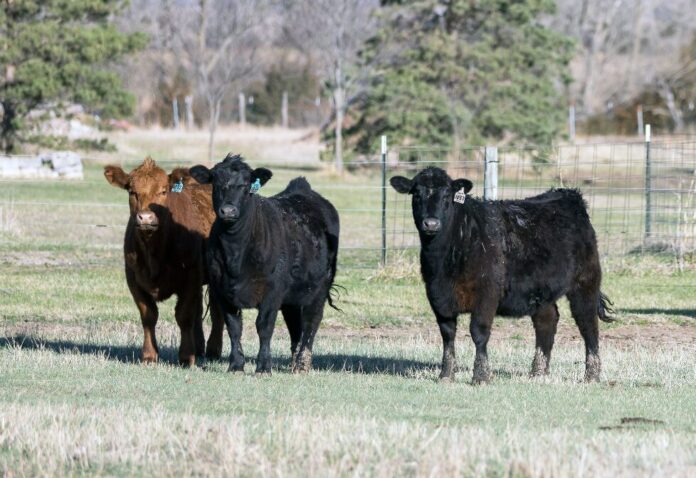
Total United States red meat and poultry production forecast for 2024 was raised based on the latest World Agricultural Supply and Demand Estimates.
Beef production was unchanged as lower expected processing was largely offset by higher dress weights.
For 2025, the red meat and poultry production forecast is raised on higher expected beef production and higher expected placements in the fourth quarter of 2024. Dressed weights are expected to remain relatively high in 2025.
Also, the cattle price forecast has been raised. The 2025 steer price was $186 per hundredweight, which is up $5 from what was projected at the beginning of 2024. The price is based on the five-area weekly weighted average direct slaughter cattle report compiled by the U.S. Department of Agriculture.

Glynn Tonsor, a professor in the department of agricultural economics at Kansas State University, said the latest report was not a surprise to him, and he continues to anticipate higher cattle prices.
Cattle operators need to focus on their own costs, he said.
“Many cow-calf operators will begin contemplating herd rebuilding and expansion and hence should know their breakevens and know what expected return on their investment would be from rebuilding and expanding,” Tonsor said. “Feedlot operators are likely to face reduced supplies of incoming animals for a couple years leading to adverse margins making cost management even more important and ongoing discussions with your lender essential.”
He also noted that the nation’s cowherd is not showing any signs of rebuilding.
Cattle inventory report
Recently, the USDA said it was not going to issue a cattle inventory report in July.
“USDA provides a host of valuable reports and data series, but all must appreciate that provision is not free (Public, tax-based budgets are real.) and that the quality of said reports when available often hinges on validity of information provided by producers to USDA,” Tonsor said. “As for other outlets, general media and industry analysis can provide insight, but many build upon the tradition of USDA providing respected, unbiased information.”
Pork, poultry
Pork production was raised in the second quarter on a more rapid pace of processing and slightly higher dressed weights.
Pork prices were estimated at $54.97 per hundredweight at the beginning of 2024 and have been trending upward, but the WASDE projects the price to be at $59 per hundredweight beginning in 2025.
Broiler production was raised on higher bird weights and recent hatchery data. Turkey production was also raised on recent hatchery data. Egg production was lowered based on recent discoveries of highly pathogenic avian influenza in commercial laying flocks.
Broiler prices, which were at 128 cents per pound at the beginning of 2024, are expected to be 126 cents per pound beginning in 2025.
Dairy
Milk production forecasts for 2024 and 2025 were unchanged from the previous month, with slight adjustments to the cow inventories offset by slower growth in milk per cow.
For 2024, butter, cheese, whey and nonfat dry milk price forecasts were raised from the previous month based on recent price strength. The all-milk price forecast is now estimated at $21.60 per hundredweight. Strong demand for dairy products is expected to carry into 2025, and prices were raised for cheese and whey.
The 2025 all-milk price forecast is estimated at $21.50 per hundredweight.
It’s A Gray Area

Henry Ford once said that you could have any color of car you wanted as long as it was black. Fast forward to today and it seems like the automotive industry is saying you can have any color of truck you want as long as it’s white.
I watch a monthly internet truck auction and I bet that 98% of the used trucks they sell are white. I’m talking bucket trucks, welding trucks, flat beds, veterinarian pickups, plumber’s trucks even over the road tractor-trailer rigs. They’re all white! Twenty-five years ago most of the trucks were some tint of silver causing me to wonder if the executives of the automotive industry are color blind?
It wasn’t always this way. Nearly 60 years ago I learned to drive in a Chevy short-bed that was gold. My father traded it in for a GMC that was cherry-red. My Grandpa’s truck was also red. One of the best looking trucks I’ve seen, even to this day, was a 1952 Chevy pick-up painted light blue with baby moon hubcaps that was frequently seen around town. But the best looking truck I’ve ever seen was the first truck I ever bought, a 1970 Chevy El Camino SS 396 that was painted a dark metallic brown with tiny gold flecks that made it sparkle like a diamond. The roof was a beige vinyl that blended beautifully with the dark brown.
Normally I’m not a big fan of brown but this rig was a real head-turner and I don’t know why I sold it, other than the fact that we needed the money for the down payment on our first home. My wife sold her beautiful blue Camaro for the same reason and looking back I wish we hadn’t bought the house and kept those vehicles instead, even if it meant we had to live in them!
My last two pickups were a two-tone combination that you don’t see much any more. The first was painted a dark blue on the top with the bottom being silver and after that we bought a one ton that was tan on top and white on the bottom. At least it was white after we washed the truck on rare occasions, the rest of the time it was more of a manure brown. It could change color rapidly too, especially if the cattle were eating washy feed.
I’ve only owned one white truck and it was my Grandpa’s company Econoline we named Herbie. This was also the only Ford I ever owned. I paid Grandpa $600 for it and used it mostly to haul my sheep, so I suppose you could call it a “Ewe Haul”. Actually it a two tone because the side mirrors were both held on by blue masking tape.. As much as I hate to say this Herbie was probably the best truck we ever owned.
It’s no coincidence that as more and more trucks were white, people became a lot less friendly. This was because when people drove colorful rigs you always knew who was approaching and had time to decide if it was friend or foe which determined whether you waved or not. Now that trucks are all white you never know who’s coming until it’s too late to wave.
I worked at an Atlantic Richfield gas station that eventually became Arco and it was always fun to try and identify our incoming regular customers by the color. of their cars. There were orange Vegas, yellow Pintos, blue Nash Ramblers and older olive drab DeSotos, Edsels and Studebakers. Ford even had a color in the 60’s they called Anti-Establish-Mint.
From what I’ve observed lately it seems like Detroit has now decided that the next wave of color will be gray. How exciting! The problem is all the white and gray vehicles on the road are so boring people are falling asleep at the wheel. They’re having terrible wrecks and the occupants are ending up in the back of a black or gray hearse to haul them to the bone orchard. I suppose the car execs think they’re being really bold and adventuress by picking gray to follow white. I wonder what they are going to call their new favorite color, Mortuary Gray, Funeral Parlor Dull or Meat Wagon Monotonous.
