Monday, February 9, 2026
Home Blog Page 388

June Gardening Tips and Checklist

0

To help make your yard and garden the best they can be this year, consider these tips.

  • Discontinue harvesting asparagus spears in early June to allow the fronds to form for the rest of the growing season.
  • Prune tomatoes to open the canopy of the plant.
  • Consider drip irrigation in the garden to conserve water.
  • Consider planting sweet corn in the garden every other week (until early July) to extend the harvest.
  • Prune spring flowering shrubs (those that bloom before June) after they have bloomed to encourage new flower buds for next season.
  • Deadhead (cut off) spent blossoms of perennial and annual flowers.
  • Thin the fruit of apples, peaches, and apricots to approximately one fruit every 5-6 inches.
  • Apply a second application of pre-emergent herbicides in late May to early June to control annual weeds in the lawn such as crabgrass and spurge.
  • Remember that turfgrass only needs 1 to 1 ½ inches of irrigation per week. See irrigation needs in your area.

Pests and Problems:

  • Monitor vegetables and herbs for earwig damage.
  • Protect ash trees with a registered chemical to prevent lilac/ash borer damage.
  • Use control measures in apples and pears to reduce wormy fruit. For specific timing see the Utah Pests Advisories.
  • Treat for powdery mildew on apples beginning when leaves are emerging (at 1/2 inch green) until June.
  • Watch for insect pests in raspberries from mid-May thru early June.
  • Control the Western cherry fruit fly when fruit changes color from straw color to pink to avoid maggots in cherries.
  • Control the peach twig borer in peaches, nectarines, and apricot trees.
  • Monitor for damaging turfgrass insects. In areas previously damaged, consider a preventative (systemic) insecticide.
  • Consider taking an online gardening course. Courses cover everything from container vegetable gardening and creating the perfect soil to planting trees and controlling pests. They are geared to both beginning and professional gardeners. Use the code SAVE25 for 25% off a course when you spend $10. Expires June 30, 2024.
  • Explore more gardening tips on Extension’s yard and garden website.

Public Health Advisories for Kansas Lakes Due to Blue-Green Algae

0

The Kansas Department of Health and Environment (KDHE) and the Kansas Department of Wildlife and Parks (KDWP) have issued a public health advisory due to blue-green algae.

A harmful algal bloom (HAB) may look like foam, scum or paint floating on the water and be colored blue, bright green, brown or red. Blooms can develop rapidly; if the water appears suspicious or there is decaying algae on the shore, avoid contact and keep pets away. These toxins can be absorbed by ingestion, inhalation of aerosols and even skin contact. Symptoms vary depending upon the type of exposure (e.g. direct contact, ingestion, inhalation) but can include rash, vomiting, diarrhea, fever, sore throat, and headache. If you, or your pets, come into contact with algae rinse the area with clean, fresh water. Suspected HAB-related health incidents, whether human or animal, regardless of season, should be reported at kdhe.ks.gov/1163.

Active Advisories

Warning

  • Harvey County East Lake, Harvey County
  • Marion Lake (Reservoir), Marion County
  • Overbrook City Lake, Osage County (Added June 7)

Watch

  • Lake Shawnee, Shawnee County
  • Lovewell Lake, Jewell County
  • Woodland Park Pond (Mount Hope), Sedgwick County (Added June 7)

Lifted

  • Atchison State Fishing Lake, Atchison County
  • Webster Lake, Rooks County

Hazard status indicates that a harmful algal bloom is present, and extreme conditions exist.

When a hazard is issued, KDHE recommends the following precautions be taken:

  • Signage should be posted at all public access locations.
  • It is recommended that either a portion of the lake or the entire lake or zone, be closed to the public.
  • In some cases, the adjacent land should be closed as well. Actual setback distances will be determined on a site-specific basis, if necessary.
  • When partial closures (i.e., beach or cove) are issued, the remaining lake or zone area will carry a warning status.

Warning status indicates that conditions are unsafe for human and pet exposure.  Contact with the waterbody should be avoided.

When a warning is issued, KDHE recommends the following precautions be taken:

  • Signage should be posted at all public access locations.
  • Inhalation of spray or aerosols may be harmful.
  • Lake water is not safe to drink for pets or livestock.
  • Lake water, regardless of blue-green algae status, should never be consumed by humans.
  • Water contact should be avoided.
  • Fish may be eaten if they are rinsed with clean water and only the fillet portion is consumed, while all other parts are discarded.
  • Do not allow pets to eat dried algae.
  • If lake water contacts skin, wash with clean water as soon as possible.
  • Avoid areas of visible algae accumulation.

Watch status means that blue-green algae have been detected and a harmful algal bloom is present or likely to develop. People are encouraged to avoid areas of algae accumulation and keep pets and livestock away from the water.

During the watch status, KDHE recommends the following precautions be taken:

  • Signage should be posted at all public access locations.
  • Water may be unsafe for humans/animals.
  • Avoid areas of algae accumulation and do not let people/pets eat dried algae or drink contaminated water.
  • Swimming, wading, skiing and jet skiing are discouraged near visible blooms.
  • Boating and fishing are safe. However, inhalation of the spray may affect some individuals. Avoid direct contact with water, and wash with clean water after any contact.
  • Clean fish thoroughly with potable water and eat fillet portion only.

Advisories are Lifted when cell densities and toxin concentrations dissipate to levels below the Watch thresholds.

KDHE investigates publicly accessible bodies of water for blue-green algae when the agency receives reports of potential algae blooms in Kansas lakes. Based on credible field observation and sampling results, KDHE reports on potentially harmful conditions.

If you observe a scum or paint-like surface on the water, small floating blue-green clumps or filaments in the water, or if the water is an opaque green, avoid contact and keep pets away. These are indications that a harmful bloom may be present. Pet owners should be aware that animals that swim in or drink water affected by a harmful algal bloom or eat dried algae along the shore may become seriously ill or die.

For information on blue-green algae and reporting potential harmful algal blooms, please visit kdhe.ks.gov/HAB and check out our interactive story and informative video.

Danger near the bird feeder? K-State wildlife expert urges caution

0

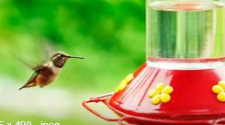
Bird feeders are a great way to enjoy nature without leaving your front porch, and many homeowners understand the joys of seeing multiple bird species frequent the feeders.

But Kansas State University wildlife specialist Drew Ricketts said bird feeders also can attract predators and other wildlife into your yard.

For example, racoons are seven times more likely to enter the yard and deer are two times more likely if you have a bird feeder.

“Carnivores, such as coyotes and red foxes and those sorts of critters, are at least one and a half times more likely to be in yards with bird feeders,” Ricketts said.

“Folks often times are inadvertently attracting critters to the yard, and that can cause problems that don’t have anything to do with the bird feeder. One of the things that I would suggest to those folks is to think about how they might be contributing to that situation by having food available in the yard.” Ricketts said.

At least once a year, Ricketts said he gets a call from people who are wanting to know how to get rid of a hawk that is hanging around their yard, preying on birds. He said there is nothing you can do because an increase in a prey species often leads to an increase in a predator species.

“Feeding birds is something people do for themselves and it might have unintended negative consequences.” Ricketts said.

According to Ricketts, bird feeders allow such predators as domesticated cats and hawks, to take advantage of the condensed hunting grounds around the feeder.

Even though we worry that birds are hungry during the winter, feeding birds may also have unintended consequences for the birds that are eating it.

According to Ricketts, birds don’t need to be fed in the winter. A study that looked at birds’ reproductive performance showed that birds being fed in the winter time hatched chicks that weighed less and had a lower survival rate than birds that did not have access to feeders.

Ricketts said concentrating birds in one area around a feeder can also be a hot spot for parasites and diseases. Two examples from scientific studies show an increase in diseases like avian pox and infections of lice and mites.

For those who want to keep birds coming around, Ricketts suggests washing bird feeders thoroughly every 24 hours with 10% bleach, and rinsing them well to remove the bleach odor.

More information on managing common wildlife animals in Kansas is available online from K-State Research and Extension.

Look for Bagworms NOW!

0

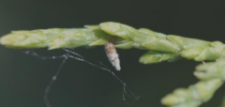
Bagworms are showing up. Though right now they are small and hard to see they are also
much easier to control. Bagworms overwinter as eggs inside the dead female’s bag. Larvae hatch and emerge from the bags mid to late-May in Kansas. The young larvae begin feeding on their host plants right away. It’s recommended to wait to spray for bagworms until mid-June to ensure most of the eggs have hatched.

Young bagworms look just like the adult version only much smaller. If you see empty
bags on your trees/shrubs, that is evidence of bagworms from the previous year and
there are likely young bagworms on the plant this year as well.

Insecticides commonly used for controlling bagworms include:

• Acephate (Orthene) Permethrin (38 Plus Turf, Termite & Ornamental Insect
Spray; Eight Vegetable, Fruit & Flower Concentrate; Garden and Farm Insect
Control)

• Bifenthrin (Bug Blaster II, Bug-B-Gon Max Lawn and Garden Insect Killer)

• Lambda-cyhalothrin (Spectracide Triazicide, Bonide Caterpillar Killer)

• Spinosad (Conserve; Natural Guard Spinosad; and Captain Jack’s Dead Bug
Brew). Spinosad is a very effective organic control for bagworms.

Thorough coverage of the plant material is essential for good control of bagworms
regardless of which product you choose.

Fertilizing Tomatoes

0

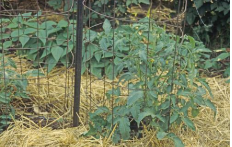
Too much nitrogen for tomato plants may result in
vigorous plant growth without much fruit. Plants
should be side-dressed with nitrogen three times
during the growing season.

The first application should be applied one to two
weeks prior to fruit ripening. Two weeks after
ripening, it’s time for the second application.

The third round of fertilizer should be applied one month after
the second. Basically, there should be one month of time between each application.

Common sources of nitrogen-only fertilizers include nitrate of soda, urea and
ammonium sulfate. Blood meal contains primarily nitrogen but has other elements as
well.

Apply one of the following fertilizers at the rate provided:
• Nitrate of soda (16-0-0): 2/3-pound (1.5 cups) fertilizer per 30 feet of row
• Blood meal (12-1.5-.6): 14 ounces (1.75 cups) fertilizer per 30 feet of row
• Urea (46-0-0): 4 ounces (1/2 cup) fertilizer per 30 feet of row
• Ammonium Sulfate (21-0-0): 0.5 pounds (1 cup) fertilizer per 30 feet of row

Alternatively, lawn fertilizer, free of weed killer/preventer, can be used at a rate of 1/3
pound (3/4 cup) fertilizer per 30 feet of row. Choose a fertilizer that is about 30%
nitrogen (the first number in the set of three).