
Saturday, February 14, 2026
Home Blog Page 445

Insight: Farm Finances

0
Image courtesy: Kansas Farm Bureau

Jackie Mundt,
Pratt County farmer and rancher

There was a line in one of those corny comedy/action-adventure movies that made me roll my eyes recently. A character asked, “What’s in Kansas?” in reference to them being unable to understand why a mutual friend moved to Kansas. That’s not the line that made me roll my eyes. I am a transplant myself and know from experience that Kansas doesn’t seem to be very exciting until you get to know what makes it such a wonderful place to live.
The line I am still thinking about was the response, “she married a rich rancher.” The insinuation that the only thing making Kansas attractive to a highly affluent, college educated woman is lots of money, makes me little concerned about how many people think all ranchers and farmers are rich.
Since Tax Day is this week, I thought it would be appropriate to dive into how much money farmers make and why people have so many misconceptions about the topic.
In my opinion, there are several culprits creating mystery around farm income levels. The first is non-farm people. I find it humorous to watch an outsider ask a farmer how many acres or cows they have. Some farmers see that as asking point-blank, “What’s your salary?” The poor outsider is probably just trying to show interest and wouldn’t have a clue if 500 or 5,000 acres was normal, let alone have any insight on the value of a cow.
Farmers also contribute to the problem. Growing up, my parents had off-farm jobs, so I never really thought about if our dairy made money. In college, I meet farm kids who somewhat proudly talked about getting Pell grants because their parents had a low income or at least had a low taxable income. I never liked that attitude and was glad to meet other farmers who were content to pay taxes because that meant their business was successful and they were being productive members of society.
Legislators and estate taxes are also part of the misunderstanding. Farming is incredibly capital intensive; high land and equipment prices make it really difficult to get started if you don’t inherit family assets. Politicians regularly point to a lower threshold for estate taxes as a way to tax the rich. The reality for farmers and many family businesses is that property and equipment quickly add up to large figures.
Those dollar signs aren’t the same as cash. They represent the tractor and field used to plant a crop. Most family farms would have to sell land and equipment to pay estate taxes if the threshold were lowered. Unless a farmer sells out, they will never see the kind of money in cash that makes people think they are rich.
Farmers deal with bigger numbers than other people. They may bring in $1 million in a great year and $100,000 the next – before expenses. After paying for seed, fertilizer, machinery, fuel, rent and other business costs, a farmer may make six figures or lose money for the year.
Farmers have tremendous amounts of money invested in equipment, inputs and land. Their risk level is high; they make many decisions without knowing if the weather or market at harvest will cover the costs they’ve already incurred. All farmers experience bad years. Sometimes they event put a farmer out of business. The stress and uncertainty of trying to keep the farm alive for the next generation is often cause of mental health issues.
Judging a farmers’ income is complicated and difficult because there are too many factors; rich or poor, materialistic or humble, heavily leveraged or paid in cash. My experience is that farmers’ finances may look different than the average American, but we really aren’t that different at all.
Dairy Cows With Avian Influenza, What?

0

Trent Loos
Columnist

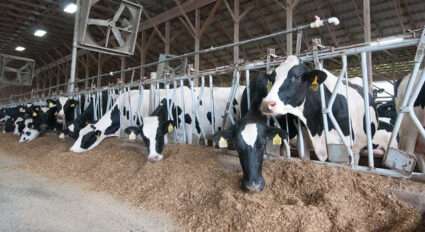
All hands on deck. I smell a serious rat in the situation that is unfolding in the dairy cattle world. Earlier today, I had a tremendous conversation with Texas Commissioner of Agriculture Sid Miller about the dairy females that are testing positive for H5N1, otherwise known as Highly Pathogenic Avian Influenza. Sid told me that, for the longest time, they were testing these sick cows for bovine diseases when someone suggested there were a large number of dead birds in the area. They tested the cows for H5N1 and got positive test results. Clearly, it was originally called a “mystery disease” and I would say that name still fits.
So right off, let’s describe what the “sick cow” means. As Sid Miller indicated, the cows affected are all in lactation. They are the older cows within in each herd. The young cows seem to be resistant to any symptoms that the older infected cows are experiencing. Now I have had dairy folks tell me that 5-10% of the positive cows will actually dry up and quit milking. For the most part, the cows experience very typical flu-like symptoms. They lose their appetite and have a fever for a few days and then come back into milk and move forward with no issues. In the realm of animal diseases. the situation could be significantly worse.
At the time of this writing, Sid Miller also reported that, for only the second time in recorded US history, a human has contracted H5N1 from interacting with animals. The symptom experienced by the worker on one of the dairies was simple pink eye. As always, there is zero reason to be careless around animals but certainly not a reason to have an elevated fear about contamination.
Honestly, I find the whole think strange. I mean migratory birds cover more than just this path in Texas where the outbreak originated. Yet the animals infected in all states, with the exception of Kansas thus far, have a direct tie to animals from Texas. Capturing many headlines in the past couple of days is the fact that the state of Nebraska announced that it will now require a permit for breeding dairy females with a Health Certificate from the state of origin in order to come into the state. To me, the news in that is the fact that a permit was not already required. As a person who routinely delivers animals to dozens of states, it is rare that permits are not already commonplace.
It needs to be said that this is an animal disease and no way should be confused as a human health issue. The milk from sick cows is discarded and not sent into the normal fluid milk channels. If that were to happen, the pasteurization process would remove any health risk for human consumption. I am concerned that I see quite a few negative sentiments about the consumption of raw milk surfacing through this situation, at a time when raw milk consumption was making a comeback.
Already the fear mongering fools out there are trying to work the consuming public into a frenzy about mass injections of mRNA H5N1 vaccines being given to these cows. That is a blatant lie.
It has not and will not happen. In fact, I attended a USDA meeting last week in Omaha where the poultry producers in the room asked Secretary of Ag Tom Vilsack why the USDA could not champion an Avian Influenza vaccine for birds. His answer was horrible but nothing short of “it will not happen anytime soon.”
At the end of the day, I am going to quote Sid Miller from our broadcast when he said, “This is not a good thing, but certainly it isn’t a real bad thing either.” I am going to predict that if we do not get armed with the truth and become louder than we have been in the past, the collateral damage to dairy and beef production will be severe.
There are plenty of folks in the world today looking to bring the cow business crashing down. Let’s not let them even start crowing about all the problems these cows are suffering. Hey, but then again, we are a week ahead of a solar eclipse that will last less than 4 minutes in any one spot and we have state governors already declaring a state of emergency. That is proof that it doesn’t take much darkness to spook some folks.


https://trentloos.substack.com/p/dairy-cows-with-avian-influenza-what?publication_id=974571&post_id=143416431&triggerShare=true&isFreemail=true&r=o4hmr&triedRedirect=true

Tomato Tips

0

Scott Eckert
Harvey County Extension Agent, Horticulture

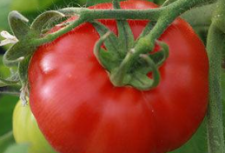
There are thousands of varieties of tomatoes out there to try. I am asked the question of what is the best tomato for our area. The answer is what ever grows best and tastes best for you! Standard slicers have some disease resistance. Determinate tomatoes produce most of their fruit early in the season and less later. They also have shorter, more manageable vines. Indeterminate tomatoes produce large vines and bear fruit through the season except when hot, summer temperatures prevent pollination and fruit formation. Here is a list of possibilities for you to find and try! (Just wait until May after the chance frost has passed!)
Roma: Little Napoli (H; determinate, compact)
Plum Crimson (H; determinate)
Plum Dandy (H; indeterminate)
Pony Express (H; nematode resistant)
Margherita VF (H; determinate)
Roma VF (heirloom, semi-determinate)
Super Marzano VF (H; indeterminate)
Grape/Cherry Type
Esterina (H; yellow, indeterminate)
Juliet (H; indeterminate)
Mountain Belle (H; determinate)
Sun Gold (H; yellow, indeterminate)
Suncherry (H; indeterminate)
SunSugar (H: yellow, indeterminate, excellent flavor, prone to cracking)
Supersweet 100 (H; indeterminate)
Tumbling Tom (H; determinate)
Sweet Olive (H; determinate)
Standard Slicers
Amelia (H; some disease resistance)
Beefy Boy (H; short internode indeterminate)
Big Beef (H; large fruit, productive, indeterminate)
Carolina Gold (H; yellow, determinate)
Celebrity (H; highly disease resistant, vigorous determinate plant, large fruit)
Chef ’s Choice (H; large fruit, indeterminate)
Florida 47 (H; determinate)
Florida 91 (H; heat tolerance, determinate)
Jetsetter (H; indeterminate)
Jet Star (H; an older indeterminate variety, very good yield, very good crack resistance. This was the top recommended variety for years. Some disease resistance.)
Mountain Fresh Plus (H; determinate)
Mountain Gold (yellow, determinate)
Mountain Spring (H; crack resistant, determinate)
Primo Red (H; early, productive, strongly determinate)
Scarlet Red (H, determinate)
Sun Leaper (H) and Sunmaster (H; heat set types that continue setting fruit at higher temperatures than standard varieties.)
Heirloom Slicers (indeterminate)
Amanda Orange (orange, very large fruit, highly fluted)
Black Krim (dark, red-purple, fruit, higher yield than most heirlooms)
Cherokee Purple (pink-purple fruit)
Mortgage Lifter (red fruit, fluted)
This is by no means the entire list of actual tomato varieties there are in the world! So as you can see there are many varieties to choose from.

These robots provide a high-tech solution to an age-old farming problem: how to get rid of weeds

0

Celia Hack
Harvest Public Media

Greenfield Robotics, a Kansas-based company, is hoping to move agriculture away from herbicides. They’ve developed robots to take on a labor-intensive process — cutting weeds down.
Three yellow, bug-like creatures crawl in perfectly straight lines across the dead grass of a flat, brown February field in Cheney, Kansas.
These are the namesake of GreenField Robotics. Two lights peer out from each side of the boxy machines, almost appearing like eyes. Blades whir at their base, about a half an inch from the ground – the perfect height to chop weeds, though there’s nothing to cut down on a frigid winter day.
They stick out in an otherwise rural landscape – and GreenField CEO Clint Brauer said he frequently hears from curious passersby.
“All the time,” Brauer said. “I’m always surprised, though, how little people notice.”
Brauer founded the company in 2018. The start-up has now grown large enough to attract investment from Chipotle’s $100 million venture capital fund and to secure partnerships with dog food and baking mix brands.
Brauer grew up on a family farm in Haven, Kansas, but moved to California after high school to work in the tech industry. In 2010, he returned home after his dad was diagnosed with Parkinson’s disease. He attributes the use of herbicides to his dad’s diagnosis.
“The more I learned about farm chemicals and stuff … the more I thought there’s a decent chance that this came from that,” Brauer said.
The move sucked Brauer back into the world of agriculture, where he started seeking ways to eliminate herbicides. He tried farming organically, but it was too expensive to be accessible to many buyers.
Another option was no till farming, where farmers avoid turning over the dirt to reduce erosion and improve soil health. But it’s a method that leans on herbicides.
And in 2015, Brauer was starting to notice the weeds in his fields were becoming resistant to chemicals anyway.
“There was no good way to get rid of those weeds, even though we had sprayed many times,” Brauer said.
“So, what do we do? And so that was the beginning of this idea of – what if we just cut those weeds?”
Cutting weeds by hand wasn’t exactly a 21st-century answer. So Brauer thought: What about robots? He reached out to software and machine-vision experts and started prototyping robots.
By 2021, the company had manufactured a two-and-a-half foot-tall working robot. And it pulled together different technologies, like drones, to create extremely precise maps of crop fields. The robots follow the maps, so that they’re unlikely to accidentally chop down a crop instead of a weed.
“They plant the crop, we count about 10 days, normally, the crops emerge, and we fly over it with a drone,” Brauer said. “ … That’s where AI – we have machine vision that automatically recognizes everything that’s going on in that field.”
Thirty to 40 days later, Brauer sends out the robots.
In 2022, the company partnered with MKC, a major agricultural cooperative, to reach farmers who might use the product. In 2023, GreenField Robotics worked with 25 to 30 Kansas farmers, Brauer said. The company currently has a fleet of 20 robots and 15 employees
This summer, Brauer said the company is planning to work the weed-cutting robots on over 20,000 acres.
John Niemann is a farmer in Reno County. He tested GreenField Robotics for the first time last spring on 80 acres of a sorghum field, leaving 10 acres untouched to compare results. He had treated the entire crop with herbicides earlier in the season.
“We saw higher yields where we used the robots, versus the 10 acres that we did not,” Niemann said.
That’s because the weeds that didn’t get chopped down in the 10 acres competed with the crop for moisture, hampering the yield.
“The robots are part of a toolbox, is how I would look at them,” Niemann said. “There is no magic bullet in farming practices. You need to have a lot of tools in your toolbox.”
Niemann says the robots are a useful tool to reduce reliance on chemicals. Plus, he said the cost was comparable to herbicides.
Brauer said the economics is always his first pitch to farmers, and the robots are compelling because they damage less of the crop than chemicals do.
The company is also adapting the robots for other uses, like planting cover crops and soil testing.
“We are on a mission,” Brauer said. “This is not about enrichment. This is – we’re building something that can’t be undone. And so we’re going to eliminate these chemicals.”
This story was first aired and produced by KMUW. It’s being distributed by Harvest Public Media, a collaboration of public media newsrooms in the Midwest. It reports on food systems, agriculture and rural issues.

https://www.hppr.org/hppr-news/2024-04-08/these-robots-provide-a-high-tech-solution-to-an-age-old-farming-problem-how-to-get-rid-of-weeds