Wednesday, February 18, 2026
Home Blog Page 497

Don’t trash the ashes

0

Recycle today for a better garden tomorrow

The phrase “waste not, want not” goes back to a time when the essentials of life were difficult to obtain, but it continues to be good advice today, says University of Missouri Extension horticulturist David Trinklein.

It applies even to ashes produced this time of the year by wood-burning fireplaces and stoves. “When collected and spread on the garden, wood ashes are an excellent and free source of calcium and other plant nutrients,” Trinklein said.

Ashes are the organic and inorganic remains of the combustion of wood. Their composition varies due mainly to the species of wood. As a rule, hardwood species produce three times more ashes and five times more nutrients than softwood species, he said.

Since carbon, nitrogen and sulfur are the elements primarily oxidized in the combustion process, wood ashes contain most of the other essential elements required for the growth of the tree used as fuel. By weight, wood ashes contain 1.5%-2% phosphorus and 5%-7% potassium. If listed as a fertilizer, most wood ashes would have the analysis of 0-1-3 (N-P-K). Calcium content ranges from 25% to 50%.

Because of the high calcium content, it’s probably best to think of wood ashes as a liming material to adjust soil pH rather than a regular fertilizer to supply an array of nutrients, said Trinklein.  The ideal pH range for most garden plants is about 6.0 to 6.5. When soil pH falls below this range, certain essential mineral elements become less available to the plant. Since garden soils tend to become more acidic as plants take up nutrients, periodic adjustment to decrease soil acidity (increase pH) is necessary.

Most wood ashes have an acid neutralizing equivalent of about 45%-50% of calcium carbonate (limestone). In other words, it takes about twice the weight of wood ashes compared with limestone to cause the same change in soil acidity. For example, if soil tests indicate you need 5 pounds of limestone per 100 square feet of garden area to raise the soil pH to an acceptable level, you would need 10 pounds of wood ashes to make the same change, Trinklein said.

Apply small amounts of wood ashes to the garden on a yearly basis to supply other nutrients such as phosphorus and potassium. Trinklein recommends a soil test every two to three years where light applications are made on a regular basis. Excessive application of wood ashes can lead to a buildup of pH above the optimum range. This can result in other nutritional problems because of reduced nutrient availability at high pH values.

Wood ashes not applied to the garden immediately should be stored under dry conditions. Ashes piled outdoors lose most of their potassium in a year’s time due to leaching from rains. Additionally, weathered wood ashes’ ability to act as a liming agent also is greatly reduced.

Because of the fine nature of wood ashes, they cannot modify soil structure and, therefore, are not considered a soil conditioning agent. The carbon compounds that act as a soil conditioner when sawdust, leaf mold or compost are applied to garden soil, for the most part, have been consumed by the fire.

Wood ashes are highly alkaline. As a safety precaution, wear protective glasses, gloves and a dust mask when spreading on the garden. Ashes from burning cardboard, trash, coal or treated wood of any type may contain potentially harmful materials and should not be used on the garden.
It’s February: Are you thinking about tomatoes…yet?

0
growth tomatoes

K-State horticulture expert gets you ready for planting this year’s crop

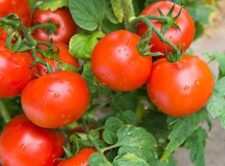
It’s still nearly three months before Kansas gardeners begin to put tomato plants into the ground. Kansas State University horticulture expert Cynthia Domenghini says that’s an opportunity for gardeners to set themselves up for a bountiful season.

“Most of the varieties available to home gardeners are indeterminate,” Domenghini said.

Indeterminate plants are traditional tomatoes that never stop growing. They are capable of producing fruit throughout the season unless disease stops production or frost kills the plant.

Domenghini said gardeners will benefit from choosing tomato varieties with strong disease resistance characteristics.

“Gardeners with limited space will likely prefer indeterminate or determinate types to stretch out the harvest season,” Domenghini said. “If there is space, you may want to grow a combination of all three, with the determinates used to produce a large harvest for canning or tomato juice, and the remainder for fresh eating.”

In Kansas, tomatoes are generally planted in early- to mid-May, or when daytime temperatures are above 70 degrees Fahrenheit and the state has passed the frost-free date. In some areas, such as the northwest part of the state, conditions might not be right for planting tomatoes until the middle of May or a bit later, according to Domenghini.

Even though indeterminate varieties produce fruit throughout the season, “our hot Kansas summers often cause a dry spell in production,” Domenghini said.

Tomatoes are less likely to set fruit when night temperatures remain above 75 F and day temperatures are above 95 F. Hot, dry winds make the situation worse, Domenghini said.

Tomato trials

Each year, Kansas Master Gardeners plant and rate a number of tomato varieties. Domenghini noted that a subsequent trial is conducted by a colleague with the University of Missouri extension service.

Results of trials conducted by Kansas’ Master Gardeners vary by county. Interested persons are encouraged to contact their local extension office for more information on varieties that perform well in their area.

Domenghini said the University of Missouri trials also give valuable information on varieties that perform well in this region. The data from Missouri’s extension service showed that the top 10 varieties (based on pounds of fruit harvested per plant) are:

  • Amish Paste.
  • Beefmaster.
  • Beefsteak.
  • Big Beef.
  • Celebrity.
  • Chef’s Choice.
  • Early Girl.
  • Florida 91.
  • Jet Star.
  • Summer Pick.

Domenghini and her colleagues in K-State’s Department of Horticulture and Natural Resources produce a weekly Horticulture Newsletter with tips for maintaining home landscapes and gardens. The newsletter is available to view online or can be delivered by email each week.

Interested persons can also send their garden and yard-related questions to Domenghini at [email protected], or contact your local K-State Research and Extension office.

Cutting back branches leaves trees with healthier outlook

0

To stay healthy, sometimes trees need a little help in the form of a trim. Pruning is an essential maintenance activity to promote tree health, safety, and aesthetics. Since trees are large, long-living plants in our landscape, pruning throughout the life of a tree can have a significant impact on how it functions in the landscape and how long it survives. Pruning while a tree is young can have exponentially beneficial results for long-term tree health, maintenance requirements, and beauty.

Because no two trees are the same, pruning is both an art and a science. Research has helped advance our understanding of tree physiology and response to pruning activities, improving techniques and outcomes. Deciding which pruning cuts to make depends on many unique factors, such as plant species, age, reasons for pruning, and desired outcome.

Before making a pruning cut, it is important to assess the entire tree and surrounding site conditions that influence the tree. It is also critical to determine your objectives for pruning. Every pruning cut, large or small, should have an explicit purpose and advance the tree toward the identified goals.

There are many reasons for pruning a tree, including safety, health, and appearance.

Prune for safety

Pruning for safety involves pruning branches that interfere with human activities or pose a threat. You can improve safety by removing limbs that block traffic sight lines or branches over sidewalks and trails that impede pedestrian traffic. Additionally, broken limbs in the canopy pose a fall risk and should be removed.

Prune for tree health

Pruning for health includes the removal of branches that cross or rub with others to minimize self-wounding. Pruning trees for structural integrity is an effective way to increase safety and promote tree health. One of the most common structural concerns is co-dominant leaders. Trees with two or more dominant leaders develop structurally weak branch angles that threaten to split under the weight of the canopy. Corrective pruning should be done to encourage a single leader. Pruning dead or diseased limbs removes disease pathogens from the tree and should always be an objective of a pruning regime.

Prune for appearance

Pruning for aesthetics turns the focus toward human preferences. The desired appearance is a subjective analysis, however, pruning decisions made for looks should still adhere to proper pruning techniques and prioritize the health and safety of the tree.

When should trees be pruned?

In the Midwest, the late dormant season is the optimal time to prune deciduous trees. While dormant, deciduous trees have shed their leaves, making it easier to assess the overall form of the tree and make pruning choices related to structural integrity easier. By pruning just before spring, trees can better allocate energy resources toward producing leaves that will remain on the tree throughout the growing season. They also dedicate energy to sealing the wounds created by pruning. Pruning branches full of leaves diminishes the tree’s capacity to photosynthesize and replenish carbohydrate reserves. Finally, pruning in later winter means that opportunistic insects and disease pathogens are also dormant, reducing the risk of infection.

How to make a pruning cut

Once you decide a pruning cut is necessary, proper technique is required.

Preserving the branch bark collar is essential to wound sealing. The branch bark collar is a swollen or raised strip of bark at the intersection of the branch and the trunk of a tree. Pruning practices of the past that include flush cuts removed the branch bark collar and are no longer recommended.

Make pruning cuts just outside the branch bark collar and have a smooth finish. If larger branches are being removed, a three-point pruning cut is recommended to avoid ripping the bark as the limb falls during the pruning activity under the weight of the branch.

Pruning is an ongoing maintenance activity, and trees should be assessed annually for pruning needs. Being consistent with assessment and action can help minimize the workload for pruning and minimize stress response in trees. If mature trees need pruning, it is best to consult with a professional arborist. Safety should always be the top priority. Pruning activities that require lift equipment or power tools should be performed by a professional arborist.


Using leftover vegetable seeds

0

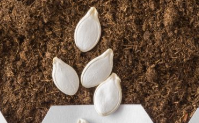
For many gardeners, midwinter is a time for pacing the floor and waiting for the weather to break. There’s been plenty of time for indoor projects, but they’ve either been completed or their appeal has faded. Well, here’s an indoor gardening project that needs your attention; sorting through and discarding out-of-date garden seeds.

If you’re like many gardeners, it’s a bit difficult to discard leftover seeds that may still be useable. How long you can keep leftover vegetable seeds depends on several factors, including the kind of vegetable seeds you have and how you’ve stored them over the past year or two. Maintaining ideal seed storage conditions in your home is impractical; but, if you’ve kept the seeds fairly cool and dry, they may still be good enough to plant.

As a rule, most vegetable seeds will remain useable for at least two or three years. There are exceptions; onion, parsley, parsnip, and lettuce seeds loose viability quickly and should be replaced every year. If you’ve been keeping sweet corn, okra and pepper seeds they’ll still be good after two or three years. Squash, watermelon, cucumber, muskmelon and tomato seeds will last up to four years.

No matter how well seeds are stored there’ll always be some uncertainty about their ability to produce a good stand of healthy seedlings. For that reason, it’s a good idea to do a seed test. Select ten seeds at random from the seed packet (do this for each seed lot). Fold the ten seeds inside a moistened paper towel and seal them in a plastic bag. Keep the seeds in a warm room and check them one week later for germination. If four or more of the seeds out of the ten have germinated and are showing signs of good growth the packet of seeds is still good enough to use; otherwise, discard the seeds and buy new seeds for your garden.

Kansas State Reasearh & Extension

A Gathering for Gardeners

0

A day filled with free gardening information for homeowners and gardeners has been
scheduled for Saturday, March 9th . The Hutchinson Horticulture Club organizes and sponsors this event as their educational project for the community. It will be held at Our Redeemer Lutheran Church at 407 East 12th just west of the Cosmosphere. After missing two years because of Covid, the Club held one last year. If not for those Covid years, this would be the 35 th year for this annual event.

Doors open at 8:30 a.m. with the morning session beginning at 9:00 a.m. The first topic
is Herbs – Growing, Using and Abusing by Kay Neff of Neff Family Farm located outside
Sedgwick, Ks. She has been growing herbs for 35 years. Her program will include growing tips for several common herbs and she’ll give suggestions and some recipes for using them.

Next at 10:00 a.m., the topic Fall Gardening – Extend your Gardening Season will be presented by James Taylor, Retired Instructor of Hutchinson Community College. His program will highlight vegetables and some flowers that do really well in cooler fall weather. He’ll provide a planting schedule and planting tips so gardeners can enjoy fresh produce after others have quit for the year.

The last presentation for the morning will begin at 11:00 a.m. Jarrod Bornholdt, of
Bornholdt Plantland, has arranged for Eric George, a Monrovia Sales Representative from
Paola, to present New & Newer Perennials, Shrub Roses & Other Shrubs. He will have suggestions for sunny and shady spots in your yard that might make your friends jealous.

The afternoon programs will resume at 1:00 p.m. with Krista Dahlinger from Mulvane,
an officer of the Kansas Native Plant Society, addressing the topic of Less Lawn – More Habitat. She will present ideas on how low growing native plants can reduce watering and create a pollinator paradise in your yard. She will share lots of “how-to” resources.

At 2:00 p.m., Rob Mortko, of Made in the Shade Gardens in Olathe, will speak about Hostas: Everything You Want to Know About America’s Most Popular Perennial. He is a nationally recognized Hosta expert and is known as “The Hosta Guy.” He has been a Hosta aficionado for over 35 years.

The last presentation of the day begins at 3:00 p.m. The topic of Success in Making Colorful Containers will be covered by Jason French, Retail Manager and Plant Specialist at Stutzmans Greenhouse. He will talk about containers, soil, fertilizer and have a handout listing recommended combinations of plants to use in containers in sun and shade locations.

There will be no charge to attend any of the “Gathering for Gardeners” programs
although registration at the door is requested. Door prize drawings will be held though out the day. This schedule is designed so individuals may attend any or all of the topics.
http://www.Facebook.com/HutchinsonHorticultureClub