Second-quarter demand was the strongest for beef and pork in 10 years.
MANHATTAN, Kan. – Beef continues to be on shoppers’ grocery lists, even as prices have soared to record highs this year. That says a lot about Americans’ appetite for beef, said Kansas State University agricultural economist Glynn Tonsor.
“On the demand side, the second quarter – April through June – was the best quarter for beef and pork demand in 10 years; better than expected, especially in view of historically high prices,” said Tonsor, livestock marketing specialist with K-State Research and Extension.
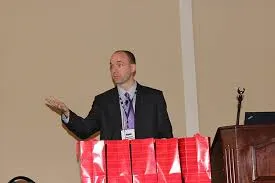
Speaking at the 2014 K-State Risk and Profit Conference in Manhattan on Aug. 21, Tonsor said beef demand in 2014 was stronger than in 2013, and stronger than most industry watchers expected, including him.
“If the price of beef was up 3 percent, I would have said demand was flat,” he said. “But, prices have been up 10 percent, and people are still buying beef.”
The fact prices notably exceeded the increase expected given the reduced volume consumed highlights the magnitude of beef demand strength.
Tonsor said he concurs with quarterly forecasts by the Livestock Marketing Information Center, which projected the average 2014 price for slaughter-ready steers in the five primary cattle markets at $152.00 to $154.00 per hundredweight, up 21.5 percent from the average of $125.88 in 2013. The average price in 2015 is projected at $157.00 to $161.00, which if realized, would be a 3.9 percent increase from 2014.
Fewer cattle spark higher prices
In its Cattle Inventory Report issued Jan. 31, 2014, the U.S. Department of Agriculture (USDA) estimated the total number of cattle and calves in the United States as of Jan. 1 at 87.7 million head, down 2 percent from the 89.3 million a year earlier and the lowest Jan. 1 inventory since 1951.
Tight cattle supplies are also reflected in the number of cattle being fed to market weight. The total number of cattle and calves in U.S. feedlots (with capacity of 1,000 head or more) on Aug. 1 was 9.8 million head, down 2 percent from a year ago. The number of cattle placed in feedlots during July was 1.56 million, 7 percent below July 2013 and the lowest since USDA began keeping such records in 1996.
Based on the cattle supply and beef demand so far this year, Tonsor believes that beef prices may be record high for the remainder of this year.
Higher prices typically spur herd expansion
Tight beef and cattle supplies and lofty prices are usually enough to encourage cattle producers to expand their herds. There were signs of such an expansion in 2012-2013, Tonsor said, but the buildup appears to have stalled this year. Some in the industry are concerned that the price of cows is high enough that producers are selling them rather than retaining them to produce more calves.
Based on various data and a survey conducted by Beef Magazine, he believes herd expansion will start in the coming months, but that it will not occur uniformly. The survey indicated that producers in the southern Plains will rebuild somewhat while those in the central and northern Plains will resume relative growth. Those in the southeast U.S. and the Midwest will likely continue the trend of relative decline in their beef cattle herd size compared to the national herd.
Raising replacement heifers may make sense, particularly if it costs a producer less to raise than buy them and if the genetic base (calving ease and milk production) is acceptable already. It also may be the best route if a producer is concerned about the availability of heifers on the open market.
Alternatively, a producer might be better off to buy replacement heifers if the cost to buy is truly less than the cost to raise them – especially if they put a value on their uses of time and money. This route may also make sense if producers value the reduced bull needs and want to grow their herd faster.
Whether raising or buying replacement heifers, Tonsor said producers must know their situation and comparative advantage. One handy resource, he said, is the Iowa State University publication (B1-73 “Buying Heifers for Beef Cow Replacement,” http://www.extension.iastate.edu/agdm/livestock/html/b1-73.html which helps identify changes in returns and costs that follow from buying rather than raising.
In some cases, it might make more sense to buy cows rather than heifers, he said. Market forces should help drive that decision.
In considering whether to expand their herds, Tonsor encourages producers to ask: Do I regularly utilize available resources, such as herd expansion tools and continuing education workshops? Do I know my comparative advantage? Do I have a favorable cost structure? Do I know the costs of retaining heifers?
Given the long-term commitment of expanding a herd, he also encourages producers to ask how comfortable they are with the current environment, including political and regulatory uncertainty and technology feasibility and acceptance.
Tonsor’s presentations, as well as others from K-State’s Risk and Profit Conference, are available at: http://www.agmanager.info/events/risk_profit/2014/Papers.asp.