- The New World Screwworm, a flesh-eating parasite, is spreading northward through Mexico, posing a threat to U.S. livestock.
- The USDA has suspended live cattle, horse, and bison imports from Mexico to prevent the screwworm’s entry.
- Kansas lawmakers are supporting legislation to increase funding for a sterile fly program in Mexico to combat the screwworm.
- A screwworm outbreak in the U.S. could devastate the livestock industry, particularly in Kansas, a leading beef producer.
The return of a flesh-eating parasite to Mexico poses a threat to livestock production in the United States, and the Kansas congressional delegation is speaking up and taking action.
The New World Screwworm is rapidly spreading northward through Mexico despite interdiction efforts, according to the U.S. Department of Agriculture. If it reaches the U.S., the results could be devastating for ranchers and the broader economy.
“Due to the threat of New World Screwworm I am announcing the suspension of live cattle, horse, & bison imports through U.S. southern border ports of entry effective immediately,” U.S. agriculture secretary Brooke Rollins said in a May 11 post on X. “The last time this devastating pest invaded America, it took 30 years for our cattle industry to recover. This cannot happen again.”
U.S. Rep. Tracey Mann, R-Kansas, said he was glad to see the response by President Donald Trump’s administration.
“We’ve got to make sure and take every step we can to make sure that it never reaches the United States,” Mann told The Capital Journal on May 15. “Kansas would be dramatically impacted if it ever does, and so I appreciate President Trump and secretary Rollins being proactive in sealing the border to incoming beef while they are working with the Mexican government and others are working to make sure that the outbreak and the scope and size of the outbreak is reduced.”
What is the New World Screwworm?
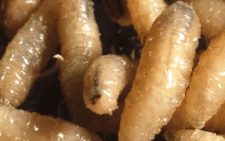
The New World Screwworm is actually a fly but gets its name from its maggot larvae. The female fly lays eggs on a wound or opening, which hatch into maggots that burrow into living flesh of livestock.
“The name screwworm refers to the maggots’ feeding behavior as they burrow (screw) into the wound, feeding as they go like a screw being driven into wood,” according to the USDA’s Animal and Plant Health Inspection Service. “Maggots cause extensive damage by tearing at the hosts’ tissue with sharp mouth hooks. The wound can become larger and deepen as more maggots hatch and feed on living tissue. As a result, NWS can cause serious, often deadly damage to the animal.”
Sterile insect technique eradicated screwworm in US
Known as NWS, the pest was eradicated from the United States in 1966, according to APHIS. USDA scientists in the 1930s and 1940s worked to develop the sterile insect technique, which started being implemented in the 1950s.
Scientists used radiation to sterilize male flies, which were mass produced and released into the wild. When the sterilized male flies mate with a wild female, the result is unfertilized eggs. Over time, the population declines until it is ultimately eradicated.
The insects aren’t modified through genetic engineering.
While the screwworm eradication programs established a barrier at the U.S.-Mexico border, there were recurrent outbreaks in the U.S. The two countries then worked together to eradicate the screwworm in Mexico, pushing the barrier to that country’s southern border by 1986.
For decades, the U.S. has worked in Central America, particularly in Panama, to maintain a biological barrier containing the pest to South America. But NWS detections in Panama started rising in 2023 and the pest has since been re-introduced farther north.
What Kansas congressmen and USDA are doing about screwworm in Mexico
The USDA said effective eradication requires a three-pronged approach of active field surveillance, limiting animal movement and dispersal of sterile insects.
Mann said the U.S. needs to be proactive about the screwworm threat.
“One of the ways they fight against New World Screwworm is by introducing sterile flies into some of these infected areas by the tens of millions,” he said. “That process is underway in southern Mexico and other parts of Mexico. Our government is supporting that, as we should, but let’s make sure that never enters our country.”
Mann said legislation has been introduced in Congress to increase funding specifically for a sterile fly program targeting the screwworm in Mexico.
“We are doing many, many good things,” he said. “We want to make sure that we have the funds available to continue to do those things if and as they’re needed in the future.”
One bill in the U.S. House is co-sponsored by U.S. Rep. Derek Schmidt, R-Kansas, and U.S. Rep. Sharice Davids, D-Kansas. That bill has a companion version in the U.S. Senate. In posts on X, U.S. Sens. Jerry Moran and Roger Marshall have indicated they are monitoring the situation.
The legislative effort, which is being led by Texas congressmen, would provide $300 million to build a new sterile fly production facility in the U.S.
Kansas is a top producer of livestock
Mann said the Big First district is “the No. 1 beef producing district in the country.”
USDA statistics from the 2022 census of agriculture show Kansas’ 1st Congressional District is the country’s top producer of cattle and calves, with about $11 billion in sales. That contributed to the Big First being the top producer in the entire livestock and poultry category, with a market value of nearly $13 billion.
Statewide statistics put the cattle and calf industry in Kansas at nearly $14 billion in sales in 2022, which was second in the country behind Texas. The state’s nearly $16 billion total for livestock and poultry was fourth in the U.S.
“We got to make sure that the New World Screwworm — and other diseases — don’t enter our country,” Mann said. “Because it would devastate our herds, devastate our feed yards. Very large negative impact to our state if we ever saw a large outbreak.”
A screwworm outbreak could be devastating
The USDA estimated as of 1996 that eradication of the screwworm provided an annual economic benefit of $796 million to producers and $2.8 billion to the broader economy.
The USDA in January performed an economic analysis of a 1976 screwworm outbreak in Texas. About 1.5 million cattle were infested in that outbreak, in addition to other livestock.
The USDA said “an NWS outbreak roughly the scale of the 1976 outbreak could cost Texas producers $732 million per year and the Texas economy a loss of $1.8 billion.”
While a new outbreak in the U.S. could be devastating, the federal government was able to quickly respond to an outbreak nearly a decade ago. That re-emergence in the Florida Keys in October 2016 was controlled using a release of sterile flies, which had the screwworm successfully eradicated by March 2017.
That was the first local infestation in the U.S. in more than 30 years.
As reported in the Topeka Capital Journal
Flesh-eating screwworm could devastate livestock. What Kansas leaders are doing
How one rural Kansas town is bringing kids and nursing home residents together
Research shows intergenerational connection boosts wellbeing. The residents of Logan are putting that to the test.
LOGAN, Kansas — With children’s shouts echoing off of colorful playground equipment, the Logan Manor doesn’t look or sound like your typical nursing home.
That’s because it’s also a school.
This rural farm town, with a population of 436, recently welcomed nursing home residents and students into its new intergenerational facility, called the Logan Intergenerational Family Education Center. By bringing different age groups together under the same roof, LIFE Center administrators are trying to foster connection and learning across generations.
Inside, Betty Albright — age 90 — is laughing and making May Day baskets with three of her friends: Jensen, Harper and Harper, ages 11 and 12. After a staring contest, one of the Harpers asks Albright when her birthday is.
“October,” Albright says. “Why, what are you gonna do?”
“I will sing Happy Birthday to you on that day, OK?” Harper replies.
Albright, who moved into Logan Manor recently, says connecting with the kids is a source of joy.
“I have a good time with these three,” she said. “I always do because I love them very much.”
As more young people move away from rural Kansas, many communities are aging. That can mean increased social isolation for older adults who stay. The LIFE Center is an effort to improve their quality of life while teaching kids crucial skills.
The setup lets nursing home residents volunteer in classrooms and help with science projects. They’re integrated into the daily life of the public school, meeting students for a high-five train every Friday and serving as reading buddies.
And it provides learning opportunities for kids. One class is interviewing residents and recording their life stories. High-schoolers can job shadow physical therapists and speech-language pathologists, and a few work part-time as nursing assistants and dietary aides.
Down the hall, 6-year-old Rhett is practicing his reading with 63-year-old Tom Goscha. Goscha has pulmonary fibrosis, and he’s lived in the nursing home for five years. He’s a favorite among the kids.
“My nieces and nephews are all grown and gone,” Goscha said. “They’ve got kids of their own, but they’re in Imperial, Nebraska, Texas and Omaha, and so it’s fun to have the little ones around.”
LIFE Center beginnings
The LIFE Center is the brainchild of school Principal David Kirkendall, who first became familiar with elder social isolation programs as a child helping his mother do nursing home maintenance work.
“I’d see all these residents sitting there on a Saturday with their hair done, waiting for somebody to show up that never showed up,” he said from his office in the new Logan school.
The idea of an intergenerational facility started to take shape in 2007, when he was the mayor of a small town near Greensburg, Kansas. The community was struck by a devastating tornado — and as it rebuilt its schools and medical buildings in their original locations, Kirkendall felt like it was a missed opportunity to bring the community closer together.
That idea grew when he moved to Logan a decade ago, where the existing elementary school building and nursing home were both in need of significant repairs.
“I said, ‘I’ve got this idea,’ and we started fleshing it out,” he said.
Not everyone was initially on board. Kirkendall says some parents expressed concern that the residents’ presence at the school could distract from classroom learning.
But he says the intergenerational model actually adds to kids’ learning — something that’s been borne out in the first few months since residents moved in. He gives the example of Logan’s first-grade class, where two residents have been helping students drill sight words with flash cards — freeing up the teacher to work one-on-one with students on difficult pronunciations.
“Now I have two additional learning opportunities in the classroom that I wouldn’t have had before,” he said.
For nursing home residents, having kids around and more opportunities for social interaction can ease the transition from independent living to long-term care.
“It’s a hard change for anybody,” said Logan Manor administrator Teresa McComb, “and there are increased levels of depression, anxiety and loneliness.”
She says having the nursing home more integrated into the local community — where residents are able to attend school performances and sporting events — allows them to develop new connections and a sense of belonging.
“We have some that don’t have family in the area, their family is busy, or they might even be the last one left in their family,” she said. “Even residents that are unable to verbalize how much they like the kids coming over, their faces light up. They smile. They’re just in better moods.”
And the benefits go beyond social interaction. If a resident is recovering from a stroke and needs to practice hand-eye coordination, they can go down the hall and spend time with the preschool class — which is also focusing on hand-eye coordination.
“They can come down to my preschoolers,” Kirkendall said, “and kick a ball back and forth. It helps both groups.”
A model for others
Intergenerational programming is not a new concept, but experts think the LIFE Center is one of the first of its kind. While there are examples of nursing homes with on-site daycare, it’s rare to find one attached to a public, K-12 school.
“I’m not sure I’ve seen something like this before,” said Shannon Jarrott, a social work professor at Ohio State University who studies intergenerational sites.
Leaders in Logan hope the town can serve as a model for other communities trying to improve well-being.
So do researchers at Kansas State University. They’re studying whether the new facility can boost social skills and academic achievement in kids and reduce cognitive decline and depression in residents.
“I’m looking to see how children develop over time by having these intergenerational experiences,” said Natalie Barlett, a teaching assistant professor of psychology at K-State.
“Most places that do intergenerational programming have to bus children in. In Logan, because the elementary school is attached to the nursing home, they get to interact every single day.”
Trase McQueen, project coordinator for the research team at K-State, says the study will also track whether there is any impact to the rate of resident falls and antidepressant medication use, as well as their reports of emotional well-being.
“Logan is doing something that I think could change people’s lives,” McQueen said.
Steven Cohen, a social epidemiologist who studies aging at the University of Rhode Island, says many of the health issues plaguing rural communities span generations, including a lack of geographic and financial access to care as well as shuttering rural hospitals and depopulation. But in many cases, he says, the solutions to these problems are not one-size-fits-all.
“We can certainly look for trends, but it’s also important to remember that what happens in rural Kansas may be very different than what happens where I am in rural Rhode Island, or other parts of the country,” he said.
Opportunities and challenges
Research indicates the social contact associated with intergenerational programming can reduce inflammation and improve psychological health in older adults. But Jarrott, the Ohio State professor, says children also have a lot to gain.
“One of the the misnomers is this idea that these intergenerational programs are really for the benefit of the older adults,” she said. “In reality, if the program is a good one, the children are going to get just as much out of this as the older adults will.”
Younger kids, she says, gain crucial social-emotional skills and confidence. Teenagers — who, data indicates, are increasingly isolated and who are experiencing rising mental health challenges — can develop perspective and lasting relationships.
So why aren’t intergenerational programs more common? Experts point to a range of reasons, from ageism to a lack of dedicated funding sources.
Ernest Gonzales, an NYU professor who directs the university’s Center for Health and Aging Innovation, says age-related stereotypes can make people reluctant to participate in programming. That includes an NYU home-sharing program that pairs seniors struggling to afford their homes with housing-insecure graduate students.
“Many older adults feel as though sharing their private space with a student is just not in their wheelhouse,” he said. “Often, when we follow up, it’s because they think students are impetuous; they’re risk-takers and party-goers. So older adults have a lot of negative stereotypes about younger generations.”
There are also structural challenges. Organizations dedicated to improving children’s education and welfare are often restricted to funding solely child-focused projects. It’s a similar story with funding for older adults. Money appropriated by the federal Older Americans Act cannot be used for intergenerational programs.
“Trying to get funders to recognize that their money is being stretched in novel ways — that’s a big challenge,” Gonzales said.
Jarrott says those barriers reflect a society that is not accustomed to thinking and living intergenerationally.
“We have multiple forces — cultural, political, financial — that discourage sharing of spaces, services and funding,” she said. “But (intergenerational programs) can be a really self-sustaining means of providing meaning and helping people have good health at any age.”
Successful intergenerational programs require intentional planning. Jarrott says it’s best for elders and kids to be paired up individually, in pairs or small groups, as opposed to throwing two large groups of people together.
And for relationships to form organically, those same groups of people should have the opportunity to meet regularly. For organizations interested in creating their own program, she points to guidelines from the nonprofit Generations United, which promotes intergenerational community-building.
In Logan, the LIFE Center also encounters logistical challenges — like how to keep residents safe during flu season, and how to keep them busy when school breaks for the summer. The school year is wrapping up, but Goscha thinks he and his younger friends will manage just fine.
“(The kids) tell me, ‘We’re going to come over and see you this summer.’ And I said, ‘OK, that’ll work. You can come over and visit.’ And I’ve got a jar of candy, and they’re like, ‘So will you have candy this summer?’ I said, ‘I’ll always have candy.’”
Kansas News Service
Kansas Beef Council Celebrates May as Beef Month

The Kansas Beef Council proudly recognizes May as Beef Month, celebrating the state’s more than 26,000 beef producers whose work supports the economic, environmental and nutritional well-being of Kansas communities. Governor Laura Kelly has also acknowledged May as Beef Month, continuing a long-standing tradition of recognizing the vital role of beef in Kansas.
“Kansas ranks third nationally for cattle and calves, with more than 6.5 million head,” KansasnBeef Council (KBC) Executive Director Scott Stebner said. “Beef Month is an opportunity to recognize the men and women who produce high-quality, nutritious beef that feeds families across our great state of Kansas.”
To celebrate, KBC is rolling out a statewide digital campaign designed to connect with consumers and share beef’s story. Campaign assets include Instagram Reels highlighting various steak cuts to grill, a multi-part series covering different ways to create delicious marinades and rubs, producer-facing content and stories highlighting beef producers.
These efforts aim to increase demand for beef as summer approaches, when grilling becomes a staple at family gatherings and celebrations. Through engaging, educational content, the campaign addresses common consumer questions, highlights the versatility of beef in everyday meals and reinforces its role as a nutrient-dense source of high-quality protein.
For more information and to follow along with the campaign, visit kansasbeef.org or follow @KSBEEF on Instagram.
Lovina’s Children Write a Tribute for Their Mother’s Birthday

Verena (Special friend Daniel Ray), age 27
Mom, us children decided to each write a birthday message to you for your 54th birthday, May 22nd. Sitting here, dozens of things pop in my head on what I could write. Your love for us is so meaningful, but I will try to keep it short so I don’t take up too much space in the column. Smile.
With my wedding coming up on June 20th, you have been extra busy. You are such a strong woman. You take on a lot and help so many people. If I have children in the future, I can only hope that I can be as wonderful with them as you are to us children.
As I look back over the years, I think of all the big happenings. Your love, prayers, and guidance stand out the most during my good and bad times. Mostly, I am thankful you taught me about God. You have taught me that life is what you make it.
Muscular dystrophy is a challenge to deal with and I remember often how you reminded us with MD that a good attitude can make it easier on us and the ones helping us. I love how you didn’t pity us or treat us any differently than the rest of your children. It helped us more than you will ever know. Your willingness to help each of your children has put a huge impact on us and helped us all through many trials in life.
Thank you, Mom, for all you do, and Happy birthday. I am blessed to have such a wonderful Mother. You deserve the best. I love you.
Ben, age 25
Happy birthday, Mom. You make many good meals, do my laundry, pack my lunch, and support me. I appreciate all the many prayers you say for me. I know I am responsible for the few gray hairs you do have. Haha! Life has not always been easy for me but you have always been there for me. I’m not good at putting my words into writing but I hope you know I am always thankful for all you do. I hope you have a great birthday and I love you.
Loretta (Husband Dustin), age 24
To the most amazing Mom in the world, Happy Birthday! Your love, support, and guidance have shaped me into the person I am today. I’m so grateful to call you my Mom.
Living across the road from you has been nice since you are not too far away if I need help. My three children love to come there and get hugs and kisses from Grandma.
Our little family of 5 couldn’t ask for a better Mom/Grandma. All the things I could say about all the great memories, I could write a whole column myself. But all my siblings have to have a turn, so I’ll end it with thank you so much for all you do for us. We love you!
Joseph (Wife Grace), age 22
Mom, I want to start out with a big thank you. I know it had to be stressful to raise a family of eight but you never gave up on us. When I lived at home, I would try to do extra jobs to make life easier for you and you always showed your appreciation. Happy 54th birthday Mom and God bless you. I love you!
Kevin, age 19
On your birthday I want to tell you how much you mean to me. With me having Muscular Dystrophy, I need help getting on to my mobility scooter every morning, you help me with the lift every morning, and you have been so helpful with everything! With your love and support, it makes everything much easier. Sometimes it is a struggle to need the extra help with everything and I know it is not always easy on your part. I do not know what I would do if I did not have you. Happy 54th birthday, Mom. Thank you for loving and supporting me! I love you!
God’s blessings! To be continued next week…
RHUBARB CUSTARD PIE
1 ½ cup rhubarb, cut in small pieces
2 tablespoons flour
2 eggs
1 cup sugar
¾ cup cream or whole milk
Place rhubarb in the pie crust. Beat together eggs, flour, sugar, and cream in a medium size mixing bowl. Pour into an unbaked 8-inch pie shell. Bake at 350 for 45 minutes to an hour or until set.
Lovina’s Amish Kitchen is written by Lovina Eicher, Old Order Amish writer, cook, wife, and mother of eight. Her three cookbooks, The Cherished Table, The Essential Amish Cookbook, and Amish Family Recipes, are available wherever books are sold. Readers can write to Eicher at Lovina’s Amish Kitchen, PO Box 234, Sturgis, MI 49091 (please include a self-addressed stamped envelope for a reply); or email [email protected] and your message will be passed on to her to read. She does not personally respond to emails.